
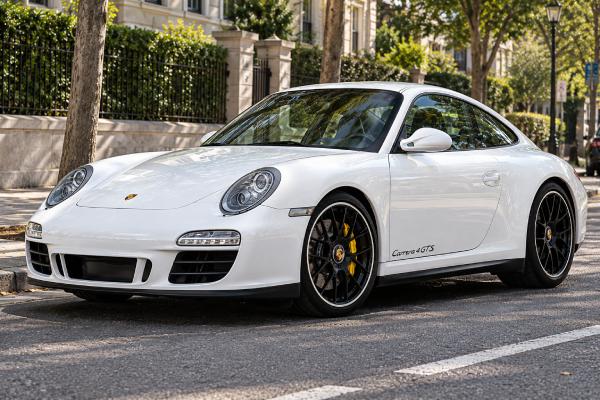
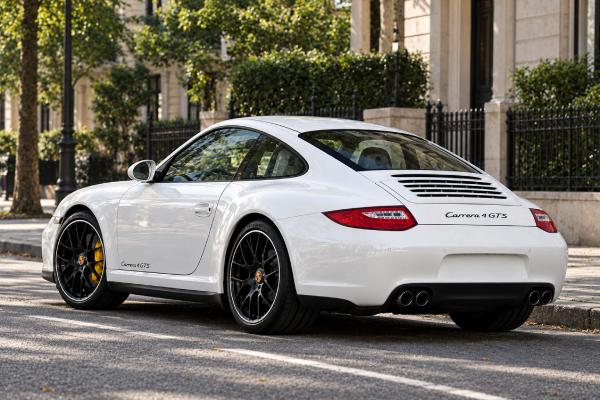
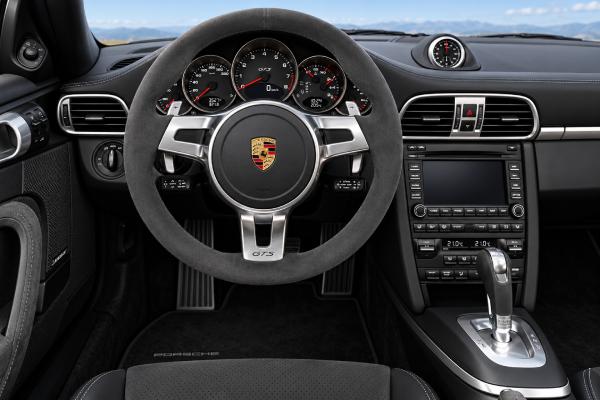
The Porsche 911 Carrera GTS (997.2) is one of the clearest examples of Porsche assembling familiar 911 components into a genuinely different factory specification. Its 3.8-litre direct-injection flat-six produces 300 kW (408 PS), but the defining detail is not power alone. Porsche paired that engine with rear-wheel drive and the 44 mm-wider body normally associated with the Carrera 4 range, then added 19-inch center-lock RS Spyder wheels, adaptive suspension, a sports exhaust and GTS-specific trim. A six-speed manual and seven-speed PDK were both available. Introduced late in the 997 cycle, the rear-drive GTS sits above the 385 PS Carrera S without becoming a GT3, which explains both its everyday usability and its collector interest. That position also creates buying traps: ordinary Carrera parts can make a modified car look convincing, while expensive center-lock, chassis and trim items can be overlooked during a superficial inspection. This guide treats the 997.2 rear-drive Carrera GTS as its own model and builds the ownership picture around the engineering choices that make it unusual.
Table of Contents
- The rear-drive wide-body formula
- 997.2 Carrera GTS technical data
- How the 408 PS engine differs
- Manual, PDK, and real-world performance
- Center-lock wheels, chassis, and brakes
- Age-related service without guesswork
- Provenance, originality, and purchase checks
The rear-drive wide-body formula
The original 997 Carrera GTS was introduced after the major 997 facelift and became the first 911 to use the GTS badge in the modern Carrera range. Porsche describes its role as a bridge between the conventional Carrera models and the more focused GT cars. The car remained usable as a road-going Carrera, but its engine, body, wheels, trim and chassis specification were deliberately more assertive than a Carrera S.
The most distinctive packaging decision is easy to miss in a specification list: Porsche used the 44 mm-wider bodywork from the all-wheel-drive Carrera models but retained rear-wheel drive as the standard layout. That gives the GTS the broad rear arches and space for a larger rear wheel package without the extra PTM front driveline of the Carrera 4 GTS. Porsche’s historical GTS material specifically identifies this wide-body/rear-drive combination and the 19-inch center-lock RS Spyder wheels as defining features.
Externally, factory cars also carry black accents and a model-specific front apron. The sports exhaust uses dark-finished outlets, while the cabin commonly uses Alcantara on the steering-wheel rim, gear lever or PDK selector area, handbrake and sports-seat surfaces according to specification. These details are not a substitute for a VIN check, but together they help establish whether the car is coherent.
The production-year description needs context. Porsche introduced the Carrera GTS in 2010, with cars sold across the final 997 model years. The assignment’s 2011–2012 span captures the late-market period most buyers encounter. A registration date alone cannot establish model year, so use the VIN and factory data for the individual vehicle.
The rear-drive GTS should also stay separate from three nearby cars during research. It is not the 385 PS Carrera S, even though both use a 3.8-litre MA1.01 base engine. It is not the Carrera 4 GTS, despite sharing the wide body and 408 PS output. And it is not a GT3: the GTS retains Carrera road-car priorities, rear seats where specified, broader comfort equipment and a less specialized suspension and engine architecture.
997.2 Carrera GTS technical data
This model is a gasoline-only, naturally aspirated internal-combustion 911 with a rear-mounted flat-six and rear-wheel drive. The following data describe the 997.2 Carrera GTS Coupé unless otherwise noted; Cabriolet figures differ slightly.
| Item | Factory specification | Notes |
|---|---|---|
| Engine family | MA1.01 / 9A1 | Direct-injection 997.2 architecture |
| Configuration | Rear-mounted naturally aspirated flat-six | Water-cooled, four valves per cylinder |
| Displacement | 3,800 cc (3.8 L) | 102.0 mm bore × 77.5 mm stroke |
| Maximum power | 300 kW (408 PS) at 7,300 rpm | GTS/Powerkit specification |
| Maximum torque | 420 Nm (310 lb-ft) at 4,200–5,600 rpm | Broad torque plateau |
| Compression ratio | 12.5:1 | Naturally aspirated |
| Maximum engine speed | 7,500 rpm | Factory limit |
| Component | Specification | Buyer note |
|---|---|---|
| Driven wheels | Rear | No PTM front driveline |
| Manual | 6-speed | Inspect clutch and shift quality |
| PDK | 7-speed dual-clutch | Check service history and diagnostic status |
| Stability control | Porsche Stability Management | Integrated traction and stability functions |
| Sports exhaust | Standard GTS equipment | Check valve operation and originality |
| Measure | 6-speed manual | 7-speed PDK |
|---|---|---|
| 0–100 km/h | 4.6 s | 4.4 s |
| Top speed | 306 km/h (190 mph) | 304 km/h (189 mph) |
| Period NEDC combined | 10.6 L/100 km (26.6 mpg UK) | 10.2 L/100 km (27.7 mpg UK) |
| Power-to-character | Linear high-rpm delivery | Same engine, quicker automated shifts |
| Feature | Specification | Why it matters |
|---|---|---|
| Body width concept | 44 mm wider than the narrow rear-drive Carrera shell | Uses AWD-style wide rear body with RWD |
| Wheels | 19-inch RS Spyder center-lock wheels | Factory GTS signature and special service procedure |
| Rear tires | 305-section GTS fitment | Inspect age, inner shoulders and approved sizing |
| Damping | PASM adaptive suspension | GTS road/handling balance |
| Steering | Hydraulic power assistance | Core 997 steering architecture |
| Area | Expected GTS characteristic | Verification method |
|---|---|---|
| Front | Model-specific apron and dark spoiler lip | Compare with factory imagery/build data |
| Rear | Wide body and dark exhaust treatment | Inspect panel originality and exhaust hardware |
| Interior | GTS-specific Alcantara/black treatment depending on order | Check option record |
| Brakes | Performance steel system; PCCB possible | Verify option code and installed hardware |
| Body style | Coupé or Cabriolet | Use correct body-style performance/specification data |
How the 408 PS engine differs
The GTS engine begins with the 3.8-litre direct-injection unit used by the facelift Carrera S, but Porsche revised the intake system to increase airflow and improve cylinder filling. The result is 300 kW (408 PS), compared with 283 kW (385 PS) for a normal 997.2 Carrera S. The maximum torque figure remains 420 Nm, yet the GTS calibration and intake arrangement broaden the useful delivery rather than simply chasing a higher peak number.
Porsche’s later historical description calls out the special intake tract and the 7,500 rpm maximum engine speed as core GTS characteristics. That matters in a road test. The engine should feel clean and progressive from low speed, gain urgency as revs rise and reach the upper range without hesitation. A car that stumbles, misfires, shows inconsistent throttle response or illuminates the engine warning lamp needs investigation before purchase.
Because this is the facelift 9A1/MA1 engine family, it should not be assessed as though it were an early 997.1 M97. Online discussions frequently blend generations, especially around internal engine concerns. The better approach is evidence-led: cold-start the actual car, inspect for oil and coolant leakage, scan its control unit, review oil-service history, check ignition condition and investigate any abnormal noise or consumption complaint on its own merits.
The direct-injection system adds high-pressure fuel hardware and injectors that should operate smoothly. Long-term deposits in the intake tract are also a possibility on direct-injection engines because fuel no longer washes the back of the intake valves. There is no reason to assume cleaning is required merely because of mileage, but persistent roughness or airflow-related faults deserve proper diagnosis rather than random parts replacement.
The standard sports exhaust is part of the GTS specification and shapes both sound and presentation. Its valves and actuators should function, the system should be free of major leaks, and the black exterior finish of the outlets should make sense with the car’s history. Aftermarket headers, catalysts or exhaust bypass modifications should be documented because they can affect noise, emissions compliance and future resale.
Manual, PDK, and real-world performance
A rear-drive GTS can deliver two quite different experiences without changing the engine. The six-speed manual keeps the familiar 997 mechanical shift and conventional clutch. The seven-speed PDK turns the same naturally aspirated torque curve into faster, more repeatable acceleration through rapid dual-clutch shifts. Porsche’s period performance data put the Coupé at 4.6 seconds from 0–100 km/h with the manual and 4.4 seconds with PDK, while top speed slightly favors the manual because of gearing.
For a manual car, clutch condition is the first cost question, but it should not be the only one. Check bite consistency, judder, release behavior and shift quality when cold and fully warm. Second-gear or high-rpm shift resistance should not be normalized without diagnosis. Review whether the clutch, flywheel or hydraulic components have been replaced and whether the work is supported by invoices.
PDK inspection should include initial engagement, parking maneuvers, gentle part-throttle shifts, full operating temperature and stronger acceleration. A healthy transmission should not rely on a warmed-up demonstration to hide harsh behavior. Diagnostic scanning can reveal stored faults that a dashboard free of warning lamps does not show. Service records should be checked against the official schedule applicable to the VIN and market rather than a generic internet interval.
The rear-drive layout is part of the GTS appeal. Without the Carrera 4’s front driveline, the car retains a simpler power path and a different balance of mass and traction. That does not mean it should feel nervous. On correct tires with sound alignment and damping, the wide rear footprint gives substantial mechanical grip. Unpredictable behavior often points to tires, geometry or worn chassis components before it points to the basic layout.
Sport Chrono was available on many cars and can alter throttle, PDK and stability-system behavior. It is desirable to some buyers but should be verified through the build record. The same applies to seats, audio, PCCB and other high-value options. A list written by a seller is not the same thing as factory configuration data.
Center-lock wheels, chassis, and brakes
The center-lock wheels are the part of the 997 GTS that most clearly changes routine workshop practice. Porsche fitted 19-inch RS Spyder wheels with a single central locking device, a design visually linked to motorsport. The system must be serviced with the correct tools, clean mating surfaces and the current Porsche tightening procedure. Ordinary five-lug habits are not transferable. If a shop cannot explain the correct center-lock process, it should not be experimenting on the car.
During a purchase inspection, remove enough uncertainty around the wheel system to know whether the hubs, locks and wheels have been handled correctly. Look for impact damage, damaged lock interfaces, signs of improvised tools and evidence of proper prior servicing. Ask specifically whether the car has seen track use, because repeated wheel removal and higher thermal loading make accurate maintenance history more important.
The wheel itself also needs close inspection. Check both faces and inner barrels for bends or cracks, then inspect the tires from edge to edge. The broad rear setup can hide inner-shoulder wear when viewed from outside. Date codes matter because a lightly used GTS may retain old tires with substantial tread but degraded age-related performance.
PASM adaptive damping is another system where “no warning light” is not a complete test. Compare damping modes, look for leaking dampers and evaluate body control on an uneven road. Worn top mounts, links, bushings or wheel bearings can imitate damper problems, so a lift inspection and road test should be interpreted together.
Steel brake discs need measurement for thickness, lip, cracking around drilled holes and pad condition. PCCB-equipped cars require a different cost calculation and a specialist inspection of the ceramic discs. Caliper paint can be changed, so use option data to establish what the car had from new. Brake-fluid history is relevant regardless of disc material.
Alignment completes the chassis picture. A 997 GTS with expensive tires but poor geometry can feel worse than a more modest Carrera on a correct setup. Uneven tire wear, an off-center steering wheel or a car that follows road camber excessively should trigger measurement rather than an assumption that “wide-body 911s do that.”
Age-related service without guesswork
The Carrera GTS is now old enough that maintenance should be based on both Porsche’s schedule and the observed condition of the car. Low annual mileage does not suspend aging. Brake fluid absorbs moisture, tires harden, batteries weaken, rubber seals change and corrosion can develop on fasteners or exhaust hardware even when the odometer moves slowly.
Start by reconstructing the service chronology. An invoice trail is more useful than a stamped book alone because it shows which fluids, filters, plugs, belts, brakes and repairs were actually performed. Engine-oil services should use a suitable Porsche-approved lubricant for the car and market. If the history is incomplete, create a conservative baseline after purchase rather than assuming undocumented work was done.
Cooling-system inspection deserves attention at the front as well as the rear. Debris can gather around the front radiator and air-conditioning condenser areas, while hoses, connections and pumps should be checked for leakage or staining. A cooling fan that behaves abnormally or a car with unexplained coolant loss needs diagnosis before hard use.
Ignition coils and spark plugs are ordinary service items, but repeated replacement without identifying the cause of a recurring misfire is not good maintenance. The same principle applies to oxygen sensors, fuel-system codes and idle problems. Diagnose from fault data, live values and mechanical condition rather than treating the parts catalog as a troubleshooting method.
At the rear, inspect engine and transmission mounts, exhaust supports, heat shields and oil seepage. On manual cars, clutch wear can become a large single bill; on PDK cars, transmission condition and scheduled fluid work deserve documentation. Neither gearbox should be dismissed as “maintenance-free” simply because it is operating normally today.
Chassis service should include PASM dampers, steering joints, bushings, wheel bearings, brakes and alignment. Center-lock hardware makes wheel work more specialized, so choose a workshop that has the tooling and current procedure. This is one of the rare cases where the competence of the shop is itself a maintenance variable.
Finally, check recalls and campaigns using the VIN and the authority relevant to the car’s market. A model-level list can indicate what to investigate, but campaign applicability and completion are vehicle-specific.
Provenance, originality, and purchase checks
A Carrera GTS can be made to look convincing with wheels, bumpers, badges and interior trim, which makes identity verification the first purchase step. Confirm the VIN, model designation and production data, then compare the original option list with the physical car. The 408 PS engine specification, rear-wheel drive and factory wide body should all align with the documentation.
Next assess originality in context rather than demanding untouched paint from every older car. Refinished bumpers and stone-chip repairs are common. What matters is whether repair quality is high and whether structural or wide-body panel work is disclosed. Paint-depth measurement, underbody inspection and careful examination of panel joins can distinguish routine cosmetic work from a larger event.
Service history should tell a believable story. Mileage recorded at inspections, services and registrations should progress logically. Major invoices should match the parts now visible on the car. If the seller claims a recent clutch, PCCB replacement, center-lock service or PDK work, ask for the invoice rather than valuing the claim at face value.
A pre-purchase inspection should begin with a cold car. Check starting behavior, idle, smoke, leaks and warning lights. Then road-test the engine through its rev range, evaluate the chosen gearbox, test PASM, listen for wheel-bearing or driveline noise and confirm straight braking. After the drive, inspect again for fresh leakage and scan the control modules.
Pay special attention to modifications. Suspension lowering, nonstandard alignment, aftermarket exhausts, engine software and replacement wheels can all be well executed, but they alter the engineering baseline and may complicate future parts supply, emissions compliance or resale. On a GTS, the value of original special-model equipment makes reversibility and documentation particularly important.
The best purchase is a car whose mechanical state and history reinforce each other. A very low odometer reading cannot compensate for aged tires, neglected fluids or uncertain wheel servicing, while a higher-mileage car with transparent specialist records may be easier to assess. The rear-drive 997 Carrera GTS is desirable because its configuration is unusual from the factory: 408 PS, the wide body, rear-wheel drive and GTS hardware belong together. Buying one successfully means proving that those elements are still present and properly maintained rather than buying the badge alone.
References
- History of the 911 Carrera GTS – Porsche Newsroom — Porsche Newsroom, accessed 2026.
- The 997: Technology offensive, new design and great variety for the 911 – Porsche Newsroom — Porsche Newsroom, 2018.
- 6th Generation – Engines – Porsche Newsroom — Porsche Newsroom, accessed 2026.
- Dossier – 911 x 8 | Porsche Christophorus — Christophorus/Porsche Newsroom, 2023.
- Wartung und Verschleiß | Porsche Deutschland — Porsche service information, accessed 2026.
- Check for Recalls: Vehicle, Car Seat, Tire, Equipment | NHTSA — National Highway Traffic Safety Administration, accessed 2026.
Disclaimer
This article provides general technical, maintenance and buying information, not a diagnosis of an individual vehicle. Factory specifications, options, service intervals, tightening procedures and campaign applicability vary by VIN, market and production date. Center-lock wheel work and other safety-critical service should follow the current Porsche workshop information and be performed by appropriately qualified personnel.
Share this guide with a buyer who is comparing the 997.2 Carrera GTS with a Carrera S, Carrera 4 GTS or later 991 GTS and needs the factory distinctions kept clear.