
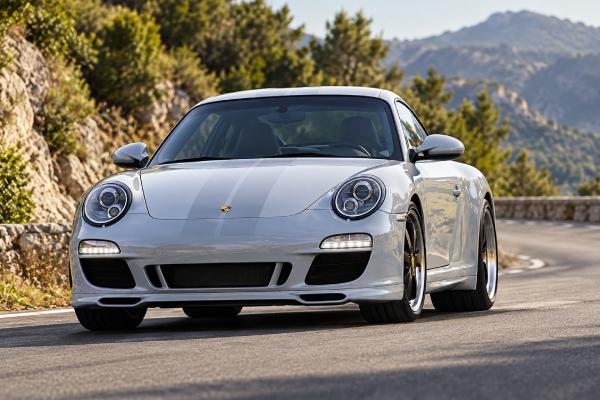
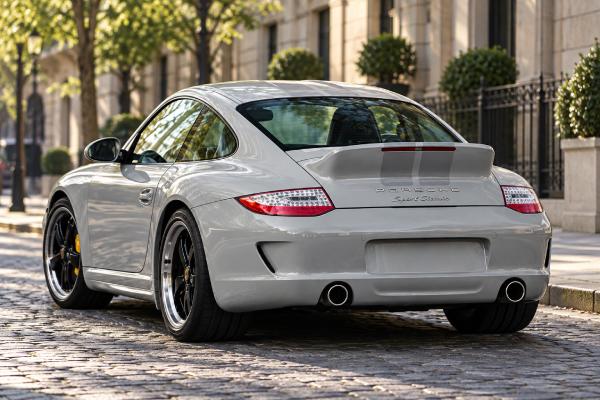
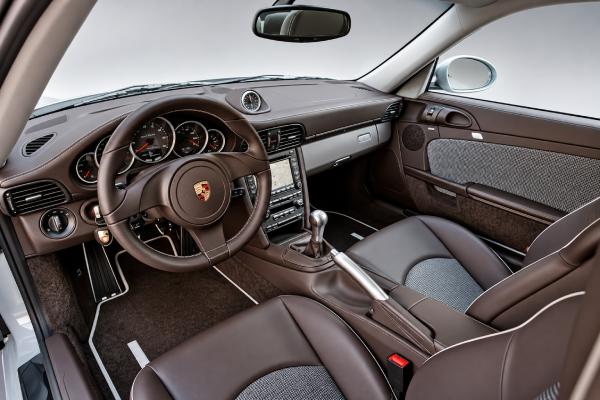
The 2010 Porsche 911 Sport Classic is a 997.2 Carrera-based special edition built by Porsche Exclusive in a run of only 250 cars. Its significance is not just cosmetic. Porsche combined the 44 mm-wider rear body normally associated with all-wheel-drive 997s with rear-wheel drive, then paired it with the 3.8-litre direct-injected flat-six fitted with the factory Powerkit, a six-speed manual gearbox, a mechanical rear differential lock, lowered PASM sport suspension and PCCB ceramic brakes. The result was rated at 300 kW (408 PS), while its double-dome roof, fixed ducktail-style spoiler and Fuchs-inspired 19-inch wheels deliberately referenced earlier 911s. Because this model mixes unique bodywork and trim with expensive performance hardware, buying one is as much an authenticity exercise as a conventional mechanical inspection. This guide therefore focuses on the exact 997.2 Sport Classic: what is unique, what the numbers mean, how to maintain it, and what should be verified before purchase.
Table of Contents
- Why the Sport Classic is different
- Sport Classic technical specifications
- Powerkit, manual gearbox, and rear-wheel drive
- Chassis, brakes, and aerodynamics
- Performance and road use
- Maintenance for a low-volume 997
- Buying and authenticity checks
Why the Sport Classic is different
The Sport Classic is not a Carrera S with an appearance package. Porsche built it as a 250-car Porsche Exclusive series with a combination of body, drivetrain, chassis and interior details that did not exist together on a normal 997.2 Carrera.
The starting point was the facelifted 997 generation, commonly called 997.2. That matters because the Sport Classic uses the later direct-fuel-injection engine architecture rather than the earlier 997.1 M97 engine. Porsche’s 2008 model update raised the normal 3.8-litre Carrera S to 385 PS; the Sport Classic’s Powerkit increased output to 300 kW (408 PS). It also retained the naturally aspirated response and 7,500 rpm character that defines the late non-turbo 997 Carrera family.
The body is equally specific. Porsche used the broader rear structure associated with Carrera 4 models while retaining rear-wheel drive. The fixed double-dome roof is more than a decorative insert: it is a distinctive panel that helped make the model ineligible for original U.S. sale. At the rear, a fixed spoiler echoes the 1973 Carrera RS 2.7 “ducktail.” Sport Classic Grey paint, subtle longitudinal stripes, model-specific sill graphics, black headlamp surrounds and Fuchs-inspired wheels complete a design that Porsche deliberately tied to its back catalogue.
Inside, Porsche Exclusive used materials not found in a standard Carrera S specification, including Espresso Nature leather and woven leather details. Numbered badging is therefore part of the car’s identity, not simply a plaque added to a production-line Carrera. A prospective owner should think of the vehicle as a complete factory package whose value and historical meaning depend on retaining those unusual parts.
There is also an important specification point: unlike most 997.2 Carrera variants, the Sport Classic was manual-only. PDK was not offered. That choice, combined with rear-wheel drive and the mechanical rear differential lock, makes the car mechanically distinct from the later 997 Speedster, even though both used the 408 PS Powerkit engine.
Sport Classic technical specifications
The Sport Classic is a gasoline-only, naturally aspirated ICE model. Its core hardware is the 3.8-litre direct-injected flat-six, a six-speed manual transmission and rear-wheel drive, with the factory Powerkit’s variable resonance intake supplying the extra output. The figures below refer to the 997.2 Sport Classic rather than a standard Carrera S or a later 992 Sport Classic.
| Specification | Value | Notes |
|---|---|---|
| Engine family | MA1.01 / 9A1-series flat-six | 997.2 direct-injection generation |
| Layout | Rear-mounted, horizontally opposed 6-cylinder | Naturally aspirated |
| Displacement | 3,800 cc (3.8 L) | 102 mm bore × 77.5 mm stroke |
| Fuel system | Direct fuel injection | Powerkit resonance intake with six switching flaps |
| Maximum power | 300 kW (408 PS; 402 hp SAE) at 7,300 rpm | Porsche period rating uses PS |
| Maximum torque | 420 Nm (310 lb-ft) at 4,200–5,600 rpm | Broad plateau for the Powerkit engine |
| Compression ratio | 12.5:1 | High-compression naturally aspirated design |
| Maximum engine speed | 7,500 rpm | Factory limit |
| Specification | Value | Configuration |
|---|---|---|
| Transmission | 6-speed manual | Only factory transmission offered |
| Drive type | Rear-wheel drive | Despite wide Carrera 4-style rear body |
| Rear differential | Mechanical limited-slip differential | Standard Sport Classic specification |
| Stability control | Porsche Stability Management (PSM) | Standard electronic stability system |
| Specification | Value | Condition |
|---|---|---|
| 0–100 km/h | 4.6 s | Factory figure, 6-speed manual |
| Top speed | 302 km/h (188 mph) | Factory figure |
| Combined fuel consumption | 10.6 L/100 km | Period NEDC figure |
| CO₂ emissions | 250 g/km | Period NEDC figure |
| Fuel | Premium unleaded gasoline | Follow market-specific owner’s documentation |
| Specification | Value | Notes |
|---|---|---|
| Front suspension | MacPherson-strut type | Porsche-optimized independent layout |
| Rear suspension | Multi-link independent | Five-link 997 architecture |
| Adaptive damping | PASM sport suspension | Body lowered 20 mm |
| Brakes | Porsche Ceramic Composite Brake (PCCB) | Standard on Sport Classic |
| Front wheels/tires | 8.5J × 19; 235/35 ZR19 | Sport Classic/Fuchs-inspired design |
| Rear wheels/tires | 11J × 19; 305/30 ZR19 | Wide-body rear fitment |
| Specification | Value | Notes |
|---|---|---|
| Body style | 2-door fixed-roof 2+2 coupé | Unique double-dome roof |
| Length | 4,435 mm (174.6 in) | Sport Classic bodywork |
| Width | 1,852 mm (72.9 in) | 44 mm wider rear body family |
| Wheelbase | 2,350 mm (92.5 in) | 997 platform |
| DIN curb weight | 1,425 kg (3,142 lb) | Period European specification |
| Production | 250 cars | Numbered limited series |
| Item | Useful reference | Ownership note |
|---|---|---|
| Engine service | Follow 997.2 Carrera/Powerkit schedule for VIN and market | Age is now as important as mileage |
| Brake fluid | Common Porsche schedules specify periodic replacement | PCCB still uses conventional hydraulic brake fluid |
| Spark plugs | Use the applicable MY09–12 Carrera schedule | Confirm interval in official regional plan |
| Drive belt | Age/mileage scheduled item | Inspect condition even on low-mileage cars |
| Tires | 235/35 ZR19 front; 305/30 ZR19 rear | Check date codes as well as tread depth |
Powerkit, manual gearbox, and rear-wheel drive
The defining mechanical feature is the Powerkit version of the 3.8-litre Carrera S engine. Rather than using forced induction, Porsche increased breathing capacity, most visibly through a newly developed resonance intake manifold with six vacuum-controlled switching flaps.
Those flaps alter the effective intake path so cylinder filling can be optimized across different engine speeds. The practical point is that the extra 23 PS over the normal 385 PS Carrera S was not intended to exist only as a narrow peak at the top of the tachometer. The engine produces 420 Nm across 4,200 to 5,600 rpm, giving the driver a broad usable plateau before maximum power arrives at 7,300 rpm. That makes the Powerkit feel like a more energetic version of the same naturally aspirated character rather than a different type of engine.
Porsche offered the Sport Classic exclusively with a six-speed manual. For a buyer, this simplifies one choice but raises the importance of evaluating the clutch, flywheel, shift quality and synchro behavior. The lever should engage each ratio cleanly when both cold and fully warm. A high clutch bite point by itself is not enough to diagnose wear, but slipping under load, judder, abnormal release-bearing noise or difficulty selecting gears deserves investigation. Because these cars often cover low annual mileage, long storage periods can matter as much as odometer reading.
The rear-wheel-drive layout is also part of the model’s identity. The broad rear body can tempt a casual observer to assume Carrera 4 underpinnings, but the Sport Classic does not drive the front axle. A mechanical limited-slip rear differential helps apportion torque between the rear wheels, particularly useful when accelerating out of a bend or when one rear tire has less grip. It should not be confused with the electronically controlled Porsche Traction Management hardware fitted to contemporary Carrera 4 models.
For authentication, the mechanical specification should agree with the car’s build documentation. A PDK conversion, non-original drivetrain configuration or missing Powerkit hardware would materially change the car from its factory specification. On a 250-unit model, verifying engine-related part numbers and option/build records through a Porsche specialist is sensible before committing to a purchase.
Chassis, brakes, and aerodynamics
Porsche gave the Sport Classic chassis hardware that matched its special-engine status: PASM sport suspension lowered by 20 mm, standard PCCB ceramic brakes, wide 19-inch rear tires and a fixed aerodynamic package. Those components improve capability, but they also make condition and originality expensive considerations.
Porsche Active Suspension Management (PASM) controls damper response electronically. On this model the sport chassis also reduces ride height, so worn dampers, damaged underbody components, broken springs or incorrect replacement parts can change both the stance and the intended calibration. During a road test, the car should feel controlled without persistent bouncing, knocking or a large left-to-right difference in response. A diagnostic scan can help identify stored faults in electronically managed chassis systems even when no warning is currently displayed.
PCCB was standard, which makes the brake inspection unusually important. Ceramic-composite discs can deliver strong heat resistance and reduce unsprung mass, but replacements are costly. Do not judge them by steel-disc habits alone. Inspect for chips, edge damage, impact marks, surface condition outside the manufacturer’s acceptable criteria, and evidence that wheels have been handled carelessly. Confirm the car still has the correct ceramic system rather than assuming yellow calipers prove originality. A specialist familiar with Porsche ceramic brakes should assess any questionable rotor before purchase.
The wide rear body accommodates 305-section rear tires, substantially wider than a base Carrera’s rear fitment. Correct size, suitable speed/load rating and matched tire type across each axle matter. On a collector car that has spent years stored, the manufacturing date may be more significant than visible tread. Hardened old tires can compromise wet grip and ride quality while looking almost unused.
The fixed rear ducktail is not the electrically deploying spoiler of a normal Carrera. Together with the model-specific front treatment it forms part of the Sport Classic’s intended aerodynamic balance. Accident repair therefore deserves careful inspection: panel gaps, paint depth, mounting points and the fit of the spoiler, roof and aluminum doors should all be checked. Replacing unique exterior components can be far more difficult than sourcing normal 997 panels.
Performance and road use
Factory performance—0–100 km/h in 4.6 seconds and 302 km/h at the top end—places the Sport Classic beyond a standard Carrera S of its era without turning it into a GT3 substitute. Its performance character comes from a stronger naturally aspirated engine, rear-drive balance and a manual gearbox rather than track-focused weight stripping.
That distinction matters in real use. The Sport Classic retains 2+2 seating and a richly trimmed cabin. It was deliberately produced by Porsche Exclusive as an expensive, highly finished special series, not as a bare competition homologation car. The lowered suspension and 305-section rear tires do make it less forgiving of poor road surfaces than a normal Carrera, while the fixed spoiler and valuable wheels add practical caution around steep ramps, parking and curb edges.
Period NEDC consumption of 10.6 L/100 km is useful as a homologation comparison, not a modern real-world promise. Driving style, traffic, fuel formulation, tire condition and the large rear contact patch can move actual consumption substantially. The figure is most meaningful when comparing the manual Sport Classic with other 997.2 variants tested under the same older procedure.
The manual-only configuration also changes how the performance is accessed. There is no PDK launch-control condition to explain; the 4.6-second factory acceleration figure depends on a well-executed manual start and healthy clutch. Repeated aggressive launches are not necessary to establish whether a used car is running correctly. Smooth full-load response in a safe higher gear, stable temperatures, clean shifting and an absence of warning messages provide more useful purchase information.
Because these cars are now collectibles, low mileage should not automatically be treated as superior to exercised mileage. A car that has been driven regularly, warmed properly and maintained on time can present fewer recommissioning needs than one that has spent long periods static. Service history should show attention to age-dependent fluids, rubber, battery condition and tires, not just odometer-triggered work.
Maintenance for a low-volume 997
Mechanically, routine servicing follows the late 997 Carrera family, but low production and unusual standard equipment change the consequences of neglect. The best maintenance strategy is to separate ordinary 997.2 service items from irreplaceable or high-cost Sport Classic-specific hardware.
For the engine, preserve records for oil and filter services even when annual mileage is modest. Porsche published market-specific maintenance schedules, and intervals differ between regions and documents, so the car’s official service booklet and VIN-specific Porsche documentation should control the schedule. The same applies to spark plugs, drive belt, gearbox oil and other timed operations. An old car with 20,000 km is still an old car; calendar age affects seals, belts, fluids, tires, batteries and suspension components.
The direct-injection MA1/9A1 engine belongs to the revised 997.2 family. Buyers sometimes approach every water-cooled 911 using the same checklist, but that can create confusion: the 997.2 engine architecture is not the earlier M96/M97 layout. Inspection should focus on evidence actually present on the car—fluid leaks, cold-start behavior, misfire counts, cooling-system condition, oil consumption history and diagnostic data—rather than assuming a problem solely because it is associated with another 911 generation.
A useful maintenance routine for this model includes:
- documenting oil type, service date and mileage rather than relying on a windshield sticker;
- inspecting coolant radiators and front condensers for debris and corrosion, especially on cars driven infrequently in wet conditions;
- testing battery state and charging behavior after storage;
- checking tire date codes, sidewalls and inner shoulders, not only outer tread;
- inspecting PASM dampers and suspension joints for leakage or play;
- checking PCCB discs with model-appropriate criteria and recording remaining brake-pad condition;
- exercising and inspecting all electrical equipment, seat functions, air conditioning and infotainment rather than assuming collector-car systems are healthy because they are rarely used.
The Sport Classic’s cosmetic components deserve a maintenance file of their own. Photograph the numbered plaque, original wheels, spoiler, roof, lights, stripes and interior trim. Keep invoices for restoration or paint work. If damage occurs, insisting on correct repair processes and retaining removed original parts where practical can make future provenance much clearer.
Buying and authenticity checks
A pre-purchase inspection for a Sport Classic should answer two questions separately: is it a healthy 997.2, and is it still an authentic Sport Classic? The second question is unusually important because the model’s scarcity and unique Porsche Exclusive parts create a large gap between a correct car and a superficially similar wide-body 997.
Start with identity. Match the VIN to registration and history records, then obtain factory specification information through an appropriate Porsche channel or specialist. Confirm that the car’s numbered-series details, Powerkit specification, manual transmission, PCCB, PASM sport chassis, differential and original market configuration agree with the records. The 250-car production total is well documented, but an individual seller’s claim about sequence number, delivery market or one-off options still needs evidence.
Next, inspect the parts that make the car hard to reconstruct. The double-dome roof should not show poor repairs or unexplained replacement. Examine the fixed ducktail and its fit, the Sport Classic wheels, the black headlamp detailing, exterior graphics, sill treatment, interior leather and woven inserts, and model-specific badging. Some ordinary 997 parts are straightforward to obtain; these pieces may not be.
Body history deserves more than a paint-meter sweep. A high-quality repair is not automatically disqualifying, but the buyer should know what happened and how it was corrected. Look underneath for structure and mounting points, check alignment of front and rear panels, and ask for photographs or invoices from any documented accident repair. If a unique panel was replaced, verify that the replacement is the correct Sport Classic component.
Then inspect it as a car. A cold start should be stable, with no persistent warning lights or obvious abnormal smoke. The engine should pull cleanly, coolant temperature should remain controlled, the manual gearbox should shift consistently, and clutch operation should be smooth. Scan all relevant control units for current and stored faults. Check for oil or coolant leakage after the road test and inspect the front cooling pack, exhaust, engine mounts, suspension and underbody.
Finally, evaluate the ownership package rather than the odometer alone. Original books, keys, invoices, build records, factory accessories and a coherent service timeline help establish what has happened to a rare car. Check the VIN for open safety recalls in the market where the car is registered. If the vehicle was imported, confirm local registration compliance and whether equipment or lighting was altered during importation.
The Sport Classic’s appeal comes from a very particular factory combination: wide body, rear-wheel drive, manual gearbox, naturally aspirated Powerkit engine and Porsche Exclusive detailing. A buyer who verifies that combination carefully is in a much stronger position than one who treats the purchase as a normal 997 Carrera S with rare paint.
References
- Dossier – 911 x 8 | Porsche Christophorus 2023
- Through Europe in the 911 Sport Classic – Porsche Newsroom 2016
- The 997: Technology offensive, new design and great variety for the 911 – Porsche Newsroom 2018
- 6th Generation – Engines – Porsche Newsroom 2023
- Wartung und Verschleiß | Porsche Deutschland 2026 (Maintenance Plans)
- Check for Recalls: Vehicle, Car Seat, Tire, Equipment | NHTSA 2026 (Recall Database)
Disclaimer
This article is for informational purposes and is not a substitute for professional diagnosis, inspection, maintenance, or repair. Specifications, torque values, service intervals, parts and procedures can vary by VIN, market and equipment; verify them against the official Porsche service documentation for the individual vehicle.
If this guide helped you research the 997.2 Sport Classic, please consider sharing it on Facebook, X/Twitter, or another enthusiast community to support our work.