

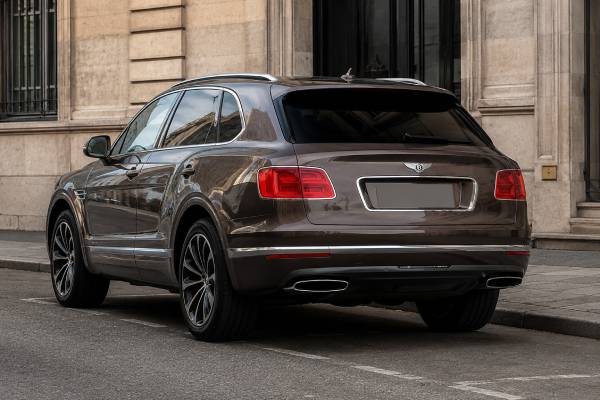
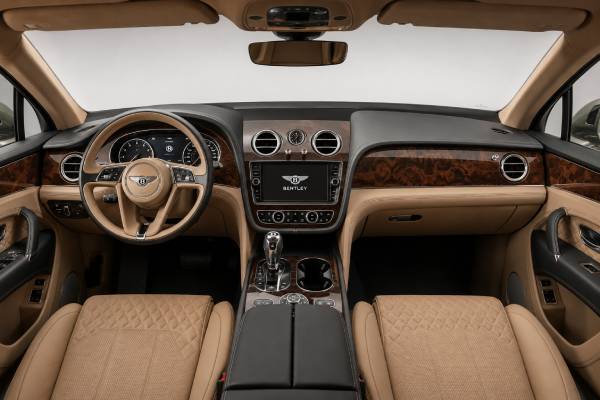
The original W12 Bentley Bentayga is the model that established the modern ultra-luxury SUV formula. Revealed in 2015 and delivered from 2016, it combined a newly developed 6.0-litre twin-turbo W12, permanent all-wheel drive, air suspension, available 48-volt active roll control and seating for four, five or seven. Its numbers were extraordinary at launch: 600 bhp, 900 Nm, 0–100 km/h in 4.1 seconds and a 301 km/h top speed. Yet the car’s real achievement was breadth. It could tow 3.5 tonnes, travel quickly in poor weather and carry passengers with the isolation expected from a Bentley grand tourer. Used examples now span very different histories, from lightly driven city cars to long-distance family vehicles and tow cars. Buying well therefore requires more than confirming the W12 badge. The important work is identifying the exact equipment, understanding early-versus-late production details, and measuring the condition of cooling, suspension, brakes, tires, electronics and luxury features before committing.
Table of Contents
- Why the W12 Bentayga Mattered
- Core Specifications and Technical Layout
- W12 Engine, Gearbox, and All-Wheel Drive
- Suspension, Ride Modes, and Real Capability
- Model-Year and Configuration Context
- Service Strategy and Fault Prevention
- Used W12 Buying Checklist
Why the W12 Bentayga Mattered
The W12 Bentayga created a new reference point by giving an SUV the pace and cabin execution of a Bentley grand tourer. It was not Bentley’s first all-wheel-drive vehicle, but it was the company’s first production SUV and the first model to apply the redesigned W12 in this particular high-riding, highly versatile package.
At launch, Bentley described it as the fastest and most powerful production SUV. Those claims were supported by a 187 mph maximum and a four-second 0–60 mph time. More important for daily use, the torque peak was effectively a plateau: 900 Nm available from 1,250 to 4,500 rpm. That allowed the vehicle to accelerate without constant high-revving or abrupt shifts.
The model also expanded Bentley’s customer base. Buyers could choose four-seat luxury, a conventional five-seat layout or a seven-seat configuration. The same body could be specified with city-assistance technology, a touring package, off-road modes, towing equipment, rear entertainment and multiple audio systems. No single used Bentayga therefore represents the whole range.
By 2020, Bentley had built 20,000 Bentaygas across the family, demonstrating that the concept was not a novelty. The original W12 remains historically important because later V8, diesel, hybrid and Speed variants all grew from the architecture and market position it established.
For a present-day buyer, that history is useful only when paired with condition. The W12 is a densely packaged, high-output engine in a vehicle full of networked control modules and powered equipment. A low asking price can hide deferred work in several systems at once. The best examples are not necessarily the lowest-mileage cars; they are the ones with continuous, detailed maintenance and evidence that faults were repaired rather than repeatedly cleared.
Core Specifications and Technical Layout
This is a gasoline internal-combustion SUV with a front-mounted W12, eight-speed automatic and permanent AWD. It uses air springs, adaptive dampers and, on suitably equipped cars, a 48-volt active anti-roll system. Dimensions remained broadly consistent through the original body style, while equipment and homologated economy figures varied by market and year.
| Specification | Value |
|---|---|
| Engine configuration | W12 petrol, twin turbocharged |
| Displacement | 5,998 cc |
| Maximum output | 608 PS / 600 bhp / 447 kW at 6,000 rpm |
| Maximum torque | 900 Nm (664 lb-ft), 1,250–4,500 rpm |
| Fuel injection | Direct and port injection |
| Fuel-saving systems | Cylinder deactivation and stop-start |
| Specification | Value |
|---|---|
| 0–60 mph | 4.0 seconds |
| 0–100 km/h | 4.1 seconds |
| Top speed | 301 km/h (187 mph) |
| Transmission | Eight-speed automatic |
| Drive | Permanent all-wheel drive |
| Fuel capacity | 85 litres (22.5 US gal) |
| Area | Specification |
|---|---|
| Front suspension | Four-link double wishbones |
| Rear suspension | Trapezoidal multi-link |
| Springs | Self-levelling air suspension |
| Damping | Electronic continuous damping control |
| Steering | Variable-ratio electric power assistance |
| Active roll control | Bentley Dynamic Ride, where specified |
| Measure | Value |
|---|---|
| Length | 5,140 mm (202.4 in) |
| Width excluding mirrors | 1,998 mm (78.7 in) |
| Wheelbase | 2,995 mm (117.9 in) |
| Turning circle | 12.4 m (40.7 ft) |
| Five-seat luggage volume | 484 litres (17.1 cu ft) |
| Braked towing capacity | Up to 3,500 kg when properly equipped |
| Category | Available configurations |
|---|---|
| Seating | Four-, five-, and seven-seat factory layouts |
| Wheel diameters | 20, 21 and 22 inches |
| Typical tire sizes | 275/50 R20, 285/45 R21 or 285/40 R22 |
| Rear-cabin focus | Luxury four-seat or family-oriented five/seven-seat layouts |
| Audio choices | Standard, Signature Audio or Naim for Bentley |
Use the VIN and market-specific technical sheet for exact weight, emissions, tire pressure and service data. Wheel size, seat count and optional equipment can change both practical use and replacement cost.
W12 Engine, Gearbox, and All-Wheel Drive
The W12 is best judged by smoothness under load. A healthy engine should start promptly, idle evenly and deliver a continuous surge without misfire, hesitation or a sudden change in coolant temperature. Because peak torque arrives early, poor response at low rpm is especially noticeable.
Bentley’s W layout packages twelve cylinders more compactly than a conventional V12. The engine also uses two injection systems: port injection can support mixture formation and help reduce deposits in some operating conditions, while direct injection assists power and control. Cylinder deactivation can shut down half the cylinders under light load. The driver usually experiences these systems as refinement rather than a series of obvious transitions.
The eight-speed automatic is programmed to use the torque. In relaxed driving it should shift unobtrusively and avoid unnecessary revs. Sport mode holds gears longer and sharpens response. Delayed engagement when selecting Drive or Reverse, a hard thump at low speed or repeated hunting on a steady incline deserves diagnosis. Software adaptation, fluid condition, mounts and driveline components can all influence behavior, so guessing from one symptom is unwise.
Permanent AWD helps launch performance and wet-road confidence. It also makes tire matching important. Large differences in tread depth or rolling circumference can create unnecessary driveline stress and confuse handling. A seller who has replaced only one tire after damage should be asked for measurements across all four positions.
The engine bay is crowded, which increases labor time for many repairs. Inspect accessible turbo and coolant plumbing for dried residue, seepage and damaged fasteners. Any history of overheating is significant. A specialist should pressure-test the cooling system if the expansion tank is repeatedly low or if a sweet odor appears after driving.
Fuel use is substantial, especially in urban traffic or at high speed. Official figures are useful for tax or comparison but should not be mistaken for a guarantee. Owners should budget around the vehicle’s real duty cycle and use the fuel grade required for the market.
Suspension, Ride Modes, and Real Capability
The Bentayga’s chassis is designed to separate ride comfort from body control. Air springs set the height and carry the load, adaptive dampers manage vertical motion, and Dynamic Ride can add active resistance to roll. When all systems work together, the vehicle feels composed rather than stiff.
Four on-road modes—Comfort, Bentley, Sport and Custom—change response. Cars with the All-Terrain Specification add off-road programs. Bentley mode is often the most convincing everyday setting because it reflects the engineers’ intended balance. Comfort allows more movement, while Sport tightens the body and powertrain responses.
Ride-height operation should be quiet and reasonably quick. A car that sinks at one corner after parking, displays an intermittent level warning or runs its compressor for long periods needs investigation. Leaks may come from an air spring, line, valve block or connection; replacing parts without proper diagnosis can become expensive.
Dynamic Ride uses a separate 48-volt electrical network. Its benefits are easy to feel in a fast bend, but its condition cannot be confirmed by a short visual check. Scan the relevant modules, test battery health and review stored undervoltage or actuator faults. Weak 12-volt supply can also create network errors, so both systems matter.
The standard iron brakes are large and costly; carbon ceramics were optional on some configurations. Measure disc and pad wear rather than relying on a dashboard estimate. Steering vibration during braking can point to tire, wheel, hub or brake issues. On ceramic-equipped cars, specialist inspection is essential because replacement cost is high and surface appearance can be misleading.
The vehicle can tow up to 3,500 kg when equipped and approved. A tow bar, scratched rear trim or heavy-duty wiring may indicate regular trailer use. Check cooling, transmission behavior, rear suspension and brake condition more carefully on such a car. Towing history is not inherently negative if maintenance was appropriate.
Model-Year and Configuration Context
The 2015–2020 assignment range covers announcement, early production and the final years before the major 2020 redesign. Registration practices differ, so a vehicle advertised as a 2015, 2016 or 2017 car may reflect build date, model year or first registration. Record all three.
Early cars have the greatest historical proximity to launch but may also show more age-related issues and older software. Later original-body cars can benefit from production refinements and may have different option packaging. There is no universal “best year”; condition and specification matter more than a simple calendar rule.
Special versions require separate identification. The First Edition, Mulliner, Pikes Peak and Speed should not be grouped with the standard 600 bhp W12 merely because they share the engine family. The Speed has 626 bhp and different calibration. A seller’s use of terms such as “Launch Edition,” “Signature,” or “Mulliner specification” should be checked against the factory build sheet.
Seating configuration shapes usability. Seven-seat cars are rare and useful for families but give up some luggage flexibility. Four-seat versions offer a formal rear console but cannot carry a fifth passenger. Five-seat cars are the broadest fit. Confirm that seat belts, latches, powered functions and removable cargo components are complete.
Options can influence value more than model year. Naim audio, Touring Specification, City Specification, rear entertainment, night vision, head-up display, panoramic roof, Dynamic Ride and carbon-ceramic brakes all deserve individual testing. A heavily optioned car with several failed systems may be less attractive than a simpler example in full working order.
Service Strategy and Fault Prevention
Preventative service is cheaper than reacting after multiple systems fail. The owner should combine scheduled maintenance with condition-based checks for cooling, batteries, tires, brakes, air suspension and water ingress.
Use the exact Bentley-approved oil and follow the correct interval for the market and duty cycle. Short trips, long storage and heavy towing can justify closer monitoring. Ask for oil-service invoices, not only dashboard resets. Inspect for leaks at each visit and record consumption between services.
Coolant should remain at a stable level when checked cold. Repeated top-ups are a symptom, not a maintenance routine. The same principle applies to air-suspension warnings and weak batteries. Small recurring faults in a complex vehicle often become more expensive when ignored because one low-voltage or leak condition can affect other components.
Keep both the 12-volt battery and any 48-volt chassis battery in good condition. Use an approved maintainer during storage. Before replacing modules in response to multiple warnings, verify voltage, grounds and network communication. A complete diagnostic scan can save substantial parts cost.
Brake fluid, tires and alignment deserve attention even on low-mileage cars. Tires age by time as well as tread depth. A heavy, fast SUV can hide inner-edge wear, so inspect the full width. Alignment should be performed by a shop that can set the air suspension to the required condition.
Clean sunroof drains and inspect cabin and luggage-area carpets for moisture. Water ingress can damage expensive modules and produce intermittent faults. Check lamp units for condensation and the powered tailgate for correct sealing and alignment.
Used W12 Buying Checklist
A serious inspection should begin with documentation and end with a second diagnostic scan. The vehicle needs to be cold when the examiner arrives, and the road test must be long enough to reach full operating temperature.
Verify VIN, build sheet, mileage history, ownership chronology and recall status. Compare the installed wheels, seating layout, brakes, audio and driver-assistance equipment with the factory record. Look for missing keys, remotes, luggage components and charging equipment for accessories.
Inspect body panels under even light and use paint-depth measurements appropriate to mixed materials. Check underbody covers, jacking points and lower bumper edges. Large wheels can hide inner-barrel cracks or repairs, so a lift inspection is worthwhile.
During startup, confirm that all warning lights perform their check. Listen for abnormal mechanical noise and watch for smoke. Test climate control, seat functions, infotainment, cameras, parking sensors, roof, tailgate, audio and every major option. Do not accept “needs coding” without a written diagnosis.
The road test should include low-speed maneuvering, rough pavement, steady cruising and firm but safe acceleration and braking. Note transmission engagement, steering centering, ride-height changes and any vibration. After the drive, check for fresh leaks or odor and scan all modules again.
Price the car from the inspection findings. Immediate tires, brake work, suspension repair and electronic faults can quickly outweigh a discount. A documented W12 with moderate mileage and recent preventative work is often the safer purchase than a very low-mileage example with old tires, weak batteries and long service gaps.
The original W12 is best for an owner who wants the fullest expression of the launch Bentayga: immense torque, very high cruising performance and a broad options range. It is not the economical route into luxury-SUV ownership, but a well-kept car still delivers the combination that made the model influential.
Model-year variation should influence the inspection plan. Early launch cars may carry the oldest software and first-production components, while later pre-facelift vehicles may incorporate running changes. A dealer printout of campaigns and software history is more useful than assuming every 2015–2020 W12 is technically identical. Check the exact market specification because emissions hardware, lighting and connected functions can differ.
Seating layout has a major effect on use and resale. Four-seat cars provide a limousine-style rear compartment but cannot match the flexibility of a five-seat bench. Seven-seat vehicles add occasional third-row capacity and different luggage packaging. Operate every folding, latching and adjustment mechanism. A buyer should choose the layout needed now, because converting between factory configurations is neither simple nor necessarily approvable.
Towing equipment requires careful review. Confirm the factory or approved tow-bar specification, electrical socket operation and maximum ratings in the vehicle documents. Inspect the rear underbody for impact, overheated wiring or evidence of loads beyond the car’s intended use. A towing history is not automatically negative when servicing is strong, but it increases the importance of transmission, cooling, brake and tire evidence.
Fuel and storage patterns can affect the W12. An 85-litre tank encourages long range, yet cars used only occasionally may retain fuel for extended periods. Ask how frequently the vehicle was driven and whether it reached full operating temperature. Short starts to move it around a garage are harder on oil and battery condition than a proper journey.
The W12’s broad torque can conceal gradual performance loss. A car with a small boost leak or tired ignition component may still feel fast to someone unfamiliar with the model. Compare requested and actual boost, fuel trims and misfire data during a specialist road test. Smoothness is part of the specification; hesitation should not be dismissed because acceleration remains strong.
Ownership is easier when maintenance is staged. Tires and alignment can be planned in one visit, fluid and cooling checks in another, and cabin electronics in a dedicated diagnostic session. Waiting for several unrelated faults to accumulate makes troubleshooting slower and can lead to low-voltage or communication issues obscuring the original problem.
A reserve fund should reflect the fitted options. Carbon-ceramic brakes, Dynamic Ride, premium audio, rear entertainment and complex seating can each shift the risk profile. Two W12 Bentaygas at the same mileage may therefore need very different budgets. The build sheet is not only a collector document; it is an ownership-cost map.
Pre-facelift infotainment and connected services should be judged in the context of age. Some online functions may change as networks and subscriptions evolve, but core hardware—screen, audio, navigation, cameras and vehicle settings—should still operate reliably. Confirm what is currently supported before pricing a missing remote feature as a fault, and document any market-specific service closure.
For long-term ownership, establish one workshop that knows the car’s history. Repeatedly moving between unfamiliar garages can lead to duplicated diagnosis, inconsistent fluid choices and lost software records. Continuity is particularly valuable on a W12 with numerous options and prior repairs.
Parts planning is also worthwhile. Record the exact tire size, brake system, battery type and frequently replaced filters before they are urgently needed. Availability and lead times can vary by market. Ordering the correct component calmly is safer than accepting an approximate substitute when the vehicle is stranded or due for a long journey.
Keep the factory build sheet with a running modification log. Even reversible changes such as a dash camera, tow wiring or wheel set should be documented so later technicians understand what was added and where power or signals were taken.
Preparing the W12 for Continental-Distance Use
The original W12 Bentayga makes most sense when it is maintained for long journeys, not merely polished for occasional local use. Before a major trip, inspect tire age and load rating, set pressures for the planned passenger and luggage load, and verify that the air suspension completes every height change without warnings. Cooling-system condition deserves equal attention because the engine, charge-air system, transmission and cabin climate control all depend on stable heat management. A small coolant loss, weak auxiliary battery or slow compressor may remain hidden during a short test drive and become disruptive hundreds of miles from specialist support.
Plan service around time and operating conditions rather than waiting for a warning message. Fresh engine oil, clean intake filters, healthy ignition components and correctly functioning active mounts preserve the smoothness that defines the W12. Confirm that the spare-key battery, locking-wheel tool, tire-inflation equipment and towing-eye hardware are actually in the vehicle. Navigation maps and connected functions may be dated, so carry an independent route and charging solution for mobile devices rather than relying on the original infotainment system alone. After travel on salted, muddy or gravel roads, clean the underbody and inspect wheel rims, brake surfaces and lower cooling openings. This routine keeps the Bentayga ready for its intended grand-touring role while reducing the chance that minor deferred issues combine into an expensive recovery.
References
- BENTLEY NEWSROOM : 2016 Bentayga 11WO 2026
- Bentley Bentayga | History and Heritage | Bentley Motors 2026
- The Award-winning Bentayga Reaches 20,000 Milestone | Bentley Media 2020
- New Bentley Bentayga, The Definitive Luxury SUV | Bentley Media 2020
- Bentley News 2017: THE BENTAYGA MULLINER: THE ULTIMATE LUXURY SUV 2017
- BENTLEY NEWSROOM : Technical Specifications 2026
Disclaimer
The article is for informational purposes and does not replace professional diagnosis or repair by a qualified specialist. Specifications, torque settings, maintenance intervals and procedures vary according to VIN, market and equipment, so rely on official service documentation for the exact W12 Bentayga. Please share the guide through Facebook, X/Twitter or another network if it assisted your research.