
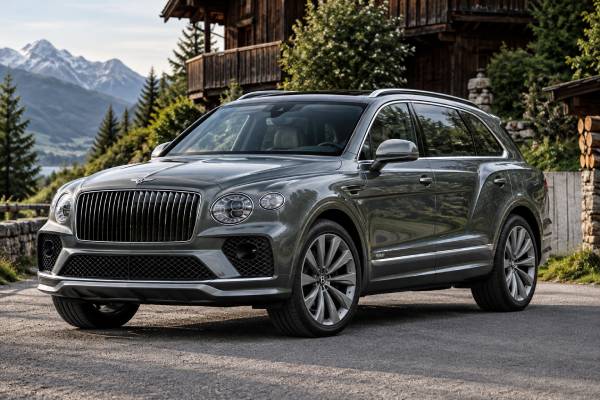
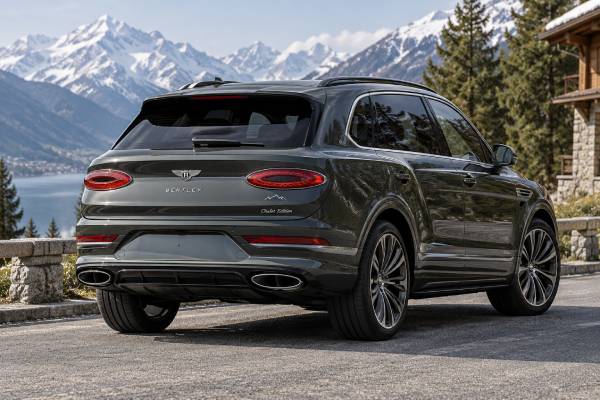
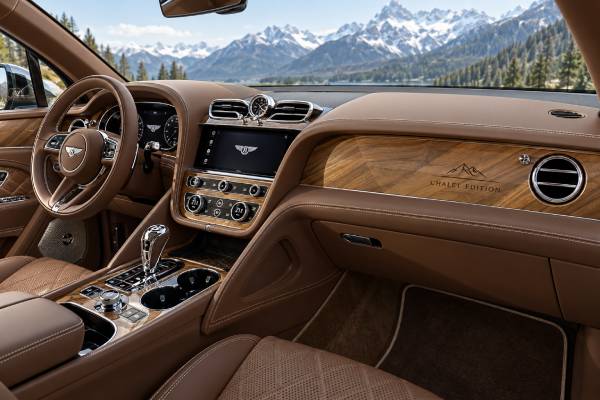
The 2026 Bentley Bentayga EWB Chalet Edition is a Mulliner-led bespoke commission created with The Gstaad Guy as an “ultimate chalet companion.” Its distinction is not a new engine or suspension tune, but an unusually complete Alpine theme: hand-sprayed Light Tudor Grey paint, Bronze exterior styling with a Fireglow pinstripe, Saddle leather, tweed details, four comfort seats, Naim audio, and optional luggage-area protection embroidered for mountain use. Underneath, it remains a 542 hp Bentayga Extended Wheelbase V8, capable of 0–60 mph in 4.5 seconds and 180 mph. The unusual specification makes provenance essential. This is better understood as a highly limited Mulliner collaboration or bespoke series than as a broadly available regular trim, so prospective buyers must confirm exactly how a particular car was ordered, delivered, and documented. This guide examines the commission’s design, long-wheelbase engineering, winter-use realities, maintenance, and the questions that determine authenticity and long-term value.
Table of Contents
- Chalet Edition Origin and Scope
- Materials, Paint, and Alpine Details
- Rear Cabin and Journey Comfort
- V8 EWB Technical Specifications
- Winter Driving and Seasonal Use
- Maintenance, Storage, and Restoration
- Provenance, Inspection, and Buying
Chalet Edition Origin and Scope
The Chalet Edition is a collaboration-driven Mulliner project built around a specific lifestyle and visual concept. It should not be assumed to have the production volume, open ordering process, or standardised equipment of a normal Bentayga trim without supporting factory documentation.
Bentley unveiled the car in 2026 with The Gstaad Guy, a satirical luxury-lifestyle personality closely associated with Alpine resort culture. The brief was warm, cocooning, and suitable for arrival at a chalet rather than overtly sporty. That context explains why tactile materials, cabin atmosphere, and luggage protection receive as much attention as the vehicle’s performance.
The base vehicle is a Bentayga EWB V8. Its 180 mm wheelbase extension provides the rear room needed for the four-seat layout, and Mulliner supplies the bespoke paint and finishing capability. The Chalet Edition is therefore related mechanically to EWB Azure and EWB Mulliner, but its identity comes from the collaboration and exact specification rather than a new drivetrain code.
Descriptions such as “limited edition,” “one-off,” “commission,” and “available through Mulliner” can be used loosely in resale advertising. The authoritative evidence is the VIN-linked build record, Mulliner documentation, original invoice, delivery correspondence, and any numbered or client-specific records supplied with the car. A conventional EWB repainted grey and retrimmed in tan is not a Chalet Edition, regardless of badges.
The car’s use case also differs from a static collector object. Bentley presented it as an Alpine companion, with protective boot accessories and materials intended to evoke lodge interiors. It can be driven in winter when equipped and operated correctly, but rarity, specialised paint, and expensive trim may encourage some owners to reserve it for dry resort transfers. Either approach is valid if maintenance and storage reflect actual use.
The Chalet Edition’s appeal is highly subjective. A buyer who understands the humour and cultural reference may view the collaboration as central to the car. Another may simply see an elegant grey-and-Saddle EWB. Value should therefore be based on documented authenticity, condition, and demand rather than an assumption that every branded collaboration automatically appreciates.
Materials, Paint, and Alpine Details
The Chalet Edition’s craftsmanship is concentrated in surfaces that are difficult to reproduce correctly. Its Light Tudor Grey exterior reportedly requires roughly 60 hours of hand spraying, while Bronze aerodynamic components, a Fireglow pinstripe, Saddle leather, and tweed create the warm contrast promised by the brief.
Light Tudor Grey is not simply a generic solid grey. Hand application, preparation, layer build, and finishing determine its depth and uniformity. Under overcast mountain light it can appear soft and architectural; direct sun reveals undertone and surface quality. Any repair must match colour, texture, and gloss across large adjacent panels, making documentation and a skilled refinisher essential.
The Styling Specification is painted Bronze rather than left in conventional visible carbon fibre. Fireglow pinstriping provides a narrow warm accent that connects the exterior to the cabin. Because pinstripes sit near vulnerable edges and lower surfaces, inspect them for polishing wear, stone damage, lifting, or overspray after repair. A crude replacement line can be obvious even when the main panel colour is acceptable.
Chalet badging and bespoke treadplates identify the collaboration at close range. These parts should be photographed and their part provenance recorded. If they are removed for protection, store them safely with labels; if damaged, confirm whether exact replacements are available before allowing an improvised substitute.
Inside, Saddle leather establishes the dominant warm tone. Tweed is used as a textural reference to Alpine clothing and chalet furnishings. The two materials age differently: leather can crease, dry, and collect dye, while woven fabric can catch lint, absorb spills, or abrade at exposed edges. Cleaning methods must therefore be material-specific rather than one product applied across the cabin.
The Naim audio system is part of the intended immersive environment. It should be evaluated with several sources and at both low and moderate volume. Listen for speaker distortion, panel resonance, intermittent channels, and digital connection problems. A powerful premium system can reveal trim noises that ordinary listening misses.
Optional Saddle leather boot protectors with Fireglow binding and Alpine embroidery extend the theme into the luggage area. They are practical for skis, boots, or outdoor equipment only if used with care; wet salt, grit, sharp edges, and melting snow can still stain or cut leather. Owners may prefer a removable waterproof layer over the bespoke protectors during genuinely dirty use, provided it does not trap moisture.
A condition archive should include high-resolution images of paint, pinstripe termination points, Bronze components, tweed weave, embroidery, treadplates, badges, and every accessory. For a commission of this kind, those records support maintenance decisions and future authenticity.
Rear Cabin and Journey Comfort
The Chalet Edition uses four comfort seats to create an intimate cabin for four occupants. That choice prioritises individual rear accommodation and atmosphere over occasional fifth-passenger flexibility.
The EWB body places its additional 180 mm in the rear cabin. Rear passengers gain substantial legroom, long doors for easier access, and the possibility of advanced seat functions depending on the precise Mulliner specification. Bentley’s announcement describes four comfort seats; buyers should still identify whether the car has the full Airline Seat Specification or a different comfort-seat package, because terminology and features are not interchangeable.
Where Airline Seat hardware is present, rear occupants can receive up to 22-way adjustment, a relaxation posture with as much as 40 degrees of recline, automatic climate sensing, massage, and Postural Adjustment. The latter makes 177 small pressure changes across six zones over three hours. These functions must be confirmed from the build record and tested individually; the Chalet name alone does not prove every possible EWB seat option.
The full centre console reinforces the four-seat layout and gives each rear passenger a distinct zone. It can reduce flexibility for bags or an emergency extra passenger, so the buyer should evaluate the car as a dedicated four-person vehicle. For ski transfers, passenger equipment and luggage may exceed the 380-litre boot even though cabin space is generous.
Long rear doors demand clearance at hotels, garages, and narrow roadside stops. Powered closing helps passengers avoid reaching outward, but the driver or valet still must position the car safely. Door edges, lower paint, and adjacent Bronze trim are vulnerable to walls, snowbanks, and hidden ice.
Climate control is central to Alpine comfort. Heating should warm seats and cabin without unusual odour or noise, while ventilation remains useful when occupants enter wearing heavy clothing. Test every zone, sensor, vent direction, and rear control. A heated cabin does not replace proper winter clothing or emergency preparation in remote conditions.
The quietness of the EWB can make occupants sensitive to small rattles from tables, console lids, accessories, or luggage. Road-test the car on broken surfaces, not only smooth resort streets. Correctly securing loose items often solves minor noise, but repeated trim movement should be diagnosed before it damages tweed, leather, or veneer.
Naim audio, soft materials, and low engine noise create the intended cocoon. The chauffeur’s role is to preserve it through smooth acceleration, progressive braking, clean door apertures, and thoughtful loading. The 542 hp available is a reserve for safe overtaking, not an instruction to disturb rear passengers.
V8 EWB Technical Specifications
The Chalet Edition is an ICE vehicle powered exclusively by a twin-turbocharged petrol V8. Its mechanical figures are those of the current Bentayga EWB V8, while Mulliner changes paint, trim, equipment, and presentation. There is no high-voltage traction battery, plug, or electric-only driving mode.
| Specification | Value |
|---|---|
| Powertrain classification | Petrol internal-combustion engine |
| Engine | 4.0-litre twin-turbocharged V8 |
| Displacement | 3,996 cc |
| Maximum power | 550 PS / 542 bhp / 404 kW at 6,000 rpm |
| Maximum torque | 770 Nm from 2,000–4,500 rpm |
| Transmission | Eight-speed automatic |
| Drive | Permanent all-wheel drive |
| Fuel-tank capacity | 85 litres |
| Measure | Manufacturer figure |
|---|---|
| 0–60 mph | 4.5 seconds |
| 0–100 km/h | 4.6 seconds |
| Maximum speed | 290 km/h / 180 mph |
| Measure | Official value |
|---|---|
| Fuel consumption | 13.0 L/100 km |
| Fuel economy | 21.7 mpg Imperial / 18.1 mpg US |
| CO2 emissions | 296 g/km |
| Driving range | 654 km / 406 miles |
| Dimension | Value |
|---|---|
| Length | 5,305 mm |
| Wheelbase | 3,175 mm |
| Added wheelbase versus standard Bentayga | 180 mm |
| Width including mirrors | 2,222 mm |
| Height | 1,774 mm |
| Published unladen weight | Approximately 2,520–2,525 kg, depending on regional definition |
| Item | Specification |
|---|---|
| Seating | Four comfort seats |
| Luggage capacity | 380 litres |
| Suspension | Air suspension with Bentley Dynamic Ride |
| Steering | All-wheel steering |
| Exterior paint | Hand-sprayed Light Tudor Grey |
| Exterior accents | Bronze Styling Specification with Fireglow pinstripe |
| Cabin materials | Saddle leather and tweed detailing |
| Audio | Naim for Bentley |
The original EWB launch material and current model data use slightly different overall lengths, so the exact vehicle certificate should govern transport and garage calculations. Bespoke components can also alter mass from a generic published figure.
Winter Driving and Seasonal Use
All-wheel drive does not make the Chalet Edition automatically prepared for snow. Correct winter tyres, suitable pressures, visibility, driver judgement, emergency equipment, and local legal compliance determine whether this powerful, heavy SUV can operate safely in Alpine conditions.
Tyres are the first decision. Use a Bentley-approved size and rating appropriate to the wheel, load, speed, temperature, and local winter rules. A true winter tyre remains flexible in cold conditions and provides tread designed for snow and slush. All-season branding may not satisfy severe-weather needs or legal requirements in every region. Fit four matching tyres rather than mixing seasonal types across axles.
Large performance wheels can limit sidewall and make pothole or ice-edge impacts more damaging. A smaller approved winter wheel package may be preferable if available for the exact brake configuration. Confirm brake clearance, offset, load capacity, tyre-pressure monitoring compatibility, and speed restrictions through Bentley documentation. Do not assume a wheel that fits another EWB will clear every Chalet specification.
Snow chains are highly vehicle- and tyre-specific. Use them only where the handbook permits, on the stated axle and tyre size, with adequate body and brake clearance. Incorrect chains can damage suspension, brake lines, wheels, bodywork, and expensive Bronze components. Practice installation in dry conditions before relying on them on a mountain road.
Air suspension and all-wheel steering help manoeuvrability but cannot create grip. Select the appropriate drive mode, use gentle accelerator and steering inputs, and brake early. The V8’s 770 Nm can overwhelm available traction despite electronic control. Downhill travel is often more demanding than climbing because mass continues to push the car toward the bend.
Clear snow from the roof, lamps, cameras, radar areas, grille, number plates, and wheel arches. Packed ice can interfere with sensors or steering clearance. Do not pour hot water onto frozen glass or handles. Use approved de-icing methods and avoid metal scrapers near painted trim.
Salt and grit are major preservation concerns. Rinse the underbody and wheel arches when conditions allow, but avoid freezing water in an unheated environment. Clean Bronze surfaces and Fireglow pinstripes with non-abrasive products. Inspect lower edges for chips before corrosion or moisture reaches damaged layers.
Load skis and boots so sharp edges cannot contact Saddle leather, tweed, or tailgate trim. Dry equipment when possible, contain meltwater, and remove damp protective layers promptly after arrival. The optional leather boot protectors are beautiful, not invulnerable waterproof tubs.
Carry region-appropriate emergency supplies, including warm layers, gloves, lighting, first aid, drinking water, and a charged phone. Route planning should account for closures, fuel availability, and weather. The car’s official 654 km range is not a winter guarantee, especially with idling, heating, traffic, and mountain gradients.
Maintenance, Storage, and Restoration
A Chalet Edition needs ordinary EWB mechanical service plus an extraordinary standard of surface care. The goal is not to prevent natural use marks at any cost, but to avoid irreversible damage caused by neglect or incorrect repair.
Service the V8, automatic transmission, all-wheel-drive system, brakes, cooling circuits, air suspension, Dynamic Ride, rear steering, and electronics according to the VIN-specific schedule. Low annual mileage still requires time-based service. Repeated short winter starts, extended idling, and storage between resort visits can be demanding operating patterns.
Keep the 12-volt battery supported during long storage using approved equipment. The car’s many modules, powered doors, seats, audio system, telematics, and active chassis depend on stable low voltage. A weak battery can cause a cascade of warnings and may prevent normal startup. Battery testing and fault diagnosis should precede indiscriminate module replacement.
Tyres should be cleaned, inspected, and stored correctly when seasonal sets are swapped. Mark their positions, record tread depth and age, and protect polished or special-finish wheels from contact damage. Torque wheel fasteners using the correct procedure, and take particular care around brake discs. Alignment should be checked if the car strikes a pothole or curb.
The air suspension must hold level after standing. Cycle available ride heights and note compressor noise. Dynamic Ride or rear-steering messages require Bentley-capable diagnostics. Brake discs can corrode during damp storage; inspect them before the first seasonal journey and avoid assuming noise will always clear safely.
Light Tudor Grey paint should be corrected conservatively. Excess polishing can thin edges, alter texture, or disturb hand-finished character. Record paint-depth readings before work, use a detailer experienced with bespoke finishes, and avoid aggressive automated washing. Any protection film should be cut without blades touching paint and should not cover the Fireglow pinstripe in a way that changes its appearance.
Tweed requires dry soil removal first. Vacuum through a clean soft attachment, then use a textile-safe method approved for the material. Saturation can spread stains or affect backing. Saddle leather should be cleaned lightly and conditioned only as recommended; glossy residue is not evidence of healthy leather.
If an accident damages bespoke pieces, involve Bentley and Mulliner early. Standard EWB panels may require special preparation, paint, pinstriping, badges, or trim after installation. Keep all correspondence, samples, invoices, and photographs. A correct restoration may take longer than a normal repair because authenticity depends on process as well as appearance.
For seasonal storage, clean and dry the underbody, stabilise the cabin environment, maintain battery charge, set tyre pressures within factory guidance, and prevent rodents from reaching wiring or upholstery. Use a breathable, correctly fitted cover only on a clean car. Start-and-idle routines are not a substitute for proper storage or a full drive to operating temperature.
Provenance, Inspection, and Buying
Provenance is the first mechanical component of a Chalet Edition purchase: without factory evidence, the collaboration story cannot be valued confidently. Once identity is established, inspect it as rigorously as any other complex EWB V8.
Ask for the original Mulliner order, factory build sheet, invoice, delivery record, owner pack, keys, bespoke accessories, and correspondence related to The Gstaad Guy collaboration. Match every identifying item to the VIN. Confirm whether the vehicle was part of a defined customer allocation, a demonstrator, a press car, or another commissioning route.
Compare the documents with the physical car. Light Tudor Grey paint, Bronze Styling Specification, Fireglow pinstripe, Saddle leather, tweed, four-seat arrangement, Naim audio, Chalet badges, treadplates, and any embroidered boot protectors should be present as ordered. Missing accessories may be difficult to replace and should affect value.
Paint inspection is particularly important. Use appropriate lighting and, where safe, non-destructive paint measurement to identify repair. Look at pinstripe joins, panel edges, Bronze surfaces, and hidden apertures. A well-documented factory-quality repair may be acceptable; an undocumented colour mismatch on hand-sprayed paint is a major concern.
Test every rear-seat and door function before driving. Operate climate, massage, heating, ventilation, audio, console controls, blinds, lighting, tailgate, cameras, and all keys. Inspect tweed for pulls, leather for dye transfer, footwells for salt staining, and luggage trim for moisture. Alpine use is not inherently damaging when the car was cleaned promptly, but residue reveals care habits.
The road test should start cold and include town manoeuvres, uneven surfaces, open-road acceleration, braking, and all suspension modes. Verify smooth gearbox engagement, stable temperatures, straight tracking, quiet wheel bearings, even ride height, rear-steering operation, and absence of warning messages. Ride in the back as well as driving.
A specialist inspection should scan every module, review stored and historic faults, examine the cooling system and turbo plumbing, measure tyre and brake condition, inspect the underbody, and assess the 12-volt battery. Check recall and campaign completion through Bentley and the relevant authority. Do not clear codes before they are recorded and interpreted.
Insurance should be agreed using the exact VIN and a defensible replacement value. A normal EWB market price may not cover bespoke repainting or rare trim. Read warranty exclusions for paint, upholstery, accessories, infotainment, batteries, seals, noises, tyres, and brakes. Consider secure storage and transport arrangements before purchase.
Future value is uncertain. Collaboration, scarcity, condition, cultural relevance, and complete provenance can create demand, but taste changes. Buy because the Chalet Edition’s warm Alpine concept is compelling and because the car can be preserved responsibly. The most defensible example will remain original, documented, mechanically healthy, and complete down to its accessories.
References
- Bentley News 2026 : The Bentayga EWB Chalet Edition – The Gstaad Guy unveils the ultimate chalet companion 2026
- Bentley Bentayga Extended Wheelbase | Bentayga EWB Range | Bentley Motors 2026
- Bentley Bentayga Extended Wheelbase Mulliner | Bentayga Extended Wheelbase Range | Models 2026
- Bentley News 2022 : THE MOST WELLBEING-FOCUSED CAR SEAT IN THE WORLD – AIRLINE SEAT SPECIFICATION 2022
- Service and maintenance 2026
- Check for Recalls: Vehicle, Car Seat, Tire, Equipment | NHTSA 2026
Disclaimer
This article is for informational purposes and is not a substitute for professional diagnosis or repair. The Chalet Edition’s production scope, specifications, torque values, service intervals, procedures, equipment, and documentation can vary by VIN, market, build date, and commission. Verify authenticity and technical requirements through official service documentation, Mulliner records, current owner literature, recall records, and a Bentley or Mulliner specialist. Follow local winter-equipment laws and factory safety instructions. Please share this guide on Facebook, X/Twitter, or another platform if it supports other collectors and owners.