
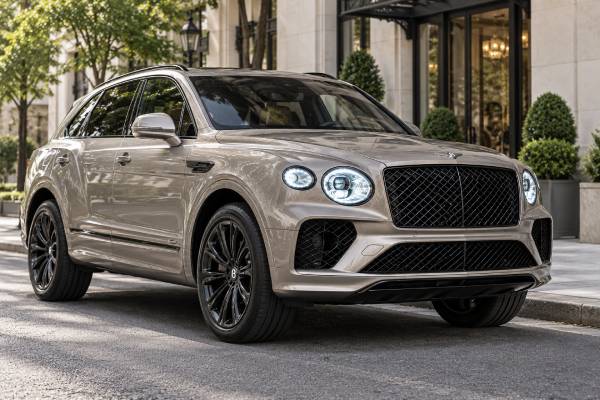
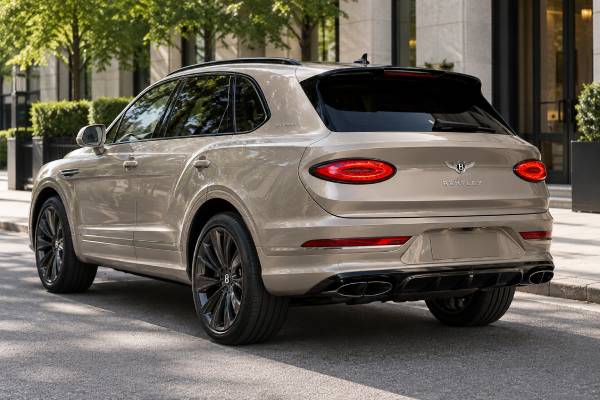
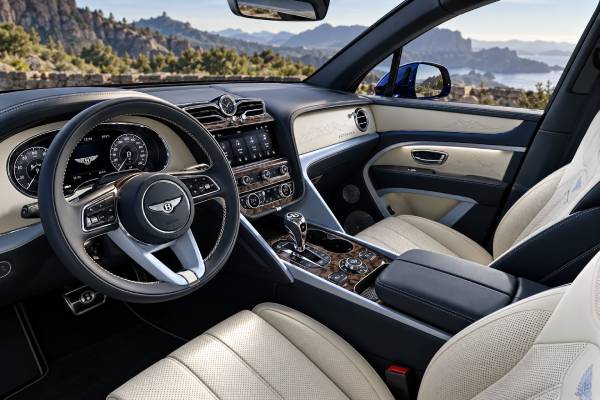
The 2026 Bentley Bentayga Artenara Edition V8 pairs the standard-wheelbase Bentayga’s 542 hp twin-turbo engine with one of the range’s most place-specific design narratives. Its name refers to Artenara in Gran Canaria, near the Roque Bentayga formation that inspired the SUV’s name, and that landscape appears as an etched and laser-perforated motif inside the car. The edition also introduces body-colour lower brightware, a tri-colour cabin, Mulliner-style exterior details, and factory-recommended combinations of paint, hide, and finish. None of this changes the underlying performance: the V8 still reaches 60 mph in 4.4 seconds and 180 mph, making it the more traditional choice for owners who want effortless long-distance pace without a charging routine. The key buying question is therefore not whether the Artenara is faster than another 542 hp Bentayga, but whether its original specification is coherent, authentic, and worth preserving. This article covers its identity, engineering, practical use, maintenance, and purchase strategy.
Table of Contents
- What Makes the V8 Artenara Distinct
- V8 Power and Touring Ability
- Bespoke Colour and Cabin Execution
- Artenara V8 Specification Sheet
- Space, Comfort, and Everyday Practicality
- Service, Consumables, and Cosmetic Care
- New and Pre-Owned Buying Strategy
What Makes the V8 Artenara Distinct
The Artenara is a special design specification, not a separate high-performance derivative. Its value is concentrated in factory-authenticated colour, trim, graphics, and detail, while the mechanical foundation remains the contemporary five-seat Bentayga V8.
The most important identifying feature is the stylised outline of Roque Bentayga. Bentley places it on the passenger fascia and reproduces it through fine laser perforations in upholstery surfaces. The motif gives the cabin a specific story without covering it in obvious logos. On a genuine car, its placement, scale, stitching, and surrounding materials should correspond to the original build specification.
A tri-colour interior broadens the design possibilities. Rather than selecting one primary and one secondary hide, the customer can define three coordinated cabin zones. Bentley introduced eight recommended colour, material, and finish directions to help those choices remain balanced. They are recommendations rather than identical fixed packages, so an Artenara can still be highly individual.
Outside, the lower brightware can be painted to match one of eight selected body colours. This reduces the usual visual separation between the body and lower trim, making the SUV look more monolithic. A Double Diamond grille, wing vents with Mulliner double-diamond detail, edition-specific welcome illumination, and illuminated treadplates add recognition at closer range.
The launch wheel is a 22-inch Mulliner design with grey-painted and polished surfaces. It is visually elaborate enough to suit the special edition without requiring the largest possible diameter. Bentley also announced a 23-inch Super Lux wheel for certain 2027-model-year Azure, Artenara, and Mulliner EWB applications. Buyers should distinguish an actually ordered wheel from one shown in later promotional material, because wheel size affects ride, tyre availability, replacement cost, and originality.
The Artenara family spans three different vehicles: this standard-wheelbase V8, a standard-wheelbase plug-in hybrid, and an EWB V8. Their decorative language is related, but their driving range, cargo space, dimensions, seating possibilities, and ownership routines are not interchangeable. An advertisement that simply says “Artenara” is incomplete; the VIN and engine specification must establish which one it is.
Compared with the Atelier Edition, Artenara is more explicitly linked to place and landscape. Atelier centres on selected legacy colours and Harmony Diamond quilting. Compared with Mulliner, Artenara is less formal and less focused on flagship convention. The edition works best for a customer who responds to its narrative and contemporary colour blocking rather than one seeking the most badges or the highest original list price.
V8 Power and Touring Ability
The 4.0-litre V8 is the reason the Artenara can cross countries with little effort. It produces 550 PS, or 542 bhp, and 770 Nm, giving strong acceleration without the charging dependency or added hybrid operating modes of the PHEV version.
Bentley’s twin-turbocharged 3,996 cc engine reaches peak power at 6,000 rpm. Maximum torque is available from 2,000 to 4,500 rpm, so the car can gain speed decisively without constantly chasing high revs. The eight-speed automatic transmission normally keeps the engine quiet and relaxed, then selects lower ratios rapidly when the driver asks for full performance.
Officially, the standard Bentayga V8 accelerates from 0–60 mph in 4.4 seconds and from 0–100 km/h in 4.5 seconds. Maximum speed is 290 km/h, or 180 mph. These figures make the Artenara extremely fast in road terms, but its character differs from the 641 hp Speed. The Speed has a more assertive chassis tune, launch control, all-wheel steering, and a performance-led exhaust strategy. The Artenara V8’s purpose is refined abundance.
Permanent all-wheel drive provides traction in changing conditions, while air suspension lets the driver select modes and ride heights suited to the road. Bentley Dynamic Ride uses 48-volt active anti-roll control to limit body lean without relying solely on stiff passive bars. The system helps a tall, heavy SUV remain composed, but it does not remove the need for suitable tyres or conservative speed on wet, icy, or loose surfaces.
The standard-wheelbase body gives the driver a more compact footprint than the EWB Artenara. Its 2,995 mm wheelbase is 180 mm shorter, and overall length is 5,125 mm rather than 5,305 mm. That difference improves parking and reduces the amount of body that must be placed on narrow roads, though the mirror-to-mirror width remains a substantial 2,222 mm.
Official WLTP combined consumption is 13.0 L/100 km, with 296 g/km of CO2 and a 654 km combined range. The 85-litre tank makes long legs possible, but actual use depends on traffic, temperature, speed, tyres, payload, and throttle. The V8 suits owners who accept fuel consumption in exchange for consistent performance and quick refuelling.
A quiet cabin can conceal how rapidly speed builds. Drivers should use the head-up display or instruments, leave appropriate braking distance, and remember that no active system can shrink the car’s mass. The brakes and tyres deserve the same attention as the engine because they determine whether the available performance remains controllable.
Bespoke Colour and Cabin Execution
A well-specified Artenara uses its third interior colour and mountain motif as disciplined accents. The strongest configurations establish a hierarchy among surfaces instead of giving every detail equal visual weight.
Begin with the exterior and body-colour lower trim. Pale colours can make the lower treatment feel seamless and architectural; darker colours create a deeper, more formal mass. Metallic flake and undertone change under daylight, overcast sky, showroom LEDs, and street lighting. Physical samples should be viewed beside the selected wheel and brightwork finish before the order is fixed.
The 22-inch grey-and-polished wheel has multiple reflective surfaces. Its polished faces can echo bright grille details, while grey sections reduce visual busyness. A full dark treatment may look dramatic but could weaken the intended relationship among Double Diamond grille, wing vent, and wheel. Any dealer-proposed refinishing should be considered carefully because it changes an original edition component.
Inside, choose a dominant hide for the largest surfaces, a secondary hide to define functional zones, and a third colour for controlled emphasis. The Roque Bentayga perforation needs sufficient contrast to be readable, yet an extreme colour difference can make the graphic overpower the rest of the cabin. Piping, stitching, seatbelts, and veneer should support that balance rather than create new unrelated themes.
The fascia etching deserves particular care. Gloss veneer emphasises depth but also shows fingerprints and fine marks; open-pore wood has a softer appearance but should not be saturated with polish. Painted or technical finishes may better suit a contemporary scheme. Ask how the motif is applied to the chosen fascia and whether a requested veneer changes its visibility.
Light leather makes the five-seat cabin airy but shows denim transfer, cosmetics, child-seat marks, and luggage contact. Dark leather is more forgiving but can hide the laser-perforated design unless contrast is selected carefully. A family-use car may benefit from darker lower sections with lighter upper areas, while a low-mileage personal car can support a more delicate palette.
Audio, mood lighting, driver assistance, and seat functions should be specified around actual use. The special edition does not make every option automatically sensible. A frequent long-distance driver may gain more from Touring Specification and front-seat comfort than from another visual accent. A music-focused owner may prioritise Naim audio, while someone who travels with children may value powered accessories, durable trim choices, and easily cleaned surfaces.
Keep the final configuration document. It records why the car looks the way it does and allows a future repairer or buyer to distinguish factory choices from later alteration. In a bespoke vehicle, documentation is part of the object.
Artenara V8 Specification Sheet
The standard-wheelbase Artenara V8 is an ICE vehicle with no traction battery or charge connection. Its technical package consists of a 3,996 cc twin-turbo petrol engine, eight-speed automatic, permanent all-wheel drive, air suspension, and active roll control. Edition features alter appearance and standard equipment, not the certified engine output or body fundamentals.
| Item | Value |
|---|---|
| Powertrain type | Petrol internal-combustion engine |
| Engine layout | 4.0-litre twin-turbocharged V8 |
| Displacement | 3,996 cc |
| Maximum power | 550 PS / 542 bhp / 404 kW at 6,000 rpm |
| Maximum torque | 770 Nm from 2,000–4,500 rpm |
| Transmission | Eight-speed automatic |
| Drive system | Permanent all-wheel drive |
| Fuel capacity | 85 litres |
| Measure | Value |
|---|---|
| 0–60 mph | 4.4 seconds |
| 0–100 km/h | 4.5 seconds |
| Maximum speed | 290 km/h / 180 mph |
| Measure | Official value |
|---|---|
| Fuel consumption | 13.0 L/100 km |
| Fuel economy | 21.7 mpg Imperial / 18.1 mpg US |
| CO2 emissions | 296 g/km |
| Driving range | 654 km / 406 miles |
| Dimension | Value |
|---|---|
| Length | 5,125 mm |
| Wheelbase | 2,995 mm |
| Width including mirrors | 2,222 mm |
| Height | 1,728 mm |
| Published unladen weight | Approximately 2,412 kg |
| Item | Specification |
|---|---|
| Seating | Five occupants |
| Luggage volume | 484 litres |
| Suspension | Air suspension with Bentley Dynamic Ride |
| Launch wheel | 22-inch grey-painted and polished Mulliner design |
| Grille | Double Diamond pattern |
| Interior theme | Tri-colour hide with Roque Bentayga motif |
| Lower exterior detail | Body-colour brightware in selected finishes |
Market-specific unladen or kerb-weight definitions can differ, and options add mass. Use the vehicle’s own certificate and handbook when a figure affects transport, lifting, taxation, towing, or regulatory compliance.
Space, Comfort, and Everyday Practicality
The standard Artenara V8 is the practical choice within the edition family when five-seat flexibility and luggage capacity matter more than limousine-like rear legroom. It retains the normal Bentayga’s 484-litre cargo area and avoids the EWB’s longer rear doors and reduced 380-litre boot.
Five adults can travel, but the outer rear positions are the best seats for long journeys. The centre position is useful rather than lounge-like. Buyers who regularly carry two rear VIP passengers should compare the EWB Artenara, which can be configured with four seats, 4+1, or five seats and offers Airline Seat technology. For family use, the standard model’s shorter body and larger cargo compartment may be more valuable.
Measure garage length, opening width, and turning space. The car is broad enough that folded mirrors may be necessary in older structures, and the tailgate needs clearance behind and above. Test the surround-view camera at night and in rain, because lens condition and display quality matter more than a feature list.
The luggage compartment works for touring but has a high floor. Fold the rear seats and test the mechanism if long items are carried. Inspect the parcel shelf, powered tailgate, load-area trim, and sill protection. On an edition with carefully coordinated colours, a scratched cargo threshold or replaced trim panel can be visually conspicuous.
Front-seat ergonomics should be tested over at least an hour. The range of adjustment is broad, but wheel size, seat type, and suspension mode affect comfort differently. Check massage, heating, ventilation, memory, steering-column movement, and climate control. An electrical feature that works once at handover may reveal intermittent behaviour only when repeatedly cycled.
The infotainment system, digital instruments, connected services, phone integration, and audio can vary by market and software version. Confirm current subscription requirements and whether future updates are included. Store personal data carefully when selling the car and perform the official user-reset process rather than simply deleting a phone pairing.
In daily urban driving, the V8’s smooth torque makes gaps easy to use, but the accelerator requires restraint. Parking sensors and cameras do not see every low post, curb, or overhanging object. The polished portions of the Artenara wheels are expensive to restore correctly, so a deliberate parking routine is worthwhile.
Service, Consumables, and Cosmetic Care
The V8 Artenara should be maintained as both a high-performance luxury SUV and a limited-design object. Mechanical neglect threatens reliability; poor cosmetic technique threatens the edition features that distinguish it from a standard Bentayga.
Follow Bentley’s schedule for oil, filters, brake fluid, inspections, software actions, and other time- or distance-based work. A car driven only on occasional weekends still needs attention because moisture, battery discharge, tyre flat-spotting, seal ageing, and brake corrosion are related to time and storage as well as mileage.
Use the correct fuel grade stated in the handbook. Consistently unsuitable fuel can reduce performance and increase knock-control intervention. If the car is stored, avoid leaving old fuel indefinitely and maintain the 12-volt battery with compatible equipment. Low system voltage can create misleading faults across seats, cameras, infotainment, suspension, and drivetrain modules.
Tyres carry roughly 2.4 tonnes before passengers and luggage. Check pressure when cold, inspect inner shoulders, and investigate uneven wear promptly. All four tyres should be compatible in size, construction, load rating, speed rating, and tread condition. Price an entire set of 22-inch tyres before purchase, especially when a rare homologated fitment is required.
Brakes need inspection for disc condition, pad thickness, corrosion, and vibration. Air suspension should raise and lower evenly, hold its height after parking, and avoid excessive compressor operation. Dynamic Ride warnings or fluid leaks need specialist diagnosis. A pre-purchase scan should cover every module, not only engine emissions.
Wash body-colour lower trim as paint, not as sacrificial black plastic. Use separate clean tools for wheels and body, rinse grit before contact, and avoid aggressive compound on edges or around sensors. Polished wheel faces require a refinisher familiar with their original process. A generic silver repaint changes the design and can reduce value.
For the interior, vacuum the laser perforations gently and apply minimal cleaner to a cloth rather than spraying the seat. Test products on a hidden area. Three-colour leather makes mismatched dye repairs easy to see, so use a specialist who can document colour formulas and preserve stitching. Protect pale sections from clothing dye and remove child seats periodically to inspect pressure points.
Maintain a condition file with photographs of the fascia etching, perforated motif, treadplates, wing vents, lower brightware, and each wheel. If damage occurs, those images help establish original finish. Retain removed factory parts whenever a reversible accessory is installed.
New and Pre-Owned Buying Strategy
Buy an Artenara V8 only after confirming that its special specification adds personal value beyond a normal Bentayga V8. The edition label alone cannot compensate for a poorly resolved colour scheme, missing history, worn tyres, or expensive deferred work.
For a new order, compare the three Artenara body and powertrain choices on the same day. The Hybrid offers electric local driving but needs charging; the EWB gives exceptional rear room but has a longer body and smaller boot; the standard V8 provides the simplest route to traditional Bentley performance and five-seat usability. The correct answer depends on routine, not status.
Build the visual specification from large surfaces to small accents. Approve paint and lower brightware first, then primary hide, secondary zones, third colour, fascia, veneer, wheel, stitching, piping, and accessories. Ask the retailer to preserve final digital renders and signed option codes. Small changes late in the process can affect the balance of several components.
At handover, inspect in natural light before protective treatments are applied. Look for paint defects, polishing marks, wheel damage, trim misalignment, leather creasing, perforation irregularity, and scratches on treadplates or veneer. Test every switch, camera, driver-assistance function, seat movement, tailgate, key, charging socket for devices, and connected service. Record concerns in writing before accepting delivery.
For a pre-owned car, begin with provenance. Confirm the VIN corresponds to the 542 hp V8 Artenara, obtain its factory build sheet, and match paint, trim, wheels, fascia, seats, wing vents, grille, and lower body treatment. A car can be beautifully modified and still not be factory-authentic; price and description should reflect the difference.
Review service invoices chronologically. Gaps need explanation, especially where low mileage is used to excuse missed time-based work. Check recall and campaign status with Bentley and the appropriate national authority. Ask whether accident repairs involved sensors, wheel alignment, air suspension, or edition-specific panels.
The inspection should start cold and include a long enough drive to reach full temperature. Evaluate startup, gearbox take-up, acceleration, braking, steering, suspension modes, cabin noise, climate performance, and every electronic convenience system. Scan all modules before faults are cleared. Inspect the underside, cooling system, turbo plumbing, tyres, brakes, and battery condition.
A warranty can reduce exposure but does not replace inspection. Read exclusions for trim, wheel finish, batteries, infotainment, noises, seals, and consumables. Obtain an insurance quotation using the VIN and declared replacement value. Special paint and trim can increase repair complexity even when the mechanical risk is identical to a standard V8.
The right Artenara V8 is one whose history and visual story remain intact. It should feel deliberately commissioned, not assembled from attractive options without hierarchy. When authenticity, condition, and personal taste align, the edition offers something a specification sheet alone cannot capture.
References
- Artenara Edition | Bentayga Range | Bentley Motors 2026
- Bentley News 2026 : Bentayga Artenara Edition: A new pinnacle in contemporary luxury 2026
- Signature Bentayga | Bentayga Range | Bentley Motors 2026
- Bentley News 2023 : NEW FEATURES FURTHER INCREASE DESIRABILITY OF BENTAYGA RANGE 2023
- Service and maintenance 2026
- Check for Recalls: Vehicle, Car Seat, Tire, Equipment | NHTSA 2026
Disclaimer
This article is for informational purposes and is not a substitute for professional diagnosis or repair. Specifications, torque values, service intervals, procedures, colours, options, and fuel results can vary by VIN, market, build date, and factory revision. Verify the vehicle through official service documentation, its build sheet, current owner literature, and a Bentley retailer or qualified specialist before buying, servicing, or repairing it. Please share the guide on Facebook, X/Twitter, or another platform if it assists Bentayga Artenara V8 owners and shoppers.