


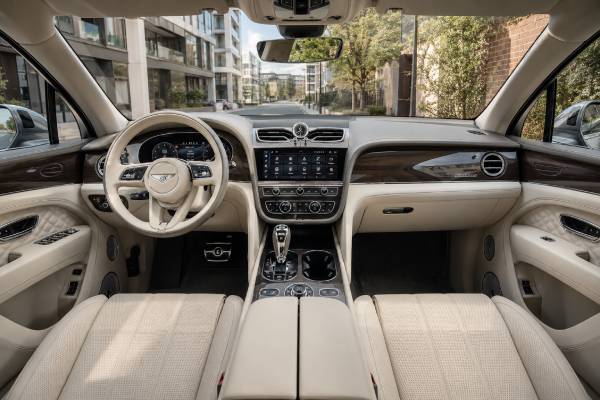
The 2023–2025 Bentley Bentayga A Hybrid is best understood as a market-specific grade name for the standard-wheelbase, 456 bhp Bentayga plug-in hybrid, particularly in Australian vehicle databases and ordering material. “A Hybrid” does not describe a different engine or a globally promoted performance derivative like S or Azure. It identifies a particular equipment position within the local range, so buyers must verify the VIN and build sheet rather than assume every feature from the badge alone. Mechanically, the car combines a turbocharged 3.0-liter V6, a 100 kW electric motor, an 18.0 kWh battery, an eight-speed automatic, and all-wheel drive. Its strongest use case is repeated short-distance travel with reliable home charging, followed by occasional long journeys using gasoline. This guide clarifies the naming, technical data, charging strategy, comfort and option considerations, servicing needs, and the checks that distinguish a sound used example from an expensive problem.
Table of Contents
- A Hybrid Name and Market Scope
- Hybrid System, Dimensions, and Performance Data
- Energy Use, Charging, and Trip Planning
- Equipment, Options, and Usability
- Service Risks and Preventive Care
- Inspection, Pricing, and Purchase Decisions
A Hybrid Name and Market Scope
The “A Hybrid” designation is not a separate global Bentley model with unique power output. It appears in some regional documentation and Australian listing databases as a specific grade of the facelifted 4V Bentayga Hybrid, and its exact standard equipment should be confirmed from the individual vehicle.
This distinction matters because Bentley’s public-facing global range commonly uses names such as Bentayga, S, Azure, Speed, and Extended Wheelbase. Australian research data identifies a 2023 launch, MY24 “A Hybrid” with the 3.0-liter plug-in-hybrid system, five seats, 21-inch wheels, and extensive comfort and assistance equipment. Bentley’s 2024 range brochure also lists Bentayga A alongside other derivatives in equipment and tire charts. The name therefore has documentary basis, but it should not be interpreted as an engineering family separate from the regular Hybrid.
Advertisements can make the situation confusing. A seller may shorten the model to “Bentayga Hybrid,” a registration database may display “A Hybrid,” and an insurer may use another grade description. None of those labels alone confirms the option set. The reliable method is to match the VIN, model year, market code, original order specification, certificate of conformity, and installed hardware.
Mechanically, the relevant cars use Bentley’s updated plug-in system with an 18.0 kWh battery and combined output of 462 PS, or 456 bhp. The electric motor is mounted within the driveline ahead of the eight-speed transmission, allowing electric, blended, and engine-driven operation through the all-wheel-drive system. Official acceleration is 5.3 seconds from 0 to 100 km/h, and top speed is 254 km/h. Those figures are shared with equivalent 456 bhp Bentayga Hybrid derivatives rather than created by the A grade.
The A Hybrid’s appeal is therefore specification-led. It may provide a well-equipped entry point below more overtly themed S or Azure versions, leaving the first owner free to spend on paint, veneers, audio, touring assistance, seating, and convenience options. On the used market, a carefully chosen A Hybrid can be more useful than a higher trim with the wrong seats, wheels, or driver-assistance package.
Production-year boundaries need care. The assignment covers 2023–2025, but a late registration can have an earlier build date, and a vehicle described as MY24 may have entered service in 2023. Software, options, connected services, charging accessories, and local warranty terms can change without altering the advertised horsepower. Treat the build sheet as the primary identity record.
Hybrid System, Dimensions, and Performance Data
The Bentayga A Hybrid is a plug-in hybrid rather than a self-charging hybrid or battery EV. It carries both a complete turbocharged gasoline powertrain and an externally chargeable traction battery, which explains its flexibility, substantial mass, and higher technical complexity.
| Parameter | Specification |
|---|---|
| Engine | 2,995 cc turbocharged V6 gasoline |
| Engine output | 250 kW at 6,400 rpm in Australian MY24 data |
| Engine torque | 450 Nm at 1,340–5,300 rpm in Australian MY24 data |
| Electric motor | 100 kW, 400 Nm |
| Combined system output | 340 kW / 462 PS / 456 bhp |
| Combined system torque | 700 Nm / 516 lb-ft |
| Traction battery | 18.0 kWh gross, lithium-ion |
| Parameter | Official or market-listed value |
|---|---|
| 0–100 km/h | 5.3 seconds |
| Top speed | 254 km/h / 158 mph |
| Transmission | 8-speed automatic |
| Drive type | All-wheel drive with Torsen center differential |
| Fuel requirement | Premium unleaded; Australian listing specifies 98 RON |
| Fuel tank | 75 liters / 19.8 US gallons |
| Parameter | Published value or function | Use note |
|---|---|---|
| Official EV range | At least 45 km / 28 miles WLTP for the updated 18.0 kWh system | Actual distance changes with speed, temperature, terrain, and climate control |
| Charging method | AC mains charging | No DC rapid charging |
| Domestic outlet time | About 450 minutes in Australian specification data | Supply and cable condition must be suitable for continuous load |
| EV Drive | Prioritizes electric propulsion | The V6 can start when power, temperature, or system protection requires it |
| Hybrid Mode | Automatically combines both sources | Navigation data can help allocate battery energy |
| Hold Mode | Preserves charge for later | Useful before an urban or low-emission zone |
| Parameter | Australian MY24 A Hybrid value |
|---|---|
| Length | 5,125 mm |
| Body width | 2,010 mm excluding mirrors |
| Height | 1,710 mm |
| Wheelbase | 2,995 mm |
| Ground clearance | 180 mm in the listed configuration |
| Tare mass | 2,618 kg under the Australian definition |
| Gross vehicle mass | 3,250 kg |
| Parameter | Specification |
|---|---|
| Standard listed wheel size | 21 × 10.0-inch alloy wheels |
| Listed tire size | 285/45 R21 front and rear |
| Body and doors | Five-door SUV |
| Seating in A Hybrid listing | Five |
| Maximum braked towing | Up to 3,500 kg when the vehicle and tow equipment are approved |
| Wading depth | Up to 500 mm under Bentley’s stated conditions |
The mass figure above is the Australian tare value, not a universal curb-weight definition. Equipment, fluids, test standards, and regional certification can produce different published weights. Likewise, a 21-inch listing does not prove that a used example retains its original wheels; many Bentaygas were ordered or later fitted with 22-inch packages.
Energy Use, Charging, and Trip Planning
This powertrain saves the most fuel when short trips are covered electrically and the battery is replenished between them. A driver who treats charging as optional will usually see disappointing gasoline consumption because the vehicle must carry the battery, motor, and luxury-SUV mass after usable charge is depleted.
Building a realistic daily routine
Start by comparing normal daily distance with the official 45 km WLTP figure. A commute of 15 to 30 km with charging at home can often be completed largely on electricity in mild weather. A 45 km motorway commute is much less likely to match the rating, especially with heating or air conditioning. The displayed range is a prediction based on recent driving, not a direct battery-health measurement.
Preconditioning while plugged in improves comfort and preserves more charge for motion. In hot climates, shaded parking and scheduled cabin cooling reduce the initial electrical load. In cold climates, seat and steering-wheel heating can sometimes be more energy-efficient than demanding maximum cabin heat immediately. The engine may still start for system protection, demisting, high power, or temperature management.
Hybrid Mode is useful on mixed routes because navigation can reserve electrical energy for slower sections. Hold Mode is more deliberate: it keeps charge for a destination where quiet or engine-off driving is valuable. Using Hold continuously does not create energy; it can increase gasoline use if the engine must work harder while charge is preserved.
Home charging setup
A dedicated AC charging point installed by a qualified electrician is the most practical arrangement. Although the battery is small by modern EV standards, repeated charging through an old or poorly protected general outlet is not good practice. Confirm earthing, circuit protection, cable rating, weather sealing, and connector compatibility.
The car should begin a charge cleanly, show the correct status at the inlet and instrument display, and complete without repeated interruption. Charging time depends on the supply, onboard charger limit, battery temperature, starting percentage, and energy used for conditioning. The approximately 7.5-hour domestic figure is guidance for a particular supply, not a universal promise.
Because there is no DC rapid-charging port, the A Hybrid is not designed for brief high-power stops during long travel. On a road trip, gasoline provides the range extension. Destination AC charging is useful when the vehicle will remain parked for several hours, but searching for a charger every 25 miles defeats the purpose of the PHEV layout.
Understanding consumption claims
Weighted PHEV fuel figures combine a prescribed amount of electric and engine operation. They can look dramatically better than the economy achieved after the battery is depleted. Two owners of identical cars may therefore report entirely different fuel use: one plugs in nightly and drives locally, while the other completes long high-speed journeys without charging.
Keep separate records for electricity and gasoline. Note distance, energy added, fuel purchased, ambient temperature, and the proportion of motorway travel. That log reveals whether the powertrain fits the household and can expose a sudden change caused by tire pressure, alignment, charging loss, or a developing fault.
Equipment, Options, and Usability
An A Hybrid should be valued by its actual options and condition, not merely by the grade name. Bentley personalization can create a larger practical difference between two cars than the label printed in a database.
Australian MY24 research data lists substantial standard content, including four-zone climate control, front-seat heating, ventilation and massage, 21-inch wheels, a panoramic glass roof, power tailgate, digital navigation, smartphone integration, multiple cameras, adaptive assistance functions, air suspension, and electronic damper control. However, databases can combine standard and market-specific features, so inspect the fitted vehicle and original order record.
The most useful options depend on ownership. Touring Specification can add or group advanced assistance features that reduce fatigue on long journeys. A head-up display, night vision, traffic-sign recognition, and adaptive cruise control are valuable only when their sensors, cameras, and software work correctly. Test them on an appropriate road rather than accepting dashboard icons as proof.
Seat choice is equally important. Five-seat configuration suits the hybrid’s packaging and gives a conventional rear bench, while individual rear-seat arrangements prioritize passengers. Check rear-seat slide, recline, heating, ventilation, massage, blinds, entertainment screens, and control tablets where fitted. A rare option can be attractive yet expensive when its dedicated electronics fail.
Veneers, leather, contrast stitching, embroidery, and paint determine much of a Bentayga’s appeal. Inspect pale hides for dye transfer, perforated seats for blocked ventilation, piano-black surfaces for scratches, and open-pore veneer for staining. Replacement trim may require color matching and factory-order lead time. A modest-looking car in excellent condition can be a more sensible purchase than a dramatic specification with neglected materials.
The standard-wheelbase body remains large in cities. Around-view cameras, parking sensors, and rear-wheel steering on applicable later cars can make a meaningful difference, but they do not protect 21- or 22-inch wheels from curbs. Confirm that camera images are aligned, sensor warnings are consistent, and the steering completes low-speed maneuvers without clunks or fault messages.
Air suspension should isolate broken surfaces while controlling body movement. Large wheels sharpen the visual presentation but add impact harshness and tire cost. For an owner who prioritizes electric urban travel and comfort, the 21-inch setup can be the rational choice. Four matching, approved tires are more important than an expensive wheel design.
Cargo capacity remains suitable for touring, but hybrid components alter underfloor packaging. Inspect the luggage floor, charging-cable storage, power tailgate, load rails, and any sliding load tray. Confirm the actual towbar installation and coding rather than assuming that a published maximum means every vehicle is ready to tow.
Service Risks and Preventive Care
Preventive care must account for the V6, turbocharging, eight-speed transmission, high-voltage battery, power electronics, two electrical systems, air suspension, and extensive cabin technology. Low mileage does not justify skipped annual checks because fluids, batteries, seals, and brakes age with time.
Engine oil can accumulate moisture and fuel during repeated short starts, especially when a trip begins electrically and the V6 runs only briefly. Give the engine regular opportunities to reach full operating temperature, and follow the approved oil specification and time interval. A hybrid owner should not delay service merely because the engine odometer hours seem low.
Cooling deserves a careful inspection. The vehicle manages heat from the combustion engine, turbocharger, electric motor, inverter, battery, transmission, and cabin. Look for low reservoirs, dried residue, staining, pump noise, weak cabin heat, fans running abnormally, or temperature warnings. Never open or repair high-voltage cooling components without the correct training and isolation procedure.
The 12-volt battery is a common source of confusing symptoms in complex vehicles. It powers control units and enables the high-voltage contactors to close. When weak, it can trigger multiple unrelated warnings, failed charging sessions, or no-start behavior. Test its capacity rather than relying only on resting voltage, and use an approved maintainer if the car is stored.
The traction battery should be checked through Bentley-capable diagnostics. Useful information includes fault codes, software level, campaign completion, temperature history where available, cell-balance data, charging interruptions, and isolation status. The displayed electric range alone is insufficient because it changes with recent driving and weather.
Regenerative braking can leave friction brakes lightly used. Inspect the inner and outer disc faces, pad movement, calipers, and brake fluid. A low-mileage car can need brake work because of corrosion rather than wear. During a road test, the transition from regeneration to hydraulic braking should be smooth and repeatable.
Air springs, dampers, active anti-roll equipment where fitted, suspension links, steering components, and wheel bearings carry substantial mass. Watch for an uneven stance after overnight parking, compressor overactivity, knocking, tire feathering, or steering vibration. Alignment should be performed with the correct ride-height and calibration procedure.
Keep the charging inlet dry and undamaged, and inspect both cables for crushed insulation, heat marks, bent pins, or unauthorized repairs. Software and connected-service updates should be documented because they can affect charging, energy management, infotainment, and driver assistance. A complete service file should include invoices, not only digital stamps.
A practical annual review
Once a year, record tire ages and tread depths, brake condition, battery test results, charging time, displayed electric range under similar weather, coolant levels, suspension height, and all warning messages. Consistent observations make gradual deterioration visible before it becomes a roadside failure. They also create valuable evidence when selling a technically complex luxury vehicle.
Inspection, Pricing, and Purchase Decisions
Buy only after the exact A Hybrid identity, charging function, high-voltage status, options, and repair history have been verified. The purchase price should be adjusted for immediate work, because tires, brakes, trim, charging equipment, and electronics can each cost more than a routine service.
First, reconcile the paperwork. The VIN on the body, windscreen, registration, service records, and diagnostic report must match. Ask for the original build specification, model-year code, local-delivery or import history, warranty start date, and all keys. If the advertisement uses both “A Hybrid” and “Hybrid,” that is not automatically suspicious, but the seller should be able to explain the regional naming and provide documents.
Second, inspect the car while it is cold and dry. Look for paint mismatch, overspray, uneven gaps, cracked dark trim, scraped lower panels, damaged underbody protection, and marks near high-voltage components. Check every wheel for bends and repairs, then compare tire brand, model, size, load rating, speed rating, and tread depth at all four corners.
Third, perform a complete charging test. Connect the supplied cable, confirm locking and status lights, monitor the session, and check for errors. A seller who presents the vehicle with an empty battery but no means to charge it has prevented a major part of the inspection. Arrange a second visit or specialist test rather than guessing.
Fourth, drive through every operating state. Begin in EV Drive, request stronger acceleration to start the engine, hold steady speed, use Sport and comfort settings, brake progressively, and maneuver at full steering lock. The transmission should shift without flare or impact, the engine transition should not shudder, and the suspension should remain quiet. Test climate control while electric because heating and cooling faults can reveal themselves differently from gasoline operation.
Fifth, scan every module with suitable equipment and retain the report. Generic code readers do not access the full hybrid, chassis, body, infotainment, and assistance network. Recently cleared codes, incomplete readiness information, recurring communication faults, or software mismatch require explanation.
Price comparisons should be like-for-like. An Azure Hybrid or S Hybrid may command more because of trim identity, but options, condition, mileage, remaining warranty, color, and market desirability can outweigh the badge. An A Hybrid with Touring Specification, excellent history, 21-inch wheels, and a healthy battery may be the better ownership car than a neglected higher-grade example.
Before payment, obtain written estimates for due service, tires, wheel repair, brakes, a 12-volt battery, charging leads, cosmetic correction, and any diagnostic finding. Confirm that an extended warranty specifically covers the components you care about. Some policies exclude high-voltage batteries, charging hardware, trim, software, or consequential damage.
The A Hybrid makes sense when its naming is understood, its equipment matches the buyer’s needs, and charging is genuinely available. It makes less sense for continuous long-distance use, unmanaged outdoor storage without charging, or an owner seeking the simplest Bentayga. In those cases, the standard V8 may provide a clearer operating pattern, while the S Hybrid or Azure Hybrid may justify their premiums when their chassis or comfort themes are priorities.
References
- Bentley Bentayga 2023 A Hybrid Pricing & Specifications – carsales 2023
- BENTAYGA RANGE 2023 (Brochure)
- Bentley News 2022 : BENTAYGA HYBRID FAMILY EXTENDS WITH NEW S AND AZURE 2022
- Bentley News 2021 : BRINGING SERENITY TO THE CITY AND BEYOND – THE NEW BENTAYGA HYBRID 2021
- Signature Bentayga | Bentayga Range | Bentley Motors 2026
- Bentley News 2023 : NEW FEATURES FURTHER INCREASE DESIRABILITY OF BENTAYGA RANGE 2023
Disclaimer
“A Hybrid” naming, standard equipment, warranty coverage, specifications, and legal towing limits vary by market and individual build. Use the VIN-specific order record, local compliance documents, Bentley service information, and a qualified hybrid inspection before buying or servicing a vehicle. Pass this article to anyone comparing regional Bentayga Hybrid listings so the grade name is not mistaken for a different powertrain.