
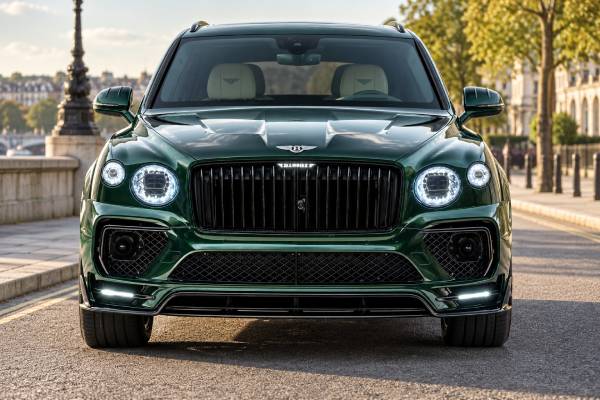
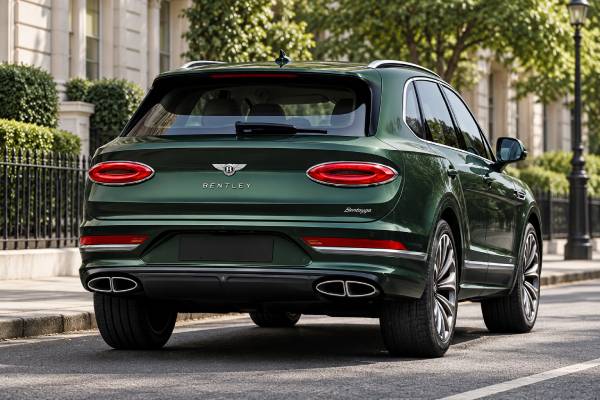
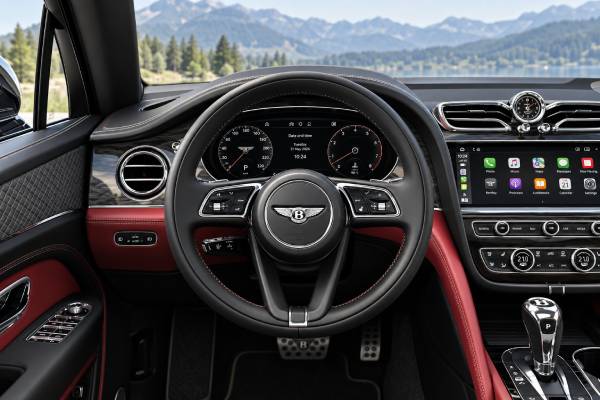
The 2023–2025 Bentley Bentayga A V8 is a regional grade designation for the standard-wheelbase, 542 bhp Bentayga powered by Bentley’s 4.0-liter twin-turbo V8. It is seen most clearly in Australian market databases and range documentation, where “A V8” identifies an equipment position rather than a separate engine tune. The underlying vehicle delivers the same 550 PS, 770 Nm, eight-speed automatic, permanent all-wheel drive, and 290 km/h top speed associated with the contemporary Bentayga V8. That makes verification more important than badge assumptions: options, wheel size, assistance technology, seating, and chassis equipment can differ substantially between two cars carrying the same grade description. This article explains what the A name means, how the V8 and driveline work, the practical effect of wheels and chassis systems, realistic operating costs, maintenance priorities, and a disciplined buying process. It is aimed at buyers comparing listings where local database terminology may not match Bentley’s global marketing names.
Table of Contents
- Decoding the A V8 Designation
- V8 Specifications and Capability
- How the A V8 Drives
- Why Configuration Matters More Than the Grade
- Running Costs and Maintenance Priorities
- Buying and Verifying an Example
- A V8 or Another Bentayga?
Decoding the A V8 Designation
The A V8 is not a globally separate performance model. It is a regional grade or database label applied to a standard 4.0-liter Bentayga V8, so the individual build record—not the letter A—determines the equipment a buyer receives.
Australian research listings identify an MY24 Bentayga A V8 with five seats, an eight-speed automatic, all-wheel drive, and the 3996 cc V8. Bentley’s 2024 customer material also includes Bentayga A in specification and tire-availability tables. In contrast, Bentley’s international consumer pages generally call the comparable model simply Bentayga. Both descriptions can therefore be legitimate for the same broad vehicle type.
This naming difference affects insurance, valuation, parts catalogues, and advertisements. One system may show “A V8,” another “Bentayga V8,” and a seller may omit the A entirely. Before assuming a discrepancy, compare the VIN, model year, market code, engine, original invoice, and factory option list. The engine output should be 404 kW, or 550 PS and 542 bhp, with 770 Nm of torque.
The A grade should also not be confused with Azure. Azure is a comfort-and-wellbeing derivative with its own exterior and interior themes. Nor is it an S, which adds a more overtly sporting design and chassis calibration. A V8 examples can still carry expensive options that resemble features from those cars, including Blackline exterior trim, Touring Specification, Seat Comfort Specification, premium audio, 22-inch wheels, rear-wheel steering on applicable builds, and bespoke Mulliner finishes.
For used buyers, that flexibility creates opportunity. A discreet A V8 with smaller wheels, strong assistance equipment, and excellent maintenance may be a better long-distance vehicle than a higher-profile trim chosen mainly for appearance. It also creates risk, because a basic advertisement rarely reveals whether the car has the options a buyer assumes are standard.
Registration year and model year are not interchangeable. A late-2023 registration may be MY24, while an unsold car can enter service much later than its build. Verify software generation, emissions certification, warranty start, connected-service status, and campaign history individually. The assignment range through 2025 describes the relevant market period, but exact content remained order- and region-dependent.
V8 Specifications and Capability
The A V8 uses an internal-combustion-only powertrain: a 3996 cc twin-turbocharged gasoline V8 connected to an eight-speed automatic and permanent all-wheel drive. Its defining strengths are broad torque, effortless high-speed performance, a 3,500 kg towing ceiling when properly equipped, and simpler day-to-day energy use than the plug-in hybrid.
| Item | Specification |
|---|---|
| Engine layout | 4.0-liter, 32-valve, twin-turbocharged V8 gasoline |
| Displacement | 3,996 cc |
| Maximum power | 550 PS / 404 kW / 542 bhp at 6,000 rpm |
| Maximum torque | 770 Nm / 568 lb-ft at 2,000–4,500 rpm |
| Fuel | Premium unleaded; use the octane specified for the market |
| Efficiency feature | Cylinder deactivation under suitable light-load conditions |
| Item | Official figure |
|---|---|
| 0–60 mph | 4.4 seconds |
| 0–100 km/h | 4.5 seconds |
| Maximum speed | 180 mph / 290 km/h |
| Transmission | 8-speed automatic with manual paddle control |
| Drive system | Permanent all-wheel drive with Torsen center differential |
| Drive settings | Bentley, Comfort, Sport, and Custom, plus off-road modes where specified |
| Item | Published value | Procedure or note |
|---|---|---|
| Combined fuel use | 13.0 L/100 km | WLTP figure for the current standard V8 specification |
| Combined CO2 | 296 g/km | WLTP |
| Official driving range | 654 km / 406 miles | WLTP result |
| Fuel tank | 85 liters / 22.45 US gallons | Provides long touring range despite high consumption |
| Real-world expectation | Highly dependent on speed, traffic, temperature, load, and wheel package | Urban use can exceed the official combined rate |
| Item | Global standard-wheelbase V8 figure |
|---|---|
| Length | 5,125 mm / 201.77 in |
| Width across mirrors | 2,222 mm / 87.48 in |
| Height | 1,728 mm / 68.03 in |
| Wheelbase | 2,995 mm / 117.91 in |
| Unladen weight | 2,412 kg under Bentley’s published regional definition |
| Boot volume | 484 liters / 17.09 cu ft |
| Item | Specification or guidance |
|---|---|
| Common standard wheel | 21-inch alloy on A V8 market listings |
| Common 21-inch tire size | 285/45 R21, subject to approved tire specification |
| Optional wheel size | 22-inch designs available in multiple finishes |
| Maximum braked trailer | 3,500 kg / 7,716 lb with approved equipment |
| Maximum stated wading depth | 500 mm under suitable conditions |
| Approach to tire replacement | Use four approved tires with compatible rolling circumference |
Figures can change with certification region and options. The Australian A V8 database may use tare mass, local dimensions, or equipment assumptions that differ from Bentley’s global unladen-weight presentation. Avoid comparing two weight figures unless their definitions are the same.
How the A V8 Drives
The A V8 is exceptionally quick but is calibrated first as a refined grand-touring SUV. Its most impressive trait is not the 4.5-second acceleration figure; it is the way 770 Nm makes ordinary progress quiet, immediate, and largely effortless.
The twin-scroll turbochargers and broad torque plateau reduce the need for dramatic downshifts. In the default Bentley mode, the transmission usually keeps revs low and the air suspension isolates the cabin. A strong accelerator input brings rapid downshifts and a deeper exhaust note, but the power delivery remains progressive rather than nervous. Sport mode holds gears longer, adds steering weight, firms damping, and permits more audible engine character.
The standard V8 tune is often a better comfort compromise than the S for daily roads. It does not have to prove its sporting intent through an aggressive calibration, and 21-inch wheels provide more tire sidewall than 22-inch alternatives. Buyers who value ride quality should test the exact wheel, tire, and chassis combination because a heavily optioned A can feel quite different from a modestly specified one.
Bentley Dynamic Ride may be fitted depending on specification and model-year content. The 48-volt active anti-roll system counters body lean without relying only on very stiff springs. When healthy, it allows a large SUV to remain composed in corners while retaining isolation over uneven surfaces. Rear-wheel steering on applicable later vehicles turns the rear wheels opposite the fronts at low speed, reducing the effective turning circle, and with the fronts at speed for stability.
The all-wheel-drive system gives confident traction, but the Bentayga’s mass and tire choice still set the limits. Wet grass, snow, mud, and steep surfaces require suitable tires and measured inputs. Off-road modes can coordinate throttle, transmission, suspension height, and stability systems; they cannot prevent damage from poor route selection or low-profile road tires.
Brakes are sized for the vehicle’s performance, yet repeated hard use generates substantial heat. The pedal should feel consistent, with no vibration or steering pull. Carbon-ceramic brakes can appear on highly optioned or special Bentaygas, but an ordinary A V8 will usually use iron discs. Confirm the fitted system before pricing replacement parts.
At motorway speed, refinement depends on tire condition, wheel balance, glazing, and alignment. A vibration that seems minor at urban speed can become intrusive at touring pace. Wind noise around doors or panoramic roof, tire roar from uneven wear, or a booming exhaust may indicate damage or nonstandard modifications rather than normal Bentley behavior.
Where the performance is most useful
The V8’s reserve is valuable for joining fast traffic, overtaking with luggage, climbing grades, and towing. It also means the car rarely feels strained with passengers aboard. Owners should resist treating every cold start as a performance opportunity: oil temperature matters, and repeated short trips are harder on a large turbocharged engine than occasional full-temperature touring.
Why Configuration Matters More Than the Grade
Two A V8s can have the same engine and very different ownership appeal. Seating, assistance packages, wheels, audio, exterior treatment, and cabin materials should be evaluated as functional choices rather than as a simple count of expensive options.
The standard Bentayga design uses bright exterior detailing, a black matrix grille with chrome surround, 21-inch wheels, and a handcrafted cabin. Blackline Specification replaces much of the brightwork with dark trim. Styling Specification adds carbon-fiber exterior components. Both alter repair cost as well as appearance; damaged carbon or black-finished pieces can be considerably more expensive than conventional trim.
Seat Comfort Specification is valuable for long-distance use because it can add heating, ventilation, massage, and greater adjustment for the front seats. Rear choices may include a five-seat bench, a 4+1 configuration with two more defined outer seats and occasional center seating, or other market-specific arrangements. Operate every motor and memory function. A seat that appears cosmetically perfect can still have failed ventilation, lumbar, massage, or occupancy sensing.
Touring Specification groups assistance features designed for longer journeys. Depending on year and market, these can include adaptive cruise control, lane assistance, head-up display, night vision, and traffic-sign functions. Sensor alignment is critical after windscreen, bumper, suspension, or body repairs. A warning-free dashboard does not prove that each function engages correctly on the road.
Audio choices range from the standard system to premium branded installations. Test all sources, balance, subwoofer output, and individual speakers at moderate volume. Infotainment should connect reliably to a phone, load navigation, display all camera views, and retain settings. Connected services may require subscription transfer or regional compatibility, which should not be assumed on an imported vehicle.
Paint and interior combinations affect resale because the Bentayga offers unusually broad personalization. Traditional colors can attract a wider market, while a distinctive Mulliner commission may appeal strongly to fewer buyers. Condition remains decisive. Creased or stained leather, scratched veneer, damaged brightwork, and poorly repaired wheels can cost more to correct than the premium paid for a desirable specification.
For towing, confirm more than the published 3,500 kg maximum. The actual vehicle needs approved hardware, correct coding, an undamaged socket, suitable tongue-load limits, and compliance with local rules. Test trailer-stability and camera functions where possible. A removable towbar should include its key, storage arrangement, and documentation.
Running Costs and Maintenance Priorities
The V8 is mechanically more straightforward than the plug-in hybrid, but it remains a complex, high-output luxury SUV with expensive consumables and chassis systems. A realistic budget must cover fuel, tires, brakes, annual service, diagnostic labor, insurance, and age-related repairs.
Fuel use is the most visible cost. The official 13.0 L/100 km combined result is achievable only under a prescribed test pattern. Dense urban use, short cold journeys, idling, winter warm-up, roof loads, towing, and frequent acceleration can push consumption far higher. Highway touring at steady legal speeds is more favorable, while unrestricted high-speed running consumes fuel rapidly.
Engine maintenance should follow Bentley’s time and distance requirements for the specific market. Use the approved oil and filter, inspect for leaks, and allow the engine to reach temperature regularly. The V8’s turbochargers, cooling circuits, ignition system, direct injection, crankcase ventilation, and cylinder-deactivation hardware depend on clean oil, correct temperatures, and prompt diagnosis of misfires or pressure faults.
Cooling problems should never be deferred. Check reservoir levels only according to safe procedures, and investigate dried coolant traces, sweet odors, pump noise, fan overactivity, or changing cabin heat. A small leak can become an overheating event in a tightly packaged, high-output engine bay.
The 12-volt electrical system supports numerous control modules, powered closures, seats, cameras, and chassis systems. Low voltage can create multiple warnings that look unrelated. Cars left unused benefit from an approved maintainer. Test the battery under load and confirm charging-system health before replacing modules based only on fault messages.
Air suspension must raise, lower, and level the vehicle evenly. Observe it after an overnight stop; one low corner suggests leakage. Listen for compressor operation, knocks, and creaks. Dynamic Ride and rear-wheel-steering hardware, where present, require specialist diagnostic access and correct calibration after suspension or alignment work.
Tires should be treated as chassis components. Check manufacturing date, sidewall damage, inner-edge wear, approved marking, pressure, and tread depth. A Bentayga can hide severe inner wear behind wide wheels. Replacing only one tire may create an undesirable rolling-circumference difference, so measure all four and follow driveline guidance.
Brake costs depend on disc type and condition. Iron discs can corrode or develop lips, while carbon-ceramic systems demand specialist inspection for chips, heat damage, and remaining life. Brake fluid remains time-sensitive. Ask for measured pad and disc figures rather than accepting “brakes are fine” on a sales sheet.
Preserve documentation for every service, alignment, tire set, software update, recall, and repair. Thorough records make future diagnosis faster and protect resale. A low-mileage vehicle with unexplained gaps is not automatically superior to a regularly used car maintained by knowledgeable specialists.
Buying and Verifying an Example
A successful purchase begins by proving exactly what the car is, then testing every expensive system under realistic conditions. Do not complete the deal on the strength of appearance, mileage, or a generic inspection that cannot access Bentley-specific modules.
Start with provenance. Match the VIN across the body, registration, service records, and diagnostic report. Obtain the original option list, delivery market, model-year code, warranty date, number of keys, and campaign status. An imported A V8 may have lighting, navigation, emissions, radio, warranty, or connected-service differences that affect daily use.
Inspect the exterior in daylight. Look for uneven paint texture, overspray, inconsistent panel gaps, changed glass dates, missing fasteners, and damage around lower trim. Examine underbody panels, suspension arms, exhaust components, tow equipment, and jacking points. A paint-depth reading is useful only when interpreted with knowledge of aluminum and mixed-material panels.
Check all four wheels on both faces. Bent rims, weld repairs, cracks, missing self-leveling centers, and incorrect fasteners deserve attention. Compare tire details and inspect the inner shoulders. Uneven wear can point to alignment, suspension damage, or prolonged incorrect pressure.
A cold-start road test should cover idle quality, oil-pressure and temperature behavior, light and full-throttle shifts, all drive modes, parking maneuvers, rough roads, sustained speed, and progressive braking. The V8 should start promptly without prolonged chain-like rattles, smoke, misfire, or warning messages. The transmission should not flare, bang, or hesitate when selecting drive or reverse.
Exercise every cabin feature. Test seat memories, massage, heating, ventilation, all climate zones, panoramic roof, tailgate, soft-close doors, cameras, assistance systems, audio, phone integration, navigation, and both keys. Faults that appear small can involve trim removal, coding, or expensive modules.
Request a full diagnostic scan before codes are cleared. Review engine misfires, boost and cooling faults, suspension history, battery voltage, assistance-camera calibration, infotainment errors, and communication failures. Confirm that readiness information and service counters are plausible. A freshly cleared fault memory should delay the purchase until the car has completed a proper drive cycle and been rescanned.
Create a first-year cost sheet. Include due service, tires, brakes, wheel correction, paintwork, battery, warranty, insurance, and any missing accessories. Use actual quotations for the VIN and fitted equipment. An apparently lower-priced A V8 can become the expensive choice when immediate work is ignored.
Signs that justify walking away
Pause when documentation conflicts with the VIN, the seller prevents a cold start or diagnostic scan, warning lights were recently erased, the suspension sinks, coolant is low, tires are mismatched, or accident repairs affect sensor and structural areas. Poorly installed exhaust, suspension, wheel, or software modifications also reduce confidence unless the work is fully documented and reversible.
A V8 or Another Bentayga?
Choose the A V8 when you want the standard Bentayga’s full V8 performance and flexibility without paying primarily for S, Azure, or limited-edition identity. Its strongest examples combine sensible wheels, useful assistance features, excellent history, and a specification that suits the owner’s real journeys.
The regular global-market Bentayga V8 is mechanically the closest comparison and may simply be the same type of vehicle under different naming. Treat price differences cautiously until equipment and provenance are aligned. The S V8 uses the same 542 bhp output but adds a sportier calibration, exhaust character, dark styling, and trim themes. It suits drivers who value a more assertive presentation.
Azure V8 focuses on comfort and wellbeing, often adding Touring-oriented equipment and distinctive bright exterior details. It is attractive for long-distance passenger use, but an A V8 with carefully selected options may deliver much of the same functional comfort at a lower purchase price.
The 456 bhp Hybrid can cover short routes electrically and may benefit from local tax or access policies. It is heavier, slower, and requires charging discipline, but can reduce gasoline use dramatically for the right pattern. The V8 is easier to use for continuous touring, remote travel, and towing because refueling is quick and performance remains consistent.
A W12 Speed from the earlier period offers greater rarity, 626 bhp, and 306 km/h capability, accompanied by higher fuel use, weight, complexity, and collector considerations. Later high-performance hybrid Bentleys belong to another technical era and should not be compared by badge alone.
The letter A should never decide the purchase. The right decision comes from matching verified hardware, options, condition, and operating costs to the intended use. In that context, the A V8 can be one of the clearest ways to obtain the essential modern Bentayga experience: strong V8 torque, handcrafted luxury, genuine towing and all-road ability, and enough personalization to avoid feeling like an entry model.
References
- Bentley Bentayga 2023 A V8 Pricing & Specifications – carsales 2023
- BENTAYGA RANGE 2023 (Brochure)
- Signature Bentayga | Bentayga Range | Bentley Motors 2026
- New Bentley Bentayga, The Definitive Luxury SUV | Bentley Media 2020
- Bentley News 2023 : NEW FEATURES FURTHER INCREASE DESIRABILITY OF BENTAYGA RANGE 2023
- Bentley Bentayga | History and Heritage | Bentley Motors 2026
Disclaimer
Regional grade names, standard equipment, homologated figures, service schedules, and warranty terms can differ even when two vehicles share the same engine. Verify the VIN, local compliance records, factory specification, and current Bentley technical information before purchasing, towing, or authorizing repairs. Share this guide with a buyer who has encountered conflicting “A V8” and “Bentayga V8” descriptions.