
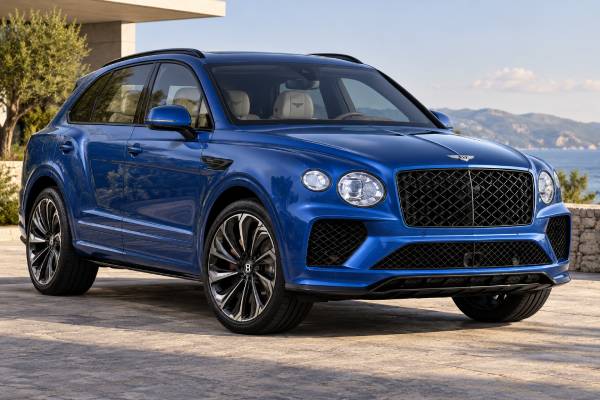
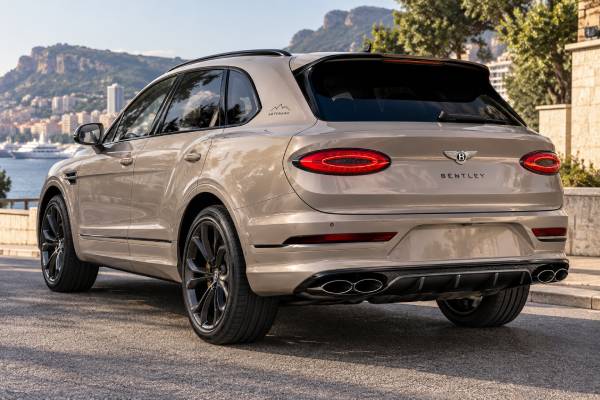
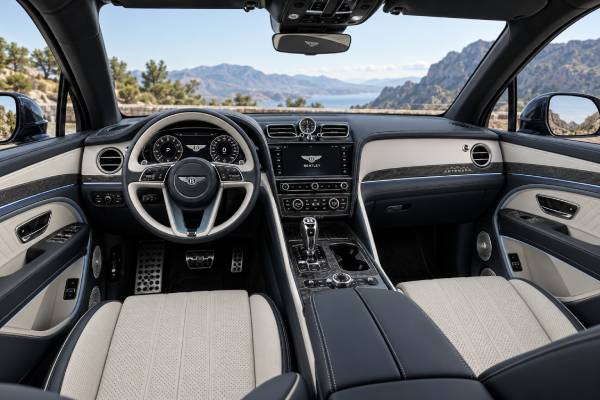
The 2026 Bentley Bentayga Artenara Edition Hybrid is a design-focused plug-in hybrid whose identity comes from place, material, and detail rather than extra engine output. Named for the Gran Canaria village near Roque Bentayga, it carries a stylised mountain motif in the fascia, seats, and door trim, while body-colour lower brightware and a curated selection of paint-and-cabin combinations give the standard-wheelbase SUV a more personal character. Mechanically, it uses Bentley’s established 3.0-litre V6 plug-in system with 456 hp, an 18.0 kWh battery, and an official WLTP electric range of 28 miles. That means its ownership case depends heavily on charging routine: used as intended, it can complete many local journeys quietly on electricity; left uncharged, it becomes a heavy petrol SUV carrying unused hybrid hardware. This guide separates the edition-specific craftsmanship from the shared PHEV engineering, explains the specifications, and shows how to assess configuration, battery use, maintenance, and value.
Table of Contents
- Artenara Story and Design Language
- How the Plug-In Hybrid Works in Real Life
- Performance, Ride, and Road Manners
- Hybrid Specifications and Technical Data
- Charging, Efficiency, and Trip Planning
- Edition Care and Mechanical Maintenance
- Configuration and Purchase Decisions
Artenara Story and Design Language
The Artenara Edition translates Bentley’s connection to the rock formation that inspired the Bentayga name into a modern decorative theme. It is best understood as a factory-curated expression of the existing Hybrid, not a separate powertrain or a homologation special.
Artenara is a mountain village on Gran Canaria, close to Roque Bentayga. Bentley’s edition uses the profile of that landmark as a recurring graphic. The motif is etched into the passenger-side fascia and repeated through laser perforations in selected seat and door surfaces. This is more than a printed badge: the design relies on the relationship among perforation, upholstery colour, contrast material, and the cabin’s broader three-colour scheme.
At launch, Bentley described eight recommended combinations of colour, material, and finish. Those curated schemes are valuable starting points, but they do not mean every Artenara must look alike. The edition offers a tri-colour interior treatment that had previously been associated most closely with the EWB Mulliner flagship, allowing three carefully balanced hides to define different cabin zones.
Exterior identifiers include wing vents carrying Mulliner-style double-diamond detail, an animated welcome lamp, illuminated treadplates, and a Double Diamond grille. The lower brightware can be finished in one of eight body colours, replacing the normal contrast of polished or dark trim with a more unified lower-body appearance. Standard 22-inch Mulliner wheels combine grey paint and polished surfaces. Bentley also announced a 23-inch Super Lux design for selected 2027-model-year Azure, Artenara, and Mulliner EWB applications, so wheel availability should be checked by market and build date rather than assumed from launch imagery.
The edition can be ordered in standard-wheelbase Hybrid, standard-wheelbase V8, and EWB V8 forms. That breadth makes the exact model important. A PHEV badge, charging flap, and hybrid instrument displays distinguish this 456 hp version from the 542 hp V8, but the safest verification is the VIN-linked factory build record. Cosmetic additions can be replicated; the original edition code, powertrain, paint, and trim history cannot.
Artenara’s aesthetic is more narrative than the Atelier Edition’s studio-like colour curation. Atelier uses selected legacy paints and Harmony Diamond quilting, while Artenara uses a location-based motif and tri-colour treatment. Mulliner remains the more formal flagship, and Azure is the comfort-led line. Buyers should choose the design story they genuinely prefer, because the special details—not a mechanical advantage—justify the premium.
How the Plug-In Hybrid Works in Real Life
The Bentayga Artenara Hybrid combines a 3.0-litre turbocharged V6 with an electric motor inside the driveline, an 18.0 kWh high-voltage battery, and external AC charging. It can move under electric power, blend both sources for maximum response, or preserve battery energy according to its control strategy and selected mode.
Bentley rates the petrol engine at 340 PS and the electric motor at 100 kW, equivalent to 136 PS. The official combined system figure is 462 PS, 456 bhp, or 340 kW, with 700 Nm of system torque. The individual outputs should not be arithmetically added because they reach their peaks under different conditions; the combined rating is the validated figure.
In EV Drive, the car prioritises electric propulsion while battery charge and demand permit. The motor’s immediate torque makes low-speed traffic smooth and quiet, which suits the Bentayga’s luxury character. Hard acceleration, high speed, low charge, temperature conditions, or other system needs can cause the V6 to start. Drivers should therefore view electric mode as a capability managed by the vehicle, not an absolute guarantee that the engine will remain off.
Hybrid Mode allows the car to blend both energy sources and can use route information to allocate charge over a journey. Hold Mode preserves a target level of battery charge for later use, such as saving electric operation for an urban destination. The most efficient practice is generally to use grid electricity early rather than burn fuel to carry a full battery unnecessarily, but local low-emission zones or destination requirements may justify holding charge.
The electric motor also acts as a generator during deceleration. Regenerative braking recovers some kinetic energy, while the hydraulic brakes provide additional stopping force. The transition is designed to feel natural, but pedal response can vary subtly with state of charge and regeneration. A test drive should include gentle and firm stops to confirm the system is smooth and free of warning messages.
When the battery’s displayed electric range reaches zero, the Bentayga does not become an ordinary lightweight V6. It retains hybrid reserve operation and can still recover energy, but it carries the battery and motor at all times. Official charge-depleted fuel use is therefore a better guide for uncharged operation than the very low weighted PHEV number. Regular access to charging is the core practical requirement.
Performance, Ride, and Road Manners
The Artenara Hybrid is quick enough for effortless touring rather than tuned as the most aggressive Bentayga. It reaches 60 mph in 5.1 seconds, 100 km/h in 5.3 seconds, and a maximum of 158 mph, with electric assistance filling the low-speed response before the V6 builds boost.
Compared with the standard V8, the Hybrid has less total power and a lower maximum speed, but it can feel especially refined in urban conditions because it starts away without engine vibration. The transition from electric to combined propulsion should be unobtrusive during gentle use. Under full demand, the V6 and motor deliver strong acceleration, though the soundtrack and sustained high-speed character are different from the V8’s.
An eight-speed automatic transmission and permanent all-wheel drive manage the combined output. The gearbox still shifts while the car is in electric operation because the motor is integrated into the driveline rather than mounted as a separate axle drive. Smooth calibration is a strength, but low-speed hesitation, harsh engagement, or repeated driveline warnings deserve diagnosis rather than being labelled normal hybrid behaviour.
The standard-wheelbase body is 5,125 mm long with a 2,995 mm wheelbase. It is easier to package than an EWB and offers 479 litres of luggage capacity, only slightly less than the regular V8. The battery contributes to a published unladen weight of about 2,510 kg, so the Hybrid is heavy even by luxury-SUV standards. Air suspension and Bentley Dynamic Ride help control that mass while preserving ride quality.
Twenty-two-inch Artenara wheels look suitably substantial, but tyre sidewall remains limited. Check ride quality on the roughest roads the car will regularly encounter. A 23-inch option can intensify appearance but raises tyre price and pothole risk. The quietness of electric driving can also make tyre roar more noticeable, so tread pattern and correct pressure matter to comfort.
The Hybrid can tow and travel long distances, but buyers should use the exact market handbook for tow limits, electrical accessories, and trailer-mode operation rather than borrowing figures from another Bentayga variant. Added load, cold weather, hills, and motorway speed all reduce electric range. For a long journey, the car’s strength is seamless use of both energy sources, not maintaining EV operation indefinitely.
Steering is accurate and the brakes are strong, yet the car’s mass and performance require realistic margins. Regeneration cannot repeal physics, and repeated hard braking creates heat in the conventional system. The Artenara’s polished surroundings can make speed deceptively quiet; use the driver displays and assistance systems as support, not a substitute for attention.
Hybrid Specifications and Technical Data
This Artenara is a PHEV: it has a petrol engine, traction motor, externally chargeable high-voltage battery, and an official electric-driving range. The technical values match the contemporary standard-wheelbase 456 hp Bentayga Hybrid on which the edition is based; Artenara changes colour, materials, and equipment rather than the homologated propulsion system.
| Specification | Value |
|---|---|
| Powertrain classification | Plug-in hybrid electric vehicle |
| Petrol engine | 3.0-litre turbocharged V6 |
| Engine output | 340 PS |
| Electric motor output | 100 kW / 136 PS |
| Combined system power | 462 PS / 456 bhp / 340 kW |
| Combined system torque | 700 Nm |
| Transmission | Eight-speed automatic |
| Drive | Permanent all-wheel drive |
| Specification | Official value or equipment |
|---|---|
| Battery capacity | 18.0 kWh |
| Maximum AC charging rate | 7.2 kW |
| Typical full AC charge | Approximately 2.5 hours under suitable conditions |
| DC rapid charging | Not fitted |
| Fuel-tank capacity | 75 litres |
| Measure | Manufacturer figure |
|---|---|
| 0–60 mph | 5.1 seconds |
| 0–100 km/h | 5.3 seconds |
| Maximum speed | 254 km/h / 158 mph |
| Measure | Official value | Context |
|---|---|---|
| Electric range | 45 km / 28 miles | WLTP combined |
| Total range | 715 km / 444 miles | WLTP combined |
| Weighted fuel consumption | 6.7 L/100 km | Includes a defined charged-battery test phase |
| Charge-depleted fuel consumption | 11.2 L/100 km | More relevant when regular charging is absent |
| Item | Value |
|---|---|
| Length | 5,125 mm |
| Wheelbase | 2,995 mm |
| Width including mirrors | 2,222 mm |
| Height | 1,710 mm |
| Published unladen weight | Approximately 2,510 kg |
| Luggage capacity | 479 litres |
| Seating | Five occupants |
Official PHEV values are especially sensitive to test procedure. The weighted fuel result assumes a prescribed proportion of driving with usable battery energy, so it cannot predict an owner’s consumption without knowing charging frequency and trip length. Compare like-for-like figures and record real fuel and electricity use separately.
Charging, Efficiency, and Trip Planning
Home or workplace AC charging is the key to obtaining the Hybrid’s benefit. The car accepts up to 7.2 kW AC and does not support DC rapid charging, so it is designed to replenish during a stop of several hours rather than at a motorway fast-charging break.
A compatible wallbox is preferable to relying indefinitely on a domestic socket. Installation should be completed by a qualified electrician who assesses circuit capacity, protective devices, earthing, cable route, and local rules. The supplied or approved charging cable must match the vehicle inlet and power source. Avoid extension leads, damaged plugs, improvised adapters, or equipment that becomes unusually hot.
Bentley quotes about 2.5 hours for a full charge under suitable conditions. Actual time can change with supply power, battery temperature, charging losses, and the car’s starting state of charge. Because the pack is relatively small by modern battery-electric standards, even lower-power overnight charging can still fit many routines. The important measure is whether the car is ready before its next typical trip.
Plan local travel around electric miles, not the theoretical total range. A 10- to 20-mile daily pattern can use a large share of EV operation in moderate conditions. A 100-mile motorway commute cannot. Cold weather, cabin heating, high speed, hills, payload, and aggressive acceleration reduce displayed and achieved range. Preconditioning while connected can improve comfort without drawing all initial climate energy from the battery.
For long trips, start charged and allow Hybrid Mode to manage the blend unless there is a specific reason to preserve energy. Hold Mode can reserve charge for a city centre or quiet arrival, but using the petrol engine to transport unused battery energy may not minimise total consumption. Navigation-based strategy works best when the destination is entered accurately.
Track electricity as well as fuel. Record wallbox kWh, petrol litres, and distance over several months. Electricity drawn from the wall includes charging losses, while the vehicle’s energy display may represent a different measurement boundary. Do not compare those numbers without understanding what each includes. Cost per mile also depends on home, workplace, and public tariffs.
Public AC charging can be useful at hotels, offices, or destinations where the car remains parked. It is less compelling when billed by time at a high rate or when a battery-electric vehicle urgently needs the connector. The Bentayga’s port location and wide body also require thoughtful parking so the cable does not create a trip hazard or rub against paint.
Edition Care and Mechanical Maintenance
Artenara ownership requires two maintenance disciplines: normal PHEV service and careful preservation of the edition’s specialised surfaces. Neither low annual mileage nor frequent electric driving eliminates the need to service the petrol engine, hydraulic brakes, cooling systems, and 12-volt electrical network.
Follow the interval and fluid requirements supplied for the exact market. The V6 may run less often on a charge-focused routine, but it still experiences cold starts, condensation, and time-dependent oil ageing. Allow the system to complete normal operating cycles and do not deliberately prevent the engine from starting when the car requests it for performance, temperature control, or system protection.
The high-voltage battery and power electronics use dedicated monitoring and thermal management. Owners should not open orange-cabled components or permit general repair shops to improvise around them. Any collision near the floor, charging area, or high-voltage hardware requires an appropriate inspection. Warning messages, charging interruptions, unusual cooling-fan behaviour, or a sudden range change should be diagnosed with Bentley-capable equipment.
Brake discs can corrode when regeneration handles much of gentle slowing and the car sits in damp conditions. Periodic conventional brake use occurs naturally, but owners should inspect rather than attempt unsafe “cleaning” manoeuvres. A workshop can measure disc condition, pad thickness, and fluid health. Tyres need frequent pressure and inner-tread checks because the SUV is heavy and powerful.
Maintain the 12-volt battery during extended storage. Charging contactors, control modules, locks, telematics, and comfort systems all rely on low-voltage power even though a high-voltage pack is present. A weak 12-volt battery can prevent the hybrid system from starting and can generate misleading faults. Use only an approved maintainer and connection procedure.
The Roque Bentayga perforation should be cleaned gently. Strong brushes can disturb fine holes, and excess liquid can enter perforated upholstery. Vacuum with a soft attachment, use leather-compatible product sparingly, and blot rather than scrub. Tri-colour interiors make dye transfer or mismatched repair more obvious, so address marks early and retain photographs of the original colour balance.
Body-colour lower brightware needs the same cautious wash technique as painted panels. Stone chips and curb damage may be more visible because the trim is colour-matched. If refinishing is required, document paint codes and use a repairer capable of reproducing the factory texture and gloss. Polished portions of the 22-inch wheels should not be repaired as if they were simply silver paint.
Keep charging records, service invoices, diagnostic reports, software campaign evidence, and condition photographs together. A special edition with transparent technical and cosmetic care is easier to value than one whose attractive details hide uncertain hybrid history.
Configuration and Purchase Decisions
The Artenara Hybrid makes sense for a buyer who loves its Gran Canaria-inspired design and can charge it consistently. Without both conditions, a standard Hybrid, regular V8, Atelier, or Azure may deliver the desired ownership experience with less complexity or a lower premium.
Start with the powertrain decision. Choose the Hybrid when many journeys fit within or near its 28-mile official EV range, a dependable AC charging space is available, and quiet local travel matters. Choose the Artenara V8 when frequent long-distance use, rapid refuelling, exhaust character, and the 542 hp engine are more important than electric operation. The V8 is not automatically simpler to own in every respect, but it avoids charging logistics and high-voltage traction hardware.
Then evaluate the edition. Ask to see the eight curated design recommendations, physical samples, and a complete rendering of the chosen tri-colour cabin. Make one colour dominant, one supportive, and one a controlled accent. The mountain motif should remain visible without competing against excessive stitching, piping, and veneer contrast.
For a new car, the signed specification must identify the exact wheel, lower brightware colour, grille, wing vents, treadplates, welcome animation, fascia motif, seat perforation, hides, veneers, and comfort options. At delivery, compare every item with the order and inspect in daylight. Test the charging cable, scheduled charging, app or connected functions available in the market, and all hybrid modes before accepting the car.
For a used example, establish authenticity before condition. Obtain the VIN build sheet and original invoice, then compare physical components. Inspect for repainting around the body-colour lower trim and charging flap. Check whether wheels have been cut or refinished, whether upholstery perforations remain crisp, and whether replacement leather matches all three original colours.
Battery evaluation should combine diagnostic data with a practical charge-and-drive test. Fully charge the car, confirm that it accepts power without repeated interruption, note displayed range in context of temperature, and drive through electric, blended, regenerative, and engine-running operation. No single displayed-mile figure proves battery health, but inconsistent charging, stored faults, or abrupt state-of-charge changes deserve investigation.
A full pre-purchase inspection should include module scans, service history, 12-volt battery condition, cooling circuits, air suspension, Dynamic Ride, brakes, tyres, underbody, and charging equipment. Check recall status through the relevant authority and Bentley network. Warranty wording should clarify high-voltage coverage, capacity provisions if any, charging hardware, trim, wheels, and wear exclusions.
Do not buy solely on a claim of rarity. Special-edition demand depends on colour appeal, provenance, condition, and market familiarity. A beautifully resolved, correctly maintained Artenara may be desirable; an awkward specification with neglected charging history can still be difficult to sell. The strongest purchase is one whose design feels personally meaningful and whose daily routine allows the hybrid system to perform its intended role.
References
- Artenara Edition | Bentayga Range | Bentley Motors 2026
- Bentley News 2026 : Bentayga Artenara Edition: A new pinnacle in contemporary luxury 2026
- Signature Bentayga | Bentayga Range | Bentley Motors 2026
- Bentley News 2022 : BENTAYGA HYBRID FAMILY EXTENDS WITH NEW S AND AZURE 2022
- Service and maintenance 2026
- Check for Recalls: Vehicle, Car Seat, Tire, Equipment | NHTSA 2026
Disclaimer
This article is for informational purposes and is not a substitute for professional diagnosis or repair. Specifications, torque values, service intervals, procedures, colours, charging performance, and efficiency can vary by VIN, market, build date, temperature, and test method. Confirm the car through its official service documentation, order records, current owner literature, and a Bentley or high-voltage specialist; electrical installation must also follow local rules. Please share this guide on Facebook, X/Twitter, or another platform if it helps other Artenara Hybrid owners and buyers.