
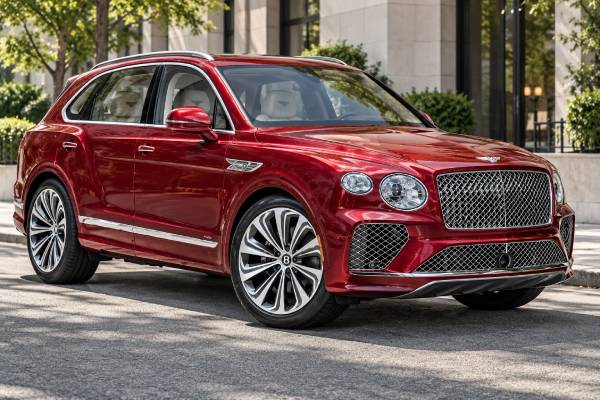
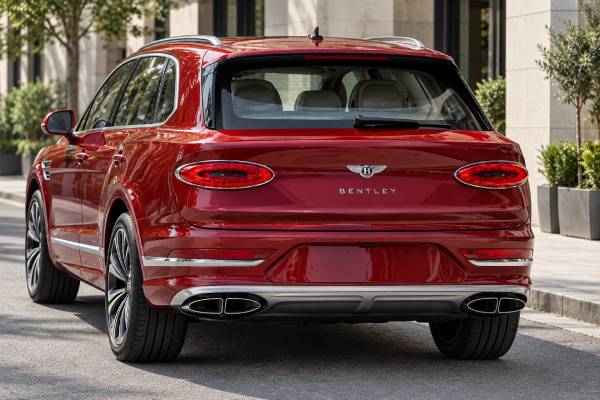
The Bentley Bentayga Atelier Edition Hybrid pairs the 456 bhp plug-in hybrid system with a limited-edition design programme built around colour, texture, and understated exterior detailing. Introduced in 2025, the Atelier Edition revived five Mulliner legacy paints—Light Onyx, Rubino, Porcelain, Quartzite, and Light Emerald—and added Obsidian Crystal as a new curated finish. Buyers were not restricted to those six colours, but the factory combinations explain the model’s purpose: a softer, more contemporary alternative to the darker visual language of the Bentayga S Black Edition.
Mechanically, this is the standard-wheelbase 18.0 kWh Bentayga PHEV. A turbocharged 3.0-litre V6 and a 100 kW electric motor produce 462 PS, or 456 bhp, and 700 Nm. Official WLTP electric range is up to 45 km (28 miles). The Edition’s value therefore depends on two distinct questions. First, does the owner’s routine suit a plug-in hybrid that should be charged frequently? Second, are the special paints, Hallmark Satin details, Harmony Diamond quilting, and edition-specific trim worth preserving? This guide treats both sides with equal care.
Table of Contents
- Atelier Hybrid Overview
- Hybrid Specifications and Measurements
- Curated Colours and Edition Details
- Using the Plug-In System Well
- Comfort, Technology, and Daily Use
- Maintenance for a Special-Edition PHEV
- Buying and Authenticating an Atelier Hybrid
Atelier Hybrid Overview
The Atelier Edition is a curated design derivative rather than a separate engineering programme. Its powertrain, standard-wheelbase body, charging hardware, suspension architecture, and basic performance match the contemporary Bentayga Hybrid. The special content is concentrated in paint, exterior finish, wheels, lighting, upholstery, and included Mulliner options.
Bentley positioned it between ordinary range models and a fully bespoke personal commission. Six factory colour stories provided a ready-made route to a coherent car, while the wider Bentley palette remained available. This matters because “Atelier Edition” does not mean every example must be painted in one of the six launch colours. Authenticity rests on the build sheet and edition content, not on paint alone.
Exterior identifiers include Atelier Edition wing vents, Hallmark Satin bumper valances, a dedicated grille treatment, and 22-inch ten-spoke wheels with Tungsten-coloured pockets. The edition also uses an animated welcome-light sequence. These details are restrained; a casual observer may see only a well-specified Bentayga.
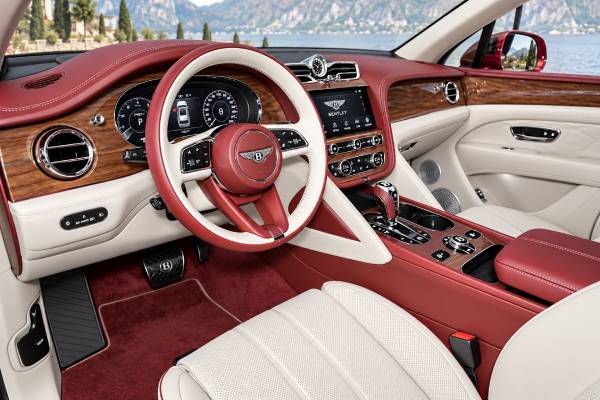
The cabin gives a clearer signal. Atelier Edition treadplates carry the wording “Hand Crafted in Crewe, England.” The seats use Harmony Diamond quilting with one elongated diamond picked out by contrast stitching. Headrest brand tags and accent-colour piping continue the theme, while painted veneer carriers can match the secondary hide.
Bentley included numerous desirable options as standard, such as self-levelling wheel badges, the jewel fuel-filler cap, mood lighting, Bentley Diamond Illumination, and a five-seat Comfort Specification. Exact equipment still varies by region, and later changes can affect availability. A buyer should compare the factory order with the market brochure for the car’s production date.
As a Hybrid, the Atelier is most persuasive in cities and on mixed journeys. Electric propulsion complements the edition’s calm aesthetic: silent departure, immediate motor torque, and reduced engine use at low speed fit the car more naturally than an aggressive exhaust note would.
Hybrid Specifications and Measurements
This vehicle is a plug-in hybrid. Its 2,995 cc V6 works with an electric motor integrated into the eight-speed automatic, sending power through permanent all-wheel drive. The 18.0 kWh battery can be charged externally on AC power; DC rapid charging is not supported.
| Specification | Value | Notes |
|---|---|---|
| Powertrain category | Petrol plug-in hybrid | PHEV with external AC charging |
| Engine | 2,995 cc turbocharged V6 | 3.0-litre petrol |
| Engine power | 340 PS (335 bhp; 250 kW) | At 6,400 rpm |
| Engine torque | 450 Nm (332 lb-ft) | 1,340–5,300 rpm |
| Electric motor | 100 kW (136 PS; 134 bhp) | Integrated with transmission |
| Motor torque | 400 Nm (295 lb-ft) | Immediate electric output |
| Combined output | 462 PS (456 bhp) | Official system figure |
| Combined torque | 700 Nm (516 lb-ft) | Official system figure |
| Battery capacity | 18.0 kWh | Manufacturer-published capacity |
| Specification | Value |
|---|---|
| Transmission | 8-speed automatic |
| Drive | Permanent all-wheel drive |
| Maximum AC charging rate | Up to 7.2 kW, supply and market dependent |
| Typical full charge | About 2.5 hours with a suitable AC supply |
| DC fast charging | Not fitted |
| Operating strategies | EV Drive, Hybrid, and Hold functions |
| Regenerative braking | Motor recuperation blended with hydraulic brakes |
| Specification | Value | Standard |
|---|---|---|
| 0–60 mph | 5.1 seconds | Manufacturer figure |
| 0–100 km/h | 5.3 seconds | Manufacturer figure |
| Top speed | 254 km/h (158 mph) | Manufacturer figure |
| Electric range | 45 km (28 miles) | WLTP |
| Total range | 715 km (444 miles) | WLTP |
| Weighted fuel consumption | 6.7 L/100 km | WLTP; assumes charging |
| Discharged-battery consumption | 11.2 L/100 km | WLTP |
| Specification | Value |
|---|---|
| Overall length | 5,125 mm (202.5 in) |
| Wheelbase | 2,995 mm (117.9 in) |
| Width across mirrors | 2,222 mm (87.5 in) |
| Overall height | 1,710 mm (67.3 in) |
| Unladen weight | 2,510 kg (5,838 lb) |
| Boot volume | 479 litres (16.9 cu ft) |
| Fuel tank | 75 litres (19.8 US gal) |
| Area | Edition feature |
|---|---|
| Paint programme | Six curated finishes, including five revived Mulliner legacy colours |
| Exterior trim | Hallmark Satin valances and unique grille treatment |
| Wheels | 22-inch ten-spoke design with Tungsten pockets |
| Seats | Harmony Diamond quilting with elongated contrast diamond |
| Entry and lighting | Edition treadplates and unique animated welcome projection |
| Included luxury content | Diamond Illumination, mood lighting, self-levelling badges, and selected Mulliner features |
Official consumption figures vary with homologation updates, wheels, and market. The weighted PHEV number is useful only when the car is charged regularly; it should not be compared directly with a petrol-only figure without considering electricity use.
Curated Colours and Edition Details
The six launch colours were selected to make the Bentayga look clean and modern rather than overtly sporty. Their history adds interest, but condition and suitability should guide a purchase more than rarity claims.
Light Onyx is a pale metallic with a warm mineral tone. Rubino is a rich red associated with earlier Bentley launches. Porcelain provides a light, refined neutral. Quartzite is a deeper grey with a technical character. Light Emerald introduces a softer green, while Obsidian Crystal was the new shade in the programme. Each could be paired with an interior designed to harmonise rather than simply contrast.
The Hallmark Satin lower trim is important because it changes the visual weight of the SUV. Bright chrome can make the lower openings appear ornate; gloss black can make them aggressive. Satin metal sits between those extremes and supports the Edition’s quiet-luxury idea.
The ten-spoke wheels use Tungsten pockets to add depth without creating a fully dark wheel. Self-levelling centre badges keep the winged B upright when the car stops. Those badges contain their own mechanism and should be checked for free movement and correct orientation.
Inside, the elongated contrast diamond is an identifying detail, but it also requires precise repair if damaged. A normal upholstery shop may reproduce the general shape without matching Bentley’s stitch density, thread, hide perforation, or alignment. Originality is especially visible on adjacent seat panels.
Bentley Diamond Illumination passes light through tiny leather perforations. It creates atmosphere without visible light strips, but the surface should not be saturated with cleaner. Blocked perforations, uneven illumination, or failed sections require careful investigation.
An Atelier car can be ordered outside the six colour stories. In that case, evaluate whether the chosen exterior, secondary hide, piping, and veneer still form a deliberate whole. A non-launch colour does not make the car inauthentic; it simply moves the specification closer to personal commissioning.
Using the Plug-In System Well
The hybrid system earns its place when charging is routine. A home wallbox or reliable workplace charger lets the car begin local journeys in EV mode and reduces the number of cold engine starts.
The official 28-mile range is a laboratory result. Real electric distance changes with weather, route, speed, tire choice, cabin heating, and acceleration. A heavy SUV climbing steep roads in winter may use charge quickly. Urban travel in mild conditions may come closer to the official value.
No DC charging means the driver should not plan motorway trips around rapid chargers. Use petrol for continuous long-distance travel and recharge at the destination. This avoids waiting for a battery that was designed for local electric operation rather than cross-country fast charging.
Navigation-based hybrid management can distribute charge along a route. Entering the destination helps the system decide where electric drive provides the greatest benefit. Hold mode is useful when saving charge for a city centre, but preserving energy without a reason can increase fuel use earlier in the journey.
Good habits include:
- charging before the battery is completely depleted when convenient;
- keeping the cable clean, dry, and protected from vehicle traffic;
- pre-conditioning while connected where the market’s app services permit;
- using smooth deceleration to maximise regeneration;
- allowing the V6 to reach normal temperature on longer runs;
- avoiding stale fuel during long periods of electric-only local use.
The displayed range estimate learns from recent conditions. A low figure after winter use does not automatically prove battery failure, and a high figure after gentle urban driving does not prove exceptional battery health. Diagnostic data, charge acceptance, fault history, and repeated real-world observation provide a better assessment.
Comfort, Technology, and Daily Use
The standard-wheelbase body is easier to place than the EWB and preserves a more conventional luggage area. It is still wide across the mirrors and deserves a measured garage check.
The five-seat Comfort Specification suits families and owner-drivers. Check the exact seat functions because heating, ventilation, massage, Postural Adjust, and Auto Climate availability can differ with option packages and production date. A special edition should not be assumed to include every comfort feature described for the wider range.
The plug-in architecture reduces boot volume only slightly compared with the V8, but the 75-litre tank is smaller. For most users, the difference is less important than the shape of the load floor, rear-seat fold, and space required for the charging cable.
Technology includes the central touchscreen, digital instrument display, smartphone integration, cameras, driver assistance, and connected services. Later model years can support My Bentley App Studio and other updates unavailable on earlier cars. Network and subscription support vary by country.
Test every feature rather than admiring the trim:
- charging timers and state-of-charge display;
- remote climate and vehicle-account connection;
- camera clarity and parking-sensor coverage;
- seat heating, ventilation, massage, and memory;
- roof, blinds, tailgate, soft-close, and keyless functions;
- all audio channels and connected media;
- welcome-light animation and Diamond Illumination;
- driver-assistance functions after a proper road test.
The Hybrid’s quiet start makes cabin noises easier to hear. A ticking fan, seat-motor rattle, loose trim piece, or wheel-bearing hum may be obvious in EV mode and masked when the engine runs. Use that silence as a diagnostic advantage.
Maintenance for a Special-Edition PHEV
Care must protect the high-voltage system, the petrol engine, and the Edition’s unusual finishes. Neglect in any one area can erase the value of the others.
Service the V6 by time and mileage according to official documentation. Frequent electric operation does not stop engine oil from ageing. Short engine runs can introduce moisture and fuel dilution, while filters, coolant, brake fluid, and seals continue to age.
Hybrid checks should cover the charging port, cable, battery cooling, power electronics, underbody battery enclosure, and stored fault codes. High-voltage components require trained technicians. Do not open orange connectors or attempt isolation using generic internet procedures.
The 12-volt battery is equally important. It wakes control units and closes the high-voltage contactors. A weak auxiliary battery can create multiple warnings or prevent charging. During storage, use approved battery support and keep software and account functions properly shut down.
Chassis wear reflects the vehicle’s mass. Inspect inner tire shoulders, wheel bends, brake corrosion, air-suspension leaks, and bush wear. Regenerative braking may reduce friction-brake use, so discs can corrode even when pad thickness appears generous.
Edition-finish care includes:
- using the correct process for gloss or satin paint;
- protecting Hallmark Satin trim from abrasive metal polish;
- cleaning Tungsten wheel pockets with non-aggressive products;
- treating pale or special-colour hides promptly after dye transfer;
- avoiding excess liquid on perforated illuminated leather;
- recording any repair to unique stitching, veneer, treadplates, or wing vents.
A complete history should include charging-equipment records, software updates, recall completion, cosmetic repairs, wheel refinishing, and invoices for any replacement edition parts. This documentation supports both diagnosis and future resale.
Buying and Authenticating an Atelier Hybrid
Authenticity starts with the VIN and factory build sheet. Do not rely on wing vents, wheels, or badges, because visible parts can be retrofitted. The record should identify Atelier Edition content and the original colour and trim specification.
Examine the treadplates, headrest tags, quilting, elongated contrast diamond, welcome projection, grille, valances, wheels, and self-levelling badges. Inconsistency may indicate repair, replacement, or an inaccurately advertised car. A replaced part is not automatically a problem, but the work should be documented and correctly executed.
A plug-in test is mandatory. Connect the car to a known-good AC supply, confirm that the port locks, and watch charging begin. Review fault messages, cable temperature, scheduled charging, and the displayed rate. Drive in EV mode before asking the engine to start, then assess the transition under moderate acceleration.
A pre-purchase inspection should include:
- Full diagnostic scanning of engine, hybrid, battery, charging, chassis, body, and comfort modules.
- High-voltage battery condition assessment using approved tools.
- Cooling-system inspection for all relevant circuits.
- Wheel, tire, brake, alignment, and air-suspension checks.
- Paint-depth and finish review, especially on legacy colours and satin trim.
- Operation of every edition lighting and comfort feature.
- VIN-based recall and campaign verification.
- Confirmation that both keys, charging cable, manuals, and original accessories are present.
Match the powertrain to a weekly routine
A useful purchase decision begins with seven days of real travel rather than a single test drive. List every regular journey, its distance, where the car remains parked, and whether dependable charging exists at either end. Trips that repeatedly fall within roughly the official 28-mile electric range give the system a chance to operate as intended. Longer motorway journeys still suit the car, but they rely increasingly on petrol and reduce the relevance of the weighted PHEV consumption figure.
Estimate energy cost with actual tariffs. Home charging at an off-peak rate can make local electric miles inexpensive, while time-billed public AC charging may be poor value for a small battery. Record electricity from the wall, not only the dashboard, because charging losses are part of what the owner pays for. Then compare the result with the charge-depleted fuel figure and the V8 Atelier’s fuel use. The answer will vary by household; there is no universal economic winner.
Parking conditions matter as much as mileage. A private driveway or assigned space makes cable management straightforward. Street parking, shared garages, or valet-only buildings may turn daily connection into a negotiation. Check cable reach without creating a pedestrian hazard, confirm that the charge port can be accessed beside walls or columns, and ask who is responsible for resetting a tripped charger. A PHEV that is inconvenient to connect often stops being connected.
Climate changes the calculation. Cold weather can reduce electric range and increase cabin-heating demand, while very hot conditions require battery and cabin cooling. Preconditioning while plugged in improves comfort and can preserve more battery energy for driving. Owners in seasonal climates should judge the car over a full year rather than assuming a warm-weather demonstration represents winter behaviour.
Also consider how long the vehicle may be kept. The V8 is mechanically familiar and simple to refuel, whereas the Hybrid adds a traction battery, charging hardware, and dedicated cooling components. That complexity is justified when electric operation is used regularly. Prospective long-term owners should understand high-voltage warranty terms, transferability, diagnostic access, and the cost of charging-equipment replacement before the factory coverage ends.
At delivery, ask the retailer to demonstrate both immediate and scheduled charging, show how charge limits or departure timers are set, and identify the emergency cable-release procedure in the handbook. Save a photograph of the supplied cable labels and adapters. These small steps establish a baseline: if charging later slows or fails, the owner can distinguish a car fault from a wallbox, tariff, timer, or cable issue. The same handover should include a fully charged drive that verifies EV operation, engine start, blended acceleration, regenerative deceleration, and a clean diagnostic state after all modes have been exercised.
The Atelier Hybrid is suited to an owner who can charge, values rare colour and material choices, and prefers subtle distinction. A buyer who cannot plug in will carry the battery’s mass without using its chief benefit. A buyer who wants the strongest engine character may prefer the V8 Atelier. The Hybrid makes sense when silent urban travel is part of the luxury experience rather than merely a tax or fuel calculation.
References
- Bentayga Atelier Edition| Bentayga Range | Bentley Motors 2026
- Bentley News 2025 : Mulliner legacy colours return for new Bentayga Atelier Edition 2025
- Signature Bentayga | Bentayga Range | Bentley Motors 2026
- Bentley News 2022 : BENTAYGA HYBRID FAMILY EXTENDS WITH NEW S AND AZURE 2022
- Service and maintenance 2026
- Check for Recalls: Vehicle, Car Seat, Tire, Equipment | NHTSA 2026 (Recall Database)
Disclaimer
This article is for informational purposes and does not replace professional diagnosis, maintenance, or repair. Specifications, torque values, charging equipment, service intervals, and procedures vary by VIN, market, model year, and fitted options. Verify all work against official service documentation from Bentley and use qualified high-voltage and refinishing specialists.
If you found this article helpful, please share it on Facebook, X/Twitter, or another platform. Sharing supports our research and helps other owners protect unusual Bentley specifications.