
The Bentley Bentayga Azure Hybrid is the comfort- and wellbeing-focused version of the 456 bhp standard-wheelbase plug-in hybrid. Introduced in 2022, it combines a turbocharged 3.0-liter V6, 100 kW electric motor, 18.0 kWh battery, eight-speed automatic, and all-wheel drive with Azure-specific seating, assistance, trim, and refinement priorities. It reaches 100 km/h in 5.3 seconds and can cover an official 45 km on electric power in the updated specification, but its purpose is not to imitate the V8 S. Azure is designed for calm progress: bright vertical grille vanes, distinctive 22-inch wheels, extensive chrome, Touring Specification, harmony-pattern quilting, mood lighting, and passenger-centered options create a gentler character. The hybrid powertrain supports that goal when it is charged regularly, allowing quiet departures and local journeys before the V6 is needed. This guide covers the exact technical layout, comfort engineering, charging and range, model-year considerations, maintenance, and the used-buying checks that matter most.
Table of Contents
- Azure Hybrid Purpose and Model History
- Technical Data and Hybrid Packaging
- Quiet Driving and Energy Management
- Wellbeing Cabin and Passenger Features
- Ride, Safety, and Touring Technology
- Service, Charging, and Long-Term Care
- Choosing a Used Azure Hybrid
Azure Hybrid Purpose and Model History
The Azure Hybrid uses the standard 456 bhp Bentayga PHEV powertrain but surrounds it with a comfort-led specification. It is intended for relaxed driving and passenger wellbeing, whereas the S Hybrid uses the same output with darker styling and more overtly sporting calibration.
Bentley announced the S Hybrid and Azure Hybrid together in September 2022. Each used the updated system with an 18.0 kWh battery and at least 28 miles, or 45 km, of WLTP electric range. Their differentiation was deliberate: S emphasized dynamic character, while Azure emphasized comfort, technology, and wellbeing.
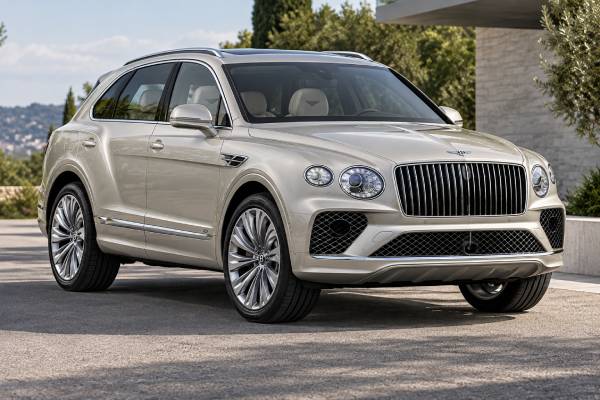
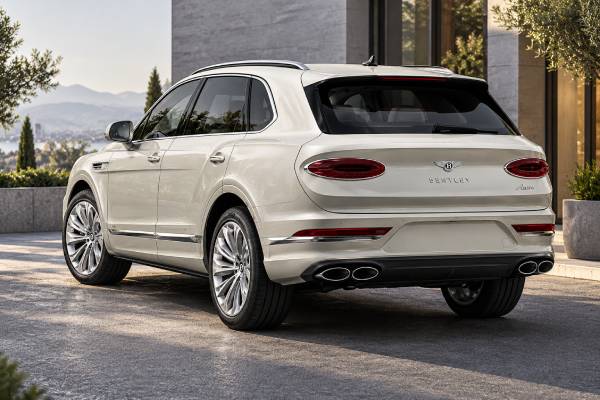
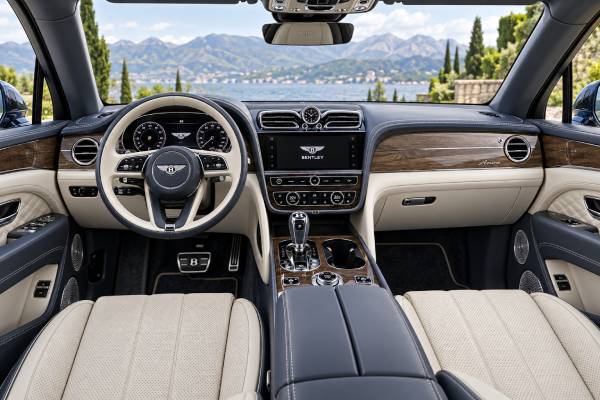
Azure visual identity starts with a bright chrome grille using vertical vanes, exclusive 22-inch ten-spoke wheels, Azure badging, and polished exterior details. The cabin typically adds Harmony Diamond Quilt, mood lighting, illuminated treadplates, duo-tone steering-wheel treatment, deep-pile overmats, and a broader comfort specification. Exact content varies by model year and region, so the original build record remains essential.
Touring Specification is a central part of the Azure proposition in many markets. It groups driver-assistance features intended to reduce workload on long journeys. Depending on location and year, these can include adaptive cruise control, lane assistance, head-up display, night vision, and predictive or traffic functions. Later vehicles can also offer expanded parking assistance and air-quality technology.
The hybrid fits the Azure mission particularly well in cities. A charged battery allows quiet, low-vibration movement through residential areas, hotel entrances, and congested streets. The transition to gasoline extends range for touring, but it also reveals the main compromise: the V6 is less sonorous and the vehicle is heavier than the V8 Azure.
“Present” should be interpreted through current local availability. Bentley’s current model information continues to list Azure with V8 or 3.0-liter hybrid powertrains, but production timing, homologation, and order books can differ by country. Confirm whether a new hybrid is actually orderable in the relevant market and check the specification attached to the individual VIN.
Early and later cars can differ in software, rear-seat equipment, driver assistance, air purification, connected features, and wheel choices. Registration date alone is not enough to identify those changes. Ask for build month, model year, option codes, market, and any factory updates completed after delivery.
Technical Data and Hybrid Packaging
The Azure Hybrid is a plug-in hybrid with one electric motor integrated into the driveline ahead of the eight-speed automatic. The battery supports external AC charging and official electric travel, while the gasoline V6 provides long-distance range and sustained performance.
| Component | Specification |
|---|---|
| Combustion engine | 2,995 cc turbocharged V6 gasoline |
| Engine output | 250 kW / 340 PS |
| Engine torque | 450 Nm |
| Electric motor-generator | 100 kW / 136 PS and 400 Nm |
| Combined output | 340 kW / 462 PS / 456 bhp |
| Combined torque | 700 Nm / 516 lb-ft |
| High-voltage battery | 18.0 kWh gross lithium-ion |
| Item | Official figure |
|---|---|
| 0–60 mph | 5.1 seconds |
| 0–100 km/h | 5.3 seconds |
| Top speed | 158 mph / 254 km/h |
| Transmission | 8-speed automatic |
| Drive | Permanent all-wheel drive |
| Powertrain modes | EV Drive, Hybrid, and Hold |
| Item | Published specification | Practical qualification |
|---|---|---|
| Official electric range | 28 miles / 45 km WLTP | Actual range changes with temperature, speed, terrain, and climate use |
| Charging interface | AC charging | No DC rapid charging |
| Faster AC time | Approximately 2.5 hours from a suitable dedicated source | Depends on supply and battery conditions |
| Domestic time | Approximately 7.5 hours in Bentley guidance | Requires an approved outlet and cable |
| Fuel tank | 75 liters / 19.8 US gallons | Smaller than the V8 tank because of PHEV packaging |
| Official total range | Approximately 715 km / 444 miles in current WLTP data | Test-cycle result using both energy sources |
| Item | Published standard-wheelbase hybrid figure |
|---|---|
| Overall length | 5,125 mm / 202.52 in in current listing |
| Width across mirrors | 2,222 mm / 87.48 in |
| Overall height | 1,710 mm / 67.32 in |
| Wheelbase | 2,995 mm / 117.91 in |
| Unladen weight | 2,510 kg under Bentley’s published regional definition |
| Boot volume | 479 liters / 16.92 cu ft |
| Area | Typical Azure feature |
|---|---|
| Exterior | Bright vertical-vaned grille, chrome detailing, and Azure badging |
| Wheels | Exclusive 22-inch ten-spoke Azure design |
| Seats | Comfort-focused layouts with heating, ventilation, and massage where specified |
| Cabin finish | Harmony Diamond Quilt, mood lighting, and distinctive color splits |
| Driver assistance | Touring Specification standard in many markets |
| Optional wellbeing | Air-quality system, Bentley Diamond Illumination, and advanced rear-seat functions |
The 2,510 kg figure is an unladen value under a particular Bentley definition and should not be compared directly with Australian tare or U.S. curb weight. Equipment, wheel choice, and homologation can alter mass and consumption. Use the certificate of conformity for the exact car.
Quiet Driving and Energy Management
The Azure Hybrid is at its best when the battery is charged before local travel and the cabin is preconditioned while connected. That routine lets the model deliver the calm, low-vibration operation that most clearly separates it from the V8 Azure in urban use.
EV Drive prioritizes the electric motor when charge and conditions permit. Acceleration is smooth and nearly silent, but the motor must move a large, heavy SUV. Gentle throttle preserves electric operation; high demand, cold conditions, low charge, strong demisting, or system protection can start the V6. Engine start is normal in those circumstances, though it should not produce harsh shuddering or repeated warnings.
Hybrid Mode automatically combines the two sources. When route guidance is active, predictive energy management can allocate charge where electric operation is most useful. Hold Mode preserves battery for a later section, such as a city center or arrival at a quiet property. It should be used deliberately, because preserving charge can require more gasoline earlier.
The official 45 km value comes from the WLTP cycle. In mild urban driving, an owner may approach it. High motorway speed, winter heating, summer air conditioning, hills, large wheels, short bursts of acceleration, and a cold battery reduce the distance. The indicated estimate is based on recent behavior, so one low number after a fast journey does not prove battery deterioration.
A useful household test is to record two weeks of normal travel. Track kilometers driven electrically, gasoline added, electricity delivered by the charger, outside temperature, and whether the V6 started. This gives a clearer picture than a single advertised fuel figure. A PHEV can be extremely economical for one owner and inefficient for another using the same model.
Home charging should use a dedicated circuit and professionally installed equipment where possible. The Azure Hybrid’s modest battery does not need a high-power DC charger, and the car cannot accept one. Its ideal pattern is overnight or destination AC charging while parked. Repeated dependence on public rapid-charger sites will be frustrating because only AC equipment is relevant.
Inspect charging hardware periodically. The connector must lock, the status light should behave consistently, and the session should not stop repeatedly. Check the inlet seal, pins, cable insulation, control box, and plug for heat or moisture damage. Do not use extension leads or improvised adapters for regular charging.
Preconditioning can heat or cool the cabin before departure and may include seats and steering-wheel functions depending on connected-service availability. Confirm that the My Bentley account can be transferred and that the car’s region supports the desired features. Imported vehicles may lose app functions even when the hardware is present.
Once charge is used on a long trip, the vehicle relies largely on the V6 and behaves like a heavy gasoline SUV with regenerative assistance. The official weighted consumption figure no longer represents that condition. Owners who mostly drive several hundred motorway kilometers at a time may prefer the V8 Azure for its simpler energy routine and stronger sustained performance.
Wellbeing Cabin and Passenger Features
Azure’s cabin is designed to reduce fatigue and create a controlled sensory environment. Its value lies in seat comfort, air quality, lighting, material choice, and assistance working together, so every feature must be tested rather than admired only as trim.
Harmony Diamond Quilt gives the upholstery a softer, more flowing visual pattern than the S model’s technical treatment. Mood lighting is typically standard, while Bentley Diamond Illumination can shine programmable light through tiny perforations in the leather. The effect is distinctive at night but adds hidden LEDs and control electronics that should be checked across all zones.
Seat configurations may include a conventional five-seat arrangement or a 4+1 setup with two full-featured outer rear seats and a folding center position. Heating, ventilation, massage, memory, lumbar adjustment, and rear controls depend on specification. Operate each function long enough to confirm output, not merely switch illumination. A fan can run without delivering proper ventilation, and a massage mechanism can work on one side only.
Airline Seat Specification is best known from the Extended Wheelbase, but later Azure technology and regional options can include advanced postural and climate functions. Verify body style and actual equipment carefully; a standard-wheelbase Azure Hybrid should not be advertised as having EWB-only rear space merely because it carries the Azure badge.
Air-quality systems can monitor PM2.5 particles and compare interior and exterior conditions, automatically adjusting recirculation and filtration. Their practical benefit depends on clean filters, functioning sensors, sealed ducting, and current software. Musty odors, weak airflow, noisy fans, or persistent misting suggest maintenance or water-ingress issues.
Veneers range from high-gloss woods to open-pore finishes and technical materials. Open-pore surfaces should not be saturated with household polish, while piano finishes scratch easily. Pale leather can show dye transfer and sunscreen staining. Inspect perforations, piping, bolsters, rear tables, console edges, and door pulls where wear concentrates.
Evaluate the cabin sound system from the seats an Azure is designed to prioritize. Play a clean local file as well as a streamed track, move the balance through each seating position, and listen for door-rattle, muted channels, or a subwoofer that drops out as volume rises. Naim for Bentley and Bang & Olufsen installations have different controls and speaker layouts, while Dolby Atmos availability on later cars also depends on compatible content and an enabled service. That procedure separates a faulty component from a phone, account, or source-quality problem.
The panoramic roof changes cabin light but can introduce creaks, blocked drains, or water ingress when neglected. Check headlining, pillars, footwells, spare storage areas, and electronic-module locations for moisture. Operate the blind and glass through their full travel, then inspect seals and drainage channels.
Luggage capacity is slightly lower than the V8 because of hybrid packaging, but 479 liters remains useful. Confirm the load floor, charging-cable storage, power tailgate, rails, and any sliding tray. The selected rear-seat layout influences how easily long or bulky items fit.
Ride, Safety, and Touring Technology
The Azure Hybrid prioritizes stable, low-effort travel rather than maximum agility. Its air suspension, assistance packages, wheel choice, and cabin isolation should make long journeys easier, though the heavy PHEV powertrain and 22-inch wheels remain physical compromises.
Air suspension varies height and damping according to mode. Comfort should absorb broken surfaces without allowing uncontrolled float, while Bentley mode provides a balanced setting for mixed roads. Sport can tighten the response but is not the Azure’s main purpose. A harsh ride may indicate tire pressure, aged tires, damaged wheels, incorrect calibration, or suspension faults.
Bentley Dynamic Ride and rear-wheel steering availability must be verified on the hybrid and exact model year. V8 Azure specifications commonly include both in later years, while hybrid content can differ. Do not assume a feature from the V8 technical page applies to the PHEV. A VIN-linked list and diagnostic scan are decisive.
Touring Specification can reduce driver workload when systems are used correctly. Adaptive cruise should maintain distance smoothly, lane assistance should not pull unexpectedly, the head-up display should remain clear, and night vision should identify relevant objects without persistent faults. Windscreen replacement, bumper repair, ride-height changes, and wheel alignment can all require sensor calibration.
Later parking systems may identify spaces, provide remote assistance, warn about obstacles, and monitor cross traffic. Test them in a safe environment. Camera stitching should be aligned, ultrasonic sensors should report consistently, and no function should disappear after a restart. The broad body and expensive 22-inch wheels make these systems practically important rather than decorative.
The braking system blends electric regeneration with friction braking. Pedal feel should remain smooth as the systems transition. Because gentle deceleration may rely heavily on regeneration, the iron discs can corrode on lightly used cars. Inspect inner and outer faces and perform controlled stops during the road test.
Tire choice affects both quietness and electric range. Use Bentley-approved specifications with correct load and speed ratings. Four matching tires with even tread are preferable to a mixed set with more total tread. Check inner shoulders, sidewall bubbles, age codes, and repaired punctures.
The 3,500 kg braked-towing capability may be available with correct equipment, but the Azure Hybrid’s main mission is passenger comfort. Towing uses the V6 frequently, reduces electric benefit, and increases thermal and brake load. Verify the individual rating, towbar, socket, cooling condition, and local tongue limits before use.
Service, Charging, and Long-Term Care
Maintenance must keep a complete gasoline vehicle, a high-voltage PHEV, an active luxury chassis, and an elaborate cabin healthy at the same time. The lowest-risk ownership comes from scheduled service, regular charging, full-temperature engine use, clean diagnostics, and careful storage.
The V6 still needs time-based oil and filter service even if most weekday travel is electric. Brief engine starts can age oil through condensation and fuel dilution. Periodically allow the engine, transmission, exhaust, and cooling system to reach full temperature under normal load.
Cooling circuits manage the engine, turbocharger, motor, inverter, battery, transmission, and cabin. Investigate low levels, dried residue, sweet odor, pump noise, abnormal fan operation, weak heating, or temperature messages. High-voltage cooling and refrigerant work require trained technicians and correct isolation procedures.
Do not judge the small battery by whether the starter turns, because the hybrid does not use it in the same way as a conventional V8. Its first job is to power the control network and authorize connection of the traction system. Slow unlocking, random assistance warnings, failed charging sessions, or a car that will not enter ready mode can therefore begin with poor low-voltage reserve. Record battery age, perform a conductance and loaded-voltage test, and confirm that the correct support procedure was used during storage or software work.
High-voltage checks should include fault history, software version, campaign status, isolation, charging performance, and battery data available through Bentley diagnostic systems. The range display is not a battery-health certificate. Compare repeated drives under similar conditions and investigate abrupt changes with proper tools.
Brake fluid remains time-sensitive. Inspect disc corrosion, pad movement, and caliper condition even when wear appears low. Exercise the friction brakes safely and regularly. Air suspension, steering, and active chassis should be checked for leaks, uneven height, compressor overuse, knocks, and calibration.
Cabin maintenance supports the Azure mission. Replace air-quality and pollen filters as required, keep roof drains clear, clean seat perforations gently, and use products matched to the veneer and leather finish. A quiet interior can hide slow water ingress until electronics or odors reveal it.
Charging cables are safety equipment. Keep them dry, protected from vehicle traffic, and free from damaged insulation or pins. Have the home installation inspected if plugs become warm, charging slows, breakers trip, or the car reports repeated supply faults.
Maintain a detailed log of services, software updates, charging issues, range observations, battery tests, tires, brakes, alignment, and interior repairs. For a luxury PHEV, that evidence improves diagnosis and resale more than a sparse stamp-only history.
Choosing a Used Azure Hybrid
A strong used Azure Hybrid should prove its identity, charge correctly, drive smoothly in electric and blended modes, and deliver every comfort feature listed on its build sheet. A low odometer is not enough when batteries, brakes, tires, and seals may have deteriorated during storage.
Start with documentation. Match VINs, identify build and model year, obtain the original option list, check delivery market, confirm warranty start, and review campaign completion. Ensure both keys and all charging cables are present. Imported vehicles require extra checks for connector type, navigation, app support, emergency calling, lighting, and warranty.
Inspect the exterior under natural light. The bright vertical grille, chrome trim, 22-inch wheels, Azure badges, and painted body panels are expensive to restore. Look for overspray, color mismatch, film edges, damaged lower trim, changed glass dates, and evidence of poor jacking or underbody impact near hybrid components.
Charge the car during the inspection. Verify inlet operation, locking, status lights, cable condition, timed charging, and completion without faults. Begin the road test in EV Drive, then request enough power to start the V6. The transition should be controlled, the transmission should shift smoothly, and no hybrid warning should return.
Drive on rough urban roads and at motorway speed. Assess suspension noise, wheel balance, steering alignment, regenerative and friction braking, climate performance, assistance systems, and cabin refinement. Test every seat, massage unit, ventilation fan, blind, screen, audio channel, lighting zone, camera, roof function, and rear control.
Ask the specialist to build a fault timeline, not merely print a list of abbreviations. The useful report links odometer and freeze-frame data to charging events, battery-temperature management, engine starts, gearbox operation, cooling demand, cabin climate, chassis behavior, and low-voltage interruptions. It should also identify software versions and modules that repeatedly lose communication. Where records show recent clearing, charge the car, drive it through electric and hybrid operation, leave it to heat-soak, and scan again; intermittent faults often reappear only after that sequence.
Turn the inspection into three separate budgets before negotiating. The first covers legal and safety items such as date-aged tires or brake corrosion; the second covers hybrid usability, including the portable lead, wall-box communication, battery support, and cooling or software faults; the third covers Azure-specific comfort and presentation, from seat mechanisms to plated trim and premium audio. Obtain VIN-based quotations because wheel size, brake specification, upholstery, and electronics alter parts and labor sharply. Then read the proposed warranty schedule line by line: traction components, charging equipment, climate hardware, air suspension, seat functions, and infotainment are not always treated alike.
Compare alternatives according to use. The regular Hybrid offers the same propulsion with less Azure identity. The S Hybrid is more assertive. The V8 Azure is faster, lighter, and simpler for long journeys but cannot provide local electric running. An EWB Azure gives substantially more rear space and different seating technology, but is a larger, V8-only proposition in this period.
The Azure Hybrid is compelling when the owner values silence, seating, assistance, and handcrafted atmosphere and can recharge at home. Without that charging routine, much of the powertrain’s purpose is lost, and the V8 may be the more coherent luxury touring choice.
References
- Bentley News 2022 : BENTAYGA HYBRID FAMILY EXTENDS WITH NEW S AND AZURE 2022
- Bentayga Azure | Bentayga Range | Bentley Motors 2026
- BENTAYGA RANGE 2023 (Brochure)
- Bentley News 2023 : NEW FEATURES FURTHER INCREASE DESIRABILITY OF BENTAYGA RANGE 2023
- Hybrids Range | Bentley Motors 2026
- Bentayga V8 and Hybrid | Luxury SUV | Bentley Motors 2026
Disclaimer
Powertrain availability, electric range, charging time, comfort equipment, connected services, and warranty differ by market, build, use, and battery condition. Confirm all decisions through VIN-specific Bentley documentation and qualified high-voltage inspection. Share this guide with a passenger-focused buyer who is comparing Azure Hybrid, Azure V8, and Extended Wheelbase alternatives.