
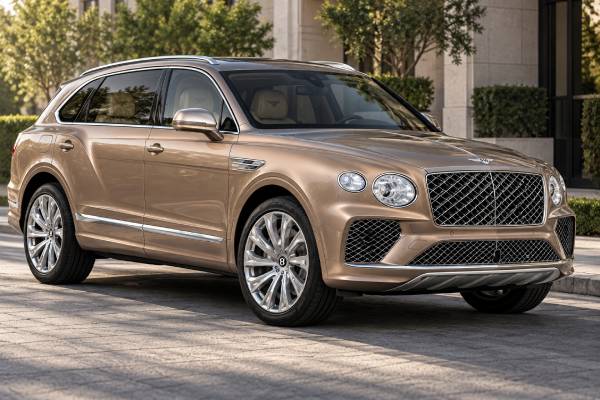
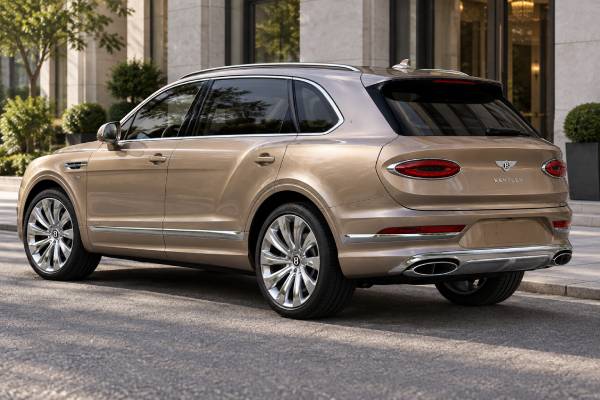
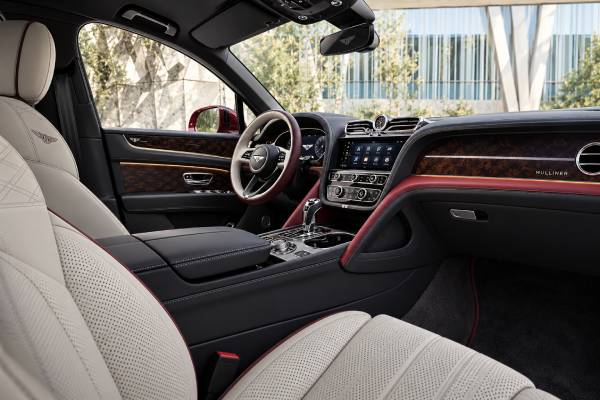
The Bentley Bentayga EWB Mulliner is the flagship version of the long-wheelbase Bentayga, built around rear-cabin space, highly curated materials, and a level of factory personalization that can make two examples look almost unrelated. Introduced in 2023, it uses the familiar 542 bhp twin-turbo V8 rather than a unique engine. Its distinction comes from Mulliner design signatures: a Double Diamond grille, exclusive 22-inch wheels, self-levelling badges, tri-tone interiors, dedicated quilting and embroidery, and an unusually broad range of bespoke colour combinations.
Its 180 mm wheelbase extension gives rear passengers limousine-like room, while the Airline Seat Specification adds 22-way adjustment, deep recline, automatic thermal management, and postural support. Rear-wheel steering and Bentley Dynamic Ride keep the 5.3-metre SUV manageable for the driver. The ownership challenge is that craftsmanship and complexity must both be preserved. Rare hides, veneers, metal overlays, power seats, air suspension, active anti-roll hardware, and advanced assistance systems can be costly to restore if neglected. This guide separates the Mulliner substance from the badge, explains the technical foundation, and shows how to assess a used or commissioned car intelligently.
Table of Contents
- Mulliner Flagship Identity
- Mechanical and Dimensional Reference
- Craftsmanship and Cabin Specification
- Rear-Passenger Technology
- Performance From the Driver’s Seat
- Preserving a Bespoke Bentley
- Commissioning or Buying Used
Mulliner Flagship Identity
The EWB Mulliner is defined by design and specification, not by a higher-output engine. It shares its 550 PS V8 and core chassis with the regular EWB, but includes a carefully assembled set of exterior, interior, and comfort features intended to place it above Azure.
Mulliner has several meanings within Bentley. It is the company’s bespoke division, a source of personal-commission options, and the name used for range-topping production derivatives. An EWB Azure with individual Mulliner options is not automatically an EWB Mulliner. The factory model designation and build record should confirm the derivative.
Exterior identifiers include the Double Diamond matrix grille, Mulliner wing vents, dedicated 22-inch wheels, and self-levelling wheel badges. Depending on specification, bright chrome may dominate, or the Mulliner Blackline Specification may substitute gloss-black details. Duo-tone paint can further alter the appearance, and later factory offerings expanded the number of two-colour combinations.
Inside, the signature is a three-colour hide layout. Bentley launched the car with eight curated tri-tone themes, ranging from warm natural combinations to darker, high-contrast palettes. Customers could also create a personal arrangement using main, secondary, and accent hides, resulting in nearly 4,000 theoretical tri-tone combinations before veneer, stitching, piping, carpet, and metal details were considered.
The materials tell only part of the story. The way they are joined matters: blind stitching, Mulliner quilting, embroidered emblems, three-dimensional illuminated treadplates, deep-pile overmats, precise veneer alignment, and consistent hide tension all contribute to the flagship effect. A used example with damaged trim may be mechanically sound yet expensive to return to original condition because replacement requires the correct material, colour batch, pattern, and craft process.
Bentley also introduced Olive Tan leather on the model, using an olive-oil-industry by-product in the tanning process, and offered carpets made from pure wool or recycled nylon. These details show that Mulliner luxury is not limited to adding more gloss. Material origin, texture, and sustainability form part of the product story.
Mechanical and Dimensional Reference
The Bentayga EWB Mulliner is a petrol ICE SUV. A 3,996 cc twin-turbo V8 drives all four wheels through an eight-speed automatic. Air suspension, rear-wheel steering, and 48-volt active anti-roll control compensate for the long wheelbase and substantial mass.
| Specification | Value | Notes |
|---|---|---|
| Engine | 3,996 cc twin-turbocharged V8 petrol | 32-valve engine with hot-V turbo placement |
| Maximum power | 550 PS (542 bhp; 404 kW) | At 6,000 rpm |
| Maximum torque | 770 Nm (568 lb-ft) | 2,000–4,500 rpm |
| Transmission | 8-speed automatic | Torque-converter unit |
| Drive type | Permanent all-wheel drive | Integrated chassis control |
| Fuel tank | 85 litres (22.45 US gal) | Premium petrol |
| Light-load strategy | Cylinder deactivation | Four cylinders can shut down when conditions allow |
| Specification | Value | Condition |
|---|---|---|
| 0–60 mph | 4.5 seconds | Manufacturer figure |
| 0–100 km/h | 4.6 seconds | Manufacturer figure |
| Top speed | 290 km/h (180 mph) | Manufacturer figure |
| Combined fuel consumption | 13.0 L/100 km | WLTP publication |
| Combined CO₂ | 296 g/km | WLTP |
| Official range | 654 km (406 miles) | WLTP |
| Specification | Value |
|---|---|
| Body style | Five-door extended-wheelbase luxury SUV |
| Overall length | 5,305 mm (208.9 in) |
| Wheelbase | 3,175 mm (125.0 in) |
| Width across mirrors | 2,222 mm (87.5 in) |
| Overall height | 1,774 mm (68.7 in) |
| Published unladen weight | 2,520–2,525 kg (approximately 5,556–5,567 lb), depending on regional definition |
| Boot volume | 380 litres (13.4 cu ft) |
| System | Function |
|---|---|
| Adaptive air suspension | Variable ride height and damping for comfort and control |
| Bentley Dynamic Ride | 48-volt active anti-roll control |
| All-wheel steering | Reduces low-speed turning effort and improves high-speed stability |
| Airline Seat Specification | Rear-seat recline, postural adjustment, and automatic thermal management |
| Touring Specification | Advanced assistance package, with content varying by market |
| Remote Park Assist | Allows supported low-speed parking control from outside the vehicle where available |
| Area | Typical factory content |
|---|---|
| Front design | Double Diamond grille and Mulliner lower-grille treatment |
| Wheels | Exclusive 22-inch Mulliner design with self-levelling badges |
| Interior colour | Curated or bespoke tri-tone hide arrangement |
| Seats | Mulliner quilting, embroidery, and blind stitching |
| Entry trim | Illuminated three-dimensional Mulliner treadplates |
| Carpets | Deep-pile overmats with wool or recycled-material options |
The standard mechanical values are straightforward; the build specification is not. A complete factory options list should accompany any serious purchase because a visual description cannot capture the thousands of possible combinations.
Craftsmanship and Cabin Specification
A Mulliner cabin should be assessed as a handcrafted interior, not merely as a collection of luxury options. Condition, originality, and repair quality can affect value as much as mileage.
Tri-tone colour is the central design tool. The main hide covers the broad surfaces, the secondary hide defines larger contrasting areas, and the accent hide highlights piping, seat sections, door details, or other focal points. A successful combination guides the eye through the cabin. A poorly chosen or later-modified one can feel visually busy even when every individual colour is attractive.
Curated combinations simplify the process because Mulliner designers balance hue, brightness, and material. Personal commissions offer more freedom, but documentation becomes more important. Keep the original commission sheet, colour names, veneer choice, thread specification, embroidery details, and photographs. These records are invaluable if a panel needs repair years later.
Veneer can be high-gloss wood, open-pore wood, piano-painted colour, or a technical finish. Metal overlays may be integrated into the fascia. Each surface needs a suitable cleaning method. Silicone-heavy dressings can create uneven gloss, harsh solvents can lift printed details, and aggressive polishing can alter open-pore texture.
Leather should feel consistent and remain evenly tensioned across quilting. Light creasing on a used seat is normal; dye transfer, cracked bolsters, stretched perforations, loose piping, or colour mismatch between adjacent panels deserves closer attention. The Olive Tan option has its own material story, but it is still a finished automotive hide and should be cleaned according to Bentley guidance rather than household leather advice.
The flagship interior contains many tactile pieces:
- organ-stop vent controls and knurled metal switches;
- embroidered seat emblems and Mulliner brand marks;
- illuminated treadplates and mood lighting;
- folding picnic tables or rear screens where specified;
- deep-pile carpets and overmats;
- powered blinds, armrests, footrests, and seat bolsters;
- audio grilles and speaker surfaces that must remain undamaged.
A cosmetic inspection should take place in daylight and under cabin illumination. Different light reveals colour mismatch, leather repairs, veneer haze, scratches, and uneven stitching. Strong fragrance can mask dampness or smoke, so inspect beneath mats and around seat bases.
Mulliner content can increase repair lead time. A standard black plastic part may be readily available, while a painted veneer carrier in a discontinued accent colour may require special ordering or remanufacture. This is why small damage should influence price even when it does not affect drivability.
Rear-Passenger Technology
The rear seat is a coordinated system of motors, pneumatic valves, sensors, heating elements, fans, control units, and trim. Its quality depends on all of them working quietly and in sequence.
Airline Seat functionality begins with 22-way adjustment. Relax mode can recline the seat to 40 degrees and create leg support by moving the front passenger seat forward. Business mode gives a more upright posture. Bolsters and headrests adjust electrically, while heated door and centre armrests can extend the sense of controlled warmth beyond the seat cushion.
Seat Auto Climate measures contact-surface temperature and humidity. The passenger chooses a comfort level rather than repeatedly selecting heat or fan speed. The system may use heating and ventilation together, an approach that sounds contradictory but can maintain a stable surface condition more effectively than one-direction control.
Postural Adjust changes pressure across six zones. The movement is intentionally small. A system that visibly inflates one side, hisses continuously, or loses support is not providing the intended subtle operation. Testing should include both rear seats because faults can affect one side only.
The four-seat and 4+1 layouts can include extensive centre-console equipment. Check cupholders, storage lids, charging ports, controls, refrigeration equipment where fitted, and any removable accessories. Missing bespoke items can be difficult to replace and may reduce collector appeal.
Remote and assistance functions should be verified with the correct region and account setup. Remote Park Assist, connected destination transfer, vehicle status, and other My Bentley services depend on software, subscriptions, mobile compatibility, and local availability. A seller’s demonstration on an old phone does not guarantee that the new owner can register the service.
Rear entertainment systems require their own test. Confirm screen articulation, touch response, audio routing, inputs, wireless functions, and shutdown. Check for marks where screens contact seatbacks and for loose mounts that can rattle on rough roads.
The most practical pre-purchase technique is to spend at least half the road test in the rear. Use the seats while the vehicle is moving, listen to road and wind noise, operate climate functions, and watch how the suspension controls head movement over dips. A static showroom demonstration cannot reveal whether the flagship experience survives real roads.
Performance From the Driver’s Seat
The EWB Mulliner is fast enough to make its restraint impressive. Its V8 produces 770 Nm across a wide band, so the vehicle can accelerate strongly without a dramatic downshift. The engine note remains present when requested but is subdued during chauffeur-style progress.
Rear-wheel steering transforms low-speed behaviour. The rear tires steer opposite the front tires when manoeuvring, helping the long body rotate. At higher speed, same-direction rear steering supports lane-change stability. The driver still needs to respect the 2,222 mm mirror width and the long rear doors, but the car does not feel like a stretched commercial vehicle.
Bentley Dynamic Ride uses a 48-volt system to counter roll. It allows the air suspension to remain compliant in a straight line while reducing lean in corners. This helps passengers because less body roll means fewer lateral head movements. It also helps the driver place the SUV confidently on a winding road.
Large wheels are the main threat to ride delicacy. The exclusive 22-inch design is part of the Mulliner identity, yet bent rims, low tire pressure, hard replacement compounds, or inner-edge wear can introduce vibration and noise. A road test should include smooth asphalt and sharp-edged urban surfaces.
The braking system must manage more than 2.5 tonnes before passengers and luggage. Progressive pedal pressure should produce straight, quiet deceleration. Steering shake, seat vibration, or a pulsing pedal after repeated stops suggests disc or hub issues. Cars used for short hotel transfers can show corrosion despite low mileage.
Driver assistance can reduce fatigue but must be calibrated. Windscreen replacement, bumper repair, wheel alignment, or suspension work may require camera and radar calibration. Warning-free operation is not proof that every system is geometrically correct; diagnostic and calibration records provide better evidence.
The EWB Mulliner can be owner-driven with pleasure, but its value proposition remains rear-focused. A buyer who rarely carries passengers may prefer a standard-wheelbase Bentayga or the more dynamic Speed, then use Mulliner personal commissioning to achieve a similarly special cabin.
Preserving a Bespoke Bentley
Preservation means keeping the mechanical systems healthy and retaining the integrity of the commission. Both require documentation and specialist judgment.
Follow the VIN-specific service schedule for oil, filters, brake fluid, inspections, spark plugs, and other time- or mileage-based work. Do not infer intervals from another Volkswagen Group V8 application. Bentley calibrations, packaging, market rules, and service procedures differ.
The turbocharged engine’s cooling system deserves routine inspection. Look for dried coolant residue, low reservoir level, fan faults, damaged heat exchangers, and debris accumulation. After sustained high-load driving, a gentler final period reduces thermal stress. Avoid repeated hard acceleration before oil and coolant reach normal temperature.
The chassis needs diagnostic as well as visual care:
- confirm even ride height after overnight parking;
- scan air-suspension, rear-steering, and 48-volt systems;
- inspect control-arm bushes, links, boots, and height sensors;
- measure alignment and tire wear across the full tread;
- inspect brake condition behind the large wheels;
- investigate compressor overrun, knocks, or chassis warnings promptly.
Electrical stability starts with the 12-volt battery. A weak battery can disrupt doors, seats, infotainment, access, and control-module communication. During storage, use Bentley-approved support equipment and ensure that bonnet, alarm, and access procedures match the charger setup.
Cabin preservation should be gentle and specific. Vacuum grit before wiping leather. Use minimal moisture around perforation and stitching. Protect pale hides from denim dye. Do not force a slow seat or table; stop and diagnose the obstruction. Store removed accessories, keys, headphones, and bespoke luggage with the vehicle.
Paint care depends on finish. Gloss, satin, hand-painted coachlines, and duo-tone boundaries require different correction methods. Machine polishing a satin panel can permanently change its sheen. Use a detailer experienced with manufacturer-applied special finishes and record any paintwork for future owners.
An extended warranty may be valuable, but read its exclusions. Trim, wear, cosmetic deterioration, batteries, screens, and bespoke materials may not receive the same protection as a failed mechanical component. A contingency reserve remains sensible even with coverage.
Commissioning or Buying Used
Commissioning new gives control; buying used gives access to someone else’s completed vision at a potentially lower price. The correct route depends on whether the buyer enjoys the specification process and whether a particular existing car already feels right.
For a new commission, begin with use rather than colour. Decide seating layout, rear-passenger priority, climate, parking environment, luggage needs, and whether the vehicle will be chauffeured. Then choose materials. This prevents an attractive specification from becoming impractical.
Ask to see physical samples in natural light. Paint chips, hide swatches, thread, piping, veneer, and metal finishes interact differently in a large cabin than on a screen. Consider cleaning and repair. A pale steering wheel, satin exterior, or bright wool carpet may be worth the care, but it should be a conscious choice.
For a used car, provenance is central. Obtain the original build sheet, commission documents, service history, warranty work, and invoices. Confirm that the tri-tone layout, wheels, grille, badges, and treadplates match the factory record. Check whether missing items—keys, rear controls, headphones, charging accessories, or bespoke luggage—were part of the original delivery.
A specialist inspection should include:
- Full diagnostic scans of powertrain, chassis, body, seat, and assistance modules.
- Cold-start and hot-running checks for the V8 and transmission.
- Overnight or extended observation of air-suspension height.
- Rear-steering, active anti-roll, and camera/radar calibration checks.
- Operation of every seat zone, door, blind, table, screen, and climate function.
- Paint-depth and finish inspection, including coachlines and duo-tone joins.
- Tire age, matching, wheel run-out, brake measurements, and alignment.
- VIN-based recall and campaign verification.
Do not let an extraordinary colour combination distract from ordinary wear. A low-mileage car can still need tires, brakes, batteries, software updates, and fluid service. Conversely, a higher-mileage chauffeur car with complete records and regular use may be mechanically healthier, though its rear cabin may show more wear.
Before money changes hands, price the exact consumables and cosmetic work rather than applying ordinary Bentayga assumptions. A correct 22-inch tire set, wheel refinishing, rear-seat control, tri-tone leather repair, or Mulliner-specific exterior piece can be material to the transaction. Written estimates turn attractive presentation into an informed total-cost decision and prevent small visible faults from becoming disproportionate surprises after delivery.
The strongest EWB Mulliner purchase is coherent, complete, and properly documented. It should feel special before its badge is noticed, operate without excuses, and suit the owner’s passenger needs. When those conditions are met, it offers a rare combination: hand-finished flagship luxury, SUV versatility, and performance that remains effortless rather than ostentatious.
References
- Bentley Bentayga Extended Wheelbase Mulliner | Bentayga Extended Wheelbase Range | Models 2026
- Bentley News 2023 : BENTAYGA EXTENDED WHEELBASE MULLINER – BENTLEY’S NEW FLAGSHIP 2023
- Bentley News 2022 : THE MOST WELLBEING-FOCUSED CAR SEAT IN THE WORLD – AIRLINE SEAT SPECIFICATION 2022
- Bentley News 2023 : NEW FEATURES FURTHER INCREASE DESIRABILITY OF BENTAYGA RANGE 2023
- Service and maintenance 2026
- Check for Recalls: Vehicle, Car Seat, Tire, Equipment | NHTSA 2026 (Recall Database)
Disclaimer
This article is for informational purposes and is not a substitute for professional diagnosis, maintenance, or repair. Specifications, torque values, service intervals, materials, equipment, and procedures vary by VIN, market, and model year. Verify all details against official service documentation from Bentley and use qualified specialists for mechanical, electrical, and high-value trim work.
Please share this guide on Facebook, X/Twitter, or another social platform if you found it useful. Your share supports our work and helps other Bentley buyers find detailed ownership information.