
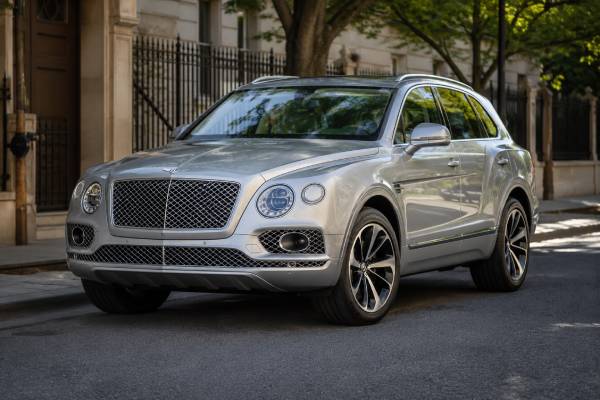
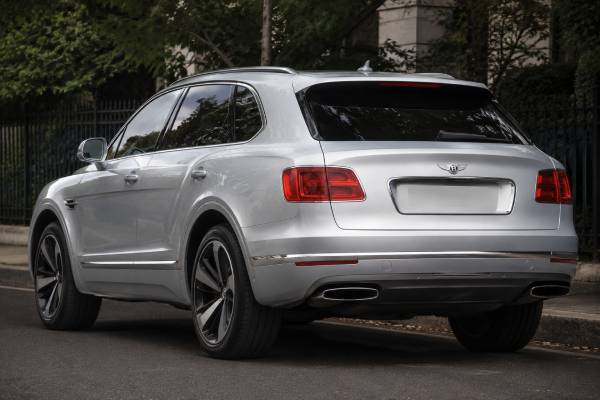
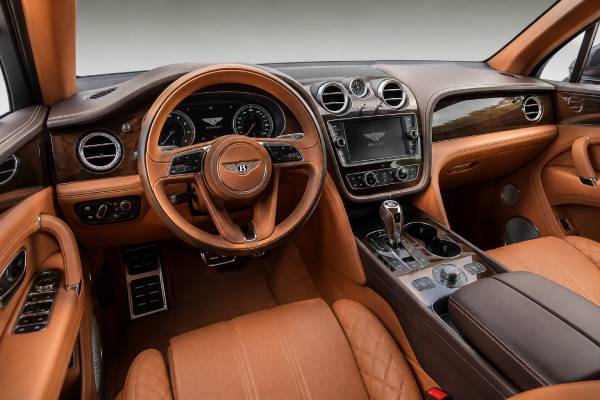
The Bentley Bentayga First Edition is the launch-series version of Bentley’s first SUV, and its appeal goes beyond a long options list. Only 608 examples were planned worldwide, a number chosen to match the engine’s 608 PS metric output. Every car combined the original 600 bhp twin-turbo W12 with launch-specific details such as Union Jack badges, illuminated treadplates, 22-inch black-and-polished wheels, “Diamond within Diamond” upholstery and a richer standard specification than an ordinary early Bentayga. That makes it both a usable high-speed luxury SUV and a genuine marker in Bentley history. Today, the main challenge is not deciding whether it is special; it is confirming that a used example is authentic, correctly maintained and still operating as one integrated luxury machine. This guide explains the First Edition’s engineering, performance, identifying features, upkeep needs and the inspection steps that matter before purchase.
Table of Contents
- What Makes the First Edition Distinct
- W12 Specifications and Technical Data
- How the Launch Bentayga Drives
- Cabin Craftsmanship and Launch Equipment
- Maintenance Priorities for an Early W12
- Used-Buyer Inspection and Authentication
- Who Should Buy One
What Makes the First Edition Distinct
The First Edition is best understood as a numbered launch specification rather than a separate mechanical model. It uses the same 6.0-litre W12, eight-speed automatic transmission, permanent all-wheel drive and air-sprung chassis as the original W12 Bentayga, but its visual and equipment package identifies it as one of the first 608 customer cars.
Bentley revealed the edition in Los Angeles in November 2015. The production number was not arbitrary: the W12 generated 608 PS, equivalent to 600 bhp. That numerical link is central to the edition’s story and should be reflected in supporting documentation, dealer records and the vehicle’s build specification. A seller who describes any well-equipped 2016 or 2017 W12 as a “First Edition” without evidence should be treated cautiously.
Factory identifiers include Union Jack exterior and fascia badging, illuminated entry plates, 22-inch wheels finished in black with polished faces, distinctive embroidery and a specific diamond-within-diamond quilting pattern. Bentley also limited the launch palette to ten exterior colours. Equipment varied by market and customer choices, so the absence of one comfort option does not automatically disqualify a car; the correct approach is to compare the VIN-specific factory build record with the physical vehicle.
Each original customer was also associated with one of three special Breitling Bentayga Edition chronographs. The watch is an interesting provenance item, but it is not part of the vehicle’s identity in the legal or mechanical sense. A car without its watch can still be authentic, while a watch offered with a non-First Edition Bentayga proves nothing. Treat accessories, presentation cases and launch paperwork as value enhancers only after the car itself has been verified.
The edition’s collector appeal depends heavily on completeness. Correct wheels, badges, treadplates, seat embroidery, veneer condition and factory colour combination matter more here than on an ordinary W12. Refinished wheels, retrimmed seats or deleted badging may improve appearance but reduce originality. On the other hand, a perfectly original car with neglected cooling, suspension or brake systems is not automatically the better purchase. Mechanical condition remains the first priority because restoration costs can easily exceed the value difference between two examples.
W12 Specifications and Technical Data
The First Edition is an internal-combustion vehicle built around Bentley’s redesigned 5,998 cc W12. The engine uses two turbochargers, direct and port fuel injection, variable cylinder operation and a broad 900 Nm torque plateau. An eight-speed ZF automatic sends power to all four wheels through a permanent AWD system, while self-levelling air suspension provides the range of ride heights expected of a luxury SUV.
| Specification | Value |
|---|---|
| Engine | 5,998 cc twin-turbocharged W12 petrol |
| Maximum power | 608 PS / 600 bhp / 447 kW at 6,000 rpm |
| Maximum torque | 900 Nm (664 lb-ft) from 1,250 to 4,500 rpm |
| Fuel system | Combined direct and port injection |
| Efficiency technology | Cylinder deactivation and stop-start |
| Fuel-tank capacity | 85 litres (22.5 US gal) |
| Specification | Value |
|---|---|
| Transmission | Eight-speed automatic |
| Drive system | Permanent all-wheel drive |
| Front suspension | Four-link double-wishbone layout with air springs |
| Rear suspension | Trapezoidal multi-link layout with air springs |
| Damping | Electronically controlled continuous damping |
| Active roll control | 48-volt Bentley Dynamic Ride where fitted |
| Measure | Claimed result |
|---|---|
| 0–60 mph | 4.0 seconds |
| 0–100 km/h | 4.1 seconds |
| Top speed | 301 km/h (187 mph) |
| Braked towing capacity | Up to 3,500 kg (7,716 lb), when correctly equipped |
| Specification | Value |
|---|---|
| Body style | Five-door luxury SUV |
| Length | 5,140 mm (202.4 in) |
| Width excluding mirrors | 1,998 mm (78.7 in) |
| Wheelbase | 2,995 mm (117.9 in) |
| Turning circle | 12.4 m (40.7 ft) |
| Luggage volume, five-seat layout | 484 litres (17.1 cu ft) |
| Area | Factory feature |
|---|---|
| Production scope | 608 examples planned worldwide |
| Exterior markers | Union Jack badging and 22-inch black-and-polished wheels |
| Entry trim | Illuminated treadplates |
| Upholstery | Diamond-within-diamond quilting, contrast stitching and embroidery |
| Fascia detail | Union Jack badge |
| Launch palette | Ten exterior colours |
Figures can differ by market, seating configuration, wheel package and homologation standard. A First Edition may be registered as a 2016 or 2017 model even though the edition was announced in 2015, so build date, model year and first-registration date should be recorded separately rather than treated as interchangeable.
How the Launch Bentayga Drives
The defining sensation is effortless speed rather than overt aggression. At low engine speeds, the W12’s 900 Nm arrives early enough that the transmission rarely needs a dramatic downshift. The vehicle gathers pace with the smoothness of a large grand tourer, yet the high seating position and substantial mass never disappear completely from the experience.
In Comfort mode, air suspension and adaptive dampers isolate long-wave road movement well, which suits the car’s original brief: crossing countries quickly without making occupants feel hurried. Bentley mode generally supplies the most natural everyday balance, keeping the body controlled without the sharper responses of Sport. Cars fitted with the 48-volt Dynamic Ride system can resist body roll more actively, but the system does not turn the Bentayga into a lightweight sports car. Its achievement is preserving ride comfort while reducing the slow, heavy leaning that can make a tall luxury SUV feel imprecise.
The steering is accurate and lighter than the vehicle’s visual mass suggests. Brake response depends strongly on condition, tire choice and whether the car has standard iron brakes or optional carbon-ceramic equipment. A healthy iron-brake car should stop smoothly without steering vibration, pedal pulsing or grinding. Carbon ceramics reduce unsprung mass and resist heat, but replacement cost makes inspection of disc condition essential. Surface marks, edge wear and previous damage must be assessed by a specialist familiar with ceramic systems rather than judged only by appearance.
The First Edition’s 22-inch wheels sharpen initial response and contribute to its stance, but they also reduce sidewall depth. Bent rims, inner-edge tire wear and impact damage are therefore realistic inspection concerns. Correctly matched premium tires are important; mixed brands, mismatched load ratings or one recently replaced tire on an AWD vehicle suggest cost-cutting. Uneven tread depth can also complicate all-wheel-drive operation and disguise alignment or suspension problems.
Off road, the Bentayga has genuine ride-height adjustment, traction programs and permanent AWD, but most First Editions are now more valuable as preserved luxury vehicles than as trail tools. Mud packed into undertrays, damaged lower trim and corrosion around towing equipment can reveal harder use than the polished bodywork suggests. A car that has towed regularly is not automatically undesirable, yet its cooling system, brakes, transmission behavior and rear suspension deserve closer scrutiny.
Cabin Craftsmanship and Launch Equipment
The cabin is where originality is easiest to see and most expensive to recreate correctly. The First Edition’s special quilting, contrast thread, embroidery, Union Jack fascia badge and illuminated entry trim should form one coherent factory presentation. Poorly matched leather, uneven stitching or a badge that appears newly fitted warrants a build-record check.
Bentley interiors use natural hides and real veneer, so gentle variation is normal. Damage is not. Inspect the driver’s bolster for cracking, the outer seat piping for abrasion, the steering wheel for shiny wear and the rear seatbacks for marks from child seats or cargo. Check that all massage, heating, ventilation and multi-way adjustment functions work through their full range. A failed seat motor or pneumatic function may sound minor, but diagnosis can involve trim removal and expensive modules.
The original infotainment system belongs to the mid-2010s. It can feel dated beside the later 10.9-inch system, yet condition matters more than modernity. Test cold startup, navigation, Bluetooth, cameras, parking sensors, audio sources, screen response and every USB or media input. Rear entertainment tablets, if fitted, should connect properly and include their mounts and charging equipment. Missing accessories can be difficult to replace in matching specification.
Naim audio, night vision, head-up display, adaptive cruise control, lane assistance and the Touring or City packages were valuable options. Do not assume every First Edition contains every technology. Instead, confirm the installed specification, then test each system in a controlled road drive. Warning-free operation at ignition is not enough; radar and camera functions may reveal calibration or communication faults only once the vehicle moves.
Small details influence both enjoyment and resale value. Inspect soft-close doors, powered tailgate action, panoramic-roof shade, ambient lighting, chilled storage, keyless entry, all keys and the remote control for rear-cabin functions where supplied. Water staining around the headliner, damp carpet near the luggage compartment or misting inside lamps should be investigated before purchase. Luxury trim can hide moisture for some time, while electrical connectors and control modules remain vulnerable.
Maintenance Priorities for an Early W12
A First Edition should be maintained as a complex, high-output grand tourer, not as a low-mileage collectible that needs only annual oil changes. Time, heat cycles and inactivity can age seals, batteries, tires, coolant hoses and suspension components even when the odometer is modest.
The best history is a continuous series of invoices from Bentley or an experienced independent specialist. A stamped service book alone does not show whether emerging leaks, weak batteries, software campaigns or worn suspension joints were addressed. Ask for line-item invoices, diagnostic reports and evidence of recall completion. Confirm that the VIN is checked through the appropriate national recall database, because campaigns vary by market and production range.
Engine care starts with correct oil specification, level and change history. The W12 contains extensive turbocharger plumbing, two injection strategies and a crowded cooling package. Look for oil or coolant residue around accessible connections, smell for coolant after a hot drive and inspect the expansion tank only when the engine is safely cold. Temperature should remain stable in traffic and during a sustained climb. A sweet smell, repeated coolant top-ups or dried residue should prompt pressure testing rather than reassurance that “they all do that.”
Battery condition is unusually important because multiple control modules, powered comfort features and the 48-volt chassis system depend on stable voltage. A weak 12-volt battery can produce a confusing collection of warnings. If the vehicle has Bentley Dynamic Ride, the 48-volt system should also be scanned for stored faults. Avoid accepting a cleared dashboard as proof; request a pre-purchase diagnostic scan before and after the road test.
Air suspension should raise and lower without excessive delay, compressor noise or a persistent corner-height difference. Park the vehicle on level ground, record the wheel-arch heights and recheck after several hours. Small visual differences can be caused by the surface, but a repeated drop at one corner indicates the need for professional leak diagnosis. During the drive, listen for knocks over sharp bumps and note any steering pull or tire roar.
Brake and tire expenditure is substantial. Budget for replacement by condition, not by the seller’s estimate of remaining life. Measure iron-disc thickness, inspect for lip and heat spotting, and check pad wear electronically and physically where possible. On carbon-ceramic cars, obtain a specialist assessment. Tires must have the correct size, load and speed rating, with similar tread depth across each axle and ideally across all four wheels.
Annual use should include enough fully warmed driving to circulate fluids, dry the exhaust and exercise moving systems. A car stored for long periods benefits from an approved battery maintainer, correct tire pressures and climate-controlled conditions, but storage is not a substitute for servicing. Old tires can retain deep tread while their rubber hardens, and brake surfaces can corrode even in an attractive garage.
Used-Buyer Inspection and Authentication
The safest buying process combines provenance verification with a mechanical inspection by someone who knows early 4V1 Bentaygas. A generic luxury-car inspection may identify paintwork and obvious leaks but miss option coding, 48-volt faults, seat-system errors or edition-specific trim inconsistencies.
Begin with identity:
- Match the VIN on the vehicle, registration document, service records and diagnostic report.
- Obtain the factory build specification and confirm First Edition equipment.
- Separate build date, model year and first-registration date.
- Check that Union Jack badges, treadplates, wheels, quilting and embroidery agree with the build record.
- Review title history, accident records and mileage entries for continuity.
Then examine structure and finish. Use a paint-depth gauge across steel and aluminium panels, understanding that material differences affect readings. Look closely at panel edges, bumper fasteners, lamp dates and paint texture. A high-quality repair is not necessarily a reason to reject the car, but undisclosed structural damage or poorly calibrated driver-assistance sensors is.
A cold start is essential. The engine should start promptly, settle evenly and avoid persistent smoke, metallic noise or strong fuel odor. Observe the instrument cluster before startup so warning lamps can be seen performing their checks. Scan all modules, not only the engine controller. Stored or intermittent faults in suspension, cameras, comfort systems and network communication can be more informative than a clean engine-light status.
During the road test, use stop-and-go traffic, rough pavement, a faster open road and several full-lock parking maneuvers. The transmission should engage Drive and Reverse without a heavy delay or impact. Acceleration should be smooth, steering centered and braking straight. Test every ride-height and drive mode only where safe. Afterward, re-scan the vehicle and inspect for fresh fluid residue or cooling-system odor.
Evaluate expensive options separately. Carbon-ceramic brakes, Naim audio, rear entertainment, night vision and powered rear-cabin equipment can add desirability when functional, but each also raises the cost of returning a neglected car to full specification. A lower purchase price rarely compensates for several concurrent electronic and chassis faults.
Finally, price the car from its actual state. Deduct realistic specialist costs for overdue servicing, tires, brakes, cosmetic correction, missing keys and nonworking options. Do not use asking prices for museum-quality examples to justify a compromised car. Conversely, a documented, correctly specified First Edition may deserve a premium over an ordinary W12 because replacement of its unique trim is difficult and its production story is clear.
Who Should Buy One
The Bentayga First Edition suits an owner who wants the earliest and most historically significant version of Bentley’s SUV without giving up everyday utility. It is fast enough to remain remarkable, comfortable enough for long trips and distinctive enough that its launch details matter to collectors.
It is less suitable for a buyer seeking inexpensive access to the badge. Fuel, insurance, tires, brakes, electronics and specialist labor remain tied to a vehicle that was engineered and priced at the top of the market. Depreciation does not reduce the cost of replacement components or the time required to diagnose networked systems.
Choose condition and documentation before mileage alone. The strongest example will have a verified build sheet, coherent First Edition trim, regular specialist invoices, completed campaigns, matching premium tires, quiet suspension and fault-free operation of its many comfort systems. A car with modestly higher mileage but consistent care is often preferable to a garage-kept example that has missed services and developed age-related faults.
The enduring reason to own one is its combination of occasion and usefulness. It is not merely a special badge applied late in a model cycle; it represents the moment Bentley entered a new segment and immediately tried to redefine its limits. Preserved properly, the First Edition can still perform that role every time it is driven.
Ownership also benefits from preserving the launch-era items that are easy to separate from the vehicle. Keep both keys, the original handbook pack, First Edition documentation, wheel-locking hardware and any supplied accessories together. Photograph the numbered or edition-specific details before workshop visits and record replacements by date and mileage. Those small steps reduce future uncertainty when the car changes hands.
A realistic annual plan should include an inspection before a long journey, not after a warning develops. Tire age, brake thickness, battery condition, coolant level and suspension height can all be checked in advance. The First Edition is at its best when it is used regularly enough to keep systems exercised, but not treated as maintenance-free simply because mileage remains low.
Documentation That Protects First Edition Value
A First Edition should be judged as a complete launch artifact rather than as a normal W12 with extra badges. The strongest history file connects the VIN to the original factory specification, delivery paperwork and early ownership record. It should explain the exterior color, wheel finish, Diamond-in-Diamond quilting, contrast stitching, Union Jack details and any major comfort or assistance packages. Original handbooks, keys, service invoices and dated photographs help establish that these elements have stayed with the vehicle. Retain the original delivery cover and labels whenever they survive. Bentley also paired First Edition customers with a special Bentayga-themed Breitling watch choice. A surviving watch is not required for the SUV to be genuine, but a documented original pairing can add interest for a collector and should be described accurately rather than assumed.
Completeness matters because small launch-specific pieces can be harder to replace than ordinary mechanical parts. Check illuminated treadplates, seat embroidery, fascia emblems, wheel center caps and the finish of every 22-inch wheel against period material and the build sheet. A missing badge may appear trivial, yet an incorrect reproduction can weaken confidence in the rest of the car. Keep high-resolution photographs of the cabin, exterior identifiers, option labels and supplied accessories with the service record. That archive gives future specialists a reference before leather repair, wheel refinishing or bodywork begins. It also prevents a well-meaning restoration from replacing rare original details with later Bentayga components that fit physically but are not correct for the launch edition.
References
- Bentley Bentayga | History and Heritage | Bentley Motors 2026
- BENTLEY NEWSROOM : 2016 Bentayga 11WO 2026
- New Bentley Bentayga, The Definitive Luxury SUV | Bentley Media 2020
- The Award-winning Bentayga Reaches 20,000 Milestone | Bentley Media 2020
- 608 Bentley Bentayga ‘First Editions’ revealed — New Car Net 2015
- BENTLEY NEWSROOM : Technical Specifications 2026
Disclaimer
This article is for informational purposes and is not a substitute for professional diagnosis or repair. Specifications, torque values, service intervals and procedures can differ by VIN, market and equipment, so verify every job against the official service documentation issued for the individual Bentley. Please share this guide on Facebook, X/Twitter or another platform if it supported your research.