
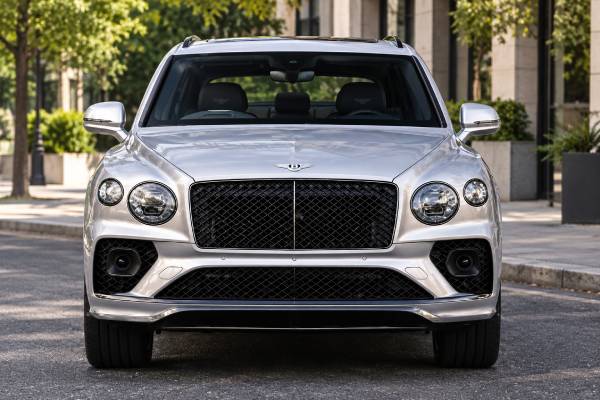
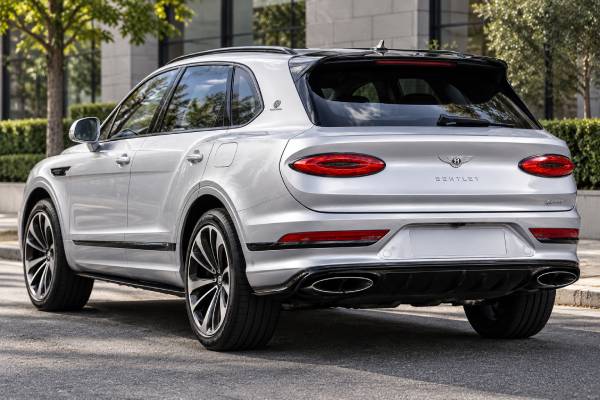
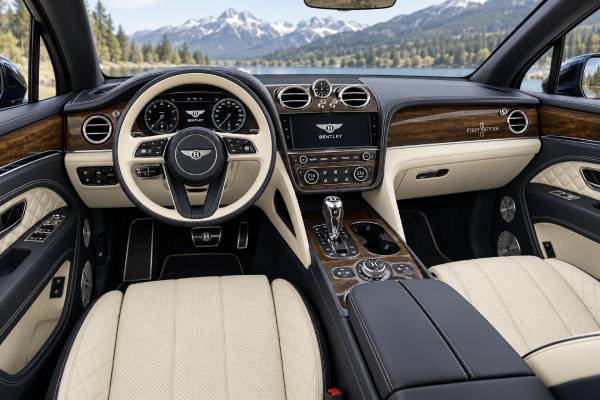
The 2021–2022 Bentley Bentayga Hybrid First Edition combines two launch stories in one vehicle. It introduced the plug-in powertrain to the redesigned Bentayga body while grouping many of the range’s most desirable options into a recognizable First Edition specification. The 443 bhp system uses a turbocharged 3.0-litre V6, an integrated electric motor and a 17.3 kWh battery, but the edition’s added value lies in factory details such as exterior and fascia badging, special contrast stitching, illuminated hybrid treadplates, LED welcome lamps, Mulliner Driving Specification, Touring Specification, mood lighting and Naim for Bentley audio. Because ordinary Hybrids could be ordered with many of those options individually, a used car must be authenticated as a complete factory specification rather than judged by a badge or wheel design. It must also pass the same high-voltage tests as any PHEV. This guide treats equipment provenance and battery condition as equal priorities, showing how to verify the edition, assess its materials and technology, test charging, and decide whether its premium over a standard Hybrid remains justified.
Table of Contents
- Why Bentley Created the Hybrid First Edition
- Powertrain Data and Factory Package Content
- An Identity Map from Badge to Build Sheet
- Mulliner Craft, Touring Assistance, and Naim Audio
- Validating Charging and Hybrid Operation
- Preserving the Edition While Maintaining the PHEV
- The Premium Test: Condition, Completeness, and Value
Why Bentley Created the Hybrid First Edition
The redesigned Bentayga arrived first with the V8, followed by the Speed and then the Hybrid in early 2021. Bentley used First Edition specifications to present the new design with a high concentration of craftsmanship, comfort and assistance technology. For the Hybrid, that approach placed electrification inside a cabin and equipment package intended to feel like a flagship rather than an economy-focused derivative.
The model should not be confused with the 2015 W12 First Edition. That first launch run was tied to 608 PS and comprised 608 vehicles. The Hybrid First Edition belongs to the later elliptical-lamp body, uses a V6 PHEV system and has no connection to the original run number. Repeating “one of 608” in an advertisement for a 2021 Hybrid is inaccurate unless supported by some separate market-specific evidence.
Nor should the car be confused with the ordinary Bentayga Hybrid. Both share the same output and battery. A standard Hybrid fitted with Touring Specification, Mulliner quilting and Naim audio may be extremely similar in daily use. The First Edition distinction comes from the factory package and its dedicated identifiers, not greater acceleration or electric range.
This creates an unusual purchase equation. Mechanical condition determines whether the car is safe and usable; completeness determines whether it deserves an edition premium. A missing badge does not make the PHEV defective, but a history of replaced seats, generic treadplates and absent documentation can undermine collectible identity.
Registration dates span 2021 and 2022 in many markets. Some cars built in late 2021 were first registered the following year. The VIN and production record should establish the exact build, while the article’s date range reflects the assignment and observed market availability.
The First Edition makes most sense for an owner who will use both halves of its character: regular electric urban travel and the long-distance comfort of Touring and Front Seat Comfort equipment. Buying it only as an ornamental special edition while never charging it overlooks the central reason the model exists.
Powertrain Data and Factory Package Content
The Hybrid First Edition retains the 449 PS system output of the regular facelift Hybrid. Its technical tables therefore need to identify the 17.3 kWh generation clearly and keep special-equipment facts separate from drivetrain facts.
| Specification | Factory information |
|---|---|
| Combustion engine | 3.0-litre twin-scroll turbocharged V6 petrol |
| Electric motor | Integrated E Motor within the eight-speed driveline |
| Combined power | 449 PS / 443 bhp / 330 kW |
| Combined torque | 700 Nm (516 lb-ft) |
| Transmission | Eight-speed automatic |
| Traction | Permanent all-wheel drive |
| Item | Published value |
|---|---|
| High-voltage battery | 17.3 kWh lithium-ion |
| Maximum AC charging | Up to 7.2 kW with compatible AC equipment |
| Full charge time | 2.5 hours using a suitable 7.2 kW source |
| Electric range | Up to 31 miles (50 km), NEDC |
| Combined range | Up to 536 miles (862 km), NEDC |
| DC rapid charging | Not supported |
| Measure | Official figure |
|---|---|
| 0–60 mph | 5.2 seconds |
| 0–100 km/h | 5.5 seconds |
| Top speed | 254 km/h (158 mph) |
| Hybrid modes | EV Drive, Hybrid Mode, and Hold Mode |
| Energy guidance | Hybrid Efficiency Navigation and accelerator feedback |
| Category | Content |
|---|---|
| Craftsmanship | Mulliner Driving Specification, diamond quilting, and drilled sports pedals |
| Touring Specification | Adaptive cruise control, lane assist, traffic assist, night vision, and head-up display |
| Comfort | Front Seat Comfort Specification, mood lighting, and deep-pile overmats |
| Audio | Naim for Bentley premium system |
| Identification | First Edition exterior and fascia badges plus dedicated contrast stitching |
| Entry details | LED welcome lamps by Mulliner and illuminated treadplates |
| Location | What to verify |
|---|---|
| Front fenders or exterior badge position | Correct First Edition emblem and finish |
| Fascia | Factory First Edition badge integrated with the selected veneer |
| Seats | First Edition or Bentley wings embroidery as ordered, with dedicated stitching |
| Treadplates | Hybrid or edition-appropriate illuminated wording according to build |
| Wheels | Mulliner ten-spoke directional design and finish shown on the build sheet |
| Documentation | Factory model designation and option codes, not only dealer description |
Regional specification can change individual items. A definitive authentication uses the VIN-specific build record and original order documents. Generic package lists are a starting point, not a substitute.
An Identity Map from Badge to Build Sheet
Begin authentication with paperwork before studying cosmetic details. The factory build sheet should identify the First Edition specification and list the car’s original paint, hide colors, veneer, wheel finish, seating configuration and option packages. An original invoice or dealer order adds useful context.
Next, map the physical car. Exterior First Edition badging should be correctly positioned and finished. Look for disturbed adhesive, paint edges or mismatched color that might indicate panel repair. A replacement badge is not disqualifying, but it should lead to a transparent explanation.
The fascia badge is harder to overlook because it is integrated into the visual center of the cabin. Compare its typeface, alignment and surrounding veneer with known factory presentation. A generic plaque added after production may sit proud, use different metal or interrupt the veneer finish.
Seat embroidery could show First Edition script or Bentley wings according to the order. That choice means one design is not universally correct. What matters is agreement between build data, stitching colors and the rest of the cabin. A front seat replaced after damage may carry different embroidery from the rear.
Dedicated contrast stitching follows the quilting and trim. Examine spacing and tension at the seat shoulders, door panels and bolsters. Handcrafted work contains natural variation, but abrupt changes in thread shade, needle holes beside the current seam or filled perforations can reveal repair.
Illuminated treadplates and LED welcome lamps should function on every door where fitted. The Hybrid may use model-specific illuminated wording. Photograph the sequence, because intermittent lighting can disappear during a later workshop visit. Water entry and damaged wiring are more consequential than a scratched plate surface.
Mulliner directional wheels support identity but are not unique enough to prove it. Confirm diameter, part number and finish. First Edition cars seen in the market use painted or black-painted ten-spoke configurations, and ordinary cars could receive similar wheels. Do not infer factory identity from wheel appearance alone.
The Naim system can be recognized by speaker grilles, yet grilles can also be swapped. The infotainment equipment list and amplifier hardware should agree. Use balance and fade to test every channel; a branded but nonfunctioning system does not preserve the package’s value.
Check both keys, manuals, charging cables, adapter set and any First Edition presentation material supplied at sale. Accessories are not as important as battery health, but completeness matters more on a launch specification. Original items can be difficult to recreate after they are lost.
Finally, look for a coherent story. A car with a confirmed build sheet, matching cabin, correct wheels, consistent service record and minor documented repairs is easier to trust than one with perfect badges but no origin documents. Authentication is cumulative evidence, not one visual trick.
Mulliner Craft, Touring Assistance, and Naim Audio
Mulliner Driving Specification gives the cabin much of its visual impact. Diamond-quilted seats and doors, drilled alloy pedals, embroidered emblems, jeweled filler caps and distinctive wheels form a craftsmanship package. On the Hybrid First Edition, those features combine with special stitching and identification.
Inspect hides in indirect daylight. The outer driver bolster and pale-color areas show wear most clearly. Dye transfer can often be cleaned, but cracked coating, stretched perforations and flattened quilting need professional assessment. A harsh re-dye may hide wear while filling the grain and embroidery edges.
The jeweled fuel cap is relevant; the oil filler cap must also match the specification where included. These pieces are easily removed during service and replaced with ordinary parts. Ask whether originals were stored if they are absent. Never treat decorative caps as a reason to overlook fluid leaks or incorrect servicing.
Front Seat Comfort Specification adds extensive adjustment, memory, heating, ventilation, massage and comfort headrests. Test every movement separately. A seat that moves forward but not upward may have a switch, wiring or motor fault that a quick demonstration misses. Confirm memory recall and passenger-side controls.
Touring Specification groups assistance for long-distance driving. Adaptive cruise, traffic assistance, lane assistance, head-up display, night vision and Bentley Safeguard Plus were included according to regional availability. Their sensors depend on correct camera, radar, windshield and alignment calibration.
Drive long enough to exercise the systems under safe conditions. The head-up display should be sharp and height-adjustable. Night vision should produce a clean thermal image. Adaptive cruise must recognize traffic and disengage normally. A warning that appears only after several miles is still a fault requiring a scan.
The 10.9-inch central display is the control hub for navigation, media and vehicle settings. It should start without repeated rebooting and respond across the full glass. Test wireless Apple CarPlay, Android Auto, USB-C ports and charging pad. Market support for connected services may have changed, so determine whether any missing function is account-related, network-related or hardware-related.
Naim for Bentley uses a high-output, multi-speaker architecture designed for the cabin. Begin testing at low volume to identify hiss, then increase gradually. Use the fader to isolate the rear and balance to compare sides. A buzz can come from a damaged speaker, amplifier channel or loose door trim. Check several sources so a poor recording is not mistaken for a vehicle fault.
Mood lighting and welcome lamps contribute to the launch-edition presentation. Inspect color consistency and brightness. Replaced door trim can produce a mismatch. Deep-pile overmats should fit securely and not interfere with pedals; original mats may be stored separately to preserve them.
The package works when all these elements reinforce one another. If multiple assistance, audio and comfort features are inoperative, repair costs can erase the edition premium even when the hybrid drivetrain is healthy.
Validating Charging and Hybrid Operation
A First Edition still needs an ordinary, disciplined PHEV test. Start with the car cold and record ambient temperature, battery percentage and indicated electric range. Confirm that the 12-volt battery is strong enough to initialize every control system without a cascade of warnings.
Inspect the AC charge port, pins, hinge and lock. Use a known-good cable and source. The connector should lock, the car should negotiate charging, and the displayed completion time should be plausible. Let the session continue long enough to reveal interruptions. Scheduled charging and departure timers should also be tested if they will be used.
The 17.3 kWh pack cannot be evaluated solely from indicated range. Ask a qualified technician for state-of-health data, cell-voltage deviation, insulation status, fault history and temperature behavior. Battery control software may reserve energy outside the displayed usable range, so raw capacity assumptions can be misleading.
Drive away in EV Drive with moderate climate demand. Power delivery should be smooth and quiet. The accelerator pressure point identifies the approximate threshold before the V6 is requested. Press through it once the car is ready and observe the engine start. The transition should add performance without a violent driveline shock.
Select Hybrid Mode and enter a destination. Hybrid Efficiency Navigation should use route data to allocate energy. Then use Hold Mode and verify that the battery state is broadly preserved. Exact behavior changes with temperature and traffic, so the aim is logical response rather than a fixed number.
Regenerative braking should blend with the hydraulic system. Perform gentle stops at low speed, then safe, firmer stops. A full or cold battery can limit regeneration, so repeat after some energy has been used. Pedal inconsistency, pulling or vibration requires diagnosis of both software and physical brakes.
Observe the digital driver display during each mode. It should distinguish electric power demand, regeneration and engine operation. Frozen graphics, missing charging pages or inconsistent state information can indicate communication or software problems.
The V6 must be assessed as a combustion engine. Listen at cold start, check oil and coolant history, scan for misfires and allow it to reach full temperature. Owners who perform most journeys electrically may accumulate few engine hours, but the oil still ages and brief cold starts can be demanding.
After the road test, connect the charger again. A hot-system charge can reveal a fault not present when cold. Listen for normal cooling operation, look for warning messages and re-scan the modules. Compare pre- and post-drive fault records.
Real-world electric distance should be judged over a repeatable route, not one acceleration-heavy demonstration. Temperature, HVAC, speed and elevation must be noted. A First Edition badge has no effect on battery range, so the same evidence standard applies as for a regular Hybrid.
Preserving the Edition While Maintaining the PHEV
Mechanical maintenance and preservation should be planned together. Before a workshop begins, photograph wheel, treadplate, seat and trim condition. Protective covers must be clean, and technicians should know that special stitching, high-gloss veneer and illuminated trim cannot be treated as generic surfaces.
The V6 requires the exact approved oil and filter on a time-based schedule. Check spark-plug and ignition records, fuel quality and cooling-system integrity. An engine that runs infrequently still needs complete warm cycles and fresh lubricants.
High-voltage work requires trained personnel and the correct isolation procedure. Battery coolant, power electronics and charging components must not be serviced by guesswork. Retain diagnostic reports so later buyers can see trends rather than one isolated reading.
The 12-volt battery is separate from the traction pack and remains essential. Test capacity, charging voltage and age. During storage, use a compatible maintainer at the approved connection points. Low voltage can create false-looking faults in the assistance, suspension and hybrid systems.
Air suspension should hold the vehicle level. Operate each height and note compressor run time. Dynamic Ride, if fitted through the package or order, adds a 48-volt active anti-roll system. That means some cars contain high-voltage traction, 48-volt chassis and 12-volt body networks, each with distinct diagnosis.
Wheel service must protect the directional Mulliner finish and large brake hardware. Record wheel position before removal, use correct lifting points and inspect inner barrels. Replace tires as a matched set when circumference or age differs substantially. Incorrect tires can reduce electric range, increase noise and stress the AWD system.
Brake fluid remains time-based. Regeneration can leave iron discs underused, allowing corrosion on hidden faces. Include safe friction-brake use and inspect the full disc surface. The hybrid’s mass makes marginal brakes unacceptable.
Interior cleaning should begin with dry methods. Use leather-compatible products sparingly, avoid soaking perforated quilting and keep polish off contrasting thread. LED welcome-lamp lenses and illuminated treadplates scratch easily; use clean microfiber rather than abrasive compounds.
Naim speaker grilles should not be saturated with cleaner. If a door panel must be removed, document clip replacement and wiring reconnection. A later rattle can destroy the premium-audio experience even when every speaker works.
Connected-service and infotainment updates should be recorded by version or campaign. Account transfer is part of resale preparation. Remove the former owner’s personal data while preserving service information and paired-key functionality.
Store original parts. If a wheel is replaced after damage, keep the repairable factory wheel. If a treadplate or badge is renewed, retain the dated old part. Transparent preservation supports authenticity better than discarding every imperfect component.
The Premium Test: Condition, Completeness, and Value
The First Edition premium can be tested through three questions. Is the vehicle mechanically stronger than comparable standard Hybrids? Is the factory package complete and documented? Do the added features work well enough to provide real value?
For mechanical strength, demand a high-voltage report, successful AC charge, clean module scan, annual V6 service and stable air suspension. Check tires, brakes, cooling and underbody. A beautiful cabin cannot compensate for a weak battery or damaged battery shield.
For completeness, compare the VIN-specific build sheet with the car. Confirm badges, fascia, embroidery, stitching, treadplates, welcome lamps, Mulliner equipment, Touring functions, Front Seat Comfort, Naim audio, mood lighting and mats. Document legitimate replacements rather than hiding them.
For functional value, operate everything. A nonworking night-vision camera, silent Naim channel, dead massage motor and intermittent screen can create a large combined invoice. Deduct repair cost from the premium rather than assuming these are minor accessories.
Inspect accident history with special attention to sensor areas and the charging side of the body. A bumper repair requires correct radar calibration; a windshield requires camera calibration; damage near the charge port can affect more than paint. Review calibration reports.
Check warranty status in writing. High-voltage battery coverage differs by market, date and mileage, and an edition designation does not extend it automatically. Confirm whether transfer or inspection conditions apply.
Compare the car with a similarly equipped standard Hybrid, not only with other First Editions. If a standard car has excellent battery health and the desired options, it may be the better ownership choice. The First Edition deserves more only when provenance and condition are convincing.
Low mileage is not enough. An unused PHEV can have an old 12-volt battery, flat-spotted tires, corroded brakes, stale fuel and a traction battery stored at an unfavorable charge. Regular documented use can be healthier. Examine chronology rather than celebrating the smallest number.
The ideal buyer has dependable charging, values the launch specification and intends to preserve it. Someone who plans to change wheels, retrim the seats or ignore connected systems is paying for equipment that will be removed or neglected.
A successful purchase should feel complete from the first approach: welcome lamps work, trim matches the records, the cabin technology starts cleanly, and the vehicle moves away silently on a healthy charge. The V6 should then join without drama when the journey expands. That seamless progression—from special-edition presentation to genuine electric use—is what separates a well-kept Hybrid First Edition from an ordinary PHEV wearing expensive labels.
References
- Bentley News 2021 : BRINGING SERENITY TO THE CITY AND BEYOND – THE NEW BENTAYGA HYBRID 2021
- THE NEW BENTAYGA 2020
- BENTAYGA 2021
- New Bentley Bentayga, The Definitive Luxury SUV | Bentley Media 2020
- Bentley Bentayga | History and Heritage | Bentley Motors 2026
- BENTLEY NEWSROOM : Technical Specifications 2026
Disclaimer
This article is for informational purposes and cannot substitute for professional diagnosis or repair, including high-voltage work. First Edition equipment, battery terms, specifications, torque values, service intervals and procedures can vary by VIN and market, so check official service documentation for the specific vehicle. Please share the guide on Facebook, X/Twitter or another social platform if it supported your research.