

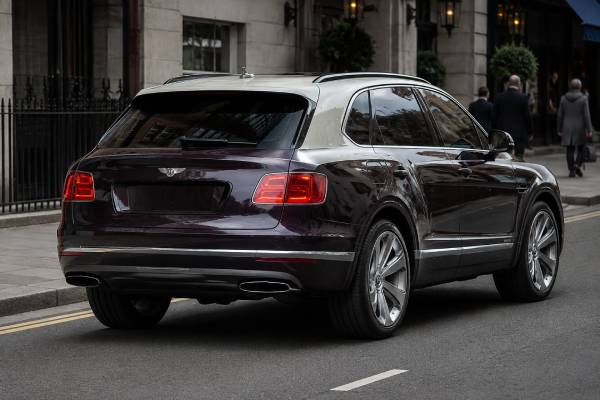
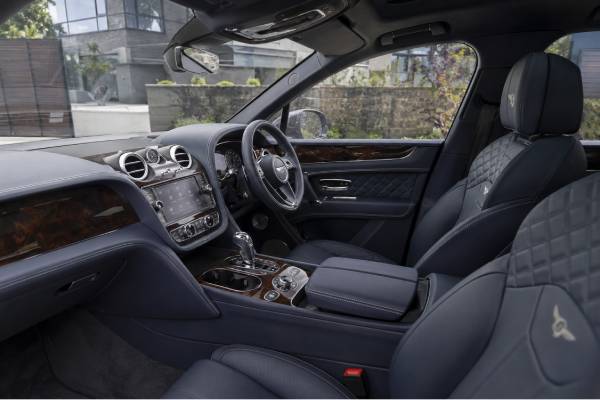
The first Bentley Bentayga Hybrid is historically important because it was Bentley’s first production plug-in hybrid and the company’s first practical step toward electrification. It combines a turbocharged 3.0-litre V6 with an electric motor integrated into the transmission, permanent all-wheel drive and a 17.3 kWh high-voltage battery. Combined output is 443 bhp, while official electric range reached 39 km under WLTP and 51 km under NEDC. The numbers are modest beside later PHEVs, but the system was designed around quiet urban travel and effortless long-distance flexibility rather than maximum electric distance. Used examples must be judged differently from petrol Bentaygas. Battery health, charging function, high-voltage cooling, brake blending, software and the history of actual plug-in use matter as much as engine and suspension condition. A low-mileage car that was rarely charged may be less appealing than a regularly used example with documented battery checks and reliable charging. This guide explains the first-generation system, practical range, technical data, maintenance needs and the inspection process for a 2018–2020 Bentayga Hybrid.
Table of Contents
- Bentley’s First Electrified Production Model
- Early Bentayga Hybrid Technical Data
- How the Hybrid Modes Manage Energy
- Charging, Electric Range, and Daily Use
- Performance, Braking, and Road Manners
- High-Voltage and Conventional Maintenance
- Used-Buyer Evaluation
Bentley’s First Electrified Production Model
The 2018 Bentayga Hybrid was not simply a V6 Bentayga with a larger starter motor. It introduced an externally chargeable battery, a traction motor, hybrid-specific navigation and three energy-management modes into Bentley’s existing luxury SUV platform.
Bentley presented the model in March 2018 and began customer deliveries in 2019. The company described it as the world’s first true luxury plug-in hybrid SUV. Its mission was serenity: leave home with a charged battery, travel through urban areas using electric drive where conditions allowed, then use the V6 for longer journeys without planning around public charging.
The hybrid retained permanent AWD and the main Bentayga drive modes. Packaging the battery and electrical hardware added mass and reduced some luggage flexibility, but the car still preserved the high seating position, air suspension and long-distance comfort expected of the range.
A key buying distinction is between announcement year, production year and first registration. Some cars are advertised as 2018 models because that is when the powertrain was revealed, while deliveries began later in many markets. Use the VIN and build record to identify exact production specification.
The early system should also be separated from the updated 2022 battery. This article covers the original 17.3 kWh version with 443 bhp, not the later 18.0 kWh, 456 bhp setup used in the Odyssean Edition and updated hybrid family.
Early Bentayga Hybrid Technical Data
The first Bentayga Hybrid is a PHEV with a turbocharged V6, one traction motor, an externally chargeable lithium-ion battery and an eight-speed automatic. Combined system output was officially rated at 449 PS, or 443 bhp, with 700 Nm.
| Specification | Value |
|---|---|
| Petrol engine | 3.0-litre turbocharged V6 |
| Electric motor | Single traction motor integrated with the driveline |
| Combined power | 449 PS / 443 bhp / 330 kW |
| Combined torque | 700 Nm (516 lb-ft) |
| Transmission | Eight-speed automatic |
| Drive | Permanent all-wheel drive |
| Specification | Value | Condition |
|---|---|---|
| Battery capacity | 17.3 kWh | Official published pack figure |
| Maximum AC charging | 7.2 kW | With compatible AC equipment |
| Full charge time | 2.5 hours | Using a suitable 7.2 kW supply |
| Electric range | 39 km (24 miles) | WLTP |
| Electric range | 51 km (31.7 miles) | NEDC |
| Charging connector | AC inlet, regional standard | No DC fast charging |
| Measure | Official figure |
|---|---|
| 0–60 mph | 5.2 seconds |
| 0–100 km/h | 5.5 seconds |
| Top speed | 254 km/h (158 mph) |
| Combined CO₂ | 79 g/km |
| Fuel tank | 75 litres (19.8 US gal) |
| Specification | Value |
|---|---|
| Body style | Five-door luxury SUV |
| Length | 5,140 mm (202.4 in) |
| Width excluding mirrors | 1,998 mm (78.7 in) |
| Wheelbase | 2,995 mm (117.9 in) |
| Suspension | Self-levelling air suspension with adaptive damping |
| Active roll control | Bentley Dynamic Ride available |
| Mode or feature | Purpose |
|---|---|
| EV Drive | Prioritizes electric propulsion where operating conditions permit |
| Hybrid Mode | Blends engine and motor using route and demand data |
| Hold Mode | Preserves battery charge for later use |
| Efficiency navigation | Uses route information to plan energy use |
| Hybrid efficiency pedal | Provides feedback near the point where engine assistance is requested |
PHEV fuel-consumption figures depend heavily on starting charge and trip distance. A weighted homologation number cannot predict fuel use for an owner who never plugs in or who frequently exceeds the electric range.
How the Hybrid Modes Manage Energy
The system’s value comes from choosing when to use electricity. EV Drive favors the motor, Hybrid Mode coordinates both power sources and Hold Mode preserves battery energy for a later low-emission zone or quiet arrival.
The accelerator contains a pressure point that helps the driver stay within electric capability. Pressing beyond it requests more power and can start the engine. This means “electric mode” is not always a guarantee that the engine will remain off. Temperature, battery state, cabin heating demand and acceleration can all change the result.
Hybrid Efficiency Navigation looks at the programmed route. It can allocate energy so the battery approaches a low state of charge near the destination rather than using all electricity immediately. The logic works best when the driver enters a destination; without route data, the system has less context.
Regenerative braking captures energy during deceleration, while the hydraulic brakes provide the remaining stopping force. The pedal should feel consistent as the system blends the two. A change in feel can come from software, battery temperature, full battery state or a mechanical brake issue. Diagnosis should not assume that every unusual sensation is “normal for a hybrid.”
Hold Mode is useful when a driver wants to save charge for an urban destination. It is not a free-energy mode. Using the engine to maintain charge still consumes fuel, and actively increasing battery charge from the engine is generally less efficient than plugging in.
Charging, Electric Range, and Daily Use
The early Bentayga Hybrid is designed around AC charging. It does not support DC fast charging. A 7.2 kW wallbox can replenish the battery in about 2.5 hours under suitable conditions, while a lower-power household supply takes longer.
Before buying, test a complete charging session rather than only confirming that the charge-port light illuminates. Check the inlet, cable, locking mechanism, scheduled charging, app functions where supported and the displayed completion estimate. Charging faults can originate in the wallbox, cable, onboard charger, battery management system or vehicle software.
Real electric distance depends on temperature, speed, HVAC use, terrain and battery condition. The 39 km WLTP figure is a laboratory rating, not a promise. Cold weather and high-speed travel can reduce it substantially. Urban driving at moderate speeds is the use case most likely to approach the official capability.
Pre-conditioning while plugged in can improve comfort and preserve driving energy, provided the car and market-specific connected services support it. The owner should learn whether scheduled climate control draws from the wall or the battery under the chosen settings.
A buyer should ask for charging history when available. Regular charging indicates that the PHEV hardware was used as intended. However, high charging frequency alone does not prove battery health. A diagnostic state-of-health report, cell balance data and fault history are more useful.
Performance, Braking, and Road Manners
With 443 bhp and instant motor response, the Hybrid feels quicker at low speed than its 5.5-second 0–100 km/h figure suggests. The motor fills the initial gap before the V6 and turbocharger deliver full output.
The engine note is less dramatic than the V8 and the overall character is calmer. In traffic, electric drive removes idle vibration and makes low-speed maneuvering especially smooth. On a motorway, the V6 provides the range and sustained performance that the battery alone cannot.
Additional battery mass is noticeable in direction changes, but the low placement helps keep the center of gravity controlled. Air suspension remains central to ride quality. A healthy car should change height without warnings or excessive compressor operation.
Brake blending needs careful assessment. At low speeds, the transition from regeneration to friction braking should be predictable. Rusty discs can develop on PHEVs that use regeneration heavily and are driven gently. Include several safe, firm stops during the road test to assess vibration, noise and straight-line stability.
Tires must be correct for load and speed, and tread depth should be closely matched. The hybrid’s mass increases the importance of wheel alignment and inner-edge inspection. Large wheels improve appearance but can reduce range and ride comfort.
High-Voltage and Conventional Maintenance
A PHEV requires two maintenance mindsets. The V6 still needs oil, filters, spark plugs, cooling and fuel-system care, while the high-voltage side needs battery diagnostics, charging checks and safe service by trained personnel.
Never use a workshop that treats the high-voltage system casually. Battery isolation, coolant service and electrical diagnosis require correct procedures and equipment. This article does not replace those instructions.
Check the 12-volt battery first when multiple unrelated warnings appear. It powers control systems and contactors that allow the high-voltage system to initialize. A weak auxiliary battery can make a healthy traction battery appear unavailable.
The car contains more than one cooling requirement. The engine and electrified components must remain within their temperature windows. Ask for evidence of correct coolant specification and investigate any loss, staining or pump noise. Do not mix coolant types based on colour alone.
Use the exact approved engine oil and maintain the V6 even if much driving is electric. A low annual engine-running time can increase the importance of time-based service because oil still ages and the engine may experience many cold starts.
Keep charging cables dry, undamaged and correctly stored. Inspect pins for heat marks or corrosion. Test the charge-port door and lock. Software updates can affect charging behavior, range display and hybrid controls, so the service history should include campaign and update records.
Used-Buyer Evaluation
A complete inspection should begin with the high-voltage battery cold and at a known state of charge. Scan all modules, record battery state of health and cell deviation, then charge and road-test the car through multiple operating modes.
Verify the 17.3 kWh specification. Do not accept a later 18.0 kWh figure copied from an updated Bentayga Hybrid advertisement. Check the VIN, build date and technical sheet to avoid mixing generations.
During the test, start in EV Drive, use gentle and stronger acceleration, then select Hybrid and Hold. Confirm that mode changes are available, the engine starts smoothly and no drivetrain warning appears. Observe whether the displayed electric range falls plausibly rather than collapsing after a few kilometres.
Inspect conventional Bentayga systems as well: air suspension, brakes, tires, panoramic roof, infotainment, cameras, seats, tailgate and audio. A healthy battery does not offset expensive faults in the rest of the vehicle.
Review warranty terms for the high-voltage battery in the applicable market. Age, mileage and transfer rules differ. A seller’s verbal statement should not replace written confirmation from Bentley or the official warranty document.
The early Hybrid is best for an owner with reliable home or workplace charging and a daily route that fits within much of the electric range. It is less convincing for someone who cannot plug in. Used correctly, it delivers a uniquely quiet Bentayga experience and represents the first chapter of Bentley’s production electrification story.
A battery-health report should be retained as a dated baseline rather than treated as a one-time pass. Repeat the same diagnostic measures periodically, ideally under similar temperature and state-of-charge conditions. Trends in usable energy, cell deviation and charging interruptions are more informative than an isolated percentage shown by different tools.
Charging losses should be separated from battery capacity. The energy measured at a wallbox includes conversion losses and any power used to heat or cool the pack and cabin. A 17.3 kWh battery will not necessarily produce a 17.3 kWh wall-to-wheel calculation. Record ambient temperature, start percentage and pre-conditioning when comparing sessions.
The onboard charger is a distinct component from the high-voltage battery. A car can have healthy cells yet charge slowly or stop because of cable communication, inlet locking, cooling or charger electronics. Test more than one known-good cable or supply before condemning the vehicle. Conversely, do not let a seller blame every interruption on the public charger without reproducing a successful session elsewhere.
High-voltage isolation faults can be intermittent and moisture-related. Inspect the charge-port seal, underbody shielding and areas around coolant connections. A warning that appears after rain, washing or a hot soak deserves investigation by qualified personnel. Never attempt to trace insulation faults with ordinary workshop methods.
The early Hybrid’s brake system benefits from deliberate friction-brake use. Regeneration may leave the discs lightly loaded during gentle commuting, particularly when the battery can accept energy. On a safe road, occasional firmer stops within legal limits help reveal vibration and keep surfaces active. This is not a cure for deep corrosion, cracked discs or seized calipers.
Tire selection affects more than comfort. High rolling resistance reduces electric distance, while mismatched circumference can stress the all-wheel-drive system. Confirm load and speed ratings, age and pressure. A low displayed range can sometimes be explained by winter tires, cold weather and short-trip heating rather than battery failure.
Cabin climate demand is one of the largest variables in electric operation. In cold conditions, the engine may start for heat or system protection. Pre-condition while connected where supported, use seat heating efficiently and judge range with the climate settings recorded. Comparing a heated winter trip with an unheated laboratory value has little diagnostic meaning.
Owners should learn how the car behaves near minimum displayed charge. PHEV control systems normally preserve a hidden buffer for battery protection and hybrid operation. “Zero” on the display does not mean the cells are physically empty, and attempting to access hidden energy through coding or modification can damage safety margins and warranty status.
The V6 fuel system also needs regular exercise. Keep fuel reasonably fresh and allow the engine to reach full temperature on a sustained journey. Repeated brief starts caused by heavy throttle or heating demand can leave moisture in oil and exhaust components. A monthly longer drive can be more beneficial than several stationary warm-ups.
Software history matters because early production PHEVs often receive refinements to charging, energy display and control logic. Ask for campaign completion by VIN and note the installed versions. If range behavior changed after an update, compare actual energy use rather than assuming the software harmed the battery.
A home electrical installation should be assessed independently of the car. A qualified electrician should confirm circuit capacity, protection and earthing for the wallbox. Repeated charging faults caused by an unsuitable supply can be misdiagnosed as vehicle problems, while an unsafe installation creates a risk beyond the Bentley itself.
Resale preparation should include transferring or removing connected-service accounts, supplying every cable and documenting battery condition shortly before sale. A prospective buyer will trust a coherent charging log and current diagnostic report more than a fully charged display on the day of viewing.
The first Bentayga Hybrid is best understood as an early luxury PHEV with a specific operating envelope. Its electric range is useful for local travel, not a substitute for a modern long-range EV. Owners who accept that boundary, charge consistently and maintain both the V6 and the high-voltage system can preserve the calm, technically significant experience that made the model Bentley’s electrified starting point.
High-voltage battery replacement is not the only possible repair path. Depending on diagnosis and regional policy, faults may involve modules, contactors, cooling components, the onboard charger or control software. A quotation that simply says “battery needed” should be supported by fault data and an approved repair procedure.
Check the emergency charging-release and connector-unlock instructions in the handbook before they are needed. Do not pull cables or force the charge door when a lock fails. Correct recovery protects the inlet, which is used every day and can be costly to repair after mechanical damage.
If the vehicle will sit for several weeks, follow Bentley guidance for both traction-battery state and 12-volt support. Leaving the PHEV permanently at an extreme displayed charge is not the same as preparing it for storage. Record the chosen state and inspect for parasitic draw if the 12-volt battery repeatedly weakens.
An owner considering solar or off-peak charging should base savings on measured wallbox energy and tariff windows. The car cannot use DC rapid charging, so home infrastructure quality has more effect on convenience than the public fast-charger network.
Finally, verify that recovery providers know the vehicle is a plug-in hybrid with permanent all-wheel drive. Incorrect towing can damage the driveline, while accident recovery around a high-voltage battery requires appropriate precautions. Keep emergency information in the car and ensure insurers list the powertrain correctly.
A well-prepared owner will also keep one known-good charging cable available for diagnosis rather than relying solely on public hardware. That simple control makes it easier to determine whether a future charging interruption belongs to the car or the supply.
Charging Evidence Matters More Than the Displayed Range
The early Hybrid’s 17.3 kWh battery and AC-only charging system should be evaluated through repeatable behavior, not a single range number shown after startup. Charge the vehicle from a known state of charge, note the time and energy accepted by the wall unit, then leave it parked long enough to check for unexpected loss. Inspect the inlet for heat discoloration, moisture or damaged pins and confirm that the locking mechanism releases correctly. The factory cable should match the market and be free from cuts, crushed sections or improvised repairs. A seller who regularly charged at home may have wallbox records that provide useful evidence of consistent use.
During the road test, begin in EV Drive with climate control operating, then increase demand gradually and observe the transition to the V6. Hybrid Mode should combine the two sources without harsh engagement, while Hold Mode should preserve charge broadly as intended rather than allowing an unexplained rapid decline. Test regenerative deceleration at several battery levels because the amount of available regeneration changes as the battery fills. Dashboard range will move with temperature, route, accessory use and recent driving style, so it cannot prove battery health by itself. A specialist scan showing cell balance, temperatures, isolation status and stored charging faults carries far more weight. Pair that data with an actual charge-and-drive cycle before deciding that a low indicated range is normal or that an optimistic display guarantees a sound battery.
References
- Bentley News 2018: THE PIONEERING BENTLEY BENTAYGA HYBRID 2018
- Bentley News 2019: DELIVERIES OF THE BENTAYGA HYBRID COMMENCES 2019
- Vehicle Specifications 2019
- Bentley Bentayga | History and Heritage | Bentley Motors 2026
- The Award-winning Bentayga Reaches 20,000 Milestone | Bentley Media 2020
- BENTLEY NEWSROOM : Technical Specifications 2026
Disclaimer
This article is for informational purposes and cannot replace professional diagnosis or repair, especially where high-voltage safety is involved. Battery specifications, torque values, service intervals, charging equipment and procedures may vary by VIN, market and equipment, so use the exact car’s official service documentation. Please share the guide on Facebook, X/Twitter or another social platform if it was useful.