
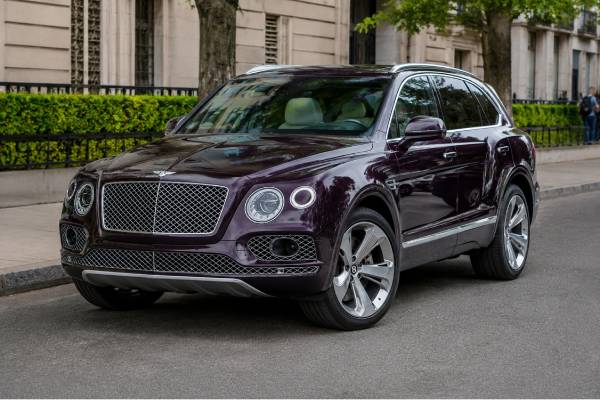
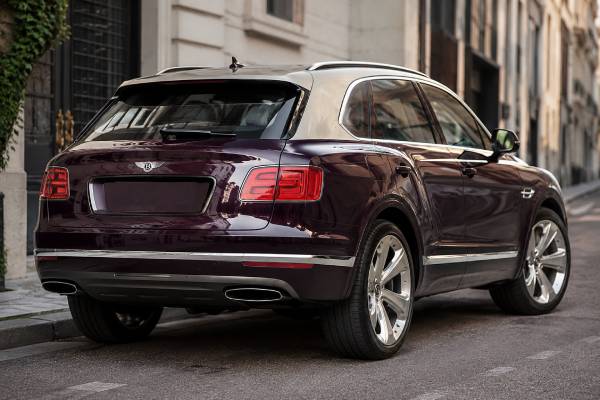
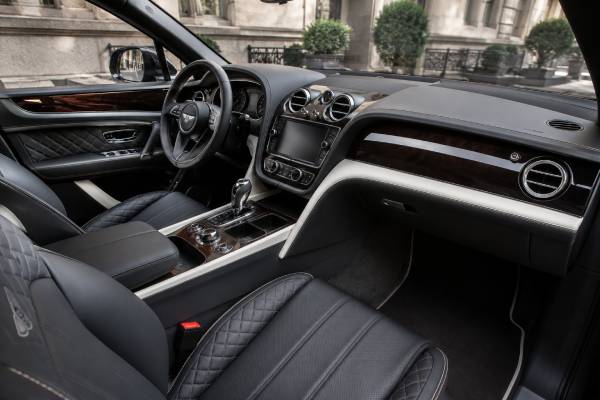
The 2017–2018 Bentley Bentayga Mulliner was created as the flagship expression of the original 4V1 Bentayga, not as a faster derivative. Its 600 bhp W12 and 187 mph capability matched the regular W12, but Mulliner transformed the car through two-tone paint availability, a new veneer concept, unique 22-inch wheels, a dedicated interior colour split and options such as the rear bottle cooler, Linley hamper and mechanical tourbillon clock. Production was deliberately limited because the cabin required unusually complex handwork. That combination gives the model a different ownership question from an ordinary Bentayga: the mechanical platform must be healthy, but value also depends on whether the bespoke specification remains complete and authentic. A neglected powertrain can be costly, while damaged Mulliner trim may be difficult to reproduce exactly. This guide separates the engineering shared with the W12 range from the details that make the Mulliner special, then explains how to inspect, maintain and value one as a used luxury SUV.
Table of Contents
- The Mulliner Concept and Production Scope
- Flagship Technical Data
- Bespoke Materials, Colour, and Rear-Cabin Features
- Road Manners and Dynamic Ride
- Preserving a Handcrafted Specification
- How to Evaluate a Bentayga Mulliner for Purchase
- Ownership Fit and Market Position
The Mulliner Concept and Production Scope
The Bentayga Mulliner was Bentley’s answer to buyers who wanted the most elaborate factory-built Bentayga rather than the most aggressive one. Bentley’s in-house commissioning division used the standard W12 platform as a canvas for materials, colour and rear-seat ceremony, placing craftsmanship ahead of additional horsepower.
Announced in March 2017, the model sat above the normal range. Bentley described production as very limited because the interior specification was labor-intensive. Unlike a simple option package, the Mulliner combined exterior, cabin and equipment changes into a recognizable flagship. Optional Duo Tone paint divided the upper and lower body colours at a carefully selected line, while unique 22-inch Paragon wheels distinguished the stance without changing the underlying chassis geometry.
Inside, the most obvious marker is the two-colour cabin division: front and rear seating areas could be finished in contrasting hide themes, emphasizing the difference between the chauffeur’s environment and the passenger lounge. Ombre Burr Walnut veneer introduced a graduated finish that moved from black toward natural wood. The rear bottle cooler used illuminated cooling hardware and bespoke Cumbria Crystal flutes, turning an accessory into a central design feature.
Mulliner also offered extraordinary additions that were never necessary to the vehicle’s function but are important to its identity. The Linley hamper combined refrigerator, china, cutlery, crystal and removable seating sections for outdoor use. The Breitling tourbillon dashboard clock was a highly expensive mechanical option. A one-off Geneva display car used hand-cut marquetry depicting the Monte Rosa mountain range. These details illustrate the model’s purpose: not merely high equipment content, but the ability to make a large SUV feel commissioned.
Because customers could still choose among extensive colours, hides, veneers and equipment, two authentic Mulliners may look very different. Verification therefore cannot rely on internet photos of a “typical” example. The definitive evidence is the VIN-linked build record, supported by invoices, original sales documentation and consistency between the specified materials and the car in front of you.
Flagship Technical Data
Mechanically, the Bentayga Mulliner is an ICE-powered W12 SUV. Its 5,998 cc twin-turbo engine produces 608 PS and 900 Nm, driving all four wheels through an eight-speed automatic. The engineering emphasis is broad torque, high-speed refinement and isolation rather than a unique Mulliner tune.
| Parameter | Specification |
|---|---|
| Configuration | 6.0-litre twin-turbocharged W12 petrol |
| Displacement | 5,998 cc |
| Power | 608 PS / 600 bhp / 447 kW at 6,000 rpm |
| Torque | 900 Nm (664 lb-ft), 1,250–4,500 rpm |
| Injection | Direct and port fuel injection |
| Fuel capacity | 85 litres (22.5 US gal) |
| Parameter | Specification |
|---|---|
| 0–60 mph | 4.0 seconds |
| 0–100 km/h | 4.1 seconds |
| Maximum speed | 301 km/h (187 mph) |
| Gearbox | Eight-speed automatic |
| Drive | Permanent all-wheel drive |
| Maximum braked trailer mass | Up to 3,500 kg when equipped and approved |
| System | Layout or feature |
|---|---|
| Front suspension | Four-link double wishbones |
| Rear suspension | Trapezoidal multi-link |
| Springing | Self-levelling air suspension |
| Dampers | Continuous electronic damping control |
| Active chassis | 48-volt Bentley Dynamic Ride |
| Steering | Variable-ratio electric power assistance |
| Measure | Value |
|---|---|
| Length | 5,140 mm (202.4 in) |
| Width, mirrors excluded | 1,998 mm (78.7 in) |
| Wheelbase | 2,995 mm (117.9 in) |
| Turning circle | 12.4 m (40.7 ft) |
| Five-seat luggage volume | 484 litres (17.1 cu ft) |
| Standard wheel distinction | Unique 22-inch Mulliner design |
| Category | Characteristic equipment |
|---|---|
| Paint | Duo Tone finish available |
| Veneer | Ombre Burr Walnut concept |
| Cabin colour | Dedicated front-to-rear Mulliner colour split |
| Rear hospitality | Mulliner Bottle Cooler with crystal flutes |
| Optional leisure equipment | Linley Hamper by Mulliner |
| Optional timepiece | Mechanical Mulliner Tourbillon by Breitling |
The exact curb weight, emissions figure and equipment content depend on market, seating arrangement and options. Highly equipped four-seat cars can differ meaningfully from five-seat examples, so a single generic specification sheet should not be used to estimate payload or replacement parts.
Bespoke Materials, Colour, and Rear-Cabin Features
A Bentayga Mulliner should feel intentional from front grille to luggage compartment. The important test is not whether every surface is ornate, but whether colours, grains, stitching and metal finishes remain consistent with the commissioned scheme.
Duo Tone paint deserves close examination because the dividing line makes repair quality easy to judge. Carefully inspect the transition under bright, diffuse light. The line should be crisp and symmetrical, without overspray on trim or a change in texture between adjacent panels. Paint-depth readings must account for the mix of steel and aluminium body panels, and a specialist should interpret them. A repaired panel is not automatically unacceptable, but an undocumented colour mismatch can be very expensive to correct on a two-tone car.
Ombre Burr Walnut is another high-value component. The graduated effect should look smooth and deliberate, not like sun fading or refinishing. Check the dashboard, doors and rear console for colour continuity. Cracks around apertures, clouding beneath lacquer and lifted edges require expert assessment because veneer restoration involves matching both the burr pattern and the tonal transition.
The rear bottle cooler should be tested rather than admired. Confirm cooling operation, illumination, lid movement, glass retention and drainage condition. Verify that the correct crystalware is present and undamaged. Replacement glasses may be obtainable, but originality adds value and a complete set supports the claim that the car has been carefully kept.
Four-seat configurations create a more formal rear cabin, often with a fixed center console and greater separation between passengers. Five-seat cars are more versatile for family use. Neither is inherently superior; the right layout depends on intended use. What matters is whether the vehicle is represented accurately and whether every powered function, tray, storage compartment, rear control and seat mechanism works.
Natural leather develops creases, particularly in heavily bolstered front seats. That is different from split piping, dye loss or shrinkage. Inspect all contrast stitching for pulled threads and examine pale hides for denim transfer. Aggressive cleaning can remove surface colour, leaving a cabin that looks temporarily bright but has reduced durability. Specialist leather conservation is preferable to heavy recolouring on a rare specification.
Road Manners and Dynamic Ride
The Mulliner drives much like a well-specified W12 Bentayga, which is a strength rather than a disappointment. It combines limousine isolation with acceleration that remains startling for a full-size luxury SUV. The extra ceremony inside does not require the owner to accept slow responses or vague body control.
The W12’s torque plateau begins at 1,250 rpm, so urban progress needs little throttle. On a motorway, the eight-speed transmission can hold a high gear and let torque do the work. Full acceleration is forceful but polished; the engine note is muted compared with the later V8, reinforcing the Mulliner’s formal character.
Bentley Dynamic Ride uses a 48-volt electrical system to actuate the anti-roll hardware. In straight-line travel, the system allows suspension compliance; during cornering, it can counter body roll rapidly. The result is not a rigid ride but a more stable cabin. This is particularly useful for rear passengers, because reduced lateral movement supports the car’s chauffeur-oriented purpose.
A test drive should reveal seamless mode changes and a quiet chassis. Repeated knocking, a compressor that runs excessively, a vehicle that sits low after parking or warnings related to the 48-volt system are not normal signs of “complex luxury.” They are diagnostic starting points. The same applies to vibration under acceleration, delayed transmission engagement or steering shake during braking.
The large wheels demand attention on imperfect roads. Inner rim damage may not be visible from outside, so inspect them on a lift. Check tire date codes, sidewalls and tread depth. The Mulliner’s mass and speed capability require tires with correct load and speed ratings; an attractive but unsuitable replacement compromises both ride and safety.
Preserving a Handcrafted Specification
Maintenance has two parallel tracks: mechanical reliability and conservation of bespoke materials. Ignoring either one weakens the car’s value. The ideal owner uses the vehicle regularly enough to keep systems exercised while avoiding careless wear to irreplaceable trim.
For the W12, insist on oil and filter service with the correct approved specification, documented coolant checks and a diagnostic scan at each major visit. The tightly packaged engine bay contains turbocharger plumbing, multiple cooling circuits and extensive electronics. Any recurring need to add coolant or oil should be investigated rather than normalized. After a road test, check for odor, residue and fresh seepage.
The 12-volt battery should be load-tested, and cars with Dynamic Ride need proper evaluation of the 48-volt network. Low voltage can trigger many unrelated-looking warnings. A battery maintainer is sensible for infrequently used cars, but it should not conceal a battery that no longer holds capacity. Ask whether software updates and service campaigns were completed, then verify by VIN.
Air suspension must be assessed for both leakage and calibration. Observe ride height after an overnight park and listen to compressor behavior during height changes. Dampers, control arms and bushings should be inspected for play or leakage. Alignment is especially important because a heavy SUV on 22-inch tires can consume inner shoulders while the outer tread still appears healthy.
Care of the cabin should be conservative. Use products appropriate for aniline or semi-aniline automotive hides and avoid saturating perforated seat sections. Dust veneer with a soft cloth, protect it from long exposure to direct sun and do not polish through the factory lacquer. Metal trim should be cleaned without abrasive compounds that alter its finish.
Two-tone paint requires matching expertise after stone chips or body repairs. Photograph the car’s colour break, panel gaps and trim fit before leaving it with a shop. Preserve removed original parts whenever practical. For rare accessories such as the hamper, crystalware or rear cooler components, create an inventory and store unused pieces securely with the vehicle’s records.
Service records should describe work, not merely prove attendance. Useful invoices list fluid specifications, measured brake wear, tire condition, fault codes, battery test results and recommended follow-up. A thick file of detailed maintenance documents will support resale more effectively than a sequence of generic dealer stamps.
How to Evaluate a Bentayga Mulliner for Purchase
Buying well starts with the commissioned specification. Request the VIN build sheet before traveling to view the car. Compare exterior colour, Duo Tone division, wheels, veneers, hide colours, stitching, seating layout and major options. If the seller cannot provide documentation, a Bentley dealer or marque specialist may be able to confirm the original configuration.
Inspect in this order:
- Identity and provenance: VIN consistency, build record, ownership chronology, service invoices and campaign status.
- Body and bespoke finish: paint quality, wheel originality, badges, veneer continuity, leather colour split and special accessories.
- Mechanical state: cold start, fluid condition, cooling stability, air suspension, brakes, tires and transmission behavior.
- Electronic function: scan every control module and test comfort, infotainment, driver-assistance and rear-cabin systems.
- Post-drive review: look for fresh leaks, hot-fluid smells, warning messages and newly stored faults.
Allow enough time for a true cold start. The engine should settle smoothly without persistent smoke or mechanical clatter. Check that warning lamps illuminate during the ignition test and then clear normally. A dashboard with no current warning is only one data point; stored and intermittent codes can reveal voltage, network or actuator problems.
On the road, include rough surfaces and low-speed full-lock maneuvers. Listen for suspension knocks, driveline shunt and tire scrubbing. Test the transmission from cold and hot, including gentle and stronger acceleration. Brake from several speeds to identify vibration or pulling. Use all ride heights and relevant drive modes in a safe area.
Every expensive option needs a functional test. The tourbillon clock, if installed, should be handled only according to the correct instructions. The bottle cooler must cool and illuminate. Rear seats, blinds, tables, entertainment, audio and remote controls should work. Missing keys and remotes are not cosmetic omissions; replacements and coding can be costly.
Commission a specialist estimate before negotiating. Separate immediate safety work, near-term maintenance and optional cosmetic correction. Then compare that total with the price of a better example. The cheapest Mulliner on the market can become the most expensive if it needs tires, brakes, air-suspension work, electronics and restoration of bespoke trim at the same time.
Ownership Fit and Market Position
The Bentayga Mulliner is most compelling for someone who values commissioning, materials and rear-seat luxury as much as performance. A buyer interested primarily in engine character may find an ordinary W12 or later Speed simpler to evaluate. A driver who wants a lighter, more audible powertrain may prefer the V8. The Mulliner’s reason for existing is its integrated luxury specification.
Rarity alone does not guarantee appreciation. Values are likely to favor original colour combinations, complete accessories, documented low-ownership histories and strong mechanical condition. Unusual specifications can be desirable, but intensely personal colours may narrow the future audience. A tasteful, well-documented car with functioning Mulliner features usually has broader appeal than a rare but compromised one.
Running costs remain those of a flagship Bentley. Budget for premium fuel, correct tires, substantial brakes, specialist diagnostics and preventative attention to batteries and cooling. Insurance should reflect the cost of matching two-tone paint and replacing bespoke interior components, not only the vehicle’s current market value.
When maintained properly, the model delivers something few SUVs attempt: it can tow, travel at very high speed, cross poor roads and still present its rear passengers with the atmosphere of a private lounge. That breadth, combined with the short-lived original-body Mulliner execution, is the core of its appeal.
The rear-cabin equipment deserves its own demonstration. On cars with the Mulliner bottle cooler, confirm that the compartment opens, closes and cools as intended, then inspect its lining, glassware storage and drainage for damage. Replacement pieces can be difficult to match. Picnic tables, rear entertainment and powered seat functions should operate without looseness or trim noise. These are not secondary details on a model whose identity is built around passenger experience.
Two-tone paint requires a repair strategy before damage occurs. Record the dividing line, color codes and finish in high-resolution photographs. A future body repair should be quoted by a shop capable of reproducing both the paint and the exact break between colors. A technically correct repair with a slightly misplaced line can remain visible across the full length of the vehicle.
For insurance, an agreed-value policy may be worth discussing where available. Standard market guides may not capture a rare color pairing, bespoke veneer or complete Mulliner accessories. Supply the insurer with the build sheet, condition report and photographs rather than relying only on the base W12 model description.
Regular exercise should include every comfort system as well as the drivetrain. Move rear seats through their ranges, operate blinds and tables, use the cooler, and check the panoramic roof. Mechanical parts often reveal stiffness or electrical weakness when left unused. A monthly function check can identify a small problem before a motor, hinge or control module is damaged by repeated attempts.
The Mulliner therefore asks more of an owner than routine servicing. Its value is distributed across paint, cabin craft, removable accessories and complex comfort equipment. Preserving all of those elements is what allows the car to remain an integrated commission rather than a mechanically sound W12 with an incomplete luxury package.
Commissioned details should also influence how the car is advertised and serviced. List the actual veneer, hide split, wheel finish, rear-cabin equipment and Duo Tone colors rather than reducing it to “fully loaded.” Precise descriptions make replacement parts easier to source and prevent future owners from confusing factory features with later additions. A photographic inventory stored with the service file is especially useful when the vehicle spends time with detailers, transporters or body shops.
Before a major trip, verify that luggage does not obstruct rear-seat mechanisms or the bottle cooler ventilation. Luxury equipment is still mechanical equipment, and careful loading helps protect trim, hinges and wiring that may be expensive to replace.
Commissioned Pieces Are Part of the Vehicle
The Mulliner’s detachable luxury equipment deserves the same inventory discipline as its engine and chassis. Depending on the order, that can include the illuminated rear bottle cooler, Cumbria Crystal flutes, Linley hamper components, picnic tables or an elaborate dashboard clock. These pieces are easy to separate from the SUV during storage, detailing or resale, and replacements may not match the original material, engraving or dimensions. Photograph each item in place, record any serial or identifying marks and keep fitted cases, trays and retaining hardware together. When viewing a car, do not accept a seller’s statement that missing accessories are “available somewhere” without checking the actual part and finish.
The same principle applies to fixed trim. Ombré Burr Walnut is not simply dark veneer beside light veneer; it is a deliberately graduated treatment whose visual balance should remain consistent across the cabin. A repaired panel that is attractive in isolation may still look wrong next to the original door or fascia pieces. Ask who performed any refinishing and whether the shop documented the color transition before work began. On Duo Tone cars, retain paint codes and photographs showing the factory division line. The best-preserved Mulliner is not necessarily untouched, but every intervention should respect the commissioned scheme. Careful records turn restoration from guesswork into conservation and make the car easier to value when two superficially similar examples have very different levels of originality.
References
- Bentley News 2017: THE BENTAYGA MULLINER: THE ULTIMATE LUXURY SUV 2017
- BENTLEY NEWSROOM : 2016 Bentayga 11WO 2026
- Bentley Bentayga | History and Heritage | Bentley Motors 2026
- The Award-winning Bentayga Reaches 20,000 Milestone | Bentley Media 2020
- New Bentley Bentayga, The Definitive Luxury SUV | Bentley Media 2020
- BENTLEY NEWSROOM : Technical Specifications 2026
Disclaimer
This material is for informational purposes, not a substitute for professional diagnosis or repair of a specific Bentayga Mulliner. Specifications, tightening values, intervals and workshop procedures may change with VIN, market and equipment; consult the car’s official service documentation before work begins. Sharing the article on Facebook, X/Twitter or another social network helps support similarly detailed guides.