

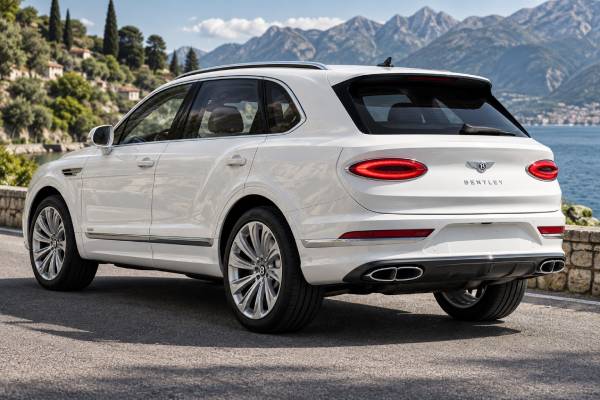
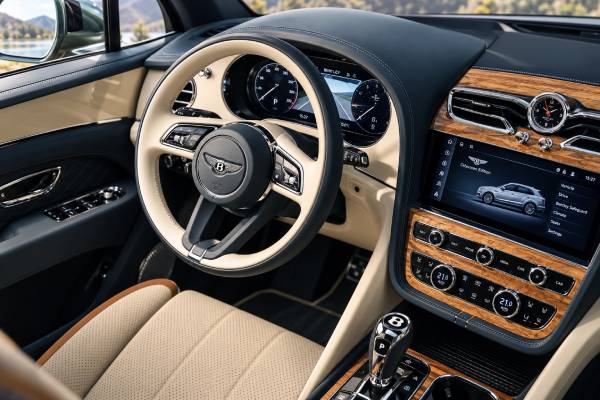
Limited to 70 examples worldwide, the Bentley Bentayga Odyssean Edition is the most focused sustainability statement in the first standard-wheelbase Bentayga generation. It pairs an updated 456 bhp plug-in hybrid system and 18.0 kWh battery with materials chosen to signal a different idea of luxury: tweed panels, open-pore Koa veneer, three-color hides and ombré embroidery. Pale Brodgar accents connect the 22-inch wheels and exterior brightware, while six curated designs gave buyers a starting point for further personalization. The larger battery raises official electric-only range to at least 45 km under WLTP, and the combined V6 and 100 kW motor deliver 700 Nm, 0–100 km/h in 5.3 seconds and a 254 km/h top speed. Rarity does not simplify ownership. A genuine car needs edition-level provenance, careful material preservation, correct charging equipment and high-voltage diagnostics. This guide explains what is unique, what is shared with the updated hybrid family, how to inspect sustainable materials without damaging them, and how to value one of the 70 cars on evidence rather than marketing language alone.
Table of Contents
- The Odyssean Idea and Its 70-Car Rarity
- Updated Hybrid Specifications and Edition Content
- Tweed, Open-Pore Koa, and Ombré Craftsmanship
- Pale Brodgar Details and the Six Curated Designs
- The 18.0 kWh System in Charging and Road Use
- Conservation-Led Service for a Modern Limited Edition
- Authenticating, Inspecting, and Valuing One of Seventy
The Odyssean Idea and Its 70-Car Rarity
Bentley unveiled the Bentayga Odyssean Edition on 1 November 2022, with production scheduled to begin in the first quarter that followed. The company limited the model to 70 examples worldwide. That explicit number makes it fundamentally different from special specifications whose production totals were never published.
The name had already appeared on the Flying Spur Hybrid. Both projects drew inspiration from the EXP 100 GT concept and Bentley’s Beyond100 strategy, using electrification and lower-impact materials to explore how future luxury could look and feel without abandoning hand craftsmanship.
The Bentayga version arrived as Bentley expanded its hybrid family. It uses the updated 18.0 kWh battery and a stronger electric motor-generator, not the earlier 17.3 kWh, 443 bhp configuration. Combined output is 462 PS, equivalent to 456 bhp. This technical change is part of the edition’s identity and should be confirmed through build and diagnostic data.
Odyssean does not mean that every component is environmentally neutral or that the vehicle has no combustion engine. The edition is still a large, high-performance PHEV with complex manufacturing and material inputs. Bentley’s claim centered on it being the most sustainable Bentayga at launch, supported by electric capability and selected cabin materials.
The model was offered through six curated designs, but buyers retained access to Bentley’s wider paint palette and bespoke possibilities. As a result, two authentic examples may look very different. Rarity cannot be judged by whether a car matches one press photograph.
A collector should distinguish factory personalization from later alteration. A non-curated color may be completely original if documented. Conversely, a car repainted to imitate a curated design has lost part of its original narrative even if the workmanship is excellent.
The 70-car limit makes provenance important, but Bentley’s public announcement does not by itself provide a sequential numbered plaque for every vehicle. Verify how the individual car records its edition status and do not invent “number X of 70” unless the vehicle’s documents or plaque explicitly support it.
Updated Hybrid Specifications and Edition Content
The Odyssean shares its updated powertrain with the later Bentayga Hybrid family, while its materials and color treatment are edition-specific. Keeping those categories separate prevents ordinary hybrid equipment from being presented as unique.
| Specification | Factory figure |
|---|---|
| Petrol engine | 3.0-litre TFSI turbocharged V6 |
| Electric motor-generator | 100 kW E Motor |
| Combined power | 462 PS / 456 bhp |
| Combined torque | 700 Nm (516 lb-ft) |
| Transmission | Eight-speed automatic |
| Drive | Permanent all-wheel drive |
| Measure | Published value |
|---|---|
| Battery capacity | 18.0 kWh |
| Electric-only range | At least 28 miles (45 km), WLTP |
| 0–100 km/h | 5.3 seconds |
| Top speed | 254 km/h (158 mph) |
| Electric motor torque | Up to 400 Nm in the updated system |
| Charging type | AC plug-in charging; no DC rapid charging |
| Material or feature | Odyssean application |
|---|---|
| Tweed | Textile panels used as an alternative accent material |
| Koa veneer | Open-pore finish using substantially less lacquer than high-gloss veneer |
| Hide palette | Three-color interior arrangement unique to the edition |
| Embroidery | Ombré thread treatment creating a gradual color transition |
| Carpets | Color coordinated with the curated interior design |
| Craft approach | Materials chosen to combine natural texture with Bentley hand finishing |
| Area | Edition treatment |
|---|---|
| Wheels | Unique 22-inch design with Pale Brodgar accents |
| Lower brightware | Pale Brodgar treatment coordinated with the wheels |
| Badging | Odyssean Edition identification according to factory build |
| Paint choice | Six curated designs plus wider Bentley palette and bespoke options |
| Overall theme | Natural-toned metallic accents rather than conventional bright chrome |
| Lighting | Facelift Bentayga cut-crystal headlamps and elliptical rear lamps |
| Claim to verify | Correct interpretation |
|---|---|
| Global production | 70 examples |
| Power output | 456 bhp, not the earlier 443 bhp |
| Battery generation | 18.0 kWh, not the earlier 17.3 kWh |
| Electric range method | At least 45 km under WLTP |
| Body style | Standard-wheelbase facelift Bentayga |
| Production timing | Announced late 2022 for production beginning in 2023 |
Electric range remains dependent on temperature, speed, HVAC use, terrain and battery condition. “At least 45 km WLTP” is a type-approval statement for the updated system, not a guarantee that every used car will display or achieve that distance in all weather.
Tweed, Open-Pore Koa, and Ombré Craftsmanship
The cabin is where the Odyssean most clearly differs from a regular Bentayga Hybrid. Bentley used texture and restrained finishing to communicate sustainability rather than relying only on green-colored graphics or badges.
Tweed panels add a woven surface among the hides. Fabric behaves differently from leather: it can trap dust, absorb liquid and develop pulled threads if scrubbed. Inspection should use bright, diffuse light. Look for staining, pilling, snagged fibers and color changes near hand contact or seatbelt paths.
Cleaning tweed begins with gentle vacuuming through a protected nozzle. Liquid products should be tested by a textile specialist because backing, dye and neighboring leather may react differently. Saturating a panel can create rings, odor or adhesive problems. A casual detailer using one cleaner across the entire door card can cause permanent variation.
Open-pore Koa preserves more visible and tactile wood grain than a thick gloss-lacquer surface. Bentley stated that the process uses substantially less lacquer than high-gloss veneers. The result should feel natural, not unfinished or rough from damage.
Inspect Koa along edges and around switches. Oils from hands can darken frequently touched areas, while moisture can raise grain or mark the surface. Conventional furniture polish and aggressive automotive compounds are unsuitable. A specialist should decide whether a light mark can be cleaned, blended or must remain as honest patina.
The three-color interior is edition-specific. Exact combinations vary among curated and bespoke commissions, so compare the car with its factory record. Examine where colors meet at piping, bolsters, door panels and center console. Repairs often reveal themselves through a slightly different grain or gloss before the hue mismatch becomes obvious.
Ombré embroidery changes thread color gradually. It is more difficult to reproduce than a single-color emblem because the transition must align across the stitched design. Check both front seats and any rear application for symmetry, missing threads and evidence of local re-stitching. Photograph intact embroidery before cleaning or repair.
Natural materials are allowed to vary. Wood figure, tweed weave and color transition will not be mechanically identical from panel to panel. Authentic variation should be distinguished from replacement. Part labels, build photographs and correspondence with Bentley or the supplying retailer can help.
The edition’s materials create a conservation question: should every sign of use be erased? Minor, stable patina can be preferable to heavy refinishing that changes texture. The objective is cleanliness, structural integrity and fidelity to the original finish—not making open-pore wood look like high-gloss plastic.
Climate and storage affect the cabin. Excess heat dries hides and can alter adhesives; high humidity encourages odor and wood movement. Stable indoor storage with ventilation is preferable. A cover should be clean and breathable, and the vehicle still needs regular battery support and exercise.
Pale Brodgar Details and the Six Curated Designs
Pale Brodgar is a warm metallic tone used to soften the contrast between body color, wheels and brightwork. On the Odyssean, it appears as an accent on the 22-inch wheels and selected exterior metal details. Its subtlety means incorrect refinishing may be obvious only when the car is viewed in daylight.
Inspect all four wheels together. The accent should have consistent hue, edge definition and gloss. Brake dust and strong acidic cleaner can change the appearance. Refurbishment records should state the color process rather than simply “wheel repaired.” Keep high-resolution photographs and, where possible, a sample or manufacturer code.
The wheel design is unique to the edition, but a visual match is not enough. Confirm part numbers, dimensions and build-sheet specification. Check inner barrels for bends, welds and previous straightening. Large wheels on a heavy PHEV are vulnerable to potholes even when the face remains flawless.
Pale Brodgar brightware should be examined at panel boundaries. Replacement after accident repair may use standard chrome or a close bronze finish. Compare left and right sides under the same light. Overspray, masking edges or different weathering can reveal partial replacement.
Bentley offered six curated designs that coordinated exterior paint with the three-color cabin and accents. These were recommendations rather than the only permitted combinations. The full exterior palette exceeded 60 colors, and bespoke choices remained possible. Authentication therefore asks whether a combination was factory built, not whether it appears in a press release.
A curated car may appeal to collectors because its composition directly reflects the design team’s proposal. A documented bespoke car may be rarer and more personal. Neither is automatically worth more. Market taste, color harmony, condition and provenance determine demand.
Paint inspection should account for aluminum body construction and complex factory finishes. Use a calibrated gauge and a technician familiar with Bentley panels. A repainted bumper is different from a structural repair, but on a 70-car edition even cosmetic work should be recorded accurately.
Protective film can preserve the lower body and metallic accents. Check for lifted edges, discoloration and cuts into paint. Old film may become difficult to remove without leaving adhesive. Documentation should show installation date and covered panels.
Edition badges must agree with the build sheet. Inspect mounting, finish and surrounding paint. If a badge was removed for polishing or paintwork, confirm that it was refitted correctly. A badge can be purchased; the original composition cannot be recreated so easily.
The strongest exterior is not necessarily untouched. A carefully refinished wheel or professionally repainted stone-chipped bumper can be better than active damage. The value lies in quality and transparency. Concealed repairs create more concern than documented preservation.
The 18.0 kWh System in Charging and Road Use
The updated battery increases official electric range and supports a more powerful motor. Bentley quoted a 15 percent rise in electric-motor torque to 400 Nm and a six percent rise in electric power to 136 PS across the updated hybrid family. The combined system remains 700 Nm because total output is controlled across the drivetrain.
At low speed, the stronger electric response should move the Bentayga smoothly without requiring the V6 for ordinary acceleration. EV Drive remains sensitive to accelerator demand, temperature, battery state and cabin heating. The engine may start even with charge available if the control system needs it.
The 5.3-second 0–100 km/h figure is two tenths quicker than the earlier 443 bhp Hybrid. The change is noticeable mainly when both energy sources are available and the battery is within its operating window. A depleted or very cold pack may not reproduce full combined response.
Charging remains AC-only. The Odyssean is not designed around public DC fast chargers. Its natural routine is a home or destination wallbox. Confirm the supplied cables and adapters, connector standard and onboard charging rate for the market.
A purchase inspection should include a full or substantial charging session. Record energy delivered by the charging unit, start and end state of charge, time and any interruption. The connector should lock securely and the charge-port door should seal. Heat marks or corrosion on pins require attention.
Battery health needs diagnostic evidence. Request usable-energy estimates, cell balance, insulation status, temperature history where available and stored charging faults. Low mileage alone does not guarantee a strong pack; long storage at very high or very low charge can be unfavorable.
Run a repeatable electric route with climate settings and ambient temperature recorded. Do not compare a winter motorway test directly with the 45 km WLTP rating. A useful assessment compares the same car over time or compares vehicles under similar conditions.
Use Hybrid Mode with a destination entered. Predictive navigation can reserve or deploy energy according to route. Hold Mode can save charge for a city segment. Confirm that mode selection appears in both central and driver displays and that the V6 joins without a harsh impact.
Regenerative braking should be smooth. The updated battery can accept more energy under some conditions, but a full or cold pack still limits regeneration. Inspect friction discs for corrosion because gentle PHEV use may leave them underworked.
The V6 remains a serviceable combustion engine, not an occasional emergency generator that can be ignored. Annual oil service, ignition checks, cooling-system integrity and fresh fuel remain necessary. Make sure it reaches full operating temperature periodically.
The Odyssean’s real environmental benefit depends on behavior. Regular charging and electric use make the hardware meaningful. Driving every journey with an empty battery turns the car into a heavier petrol SUV while preserving only the aesthetic sustainability story.
Conservation-Led Service for a Modern Limited Edition
Service planning should begin with a condition record. Photograph the cabin materials, wheel accents, brightware, badges and underbody before work. Note any existing mark so the owner and workshop can distinguish prior wear from service damage.
Choose workshops for both technical capability and handling discipline. High-voltage training is essential, but so is experience protecting open-pore veneer, tweed and complex embroidery. Clean seat and steering covers should never trap grit against pale hides.
The traction battery, power electronics and motor use high voltage and specialized cooling. Isolation procedures and personal protective equipment are mandatory. Never allow an untrained technician to disconnect orange cabling or open a battery enclosure.
The 12-volt battery remains responsible for control systems and contactors. Test it under load and record replacement date. A compatible maintainer is useful during storage, but connection points and charging mode should follow Bentley instructions.
Some vehicles also carry 48-volt chassis equipment such as Bentley Dynamic Ride. The presence of three voltage levels increases diagnostic complexity. A warning must be traced to the correct network instead of assuming the large traction battery powers everything.
Maintain the V6 with approved oil and filters. Check coolant condition and pressure integrity across relevant circuits. Repeated top-ups, pump noise or temperature irregularity need investigation. The later battery does not eliminate the thermal-management responsibilities of the earlier Hybrid.
Tires should be matched in size, construction, load rating, speed rating, age and tread. The 22-inch wheels require careful mounting equipment. Ask the tire shop to preserve Pale Brodgar surfaces and remove center caps correctly. Inspect wheel bolts and locking hardware.
Brakes require conventional fluid service and physical inspection. Regenerative use can conceal corrosion on inner disc faces. Apply the brakes safely and firmly from time to time, but do not try to “clean” severely damaged discs through aggressive driving.
Clean tweed and Koa conservatively. Establish a written care plan with a specialist and keep product records. If a stain requires intervention, test in a hidden area and work from least aggressive to more involved methods. Replacement material may be difficult to source for a 70-car edition.
Protect ombré embroidery from repeated abrasion. Seat entry technique matters, particularly at the outer bolster. Avoid accessories that rub the thread or transfer dye. Repair should reproduce the gradient and stitch density, not merely approximate the shape.
Infotainment, connected services and charging software need updates where applicable. Record campaign numbers and versions. Before ownership transfer, remove personal accounts while confirming that the next owner can register the car and access supported hybrid functions.
Retain all removed original pieces. A marked wheel center, worn mat or replaced badge can document provenance. Label each item with date, mileage and reason for replacement. Modern limited editions benefit from the same archival discipline applied to older collector cars.
Authenticating, Inspecting, and Valuing One of Seventy
Start with official identity. The VIN, build sheet and original sales documentation should name the Odyssean Edition and show the 18.0 kWh, 456 bhp hybrid specification. Confirm whether the car follows one of the six curated designs or a documented bespoke commission.
Ask for proof supporting any individual production number. The global limit of 70 is official; a claim such as “number 12” requires its own plaque or document. Do not let an unsupported sequence number drive the price.
Build a materials inventory. List tweed panels, Koa veneer pieces, hide colors, embroidery, wheel accents, brightware and badges. Compare each with build information and period photographs. Note repairs, substitutions and missing accessories.
Inspect the high-voltage system independently of rarity. Obtain state-of-health and cell-balance data, complete an AC charge, test every hybrid mode and scan all modules. Verify that the battery is the 18.0 kWh generation. A car marketed with 456 bhp but carrying earlier control data deserves deeper investigation.
See the vehicle cold. Evaluate the 12-volt battery, V6 startup, warning-light sequence and readiness. Drive first electrically, then bring in the engine under progressive load. Check cooling stability, transmission blending and brake feel.
Test the 10.9-inch infotainment, digital driver display, phone integration, cameras, climate, seats, assistance features and Naim audio where fitted. Rarity does not reduce the cost of electronic repair. Connected services may depend on current market support, so verify what can actually be transferred.
Inspect the body and underbody on a lift. Look for battery-shield impact, incorrect jacking, damaged air-suspension components and wheel repairs. Examine both faces of brake discs. Use paint measurements and repair invoices to understand accident history.
Review storage conditions. A collector car kept indoors may preserve materials but still develop old tires, flat spots, low-voltage problems and stale fuel. A regularly driven example may show more cosmetic wear but healthier systems. Neither pattern wins automatically.
Value should consider three layers. First is the condition and market value of a later 456 bhp Bentayga Hybrid. Second is the cost and desirability of the Odyssean material package. Third is the scarcity and documentary quality of one of 70 examples. Weakness in any layer should reduce the premium.
Insurance should reflect limited-edition trim replacement, not merely ordinary Hybrid book value. Discuss agreed value where available and identify who can source or reproduce tweed, Koa and embroidery after damage. A standard repair allowance may be insufficient.
Avoid paying solely for delivery mileage. A few thousand well-documented kilometers can demonstrate charging, cooling and software function. The ideal car has been used enough to prove itself but protected enough to retain its special surfaces.
The Odyssean is most convincing when its philosophy is still visible in how it has been owned. Regular charging, careful material care, transparent records and restrained restoration preserve both the technical and design intent. One of 70 is genuinely rare, but rarity becomes meaningful only when the specific vehicle remains authentic, healthy and ready to function as more than a static object.
References
- Bentley News 2022 : BENTAYGA ODYSSEAN EDITION – THE MOST SUSTAINABLE BENTAYGA 2022
- Bentley News 2022 : BENTAYGA HYBRID FAMILY EXTENDS WITH NEW S AND AZURE 2022
- Bentley News 2021 : BRINGING SERENITY TO THE CITY AND BEYOND – THE NEW BENTAYGA HYBRID 2021
- BENTAYGA 2021
- Bentley Bentayga | History and Heritage | Bentley Motors 2026
- BENTLEY NEWSROOM : Technical Specifications 2026
Disclaimer
Use this Odyssean Edition article for informational purposes; it is not a substitute for professional diagnosis or repair. Edition equipment, battery terms, specifications, torque values, service intervals and procedures may vary by VIN and market, and should be verified in official service documentation. Please share the guide on Facebook, X/Twitter or another social platform if it was useful.