
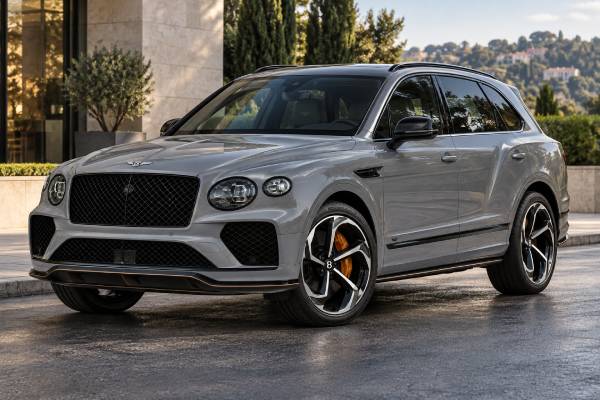
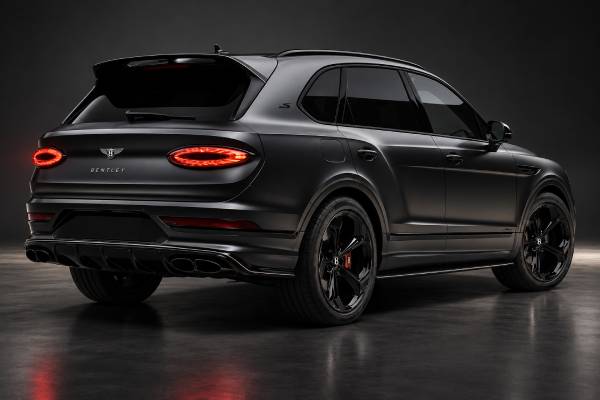
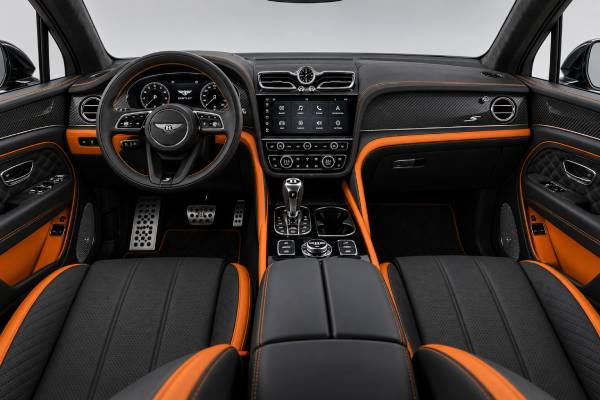
The 2024–2025 Bentley Bentayga S Black Edition V8 is a factory-built styling and chassis derivative distinguished by the first black-tinted Bentley wings used on a production Bentley in the marque’s 105-year history. It retains the Bentayga S’s 542 bhp twin-turbo 4.0-liter V8, eight-speed automatic, all-wheel drive, Dynamic Ride, rear-wheel steering, and 4.5-second 0–100 km/h performance. Its special character comes from black exterior details combined with one of seven available accent colors applied to the lower body kit, brake calipers, cabin stitching, piping, and trim. This is not simply a standard S with black wheels: authentic cars have coordinated factory content, S Black Edition badging, darkened emblems and lettering, and a VIN-linked specification. The guide below explains the exact mechanical package, visual identifiers, wheel and tire considerations, daily behavior, maintenance costs, accident-repair challenges, and the inspection process needed to separate an original example from a modified or incompletely repaired one.
Table of Contents
- The Black Edition Concept and Factory Identity
- V8 and Chassis Specifications
- Accent Design and Cabin Details
- Performance and Behavior on the Road
- Maintenance, Repair, and Preservation
- Used-Car Authentication and Buying Advice
The Black Edition Concept and Factory Identity
The S Black Edition is the darkest factory expression of the 542 bhp Bentayga S, with black Bentley wings and lettering tied to a coordinated accent-color package. It adds rarity and design coherence rather than more engine output.
Bentley announced the derivative in April 2024 and emphasized that the black-tinted wings were a first in 105 years of company history. The change extends beyond the bonnet badge. Exterior lettering is darkened, the 22-inch wheels are finished in black, Blackline-style brightwork removes much of the chrome, and a Black Edition badge appears on the D-pillar. A vivid accent stripe traces the lower edge of the carbon-style or painted body treatment, with matching brake calipers.
Seven accent colors were offered: Mandarin, Signal Yellow, Klein Blue, Pillar Box Red, Ice, Hyper Green, and Beluga. The chosen color carries into the cabin through contrast stitching, piping, and selected leather or trim details. This pairing is central to the factory concept. A black S fitted later with colored calipers or vinyl pinstriping may look similar but does not become a Black Edition.
The package was available with both V8 and plug-in-hybrid powertrains. The vehicle covered here is specifically the V8, which produces 550 PS, or 542 bhp, and 770 Nm. A seller’s description must be checked carefully because exterior photographs alone may not reveal whether a car is the V8 or 456 bhp S Hybrid Black Edition. VIN, engine bay, charging port, instrument display, registration data, and build sheet remove ambiguity.
Production was not publicly defined as a numbered 20-car collection like the Apex Edition. Rarity therefore depends on market allocation, color combination, and actual sales rather than a stated global cap. Its collector appeal is likely to be strongest when the original accent choice, paint, wheels, emblems, interior, and factory documentation remain intact.
Model-year boundaries also require precision. The Black Edition was announced during 2024 and may appear as a 2024 build, 2025 model year, or later registration depending on country. Equipment such as Touring Specification, rear-wheel steering, assistance systems, audio, and seat configuration can vary. Confirm the individual car rather than transferring a press-release specification wholesale.
V8 and Chassis Specifications
The Black Edition V8 uses the same internal-combustion powertrain as the contemporary Bentayga S: a 3,996 cc twin-turbo V8 driving all four wheels through an eight-speed automatic. Its active chassis aims to deliver flatter cornering and easier low-speed maneuvering without removing the Bentayga’s air-suspended touring ability.
| Parameter | Factory specification |
|---|---|
| Engine | 4.0-liter, 32-valve, twin-scroll twin-turbo V8 gasoline |
| Displacement | 3,996 cc |
| Maximum power | 550 PS / 404 kW / 542 bhp at 6,000 rpm |
| Maximum torque | 770 Nm / 568 lb-ft at 2,000–4,500 rpm |
| 0–60 mph | 4.4 seconds |
| 0–100 km/h | 4.5 seconds |
| Top speed | 180 mph / 290 km/h |
| System | Specification | Driver effect |
|---|---|---|
| Transmission | 8-speed automatic | Low-rev cruising and rapid kickdown |
| Driveline | Permanent all-wheel drive | Distributes torque for traction and stability |
| Suspension | Height-adjustable air suspension with electronic damping | Combines comfort settings with firmer Sport behavior |
| Bentley Dynamic Ride | 48-volt active anti-roll control | Reduces body lean while allowing wheel movement over rough surfaces |
| Rear-wheel steering | Standard on the later S package | Reduces low-speed turning effort and improves high-speed stability |
| Exhaust | Free-flowing S sports exhaust | Creates a more assertive V8 sound |
| Parameter | Published figure |
|---|---|
| Combined fuel consumption | Approximately 13.0 L/100 km WLTP for the current V8 specification |
| Combined CO2 | Approximately 296 g/km WLTP |
| Fuel tank | 85 liters / 22.45 US gallons |
| Official range | About 654 km / 406 miles WLTP |
| Fuel type | Premium unleaded to the market-specified octane |
| Parameter | Standard-wheelbase V8 figure |
|---|---|
| Length | 5,125 mm |
| Width across mirrors | 2,222 mm |
| Wheelbase | 2,995 mm |
| Height | About 1,728 mm depending on configuration |
| Boot capacity | Approximately 484 liters |
| Maximum braked towing | Up to 3,500 kg with the correct factory and legal equipment |
| Area | Factory treatment |
|---|---|
| Brand emblems | Black-tinted Bentley wings and dark exterior lettering |
| Wheels | 22-inch S design in black finish |
| Lower body | Black treatment with a narrow chosen-color accent stripe |
| Brake calipers | Painted to coordinate with the accent color |
| Exterior identifier | Black Edition badge on the D-pillar |
| Interior | Matching accent stitching, piping, and selected color details |
These figures describe the V8 version, not the plug-in hybrid. Local homologation, wheel specification, options, and model year can alter consumption, mass, and equipment. The original order record should always take priority over a generic listing.
Accent Design and Cabin Details
The Black Edition succeeds when the accent color appears as a disciplined line rather than overwhelming the Bentayga’s shape. Condition and color matching are therefore unusually important: a poorly repaired stripe or caliper can be more visible than damage on an ordinary dark-trim S.
Mandarin and Signal Yellow create the strongest motorsport-like contrast, especially against black or dark gray paint. Hyper Green and Klein Blue are similarly vivid but less conventional. Pillar Box Red gives a traditional performance cue, Ice produces a cooler and more subtle highlight, and Beluga can create an almost entirely monochrome car. Bentley’s broad paint catalogue means the same accent can look completely different beside a satin, metallic, solid, or Mulliner exterior finish.
The lower stripe follows the Styling Specification treatment around the body. Inspect it at panel joins, wheel openings, bumper corners, and door edges. Factory alignment should be consistent, with no lifting film, visible trimming cuts, overspray, or abrupt color changes. Determine whether the accent is painted, applied through a factory-specified process, or has received later protective film; document any repair method.
Black emblems and lettering need careful cleaning because abrasive polishing can expose edges or change gloss. Replacement wings should match the correct tinted finish, mounting, and part provenance. A standard chrome badge painted black by an owner is not equivalent. The D-pillar Black Edition badge should agree with the VIN-linked build record.
The 22-inch black wheels visually reduce their apparent size but readily show curb rash, poor refinishing, and brake-dust etching under direct light. Check the inner barrels for bends, welds, and color mismatch. If the calipers have been repainted, compare shade, lettering, surface preparation, and heat resistance with factory appearance. A close but incorrect accent color weakens the coordinated design.
Inside, the accent appears in contrast stitching, piping, and selected hide details. Look at areas where trim panels meet: the color should remain consistent across seats, doors, fascia, steering wheel, and console according to the commissioned design. Leather repairs may use thread or pigment that looks acceptable in shade but differs under sunlight. Ask for invoices and before-and-after photographs when restoration has occurred.
S-specific cabin themes often use a technical, darker presentation with fluting, S emblems, and Dinamica-type material. Options can add high-gloss or open-pore veneer, carbon surfaces, upgraded audio, embroidered emblems, and extensive leather. Test every powered seat function, because repairing massage, ventilation, heating, and memory systems can require significant disassembly.
The best preservation strategy is gentle, regular cleaning with products suitable for each finish. Avoid generic solvent dressings on matte trim, acidic wheel cleaners, aggressive leather dye, and polishing compounds on satin surfaces. Maintain a photographic condition record so any future change can be identified early.
Performance and Behavior on the Road
The Black Edition drives like a well-specified later Bentayga S V8: very fast, controlled for its size, and more vocal than the standard V8. The black-and-accent treatment does not change power, so any performance claim beyond the S specification should be treated skeptically.
The V8’s 770 Nm plateau gives immediate response from low engine speed. Normal driving requires little throttle, and the eight-speed automatic can remain in high gears without making the engine feel strained. Under full demand, the transmission selects lower ratios quickly and the sports exhaust provides a deeper, more obvious soundtrack than the standard Bentayga.
Sport mode changes more than sound. Damping becomes firmer, roll control is more assertive, steering weight increases, and the stability system allows a more dynamic attitude. Bentley stated a 15 percent increase in damping stiffness for the S calibration in Sport compared with the regular setup. The result is better body control, but rough roads can feel busy on 22-inch tires.
Rear-wheel steering is one of the most useful everyday systems. At parking speeds, the rear wheels turn opposite the fronts, effectively shortening the wheelbase and reducing the effort needed in tight spaces. At higher speed they turn with the fronts, supporting smoother lane changes. During a test drive, the system should operate without clunks, steering warnings, or an off-center wheel.
Dynamic Ride uses electric actuators in the anti-roll system. When functioning correctly, it keeps the body flatter in corners while allowing the air springs to absorb isolated bumps. A chassis warning, persistent lean, harshness in one mode, or unusual knocking needs specialist diagnosis. The system’s 48-volt network is separate from the ordinary 12-volt electrical supply and should not be approached as conventional passive suspension.
The 22-inch tire package shapes the car’s response. Fresh approved tires give strong grip and precise steering; aged, mismatched, or unevenly worn tires can make the vehicle tramline or vibrate. The Black Edition’s performance should never be assessed on unknown tire pressure or after a long period in storage.
Braking performance is strong with the standard large iron system, while carbon-ceramic brakes may appear if separately specified. Identify the hardware before ordering parts or accepting a seller’s claim. A soft pedal, judder, surface cracking, or steering pull is not normal. The weight and speed potential make brake condition a safety priority.
Despite the sport theme, the Bentayga remains a touring SUV. In Bentley or Comfort mode, it should settle at motorway speed with low wind noise and controlled tire roar. Persistent resonance may come from wheel damage, poor balancing, uneven tread, or aftermarket exhaust work rather than the Black Edition package.
Daily-use compromises
Dark paint, black trim, and bright accents show dust, chips, and wash marks quickly. Low-profile tires require pothole awareness, and the broad body demands care in narrow car parks. Fuel use is high in short urban driving, although the 85-liter tank provides useful long-range flexibility. These are manageable compromises for an owner who values the design enough to maintain it carefully.
Maintenance, Repair, and Preservation
Mechanical servicing follows the Bentayga S V8, while cosmetic maintenance must preserve finishes unique to the Black Edition. The safest approach is to document every operation and use specialists who understand both Bentley systems and low-volume trim.
Follow the VIN-specific oil, filter, brake-fluid, inspection, and software schedule. Time matters as well as distance. The twin-turbo V8 should be allowed to reach operating temperature regularly, especially if the car is used mainly for short journeys. Investigate oil or coolant leaks, misfires, boost faults, unusual turbo noise, smoke, or fan behavior immediately.
Cooling-system condition is critical in a tightly packaged performance SUV. Check for dried residue, odor, changing reservoir level, weak cabin heating, and temperature messages. Do not mix coolant types or authorize a generic pressure test without the correct procedures. Service history should identify the fluid and components used.
The 12-volt battery can trigger widespread faults when weak, and the 48-volt Dynamic Ride network adds another electrical layer. Use an approved maintainer during extended storage and have both systems assessed with Bentley-capable diagnostics. Replacing modules without correcting low voltage or communication faults can be an expensive mistake.
Air suspension should maintain level height after parking and move through settings evenly. Inspect air springs, dampers, links, compressor behavior, active-roll components, and rear-steering hardware. Alignment must be completed at the correct ride height with required calibrations. A cheap alignment that ignores active systems may worsen tire wear and steering behavior.
Wheel maintenance requires correct lifting points, bolt torque, and refinishing quality. Photograph each wheel before tire work. Specify approved tires and confirm load and speed ratings. Because the wheels are black, a quick cosmetic touch-up can hide impact damage; inspect structure before appearance.
Brake caliper refinishing is particularly sensitive. The accent color is part of the factory identity, and heat-resistant coating, logos, surface preparation, and shade must be correct. Do not let a general body shop spray over seals, hardware, or identification. Preserve invoices and color information.
Body repairs need sensor calibration, trim sourcing, and stripe restoration. Assistance cameras and radar may require aiming after bumper or windscreen work. Satin or gloss black pieces can differ subtly by supplier and batch. Insist on a written repair plan that identifies whether parts will be replaced, refinished, or blended.
For storage, keep the car clean and dry, maintain the battery, control tire pressure, and avoid a damp cover against the paint. Start-and-idle routines are less useful than periodic full-temperature drives. If the vehicle must remain static, follow professional guidance for fuel, tires, ventilation, and alarm power.
Used-Car Authentication and Buying Advice
A used S Black Edition V8 should be purchased only after the factory specification, powertrain, accent combination, repair history, and active chassis have been verified. The edition premium is difficult to justify when the visual package is incomplete or recreated after delivery.
Obtain the VIN-linked build sheet from a Bentley retailer or reliable factory record. It should identify the Black Edition, V8 powertrain, original paint, accent color, wheels, interior treatment, assistance packages, seat configuration, and optional equipment. Match those details to the physical car and sales invoice.
Examine the emblems, D-pillar badge, exterior lettering, lower stripe, calipers, wheels, and cabin accents in daylight. Look for inconsistent gloss, nonfactory adhesive, overspray, missing fasteners, incorrect fonts, or color mismatch. Compare both sides of the vehicle; one repaired side may differ subtly from the other.
Body inspection should include paint-depth measurement, panel gaps, glass dates, underbody shields, jacking points, and carbon or lower styling pieces. Accident repairs near radar, cameras, parking sensors, rear steering, suspension, or cooling systems require invoices and calibration records. A clean vehicle-history report does not replace physical inspection.
The road test should begin cold. Listen for abnormal rattle, misfire, smoke, or fluid noise. Drive in Comfort, Bentley, and Sport settings; verify smooth transmission behavior, stable temperatures, straight tracking, rear-steering assistance, air-suspension height changes, and consistent braking. Test at motorway speed where wheel and tire problems become clear.
Make the electronic inspection reproduce real use rather than ending with a stationary code read. Begin with a cold start, exercise every chassis mode, operate the cameras and assistance systems, then repeat the scan after the road test. The report should show timestamps and status for the V8, gearbox, 48-volt Dynamic Ride system, rear steering, air suspension, body controllers, multimedia network, and low-voltage supply. A cluster of communication entries may trace to one voltage event, while an empty history on a recently serviced car deserves corroboration from workshop records.
Operate every luxury feature: seats, massage, ventilation, heating, memory, climate zones, panoramic roof, tailgate, soft-close doors, audio, cameras, adaptive cruise, lane functions, night vision where fitted, phone integration, keys, and connected services. Price each defect before negotiation.
Create a purchase reserve for four tires, brakes, annual service, wheel correction, battery replacement, trim restoration, and warranty. Verify whether an extended policy covers active anti-roll control, rear-wheel steering, infotainment, assistance sensors, and cosmetic items. Agreed-value insurance may be appropriate for a rare color combination.
A standard Bentayga S V8 may be the better buy when performance matters more than the black-wing history. The Black Edition earns its premium through originality, coordinated design, and condition. A complete, correctly maintained example offers all the dynamic ability of the S while marking an unusual moment in Bentley’s visual identity.
Protecting the Edition Premium
The Black Edition’s extra value depends on small details remaining coherent. Keep a dated image set showing the wings, D-pillar badges, lettering, stripe edges, calipers, wheel finish, stitching, and major interior panels. Add paint readings and wheel-condition notes when the car is acquired. This evidence helps a future buyer distinguish normal wear from later replacement and gives an insurer a clearer basis for repair.
Ask the insurer to record the exact derivative and factory options rather than rating the vehicle as a generic Bentayga S. Confirm whether original black emblems, accent-color refinishing, branded glass, advanced-driver-assistance calibration, and matching wheel replacement are covered. A policy that pays only for an ordinary chrome badge or approximate caliper color can leave the owner funding the difference after a minor incident.
Before any body or detailing work, provide the repairer with the build sheet and photographs. Require a sample or documented paint code for the accent, agree how stripe joins will be restored, and prohibit polishing of satin surfaces without approval. After repair, inspect the car outdoors from both sides and test all sensors that may have been disturbed. Careful documentation is not excessive on this model: it is the practical way to preserve the design story that separates a real Black Edition from a black-trimmed S.
References
- Bentley News 2024 : Black Bentley wings identify S Black Edition – the darker side of Bentayga 2024
- BENTLEY NEWSROOM : Bentayga S 2026
- BENTAYGA RANGE 2023 (Brochure)
- Bentley News 2023 : NEW FEATURES FURTHER INCREASE DESIRABILITY OF BENTAYGA RANGE 2023
- Bentley News 2024 : Bentley Europe launches exclusive Bentayga styling packages inspired by Mother Nature 2024
- Bentayga V8 and Hybrid | Luxury SUV | Bentley Motors 2026
Disclaimer
Black Edition content, option availability, specifications, and warranty coverage vary by market and build. Confirm originality and mechanical condition through the VIN record, physical inspection, diagnostic scan, and qualified Bentley service information; do not rely on exterior appearance alone. Share this guide with an owner, detailer, or buyer responsible for preserving a factory accent-color specification.