

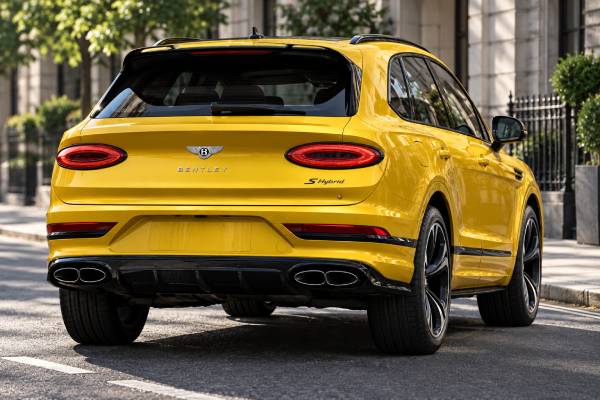

The 2022–2025 Bentley Bentayga S Hybrid is the driver-focused version of Bentley’s first-generation plug-in-hybrid SUV formula. It combines a turbocharged 3.0-liter V6, a transmission-mounted electric motor, an 18.0 kWh high-voltage battery, and permanent all-wheel drive for a factory-rated 456 bhp. The important distinction is not outright speed: the S Hybrid is slower than the V8 S, but it adds near-silent short-distance driving, useful electric assistance, and sharper chassis and design tuning than the comfort-oriented Azure Hybrid. It works best for an owner who can charge regularly and wants a Bentayga that feels more alert without accepting the fuel use of the V8 on every local journey. This guide explains the exact powertrain, performance, charging behavior, chassis hardware, maintenance priorities, model-year details, and used-buying checks that matter. It also separates official ratings from real-world expectations, because plug-in-hybrid economy depends heavily on how the vehicle is charged and driven.
Table of Contents
- What Makes the S Hybrid Different
- Plug-in Powertrain and Technical Specifications
- Driving, Charging, and Electric-Range Reality
- Chassis, Cabin, and Everyday Practicality
- Maintenance and Hybrid-System Care
- Used-Buying Strategy and Inspection Checklist
- Who Should Buy It and What Else to Consider
What Makes the S Hybrid Different
The Bentayga S Hybrid is a sporting trim built around Bentley’s 456 bhp plug-in-hybrid system, not a higher-output hybrid powertrain. Its value comes from calibration, equipment, sound, and appearance rather than a power increase over the standard or Azure Hybrid.
Bentley introduced the S Hybrid for the 2023 model year after announcing it in September 2022. Depending on market registration conventions, examples may be described as 2022 launch vehicles or 2023-onward models. The assignment range through 2025 covers the facelifted 4V1 Bentayga before Bentley’s later powertrain strategy changed. Buyers should therefore identify the exact build date, market specification, and model year rather than relying only on an advertisement’s registration year.
The hardware pairs a 3.0-liter turbocharged gasoline V6 with a 100 kW electric motor-generator located between the engine and eight-speed automatic transmission. Bentley publishes a combined 462 PS, equal to 456 bhp, and 700 Nm of system torque. An 18.0 kWh battery supports official electric driving of at least 28 miles, or 45 km, on the WLTP cycle in the updated specification. The vehicle can move in electric mode, blend both power sources, or preserve battery energy for later use.
The “S” treatment changes the character around that system. Bentley used a more assertive Sport calibration, a 15 percent increase in damping stiffness in Sport mode, a more permissive electronic stability-control setting, and a Hybrid Sports Exhaust concept intended to give the V6 more presence under load. Exterior identifiers include dark-tinted brightware through the Blackline Specification, dark headlamp and taillamp detailing, S badging, a rear spoiler, and distinctive wheel designs. Cabin themes often use Dinamica-like technical material, contrast stitching, S embroidery, and a driver-oriented color split.
That combination creates an unusual proposition. On faster roads, the electric motor fills torque while the V6 and transmission deliver sustained performance. Yet its mass remains evident, and the powertrain cannot duplicate the immediate sound, lighter nose feel, or continuous high-load response of the 4.0-liter V8 S. The S Hybrid is best understood as the more expressive and dynamically tuned version of the Bentayga plug-in hybrid—not as an electric substitute for the V8.
Plug-in Powertrain and Technical Specifications
This Bentayga is a PHEV: it has a gasoline engine, one traction motor, an externally chargeable battery, and an official electric range. The system drives all four wheels through an eight-speed automatic, so electric propulsion also uses the conventional transmission and driveline rather than a separate electric rear axle.
| Item | Specification | Practical meaning |
|---|---|---|
| Combustion engine | 3.0-liter turbocharged V6 gasoline | Provides sustained performance and long-distance range |
| Electric motor-generator | 100 kW, transmission-integrated | Propels the vehicle electrically and assists the V6 |
| Combined output | 462 PS / 456 bhp | Official system output; individual peaks must not be added |
| Combined torque | 700 Nm / 516 lb-ft | Strong low-speed response when both systems contribute |
| High-voltage battery | 18.0 kWh gross capacity | Updated battery used for the 28-mile WLTP target |
| Powertrain type | Plug-in hybrid electric vehicle | Requires external charging to deliver its intended efficiency |
| Item | Specification |
|---|---|
| Transmission | 8-speed automatic |
| Drive system | Permanent all-wheel drive |
| EV Drive | Prioritizes electric propulsion while conditions and charge permit |
| Hybrid Mode | Automatically blends engine and motor using route and demand data |
| Hold Mode | Maintains battery charge for later urban or restricted-area use |
| Regeneration | Recovers energy during deceleration and braking |
| Measure | Official figure |
|---|---|
| 0–60 mph | About 5.1 seconds |
| 0–100 km/h | 5.3 seconds |
| Top speed | 158 mph / 254 km/h |
| Character | Electric torque at low speed; blended performance under heavy demand |
| Item | Published specification | Important condition |
|---|---|---|
| Official electric range | At least 28 miles / 45 km WLTP | Test-cycle result; weather, speed, and HVAC use reduce actual range |
| Charging type | AC charging only | No DC rapid-charging capability |
| Faster AC recharge | Approximately 2.5 hours from a suitable dedicated supply | Depends on supply, cable, temperature, and starting charge |
| Domestic-socket recharge | Approximately 7.5 hours in Bentley guidance | Use only an approved, correctly rated outlet and cable |
| Fuel tank | 75 liters / 19.8 US gallons | Smaller than the V8 tank because of hybrid packaging |
| Item | Approximate official specification |
|---|---|
| Body style | Standard-wheelbase luxury SUV |
| Length | 5,125 mm / 201.8 in |
| Wheelbase | 2,995 mm / 117.9 in |
| Width including mirrors | 2,222 mm / 87.5 in |
| Height | About 1,710–1,728 mm depending on specification |
| Luggage capacity | About 479 liters in five-seat form |
| Maximum braked towing capacity | 3,500 kg / 7,716 lb when correctly equipped |
These figures describe the 456 bhp, 18.0 kWh S Hybrid specification. Earlier Bentayga Hybrid literature, different regional homologation procedures, and later Bentley hybrid systems can show other values. Wheel and tire packages also affect ride, efficiency, and dimensions, so the vehicle’s certificate of conformity remains the best source for a specific example.
Driving, Charging, and Electric-Range Reality
The S Hybrid delivers its best ownership experience when it begins most local trips with charge. Without regular charging, it becomes a very heavy gasoline SUV carrying electrical hardware that cannot provide its full economy advantage.
How the powertrain feels
Initial acceleration in EV Drive is smooth and quiet, well suited to parking structures, residential streets, and congested centers. The motor’s response is immediate, but it must move a vehicle weighing well over two metric tons. Gentle inputs preserve electric operation; a deep accelerator request, low battery state, high speed, cold conditions, or strong cabin-heating demand may start the V6.
When the engine joins, the transition should be controlled rather than abrupt. The eight-speed automatic remains part of the propulsion path in electric driving, so gear changes and driveline behavior can be felt more than in a single-speed battery EV. Under full acceleration, the combined system is convincingly quick, though the delivery is layered: motor torque arrives first, the V6 builds, and the transmission manages both. A healthy car should not hesitate, flare engine speed, or produce repeated warning messages during these transitions.
Sport mode keeps the vehicle more ready to use both power sources and firms the chassis. The S calibration makes direction changes feel more deliberate than in the standard Hybrid, but it cannot remove the battery’s mass. The benefit is composure rather than sports-car delicacy. Drivers should expect a stable, fast grand-touring SUV with a useful electric side, not a lightweight performance crossover.
What electric range to expect
The 28-mile or 45 km figure is an official WLTP result, not a promise. Mild temperatures, moderate speeds, preconditioned cabin temperatures, and urban driving can bring an owner close to the rating. Winter heating, hot-weather air conditioning, repeated acceleration, large wheels, hills, and motorway speeds can reduce it substantially. Battery age and usable-capacity management also influence the displayed estimate.
A practical test drive should begin with a meaningful charge. Record the displayed range, drive a mixed route, and compare energy use with distance covered. One short drive cannot certify battery health, but a dramatic mismatch, rapid percentage loss, charging interruption, or inability to select EV Drive deserves diagnosis. The indicated range is adaptive and learns from recent use, so a low number after fast or cold driving is not automatically a battery fault.
Charging routine
A dedicated home charging point is preferable to relying on a general domestic outlet. It provides safer repeated use, more consistent current, and a predictable overnight routine. The vehicle does not support DC rapid charging, and its modest battery means public high-power chargers offer no advantage. Destination AC charging can still be useful at hotels, offices, or restaurants.
Inspect both the vehicle inlet and portable cable for heat damage, contamination, corrosion, or broken locking components. Charging should start without repeated negotiation failures, and the connector should lock and release correctly. Timed charging and cabin preconditioning can make the car more useful because grid electricity prepares the cabin before departure rather than consuming battery energy immediately.
The most efficient pattern is frequent, shallow use of the battery followed by regular charging. Long motorway journeys will eventually rely mainly on gasoline, where the Hybrid’s mass limits economy. Owners who never have access to charging may be better served by a V8 chosen for simplicity of use, even though its fuel consumption is higher in urban driving.
Chassis, Cabin, and Everyday Practicality
The S Hybrid is tuned to feel more controlled and expressive than the comfort-led Bentayga Hybrid variants, while retaining the air-suspended isolation expected of a Bentley. Its central compromise is that sportier wheels and settings can expose more road texture without making the vehicle genuinely light.
Bentley Dynamic Ride, where fitted for the exact market and build, uses a 48-volt active anti-roll system to resist body lean while allowing the air suspension to remain compliant over uneven surfaces. The S calibration increases damping stiffness in Sport mode by 15 percent and works with a more permissive stability-control strategy. Later cars may include rear-wheel steering, which turns the rear wheels opposite the fronts at low speed to improve maneuverability and in the same direction at higher speeds to increase stability. On a large SUV, its parking benefit is immediately noticeable.
Wheel choice has a major effect. Twenty-two-inch S wheels create the intended stance and sharpen responses, but their low-profile tires cost more and are vulnerable to pothole damage. A car that tramlines, vibrates, or pulls may have tire damage, poor alignment, a bent wheel, or worn suspension components. All four tires should match in approved specification and remain close in tread depth because the all-wheel-drive and stability systems assume consistent rolling behavior.
The braking system blends regenerative and friction braking. Pedal feel may change subtly as the system moves between them, yet it should remain predictable. Corrosion on the discs can develop when regeneration handles much of the gentle slowing or when the car sits. A road test should include several progressive stops, checking for vibration, scraping, pulling, or a pedal that changes unexpectedly.
Inside, the S treatment favors a darker and more technical atmosphere than Azure. Typical details include S emblems, contrast stitching, fluted upholstery, sports graphics, and extensive color choice. The infotainment system supports navigation data that can help Hybrid Mode plan energy use, while digital instrumentation shows energy flow and battery status. Test every screen, camera, USB port, wireless function, key, seat motor, ventilation feature, and driver-assistance control. Luxury options are desirable, but each adds a component that may be costly to diagnose.
The five-seat layout is generally the clearest match for the hybrid packaging. Buyers should verify seat count from the actual car because seven-seat availability and luggage configuration differ from V8 versions and markets. Battery placement slightly affects cargo packaging, although the Bentayga remains useful for normal family and touring luggage. The 3,500 kg braked towing figure is significant, but towing can start the engine frequently and consume charge quickly. Confirm the factory tow package, electrical socket, cooling condition, tongue-load limits, and local licensing rules before using the maximum rating.
Cabin refinement is strongest when road, wind, powertrain, and trim noises remain subdued. Listen for panoramic-roof creaks, loose rear trim, seat rattles, air-suspension knocks, and a harsh V6 start. Some change in sound is normal when the engine wakes after electric running; repeated shuddering or warning lights are not.
Maintenance and Hybrid-System Care
Maintenance must cover two complete systems: a sophisticated gasoline Bentayga and a high-voltage plug-in-hybrid installation. Regular charging does not eliminate engine service, and low annual mileage can increase the importance of time-based fluid, battery, brake, and tire checks.
Follow the market-specific Bentley schedule and service reminders, but do not assume that an engine used intermittently needs less attention. Oil still ages through moisture, fuel dilution, short cold starts, and calendar time. The cooling system has to manage the V6, turbocharger, transmission, power electronics, motor, and battery through separate or interconnected circuits. Any coolant loss, sweet odor, pump noise, temperature warning, or cabin-heater inconsistency should be investigated by a technician trained on the hybrid system.
The 12-volt battery remains critical because it wakes control modules and allows the high-voltage system to initialize. A weak low-voltage battery can generate a confusing collection of warnings even when the traction battery is healthy. Cars stored for long periods benefit from an approved maintainer connected according to Bentley instructions. Do not improvise around orange high-voltage cabling or attempt battery repairs without qualified equipment.
High-voltage battery health is protected by control software, thermal management, and reserved capacity. Owners can support it by using normal charging, avoiding unnecessary months at an indicated extreme, keeping cooling inlets clear, and addressing charging faults promptly. A battery warranty may apply subject to market, age, mileage, and terms, but it is not a substitute for testing. Ask the retailer to check fault history, software level, campaign status, isolation readings, and available battery diagnostic data.
Brake servicing deserves special attention. Regeneration can reduce pad wear but may leave discs underused. Clean, dry storage and occasional controlled friction braking help, while annual inspection catches corrosion before it becomes severe. Brake-fluid service remains time-sensitive. Large wheels also make tire replacement expensive, so pressure, sidewall condition, age codes, alignment, and tread depth should be checked often.
Air suspension, active anti-roll hardware, rear-wheel steering where fitted, and the eight-speed transmission need leak and fault inspections. The vehicle should rise and lower evenly, remain level after standing, and complete drive-mode changes without warnings. A suspension corner that settles overnight may indicate an air leak. Transmission fluid policies vary by market and service philosophy, but a specialist can assess usage, temperature history, leaks, and shift quality before recommending preventive work.
Useful ownership records
Retain charging-cable details, software invoices, recall and campaign confirmations, battery reports, wheel-alignment sheets, tire specifications, and every service receipt. Hybrid faults can be intermittent; dated photographs of warnings and notes about state of charge, temperature, and driving mode help technicians reproduce them. A complete record also reassures the next buyer that the electrical system was treated as an integral powertrain, not ignored until a warning appeared.
Used-Buying Strategy and Inspection Checklist
The best used S Hybrid is not necessarily the newest or lowest-mileage example; it is the car with verifiable specification, consistent charging behavior, complete maintenance, healthy tires and brakes, and no unresolved hybrid warnings. A pre-purchase inspection should be performed by a Bentley retailer or an independent specialist with suitable high-voltage diagnostic capability.
Begin with identity. Confirm the VIN, build date, model year, market, S Hybrid designation, battery specification, and original options. Imported vehicles can have different charging connectors, navigation services, warranty coverage, lighting, emissions equipment, and campaign histories. Compare the VIN against national recall databases and Bentley service records, then obtain written proof that outstanding actions are complete.
Examine the body in bright, dry conditions. S-specific dark trim, lower styling pieces, large wheels, and painted bumpers are expensive to restore correctly. Uneven gaps, overspray, missing fasteners, different glass dates, or fresh undercoating may reveal repairs. A paint-depth gauge is useful when interpreted by someone familiar with aluminum and mixed-material construction. Inspect the underside for impact damage around battery protection, jacking points, exhaust components, and suspension arms.
Charge the vehicle during the inspection. The inlet should open, accept the plug, lock, begin charging, and release without repeated errors. Check both supplied cables and verify that they match local sockets. Review the instrument cluster for charging history, displayed range, warning messages, and service notices. Then drive in EV mode until the engine starts naturally or is requested, observing transition quality.
The road test should include a cold start, urban electric driving, stronger blended acceleration, steady motorway speed, tight parking maneuvers, rough surfaces, and several braking events. Confirm straight tracking, smooth shifts, stable temperature, quiet suspension, accurate cameras, and correct operation of all drive modes. Use Sport mode to expose driveline vibration or damper faults that a gentle test might hide.
Service history should show more than stamps. Look for invoices identifying oil specification, brake-fluid changes, coolant or pump work, battery diagnostics, software updates, tires, alignments, and air-conditioning service. Verify that cosmetic modifications did not interfere with sensors or cooling. Aftermarket wheels may be heavy, incorrectly rated, or mismatched to approved tire sizes, while nonstandard suspension coding can create future diagnostic problems.
Obtain a written quotation for near-term work before agreeing on price. Four approved tires, large brake components, a 12-volt battery, damaged charging cables, wheel refurbishment, and overdue service can erase a seemingly generous discount. Extended warranty products should be read carefully for high-voltage battery, charging, air suspension, infotainment, and wear-item exclusions.
Immediate reasons to pause a purchase
Walk away or seek specialist evidence when the seller cannot charge the car, warning lights have recently been cleared, the vehicle repeatedly refuses EV mode without an obvious environmental reason, coolant is low, the underside shows battery-area impact, or the tires are mismatched. The same caution applies to incomplete accident history, missing keys or charging leads, unexplained software problems, or a price that assumes warranty coverage the car does not actually have.
Who Should Buy It and What Else to Consider
Choose the S Hybrid when daily routes often fit within its electric capability, reliable charging is available, and you want the sportier Bentayga presentation without moving to the V8. It is a weak fit for owners who cannot charge, routinely tow long distances, or prioritize the lightest and most natural performance response.
A home-charging commuter may use little gasoline during the week, then rely on the V6 for long trips without planning around public fast chargers. That flexibility is the model’s central advantage. Business users in regions with tax or access benefits for plug-in hybrids may also find the official emissions classification valuable, although local rules should be checked because incentives and testing methods change.
The standard Bentayga Hybrid provides essentially the same propulsion with a less assertive design and chassis character. It may be better value when a quiet specification, smaller wheels, or lower used price matters more than S trim. The Azure Hybrid uses the same combined output but emphasizes comfort, wellbeing, bright detailing, and passenger-focused equipment. It is the stronger choice for relaxed touring and rear-seat use.
The Bentayga S V8 is faster, more sonorous, and more consistent under repeated heavy acceleration. It avoids charging routines and high-voltage battery concerns, but consumes substantially more fuel in short urban use and cannot provide engine-off local driving. The standard V8 may ride more gently and cost less than an equivalently equipped S while preserving the same 542 bhp engine.
A battery-electric luxury SUV offers much longer electric range and no gasoline engine, but requires charging planning on extended journeys and presents a different refinement and resale equation. Competing plug-in-hybrid SUVs may offer larger batteries, faster charging, or newer interfaces, yet few match the Bentayga’s materials, personalization, towing rating, and traditional luxury atmosphere.
The ownership decision should therefore begin with a route diary rather than an options list. Record daily distance, charging access, winter conditions, motorway frequency, passenger needs, and towing. When those patterns suit a 28-mile-class PHEV, a carefully inspected S Hybrid can be a compelling bridge between electric calm and long-range Bentley travel. When they do not, its extra weight and complexity become burdens rather than benefits.
References
- Bentley News 2022 : BENTAYGA HYBRID FAMILY EXTENDS WITH NEW S AND AZURE 2022
- BENTAYGA RANGE 2023 (Brochure)
- Bentley News 2023 : NEW FEATURES FURTHER INCREASE DESIRABILITY OF BENTAYGA RANGE 2023
- Hybrids Range | Bentley Motors 2026
- Bentayga V8 and Hybrid | Luxury SUV | Bentley Motors 2026
- Bentley News 2022 : BENTAYGA ODYSSEAN EDITION – THE MOST SUSTAINABLE BENTAYGA 2022
Disclaimer
Specifications, equipment, charging times, range, service requirements, and warranty terms differ by market, build date, options, test cycle, and vehicle condition. Confirm any purchase or maintenance decision with the VIN-specific documents, an authorized Bentley retailer, and a qualified high-voltage specialist. Share this guide with another Bentayga Hybrid owner or buyer who would benefit from a careful technical check.