
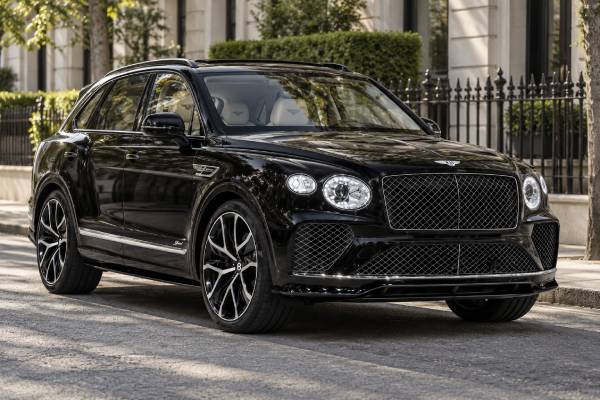
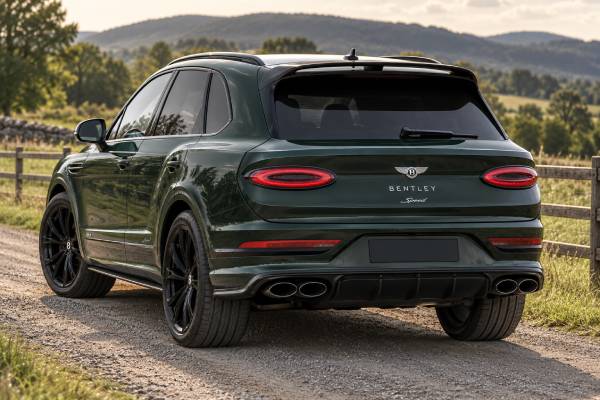
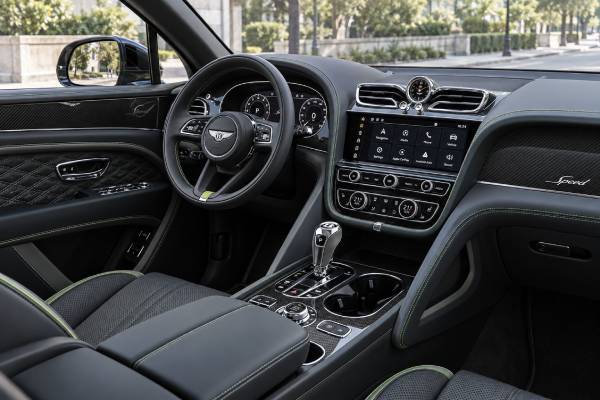
The 2025-on Bentley Bentayga Speed is the version to choose when the Bentayga’s luxury matters as much as its ability to behave like a serious performance SUV. Its revised 4.0-litre twin-turbocharged V8 produces 641 hp, launches the car from 0–60 mph in 3.4 seconds, and can reach 193 mph when specified with the carbon-ceramic braking package. Those numbers are striking, but the larger change is how the car responds: a dedicated SPORT calibration, all-wheel steering, a performance-focused stability-control mode, and a more assertive exhaust make this Speed substantially more involving than the regular V8 model. It remains a large, lavishly trimmed five-seat Bentley rather than a stripped track special, so buying one still requires attention to options, tyre costs, brake condition, service history, and intended use. This guide explains what is unique, how the hardware works together, and what to inspect before committing to a new or used example.
Table of Contents
- Where the 2025 Bentayga Speed Fits
- Engine, Gearbox, and Acceleration
- Chassis, Steering, and Braking Hardware
- Technical Specifications and Dimensions
- Cabin Design and Everyday Use
- Maintenance, Tyres, Brakes, and Running Costs
- Buying and Specification Guide
Where the 2025 Bentayga Speed Fits
The current Speed is the fastest and most dynamically focused member of the contemporary Bentayga family. It is not merely a regular 542 hp V8 with different badges: Bentley increased output, revised the chassis software, added all-wheel steering, created a more permissive dynamic setting, and gave the model distinct visual and acoustic character.
Bentley introduced this generation of Bentayga Speed in 2025, after the previous W12-powered Speed had left production. The important point for shoppers is that the new model returns to the top of the range with a 4.0-litre V8 rather than twelve cylinders. Its 650 PS metric rating corresponds to 641 bhp, while peak torque is 850 Nm. That is 100 PS and 80 Nm more than the regular Bentayga V8, and it gives the Speed an unmistakably different performance envelope.
The model code in this assignment, 4V1, identifies the standard-wheelbase Bentayga body rather than the longer EWB. The wheelbase remains 2,995 mm, the cabin has five seats, and the luggage compartment is substantially larger than that of the EWB. Buyers who place rear-passenger lounging space above handling should compare an EWB Azure or Mulliner, but there is no EWB equivalent of the 641 hp Speed at launch. The Speed’s proportions and mass distribution are therefore aligned with the more driver-oriented role.
Visual identification is deliberately assertive. Dark-tint exterior brightware, Speed-specific detailing, a roof spoiler, and model-specific wheel choices separate it from a standard V8. Optional 23-inch wheels give it an especially planted stance, while a Blackline Specification can intensify the dark exterior theme. None of these details alone proves a car is genuine, however. On a used example, verify the VIN-derived factory specification and build record rather than relying on emblems or aftermarket cosmetic changes.
The Speed is still a luxury SUV first. It retains air suspension, extensive leather and veneer choices, modern driver assistance, and the ability to cruise quietly. Its value is the breadth between those roles: it can travel with the refinement expected of a Bentley and then adopt a much sharper personality when SPORT mode is selected. That duality is the main reason to buy it rather than choosing a less expensive performance SUV or a regular Bentayga V8.
Engine, Gearbox, and Acceleration
The 4.0-litre twin-turbo V8 delivers the Speed’s headline pace, but calibration and driveline response make the performance usable. Maximum power arrives at 6,000 rpm, while 850 Nm is available from 2,250 to 4,500 rpm, giving the car both strong low-speed thrust and meaningful top-end energy.
How the higher-output V8 changes the experience
Compared with the 542 hp Bentayga V8, the Speed feels less dependent on a single burst of mid-range torque. It accelerates harder as speed rises and carries its pace with less sense of strain. The official 0–60 mph time is 3.4 seconds, and 0–100 km/h takes 3.6 seconds. Those figures put a vehicle weighing roughly two and a half tonnes into genuine high-performance territory.
The engine uses two turbochargers and works through an eight-speed automatic transmission and permanent all-wheel drive. Bentley does not ask the driver to manage a complicated launch procedure in normal use, but the Speed adds launch control for repeatable maximum acceleration. It should be reserved for suitable conditions: tyres must be warm, the surface must be dry and clear, and repeated standing starts add heat and load to the driveline, tyres, and brakes.
SPORT mode is central to the Speed’s identity. It sharpens throttle response, holds lower gears, and coordinates the engine, transmission, suspension, steering, and stability systems. A sports exhaust is standard, giving the V8 a clearer voice without requiring the optional titanium Akrapovič system. The latter changes sound and visual finish more than it changes everyday usefulness, so buyers should hear both systems from inside and outside the car before paying a large premium.
At motorway speeds, the transmission can settle into a tall gear and the engine’s torque makes overtaking effortless. The official maximum speed is 193 mph, but Bentley ties that figure to the optional carbon-ceramic brake specification. A car on standard iron brakes remains extraordinarily fast, yet its stated top speed is lower. This distinction matters when comparing advertisements: a dealer should not present every Speed as a 193 mph specification without confirming its brakes.
Fuel use and real-world range
The homologated WLTP combined consumption is 13.1 L/100 km, equivalent to about 21.6 mpg Imperial or 18.0 mpg US. The official CO2 result is 298 g/km, and the 85-litre tank supports a published combined range of 649 km under the same test framework. These numbers are useful for comparison, not a promise of everyday results.
Short urban trips, cold starts, heavy traffic, frequent SPORT-mode use, and wide throttle openings can increase consumption considerably. Gentle long-distance cruising can do better than hard mixed use, but owners should budget for premium fuel at a rate appropriate to a 641 hp, high-mass SUV. The Speed is not an efficiency purchase; its broad range and large tank are the practical advantages.
Chassis, Steering, and Braking Hardware
The Speed’s most consequential upgrades are underneath it. All-wheel steering, Bentley Dynamic Ride, a performance SPORT calibration, and available carbon-ceramic brakes work together to make the vehicle rotate, settle, and stop with less effort than its size suggests.
All-wheel steering and Dynamic Ride
At lower speeds, the rear wheels steer opposite the fronts to reduce the effective turning circle and help the Bentayga pivot into tight spaces. At higher speeds, they steer in the same direction to improve stability during lane changes and fast bends. The system cannot make the car small, but it makes its 5.14-metre length less intimidating in car parks while also supporting high-speed confidence.
Bentley Dynamic Ride is the brand’s active anti-roll system. Its 48-volt actuators can resist body roll in corners while allowing the suspension to remain compliant when the wheels encounter uneven surfaces independently. In the Speed, the software is tuned to provide stronger control in SPORT without eliminating the isolation expected in a luxury SUV. The result is not a low, rigid sports car; it is a tall vehicle that manages its mass unusually well.
The new ESC Dynamic mode permits greater slip before electronic intervention. It gives an experienced driver more freedom to adjust the car with throttle and steering, particularly on a closed course or broad, low-grip surface. It is not a road-racing setting. Public-road margins remain finite, and the car’s speed can rise far faster than its quiet cabin suggests.
Iron brakes versus carbon ceramics
Standard brakes are conventional iron discs engineered for powerful road use. They are likely to suit most owners because they work predictably in ordinary temperatures and are less expensive to replace. Condition still matters: a heavy, fast SUV can wear front discs and pads quickly if driven hard or used repeatedly in mountains.
The optional carbon-ceramic system is the enthusiast choice. Bentley pairs it with ten-piston front calipers, reduced unsprung mass, strong resistance to repeated high-temperature use, and the Speed’s 193 mph maximum-speed capability. Carbon-ceramic discs can last well in sympathetic road use, but physical damage, edge chipping, incorrect wheel handling, or severe wear can make replacement extraordinarily costly. A pre-purchase inspection should measure condition using Bentley-approved procedures rather than judging the glossy disc surface casually.
Wheel size also changes the car. Twenty-two-inch wheels generally offer more tyre sidewall, lower replacement expense, and better protection against potholes. Optional 23-inch wheels sharpen appearance and may make steering response feel more immediate, but tyres are costlier and damage risk is higher. The best choice depends on road quality and intended use, not simply which wheel fills the arch most dramatically.
Technical Specifications and Dimensions
This Bentayga Speed is an ICE vehicle: propulsion comes solely from a petrol V8, with no traction battery or external charging system. The mechanical essentials are the 4.0-litre twin-turbo engine, eight-speed automatic transmission, permanent all-wheel drive, air suspension, active roll control, and all-wheel steering. Figures below refer to the 2025-on 641 hp standard-wheelbase Speed; market equipment and weight definitions can differ slightly.
| Specification | Value |
|---|---|
| Powertrain type | Petrol internal-combustion engine |
| Engine | 4.0-litre twin-turbocharged V8 |
| Displacement | 3,996 cc |
| Maximum power | 650 PS / 641 bhp / 478 kW at 6,000 rpm |
| Maximum torque | 850 Nm from 2,250–4,500 rpm |
| Transmission | Eight-speed automatic |
| Drive | Permanent all-wheel drive |
| Fuel-tank capacity | 85 litres |
| Measure | Manufacturer figure | Important condition |
|---|---|---|
| 0–60 mph | 3.4 seconds | Official Bentley figure |
| 0–100 km/h | 3.6 seconds | Official Bentley figure |
| Maximum speed | 310 km/h / 193 mph | With optional carbon-ceramic brakes |
| Launch control | Fitted | Use only in appropriate conditions |
| Measure | Official combined value |
|---|---|
| Fuel consumption | 13.1 L/100 km |
| Fuel economy | 21.6 mpg Imperial / 18.0 mpg US |
| CO2 emissions | 298 g/km |
| Driving range | 649 km / 403 miles |
| Dimension | Value |
|---|---|
| Length | 5,144 mm |
| Wheelbase | 2,995 mm |
| Width including mirrors | 2,222 mm |
| Height | 1,728 mm |
| Unladen weight | Approximately 2,465–2,470 kg, depending on market definition |
| Item | Specification |
|---|---|
| Seating | Five occupants |
| Luggage capacity | 484 litres |
| Suspension | Air suspension with Bentley Dynamic Ride |
| Rear steering | All-wheel steering |
| Standard exhaust | Sports exhaust |
| Optional braking system | Carbon-ceramic discs with ten-piston front calipers |
| Available wheel size | Up to 23 inches |
Specifications should be checked against the build sheet and market documentation for an individual car. Optional equipment can change mass, tyre specification, top-speed certification, and replacement costs even when the headline engine output is identical.
Cabin Design and Everyday Use
The Speed does not require its owner to sacrifice Bentley craftsmanship for performance. Its cabin combines model-specific cues with the same broad material choice, comfort equipment, and practical five-seat layout available elsewhere in the standard-wheelbase range.
Speed embroidery, distinctive graphics, and darker or more technical trim combinations usually make the interior feel sportier than an Azure or Mulliner. Depending on specification, buyers can combine leather with Dinamica-like technical materials, contrast stitching, piping, veneers, or carbon-fibre trim. The configurator offers so many combinations that two cars may feel very different. A restrained cabin can age more gracefully, while an elaborate contrast scheme may be exactly what makes a bespoke Bentley appealing.
Front-seat comfort is important because the car can cover long distances rapidly. Check that the driving position works with the exact seat and trim package, not merely in another Bentayga at the showroom. Test heating, ventilation, massage functions, memory settings, steering-column adjustment, and the operation of every switch. A heavily optioned luxury cabin contains many systems whose faults are inconvenient even when they do not immobilise the vehicle.
The standard-wheelbase body is more useful for luggage than the EWB. Its 484-litre cargo area is suitable for touring, sports equipment, or everyday family use, though the high load floor and sloping tailgate mean the raw number does not describe every object it can carry. Bring representative luggage if cargo capacity is central to the purchase. Also inspect the powered tailgate, parcel shelf, seat-folding mechanisms, and load-area trim for damage.
The infotainment system supports modern navigation and connected features, but buyers should evaluate interface speed, phone integration, camera clarity, and audio operation in the specific car. Optional Naim audio can be a major attraction, yet speaker rattles or trim resonance should not be dismissed as inevitable. A road test over varied surfaces can expose noises that are hidden on a smooth dealership route.
In town, all-wheel steering helps, but width remains the bigger constraint. At 2,222 mm including mirrors, narrow entrances and older parking structures need care. A surround-view camera and parking sensors are valuable rather than decorative options. Inspect wheel rims closely because even an attentive driver can collect curb damage in a vehicle this broad.
Maintenance, Tyres, Brakes, and Running Costs
A complete Bentley service history and condition-based inspection matter more than low mileage alone. The Speed’s engine is proven in broad architecture, but its performance, mass, active chassis, and large consumables can turn deferred maintenance into a very expensive ownership problem.
Follow the service schedule shown for the car’s market and model year, and have the work documented by a Bentley retailer or a genuinely qualified independent specialist. Routine items include engine oil and filter service, brake-fluid replacement, cabin and intake filtration, tyre inspection, software checks, and broader scheduled inspections. Time limits still apply to cars that cover few miles; repeated short trips and long storage can be harder on batteries, fluids, and tyres than regular highway use.
The 12-volt electrical system deserves attention because low voltage can create multiple warning messages and erratic convenience-system behaviour. A car stored for weeks should use a compatible maintainer according to Bentley instructions. Before purchase, check whether faults were simply cleared after charging or properly diagnosed. A clean scan after an adequate drive is more informative than a dashboard with no warning lights immediately after startup.
Tyres must match in type, size, speed rating, and broadly similar tread depth across the all-wheel-drive system. Uneven wear can reveal poor alignment, worn suspension components, frequent hard use, or pothole impacts. Twenty-three-inch tyres are particularly costly, and replacement availability may be limited in some regions. Price a complete set before buying rather than treating tyres as an ordinary economy-car expense.
Iron brake discs should be checked for lip, cracking, scoring, corrosion, and vibration. Carbon-ceramic discs require specialist evaluation for wear measurement and physical damage. Never assume ceramics are a lifetime component. Ask how wheels were removed and refitted, because careless handling can strike a disc. Confirm the correct pads and service procedures were used.
Air-suspension operation should be smooth and even at every selectable height. Listen for compressor overactivity, check whether one corner settles after the vehicle stands, and test Dynamic Ride and steering without warning messages. All-wheel-steering faults are not a reason to condemn every car, but they are a reason to obtain a precise diagnosis and written repair estimate before purchase.
Bodywork costs can also be unusually high. Cameras, radar sensors, complex lamps, paint finishes, and carbon-fibre or Blackline components make minor collision repairs more involved. Inspect panel gaps, paint depth, underbody covers, wheel-arch trim, and calibration records after any accident. Properly repaired damage can be acceptable; undocumented cosmetic work should affect price and confidence.
Insurance, taxation, fuel, secure storage, and depreciation may exceed routine servicing. Obtain model-specific insurance quotations using the exact VIN and declared options. The correct ownership budget includes a reserve for tyres, brakes, batteries, and unscheduled electronic or suspension repairs rather than only annual service fees.
Buying and Specification Guide
Buy the Bentayga Speed for its chassis and 641 hp powertrain, then choose options around how the car will actually be used. A dramatic showroom specification is not automatically the best touring, urban, or long-term ownership configuration.
New-car priorities
For frequent fast road use, carbon-ceramic brakes offer the strongest heat resistance and unlock the quoted 193 mph maximum speed, but they are not mandatory for enjoying the car. Standard iron brakes make sense for primarily urban and touring use, especially where replacement cost matters. The choice should be intentional because retrofitting an equivalent factory system later is generally impractical.
Twenty-two-inch wheels are the rational choice on broken roads; 23-inch wheels maximise stance and visual impact. A driver-assistance package, surround-view cameras, heated and ventilated seats, and an audio system suited to the owner may deliver more daily value than exterior carbon. Conversely, buyers specifically seeking the most focused Speed may prioritise carbon ceramics, the Akrapovič exhaust, performance wheels, and darker technical trim.
Colour and interior combinations influence resale, but a Bentley should not be specified solely for the next owner. Check that light leather, contrast Alcantara-style materials, and open-pore veneers suit the household’s children, pets, clothing, and climate. Factory protective film or professionally installed paint protection may be sensible on vulnerable front surfaces, provided installation quality is documented and sensors are not obstructed.
Used-car inspection sequence
Begin with provenance. Match the VIN to registration records, factory specification, service invoices, recall completion, and ownership history. Confirm that the car is a 641 hp 2025-on Speed, not an earlier model or a standard V8 cosmetically altered. Review the date codes and condition of all four tyres, then identify whether the brakes are iron or carbon ceramic.
Inspect the car cold. Listen for abnormal startup noise, look for fluid leaks, and ensure warning lamps illuminate for their self-check before going out. During the road test, verify smooth low-speed gearbox behaviour, clean full-throttle acceleration when safe, straight braking, stable tracking, quiet wheel bearings, and consistent ride-height changes. Test COMFORT, BENTLEY, and SPORT modes so that active systems are exercised rather than assumed functional.
After the drive, scan all control modules with Bentley-capable diagnostic equipment. A generic reader may miss chassis, body, infotainment, seat, camera, and network faults. Have the underbody inspected for impact damage and examine the cooling system, turbo-related plumbing, brakes, suspension joints, wheels, and exhaust. Obtain estimates for every defect before negotiating.
A retailer-backed warranty can reduce risk, but read its exclusions and claim limits. Verify whether carbon-ceramic brakes, tyres, trim, infotainment faults, batteries, and wear-related suspension issues are covered. The strongest car is one with transparent history, correct maintenance, coherent factory specification, and no unexplained warning pattern—not necessarily the example with the lowest odometer reading.
Who should choose another Bentayga
A regular V8 is more than quick enough for most roads and may be the better value when performance settings, launch control, and the 641 hp engine are not priorities. A Hybrid can reduce local fuel use when it is charged reliably and driven within its electric range. An EWB Azure or Mulliner gives rear passengers substantially more space and comfort technology. The Speed is the right answer when the owner wants to drive, values sharper responses, and accepts the running costs that accompany its capability.
References
- Bentayga Speed | Bentayga Range | Bentley Motors 2026
- Bentley News 2025 : New Bentayga Speed: the most powerful and dynamic Bentayga yet 2025
- Signature Bentayga | Bentayga Range | Bentley Motors 2026
- Service and maintenance 2026
- Bentley Services | Warranty and Maintenance | Bentley Motors 2026
- Check for Recalls: Vehicle, Car Seat, Tire, Equipment | NHTSA 2026
Disclaimer
Specifications, torque values, service intervals, procedures, equipment, and test results can vary by VIN, market, build date, and options. This article is for informational purposes and is not a substitute for professional diagnosis or repair. Confirm the exact vehicle through official service documentation, factory records, current owner literature, and a Bentley retailer or qualified specialist before buying, servicing, modifying, or driving at high speed. Share this guide on Facebook, X/Twitter, or another platform if it helps other Bentayga Speed owners and shoppers.