

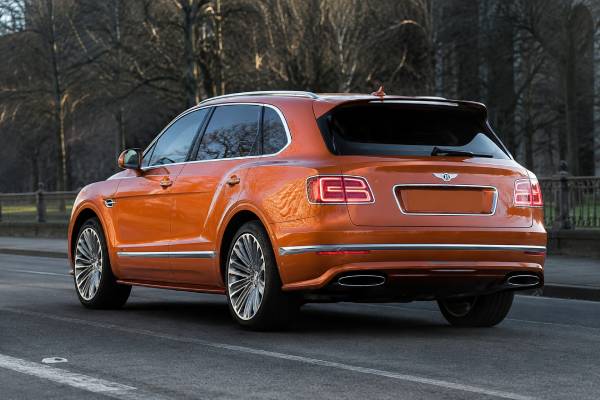
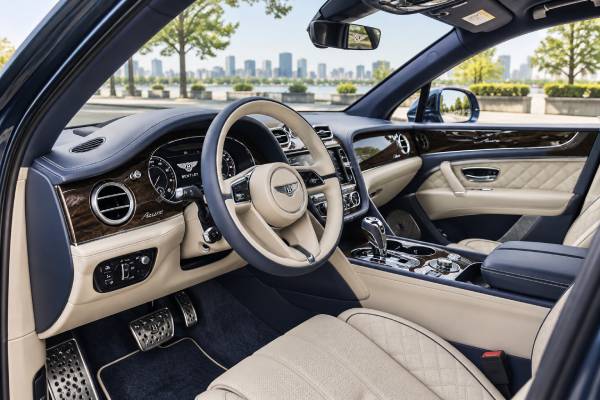
The 2020–2024 Bentley Bentayga Speed is the facelift-era, W12-powered performance flagship of the standard-wheelbase Bentayga range. Its 6.0-liter twin-turbocharged 12-cylinder engine produces 626 bhp, yet the model’s appeal is broader than its 190 mph top speed. Bentley also gave it a sharper Sport mode, firmer chassis calibration, distinctive exterior details, and an interior that blends performance cues with the comfort expected of a hand-finished luxury SUV.
This is also one of the last Bentaygas powered by Bentley’s long-running W12. Production of that engine ended in 2024, making correct identification and history increasingly important. The ordinary Speed and the limited Speed Edition 12 share the same basic 626 bhp Bentayga powertrain, but they are not interchangeable models. Buyers should verify the build specification, brake system, wheel package, service record, software status, and evidence of careful warm-up and maintenance. The following guide covers the regular 2020–2024 Bentayga Speed and explains where its performance, complexity, and ownership costs differ from a V8 Bentayga.
Table of Contents
- The W12 Speed’s Place in the Bentayga Range
- Verified Specifications and Technical Layout
- What Makes the Speed Drive Differently
- W12 Maintenance and Mechanical Risk Areas
- Brakes, Tires, and Chassis Costs
- Model-Year Changes and Authentication
- Inspection Strategy and Purchase Decision
The W12 Speed’s Place in the Bentayga Range
The W12 Speed was the fastest and most powerful series-production Bentayga of its period. It used the facelifted Bentayga body introduced for 2020, retained the 635 PS output of the earlier Speed, and remained the range’s high-speed flagship until W12 production ended in 2024.
Bentley’s “W12” is not a conventional long V12. It uses four banks of three cylinders arranged in a compact W layout, allowing twelve cylinders to fit into a comparatively short engine bay. Two turbochargers and a broad 900 Nm torque plateau give the Bentayga Speed its characteristic effortlessness. The car can accelerate with remarkable force without relying on high engine speed or an aggressive launch routine.
The regular Speed should be separated from three related vehicles:
- The pre-facelift Bentayga Speed launched for the 2019 model year has similar headline performance but different exterior, cabin, and infotainment design.
- The Speed Edition 12 is a limited 2023–2024 commemorative specification with unique color, trim, badging, and presentation items.
- The later Bentayga Speed uses a high-output 4.0-liter V8 and is a materially different model despite retaining the Speed name.
For the 2020–2024 W12 car, visual identifiers include Speed badging, dark-tinted lamps and grilles, body-colored lower styling, a rear spoiler, and model-specific 22-inch wheels. Cabin treatment commonly includes Speed embroidery, contrast materials, and a more sporting color split. Because Bentley offered extensive personalization, no single color or trim combination proves authenticity. The original build record remains the best evidence.
The Speed could still be ordered with luxury and touring equipment that changed how an individual car feels and what it costs to repair. Carbon-ceramic brakes, Bentley Dynamic Ride, upgraded audio, rear-seat entertainment, special veneers, carbon-fiber trim, and Mulliner options all influence desirability. A lightly specified car is not necessarily wrong, but its market position should reflect what is actually fitted.
Verified Specifications and Technical Layout
The Bentayga Speed is a gasoline-only ICE vehicle with a 5,950 cc twin-turbo W12, an eight-speed automatic, and permanent all-wheel drive. Its output did not increase during the 2020–2024 facelift period: the key factory figures remained 635 PS, 900 Nm, 3.9 seconds to 100 km/h, and 306 km/h maximum speed.
| Specification | Value | Technical note |
|---|---|---|
| Engine type | 5,950 cc twin-turbocharged W12 | Gasoline, front-mounted |
| Maximum power | 635 PS / 467 kW / 626 bhp | Manufacturer rating |
| Maximum torque | 900 Nm (664 lb-ft) | Approximately 1,500–5,000 rpm |
| Transmission | 8-speed automatic | Speed-specific calibration in Sport mode |
| Drive system | Permanent all-wheel drive | Torsen center differential |
| Efficiency functions | Cylinder deactivation, start-stop, and coasting strategy | Operation depends on load and conditions |
| Fuel tank | 85 L (22.45 US gal) | Premium gasoline |
| Measure | Factory figure | Condition |
|---|---|---|
| 0–60 mph | 3.8 seconds | Manufacturer figure |
| 0–100 km/h | 3.9 seconds | Manufacturer figure |
| Maximum speed | 306 km/h (190 mph) | Approved high-speed tires required |
| Braked towing capacity | 3,500 kg (7,716 lb) | Where approved and tow-equipped |
| Maximum wading depth | 500 mm (19.7 in) | Use only with suitable assessment |
| Specification | Approximate value | Notes |
|---|---|---|
| Body style | Five-door luxury SUV | Standard wheelbase |
| Overall length | 5,125 mm (201.8 in) | Facelift body |
| Wheelbase | 2,995 mm (117.9 in) | Unchanged from regular SWB Bentayga |
| Width across mirrors | 2,222 mm (87.5 in) | Critical for garage planning |
| Overall height | About 1,728 mm (68.0 in) | Ride-height convention can affect published data |
| Unladen weight | About 2,490–2,510 kg (5,490–5,534 lb) | Definition and options vary |
| Boot volume | Approximately 484 L (17.1 cu ft) | Measurement method and seating configuration matter |
| Component | Configuration |
|---|---|
| Suspension | Adaptive four-corner air suspension with electronically controlled dampers |
| Active roll control | Bentley Dynamic Ride 48-volt electromechanical system |
| Steering | Electric power-assisted rack-and-pinion |
| Standard brakes | Large ventilated iron discs with performance calipers |
| Optional brakes | Carbon-ceramic discs, approximately 440 mm front and 370 mm rear |
| Common wheel size | 22-inch Speed-specific alloy wheels |
| Drive modes | Comfort, Bentley, Sport, and Custom; off-road modes when specified |
| Measure | Typical official range | Standard |
|---|---|---|
| Combined fuel consumption | Roughly 14–15 L/100 km | WLTP figures vary by year and market |
| Combined CO₂ | Roughly 320–340 g/km | WLTP, configuration-dependent |
| Practical consumption | Often materially higher in urban or short-trip use | Depends heavily on traffic and driving style |
Official consumption figures should not be treated as a running-cost promise. Cold starts, short journeys, heavy traffic, large wheels, and frequent use of the available performance can push fuel use far above the homologated value. The 85-liter tank gives useful touring range, but a Speed driven as intended can require frequent premium-fuel stops.
What Makes the Speed Drive Differently
The Speed’s advantage over a W12 luxury trim is not simply more horsepower; its chassis and control calibration make the car respond more directly. Sport mode changes throttle response, transmission behavior, suspension control, and the way the exhaust and engine character are presented to the driver.
The W12’s strongest quality is its torque delivery. It does not need to feel frantic. From moderate road speed, a firm throttle input produces a deep surge that continues well beyond ordinary highway pace. The eight-speed transmission normally shifts smoothly, but in Sport it holds gears longer and reacts more quickly. Any hesitation, repeated flare, harsh engagement, or drivetrain thump should be investigated rather than dismissed as “normal for a performance SUV.”
Bentley Dynamic Ride is important to the Speed’s dual personality. Traditional stiff anti-roll bars reduce body lean but can harm single-wheel ride comfort. Bentley’s 48-volt system uses electric actuators to oppose roll when needed while allowing more independence over uneven surfaces. The result is better cornering support without turning the SUV into a rigid track car.
The Speed-specific suspension tune is firmer than a comfort-oriented Bentayga, yet it should still feel composed and expensive. Sharp impacts, repeated bouncing, a floating rear end, or a constant compressor sound suggest that the air suspension, dampers, ride-height sensors, tires, or alignment need attention.
At very high speed, tire condition becomes a safety-critical specification rather than a cosmetic detail. A tire can have legal tread and still be unsuitable because of age, internal damage, incorrect speed rating, an improper repair, or a mismatch across axles. Buyers should check the full sidewall codes and obtain written confirmation that the fitted tires meet Bentley requirements.
Carbon-ceramic brakes change the character and cost profile. They reduce unsprung mass and resist fade under repeated high-energy stops. They can also be costly to replace, vulnerable to impact damage, and more sensitive to inspection technique than ordinary iron discs. A specialist should examine disc surfaces, edge condition, measured wear, pads, and service history. Surface appearance alone is not enough.
W12 Maintenance and Mechanical Risk Areas
A W12 Bentayga rewards consistent specialist maintenance and penalizes neglect. The engine is densely packaged, heat-intensive, and expensive to access, so a complete history and early response to leaks or warning signs are more valuable than low mileage by itself.
The service schedule must be checked by VIN and market, but several principles apply across the range. Engine oil should be changed at the required time even when annual mileage is low. The cooling system must remain sealed and correctly filled. Spark plugs, filters, brake fluid, and other time- or distance-based items should be documented rather than assumed.
Areas to examine include:
- Cold-start behavior: The engine should settle smoothly without persistent misfire, heavy fuel smell, abnormal mechanical noise, or prolonged smoke. A seller who pre-warms the car before every viewing may be hiding a symptom.
- Oil and coolant leaks: Inspect from above and below after removing appropriate covers. Small seepage near hot components can become a larger repair or odor problem.
- Ignition quality: Twelve cylinders mean more plugs, coils, injectors, and opportunities for a misfire. A complete diagnostic scan should show whether faults have been intermittent or recently cleared.
- Turbocharger and charge-air system: Listen for unusual whistle, inspect hoses and connections, and verify that full-load acceleration is clean and consistent.
- Engine mounts: Excess vibration at idle, movement during gear engagement, or a thump under load can indicate mount wear or another drivetrain issue.
- Cooling fans and valves: The system should regulate temperature without warnings, coolant odor, or fans running at maximum for no clear reason.
- Battery condition: A weak 12-volt battery can create cascading fault messages. Cars stored as collectibles need the correct maintainer and charging routine.
Because access can be labor-intensive, an apparently simple gasket, hose, sensor, or wiring fault may carry a large labor bill. Ask for itemized invoices; a stamp alone does not reveal what was deferred or what parts were used.
The final years of W12 production do not make parts support disappear, but they do increase the importance of planning. Owners should maintain a relationship with a Bentley retailer or a specialist that has current diagnostic access, factory information, correct lifting equipment, and experience with the W12 and 48-volt chassis system.
Brakes, Tires, and Chassis Costs
Chassis consumables can dominate near-term ownership costs even when the engine is healthy. A 2.5-tonne SUV with 626 bhp places heavy demands on tires, brakes, suspension joints, and alignment, especially if it has been driven quickly or used on poor roads.
Start with the wheels. Speed-specific 22-inch alloys are part of the car’s identity, and replacement or correct refinishing can be expensive. Inspect inner barrels as well as visible faces. Look for welds, cracks, flat spots, excessive balancing weights, poor powder coating, and damage around bolt seats. A vibration at 80–120 km/h may come from a wheel, tire, alignment, driveshaft, or suspension issue.
Tire wear tells a story. Inner-edge wear can indicate alignment or suspension problems. Feathering may point to toe error. Different brands or models across axles can alter handling and all-wheel-drive behavior even when the nominal size is correct. Four matching, recent, correctly rated tires are a strong sign of conscientious ownership.
Iron brakes are expensive but comparatively straightforward to assess. Measure disc thickness, lip, cracking, and pad life. Carbon-ceramic systems require a technician familiar with Bentley procedures. Do not accept a generic workshop’s statement that the discs “look fine.” Replacement cost can materially change the value of the car.
The air suspension should be checked after the vehicle has stood overnight and again during a road test. All corners should rise and lower evenly. The car should not lean, display a height warning, or keep the compressor running abnormally. Faults can involve air springs, dampers, lines, a compressor, valve blocks, sensors, control modules, or wiring.
Bentley Dynamic Ride faults need proper 48-volt diagnosis. The system’s actuators and electrical supply are not conventional anti-roll bars, and improvised repair is inappropriate. Likewise, steering or alignment work should be completed with the correct calibration process and a printout of before-and-after values.
Model-Year Changes and Authentication
The regular facelift Bentayga Speed remained mechanically consistent from 2020 through its 2024 run, but equipment, software, trim availability, emissions certification, and option packaging changed. Compare cars by VIN-specific specification rather than assuming that one calendar year is universally better.
The 2020 introduction brought the redesigned rear body, new elliptical tail lamps, revised front styling, a new infotainment architecture, and an updated cabin presentation. Later cars may have newer software, different connected-service capability, additional color or trim choices, and model-year equipment changes. Market restrictions also affected where the W12 Speed could be ordered.
The 2023 Speed Edition 12 is the most common source of confusion. It was created to celebrate the end of W12 production and included unique Edition 12 details. A normal Speed with added badges, Opalite paint, or gold accents is not automatically an Edition 12. Conversely, a true Edition 12 should be valued according to its complete, original specification and documentation.
To authenticate a regular Speed:
- obtain the original Bentley build sheet and option list;
- match the VIN on the body, documents, diagnostic report, and service invoices;
- verify factory Speed model coding rather than relying on exterior badges;
- confirm the original wheel and brake specification;
- inspect paint depth and body repairs, especially around the front structure and rear quarters;
- check that interior embroidery, treadplates, veneers, and trim match the build record.
A highly personalized car is not necessarily less desirable. Bentley’s breadth of factory customization is part of the product. The issue is whether unusual details are factory-authenticated, well preserved, and appealing enough to support resale.
Inspection Strategy and Purchase Decision
Buy the best-documented and best-inspected Speed you can afford, not the lowest advertised price. One set of brakes, tires, deferred services, or unresolved chassis faults can erase a tempting discount.
A proper pre-purchase process should include a cold start, a Bentley-capable scan of every control module, a lift inspection, tire and brake measurements, paint-depth readings, battery testing, campaign verification, and a long road test. The road test should cover low-speed maneuvering, rough pavement, steady cruising, full-temperature operation, and several controlled acceleration and braking events.
Ask the technician to retain a copy of all stored and intermittent faults before clearing anything. Repeated misfire codes, suspension faults, low-voltage events, communication errors, active-roll warnings, or transmission issues need documented explanations. A clean dashboard does not prove a clean fault history.
Budget for immediate work in writing. Include the next scheduled service, aged tires, brake wear, wheel repair, battery replacement, alignment, cosmetic correction, and any missing keys or accessories. Insurance, fuel, road tax, secure storage, and access to a qualified workshop should also be considered before purchase.
The W12 Speed is most suitable for an owner who values the engine’s character, the rarity of the final production years, and effortless high-speed touring. A Bentayga V8 is lighter, simpler, and often easier to justify as a daily SUV. The W12 Speed adds occasion, torque, and historical significance, but it also brings twelve-cylinder service exposure and higher consumable costs.
A good example should feel cohesive: smooth at idle, forceful under load, stable under braking, quiet over rough roads, and free of warnings or unexplained vibration. When those standards are met, the 2020–2024 Bentayga Speed remains a distinctive achievement—a genuinely luxurious SUV capable of performance that still feels extraordinary years after its launch.
A final valuation point is provenance. W12 Speed cars were often ordered with highly individual paint, leather, stitching, veneer, and Mulliner content. Retain the original order document, sales invoice, handbooks, keys, battery maintainer, tool kit, tire-inflation equipment, and any removable accessories. Missing presentation items do not stop the car from being usable, but complete provenance supports confidence and may matter more as the W12 era recedes.
Storage conditions deserve equal attention. A car that spends long periods unused should be kept dry, maintained at the correct battery voltage, moved often enough to avoid tire flat spotting, and brought fully to operating temperature when driven. Repeated short starts merely to move the vehicle can load the battery, add condensation to the exhaust and oil, and prevent the many control systems from completing normal operating cycles. Inspect low-mileage examples for old tires, seized or corroded brake hardware, stale service dates, and moisture rather than assuming limited use guarantees excellent condition.
Before committing, compare the Speed with the exact alternatives that meet your real use. The V8 Bentayga gives most of the same cabin, towing ability, and everyday pace with lower front-axle mass and fewer cylinders to service. The Extended Wheelbase prioritizes rear passengers but was not offered with the W12 Speed powertrain in this period. A Continental GT Speed provides a more focused grand-touring experience, while the Bentayga remains the more practical choice for passengers, cargo, winter roads, and rough access.
The regular Speed can also be the better purchase than an Edition 12 when it has a more attractive specification or stronger history. Limited production does not compensate for neglected maintenance, repaired carbon-ceramic brakes, missing documentation, or an interior combination that is hard to resell. Judge the complete car first and the badge second.
References
- The New Bentayga Speed is the Ultimate Luxury SUV | Bentley Media 2020
- Bentley News 2019 : BENTLEY LAUNCHES WORLD’S FASTEST, MOST LUXURIOUS SUV 2019
- BENTAYGA RANGE 2020 (Brochure)
- Bentley Bentayga | History and Heritage | Bentley Motors 2026
- Bentley News 2023 : BENTLEY ANNOUNCES END TO 12-CYLINDER ENGINE PRODUCTION WITH THE MOST POWERFUL VERSION EVER 2023
- Bentley News 2024 : End of an era as final Bentley W12 engine hand-built in Crewe 2024
Disclaimer
This article is for informational purposes and is not a substitute for professional diagnosis or repair. Specifications, torque values, intervals, campaign eligibility, and procedures vary by VIN, market, model year, and equipment. Confirm all service and repair information against official Bentley documentation for the exact vehicle.
Please share this article on Facebook, X/Twitter, or another enthusiast community if it helped you understand the W12 Bentayga Speed.