
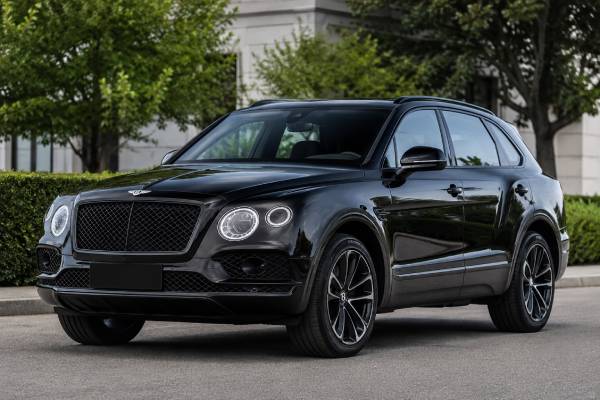
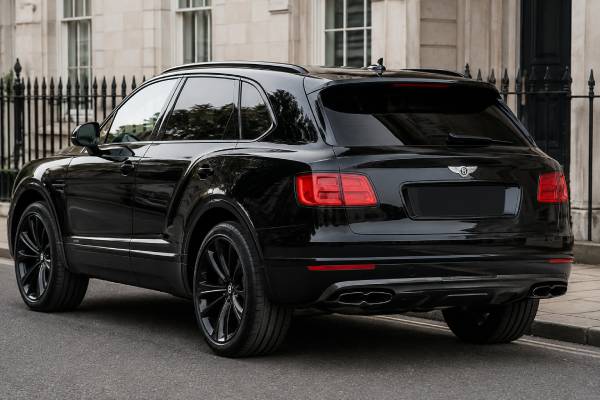
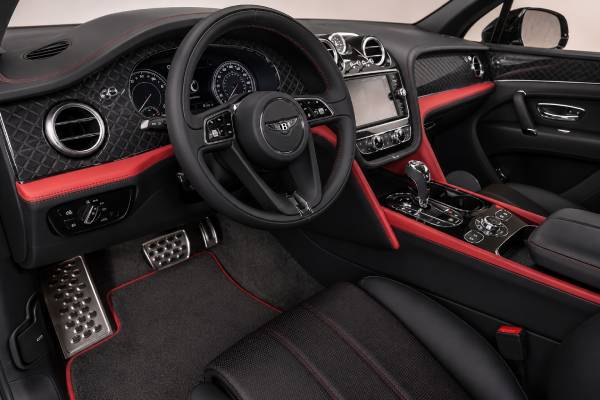
The Bentley Bentayga V8 Design Series is a style-led 2019–2020 special specification built around the 542 bhp twin-turbo V8. Its significance lies less in extra speed than in a carefully coordinated visual system: Palladium Grey Paragon wheels, self-levelling wheel badges, Blackline exterior trim, four vivid cabin accent themes, a unique carbon-fibre weave and a mother-of-pearl Breitling clock. Mechanically it retains the standard V8’s 770 Nm, 4.5-second 0–100 km/h performance and 290 km/h maximum speed. That distinction is crucial when buying. A Design Series should be authenticated through its build record and its model-specific details, not through badges or an advertisement’s description. Its special materials also require preservation rather than indiscriminate refurbishment. Refinished wheels, replaced trim or a retrimmed cabin can erase much of what makes the edition collectible. This guide explains the design concept, lists the verified equipment and technical data, shows how to inspect its unusual finishes, and provides a maintenance and purchase strategy that values originality as highly as mechanical condition.
Table of Contents
- A Bentayga Defined by a Coordinated Design Concept
- Verified V8 Data and Design Series Equipment
- Exterior Details and How to Preserve Them
- Duotone Cabin Themes and Special Materials
- Driving Character Without a Power Increase
- Condition-Led Maintenance for a Design Edition
- Authentication, Valuation, and Buying Decision
A Bentayga Defined by a Coordinated Design Concept
Bentley created the Design Series to give the Bentayga V8 a more contemporary visual identity. Instead of increasing engine output or adding a competition story, the company linked exterior color, dark brightware, wheel finish, cabin accent color and technical materials into one composition.
The edition was announced in April 2019. Its starting point was the regular Bentayga V8, already the most overtly sporting engine choice in the range. The Design Series then applied details intended to make that character visible without turning the vehicle into a conventional blacked-out performance package.
Four Duotone themes were central to the cabin: Pillar Box Red, Orange, Mulliner White and Klein Blue. Each color was paired with Beluga black and used in selected areas rather than spread indiscriminately through the interior. A matching accent line followed the instrument panel and door architecture, giving the cabin a graphic quality not found in an ordinary two-color commission.
Outside, the Blackline Specification was standard. Chrome exterior pieces were replaced by dark elements, the lower front apron matched the body color and gloss-black exhaust finishers completed the theme. Palladium Grey Paragon wheels included self-levelling Bentley badges, a small feature that keeps the winged B upright as the wheel turns.
The Design Series was not presented as a numbered production run. Sellers may call it “limited,” but the more defensible description is a special model or curated specification. Its market value should arise from rarity in a particular region, authenticity, condition and appeal—not an invented global production number.
A buyer must also avoid confusing it with a vehicle ordered through Mulliner using similar colors or carbon trim. Bentley’s personalization range makes look-alikes possible. Only the factory documentation can establish that the car was built as a Design Series.
Verified V8 Data and Design Series Equipment
The powertrain is unchanged from the contemporary Bentayga V8. The special model’s identity comes from equipment and finishes, which means both sets of facts should be checked independently.
| Specification | Factory figure |
|---|---|
| Engine | 3,996 cc twin-turbocharged V8 petrol |
| Maximum power | 550 PS / 542 bhp / 404 kW at 6,000 rpm |
| Maximum torque | 770 Nm (568 lb-ft) from 1,960–4,500 rpm |
| Transmission | Eight-speed automatic |
| Drive | Permanent all-wheel drive |
| Cylinder management | Four-cylinder deactivation under suitable light-load conditions |
| Measure | Published figure |
|---|---|
| 0–60 mph | 4.4 seconds |
| 0–100 km/h | 4.5 seconds |
| Top speed | 290 km/h (180 mph) |
| WLTP combined fuel consumption | 13.0 L/100 km |
| WLTP combined CO₂ | 296 g/km |
| Fuel tank | 85 litres (22.5 US gal) |
| Area | Edition-specific treatment |
|---|---|
| Wheels | 22-inch seven-spoke Paragon design in Palladium Grey |
| Wheel centers | Self-levelling Bentley badges |
| Brightware | Blackline Specification fitted as standard |
| Front lower apron | Body-color finish |
| Exhaust finishers | Gloss black |
| Identification | Design Series exterior badging |
| Feature | Description |
|---|---|
| Primary cabin palette | Beluga with a selected contrasting accent theme |
| Accent choices | Pillar Box Red, Orange, Mulliner White, or Klein Blue |
| Seat quilting | Edition-specific diamond treatment and contrast detailing |
| Technical surface | Unique carbon-fibre weave pattern |
| Gloss finish | Piano Black elements |
| Dashboard clock | Breitling clock with mother-of-pearl face |
| Component | Configuration |
|---|---|
| Suspension | Adaptive self-levelling air suspension |
| Active anti-roll | Optional Bentley Dynamic Ride 48-volt system |
| Standard brakes | Ventilated iron discs |
| Optional brakes | Carbon-ceramic system available |
| Seating | Four-, five-, and seven-seat factory layouts |
| Driver assistance | Optional City and Touring Specifications |
The WLTP figures shown above were published for the edition in Bentley’s announcement. Actual consumption depends on traffic, temperature, wheel and tire condition, load and driving style. The Design Series does not have a different engine map that would improve or reduce fuel use relative to a similarly equipped V8.
Exterior Details and How to Preserve Them
The Paragon wheels are among the easiest identifiers and the easiest parts to alter. Their Palladium Grey finish has a specific tone and relationship with the black exterior details. A generic silver or dark-grey refurbishment can look acceptable while reducing authenticity. Before refinishing, photograph the original surface in natural light, record any part numbers and choose a specialist capable of matching the correct color and machining treatment.
Self-levelling badges use weighted centers so the B remains upright. Spin each wheel slowly and watch the badge settle. A seized, missing or replacement center is not a major mechanical fault, but four correct pieces support completeness. Avoid high-pressure cleaning directly at the badge mechanism.
Blackline exterior trim should have consistent color and gloss. Inspect grille surrounds, window trim, lower details, roof rails where fitted and badging. Vinyl wrapping over chrome may imitate the look but tends to reveal edges, seams or a different texture. A build sheet confirming standard Blackline is more important than visual similarity.
Gloss-black exhaust finishers collect soot and can be scratched by harsh metal polish. Clean them with products suitable for the finish rather than treating them as bare stainless steel. Uneven protrusion, damaged clamps or a different exhaust note may indicate aftermarket work.
The body-color lower apron sits close to road debris. Look for chips, cracks, parking damage and mismatched paint. Because the Bentayga uses aluminum-intensive body construction, repair quality should be assessed by a shop familiar with the material and with factory paint-depth variation. A high reading does not automatically mean poor repair, but inconsistent texture, overspray and disturbed fasteners require explanation.
Design Series badges should be straight, correctly located and consistent in finish. Adhesive residue or missing badges may reflect previous paintwork. Replacement badges alone cannot authenticate a car, so avoid placing disproportionate value on them.
Carbon exterior parts may be present through other options. Inspect clear coat for ultraviolet clouding, stone impact and hairline cracks around fasteners. Carbon should not be polished aggressively through the clear layer. If a piece has been replaced, compare weave orientation and gloss with the opposite side.
The panoramic roof and its black perimeter can visually merge with dark trim, making seal damage easy to miss. Operate the roof, inspect drains and look for water marks around the headlining and rear luggage area. Exterior design preservation includes keeping moisture away from the electronics hidden inside the body.
Duotone Cabin Themes and Special Materials
The four accent themes are not interchangeable accessories. They define the edition’s intended cabin atmosphere. Pillar Box Red is bold and traditional, Orange is warmer and more modern, Mulliner White produces strong contrast, and Klein Blue gives the most graphic presentation. The build record should identify the original selection.
Beluga forms the dark base. Accent color appears in carefully bounded areas, with a line running through parts of the fascia and doors. During repair, an upholsterer may match the broad hue but miss grain, sheen, thread color or edge placement. Inspect both sides of the cabin in daylight and compare stitching density and panel fit.
Seat bolsters show wear first. Dye transfer is especially visible on Mulliner White, while vivid colors can fade or become glossy if scrubbed with strong cleaner. A professional repair can be acceptable, but it should preserve perforation, embroidery and the boundaries of the color split. Heavy re-dyeing that fills the leather grain is less desirable.
The special carbon-fibre surface uses a diamond-like weave rather than a conventional straight twill. This is one of the edition’s most meaningful details because it was created to echo the diamond quilting. Compare every panel for weave direction, depth and gloss. A standard carbon replacement from another Bentayga may fit while being visibly wrong.
Piano Black provides contrast but shows fine scratches under strong light. Light marks can often be corrected; deep scratches near edges may require refinishing. Removing veneer panels carelessly can break clips or damage adjacent leather, so cosmetic work should be planned with an interior specialist rather than approached as ordinary trim polishing.
The mother-of-pearl Breitling clock face is naturally variable. Differences in color and pattern are part of the material. Check that the clock keeps time and that the face, bezel and surrounding dashboard are undamaged. A standard clock replacement would remove a recognized Design Series feature.
Carpets, overmats and luggage-area protection should match the original color scheme where supplied. Missing mats are minor compared with mechanical faults, but an edition whose appeal rests on coordination benefits from complete accessories. Ask whether the owner retained original parts after installing all-weather items.
Odor matters. Strong perfume, smoke or dampness can penetrate hides and headlining. Masking scent can make inspection difficult. Let the car sit with climate control off, then assess the cabin before and after driving. Water entry, not merely cleanliness, is the more serious concern because modules and wiring run beneath trim.
Driving Character Without a Power Increase
Mechanically, the Design Series behaves like a well-specified Bentayga V8. The 770 Nm torque plateau provides immediate response, and the eight-speed automatic can keep the engine in its strongest range without abrupt shifts. The sound is deeper and more obvious than the W12, particularly when a factory sports exhaust is fitted.
The edition’s 22-inch wheels influence ride and steering more than its badges. Low-profile tires sharpen initial response and support the intended stance, but they transmit more sharp-edge impact than smaller wheels. A crashy ride is not automatically a suspension failure, yet repeated thumps, steering shake or a side-to-side difference need diagnosis.
Bentley Dynamic Ride, when fitted, uses a 48-volt active anti-roll system. It can keep the body flat in corners while allowing softer wheel movement in a straight line. Check its operation through the available modes and scan the control system. A warning may result from low voltage, but it should never be accepted without determining the cause.
The V8 deactivates four cylinders under light load. Most drivers will not notice the transition. A tremor at cruise should lead to checks of tires, engine mounts, ignition, fueling and transmission as well as the cylinder-management system. Avoid replacing parts based on a single assumption.
Braking specification changes the ownership experience. Iron discs are strong and simpler to budget. Carbon ceramics reduce unsprung mass and resist heavy use, but they can make a design-focused special edition significantly more expensive to restore. The build sheet and visual inspection must agree on which system the car left the factory with.
At motorway speed, the cabin should be quiet enough for the special materials to remain the main experience. Wind noise around a door, panoramic-roof rattle or tire drone may expose previous repair, wheel damage or aging seals. Test on varied surfaces because a short demonstration route can hide these issues.
The Design Series is not faster than a regular 542 bhp V8, and a seller should not charge a performance premium based on the name. Its premium should reflect the completeness and condition of the design package. A mechanically identical V8 with replacement trim may drive as well but is not the same collector proposition.
Condition-Led Maintenance for a Design Edition
Mechanical maintenance follows the V8’s requirements. Use the approved oil, keep annual records, inspect the hot-V turbo area for leaks and preserve cooling-system integrity. The concentrated heat between the cylinder banks makes correct oil level and clean heat exchangers important.
Scan for misfires and assess the engine under load only after it is warm. Spark plugs and coils should have documented replacement where due. Check intake clamps, charge-air connections and turbo oil or coolant lines. A small leak can affect performance without immediately illuminating a warning lamp.
The air suspension should remain level after standing. Operate every height and note compressor run time. Dynamic Ride cars also require a healthy 48-volt system. The conventional 12-volt battery should be load-tested because weak voltage can generate unrelated warning messages.
Tires are both mechanical and visual components. Preserve the correct size and load rating, match all four and protect the Palladium Grey wheels during installation. A tire shop should use clean, coated tools and understand the self-levelling centers. Photograph wheel condition before service.
Brake care depends on material. Iron discs need corrosion inspection on both faces; carbon ceramics need specialist assessment for edge damage and surface condition. Brake fluid remains time-based in either case. Avoid wheel-cleaning chemicals that may stain calipers or adjacent special finishes.
Interior maintenance should be conservative. Vacuum first, test any cleaner on an unseen area and work with the leather’s coating rather than soaking it. Different accent colors may respond differently to the same product. The carbon weave, Piano Black and mother-of-pearl clock should each be treated as a separate material.
Sunlight can alter bright accent colors and dry hides. Indoor storage or a breathable, clean cover helps, but long storage introduces battery and tire problems. Maintain the 12-volt battery with compatible equipment, keep tires correctly inflated and move the car enough to avoid flat spotting. Storage is not a replacement for annual servicing.
Retain replaced original parts when practical. A worn but authentic badge, wheel center or trim panel can help document the car even after a correct new part is fitted. Label and store pieces carefully rather than discarding them at the workshop.
Paint protection film can defend the body-color apron and carbon pieces, but installation quality matters. Film edges should not cut into paint, trap moisture or distort matte and gloss relationships. Keep the installer’s invoice and note which panels were covered so later inspectors do not mistake film edges for repainting.
Documentation should include cosmetic work as well as mechanical service. Record wheel refinishing formula, leather repair location, paintwork and replacement trim part numbers. For a design edition, transparent restoration is more valuable than pretending no work has occurred.
Authentication, Valuation, and Buying Decision
Begin with the VIN and factory build specification. It should identify the Bentayga V8 Design Series and list the original exterior paint, accent theme, wheel, veneer or technical finish, Blackline treatment and major options. Compare that document with the car line by line.
Next, inspect the edition markers as a system. Correct wheels with incorrect centers, a normal carbon weave, missing mother-of-pearl clock and newly applied badges suggest either partial repair or a conversion. One changed part is not decisive, but several inconsistencies require a clear history.
Assess cosmetic condition under neutral daylight. Showroom spotlights can hide color mismatch and exaggerate gloss. View the car from both sides, open every door and compare trim across the centerline. Use paint-depth readings as evidence, not as an automatic pass or fail.
A cold mechanical inspection remains essential. Watch the first start, scan every module, test the V8 through a complete warm-up and operate the air suspension. Check coolant, oil, underbody, brakes and tire wear. Special trim does not compensate for overheating history, transmission faults or neglected suspension.
Drive on a rough surface and at motorway speed. The Paragon wheels should run true, steering should stay centered and the body should remain composed. Brake progressively and listen for wheel-bearing or tire noise. After the test, inspect for fresh leaks and recheck ride height.
Value the car against both ordinary V8s and other Design Series examples. A premium is justified when the factory identity is proven, the four-theme cabin remains intact, wheels and trim are correct, and mechanical history is strong. A heavily modified or incompletely restored car should be priced closer to a standard V8 regardless of badge availability.
Mileage has less meaning without context. A low-mileage car can have old tires, flat-spotted wheels, dried seals and skipped time-based service. A regularly used car may have seat wear but stronger operating history. Compare condition, records and diagnostic data rather than choosing the smallest odometer number.
Ask who will maintain and restore the vehicle after purchase. A general workshop may handle routine tasks, but matching Palladium Grey, repairing the unique carbon weave or preserving a Duotone seat requires specialized capability. Identify those resources before damage occurs.
The edition suits a buyer who notices small design decisions and is willing to protect them. Someone interested only in V8 speed can buy a regular Bentayga with more freedom to change wheels or trim. The Design Series is rewarding precisely because its details form a coherent whole. Preserve that whole, and the car remains a distinctive record of Bentley’s late-2010s design language rather than merely another black-trimmed SUV.
Restoration Can Erase the Edition’s Best Details
The Design Series rewards restrained conservation because its identity comes from coordinated surfaces rather than a single numbered plaque. Before refurbishing the cabin, photograph the accent line, Duotone perforation pattern, embroidery, special carbon-fiber weave, Piano Black areas and mother-of-pearl Breitling clock face under neutral light. A trimmer can reproduce colors that look close in a sample book yet alter the original balance when spread across the dashboard and seats. Likewise, replacing the edition’s self-leveling wheel badges with ordinary centers may solve a minor fault but removes one of its most recognizable Mulliner details.
Exterior work needs the same discipline. Record Palladium Grey wheel color, polished faces, Blackline components, door badging and the finish of the twin tailpipes before dismantling. Powder coating that is durable but too dark, or a generic gloss-black replacement for a specific factory part, can make an authentic car appear modified. Save removed pieces even when damaged, since they provide patterns, part numbers and finish references for a later specialist. The objective is not to freeze the SUV in unused condition; stone chips, leather creasing and careful repair are normal. The objective is to preserve the visual relationship Bentley designed, so maintenance improves condition without turning a rare coordinated edition into a collection of individually refurbished but mismatched components.
References
- Bentley News 2019: CONTEMPORARY STYLE OF THE BENTAYGA V8 DESIGN SERIES 2019
- Bentley News 2018: The Bentley Bentayga V8 2018
- The Award-winning Bentayga Reaches 20,000 Milestone | Bentley Media 2020
- BENTLEY NEWSROOM : 2016 Bentayga 11WO 2026
- Bentley Bentayga | History and Heritage | Bentley Motors 2026
- BENTLEY NEWSROOM : Technical Specifications 2026
Disclaimer
The guide is for informational purposes, not a substitute for professional diagnosis, repair or conservation work. Specifications, color-dependent equipment, torque values, service intervals and procedures may differ by VIN and market, so confirm the exact Design Series in official service documentation. Please share the article on Facebook, X/Twitter or another social platform if it assisted your research.