
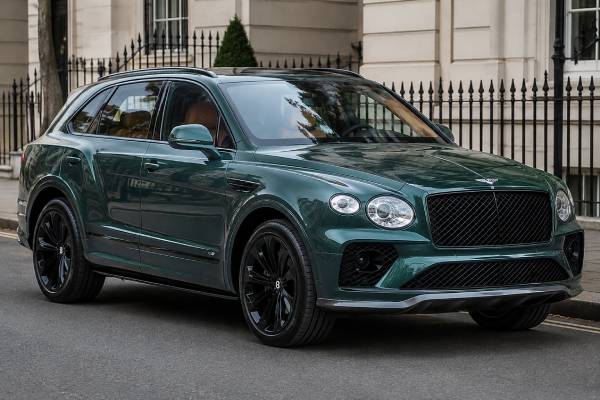
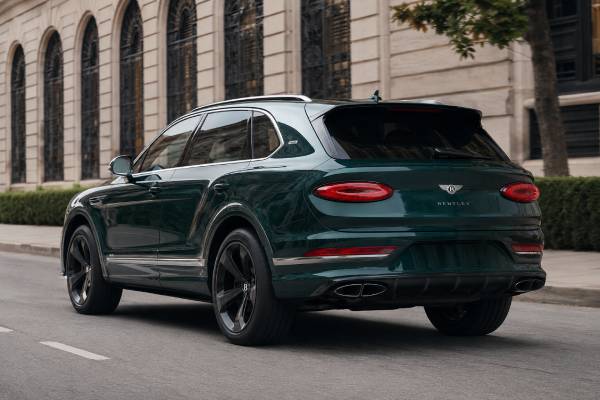
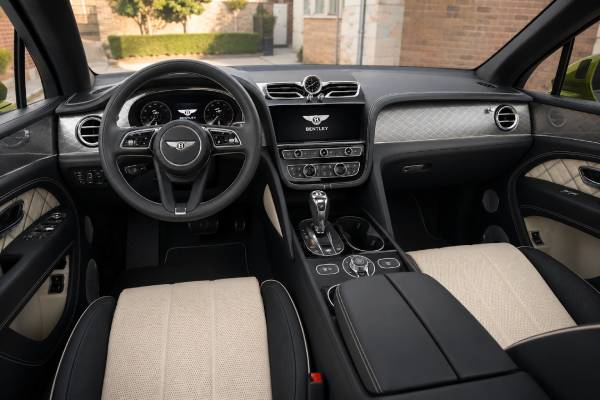
The 2020–2021 Bentley Bentayga V8 First Edition marked the arrival of the extensively redesigned Bentayga. It combined the familiar 542 bhp twin-turbo V8 with new elliptical lighting, a transformed rear body, a 10.9-inch infotainment system and a substantially revised cabin. Bentley then added First Edition badging, illuminated treadplates and a concentrated package of high-value equipment, including Touring Specification, Mulliner Driving Specification and Naim for Bentley audio. Unlike the 608-car launch edition of the original 2015 Bentayga, this later First Edition belongs to the facelifted generation and must not be described with the earlier car’s production number or details. The mechanical foundations are proven, but used examples bring a different set of checks: correct launch-edition identity, functioning driver assistance, screen and connectivity performance, condition of the intricate quilted interior, and evidence that the hot-V V8 and air suspension have been maintained. This guide separates the 2020 First Edition from look-alike cars, documents its verified technical figures, and explains how to inspect the redesign as both a luxury object and a complex performance SUV.
Table of Contents
- A First Edition for the Redesigned Bentayga
- Technical Facts and Standard First Edition Content
- What Changed Outside and Inside
- Touring, Mulliner, and Naim as a Unified Package
- V8 Performance and Facelift Road Behavior
- Technology Testing and Mechanical Service
- Authenticating and Buying the 2020–2021 First Edition
A First Edition for the Redesigned Bentayga
Bentley revealed the new Bentayga in June 2020, five years after the original SUV entered production. Although the basic platform and V8 powertrain continued, every exterior panel at the front and rear was changed. The redesign aligned the SUV more closely with the contemporary Continental GT and Flying Spur while retaining its recognizable proportions.
The V8 was the first engine offered in the revised range. To celebrate that launch, Bentley created the Bentayga V8 First Edition. It was described as a rare and collectible edition, with selected desirable options made standard and visible First Edition identifiers inside and outside.
This car is frequently confused with the original Bentayga First Edition introduced in 2015. The earlier model was a W12, carried a global run of 608 examples and used the first-generation body. The 2020 version is a 542 bhp V8 with the facelift’s elliptical rear lamps and new dashboard. An advertisement that combines “608 produced” with a 2021 V8 is mixing two separate editions.
First Edition identity should also be separated from an ordinary facelift V8 ordered with similar options. Touring Specification, Mulliner Driving Specification and Naim audio could be selected elsewhere in the range. Their presence supports the expected equipment but does not prove the model. Factory designation, original invoice and build data are decisive.
The production window can appear differently by country. Cars built in the second half of 2020 were often registered or titled as 2021 models. This article therefore uses 2020–2021, but a buyer should rely on build date, VIN and market documents rather than one date field.
Technical Facts and Standard First Edition Content
The First Edition did not receive a unique engine output. It uses the regular facelift V8 calibration, with 550 PS and 770 Nm. Its distinction is the combination of launch-year design details and equipment.
| Specification | Factory figure |
|---|---|
| Engine | 3,996 cc, 32-valve, dual twin-scroll turbocharged V8 petrol |
| Maximum power | 550 PS / 542 bhp / 404 kW at 6,000 rpm |
| Maximum torque | 770 Nm (568 lb-ft) from 1,960–4,500 rpm |
| Transmission | Eight-speed automatic |
| Drive | Permanent all-wheel drive |
| Efficiency systems | Cylinder deactivation and coasting functions under suitable conditions |
| Measure | Published value |
|---|---|
| 0–60 mph | 4.4 seconds |
| 0–100 km/h | 4.5 seconds |
| Top speed | 290 km/h (180 mph) |
| Combined fuel consumption | 13.0 L/100 km (21.7 mpg imperial) |
| Combined CO₂ | 294 g/km |
| Fuel tank | 85 litres (22.5 US gal) |
| Feature | Edition treatment |
|---|---|
| Exterior identification | First Edition badging |
| Interior identification | First Edition badging within the cabin |
| Seat embroidery | Choice of First Edition script or Bentley wings according to order |
| Treadplates | Illuminated plates carrying the Bentley name |
| Luxury specification | Mulliner Driving Specification included |
| Audio | Naim for Bentley premium system included |
| System | Function |
|---|---|
| Adaptive cruise functions | Maintains selected following behavior when conditions permit |
| Touring assistance | Adaptive cruise control, lane assist, traffic assist, night vision, and head-up display |
| Head-up display | Projects key driving information into the driver’s view |
| Night vision | Uses thermal imaging to highlight people and animals where fitted in the package |
| Infotainment | 10.9-inch high-resolution touchscreen with integrated connectivity |
| Smartphone integration | Wireless Apple CarPlay and wired Android Auto at launch specification |
| Item | Details |
|---|---|
| Length | 5,125 mm (201.8 in) |
| Wheelbase | 2,995 mm (117.9 in) |
| Suspension | Adaptive self-levelling air suspension |
| Active roll control | Bentley Dynamic Ride according to specification |
| Seating layouts | Four-, five-, or seven-seat availability within the facelift range |
| Rear comfort | Revised seat structures and increased adjustment, especially in four- and five-seat cars |
A First Edition’s exact equipment can still vary by market and customer choices. “Included” does not mean every vehicle has identical paint, veneer, wheel finish or seating layout. The build record remains the detailed source.
What Changed Outside and Inside
The facelift’s front grille became more upright, and the headlamps moved higher and farther outward. Their cut-crystal internal pattern produces a jewel-like appearance even when switched off. Heated wet-arm wipers, with washer jets integrated into the blades, were a new practical detail.
At the rear, the transformation is clearer. Elliptical lamps replaced the original rectangular arrangement, the tailgate was reshaped and the license plate moved into the bumper. Oval exhaust finishers visually connect the rear with Bentley’s grand tourers. Check panel alignment carefully because repairs around the large tailgate and lamp openings can be difficult to make invisible.
Wheel position within the arches was revised to improve stance. This makes an incorrect offset or non-factory spacer more noticeable. Examine the inside of each wheel for contact marks and confirm that any replacement wheel has the proper dimensions and load rating.
The cabin gained a new center fascia, steering wheel, door trims and seats. The central screen grew to 10.9 inches and abandoned the older physical-button-heavy interface for a more integrated touchscreen system. USB-C ports, a wireless charging area and an embedded SIM supported newer connected services.
The infotainment upgrade is a major reason to choose this model over the pre-facelift V8, but it creates its own inspection task. The screen should start promptly, retain settings, respond across its full surface and connect reliably to a phone. Navigation, audio, cameras, climate pages and vehicle settings all need testing. A frozen screen can block access to several functions at once.
Rear-seat comfort improved. In the five-seat layout, the recline range doubled and rear ventilation became available. Four-seat cars gained more knee room, especially in the reclined position. Verify the exact layout because a four-seat configuration changes practicality and resale audience, while seven-seat cars have a different luggage arrangement.
New trim possibilities included Koa and Crown Cut Walnut veneers plus Dark Tint Diamond Brushed Aluminium. First Edition cars can therefore vary widely. A distinctive metal fascia is not a universal identifier, and traditional veneer does not make a car incorrect.
Touring, Mulliner, and Naim as a Unified Package
The First Edition’s appeal comes from receiving several costly option groups as part of one launch specification. Those systems must be evaluated individually because a badge cannot guarantee that every feature still works.
Touring Specification brings driver-assistance functions intended to reduce fatigue and increase awareness. Depending on market, it can include adaptive cruise assistance, lane guidance, traffic-sign information, head-up display and night vision. These remain support systems, not autonomous driving. Windshield replacement, bumper repair or wheel alignment can affect camera and radar calibration.
During inspection, begin with a clean windshield and unobstructed sensors. Confirm that the head-up display is sharp and can be adjusted. Night vision should produce a clear thermal image and identify relevant objects when conditions allow. Adaptive cruise must engage without warnings, maintain a consistent gap and disengage normally. Any unavailable message needs a diagnostic explanation rather than a promise that it will disappear after cleaning.
Mulliner Driving Specification emphasizes craftsmanship. It brings a new quilting design for the facelift, along with model-appropriate embroidered or branded details and upgraded wheel choices depending on the order. The First Edition adds its own embroidery choice. Examine whether the seat pattern, stitching and badges form a coherent factory combination.
Quilted hides can wear at the outer bolster and collect dust in perforations. Strong cleaners may flatten the grain or fill contrast stitching with residue. A high-quality repair should preserve perforation and thread spacing. Compare opposite seats for color and sheen before accepting a re-dye as original.
Naim for Bentley is the premium audio system and was a major element of the First Edition package. Test every source at low and moderate volume, then use balance and fade controls to isolate speakers. Buzzing can come from a damaged driver, loose trim or an object in a door pocket. The system’s value depends on clean output, not simply the presence of Naim grilles.
The combination of these three packages creates complexity. A vehicle may drive perfectly while carrying several expensive non-engine faults. A buyer should allocate enough inspection time to use every function rather than focusing only on paint and acceleration.
V8 Performance and Facelift Road Behavior
The facelift retained the 542 bhp output because the engine already suited the Bentayga’s broad mission. Its 770 Nm torque arrives below 2,000 rpm, so the SUV moves decisively with little throttle. Full acceleration is dramatic, but the V8’s everyday strength is effortless mid-range response.
The twin-scroll turbochargers sit inside the cylinder-bank V. This compact hot-V layout improves response but creates a concentrated thermal environment. A healthy car should maintain stable temperature in traffic and after faster driving, without coolant odor or repeated fan operation under ordinary conditions.
Cylinder deactivation can close four cylinders when load and temperature allow. Coasting functions can also reduce engine drag. The transitions should remain smooth. A vibration at steady speed may have many sources, including tires, ignition, mounts, wheel balance or driveline components, so it requires measured diagnosis.
Air suspension gives the vehicle its refined ride. The facelift’s chassis tuning and revised wheel placement improve confidence without making it a lightweight sports car. Dynamic Ride-equipped examples resist body roll through a 48-volt active anti-roll system. Check that the car changes ride height correctly and remains level after an overnight stop.
The choice of wheels has a substantial effect. First Edition cars often have large, visually complex wheels that expose the rims to damage. At motorway speed, a bent inner barrel may create vibration even when the visible face is perfect. Inspect tire age, inner shoulders, load and speed ratings, and matching tread.
Standard iron brakes are powerful but costly due to size. Carbon ceramics may appear on highly specified cars and require specialist condition assessment. The First Edition package itself does not prove which brakes are fitted. Use the build sheet and inspect the hardware.
The road test should include rough urban surfaces, a steady cruise, gentle lane changes and progressive braking. The cabin should remain quiet, steering should return naturally and the transmission should shift without flare. Test the car long enough for heat-related behavior to emerge.
Technology Testing and Mechanical Service
The 2020 redesign added technology faster than it reduced mechanical complexity. Ownership therefore benefits from two records: a conventional maintenance history and an electronic history showing software campaigns, calibrations and resolved faults.
Start with the 12-volt battery. Low voltage can create warnings across infotainment, driver assistance, suspension and comfort controllers. Test capacity and alternator output rather than merely measuring resting voltage. After replacing or charging a weak battery, clear and rescan to identify which faults return.
The embedded SIM and connected services depend on market support, subscriptions and later network changes. A function that worked when new may have limited availability years later. Confirm what Bentley currently supports for the VIN and country, and distinguish a discontinued service from defective vehicle hardware.
Infotainment software should be current enough to operate reliably with modern phones. Test wired and wireless connections, microphone quality, navigation positioning, camera switching and audio. A factory reset can solve corrupted settings but will not repair failing hardware.
Touring sensors may need calibration after windshield, bumper, suspension or alignment work. Review repair invoices and look for calibration documentation. A replacement windshield must have the correct camera area and heating features. Poor glass installation can also cause wind noise or water entry.
Mechanically, service the V8 with the exact approved oil and filter. Time-based annual care remains important even for low-mileage vehicles. Scan for misfire counts, inspect turbocharger and charge-air connections, and pressure-test the cooling system when loss is suspected.
Check the eight-speed automatic cold and hot. Engagement should be prompt, low-speed shifts smooth and kickdown decisive. Mounts, software and driveline lash can imitate transmission faults, so diagnosis should cover the whole system before repair decisions.
Air-suspension leaks may reveal themselves after parking. Listen for excessive compressor operation and inspect air springs, lines and valve blocks. Dynamic Ride brings a 48-volt battery and active bars; warning lights require specialist scanning of that network.
Brake fluid and coolant are time-sensitive. Inspect iron discs on the hidden inner faces, especially if the car has been stored. On ceramic-equipped cars, measure and assess the discs according to the correct procedure. Large wheels should be removed by a shop that can avoid striking the rotors.
The panoramic roof, tailgate and redesigned rear lamps deserve water checks. Look beneath luggage-floor panels and around headlining edges. The new tailgate contains lighting and electrical components, so moisture can create faults far from the point of entry.
Interior service must respect the First Edition materials. Keep records of leather repairs, veneer removal and speaker work. A technician accessing a dashboard component can damage contrast stitching or high-gloss trim if the cabin is treated like a mass-market vehicle.
Authenticating and Buying the 2020–2021 First Edition
Authentication begins with the factory model designation. Obtain the build sheet, original order or dealer invoice and verify First Edition badging, seat embroidery, treadplates, Touring Specification, Mulliner Driving Specification and Naim audio. A car missing one item may have been repaired; a car missing several may simply be an ordinary V8 styled to resemble the edition.
Do not use the 608-car number from the 2015 W12 First Edition. Bentley’s facelift brochure called the V8 First Edition limited and collectible but did not identify it as the same numbered run. Accurate provenance protects both buyer and seller from inflated claims.
Inspect the exterior under daylight. Check the cut-crystal headlamps for condensation, the elliptical rear lamps for matching color and the tailgate for alignment. Look for overspray on black trim and disturbed fasteners near sensors. Measure paint, but interpret aluminum panels with appropriate expertise.
Inside, compare the First Edition identifiers with the build record. Bentley offered either First Edition script or wings embroidery, so one is not automatically more correct. Check the quilting, treadplate illumination, veneer, screen and Naim grilles. Wear should agree with mileage.
Conduct a full electronic scan before and after the road test. Pay particular attention to driver-assistance calibration, suspension, 48-volt systems where fitted, infotainment communication and low-voltage history. A car can show no dashboard warning while retaining stored faults.
See the engine cold. Observe startup, idle and exhaust, then warm it gradually. Use progressive acceleration rather than repeated launches. Confirm smooth V8 power, stable cooling and clean transmission shifts. After the drive, inspect for new leaks and coolant smell.
Test every seating function and rear configuration. Four-seat cars should have all console controls and recline functions working; seven-seat cars need a complete folding and latching check. Verify tailgate height memory, soft-close doors, climate zones and both keys.
Obtain realistic costs for tires, brakes and annual service. The First Edition’s standard equipment increases replacement exposure: Naim audio, night vision, head-up display and complex quilted trim are valuable only when functioning. Set aside a contingency instead of spending the entire budget on purchase price.
Compare the premium with an ordinary facelift V8 carrying similar equipment. The First Edition deserves extra value when identity is documented, launch details remain intact and the car has a desirable original combination. It deserves little premium when badges are the only distinction or key equipment is defective.
This model is best for a buyer who wants the redesigned Bentayga in a historically clear launch specification. It combines the mature V8 powertrain with a much newer digital cabin and a rich set of factory options. The right example should feel cohesive: the exterior redesign, intricate interior and assistance technology should all work as intended. When one part of that package has been neglected, the badge cannot restore the original proposition.
A final comparison with a similarly equipped ordinary facelift V8 should include repair exposure, not only asking price. The First Edition premium is strongest when all bundled systems work, the launch details remain intact and the documentation proves the factory specification.
Software Completeness Is Part of the Specification
The facelift First Edition introduced a much more modern digital environment, so a pre-purchase inspection must include software and connectivity rather than ending with a mechanical road test. Pair both an iPhone and an Android device where possible, confirm wireless Apple CarPlay behavior, test navigation search and verify that the 10.9-inch display responds across its full surface. Check the driver display, head-up display, reversing camera and every steering-wheel control. A system that merely boots is not necessarily healthy; intermittent restarts, missing audio channels, frozen menus or failed account activation can require diagnosis and software work.
The Touring Specification adds another layer. Demonstrate adaptive cruise control, lane assistance, traffic functions and night vision under conditions where each feature can operate safely. Windscreen replacement, front-end repair or suspension work may require camera and radar calibration, so invoices should show what was performed. The Naim system deserves a controlled listening test using familiar material: move the balance and fader through every zone, listen for rattles and confirm that all speakers contribute cleanly at modest volume. Verify both keys, remote functions, charging ports and any rear entertainment equipment as well. Before transfer, the previous owner should remove personal profiles and connected-service access while the buyer confirms that the vehicle can be added to a new account. Digital handover is now part of ownership provenance, not an optional courtesy.
References
- New Bentley Bentayga, The Definitive Luxury SUV | Bentley Media 2020
- THE NEW BENTAYGA 2020
- Bentley News 2018: The Bentley Bentayga V8 2018
- The Award-winning Bentayga Reaches 20,000 Milestone | Bentley Media 2020
- Bentley Bentayga | History and Heritage | Bentley Motors 2026
- BENTLEY NEWSROOM : Technical Specifications 2026
Disclaimer
This First Edition guide is for informational purposes and does not replace professional diagnosis or repair. Option content, software, specifications, torque values, service intervals and procedures can vary by VIN, market and equipment; confirm the individual vehicle through official service documentation and qualified inspection. Please share it on Facebook, X/Twitter or another social platform if it helped.