
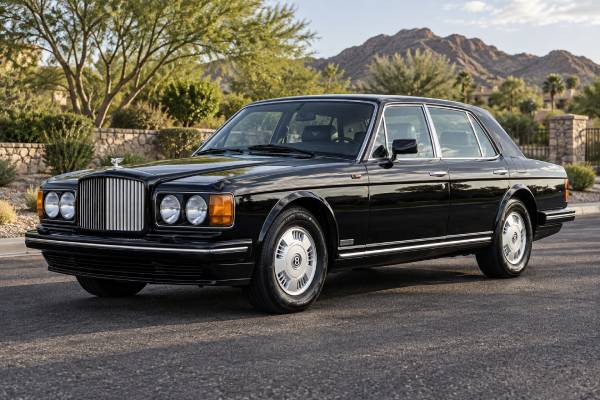
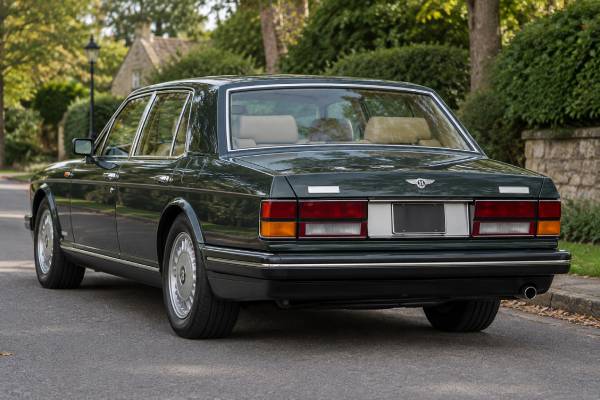
The 1993 Bentley Brooklands is the calmest and most traditional version of the SZ-era saloon. It uses the long-running 6.75-litre L410I V8 without a turbocharger, sends its power to the rear wheels through a four-speed automatic, and wraps the mechanical package in a hand-finished four-door body. Its appeal is not outright speed. The attraction is low-speed torque, near-silent progress, rich materials, and the sense that every control was designed for deliberate rather than hurried use.
This first-year Brooklands also occupies an important place in Bentley history. It replaced the Bentley Eight and Mulsanne S as the marque’s entry saloon while retaining the costly Crewe construction methods of its predecessors. Buyers today should treat it as a specialist classic, not an inexpensive old luxury car. A sound example can be deeply satisfying, but hydraulic, cooling, electrical, trim, and corrosion problems can quickly exceed the price difference between an average car and an excellent one.
Table of Contents
- What Defines the 1993 Brooklands
- Technical Specifications and Vehicle Data
- Performance and Road Manners
- Engineering, Chassis, and Cabin
- Maintenance Priorities
- Known Problems and Inspection Points
- Buying, Valuation, and Ownership Advice
What Defines the 1993 Brooklands
The 1993 car is the naturally aspirated, standard-wheelbase Brooklands and should not be confused with the later turbocharged 1997 model or the 1998 Brooklands R. Its character comes from restraint: a large V8 tuned for quiet torque, soft but controlled suspension, and understated Bentley styling rather than the more aggressive specification of a Turbo R.
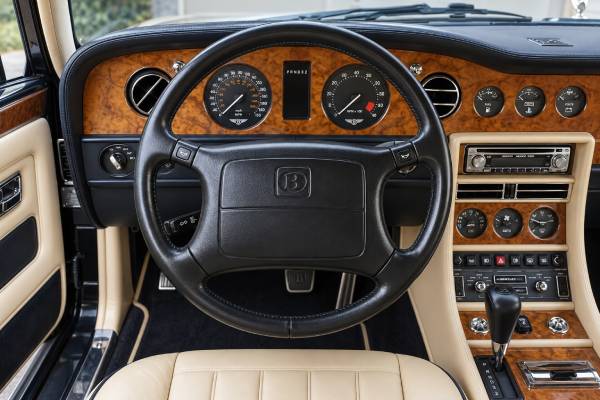
Brooklands was introduced as a rationalized replacement for the Bentley Eight and Mulsanne S. The body remained part of the SZ family shared with contemporary Rolls-Royce saloons, but Bentley gave the car a color-keyed vaned radiator shell, a cleaner bonnet without the central chrome strip, integrated fog lamps in a revised air dam, and alloy wheels. Inside, the console-mounted selector and leather-trimmed cabin created a more driver-oriented atmosphere than the equivalent Rolls-Royce, even though the basic architecture remained closely related.
The assignment’s 232 hp identification reflects one of the period output listings used for this L410I version. Historic documentation is not perfectly uniform: figures around 221 bhp, 224 PS, 232 hp, and slightly different torque values appear across markets and rating standards. That inconsistency is normal for Crewe cars of this period, when official literature was sometimes deliberately restrained and homologation sheets used different definitions. For purchasing purposes, the important distinctions are simpler: 1993, naturally aspirated L410I, four-speed automatic, standard wheelbase, and no factory light-pressure turbo.
The standard-wheelbase label is also relative. At more than 5.2 metres long with a wheelbase just over 3.0 metres, this is still a very large saloon. The LWB derivative adds rear-compartment length, but the normal Brooklands already provides generous rear space. Its shorter body is easier to place, marginally lighter, and generally the better choice for an owner who expects to drive rather than be driven.
Production records show the broader Brooklands saloon line ran from model year 1993 through 1997, with the 1993 cars identifiable within the early chassis sequence. Green-enamel Bentley badges are a useful first-year detail, although badges can be changed. A VIN check, build record, and inspection of original fittings are more reliable than cosmetic cues alone.
Technical Specifications and Vehicle Data
The 1993 Brooklands is a conventional petrol-powered ICE vehicle with a front-mounted, naturally aspirated 90-degree V8, rear-wheel drive, and a four-speed automatic transmission. Its most significant technical feature is not high specific output but the integration of a large low-revving engine with high-pressure hydraulic braking and rear self-levelling suspension.
| Specification | Value | Notes |
|---|---|---|
| Engine family/code | L410I | Fuel-injected, naturally aspirated Crewe V8 |
| Configuration | 90-degree V8, OHV, 2 valves per cylinder | Gear-driven central camshaft with hydraulic tappets |
| Displacement | 6,747 cc (6.75 L) | Often rounded to 6.8 L |
| Bore × stroke | 104.14 × 99.06 mm | Near-square, large-bore design |
| Induction | Naturally aspirated | No turbocharger or intercooler |
| Fuel system | Electronic multi-point injection | Bosch-based engine management in period listings |
| Maximum power | 232 hp assignment rating | Historic sources use differing bhp, PS, and kW standards |
| Maximum torque | Approximately 450–460 Nm (332–339 lb-ft) at 1,500 rpm | Low-speed delivery is the defining feature |
| Compression ratio | 8.0:1 | Period specification |
| Fuel tank | About 108–113 L (28.5–29.9 US gal) | Capacity differs slightly by documentation method |
| Specification | Value |
|---|---|
| Transmission | 4-speed electronically controlled automatic |
| Drive type | Rear-wheel drive |
| Engine location | Front, longitudinal |
| Top-gear ratio | 0.75:1 in commonly published data |
| Final-drive ratio | 3.07:1 in commonly published data |
| Traction control | Not part of the standard 1993 specification |
| Measure | Value | Condition |
|---|---|---|
| 0–100 km/h | About 10.6 seconds | Period model-year figure |
| 0–60 mph | About 9.6–10.0 seconds | Published figures vary by test source |
| Top speed | About 202–206 km/h (126–128 mph) | Manufacturer and secondary listings differ slightly |
| Realistic mixed fuel use | Roughly 18–24 L/100 km (10–13 mpg US) | Condition, traffic, and driving style have a large effect |
| Touring range | Typically 450–550 km (280–340 mi) | Practical range, not an official test-cycle figure |
| Specification | Value | Notes |
|---|---|---|
| Body | 4-door saloon | Standard-wheelbase SZ body |
| Seating | 5 | Some descriptions treat the rear as a more formal 2+1 layout |
| Length | 5,268 mm (207.4 in) | Period homologation dimension |
| Wheelbase | 3,061 mm (120.5 in) | Standard-wheelbase version |
| Width | 1,920 mm (75.6 in) | Body width; other listings may include mirrors |
| Height | About 1,480–1,486 mm (58.3–58.5 in) | Depends on loading and measurement source |
| Unladen weight | 2,245 kg (4,949 lb) | Swiss type-approval definition |
| Published kerb weight | About 2,350–2,385 kg (5,181–5,258 lb) | Includes fluids according to source definition |
| Specification | Value |
|---|---|
| Front suspension | Independent double wishbones with coil springs |
| Rear suspension | Independent semi-trailing arms, coil springs, and hydraulic self-levelling |
| Steering | Power-assisted rack and pinion |
| Front brakes | Ventilated discs, high-pressure hydraulic actuation, ABS |
| Rear brakes | Discs, high-pressure hydraulic actuation, ABS |
| Typical 1993 tire size | 235/70 R15 |
| Typical wheel | 6.5J × 15 alloy, ET41 in period approval data |
These figures should be used as identification and comparison data, not as a substitute for the build sheet or handbook for a particular chassis. Crewe offered market-specific equipment, and old cars often acquire later wheels, tires, springs, steering wheels, or trim during their lives.
Performance and Road Manners
The 1993 Brooklands is adequately quick but intentionally unhurried. Its best performance is available between idle and moderate engine speed, where the V8 moves the car with little audible effort and the automatic transmission can remain in a high gear.
A standing-start figure around ten seconds to 60 mph sounds modest today, yet it does not describe the car well. The throttle is long and progressive, the engine produces useful torque almost immediately, and acceleration builds without a dramatic change in sound. In normal traffic, the driver rarely needs full throttle. Pressing the pedal halfway is enough to merge, pass slower traffic, or climb a grade while the cabin remains composed.
The four-speed automatic is central to the experience. It should engage Drive or Reverse cleanly, shift without flare, and settle into top gear on an open road. A healthy car may make its changes more perceptible than a modern multi-speed automatic, but harsh engagement, delayed take-up, repeated hunting, or a rising engine speed without matching acceleration are warning signs. Old fluid, electrical control faults, worn mounts, or internal transmission wear can all alter shift quality.
Steering is lighter than the car’s size suggests, but it should not feel vague around the straight-ahead position. The standard-wheelbase body is easier to guide through narrow roads than the LWB, and the front wheels respond more accurately than the formal styling implies. This is not a sports saloon in the modern sense. Body roll is visible, tire sidewalls are tall, and sudden direction changes reveal the mass. Driven smoothly, however, the Brooklands can cover distance with impressive stability.
Ride quality depends heavily on condition. Fresh suspension bushes, correct tires, properly functioning dampers, and an operative self-levelling system produce a soft initial response without uncontrolled floating. A car that bounces repeatedly, sits low at the rear, knocks over broken surfaces, or follows road grooves is not displaying “normal old Bentley” behavior. It needs diagnosis.
Braking feel is distinctive because the system uses engine-driven hydraulic pressure rather than a conventional vacuum servo. The pedal can feel firm with limited travel, but the car should slow in a straight line with strong, progressive response. Brake-pressure warning lamps must extinguish promptly after startup and remain off. Any warning light, excessive pump cycling, slow pressure build, fluid leak, or weak reserve after the engine is switched off deserves specialist attention before the car is driven further.
Engineering, Chassis, and Cabin
The Brooklands combines conservative mechanical design with unusually complex support systems. The basic V8 is durable when kept cool and lubricated, while the braking, levelling, climate-control, and electrical systems demand knowledge that ordinary repair shops may not have.
The L-series V8 traces its architecture back decades, but the 1993 L410I is not primitive. It has electronic fuel injection, engine management, hydraulic tappets, aluminum major castings, and a gear-driven camshaft. Its low compression ratio and modest specific output reduce mechanical stress. Heat is the larger threat. Silted radiators, weak viscous fans, aged hoses, corroded pipes, sticking thermostats, or neglected coolant can turn a robust engine into a very expensive repair.
Oil leaks are common enough to require interpretation. Light sweating from old gaskets is different from active leakage onto the exhaust, a rapidly falling level, or oil contamination around the front of the engine. A specialist should identify the source rather than simply steam-cleaning the bay. The same applies to coolant: dried staining around hose joints, the radiator, water pump, heater circuits, and expansion tank can reveal a history that a freshly detailed engine compartment hides.
The rear self-levelling system keeps the car at its intended height when passengers or luggage are added. It shares hydraulic principles and fluid requirements with the braking system. Correct mineral hydraulic fluid is essential; incompatible brake fluid can damage seals throughout the system. Because the consequences are serious, reservoir labels, fluid color, service invoices, and evidence of knowledgeable maintenance matter more than a generic “recently serviced” statement.
Inside, the craftsmanship is a major part of the value. Veneer should have consistent color and intact lacquer, leather should remain supple rather than painted over, and the headlining should be secure. The front seats, climate control, windows, mirrors, central locking, cruise control, instruments, and audio system should all be tested. Repairing one failed switch may be straightforward; tracing multiple faults through aged connectors, relays, seat modules, and previous alarm installations can be time-consuming.
Originality has practical as well as collectible value. Correct 15-inch wheels preserve ride quality and steering calibration. Non-original large-diameter wheels may look more modern but can worsen tramlining, expose the suspension to impact loads, and create clearance or load-rating problems. Likewise, an aftermarket steering wheel or stereo may have required alterations to wiring or airbag systems. Modifications should be documented and reversible.
Maintenance Priorities
Preventive maintenance is cheaper than waiting for a warning lamp or overheating event. The best schedule is based on elapsed time, fluid condition, and specialist inspection, because many Brooklands cover very little annual mileage.
Start with a baseline service after purchase unless the records prove that the work was completed recently. The baseline should include engine oil and filter, cooling-system pressure test, ignition inspection, accessory belts, fuel hoses, battery and charging test, transmission condition, differential leaks, hydraulic reservoir and pressure checks, brake inspection, tire age, and a road test by someone familiar with SZ cars.
Engine oil should be changed at least annually on a lightly used car. Short trips leave moisture and fuel in the oil, while long storage periods allow seals to dry. Use the viscosity and specification approved for the exact climate and engine, rather than choosing solely by modern marketing claims. The large sump and low-stressed engine do not excuse extending the interval.
Cooling-system work should be treated as planned preservation. Replace aged hoses and clamps before they fail, keep the radiator exterior clean, confirm that the core flows properly, and verify fan operation. Coolant chemistry matters because the engine combines different metals. A generic top-up can upset the corrosion protection if it is incompatible with the existing coolant.
The hydraulic system needs specialist inspection even when the car stops normally. Accumulator spheres lose their gas charge over time, pumps and pressure switches wear, flexible hoses age, and levelling valves can leak or stick. A proper pressure test is more useful than judging the system by pedal feel alone. Never open a pressurized component or improvise with fluids.
Transmission service history is valuable. The fluid should not smell burnt, and the pan should not contain excessive debris. Because opinions differ on service intervals and some cars have had partial changes, ask a specialist to evaluate the current condition before performing an aggressive flush. A controlled fluid and filter service is generally safer than using a high-pressure flushing machine on an unknown unit.
Low use creates its own problems. Tires can age out with deep tread remaining, fuel can degrade, brakes can corrode, air-conditioning seals can dry, and battery voltage can fall low enough to produce misleading electrical faults. A Brooklands benefits from regular, fully warmed drives rather than frequent starts followed by idling in storage.
Keep a maintenance file with dates, mileage, part numbers, fluid specifications, and the name of the workshop. That record improves diagnosis, prevents incompatible products from being mixed, and supports resale value. On a car this complex, documentation is part of the vehicle.
Known Problems and Inspection Points
The most expensive faults are usually visible before purchase if the inspection is systematic. Concentrate on hydraulic pressure, cooling health, corrosion, suspension condition, electrical completeness, and evidence of deferred maintenance.
Hydraulics and brakes
Both brake-pressure lamps should illuminate with the ignition, then go out after the engine starts and pressure builds. Listen for abnormal pump noise and check how often pressure is replenished during repeated pedal applications. Inspect the reservoirs, pumps, accumulators, distribution valves, hoses, rear levelling components, and calipers for leakage. A seller’s claim that warning lights are “just sensors” should not be accepted without test results.
Cooling and engine condition
Inspect from cold. The coolant level and color should be correct, hoses should not be rock-hard before startup, and there should be no signs of combustion pressure in the expansion tank. Watch the temperature gauge through a long idle and road test. Check for misfire, exhaust smoke, tappet noise, oil-pressure concerns, hot-start difficulty, and fuel odors. A smooth idle after warm-up is expected.
Body and structure
Look closely at wheelarches, lower wings, sills, jacking areas, door bottoms, the boot floor, screen surrounds, and underbody mounting points. Thick underseal can conceal corrosion. Panel alignment matters because repair of the large hand-finished body is labor-intensive. Inspect the paint in strong light for microblistering, mismatched metallic finishes, shrinkage, and filler.
Suspension, steering, and tires
Worn bushes, ball joints, dampers, wheel bearings, and steering components create wandering, clunks, uneven tire wear, and poor braking stability. Confirm that all four tires match in size, speed rating, load rating, brand, and age. Correctly rated tires for a heavy car are more important than finding the cheapest 15-inch replacement.
Electrical and interior equipment
Operate every item repeatedly, not just once. Climate control should deliver both hot and cold air and direct it correctly. Seat motors should move smoothly without twisting the frames. Check window lift speed, mirror adjustment, central locking, interior lamps, warning lamps, fuel gauge, cruise control, and demisters. Non-working equipment often points to more than a blown fuse.
A pre-purchase inspection should include a lift examination, hydraulic pressure test, cooling-system test, scan or electrical diagnosis where supported, compression or leak-down testing if symptoms justify it, and verification of chassis and engine identity. A general inspection at a prestige-car dealer is not equivalent to an SZ specialist assessment.
Buying, Valuation, and Ownership Advice
Buy the best-documented car rather than the cheapest or shiniest one. Mechanical restoration, hydraulic rectification, paintwork, veneer, leather, and obsolete trim can each consume a substantial budget, so a higher purchase price for a sorted example is often economical.
Service history should show continuity, not merely a stack of recent invoices. Look for repeated annual attention, cooling-system work, hydraulic sphere and hose replacement, brake maintenance, transmission care, tire renewal by age, and repairs performed by recognized specialists. Long gaps require explanation even when mileage barely changed.
Verify the exact variant through the VIN and build information. A 1993 standard-wheelbase Brooklands should not be represented as a later higher-output car because it has updated wheels or badges. Confirm left- or right-hand drive, market specification, catalyst equipment, original colors, options, and whether any major components have been replaced. Matching numbers are less central to usability than on an early sports car, but clear identity supports value.
During the test drive, begin with a fully cold car. Note cranking speed, warning-lamp behavior, idle quality, hydraulic pressure build, exhaust smoke, and initial gear engagement. Drive in town, at motorway speed, over broken surfaces, and through several controlled braking events. Then let the car heat-soak and restart it. Many fuel, cooling, starter, and electrical problems appear only when hot.
Budget beyond routine servicing. A prudent owner keeps a reserve for hydraulic components, climate-control work, suspension renewal, cooling repairs, and age-related electrical faults. The annual cost varies more with condition than mileage. A garage-kept car driven 3,000 miles can cost less than a neglected example driven 500 miles, because inactivity does not stop rubber, seals, fluids, and electrical connections from aging.
The 1993 naturally aspirated car suits an owner who values serenity, originality, and traditional Bentley character over performance. Compared with the 1997 turbo model, it is slower but mechanically simpler and less thermally loaded. Compared with the LWB, it is easier to use and feels a little less formal. Compared with the Brooklands R, it offers a softer, more period-correct ride.
Its weaknesses are equally clear. Fuel use is high, urban maneuvering requires planning, specialist support is essential, and parts prices can be disproportionate to market value. Safety design also reflects the early 1990s rather than current standards. Buyers should not assume that mass alone provides modern crash protection.
A good Brooklands rewards sympathetic use. Let it warm naturally, avoid repeated short trips, keep it dry, exercise every system, and fix small faults before they become interconnected ones. The car’s engineering was built to be maintained, not ignored. When that expectation is respected, the first-year Brooklands remains one of the most accessible ways to experience a traditional hand-built Crewe Bentley.
References
- Bentley Brooklands 2026 (Model History and Production Data)
- Bentley Brooklands 1993 2026 (Official Heritage Catalogue)
- 1993 Bentley Brooklands: detailed specifications, performance and economy data 2013 (Technical Data)
- Bentley Brooklands Saloon Chassis Information | Technical Specifications & Features 2026 (Chassis Identification)
- Bentley Brooklands (1992–1998) — Common Car Problems, MOT Failures & Pass Rate Data | CarGarages.co.uk 2026 (DVSA-Based Inspection Data)
- Detailed Hydraulic Pressure Testing Guide for Rolls-Royce and Bentley Models 2023 (Hydraulic System Guide)
Disclaimer
This article is for informational purposes and is not a substitute for professional diagnosis, repair, or a model-specific inspection. Specifications, torque values, service intervals, fluids, and procedures can vary by VIN, market, production date, and equipment. Verify all work against the official handbook, workshop information, and parts data for the exact car.
Please share this guide on Facebook, X/Twitter, or your preferred enthusiast community if it helped you research the 1993 Bentley Brooklands and support our work.