
The Pikes Peak Bentayga is valuable because it links a road-going W12 SUV to a specific, measurable motorsport achievement. On June 24, 2018, Rhys Millen drove a production-based Bentayga up the 12.42-mile, 156-corner Pikes Peak course in 10 minutes 49.9 seconds, averaging 66.5 mph while climbing roughly 5,000 feet. Bentley then created a ten-car Mulliner limited edition inspired by the record. The road model retained the 600 bhp, 6.0-litre W12 powertrain rather than receiving a special racing engine, so its significance lies in provenance, specification and connection to the record program. That also creates room for confusion: a standard W12 with decals is not a Pikes Peak edition, and the competition car itself used safety and event-specific preparation that should not be assumed on a customer vehicle. This guide explains the record, the limited-edition details, the underlying technical package and the inspection standards needed when buying one of Bentley’s rarest Bentaygas.
Table of Contents
- The 10:49.9 Record Run
- From Competition Project to Ten-Car Edition
- Pikes Peak Bentayga Technical Specifications
- Why the W12 Package Worked on the Mountain
- What the Limited Edition Is Like on the Road
- Maintenance and Preservation of a Ten-Car Bentley
- Authentication and Purchase Decision
The 10:49.9 Record Run
The achievement was an outright production-SUV record, not a general victory over purpose-built hill-climb cars. Millen completed the course in 10:49.9, nearly two minutes quicker than the previous production-SUV benchmark, in a Bentayga W12 that remained closely related to the showroom vehicle.
Pikes Peak is unusually demanding because speed, braking, cooling and driver confidence must remain consistent as altitude rises. The route contains 156 turns, starts below the tree line and finishes above 14,000 feet. Air density falls during the ascent, road edges are exposed and corner types change constantly. A heavy SUV cannot rely on one headline attribute; it needs traction, predictable brakes, stable body control and an engine that can sustain output.
Bentley’s project used a standard production powertrain. Safety equipment required by the event included a roll cage, fire-suppression provisions and a racing seat. The project also involved technical partners Pirelli, Mobil 1 and Akrapovič. Those changes should not be confused with a secret higher-output engine or a production performance package. The record’s credibility came from demonstrating the capability already present in the W12 Bentayga platform.
The average speed of 66.5 mph sounds modest only until the course is considered. It includes hairpins, large elevation change and no room for a casual mistake. The result showed that Bentley’s air-sprung chassis and 48-volt active roll control could maintain enough precision for a sustained competition run, even though the vehicle had been designed primarily for luxury touring.
The record was later placed within a larger Bentley Pikes Peak story. In 2019, a Continental GT set a production-car record on the same mountain, and Bentley returned with other projects. For the Bentayga edition, however, the date and time to remember are 2018 and 10:49.9. Those identifiers belong in the car’s documentation and interior storytelling.
From Competition Project to Ten-Car Edition
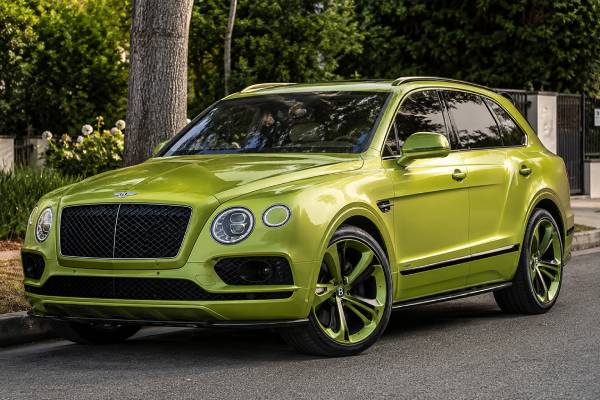
The customer Pikes Peak Bentayga was a Mulliner collection limited to ten examples. It translated the record car’s visual energy into a road-legal luxury specification instead of reproducing the safety cage and competition interior.
Exterior themes centered on Radium green or Beluga black, with a gloss-black treatment, a carbon-fibre body kit and prominent Pikes Peak graphics. The edition used 22-inch wheels and an Akrapovič exhaust connection to echo the mountain program. Exact colour and market details should be verified against the individual build sheet because extremely small runs are often described inconsistently in resale advertisements.
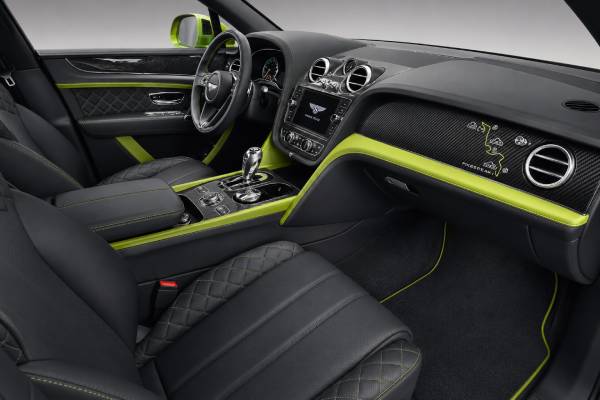
Inside, Alcantara and carbon fibre gave the cabin a more technical character than the wood-and-hide emphasis of the Mulliner flagship. The passenger-side fascia incorporated a depiction of the Pikes Peak course, and numbered or edition-specific details connected the vehicle to the record. The purpose was not subtle anonymity. A correct car should present a coherent exterior-and-interior theme rather than a selection of aftermarket badges.
Because only ten were made, originality has unusual weight. Repainting a damaged Radium panel, replacing a carbon-fibre component or restoring the course graphic can require factory-level information and highly skilled work. Before purchase, document every rare component with photographs and compare it with the factory specification. Keep removed original parts, even when a reversible modern replacement is fitted for regular use.
The low production figure can also tempt sellers to exaggerate. Claims such as “one of one,” “the actual record car” or “factory race engine” require specific proof. The competition vehicle and the ten customer cars are related but not interchangeable. Provenance should identify whether the car is a production limited edition, a Bentley media vehicle, a show example or the actual hill-climb chassis.
Pikes Peak Bentayga Technical Specifications
The production edition is an ICE-powered W12 Bentayga. It combines a 5,998 cc twin-turbocharged engine with an eight-speed automatic, permanent all-wheel drive, self-levelling air suspension and Bentley Dynamic Ride. Its performance figures match the 600 bhp W12 rather than the later 626 bhp Bentayga Speed.
| Specification | Value |
|---|---|
| Engine type | Twin-turbocharged W12 petrol |
| Displacement | 5,998 cc |
| Maximum power | 608 PS / 600 bhp / 447 kW at 6,000 rpm |
| Maximum torque | 900 Nm (664 lb-ft) from 1,250 to 4,500 rpm |
| Fuel delivery | Direct and port injection |
| Fuel tank | 85 litres (22.5 US gal) |
| Measure | Factory figure |
|---|---|
| 0–60 mph | 4.0 seconds |
| 0–100 km/h | 4.1 seconds |
| Top speed | 301 km/h (187 mph) |
| Transmission | Eight-speed automatic |
| Drive layout | Permanent all-wheel drive |
| Item | Recorded detail |
|---|---|
| Driver | Rhys Millen |
| Date | June 24, 2018 |
| Course distance | 12.42 miles (19.99 km) |
| Number of corners | 156 |
| Elapsed time | 10 minutes 49.9 seconds |
| Average speed | 66.5 mph (107.0 km/h) |
| Specification | Value |
|---|---|
| Body | Five-door luxury SUV |
| Suspension | Self-levelling air suspension with adaptive damping |
| Roll control | 48-volt Bentley Dynamic Ride |
| Length | 5,140 mm (202.4 in) |
| Width excluding mirrors | 1,998 mm (78.7 in) |
| Wheelbase | 2,995 mm (117.9 in) |
| Area | Edition treatment |
|---|---|
| Production | Ten customer examples |
| Exterior themes | Radium or Beluga, with black and carbon-fibre details |
| Wheels | 22-inch edition specification |
| Cabin materials | Alcantara and carbon-fibre emphasis |
| Fascia artwork | Pikes Peak course graphic |
| Exhaust association | Akrapovič performance exhaust treatment |
Do not substitute the later Bentayga Speed’s 626 bhp, 190 mph figures for this edition. The Pikes Peak Bentayga’s historical point is that the 600 bhp production W12 established the record before the Speed entered the range.
Why the W12 Package Worked on the Mountain
Turbocharging is especially useful at altitude because compressors help offset the reduced density of the intake air. That does not eliminate altitude effects, but it gives the W12 a stronger basis than a naturally aspirated engine of similar sea-level output. The broad torque band also reduces the need for frantic gear changes between closely spaced corners.
Permanent all-wheel drive gives the driver traction confidence when accelerating from hairpins. An open mountain course can present changes in temperature and surface grip over a single run. Predictable torque distribution matters more than theatrical oversteer, particularly in a tall vehicle carrying substantial mass.
The 48-volt Dynamic Ride system is another important element. Conventional anti-roll bars create a compromise: stiffness controls roll but can reduce wheel independence and ride quality. An active system can apply control when lateral load builds while allowing more compliance at other times. On Pikes Peak, that supports tire contact and driver confidence. On public roads, it explains how the Bentayga can remain comfortable without floating excessively.
Braking is a major test because the course includes repeated deceleration and limited cooling opportunities. The record car’s event preparation and chosen tires were part of the complete package. A road owner should not interpret the record as permission to ignore brake fluid age, pad condition or tire heat. Competition success depends on preparation; the same principle applies to a used limited edition.
Aerodynamics were not the Bentayga’s primary advantage, yet stability at speed matters. The production body, active chassis and carefully selected wheel-and-tire package created a predictable platform. The record is therefore better viewed as a demonstration of systems integration than as proof of one spectacular component.
What the Limited Edition Is Like on the Road
On ordinary roads, the Pikes Peak edition remains a refined W12 Bentayga with a more extroverted presentation. The engine delivers speed in a smooth surge, while the exhaust and cabin materials make the experience feel more purposeful than a conventional luxury specification.
The car is still heavy and tall. It does not shrink into a sports coupe, and an owner who expects the steering texture of a lightweight performance car may be disappointed. Its talent is covering distance rapidly while keeping passengers isolated. Sport mode tightens responses, but Bentley mode is usually the better daily setting because it preserves the grand-touring balance.
Rare carbon-fibre exterior pieces create a practical concern. Low curbs, automated car washes and careless lifting can damage components that are not simple to source. Inspect the underside of splitters and side pieces with the vehicle raised. Repairs should preserve weave orientation and finish, not merely hide cracks under tinted resin.
The 22-inch wheels need careful alignment and tire management. A record-inspired appearance does not reduce the load carried by each tire. Check inner shoulders, date codes and evidence of impact. The all-wheel-drive system is best served by closely matched rolling circumferences across all four positions.
Cabin usability is still high. The rear seats, luggage area and towing ability remain available, but repeated heavy use can reduce collector quality. Buyers should decide whether they want a preserved showpiece or a regularly driven grand tourer. Either approach can be valid if documented honestly; problems arise when a heavily used car is cosmetically refreshed and marketed as untouched.
Maintenance and Preservation of a Ten-Car Bentley
For a ten-car edition, maintenance should create an audit trail. Every service, repair, tire change, paint correction and removed component should be recorded. Future buyers will need to understand not only that work was completed, but how originality was protected.
Mechanically, follow W12 priorities: correct oil, stable coolant level, healthy batteries, clean diagnostic scans and proactive inspection of air suspension and control arms. Allow the engine to reach operating temperature during use. Repeated short starts for display can add moisture and battery load without benefiting the drivetrain.
The 12-volt electrical system deserves testing before strange warnings appear. If Dynamic Ride is fitted, the 48-volt network should be checked with appropriate Bentley-capable diagnostics. Clearing codes before sale is not evidence of repair. A specialist should compare stored faults, freeze-frame information and live values after a meaningful road test.
Brake condition must be measured. If carbon-ceramic hardware is fitted, obtain a written assessment from a qualified shop. If iron brakes are installed, record disc thickness, lip, cracking and pad life. Use the correct wheel torque and lifting points; a generic tire shop can cause expensive damage to wheels, trim or underbody panels.
Preserve the edition materials with non-abrasive methods. Alcantara should be cleaned gently to prevent matting. Carbon fibre should be inspected for delamination and UV damage. Decals or graphics need products that will not lift edges or alter gloss. Store original documents, accessories and spare parts in stable, dry conditions.
Insurance valuation should account for rarity and restoration difficulty. A normal market-value policy may not cover the cost of recreating limited-edition trim. Agreed-value coverage, detailed photographs and an independent appraisal can reduce disputes after a loss.
Authentication and Purchase Decision
Authentication starts with the VIN-linked build record and continues through physical consistency. No single badge, colour or seller statement is sufficient for a car claimed to be one of ten.
Request original sales documentation, service invoices, ownership history and any Bentley correspondence. Confirm the production number where possible. Check the course graphic, exterior treatment, wheels, cabin materials and exhaust against factory information. Look for evidence that rare parts were added later to a standard W12.
A specialist pre-purchase inspection should include:
- cold-start behavior and engine-fluid checks;
- full-system diagnostic scan before and after driving;
- air-suspension leak and height evaluation;
- wheel, tire and brake measurement;
- paint-depth mapping and carbon-fibre inspection;
- operation of all comfort and driver-assistance systems;
- confirmation of recall and service-campaign status by VIN.
The road test should be long enough to reach full temperature. Use rough roads, steady motorway speed, repeated low-speed turns and controlled braking. Watch for steering vibration, suspension noise, delayed gear engagement or cooling odor. A rare edition can still be a poor car if it has been stored badly, repaired carelessly or serviced only when a warning appeared.
Valuation depends on provenance, originality, condition and completeness. The record connection can support a premium, but only when the car is verifiably part of the limited run. A standard W12 with tasteful Pikes Peak-inspired modifications may be enjoyable, yet it belongs in a different price category and should be represented as such.
For the right buyer, the edition offers a concise piece of Bentley motorsport history in a vehicle that remains practical. Its strongest claim is not that it is the fastest Bentayga; it is that it commemorates a specific moment when Bentley used a production luxury SUV to reset the mountain benchmark.
Because only ten customer cars were announced, every change should be approached as a provenance decision. Before installing paint protection film, refinishing a wheel or repairing carbon fibre, create a dated visual record and retain the invoice. Where a damaged original part must be replaced, store it if safe and practical. A future owner may value the evidence even when the new component is objectively better.
Storage conditions can alter a low-mileage example quickly. Tires age and flat-spot, brake discs corrode, the 12-volt battery weakens and fuel deteriorates. Climate-controlled storage helps the paint and cabin but does not replace regular heat cycles, fluid checks and road use. A sensible program includes battery maintenance, correct tire pressure, periodic movement and a fully warmed drive under controlled conditions.
The Akrapovič titanium exhaust is an important point of inspection where fitted as part of the edition specification. Look for impact damage, non-factory welding, loose heat shields and altered valve control. Titanium changes color with heat and can develop a normal surface appearance, so assessment should focus on cracks, mounting and authenticity rather than expecting it to look unused. Keep any original exhaust documentation and avoid software changes that create excessive valve cycling or emissions issues.
The Beluga paint and Radium accents used in the factory presentation create a strong contrast. Wheel refinishing must reproduce the correct accent rather than a generic fluorescent green. Inspect the inner barrels and rim edges, because road damage can be hidden by a fresh cosmetic face. The same principle applies to the carbon-fibre exterior package: clear-coat gloss, weave direction and edge fit should match from side to side.
A specialist should also assess whether any record-themed graphics have been replaced. The course outline and other cabin identifiers are part of the commemorative story. Reproduction pieces may be acceptable after genuine wear, but the seller should disclose them. An apparently perfect interior with no supporting history can be less convincing than an original cabin showing minor, documented use.
Insurance and transport planning are unusual for a ten-car model. Confirm that the policy recognizes the exact edition, and use covered transport with suitable loading angles when the car cannot be driven. Low front carbon parts and large wheels are vulnerable to careless ramps and tie-downs. Photograph the car before and after third-party transport.
The strongest purchase file will connect the production car to the Pikes Peak narrative without exaggeration. The customer edition commemorates the record; it is not the stripped competition vehicle that climbed the mountain. Accurate language protects its historical importance. It allows the buyer to appreciate the real achievement—a road-legal Bentayga celebrating a documented 10:49.9 SUV record—without turning marketing association into a false race history.
A concours-style inspection should not replace a dynamic one. Even a display-quality example needs fuel, coolant, brake fluid and tires that are safe for road use. If the car has spent years as a collection piece, plan a recommissioning sequence before asking for full performance: inspect fluids, test batteries, replace age-limited tires, verify brake condition and bring temperatures up gradually.
The edition’s historical file should include copies of Bentley’s record announcement and customer-edition material, but those documents do not substitute for the individual car’s invoice and VIN record. Keeping the two categories separate—event history and vehicle history—makes provenance clearer and reduces the temptation to attribute competition mileage or components to the road car.
When negotiating, separate reversible condition issues from provenance loss. Old tires and a weak battery can be corrected predictably; missing edition trim, undocumented repainting or an uncertain identity may never be fully resolved. Price the first group with quotations and treat the second as a permanent change to the car’s collector standing.
A buyer who intends regular road use should keep a second set of correctly specified wheels only if storage and documentation are excellent. The original Radium-accented set should never become anonymous workshop stock.
Building a Ten-Car Provenance Chain
With only ten customer editions announced, provenance should be continuous enough to distinguish a genuine Pikes Peak Bentayga from a convincing visual conversion. Start with the VIN build record and confirm the factory exterior color, Pikes Peak graphics, Black Specification content, 22-inch wheel finish, carbon-fiber details and Akrapovič sports exhaust. Compare those records with dated dealer invoices, delivery photographs and early registration documents. The limited edition celebrated the record but was not the stripped competition vehicle: it retained a production cabin and road equipment. A roll cage, racing seats or claims of being the actual hill-climb car therefore require exceptional documentation rather than adding automatic credibility.
Period images are especially useful because cosmetic parts can be changed after delivery. Save photographs of the grille, lower bodywork, roof spoiler, wheel faces, embroidery and treadplates, including close views of any numbered or edition-specific markings. If the SUV has been repainted, wrapped or fitted with replacement wheels, document where the original parts went. The Akrapovič system should also be checked for correct installation, heat shielding and damage rather than treated only as a desirable name. A buyer should be able to explain the car’s identity in a clear sequence from Bentley’s build data to its present condition. When that chain contains unexplained gaps, value the vehicle as an uncertain special-specification Bentayga until the missing evidence is independently resolved.
References
- Bentley News 2018 : BENTAYGA BREAKS SUV RECORD AT PIKES PEAK 2018
- Bentley News 2019: CONTINENTAL GT BREAKS OUTRIGHT PRODUCTION CAR RECORD 2019
- Bentley News 2021 : BENTLEY BRINGS SPEED AND SUSTAINABILITY TO PIKES PEAK 2021
- BENTLEY NEWSROOM : 2016 Bentayga 11WO 2026
- Bentley Bentayga | History and Heritage | Bentley Motors 2026
- BENTLEY NEWSROOM : Technical Specifications 2026
Disclaimer
Use this guide for informational purposes only; it cannot replace professional diagnosis, repair or provenance certification. Technical specifications, torque values, service intervals and procedures may differ by VIN, market and equipment, and must be checked in the vehicle’s official service documentation. A share on Facebook, X/Twitter or another social platform is a welcome way to support our work.