
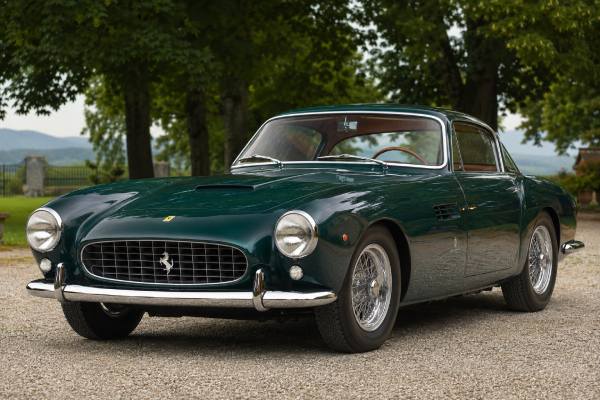
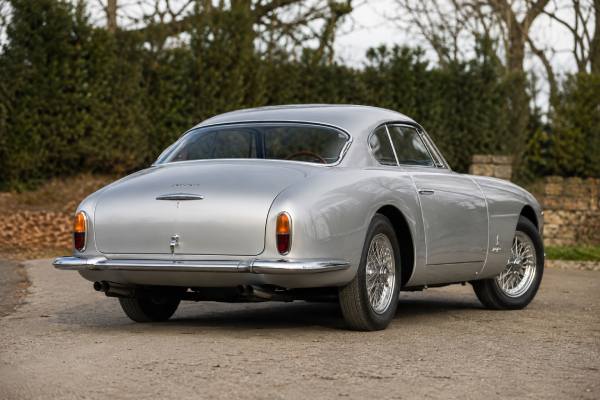
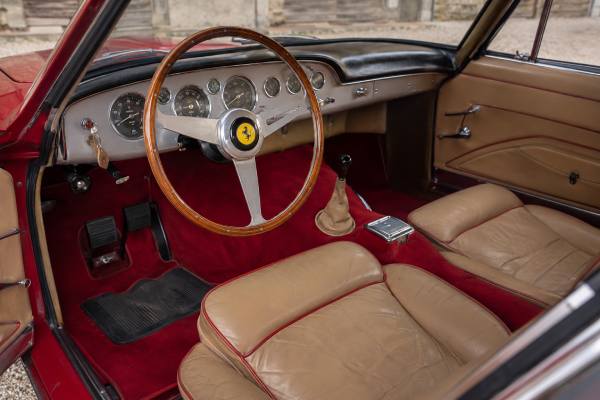
The Ferrari 250 Europa Tipo 103 was the first road-focused Ferrari to carry the 250 Europa name with the large Lampredi 3.0-liter V12 in its mature form, produced during 1953 and 1954 with about 200 hp. It sits at a fascinating turning point: still coachbuilt, still highly individual from car to car, but moving Ferrari toward the more recognizable 250 grand touring family that would define the marque through the 1950s and early 1960s.
Unlike later Colombo-powered 250 GT models, the Tipo 103 Europa used Aurelio Lampredi’s long-block V12 in most examples, making it a technical outlier within the broader 250 story. It shared much of its grand touring character with the larger 375 America, but with a smaller 3.0-liter engine and a more balanced identity as a fast, luxurious, long-distance road car. Today it matters because it combines early Ferrari rarity, coachbuilt Pinin Farina and Vignale design, Mille Miglia-era engineering flavor, and the kind of provenance-sensitive value that makes inspection and documentation just as important as performance.
Quick Take
The Ferrari 250 Europa Tipo 103 is most appealing as an early, elegant, coachbuilt Ferrari GT with a rare Lampredi 3.0-liter V12 rather than the later short-block Colombo engine most people associate with the 250 line. Its main identity is historical: it bridges Ferrari’s small-volume Inter-era road cars and the more standardized 250 GT dynasty. The tradeoff is complexity and ambiguity, because production records, engine histories, coachwork differences, and restorations can vary widely. For buyers, the most important factors are matching major components, Ferrari Classiche or equivalent expert documentation, body authenticity, restoration quality, and a specialist inspection by someone who knows early Lampredi Ferraris.
Table of Contents
- History and Collector Importance
- Engine, Chassis and Key Specifications
- Production, Variants and Authenticity Details
- Design, Engineering and Special Features
- Road Feel, Performance and Usability
- Maintenance, Reliability and Restoration Risk
- Values, Buying Advice and Rivals
History and Collector Importance
The 250 Europa matters because it helped turn Ferrari’s 3.0-liter V12 idea into a serious road-car line. It was not yet the familiar production 250 GT, but it pointed directly toward that future.
Ferrari introduced the 250 Europa in 1953, when the company was still young and road-car production existed partly to support racing. Earlier road Ferraris such as the 166 Inter, 195 Inter, and 212 Inter had already shown that wealthy customers wanted refined, fast grand tourers wearing Ferrari badges. The Europa took that idea further with more presence, a longer wheelbase, and a stronger connection to the big grand touring cars Ferrari was selling alongside its competition machines.
The car was closely related in concept and structure to the 375 America. Both were aimed at high-end clients who wanted long-distance speed, hand-built style, and exclusivity rather than bare racing equipment. The 375 America used a larger V12, while the 250 Europa used a 3.0-liter engine carrying the 250 naming logic: roughly 250 cc per cylinder across 12 cylinders.
The exact 250 Europa story has one important wrinkle. The first cars connected with the Europa name included rare Colombo-powered examples, while the better-known Tipo 103 specification used the Lampredi long-block V12. This is why serious buyers must read the chassis and engine history of each car carefully instead of assuming every 250 Europa is mechanically identical.
By 1954, Ferrari moved toward the 250 Europa GT, a different and more clearly Colombo-powered step toward the later 250 GT line. That makes the Tipo 103 Europa a brief, transitional model. It is neither a mass-produced GT nor a competition berlinetta. It is a hand-built early grand tourer from the period when Ferrari was still deciding what its luxury road cars should become.
Its collector appeal comes from several overlapping qualities:
- Very low production, with most sources placing the run around the low twenties.
- Early position in the 250 road-car bloodline.
- Lampredi V12 rarity within the wider 250 family.
- Pinin Farina and Vignale coachwork.
- Eligibility and interest for major concours and historic touring events.
- High sensitivity to provenance, originality, and restoration quality.
For enthusiasts, the Europa is a reminder that the 250 story did not begin with the California Spider, Tour de France, Lusso, or GTO. It began with quieter, more formal grand tourers like this, built for a small group of clients who wanted Ferrari engineering in a luxurious roadgoing package.
Engine, Chassis and Key Specifications
The Tipo 103 Europa’s defining feature is its 2,963 cc Lampredi V12, rated around 200 hp. It was a large, smooth, long-block engine in a grand touring chassis rather than the compact Colombo V12 layout used by most later 250 models.
| Item | Specification |
|---|---|
| Production years | 1953–1954 |
| Engine | Tipo 103 60-degree V12 |
| Displacement | 2,963 cc |
| Bore and stroke | 68 mm x 68 mm |
| Valve gear | Single overhead camshaft per bank, two valves per cylinder |
| Fuel system | Three Weber twin-choke carburetors |
| Power | About 200 hp at roughly 6,300 rpm |
| Transmission | 4-speed manual |
| Drive | Front-engine, rear-wheel drive |
| Chassis | Tubular steel frame with coachbuilt body |
| Wheelbase | 2,800 mm |
| Brakes | Hydraulic drums front and rear |
The Lampredi engine is central to the car’s identity. Aurelio Lampredi’s V12 architecture was developed with larger displacement in mind, so it had wider bore spacing than the Colombo V12. In the 250 Europa, Ferrari used this architecture in a smaller 3.0-liter form. The result was a square engine, with the same 68 mm bore and stroke, good torque for its period, and a more relaxed grand touring character than many of Ferrari’s sharper competition engines.
The chassis was also more touring-focused than racing-focused. The 2,800 mm wheelbase gave the cabin more space and made the car feel stable at speed. The structure was a tubular steel frame, clothed by hand-built bodywork. Most bodies were steel with aluminum panels or aluminum sections depending on coachbuilder and individual car, so each example must be inspected as a specific artifact rather than as a standardized production shell.
| Area | Typical Tipo 103 Europa layout |
|---|---|
| Front suspension | Independent layout with transverse leaf spring and shock absorbers |
| Rear suspension | Live axle with semi-elliptic leaf springs |
| Steering | Period manual steering system |
| Wheels | Borrani-style wire wheels on many examples |
| Fuel capacity | Large touring tank, commonly cited around 140 liters |
| Weight | Roughly 1,150–1,200 kg depending on body and trim |
Performance figures vary because period testing was inconsistent and axle ratios differed. A healthy car was fast for an early 1950s road machine, with a top speed often discussed in the 130 mph to 140 mph range depending on gearing, body, tune, and measurement method. More important than the headline number is the way the Europa delivered speed: long-legged, smooth, and confident, rather than nervous or stripped-out.
Production, Variants and Authenticity Details
The 250 Europa was built in tiny numbers, and no two cars should be treated as interchangeable. Coachwork, engine history, restoration decisions, and factory records can change both the car’s identity and its value.
Production is commonly described as about 21 or 22 examples, depending on how individual chassis, early engine differences, and later factory changes are counted. That small number is already enough to explain why blanket advice is dangerous. A Pinin Farina coupe, a Vignale coupe, a cabriolet, a show car, and a car later altered by the factory can all sit under the broader Europa story but appeal to different buyers.
Coachbuilders and body styles
Most 250 Europas wore Pinin Farina coachwork. These cars generally have a more formal, balanced, elegant look than the more flamboyant Vignale-bodied examples. Pinin Farina coupes often show the restrained proportions that would help define later Ferrari GT design: long hood, compact cabin, clean side surfaces, tasteful chrome, and a fastback or close-coupled roofline.
Vignale-bodied cars are much rarer and usually more visually dramatic. Giovanni Michelotti’s design influence gave them stronger ornament, more adventurous grille and side treatments, and a more show-car-like personality. For some collectors, that makes a Vignale Europa especially desirable. For others, the calmer Pinin Farina shape better represents the future direction of Ferrari road cars.
A very small number of open cars were also built. Cabriolets are naturally important because of their rarity, but their value still depends on authenticity, condition, and history rather than body style alone.
Engine identity and matching numbers
The Tipo 103 Lampredi V12 is the core engine for this article, but buyers must know that the earliest Europa history includes exceptions. Some early cars associated with the 250 Europa line used Colombo-type 3.0-liter engines. Later and more typical Tipo 103 examples used the Lampredi long-block V12.
This matters because a car’s market identity is tied to what it was when new, not what someone assumes from the badge. A correct Lampredi-powered Tipo 103 car should have documentation that supports its chassis, engine, gearbox, rear axle, body, and build configuration. A car with replacement components can still be valuable, but the price should reflect the difference between original, matching, correct-type, and undocumented parts.
Key authenticity checks include:
- Chassis number and stamping style.
- Engine number, internal number, and engine type.
- Gearbox and rear axle identity.
- Coachbuilder body number where available.
- Original color and trim records.
- Period photos, delivery records, and ownership chain.
- Ferrari Classiche certification or equivalent expert documentation.
- Restoration invoices from recognized early Ferrari specialists.
Factory records and expert histories are especially important because many early Ferraris lived complex lives. Some were repainted, rebodied, upgraded, crashed, stored, or restored before modern collectors began tracking originality with today’s intensity.
Design, Engineering and Special Features
The 250 Europa looks and feels like an early luxury Ferrari because it was built before the brand settled into repeatable production GT design. Its special character comes from the mix of grand touring engineering, hand-built coachwork, and a rare Lampredi V12.
The long hood is more than styling. It reflects the front-mounted V12 and the proportions expected of a prestigious 1950s gran turismo. The cabin sits rearward, the wheelbase is generous, and the car has a calm, formal stance compared with later short-wheelbase competition Ferraris.
Pinin Farina bodies brought order and restraint. Their appeal is in proportion, not theatrics. The better-known Pinin Farina Europa coupes have a dignified roofline, a clean nose, delicate chrome details, and a more mature look than many earlier coachbuilt Ferraris. Some had contrasting roof colors or detail variations that make individual cars easy to identify.
Vignale bodies brought more drama. Their surfaces could include deeper side sculpting, more prominent chrome, unusual headlamp treatments, and decorative vents or grilles. These cars show the highly personal nature of early Ferrari coachbuilding, when a customer could still buy a machine that looked closer to a one-off salon car than a regular production model.
Mechanically, the Tipo 103 Europa was special because Ferrari paired a relatively small-displacement Lampredi V12 with a refined grand touring package. The engine had wet-sump lubrication, carburetion rather than fuel injection, and a sound shaped by twelve small cylinders breathing through Weber carburetors. It was not a peaky modern exotic engine. It was a flexible, mechanical, carbureted V12 that rewarded patience, warm-up, and proper tuning.
The cabin followed the luxury GT brief. Expect leather, carpeting, bright instruments, a thin-rim steering wheel, and an airy but intimate driving position. The rear luggage shelf or space behind the seats made the car more useful for touring than a competition berlinetta. Sound insulation and trim quality were part of the selling point, even though by modern standards the cabin is still mechanical, warm, and full of vibration.
The special feature that matters most today is not a single gadget or design flourish. It is the car’s hand-built individuality. Two Europas can differ in details such as lamps, trim, vents, bumpers, roof profile, interior layout, and colors. That individuality is a major part of the charm, but it also means restoration accuracy is difficult. A missing trim piece or wrongly shaped panel cannot always be replaced from a catalog.
Road Feel, Performance and Usability
A good 250 Europa Tipo 103 should feel like a fast, dignified 1950s grand tourer, not a later 250 racing car. Its best qualities are smooth V12 pull, long-distance composure, and the sense of operating a carefully tuned mechanical machine.
The engine needs proper warm-up. Carbureted early Ferraris do not like being treated like modern fuel-injected cars. When cold, the V12 may feel rich, uneven, or slightly reluctant until oil temperature and carburetor behavior settle. Once warm and correctly tuned, it should pull cleanly and build speed with a cultured but purposeful note.
Throttle response is direct but not abrupt. The three Weber carburetors give the engine a crisp intake sound, and the Lampredi V12’s square bore and stroke help it feel broad and usable. It is not about explosive low-end torque or modern high-rpm theatrics. It is about steady, expensive-feeling acceleration and the pleasure of using a V12 across open roads.
The 4-speed manual gearbox is part of the experience. In a well-rebuilt car, shifts should be deliberate and satisfying, but they still require mechanical sympathy. Rushed shifts, cold oil, or worn synchros can quickly make the car feel older than it should. Clutch action depends heavily on setup and condition.
Steering effort is higher than in a modern car, especially at parking speeds. Once moving, the car should feel stable and communicative. The long wheelbase gives it more high-speed calm than a short competition Ferrari, but it also makes it less agile in tight bends. The Europa is happiest flowing through long curves and fast roads rather than being forced into sharp, modern sports-car inputs.
The drum brakes require realistic expectations. Properly adjusted hydraulic drums can work well for road touring, but they do not have the repeated high-speed stopping power, fade resistance, or pedal feel of later disc-brake Ferraris. A buyer should test for straight stopping, consistent pedal response, and signs of pulling, grabbing, or heat-related fade.
Ride quality is one of the car’s strengths when suspension, tires, and dampers are correct. The Europa was intended for wealthy owners covering distance, not racing drivers tolerating harshness. A tired car may wander, crash over bumps, or feel loose through the structure. A properly restored one should feel supple, solid, and composed.
Usability is limited by age, value, and specialist care, but not by concept. This was a road car from the beginning. It can be enjoyed on rallies, concours tours, and careful road events. The limits are practical: heat, traffic, drum brakes, tire age, carburetor tuning, and the risk of using a seven-figure coachbuilt Ferrari in modern conditions.
Maintenance, Reliability and Restoration Risk
The 250 Europa Tipo 103 is not unreliable in the simple used-car sense; it is specialist-dependent. A well-restored and properly maintained example can be rewarding, while a neglected or cosmetically restored car can become a very expensive sorting project.
The Lampredi V12 is robust when built correctly, but it is not a casual engine. Correct machining, cooling, oiling, carburetor setup, ignition condition, and valve adjustment all matter. Many problems blamed on “old Ferrari behavior” are really the result of poor tuning, aging fuel systems, weak ignition components, or incomplete restoration.
Important mechanical inspection areas include:
- Oil pressure hot and cold.
- Coolant temperature stability in slow traffic and open-road use.
- Carburetor balance, jetting, throttle linkage wear, and fuel leaks.
- Ignition coils, distributor condition, plug leads, and timing.
- Timing chain, valve gear noise, and evidence of past engine work.
- Clutch take-up, gearbox synchros, and rear axle noise.
- Brake drum condition, wheel cylinders, hoses, and master cylinder.
- Suspension bushings, kingpins, dampers, springs, and steering joints.
- Wheel condition, spoke tension, hubs, and tire age.
The cooling system deserves special attention. Early V12 Ferraris can run well when radiators, water pumps, hoses, fans, and passages are right. They can also become frustrating if corrosion, scale, poor recoring, or incorrect fan setup is ignored. A car that behaves well on a cool concours lawn may not be sorted for real traffic.
Corrosion and body condition are major cost drivers. Coachbuilt bodies can hide old repairs, filler, cracked leadwork, distorted aluminum, and poorly repaired accident damage. Doors, sills, lower fenders, floors, trunk areas, and mounting points all need careful inspection. Even when rust is not severe, incorrect panel shape can be expensive to correct because replacement panels must often be made by hand.
Restoration quality varies widely. Older restorations may look attractive but fail on accuracy. Common issues include incorrect interior materials, wrong carpets, modernized wiring, inaccurate paint colors, non-original trim shapes, incorrect fasteners, poor chrome fit, and mechanical rebuilds done by general classic shops rather than early Ferrari specialists.
Parts availability is mixed. Some engine and service components can be sourced through specialists, but unique coachwork, trim, instruments, castings, and early-specific hardware can be difficult or impossible to replace without fabrication. That makes completeness very valuable. A disassembled project missing original trim can be far more challenging than its purchase price suggests.
Originality versus usability is a real decision. Some owners quietly improve cooling, wiring protection, or fuel-system safety while preserving the car’s visible authenticity. Others pursue strict concours correctness. The best approach depends on the car’s history. A highly original, documented example should not be casually modified. A car with older non-original changes may be a better candidate for sympathetic touring-focused improvements.
Values, Buying Advice and Rivals
The 250 Europa Tipo 103 sits in the million-dollar-plus early Ferrari market, with large value swings based on body style, history, originality, and restoration quality. Recent public sales show that ordinary language like “excellent condition” is not enough; the exact car is the market.
A Pinin Farina coupe with good history, correct major components, and strong documentation may occupy a different price band from a Vignale-bodied show car, an early Colombo-powered exception, or a car with major replacement components. The most important value drivers are not mileage or convenience features. They are identity, documentation, and condition.
Strong value factors include:
- Matching-numbers engine and chassis.
- Original or correctly documented coachwork.
- Known ownership history from new.
- Period photos and delivery records.
- Ferrari Classiche certification.
- Restoration by a recognized early Ferrari specialist.
- Correct colors and materials.
- Major concours history or eligibility.
- Mechanical sorting proven by road use, not just static display.
- Complete original trim, instruments, and body details.
Risk factors include:
- Unclear engine replacement history.
- Missing body-number evidence.
- Heavy accident damage.
- Poorly documented older restoration.
- Modernized interior or incorrect trim.
- Long-term storage without mechanical recommissioning.
- Attractive paint over weak structure.
- Incomplete project condition.
- Disagreement between advertised claims and expert records.
A serious pre-purchase inspection should include both a mechanical specialist and a historian or marque expert. The mechanical inspection tells you whether the car can be used. The historical inspection tells you what the car actually is. For a 250 Europa, both are essential.
The inspection process should include:
- Confirm chassis, engine, gearbox, axle, and body identities.
- Compare the car against factory records, Classiche documents, and expert histories.
- Inspect body structure, panel shape, corrosion, and old repairs.
- Review restoration invoices and photos, not just the finished result.
- Test hot running, oil pressure, cooling behavior, brakes, steering, and gearbox.
- Check that rare trim and instruments are correct and complete.
- Estimate sorting costs before negotiating, because small early-Ferrari issues can become large bills.
Rivals and alternatives depend on what the buyer wants. A 375 America offers a grander, larger-engined Ferrari experience with similar early-1950s prestige. A later 250 Europa GT is closer to the main Colombo-powered 250 GT line and may feel more familiar to collectors focused on the classic 250 dynasty. A 250 GT Boano or Ellena offers later production development with more availability. Outside Ferrari, period Maserati A6G and early Aston Martin DB models offer similar coachbuilt GT appeal, but without the same Ferrari 250 mythology.
For long-term collectability, the Tipo 103 Europa has durable strengths: rarity, early placement, coachbuilt beauty, and technical distinction. It will probably remain a specialist collector’s Ferrari rather than a mainstream poster car. That is part of its appeal. Buyers are not just purchasing a fast 1950s GT; they are buying one of the formative chapters in Ferrari’s road-car identity.
References
- Ferrari 250 Europa (1953) – Ferrari.com 1953 (Manufacturer Specifications)
- 1954 Ferrari 250 Europa | Gooding Christie’s 2023 (Auction Listing)
- 1953 Ferrari 250 Europa Coupe by Vignale | Miami 2024 | RM Sotheby’s 2024 (Auction Listing)
- Ferrari 250 Europa Guide — Supercar Nostalgia 2020 (Historical and Technical Guide)
- 250 Europa – Register 2025 (Chassis Register)
Disclaimer
This article is for informational purposes only and is not a substitute for professional diagnosis, repair, valuation, or authentication. Specifications, torque values, service intervals, procedures, and component details can vary by chassis number, market, equipment, restoration history, and factory changes. Always verify details against official service documentation, factory records, and a qualified Ferrari specialist before buying, repairing, restoring, or operating a Ferrari 250 Europa.
If this guide helped, please consider sharing it on Facebook, X/Twitter, or your favorite car community to support our work.