
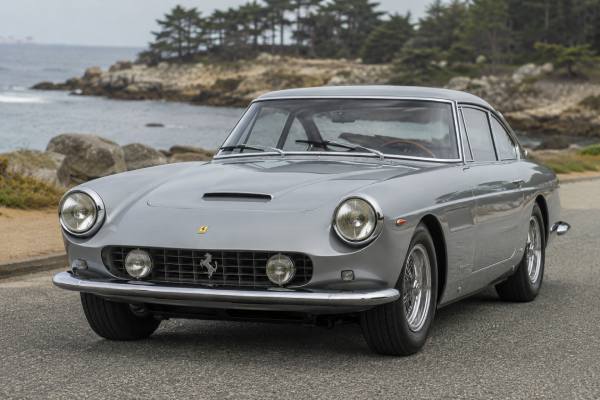
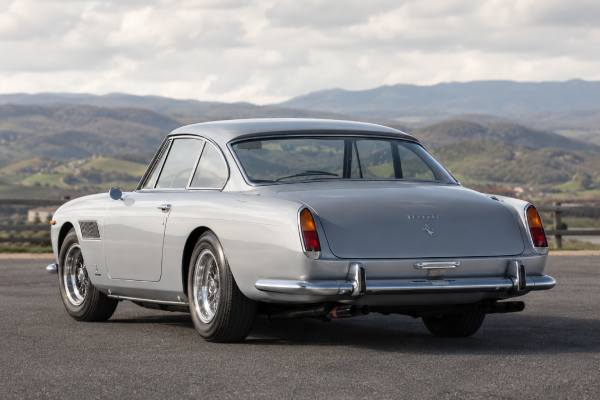
The Ferrari 250 GT 2+2, built on the Tipo 508E chassis and powered by the Tipo 128E 3.0-litre Colombo V12, was Ferrari’s first truly series-produced four-seat grand tourer. Introduced in 1960 and central to Ferrari’s early-1960s road-car expansion, it took the ingredients people already associated with the 250 line—front-mounted V12 power, Pininfarina styling, a tubular chassis, rear-wheel drive, and long-distance pace—and made them usable for more than two people.
It is often called the 250 GTE 2+2, and that “E” matters because it identifies the revised chassis package created to make space for a genuine 2+2 cabin. The wheelbase stayed close to the familiar long-wheelbase 250 GT layout, but the engine was moved forward in the frame so the rear seats could sit ahead of the rear axle. The result was not a limousine, and the rear seats were still best for children or occasional adult use, but it was a major shift for Ferrari: a fast, elegant, expensive GT that helped prove there was a real market for practical V12 Ferraris.
For today’s collectors, the 250 GT 2+2 is appealing because it delivers much of the classic 250 experience at a lower price than the short-wheelbase Berlinettas, California Spiders, or Lussos. The caution is just as clear: restoration costs can still be pure 250 Ferrari money, and the car’s value depends heavily on originality, matching numbers, documentation, and whether the body, chassis, and engine have survived without conversion or poor restoration work.
Quick Take
The Ferrari 250 GT 2+2 is the practical, elegant side of the early-1960s Ferrari 250 family: a Pininfarina-bodied V12 grand tourer with real historical importance as Ferrari’s first large-production 2+2. Its strongest appeal is the combination of Colombo V12 character, graceful proportions, four-seat usability, and relative value within the 250 world. The main tradeoff is that it is less rare and less sporting than the most famous two-seat 250s, while restoration, engine work, body repairs, and trim replacement remain expensive enough to overwhelm a weak purchase. The best cars are matching-numbers, well-documented examples with sound bodies, correct mechanical specification, and restoration work that respects the Tipo 508E identity.
Table of Contents
- Model History and Importance
- Tipo 128E Engine and Core Specs
- Production Series and Factory Details
- Pininfarina Design and Engineering Features
- Road Manners, Performance and Character
- Maintenance, Reliability and Restoration Risk
- Market Values, Buying Advice and Rivals
Model History and Importance
The 250 GT 2+2 matters because it turned Ferrari’s V12 grand tourer into a more usable road car without abandoning the brand’s performance identity. It was not the fastest or most glamorous 250, but it helped define a line of luxurious Ferrari 2+2 models that continued through the 330 GT, 365 GT 2+2, 365 GTC/4, 400 series, 456, 612 Scaglietti, and beyond.
Ferrari had built earlier cars with occasional rear seating, but the 250 GT 2+2 was the first to make the idea commercially serious. The prototype appeared in 1960, and the production car became a key part of Ferrari’s road-car business just as the company was balancing racing ambition with the need for stronger cash flow. A hand-built V12 Ferrari that could carry a couple, children, and luggage was a new proposition. It appealed to wealthy owners who wanted Ferrari speed and sound, but who also wanted a car that could be used for travel, business, and social occasions.
The car sat within the broader Ferrari 250 family, one of the most important model groups in Ferrari history. The same basic 3.0-litre Colombo V12 family powered everything from elegant road coupés to major competition cars. In that company, the 250 GT 2+2 was the refined grand tourer rather than the weapon for races or hill climbs. That is exactly why it is historically important. It showed that Ferrari could sell cars not only to racers and committed sports-car drivers, but also to buyers who wanted a high-speed luxury GT.
Pininfarina was central to the car’s identity. The coachbuilder gave the 250 GT 2+2 a clean, restrained shape rather than a dramatic racing body. The proportions were carefully managed: a long bonnet, airy cabin, slim pillars, formal roofline, and a broad grille. The body had to hide a difficult packaging job. The V12, transmission, passengers, and luggage all had to fit inside a grand touring silhouette that still looked like a Ferrari.
The Tipo 508E chassis was the technical answer. Ferrari moved the engine forward compared with other 250 GT chassis layouts. This created enough cabin length for rear seats while keeping a 2600 mm wheelbase. That decision shaped the car’s personality. It is still a front-engined Ferrari GT, but it has a slightly more nose-led feel than the lighter two-seat cars.
Its reputation today is layered. Enthusiasts value it for the Colombo V12, Pininfarina design, and classic Ferrari feel. Collectors value it as the first large-production Ferrari 2+2 and as one of the more attainable ways into the 250 family. Investors look at it more cautiously. It is not as scarce as the most desirable 250 variants, and buyers must be careful because poor restorations and replica conversions have affected the surviving pool. A great 250 GT 2+2 is a blue-chip classic Ferrari. A compromised one can become an expensive lesson.
Tipo 128E Engine and Core Specs
The heart of the Ferrari 250 GT 2+2 is the Tipo 128E version of the Colombo 3.0-litre V12, rated at 240 hp in the commonly quoted factory specification. It is a front-mounted, naturally aspirated, carbureted V12 designed for smooth high-speed road use rather than racing tune.
| Category | Specification |
|---|---|
| Production focus | 1960–1962 early 250 GT 2+2 / 250 GTE 2+2 |
| Chassis type | Tipo 508E tubular steel frame |
| Body style | 2+2 coupé by Pininfarina |
| Engine type | Tipo 128E front longitudinal 60-degree V12 |
| Displacement | 2953.21 cc |
| Bore x stroke | 73 mm x 58.8 mm |
| Valve gear | Single overhead camshaft per bank, two valves per cylinder |
| Induction | Three twin-choke Weber carburetors, commonly listed as 40 DCL/6 |
| Compression ratio | 8.8:1 on early specification |
| Maximum power | 240 hp at 7000 rpm |
| Lubrication | Wet sump |
| Transmission | Four-speed manual with overdrive |
| Drivetrain | Rear-wheel drive |
| Front suspension | Independent unequal-length wishbones, coil springs, telescopic dampers, anti-roll bar |
| Rear suspension | Live axle with radius arms, semi-elliptic leaf springs, telescopic dampers |
| Brakes | Four-wheel disc brakes |
| Wheelbase | 2600 mm |
| Typical dry weight | About 1280 kg |
| Fuel capacity | About 100 litres in commonly cited factory-style data |
| Top speed | About 230 km/h, depending on tune, gearing, condition, and test method |
The 250 naming convention comes from the approximate displacement of each cylinder, not from total engine size. With twelve cylinders and just under 3.0 litres total, each cylinder is close to 250 cc. That engine character is central to the car’s appeal. The V12 is not large by modern standards, but it is smooth, eager, and mechanically rich. It rewards revs, careful carburetor setup, and proper warm-up.
The Tipo 128E was not a wild race engine dropped into a family car. It was a road-tuned Colombo unit, built to suit long-distance touring. Triple Webers give it crisp response when properly synchronized, while the four-speed gearbox and overdrive make the car more relaxed at speed than a simple four-speed would be. Overdrive is important because this car was intended to cross countries, not just sprint between corners.
The chassis layout was conventional for Ferrari at the time: tubular steel frame, independent front suspension, live rear axle, and disc brakes. The live rear axle sounds old-fashioned today, but in period it was a normal and effective solution for a powerful GT. The key is condition. A correctly rebuilt 250 GT 2+2 feels composed and stable. A tired one can feel vague, noisy, and heavy.
Dimensions are also part of the story. At about 4.7 metres long and with a 2600 mm wheelbase, the 250 GT 2+2 is larger than the short-wheelbase sporting 250s but still compact by modern grand-tourer standards. Its size makes it easier to place on narrow roads than many later Ferraris, while the big glass area helps visibility.
Production Series and Factory Details
The 250 GT 2+2 was built in meaningful numbers for a hand-built Ferrari, with Ferrari commonly listing 957 examples. The exact counting can vary because of prototypes, late Series III cars, and the closely related 330 America, but the important point is that this was a series-production Ferrari rather than a small coachbuilt batch.
| Area | What buyers should know |
|---|---|
| Common names | Ferrari 250 GT 2+2, Ferrari 250 GTE 2+2, 250 GT/E |
| Core chassis identity | Tipo 508E, with the engine moved forward for cabin space |
| Engine identity | Tipo 128E Colombo V12 on early cars covered here |
| Series I | Early production style; highly relevant to the 1960–1961 period |
| Series II | Introduced with detail interior and ventilation changes; important for many 1962 cars |
| Series III | Late-1962/1963 evolution with more visible trim and lighting changes |
| Successor link | The 330 America used a similar late body style with a larger 4.0-litre V12 |
For a buyer, the first task is to identify the car correctly. A 250 GT 2+2 should have odd-numbered Ferrari road-car chassis numbering with a GT suffix, and the chassis, engine, gearbox, and body should be checked against factory records and specialist documentation. The most desirable cars are not simply the shiniest ones. They are the cars whose identities make sense.
Originality matters because many 250 GT 2+2s lived complicated lives. For years, they were less valuable than the most famous 250s. Some were modified, neglected, broken for parts, or used as donor cars for replicas of more valuable Ferrari bodies. That history makes surviving, correct cars more important today. A car with its original chassis, engine, body, and major components is very different from one with a replacement engine, altered body, or unclear paperwork.
Series differences should be understood but not overplayed. A buyer should not reject a strong Series II car simply because a Series I car appears more “early,” nor should a late car be dismissed if it has excellent history and condition. The hierarchy usually depends on condition, documentation, originality, color, restoration quality, and provenance more than minor trim changes.
Factory colors and interiors were part of the appeal. Ferrari and Pininfarina could accommodate special orders, and many cars have been repainted or retrimmed over the decades. A color change is not automatically fatal, but it should be priced correctly. A car returned to its original color combination, with records showing the original specification, normally has broader collector appeal than a car finished in a modern fantasy scheme.
Factory documentation, Ferrari Classiche certification, old registration papers, restoration invoices, expert reports, photographs, and continuous ownership history can all change value. On a 250-series Ferrari, paperwork is not a formality. It is part of the car.
Pininfarina Design and Engineering Features
The 250 GT 2+2 is distinctive because Pininfarina made a four-seat Ferrari look formal and elegant without making it look heavy. The design uses restraint rather than aggression: a long bonnet, thin pillars, a clean roofline, a wide egg-crate grille, and balanced glass-to-body proportions.
The biggest engineering feature is hidden under the skin. The engine was moved forward in the chassis to create useful passenger space within the wheelbase. That sounds simple, but it required careful packaging. The firewall, steering, pedals, transmission tunnel, exhaust routing, cooling, seating position, and luggage space all had to work together. The result was a proper grand tourer rather than a two-seat car with symbolic rear cushions.
Body construction reflected period Ferrari practice. The car used a steel body, with aluminium used for some panels on many examples. The steel structure makes corrosion a major inspection concern today, but it also gave the car the refinement expected from a luxury GT. Doors, bonnet fit, boot fit, chrome alignment, and glass sealing all reveal a lot about restoration quality.
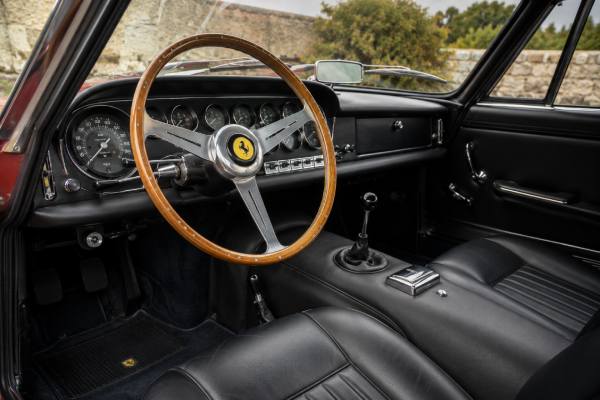
The cabin is a major part of the car’s charm. The driver faces large Veglia instruments, a wood-rim steering wheel, leather trim, and a traditional long gear lever. The rear seats are not modern adult seats, but they give the car a different feel from the two-seat 250s. It is a Ferrari that can be used for a weekend away with luggage, not only for a solo blast.
The design also shows how Ferrari was changing. Earlier road Ferraris often felt like racing cars softened for the street. The 250 GT 2+2 feels more like a purpose-built road Ferrari. It still has a competition-bred engine family, but its purpose is high-speed travel, comfort, and elegance. That blend became a Ferrari theme for decades.
Important exterior details include:
- wide front grille with auxiliary lamps;
- open headlamps with chrome surrounds;
- slim pillars and generous glass area;
- restrained chrome trim;
- Borrani wire wheels on many cars;
- formal rear quarters designed around the 2+2 cabin;
- quad exhaust pipes that remind you this is still a V12 Ferrari.
The sensory character is also part of the engineering. The Colombo V12 is smooth at low speed but comes alive as revs rise. Intake sound from the Weber carburetors, mechanical valve-train noise, exhaust note, and driveline feel all contribute to the experience. A good 250 GT 2+2 does not need theatrical styling to feel special. It feels special because every control and sound comes from a mechanical system working directly in front of the driver.
Road Manners, Performance and Character
A healthy 250 GT 2+2 feels like a fast, refined early-1960s GT rather than a modern sports car. It is quick by period standards, relaxed at speed with overdrive, and most enjoyable when driven smoothly after the engine, gearbox, oil, and tires are properly warm.
Cold starts require patience. Carbureted Ferraris do not behave like modern fuel-injected cars. The fuel system must be allowed to prime, the engine should not be rushed when cold, and oil temperature matters. Once warmed through, the V12 becomes cleaner, sharper, and more willing to rev. A well-set-up engine should pull smoothly from low revs and then build into a bright, hard-edged V12 note near the upper range.
The gearbox is part of the pleasure when correctly adjusted. The shift is mechanical and deliberate rather than short and modern. Overdrive adds long-distance ability, letting the car cruise more comfortably on open roads. If the gearbox baulks badly when warm, jumps out of gear, or has a noisy overdrive, the issue deserves specialist attention before purchase.
Steering is heavier than a modern assisted system, especially at parking speeds. Once moving, it should feel natural and accurate. The 250 GT 2+2 is not as agile as a short-wheelbase 250 Berlinetta, and the forward engine placement gives it a different balance, but it should not feel clumsy. Excessive wandering, vibration, or looseness points to tires, alignment, steering-box wear, suspension bushings, wheel balance, or chassis issues.
Braking performance depends heavily on condition. Four-wheel disc brakes were advanced for a GT of this era, but a neglected hydraulic system, old hoses, tired servos, or contaminated pads can make the car feel much worse than it should. The pedal should inspire confidence, though no one should expect modern ABS behavior or modern fade resistance.
The ride is firm but not harsh when the suspension is in good order. The live rear axle can be felt on rough roads, and tire choice has a major effect on steering feel and ride quality. Correct-style tires usually make the car feel more authentic and predictable than overly modern rubber chosen only for grip.
The best driving environment is a flowing road. The car likes rhythm: brake early, settle the nose, use the torque, let the V12 breathe, and guide the car with smooth steering. It can handle city use, but heat, traffic, clutch wear, and low-speed steering effort make it less happy there. Its real purpose is the long road, where the engine, overdrive, visibility, and cabin comfort make sense together.
Period performance figures vary by source and condition, but a top speed around 230 km/h is commonly quoted for the 240 hp specification. More important than the number is the way the car delivers speed. It is not explosive by modern supercar standards. It is progressive, musical, and deeply mechanical.
Maintenance, Reliability and Restoration Risk
The 250 GT 2+2 can be reliable in classic Ferrari terms, but only when it is maintained by specialists who understand Colombo V12s, Weber carburetors, period Ferrari chassis setup, and hand-built bodies. Neglect is expensive because nearly every major system is costly to rebuild correctly.
Engine health is the first priority. A good Tipo 128E should have even compression, stable oil pressure, clean carburetion, correct ignition behavior, and no alarming smoke, overheating, or bottom-end noise. Oil leaks are common on old cars, but heavy leaks, coolant contamination, poor hot starting, and uneven running are warning signs. Carburetor tuning matters. Three twin-choke Webers can make the car feel wonderful when synchronized and miserable when neglected.
Cooling is another major issue. A partially blocked radiator, tired water pump, old hoses, weak fan setup, silted waterways, or incorrect ignition timing can make the car run hot. Overheating can become expensive quickly, so cooling-system condition should be checked before any long-distance use.
The gearbox and overdrive deserve careful testing. The car should shift cleanly when warm, and the overdrive should engage properly. Weak synchros, noisy bearings, clutch shudder, or inconsistent overdrive operation can mean major expense. Clutch feel should be smooth and progressive.
Corrosion is one of the biggest risks. The body is old steel, and many cars have had multiple restorations. Inspect the lower body, sills, floors, wheel arches, door bottoms, boot floor, front structure, rear valance, window surrounds, and chassis tubes. Fresh paint is not proof of good metal. Magnet checks, borescope inspection, lift inspection, and restoration photos are valuable.
Common inspection areas include:
- chassis tubes, outriggers, and suspension mounting points;
- evidence of accident repair or poor jig alignment;
- door, bonnet, and boot gaps;
- bubbling around lower panels and glass;
- old filler under new paint;
- fuel tank condition and fuel-line age;
- brake calipers, servo, master cylinder, and hoses;
- steering box play and worn suspension joints;
- rear axle noise and leaf-spring condition;
- wiring condition, fuse boxes, instruments, and charging system;
- correctness of wheels, trim, instruments, lights, and interior details.
Restoration quality varies widely. A cosmetic restoration that ignores mechanical systems is not enough. A proper restoration should include body metalwork, chassis inspection, engine and gearbox assessment, suspension rebuild, brake system renewal, cooling-system work, correct trim, and documentation. Because restoration costs can exceed the value gap between a fair car and a very good one, buyers should usually pay more for a proven car rather than rescue a needy one.
Originality versus upgrades is a careful balance. Sensible hidden improvements for safety or usability may be acceptable, such as better cooling efficiency, modern internal materials, or improved electrical reliability, as long as they do not erase the car’s identity. Major non-original changes, incorrect engines, replica bodywork, modernized interiors, and undocumented modifications reduce collector confidence.
Market Values, Buying Advice and Rivals
The Ferrari 250 GT 2+2 remains one of the more accessible entries into the classic 250 Ferrari world, but “accessible” is relative. As of the mid-2020s, public sales and market trackers commonly place usable, correct cars in the low-to-mid six-figure range, while exceptional examples with strong history, matching numbers, and high-quality restoration can trade higher.
The market rewards correctness. A matching-numbers chassis, engine, and body matter. So do original colors, Ferrari build records, expert reports, long-term ownership, and invoices from respected specialists. A car with uncertain identity, missing original engine, poor restoration, corrosion, or replica-conversion history should be priced with extreme caution.
| Priority | Why it matters |
|---|---|
| Identity and numbers | Confirms the car is a genuine 250 GT 2+2 with correct chassis, engine, and body history |
| Body and chassis condition | Metalwork and structural repairs can be more expensive than buyers expect |
| Engine health | Colombo V12 rebuilds require specialist knowledge and significant budget |
| Documentation | Factory data, ownership history, and expert reports support value and reduce risk |
| Restoration quality | Good restoration preserves value; poor restoration creates repeat costs |
| Correct details | Trim, wheels, lights, instruments, and interior details affect authenticity |
| Driving condition | A car that runs well, cools properly, brakes straight, and shifts cleanly is worth more |
A pre-purchase inspection should be done by a Ferrari 250 specialist, not a general classic-car shop. The inspection should include lift time, road test, compression or leak-down testing when possible, chassis-number verification, engine-number verification, gearbox and axle assessment, brake inspection, cooling-system checks, and a review of all documents. For a car at this level, paying for expert advice is not optional.
The best examples to seek are matching-numbers cars with known history, correct Tipo 508E structure, original or well-documented color combinations, proper Weber setup, working overdrive, strong cooling, excellent metalwork, and a restoration file that shows what was done rather than simply claiming “restored.” The cars to avoid are shiny but undocumented examples, cars with unclear engine swaps, cars with suspiciously fresh underseal, cars that overheat during a test, and cars whose body gaps suggest accident or poor restoration work.
Closest Ferrari alternatives include the 250 GT Pininfarina Coupé, 250 GT Lusso, 330 America, and 330 GT 2+2. The Lusso is far more glamorous and valuable, but less practical. The 330 GT 2+2 is more powerful and often more usable, but it does not have the same pure 250 identity. The 250 GT Pininfarina Coupé is closer in spirit but lacks the same 2+2 importance.
Period rivals include the Maserati 3500 GT, Aston Martin DB4 and DB5, Jaguar E-Type fixed-head coupé, and Lancia Flaminia GT. The Maserati is probably the most natural Italian comparison: elegant, six-cylinder rather than V12, and often less costly. The Aston Martins offer strong British GT appeal and high values. The Jaguar is faster per dollar and easier to support, but it does not carry the same Ferrari hand-built V12 collector status.
Long-term collectability looks sound because the 250 GT 2+2 has three durable strengths: it is a real Ferrari 250, it has a Colombo V12, and it represents the beginning of Ferrari’s commercially important 2+2 tradition. It will probably never match the values of the rare two-seat 250 legends, but that is also part of its appeal. It is a classic Ferrari that can still be driven, shared, and understood as a grand tourer rather than treated only as a museum object.
References
- Ferrari 250 GT 2+2 (1960) 2026 (Manufacturer Model Page) ([Ferrari][1])
- Ferrari 250 GT 2+2 Specifications 2025 (Technical Specifications) ([SBR Engineering][2])
- Ferrari 250 GTE 2+2 Wheels & Tires | Ruote Borrani 2026 (Wheel Specification Reference) ([borrani.com][3])
- Ferrari 250 GT/E 2+2 Market – CLASSIC.COM 2026 (Market Data) ([Classic.com][4])
- 1963 Ferrari 250 GTE 2+2 Series III by Pininfarina | Paris 2026 | RM Sotheby’s 2026 (Auction Reference) ([RM Sotheby’s][5])
Disclaimer
This article is for informational purposes only and is not a substitute for professional diagnosis, inspection, repair, or valuation. Specifications, torque values, service intervals, procedures, and correct components can vary by chassis number, market, equipment, and production changes. Always verify details against official Ferrari documentation, factory records, and a qualified Ferrari specialist before buying, restoring, servicing, or operating a Ferrari 250 GT 2+2.
If you found this guide useful, please share it on Facebook, X/Twitter, or your favorite enthusiast community to support our work.