
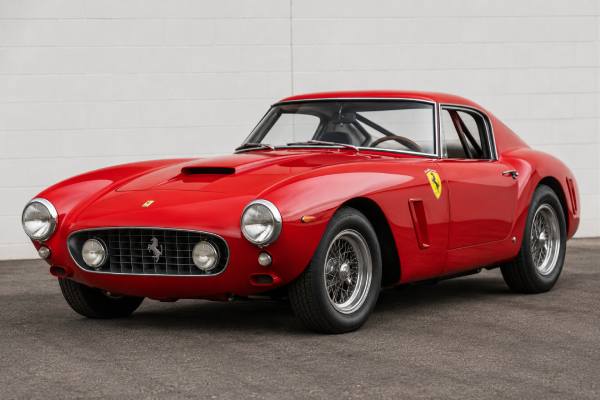
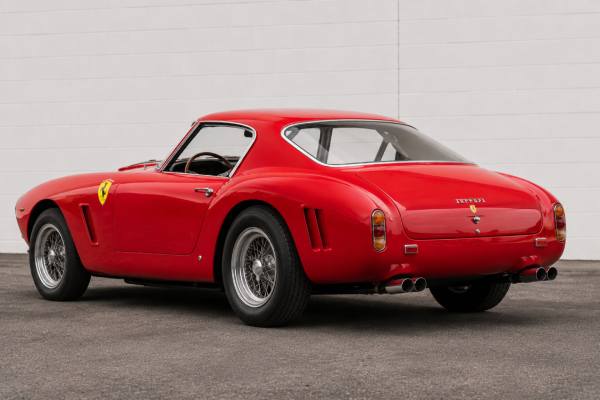
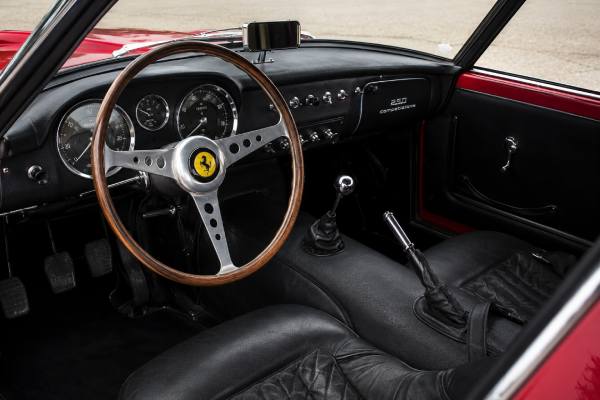
The Ferrari 250 GT Berlinetta passo corto Competizione, built on the Tipo 539 short-wheelbase chassis and powered by the Tipo 168 3.0-liter Colombo V12, is one of Ferrari’s defining front-engine GT racers of 1959–1962. Often called the 250 GT SWB, it shortened the earlier long-wheelbase Tour de France formula, added sharper handling, and paired a beautifully compact Pininfarina shape with Scaglietti coachwork and serious endurance-racing hardware.
In competition form, the SWB Berlinetta sits between the earlier 250 GT LWB “Tour de France” and the later 250 GTO. That position matters. It was not a pure prototype, and it was not merely a road car with racing paint. It was a dual-purpose Ferrari GT that could run at Le Mans, the Tour de France Automobile, Sebring, Goodwood, or Nassau, then still make sense as a fast road berlinetta. Today, collectors search for it because the best examples combine Ferrari Classiche-level documentation, period race history, alloy coachwork, matching-number mechanical components, and one of the most usable classic Ferrari driving experiences.
Quick Take
The 250 GT Berlinetta passo corto Competizione is valuable because it distills early-1960s Ferrari into a compact, front-engine V12 GT with genuine racing credibility, disc brakes, sharp proportions, and major event eligibility. Its appeal is strongest when an example has an original Tipo 539 chassis, correct Tipo 168-family engine, documented competition specification, original alloy body, and strong provenance. The main caution is that two cars can look similar yet differ hugely in value because of body material, race history, engine identity, restoration quality, and factory documentation.
Table of Contents
- History and Collector Importance
- Tipo 168 V12, Chassis and Specs
- Production, Variants and Originality
- Design, Engineering and Special Details
- Road, Track Character and Performance
- Maintenance, Restoration and Known Risks
- Values, Buying Checks and Rivals
History and Collector Importance
The 250 GT SWB Competizione matters because it turned Ferrari’s successful long-wheelbase GT racer into a shorter, stiffer, faster-reacting berlinetta that still kept the road manners of a proper grand tourer. It became one of the most important bridges between Ferrari’s 1950s sports-racing tradition and the more specialized 250 GTO era.
Ferrari introduced the 250 GT Berlinetta passo corto at the 1959 Paris Salon. “Passo corto” means short wheelbase, and the name was literal: the new chassis used a 2,400 mm wheelbase instead of the 2,600 mm wheelbase used by earlier 250 GT Berlinettas. That 200 mm reduction helped the car rotate more eagerly and made it better suited to tight road circuits, hill climbs, and endurance events where braking stability and agility mattered as much as outright speed.
The model’s basic idea was simple but powerful. Ferrari already had a strong racing reputation with the 250 GT Berlinetta “Tour de France,” named for its success in the Tour de France Automobile. The SWB kept the front-engine V12 GT layout but refined it with a shorter tubular chassis, improved engine development, more compact bodywork, and four-wheel disc brakes. In period, that was a major step for a Ferrari production GT.
The car’s body was designed by Pininfarina and built by Scaglietti in Modena. That division of labor is part of the SWB’s identity. The shape has Pininfarina’s discipline and balance, while the construction has Scaglietti’s hand-built competition character. No two early cars are exactly identical in detail, especially when comparing steel-bodied road cars, alloy-bodied Competizione cars, and later “SEFAC Hot Rod” competition evolutions.
The SWB’s racing record is central to its status. It won GT classes and overall events across Europe and North America, including major results at Le Mans, Sebring, Goodwood, Nassau, and the Tour de France Automobile. The later 250 GTO became more famous and more valuable, but the SWB was the car that proved Ferrari could make a compact, powerful, disc-braked GT berlinetta that private teams and skilled amateur drivers could use seriously.
Its collectability rests on several layers:
- It belongs to the Ferrari 250 family, one of the most important groups in the company’s history.
- It uses the Colombo-derived 3.0-liter V12, the engine architecture that defined many early Ferraris.
- It is directly linked to the 250 GTO, both technically and historically.
- It has major event eligibility, including concours, historic rallies, and top-tier vintage racing.
- It exists in road and competition forms, giving collectors meaningful specification differences to study.
- It combines usability, beauty, rarity, and competition credibility better than almost any early-1960s GT.
For a collector, the phrase “250 GT SWB Competizione” is not just a model name. It is a shorthand for body material, engine type, build sheet specification, racing provenance, restoration standards, and Ferrari Classiche certification. That is why inspection and documentation matter so much. A correct, well-documented alloy Competizione car is a very different asset from a steel-bodied road car converted later for historic racing, even if both are real SWBs and both are desirable.
Tipo 168 V12, Chassis and Specs
The core of the 250 GT SWB Competizione is its Tipo 539 tubular chassis and Tipo 168-family 3.0-liter V12. In period racing specification, the engine was commonly rated around 280 hp, though exact output depends on year, carburetion, camshaft specification, compression ratio, exhaust, and whether the car is an early Competizione or later “Hot Rod” development.
| Item | Specification |
|---|---|
| Production period | 1959–1962 for the main SWB Berlinetta period |
| Chassis type | Tipo 539 tubular steel chassis |
| Body style | Two-seat berlinetta, steel or aluminum depending on version |
| Coachwork | Pininfarina design, Scaglietti construction |
| Engine family | Tipo 168 Colombo-derived 60-degree V12 |
| Displacement | 2,953 cc |
| Bore x stroke | 73 mm x 58.8 mm |
| Valve gear | Single overhead camshaft per bank, two valves per cylinder |
| Induction | Weber carburetors; specification varies by road, competition, and period setup |
| Competition output | About 280 hp at 7,000 rpm in common Competizione specification |
| Transmission | Four-speed manual, rear-wheel drive |
| Front suspension | Independent wishbones with coil springs and hydraulic dampers |
| Rear suspension | Live rear axle with semi-elliptic leaf springs, radius arms, and dampers |
| Brakes | Four-wheel disc brakes, commonly Dunlop on competition cars |
| Wheelbase | 2,400 mm |
| Dry weight | About 960 kg for lightweight specification |
| Top speed | Commonly quoted up to about 268 km/h, depending on gearing and specification |
The “250” name comes from the approximate displacement of each cylinder: just under 250 cc per cylinder across 12 cylinders. The engine is compact, oversquare, and eager to rev. It is not a lazy large-capacity V12. Its character comes from light reciprocating parts, carburetor response, cam timing, and the way a small Ferrari V12 builds power above the midrange.
The Tipo 168 label is important, but buyers should not treat it as a single fixed specification. Ferrari’s 250 GT engines evolved constantly, and period build sheets can show different carburetors, camshafts, compression ratios, sumps, distributors, exhaust systems, and internal-number details. Competition cars may have had Weber 40 DCL6 or 46 DCF-type carburetors, while road cars usually had milder induction and cam timing. Later competition cars, especially the 1961 “SEFAC Hot Rod” style cars, moved closer to the 250 GTO in intensity and could produce more than the earlier 280 hp figure in the right tune.
The chassis is conventional in layout but extremely effective. A welded tubular steel frame carries the engine ahead of the cabin, with drive sent to the rear axle through a manual gearbox and propshaft. The rear axle is live, which sounds crude beside later independent rear suspension, but Ferrari knew how to make it work. The short wheelbase, good weight distribution, limited-slip differential on many competition cars, and careful spring and damper tuning gave the SWB its famous balance.
Disc brakes were a major advantage. Earlier Ferrari GT cars used drum brakes, which could be strong when fresh but were more vulnerable to fade in long races. The SWB’s disc brakes improved stopping consistency and gave drivers more confidence during endurance events. In a car capable of roughly 150–165 mph depending on gearing and tune, repeatable braking was not a minor upgrade.
Production, Variants and Originality
The SWB Berlinetta was built in small numbers, and exact totals vary slightly by source because Ferrari production in this period did not follow modern model-year clarity. A commonly used figure is about 165 SWB Berlinettas across steel-bodied road cars and aluminum-bodied competition cars, with a smaller subset built as true Competizione examples.
The broad split is easy to understand, but the details are not. There were steel-bodied road cars, alloy-bodied competition cars, interim and prototype-related details, early competition cars, later competition evolutions, left- and right-hand-drive examples, and cars that were modified during period use. Many surviving cars also have complex restoration histories.
Road cars versus Competizione cars
The steel-bodied road cars are often called Lusso or street-specification SWBs, though “Lusso” can be confusing because Ferrari later built the separate 250 GT Berlinetta Lusso. SWB road cars typically have a more comfortable trim level, heavier bodywork, milder engine specification, and fewer competition details.
Competizione cars were built for racing and usually had aluminum bodywork, lighter trim, more aggressive engines, different gearing, competition exhausts, and details such as outside fuel fillers, roll hoops on some cars, lightweight windows, or racing instrumentation depending on year and owner requirements.
The most valuable cars are not simply “alloy” cars in a general sense. Value depends on whether the car was originally built as a competition car, whether it retains its original chassis, engine, rear axle, gearbox or correct-type gearbox, original body, and documented build-sheet configuration.
Early cars and later development
Early 1960 competition cars can have different features from later 1961 cars. The later SWB Competizione “SEFAC Hot Rod” cars are especially prized because they represent the most developed version of the SWB formula before the 250 GTO took over. These cars received lighter construction and more highly tuned engines, and they are often treated almost as a technical stepping stone to the GTO.
Important identification and desirability factors include:
- Original chassis number and continuous identity.
- Original or correct-type Tipo 168-family engine.
- Factory build-sheet specification.
- Alloy versus steel body as originally delivered.
- Evidence of period race entries and results.
- Original body panels and absence of major unrecorded accident repair.
- Ferrari Classiche certification and supporting expert reports.
- Known ownership history from new.
- Period photographs matching body details and paint.
- Correct interior, dashboard, gauges, fuel-filler position, vents, and competition equipment.
Documentation that changes value
For a car at this level, paperwork is not a side issue. A good file may include Ferrari factory build sheets, Ferrari Classiche Red Book certification, Marcel Massini or marque-specialist history reports, old race entries, period photographs, correspondence, restoration invoices, engine rebuild records, gearbox and axle documentation, and concours judging sheets.
A buyer should treat “matching numbers” carefully. The strongest case is original chassis, original engine, original body, and documented continuity from new. A correct-type replacement engine may still be acceptable for some buyers, especially if period racing history explains the change, but it will usually affect value. A car restored from scattered components, or one with unclear identity, sits in a different risk category.
Design, Engineering and Special Details
The 250 GT SWB looks simple because the design is so well resolved, not because it is plain. Its short hood, compact cabin, clean tail, small grille opening, and muscular wheel arches turn Ferrari’s earlier 250 GT Berlinetta language into a tighter and more purposeful shape.
The Pininfarina design avoids decoration. The nose is low and rounded, the roofline is compact, and the rear haunches have enough volume to suggest power without looking heavy. Scaglietti’s hand-built execution gives the car its human quality. Panel gaps, vent details, window frames, fuel fillers, and small trim pieces can vary between cars, especially across competition examples.
The SWB’s beauty comes from function. The short wheelbase reduces visual length, but the car still has enough hood to communicate a front-mounted V12. The cabin is set back, giving the driver a clear sense of sitting near the rear axle compared with a modern front-engine car. The tail is short and efficient. Cooling openings are purposeful, not theatrical.
Body construction
Steel-bodied cars are generally heavier and more road-oriented. Alloy-bodied Competizione cars are lighter and more valuable, but they are also more vulnerable to poor repair. Aluminum panels can be reshaped, replaced, patched, or recreated so well that casual inspection means little. Originality must be judged through physical inspection and documentation together.
A proper inspection should look at:
- Inner panel surfaces and tool marks.
- Welds, seams, and panel edges.
- Evidence of old race damage.
- Alignment of doors, bonnet, and rear hatch.
- Correct body-number markings where present.
- Period photographs showing vents, lamps, fillers, and trim.
- Signs of over-restoration that erase original construction evidence.
Engine packaging and sound
The Colombo V12 sits forward under a long bonnet, but the car is compact enough that the engine dominates the experience. In competition trim, carburetor noise, valve-train sound, exhaust resonance, and mechanical whir become part of the cabin environment. The sound is higher, harder, and more metallic than a later large V12 Ferrari. It rewards revs and clean throttle work.
The exhaust note depends heavily on specification. A mild road car can sound rich and smooth; a competition car with correct exhaust, camshaft, and carburetor setup is sharper and more urgent. Buyers should be wary of cars made artificially loud for modern events if the setup harms drivability, originality, or engine longevity.
Engineering philosophy
The SWB is not advanced in the modern sense. It has no independent rear suspension, no five- or six-speed gearbox, no electronic support, and no aerodynamic devices. Its engineering achievement is integration. Ferrari balanced power, size, weight, braking, steering feel, and endurance reliability in a package that a skilled driver could use hard for hours.
That balance explains why the car has remained desirable. Some classics are beautiful but fragile to drive. Others are important but difficult on the road. A properly sorted 250 GT SWB Competizione can still feel coherent: light enough, powerful enough, communicative enough, and robust enough when maintained by specialists.
Road, Track Character and Performance
A healthy 250 GT SWB Competizione feels alert, mechanical, and compact rather than brutally fast by modern supercar standards. Its performance comes from throttle response, low weight, gearing, braking confidence, and the way the chassis communicates grip before it lets go.
The engine is the heart of the experience. Below the power band, it should pull cleanly if the carburetors are correctly set and the ignition is healthy. As revs rise, the V12 becomes sharper and more urgent. Unlike a turbocharged modern engine, there is no sudden boost event. The power builds in a clean, linear way, which helps the driver balance the car on throttle.
The gearbox requires respect. A well-rebuilt four-speed Ferrari transmission can feel precise and satisfying, but it is not a modern synchromesh unit that tolerates rushed, careless shifts. The best drivers pause slightly, match revs, and let oil temperature come up before pushing. A weak second-gear synchro, noisy bearings, or a reluctant shift when warm can point to expensive work.
Steering is one of the SWB’s pleasures. At parking speed it is heavy, especially on period-type tires. Once moving, it becomes direct and loaded with information. The short wheelbase makes the car feel more agile than earlier long-wheelbase 250 GTs, but it also means setup matters. Poor alignment, tired dampers, old tires, or incorrect ride height can make the car nervous.
The brakes are strong for the period, especially compared with drums, but they still require classic-car expectations. Pedal effort, pad choice, fluid condition, disc condition, and cooling all affect confidence. On track, owners must treat the braking system as a consumable, not a museum piece.
Period performance figures vary, but a competition-spec car with around 280 hp and low weight is genuinely quick. A top speed in the 250–268 km/h range is often quoted depending on gearing and setup. Acceleration is strong rather than violent. The car’s real speed is in its ability to brake, turn, and maintain rhythm.
What separates a great car from a tired one
A freshly sorted SWB feels cohesive. The engine starts cleanly when warm, carburetion is crisp, temperatures are controlled, the gearbox shifts cleanly, the steering tracks straight, the brakes pull evenly, and the rear axle feels planted rather than vague.
A tired car may still look valuable but drive poorly. Warning signs include:
- Flat spots through the carburetors.
- Excessive smoke after overrun or under load.
- High oil consumption.
- Gear clash once warm.
- Brake vibration or pulling.
- Rear axle noise on overrun.
- Wandering at speed.
- Harshness from old suspension joints.
- Heat soak in traffic.
- Poor hot starting.
A good SWB is not effortless. It needs warm-up, mechanical sympathy, and regular use. But when right, it feels like a racing GT rather than a fragile antique.
Maintenance, Restoration and Known Risks
Ownership risk on a 250 GT SWB Competizione is not about ordinary reliability scores. The real issues are originality, correct specialist work, corrosion or accident history, engine and gearbox condition, body authenticity, and whether old restorations hide expensive problems.
The Colombo V12 is durable when built correctly and serviced by people who understand it. It is also costly to repair badly. Carburetors, ignition, cam timing, valve clearances, oiling, cooling, and fuel quality all matter. A car that sits for long periods may develop problems even if mileage is low. Old fuel, dried seals, corroded tanks, tired hoses, weak ignition components, and sticky carburetor parts can make a valuable car unreliable.
Common maintenance and restoration areas include:
- Fuel tank cleaning or repair.
- Carburetor rebuilding and synchronization.
- Ignition distributor and coil service.
- Cooling-system flushing, radiator repair, and hose replacement.
- Oil leaks from engine, gearbox, and rear axle.
- Clutch wear and flywheel condition.
- Gearbox synchros, bearings, and selector wear.
- Brake caliper, disc, line, and master-cylinder condition.
- Suspension bushings, dampers, springs, and wheel bearings.
- Steering box wear and linkage play.
- Exhaust cracking or incorrect replacement systems.
- Wiring insulation, grounding, and charging issues.
Corrosion and accident repair
Rust can affect tubular chassis members, floors, sills, suspension pickup areas, and hidden steel structures, even when the outer body is aluminum. Competition history often means accident history. That is not automatically bad; many great cars were damaged and repaired in period. The problem is undisclosed damage, poor alignment, weak structural repairs, or modern recreation of too much original material.
A specialist inspection should include chassis measurement, metal thickness assessment where appropriate, close review of suspension pickup points, and comparison with period records. On a car worth millions, a normal pre-purchase inspection is not enough. The inspection team should include marque historians, Ferrari mechanical specialists, and body experts familiar with Scaglietti construction.
Restoration quality
A concours restoration can increase value if it is accurate, documented, and respectful of original material. It can reduce value if it erases evidence, replaces original panels unnecessarily, uses incorrect trim, changes colors without documentation, or creates a car that is more symmetrical than Scaglietti ever built it.
Restoration invoices matter, but they do not prove correctness by themselves. A buyer should ask what was restored, what was replaced, what was preserved, who did the work, and whether the finished car matches its factory and period record.
Originality versus usability is a constant tradeoff. Some owners quietly fit modern safety equipment for historic racing, improved cooling for events, or hidden electrical upgrades for reliability. These can be sensible if reversible and documented. Permanent modifications, incorrect engine specification, or speculative “competition upgrades” are more risky.
Values, Buying Checks and Rivals
The 250 GT SWB Competizione sits in the upper tier of collectible Ferraris, below the most valuable 250 GTOs but above most production 250 GT road cars. Market value depends less on a generic price guide and more on the exact car: alloy or steel body, competition history, originality, certification, restoration quality, and whether major numbers still match.
Public results for SWB Berlinettas have commonly been in the multi-million-dollar range, with top competition examples moving well beyond ordinary classic-car valuation logic. A standard steel-bodied SWB, an alloy Competizione, and a famous race-history car should not be grouped together casually. The market pays for identity.
The biggest value drivers are:
- Original factory Competizione build.
- Alloy body originally fitted to the car.
- Matching-number chassis and engine.
- Correct gearbox and rear axle.
- Ferrari Classiche certification.
- Period race entries at major events.
- Known drivers, teams, or important ownership.
- Original colors or desirable documented period colors.
- High-quality restoration by respected specialists.
- Long-term continuous history with no identity gaps.
Buyer inspection priorities
A serious buyer should start with the paper trail, then use the car to test the paperwork. The key question is not “is it a real SWB?” but “what exactly is this SWB, and how much of its important identity remains?”
| Area | What to verify | Why it matters |
|---|---|---|
| Identity | Chassis number, engine number, internal numbers, body evidence | Defines authenticity and value |
| Factory records | Build sheets, original specification, delivery color, first owner | Separates original specification from later changes |
| Competition history | Race entries, results, photos, team records | Can transform desirability and price |
| Body | Original panels, repair history, alloy versus steel construction | Major originality and restoration-cost factor |
| Engine | Correct Tipo 168-family specification, condition, rebuild history | Expensive and central to driving character |
| Gearbox and axle | Original or correct-type units, ratios, condition | Affects value, usability, and event suitability |
| Chassis condition | Alignment, corrosion, crash repair, pickup points | Structural integrity and authenticity |
| Certification | Ferrari Classiche Red Book and expert reports | Helpful, but should still be checked independently |
| Restoration file | Invoices, photos, specialist names, preserved parts | Shows whether work improved or compromised the car |
Examples to seek are cars with clear identity, original or correct major components, strong documentation, and transparent restoration history. Examples to avoid are cars with unclear chassis identity, unexplained engine changes, heavy undocumented body reconstruction, vague “competition upgrade” claims, or missing period records.
Rivals and alternatives
Closest Ferrari relatives include the 250 GT LWB “Tour de France,” 250 GT California Spider SWB, 250 GTO, and 250 GT Berlinetta Lusso. The Tour de France is earlier and more 1950s in feel. The California Spider SWB is more glamorous and open, often more expensive in top specification, but less focused as a berlinetta. The GTO is the direct racing successor and sits in a different value universe. The Lusso is more refined and beautiful in its own way, but it lacks the same competition identity.
Period rivals include the Aston Martin DB4 GT and DB4 GT Zagato, Jaguar E-Type lightweight and competition variants, Maserati 3500 GT competition-related cars, and certain Porsche 356 Carrera GT models. The Aston Martin DB4 GT is the closest in concept: short-wheelbase, front-engine, high-performance, and collectible. The DB4 GT Zagato adds rarity and design appeal, but the Ferrari generally carries broader 250-series mythology and a deeper endurance-racing connection.
For long-term collectability, the SWB Competizione remains one of the safest names in the classic Ferrari world, but “safe” does not mean simple. The right car may be a museum-quality asset and a thrilling event machine. The wrong car may absorb enormous money while never achieving top-tier status. At this level, the buying decision is less about finding a bargain and more about avoiding an identity, originality, or restoration mistake that cannot be undone.
References
- Ferrari 250 GT Berlinetta passo corto (1959) 1959 (Manufacturer Specifications)
- FIA Historic Database 1960 (Homologation Database)
- 1960 Ferrari 250 GT SWB Berlinetta Competizione by Scaglietti | Paris 2024 | RM Sotheby’s 2024 (Auction and Provenance)
- 1961 Ferrari 250 GT Berlinetta SWB Market – CLASSIC.COM 2026 (Market Data)
- 1962 Ferrari 250 GT SWB Berlinetta by Scaglietti 1962 (Model and Production Context)
Disclaimer
This article is for informational purposes only and is not a substitute for professional diagnosis, inspection, repair, restoration, valuation, or legal advice. Specifications, torque values, service intervals, procedures, originality details, and component applicability can vary by chassis number, market, period modification, and individual vehicle history. Owners and buyers should verify all details against official Ferrari documentation, Ferrari Classiche records, factory build sheets, and qualified marque specialists before making repair, restoration, purchase, or investment decisions.
If this guide was useful, please consider sharing it on Facebook, X/Twitter, or your favorite enthusiast community to support our work.