
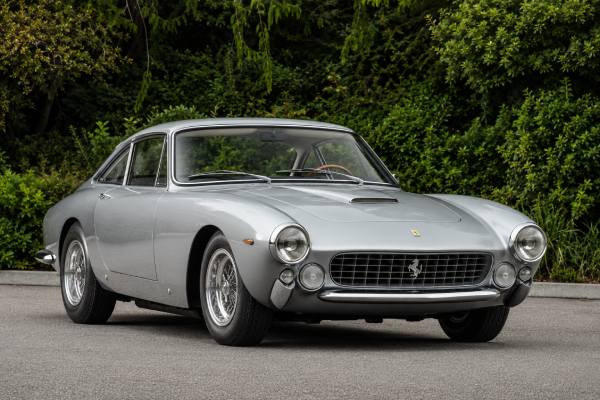
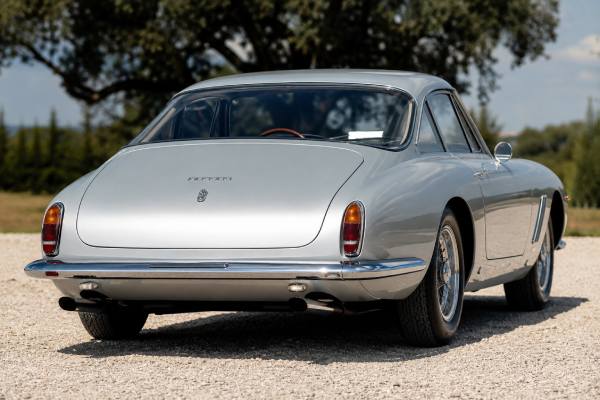
The Ferrari 250 GT Berlinetta passo corto Lusso is the road-focused version of Ferrari’s short-wheelbase 250 GT Berlinetta, built from 1960 to 1962 with a Tipo 539 chassis and a 3.0-liter Tipo 168 Colombo V12 in roughly 240 hp form. It sits in a narrow but important place between the harder competition 250 GT SWB and Ferrari’s more formal grand tourers of the same period. The name “passo corto” means short wheelbase, and the 2,400 mm chassis is central to the car’s identity: compact, responsive, elegant, and far more serious than an ordinary luxury coupe.
This Lusso specification was not the later 250 GT/L Lusso of 1962–1964, although the names are often confused. It was the more comfortable steel-bodied SWB Berlinetta, normally with finer interior trim, bumpers, road equipment, and a more tractable V12 tune than the lightweight Competizione cars. For collectors, the car matters because it combines Pininfarina design, Scaglietti construction, Ferrari’s great Colombo V12, meaningful motorsport DNA, and real usability. It is also a car where originality, documentation, and exact specification can change value by millions.
Quick Take
The 250 GT Berlinetta passo corto Lusso is one of the most usable and desirable roadgoing Enzo-era Ferraris because it keeps the SWB’s compact chassis, disc brakes, and competition-bred V12 character while adding a more civilized cabin and steel road bodywork. Its appeal is the blend: it feels close to the racing cars without being as raw, rare, fragile, or compromised as a pure Competizione. The main caution is that no two examples should be judged casually. Body material, engine type, original colors, Ferrari Classiche certification, past accident damage, and old competition-style conversions all have major effects on authenticity, driving quality, and market value.
Table of Contents
- History and Collector Significance
- Tipo 168 V12 and Key Specifications
- Production, Variants, and Factory Details
- Design, Engineering, and Special Features
- Driving Experience and Performance Character
- Reliability, Maintenance, and Restoration Risk
- Market Value, Buying Guide, and Rivals
History and Collector Significance
The 250 GT Berlinetta passo corto Lusso matters because it is the roadgoing side of one of Ferrari’s greatest dual-purpose GT platforms. It arrived when Ferrari could still build a car that looked refined on the road, ran hard in competition, and shared much of its basic engineering with the cars that made the company feared at endurance races.
Ferrari introduced the short-wheelbase 250 GT Berlinetta at the end of the 1950s as the successor to the longer-wheelbase 250 GT Berlinetta, often known today as the Tour de France. The older car had already proved that a front-engined Ferrari GT could be both beautiful and successful in serious road racing. The passo corto formula sharpened that idea. The wheelbase dropped from 2,600 mm to 2,400 mm, the chassis became more agile, and four-wheel disc brakes gave the car much stronger stopping power than many earlier Ferraris.
The Berlinetta passo corto was shown publicly around the 1959 Paris Salon period and reached customers from 1960. It was designed by Pininfarina and bodied mainly by Scaglietti in Modena. That partnership gave the car its lasting identity: clean Pininfarina proportions, muscular but not overdone surfaces, and hand-built Scaglietti detail work.
The Lusso version was aimed at private road customers who wanted the SWB’s speed, sound, and prestige without the full stripped-out competition specification. “Lusso” means luxury, but in this context it should not be read as soft. The car was still small, loud, carbureted, manual, rear-drive, and mechanically direct. Its luxury was relative: better trim, road seats, bumpers, more finished cabin materials, and usually a steel body with aluminum opening panels rather than a full lightweight alloy competition shell.
The model also has an important motorsport shadow. The SWB platform won major GT events and helped bridge the line between the 250 GT Tour de France and the 250 GTO. Collectors care about the Lusso because it carries much of that lineage while often being less extreme than a Competizione. In the real world, that makes a properly sorted Lusso one of the most enjoyable ways to experience an early 1960s Ferrari V12.
Its present-day significance rests on several pillars:
- Short-wheelbase chassis balance — the 2,400 mm platform gives the car a more compact, lively feel than earlier long-wheelbase 250 GT Berlinettas.
- Colombo V12 character — the Tipo 168 engine is smooth, eager, and mechanical, with a sound that defines early Ferrari road cars.
- Pininfarina and Scaglietti craftsmanship — the design is restrained, but every line has purpose.
- Road and race connection — the Lusso is not merely a luxury coupe; it is a road version of a platform with serious GT credibility.
- Collector sensitivity — originality, matching numbers, factory colors, and restoration quality carry exceptional weight.
The car’s reputation today is not based only on rarity. It is based on the way all the right Ferrari ingredients meet in one machine: a front-mounted V12, a compact chassis, hand-built bodywork, disc brakes, elegant design, and a direct link to the company’s most celebrated GT era.
Tipo 168 V12 and Key Specifications
The Lusso version used Ferrari’s 3.0-liter Colombo V12 in road tune, usually quoted at about 240 hp. The important point is not just output, but the way the Tipo 168 engine, short chassis, manual gearbox, and disc brakes work together to make the car feel light, alert, and mechanical.
| Item | Specification |
|---|---|
| Production focus | Roadgoing Lusso specification of the 250 GT Berlinetta passo corto |
| Production years covered | 1960–1962 |
| Chassis type | Tipo 539 tubular steel chassis, later developments depending on year |
| Body style | Two-seat berlinetta coupe |
| Body construction | Usually steel bodywork with aluminum doors, bonnet, and boot lid on road Lusso cars |
| Engine | Tipo 168 Colombo 60-degree V12 |
| Displacement | 2,953.21 cc |
| Bore x stroke | 73 mm x 58.8 mm |
| Valve gear | Single overhead camshaft per bank, two valves per cylinder |
| Fuel system | Triple twin-choke Weber carburetors, exact type depending on specification |
| Power | About 240 hp in Lusso road tune |
| Transmission | Four-speed manual with reverse |
| Drivetrain | Front engine, rear-wheel drive |
| Front suspension | Independent wishbones, coil springs, hydraulic dampers |
| Rear suspension | Live axle with leaf springs, radius arms, and dampers |
| Brakes | Four-wheel disc brakes |
| Wheelbase | 2,400 mm |
| Top speed | Usually around 240 km/h in road specification, with period figures varying by gearing and tune |
The Colombo V12 is an aluminum-alloy engine family that defined Ferrari’s early road and racing cars. In the 250 series, the model name refers to the approximate displacement of each cylinder, not the total engine size. Twelve cylinders of roughly 250 cc each give the familiar 3.0-liter capacity.
In Lusso trim, the engine was not as sharp as the strongest competition versions. That is part of the car’s appeal. The road engine gives up some peak aggression for cleaner road manners, a broader operating range, and better long-distance usability. A well-tuned car should feel crisp rather than peaky. The triple Weber setup needs correct synchronization, clean fuel delivery, and proper ignition health, but when sorted it gives the engine its quick response and layered induction sound.
The chassis is as important as the engine. The short 2,400 mm wheelbase makes the car more responsive than the earlier long-wheelbase Berlinettas, but the suspension remains period-correct and mechanical. The front is independent, while the rear uses a live axle. That layout can work beautifully when the geometry, dampers, springs, tires, and bushings are correct. It can also feel nervous, harsh, or vague if the car has been poorly restored or set up.
The disc brakes were a major advantage in period. They do not feel like modern assisted brakes, and they do not come with ABS, but they give the SWB a level of braking confidence that earlier drum-braked Ferraris cannot match. Brake condition matters greatly, especially on a car that may be driven in events or mountain tours.
Period performance figures vary because gearing, body weight, carburetion, engine tune, and test method varied. A road Lusso is best understood as a fast 1960s GT rather than a modern supercar. Its performance comes from low weight, clean aerodynamics, torque, gearing, and response, not from huge displacement or electronic traction systems.
Production, Variants, and Factory Details
The 250 GT SWB family was built in small numbers, and the Lusso version must be judged car by car rather than by a simple brochure description. Depending on how prototypes, special-bodied cars, road cars, and competition cars are counted, total SWB production is usually quoted in the mid-160s to mid-170s.
The main split is between roadgoing Lusso cars and competition-focused cars. That sounds simple, but Ferrari did not build these cars with modern production-line rigidity. Specifications could overlap. Some steel-bodied cars received more aggressive mechanical parts. Some competition-style cars acquired more comfortable trim. Some cars were later modified by owners, restorers, or racers. That makes documentation essential.
Road Lusso versus Competizione
The typical Lusso had a more complete interior, bumpers, road lighting, wind-up or more finished window arrangements depending on the car, and a steel body with aluminum opening panels. It was meant to be fast and usable on the road.
The Competizione cars were lighter and more focused. They often used more aluminum bodywork, lighter trim, sliding windows, simplified cabins, and higher-output engines. The later “SEFAC Hot Rod” style cars took the competition idea further with more power and lower weight. These cars sit in a different market and should not be confused with a normal Lusso, even though the family resemblance is close.
Year and detail changes
The SWB evolved during production. Early and late cars can differ in small but valuable ways. Changes may include window shape, dashboard layout, ventilation details, side-marker treatment, fuel-filler position, roof or rear-window venting, and trim details. Late cars often have a more developed look and may include running improvements, but early cars can be highly prized when original and well documented.
Important identification and originality areas include:
- chassis number and its relationship to factory records
- engine number and internal engine stamping
- gearbox and differential numbers
- original body number and coachwork details
- factory color and trim specification
- original delivery market and first owner
- period competition history, if any
- restoration history and whether work was reversible
- Ferrari Classiche certification and any noted deviations
Factory documentation is central. A proper car should have a clear chain of ownership, period records where possible, restoration invoices, photographs, expert reports, and ideally Ferrari Classiche certification. The certification does not replace a full inspection, but it is a major authenticity marker because it compares the car against factory records.
Colors, interiors, and special orders
Many cars have been repainted, retrimmed, or converted over the decades. Red is common in the market, but not every car was born red. Original shades such as silver, grey, blue, green, or darker period colors can be very desirable when documented. The same applies to interior material and color. Connolly or Vaumol-style leather, period seat patterns, correct instruments, proper switchgear, and correct carpets all matter.
Special-order details can add interest, but only if they are documented. A claimed unique color, special seats, unusual show-car history, or celebrity connection should be backed by factory records, period photographs, invoices, or marque historian research. In this market, stories without documentation are not enough.
Design, Engineering, and Special Features
The car’s special quality comes from restraint. The 250 GT Berlinetta passo corto Lusso does not need exaggerated vents, wings, or decorative drama because its proportions, stance, and mechanical layout do the work.
Pininfarina’s design gives the SWB a short, purposeful body over a compact chassis. The bonnet is long enough to announce the V12, but the cabin is not pushed too far back. The roofline is clean, the rear is tight, and the surfaces are controlled. Compared with some later grand tourers, it looks smaller, denser, and more athletic.
Scaglietti’s construction gives each car a hand-built character. Panel fit, door shut, bonnet shape, and minor body details can vary, and this is part of the model’s reality. A good restoration should not erase the car’s identity by making it look like a modern computer-stamped shell. At the same time, “hand-built” should not be used as an excuse for poor panel alignment, uneven gaps caused by damage, or badly repaired structure.
The body engineering is a mix of beauty and purpose. The low nose helps cooling air enter the front, the cabin glass gives good forward visibility, and the fast rear shape keeps the car visually light. Bumpers on Lusso cars soften the appearance compared with competition versions, but they also help identify the road intent of the specification.
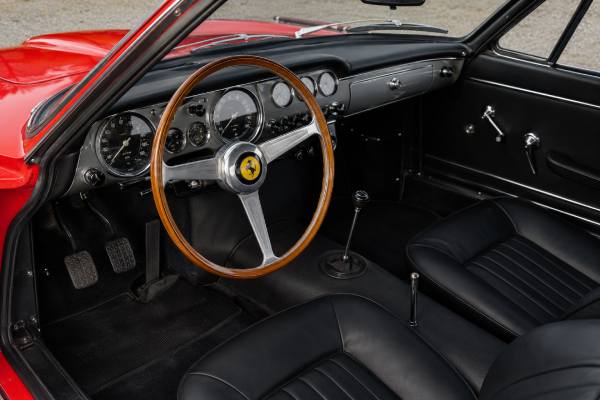
Inside, the Lusso is still simple by modern standards. The driver faces large analog instruments, a slim steering wheel, a manual gear lever, and a cabin dominated by leather, metal, glass, and engine noise rather than insulation. The driving position can feel upright and close, but that is part of the car’s charm. It was built before the age of wide consoles, thick pillars, electronic displays, or deep crash structures.
The most important engineering feature is the balance between road trim and competition hardware. The car has:
- a compact tubular chassis
- a front-mounted V12 placed behind a long bonnet
- rear-wheel drive
- a manual gearbox
- four-wheel disc brakes
- light construction by modern standards
- a live rear axle that rewards smooth driving
- carburetors that make tuning quality obvious
Sound is a major part of the experience. The Colombo V12 has a lighter, more metallic voice than later large-capacity Ferrari engines. At low speed it can sound busy and mechanical. Under load it becomes hard-edged, layered, and urgent, especially when the carburetors and exhaust are correct. This is not a quiet luxury GT. It is a refined early Ferrari, and that still means heat, oil smells, gear whine, induction noise, and a cabin that tells you what the machine is doing.
Driving Experience and Performance Character
A sorted 250 GT Berlinetta passo corto Lusso feels fast because it is compact, responsive, and alive, not because it overwhelms the driver with modern grip. The best examples reward timing, mechanical sympathy, and smooth inputs.
The engine needs proper warm-up. A cold Colombo V12 should not be rushed. Oil temperature, carburetor behavior, and ignition condition all affect how cleanly the car responds. Once warm, the engine should pull cleanly from moderate rpm and become more urgent as revs rise. The road tune gives useful flexibility, but it is still a high-quality Italian V12 from the early 1960s, not a lazy large-displacement engine.
The gearbox is part of the ritual. A good four-speed Ferrari gearbox should feel mechanical and deliberate, with clean engagement when the oil is warm and the linkage is correctly adjusted. Fast, careless shifts can be expensive. A skilled driver lets the car settle, uses the clutch properly, and treats the driveline with respect.
The steering is usually heavy at parking speed and far more natural once moving. There is no modern assistance to hide tire condition, alignment, or worn suspension joints. That makes a good car deeply satisfying and a tired car disappointing. When set up properly, the front end feels accurate, and the short wheelbase makes the car eager to change direction.
The rear live axle gives the SWB a period feel. It can be stable and communicative on a smooth road, but it will not absorb broken surfaces like a modern independent rear suspension. The car prefers flowing roads and measured inputs. Lift suddenly mid-corner or drive roughly on old tires, and it will remind you that this is a powerful, short-wheelbase, rear-drive car from another era.
Braking is one of the SWB’s strengths. The disc setup gives more confidence than many earlier classic Ferraris, but the system still depends on condition, fluid, pads, calipers, hoses, and adjustment. There is no electronic safety net. Long descents or event use demand a braking system that has been inspected by someone who knows the model.
As a road car, the Lusso is more approachable than a competition SWB. It has better trim, a more finished cabin, and a less frantic mechanical mood. Yet it is not casual transportation. Cabin heat, noise, fuel smell, firm controls, and the need for frequent specialist attention are all part of ownership. The difference between a freshly sorted car and one that has merely been polished for sale can be enormous.
Performance should be read in context. A top speed around 150 mph was serious for the early 1960s, and the car’s acceleration remains lively today. But the real performance pleasure is the way the engine, steering, brakes, and chassis talk to the driver at legal or near-legal speeds. A modern supercar is much faster. Very few modern cars are as transparent.
Reliability, Maintenance, and Restoration Risk
Reliability depends less on the model’s basic design than on the quality of care, restoration, and setup. A properly maintained 250 GT SWB Lusso can be a dependable event car, but a neglected or poorly restored one can consume huge sums very quickly.
The Colombo V12 is strong when built and serviced correctly, but it is not tolerant of casual maintenance. Carburetor synchronization, valve adjustment, ignition timing, cooling health, oil pressure, fuel delivery, and correct warm-up habits matter. A car that runs rich, overheats, fouls plugs, or idles badly may need simple tuning, or it may be hiding deeper issues.
Common mechanical inspection areas include:
- oil leaks from engine, gearbox, and differential
- weak oil pressure when hot
- poor carburetor balance or worn throttle shafts
- incorrect ignition components or timing
- overheating in traffic
- tired water pump, radiator, hoses, or fan setup
- worn clutch or noisy release bearing
- gearbox synchro wear
- differential noise or incorrect ratios
- brake caliper leaks and old flexible hoses
- worn suspension bushings, kingpins, and dampers
- cracked or loose Borrani wire wheels
- worn hubs, splines, and knock-offs
Corrosion is a major issue on steel-bodied Lusso cars. Even valuable examples can hide old repairs under paint, filler, and underseal. Rust-prone areas include sills, floors, lower doors, wheel arches, boot floors, battery areas, bulkheads, lower wings, and areas around glass. The tubular chassis also needs careful inspection for corrosion, poor repairs, distortion, and crash damage.
Accident history is especially important. Many SWBs were driven hard, raced, modified, or restored at times when values were far lower. A chassis that has been bent and repaired may still be acceptable if the work is known, documented, and expertly done. Hidden damage is a different matter. Buyers should insist on lift inspection, measurement, paint-depth review, underside photography, and expert evaluation of welds, tubes, suspension pickup points, and body structure.
Restoration quality can make or break the car. A poor restoration may look shiny but contain incorrect materials, wrong stitching, modernized wiring, inaccurate instruments, non-period hardware, badly shaped panels, or mechanical shortcuts. An excellent restoration respects original methods while making the car safe and usable.
Originality is a constant tradeoff. Some upgrades can improve usability, such as discreet cooling improvements or careful electrical renewal, but visible modernization can hurt value. Converting a Lusso to competition style is especially sensitive. If the car was born as a road Lusso, removing trim, changing body details, fitting non-original competition parts, or altering the engine specification may make it more dramatic but less authentic.
The safest ownership approach is simple: use a recognized Ferrari 250 specialist, keep every invoice, photograph major work, avoid irreversible modifications, and verify all numbers before buying. A pre-purchase inspection should include a Ferrari historian or marque expert, not just a general classic-car mechanic.
Market Value, Buying Guide, and Rivals
The 250 GT Berlinetta passo corto Lusso sits in the top tier of collectible roadgoing Ferraris, with values shaped by authenticity more than by ordinary condition alone. A correct, documented, matching-numbers car with known history is a very different proposition from a car with missing records, heavy modifications, or uncertain body identity.
Public market data in the mid-2020s shows SWB Berlinettas trading in a multi-million-dollar range, with major auction results often above $5 million and the best or most historically important cars much higher. Broad market benchmarks can be useful, but they are only a starting point. For this model, the exact car matters more than the average.
The strongest value factors are:
- original chassis, engine, gearbox, differential, and body
- documented factory colors and trim
- Ferrari Classiche certification
- continuous ownership history
- known first owner or period show history
- documented competition history, if genuine
- high-quality restoration by respected specialists
- preserved original features
- rare but verifiable factory specification
- strong expert reports from recognized marque authorities
The biggest risks are:
- replacement engine or unclear engine identity
- rebody work not properly documented
- hidden accident damage
- corrosion covered by cosmetic restoration
- conversion from Lusso to competition appearance
- missing factory records
- incorrect interior or instruments
- poor panel shape after restoration
- weak mechanical condition despite show-quality paint
- seller claims that cannot be proven
A serious buyer should build the inspection around authenticity first and cosmetics second. Paint quality matters, but it is not the main question. The main question is whether the car is truly what it claims to be.
Buyer inspection checklist
| Area | What to verify | Why it matters |
|---|---|---|
| Identity | Chassis, engine, gearbox, differential, and body numbers | Correct identity is central to value |
| Documentation | Factory records, ownership chain, restoration files, Classiche status | Documents support provenance and market confidence |
| Body | Panel shape, corrosion, alloy panels, repair history, paint depth | Body restoration is complex and expensive |
| Chassis | Tubes, welds, alignment, suspension pickup points | Crash or corrosion damage can be costly and value-sensitive |
| Engine | Compression, leakdown, oil pressure, numbers, carburetion, cooling | V12 rebuilds require specialist skill and major budget |
| Driveline | Gearbox synchros, clutch, differential noise, axle condition | Wear can make the car unpleasant and expensive to sort |
| Interior | Seats, leather, gauges, switches, carpets, trim pattern | Incorrect details reduce authenticity |
| Road test | Warm idle, throttle response, braking, steering, temperature, noises | A static inspection cannot reveal everything |
The best examples to seek are either highly original preserved cars with honest patina and strong documents, or restorations completed by recognized Ferrari specialists with photographic evidence and correct materials. A car restored to its original colors and specification will usually be easier to understand than one repeatedly changed to suit fashion.
Cars to avoid are those with vague descriptions such as “believed original,” “competition-style,” “upgraded to GTO specification,” or “restored many years ago” without supporting records. None of those phrases is automatically bad, but each demands proof.
Closest Ferrari alternatives include the 250 GT Tour de France, the 250 GT California SWB, the later 250 GT/L Lusso, and the 275 GTB. The Tour de France feels older and more competition-rooted. The California SWB brings open-body glamour and often even higher values. The later 250 GT/L Lusso is more elegant and refined but less directly tied to the compact SWB competition platform. The 275 GTB is newer, more powerful, and more usable in some ways, but it has a different character.
Non-Ferrari rivals include the Aston Martin DB4 GT, Mercedes-Benz 300 SL Gullwing, Maserati 3500 GT, and Jaguar E-Type lightweight or competition-related cars. Each has its own appeal, but few match the Ferrari’s combination of V12 sound, small-body agility, design purity, and direct link to early 1960s GT racing.
The long-term collector outlook remains strong because the car sits at the center of Ferrari’s most admired era. Still, buyers should not treat every SWB-badged car as equal. The market rewards truth. A fully documented Lusso with correct identity, factory colors, expert restoration, and clean history will always be easier to own, insure, show, and resell than a prettier but less certain car.
References
- Ferrari 250 GT Berlinetta passo corto (1959) 2026 (Manufacturer Specifications)
- Ferrari Classiche: Certification – Ferrari.com 2026 (Certification)
- Ferrari 250 GT Berlinetta SWB Market – CLASSIC.COM 2026 (Market Data)
- 1962 Ferrari 250 GT SWB Berlinetta by Scaglietti | Monterey 2019 | RM Sotheby’s 2019 (Auction Catalogue)
- 1962 Ferrari 250 GT Berlinetta SWB No reserve 2024 (Auction Catalogue)
Disclaimer
This article is for informational purposes only and is not a substitute for professional diagnosis, inspection, repair, restoration advice, or valuation guidance. Specifications, torque values, service intervals, parts, and procedures can vary by chassis number, market, equipment, restoration history, and individual vehicle condition. Always verify details against official Ferrari documentation and consult a qualified Ferrari 250 specialist before buying, repairing, restoring, or operating the car.
If you found this guide useful, please consider sharing it on Facebook, X/Twitter, or your favorite automotive community to support our work.