
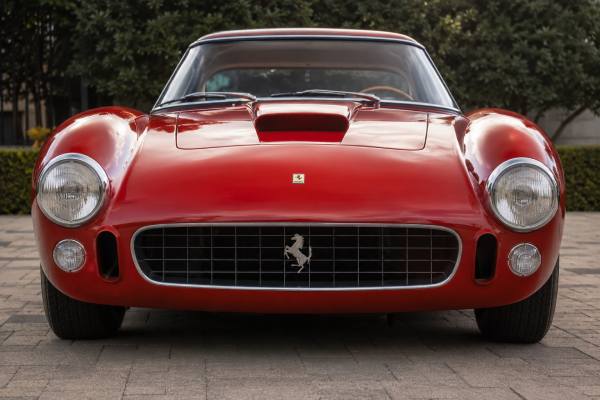
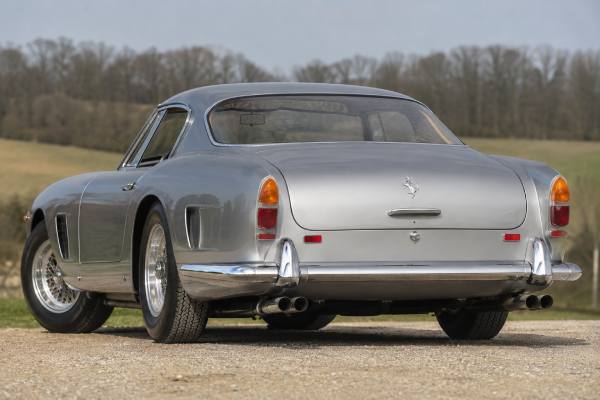
The Ferrari 250 GT Berlinetta Tour de France in early Tipo 508B / Tipo 128B form is the 1956–1957 long-wheelbase competition berlinetta that helped define Ferrari’s front-engined V12 GT legend. Built around a tubular steel chassis, lightweight Scaglietti alloy bodywork, and a 2,953 cc Colombo V12 rated at about 240 hp, it gave private and works-supported drivers a car that could win endurance events, hill climbs, and road races while still being recognizably related to Ferrari’s road-going 250 GT family.
Its importance comes from more than beauty or rarity. This is one of the cars that made the 250 name matter in competition before the short-wheelbase 250 GT Berlinetta and the 250 GTO became icons. The “Tour de France” identity came from success in the French endurance event, where the early 250 GT Berlinetta proved fast, durable, and usable over punishing mixed stages. Today, buyers and collectors search for it because every detail matters: chassis number, engine type, body style, race history, restoration quality, and whether the car still has its original mechanical and coachbuilt identity.
Quick Take
The 1956–1957 Ferrari 250 GT Berlinetta Tour de France is most appealing as a usable, race-bred V12 Ferrari from the period when Maranello was turning its 250 GT road platform into a serious GT weapon. Its aluminum Scaglietti body, 240 hp Colombo V12, long-wheelbase balance, and period competition history give it huge collector weight, but the main caution is authenticity: a car’s value depends heavily on original chassis, engine, body, documentation, competition record, and the quality of any past restoration.
Table of Contents
- Why the Early TdF Matters
- Engine, Chassis and Key Specifications
- Production, Variants and Originality Details
- Scaglietti Design and Engineering Character
- Road Feel, Performance and Race-Bred Character
- Maintenance, Restoration and Known Risks
- Market Values, Buying Checks and Rivals
Why the Early TdF Matters
The early Ferrari 250 GT Berlinetta Tour de France matters because it turned the 250 GT into a credible endurance-racing car. It was not a luxury coupe with a few sporting touches; it was a lightweight berlinetta aimed at GT-class competition and serious private entrants.
Ferrari’s 250 family was built around the idea of a compact 3.0-litre V12, with the “250” name referring to the approximate displacement of each cylinder. By the mid-1950s, the formula was becoming central to Ferrari’s future. The company needed cars that could satisfy wealthy road customers while also winning in GT racing, where production-based sports cars were gaining importance.
The 250 GT Berlinetta answered that need. It used the 2,600 mm long-wheelbase chassis layout associated with early 250 GT models, but it wore lighter, more purposeful closed bodywork. Pinin Farina shaped the design, and Scaglietti constructed the aluminum bodies. That partnership gave Ferrari a car with elegance, low weight, and enough practicality for long-distance events.
The “Tour de France” nickname came from racing, not from a separate official model line at launch. The berlinetta’s success in the Tour de France Automobile made the name stick. For collectors, that distinction still matters. The car is best understood as the competition-oriented 250 GT Berlinetta that earned the TdF identity through results.
The 1956–1957 cars sit at the beginning of the TdF story. They have special interest because they show the car in its formative shape: early coachwork, drum brakes, long-wheelbase stability, and a 240 hp V12 before later developments raised output and changed the body details. Later TdF cars gained visual and mechanical changes, including different louvre layouts and more developed engines, but the early cars have a directness that many collectors value.
Their significance also comes from what followed. The 250 GT Berlinetta TdF helped establish the path toward the 250 GT SWB and, eventually, the 250 GTO. Those later cars are often more famous, but the early TdF is one of the foundations. It proved that Ferrari could build a closed GT car that was fast enough for major events and durable enough for privateers.
For enthusiasts, the appeal is emotional as well as historical. This is a front-engined Ferrari V12 from the period when racing and road use were still closely linked. For collectors, it is a blue-chip car where provenance can matter as much as condition. A TdF with period race history, original bodywork, matching mechanical components, and strong documentation can sit among the most desirable 1950s Ferraris.
Engine, Chassis and Key Specifications
The early 250 GT Berlinetta TdF’s core specification is simple but serious: a front-mounted 3.0-litre Colombo V12, a four-speed manual gearbox, rear-wheel drive, a tubular chassis, aluminum berlinetta bodywork, and drum brakes. In 1956–1957 Tipo 128B form, the engine was commonly rated at about 240 hp at high rpm.
| Item | Specification |
|---|---|
| Model | Ferrari 250 GT Berlinetta Tour de France |
| Chassis type | Tipo 508B tubular steel frame |
| Engine type | Tipo 128B Colombo 60-degree V12 |
| Displacement | 2,953 cc |
| Bore x stroke | 73 mm x 58.8 mm |
| Induction | Triple twin-choke Weber carburetors |
| Output | About 240 hp at 7,000 rpm |
| Valve gear | Single overhead camshaft per bank, two valves per cylinder |
| Transmission | Four-speed manual |
| Drivetrain | Front engine, rear-wheel drive |
| Wheelbase | 2,600 mm |
| Body | Two-seat aluminum berlinetta by Scaglietti, designed by Pinin Farina |
| Brakes | Four-wheel hydraulic drums |
The engine is the heart of the car. The Colombo V12 is compact, light for a twelve-cylinder engine, and happy to rev. It does not deliver power like a large lazy grand-touring engine. It builds its best performance higher in the range, which suits the gearbox and the car’s competition purpose. Carburetor setup is critical because three twin-choke Webers give the engine its response, sound, and character, but they also demand correct tuning.
The chassis is a tubular steel structure rather than a monocoque. That was normal for the period and ideal for Ferrari’s low-volume, coachbuilt production. It allowed development from car to car and made it possible for Scaglietti to fit lightweight aluminum bodywork in small batches.
The front suspension used independent geometry, while the rear relied on a live axle. By modern standards, that sounds basic. In the 1950s, it was a proven racing solution. The live rear axle was strong, predictable, and easier to service in endurance use. The key is setup. A well-restored TdF feels stable and progressive; a tired or poorly rebuilt one can feel loose, harsh, or nervous.
Drum brakes are part of the early TdF experience. They can work well when properly rebuilt, correctly adjusted, and used with period expectations. They do not behave like later disc brakes, especially after repeated hard stops. Buyers should be careful with any car advertised as “upgraded,” because brake changes may improve driving confidence but can affect originality and value.
Performance figures vary because cars differed by gearing, body configuration, tune, and period measurement methods. A healthy early 240 hp car was capable of roughly 150 mph in suitable gearing, making it extremely fast for a mid-1950s GT. Acceleration depends heavily on final-drive ratio and engine tune, but the important point is not a single stopwatch number. The TdF combined high-speed stamina, light weight, strong power, and road-racing durability.
Production, Variants and Originality Details
The TdF was not a uniform mass-produced model, and that is why identification is so important. Early 1956–1957 cars can differ in body details, louvre arrangements, engine development, competition equipment, and original delivery specification.
The broad TdF family ran from 1956 into 1959, but the car covered here is the early 1956–1957 240 hp type. Within that window, collectors often pay close attention to no-louvre and 14-louvre body styles. These visual differences are not cosmetic trivia. They help place a car within the development sequence and can affect desirability.
Early cars often had distinctive Scaglietti hand-built details. Door fit, vent shapes, panel profiles, dashboard trim, and competition equipment can vary from one chassis to another. A small difference may be correct for a specific car, or it may be evidence of later repair. That is why chassis-specific research matters more than general model knowledge.
Important identifiers include:
- chassis number and its relationship to known Ferrari production records
- engine number and whether it matches the original unit
- body number, body stampings, and evidence of original Scaglietti panels
- original color and interior trim
- early competition equipment such as roll bar, outside fuel filler, auxiliary lights, or special gearing
- documented ownership history and period racing entries
- Ferrari Classiche certification or equivalent specialist documentation
- invoices and photographs from older restorations
Matching numbers are especially important. On a car at this level, “matching numbers” normally means the original major components remain with the car, especially the chassis and engine. Gearbox and rear axle identity can also matter. A replacement engine may be acceptable for a race car with documented period history, but it changes the value discussion.
Original bodywork is another major point. Many TdFs were raced hard. Crashes, repairs, rebodying, and panel replacement are part of the model’s reality. A car with its original aluminum body and clear evidence of continuous identity is more desirable than a car assembled around a compromised history. That does not mean restored cars should be dismissed. It means the restoration must be understood in detail.
Factory colors and interiors also matter, but not in the same way as on modern limited-edition supercars. A spectacular current color is less important than whether the car has been returned to its original color and whether that claim is documented. Original leather, original instruments, correct switches, and period-correct seat trimming can make a strong car feel more authentic.
The early TdF also attracts confusion because later 250 GT Berlinetta variants are sometimes grouped under the same broad nickname. The short-wheelbase 250 GT Berlinetta is a different car. Later TdF development cars with different engine specifications are also not the same as the 1956–1957 Tipo 128B-focused subject here. For buying, selling, or writing a catalog description, those distinctions must be precise.
Scaglietti Design and Engineering Character
The early TdF’s design is special because it looks elegant but was shaped by competition needs. Pinin Farina supplied the design language, and Scaglietti turned it into lightweight aluminum coachwork suited to hard use.
The body has the proportions that define many great 1950s Ferraris: long hood, compact cabin, short rear deck, slim pillars, and a purposeful stance. It is not aggressive in the modern sense. Its drama comes from proportion, surface tension, and small functional details. Louvres, vents, scoops, and window shapes all tell you where the car sits in the development story.
Aluminum construction saved weight, but it also means every body panel deserves close inspection. These cars were hand-built, so symmetry should be judged by expert eyes rather than by modern production-car standards. Slight hand-built variation can be normal. Poor panel alignment, thick filler, distorted inner structure, or incorrect repairs are not.
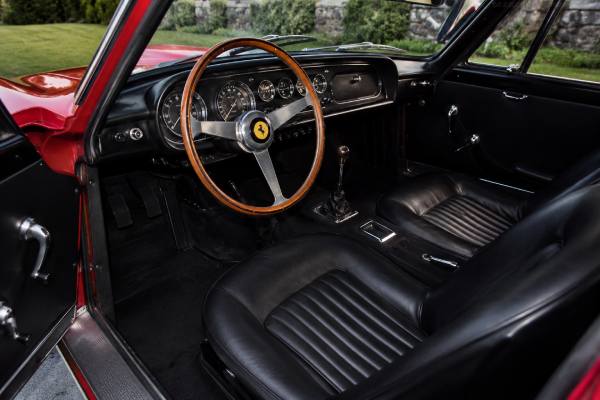
The cockpit is simple and functional. The driver gets large instruments, a thin-rim steering wheel, a long view over the hood, and a cabin shaped more around driving than comfort. Some examples were trimmed more luxuriously than others, depending on customer use. A road-focused owner might have wanted more finish; a competition owner cared more about weight and access.
Cooling and airflow are central to the design. The Colombo V12 works hard in long-distance events, so radiator condition, ducting, oil temperature control, and under-bonnet airflow matter. The louvres are not just styling marks. They help manage heat and became part of the car’s visual identity.
The exhaust and intake layout also define the sensory character. A correctly set up TdF has a sharp mechanical sound at idle, a hard-edged induction note under throttle, and a rising V12 wail as revs build. Exhaust tone depends on system design, but originality matters. A modernized exhaust may sound dramatic while losing the period timbre collectors expect.
The engineering is appealing because it is understandable. There are no electronics, no active systems, no hidden software, and no carbon structure. The car’s behavior comes from weight, tires, suspension geometry, engine tune, brakes, and driver skill. That mechanical honesty is a major reason these cars remain so engaging.
Compared with later Ferrari GTs, the early TdF feels rawer and more visibly hand-made. Compared with earlier Ferrari sports racers, it is more usable and enclosed. That middle ground is its identity: a beautiful berlinetta that could drive to an event, compete seriously, and remain desirable as a road car.
Road Feel, Performance and Race-Bred Character
A good early TdF feels alive, light, and mechanical rather than brutally fast by modern standards. Its performance comes from a rev-hungry V12, low weight, direct controls, and the confidence of a stable long-wheelbase chassis.
The engine needs proper warm-up. Oil temperature, coolant temperature, and carburetor behavior matter before hard use. Once warm, the Colombo V12 is responsive and eager. It does not need forced induction or huge displacement to feel exciting. The reward comes from throttle precision, rising revs, and the sound of twelve small cylinders working cleanly.
The four-speed gearbox is part of the experience. It should feel mechanical but not obstructive when properly rebuilt and adjusted. Synchromesh condition matters, and rushed shifts in a cold car are unwise. A worn gearbox can make the car feel much older than it is, while a properly set up one gives the driver a clear, deliberate rhythm.
Steering is heavy at parking speeds and lighter once moving. On narrow period-style tires, the car communicates clearly. It does not have modern grip, but it gives the driver information. That is one reason vintage Ferrari drivers often value correct tire choice. Overly modern rubber can overload suspension, brakes, and steering feel.
The long wheelbase gives the TdF a settled high-speed character. It is not as pointy as the later short-wheelbase Berlinetta, but it is secure and composed. On fast roads, that stability is a virtue. In tight corners, the driver must be patient and smooth, especially with a live rear axle.
Braking requires period expectations. Good drums can stop the car confidently, but repeated heavy braking demands planning. Pedal feel, adjustment, lining material, drum condition, and cooling all affect performance. A driver used to modern carbon-ceramic brakes must recalibrate.
Ride quality depends heavily on restoration quality. A sorted car should feel firm but not crude. A tired car may wander, crash over bumps, or feel vague. Many complaints about old Ferraris come from poor setup rather than the original design.
In real use, the early TdF is most satisfying on open roads, historic rallies, and carefully driven vintage events. It is not a relaxed luxury cruiser. Heat, noise, fuel smell, steering effort, and maintenance awareness are part of the ownership experience. That is exactly what many owners want. The car asks the driver to participate.
Maintenance, Restoration and Known Risks
A 1956–1957 TdF is not maintained like a normal classic car. It needs specialist knowledge, chassis-specific research, careful documentation, and a budget that reflects its rarity and value.
The engine is robust when built correctly, but it is expensive to rebuild and easy to harm through neglect. Carburetor tuning, ignition condition, valve clearances, cooling performance, oil pressure, and fuel quality all matter. A misfire that seems minor can become costly if the car is driven hard.
Key mechanical inspection areas include:
- cold and hot oil pressure
- coolant temperature stability
- carburetor wear and synchronization
- ignition timing and distributor condition
- compression and leak-down results
- timing chain, cam, and valve-train condition
- gearbox synchros and bearing noise
- clutch engagement and release
- rear axle noise and final-drive ratio
- brake drum condition, lining material, and hydraulic system health
Cooling-system condition is especially important. Old radiators, blocked passages, tired hoses, incorrect caps, and poor airflow can cause overheating. Because these cars are often used in modern traffic or warm-weather events, cooling must be better than merely “period correct” in appearance.
Fuel systems also need attention. Old tanks, lines, filters, pumps, and carburetor floats can create reliability and safety problems. Ethanol-blended fuels can worsen deterioration in older rubber components if the system has not been updated with compatible materials.
Chassis condition is one of the largest risks. The tubular frame must be inspected for corrosion, cracks, accident damage, incorrect repairs, and signs of past straightening. Even a beautiful exterior can hide structural issues. A specialist should inspect suspension pick-up points, engine mounts, crossmembers, and areas around previous repairs.
The aluminum body requires expert assessment. Corrosion can occur where aluminum meets steel, especially around mounting points. Previous accident repairs may include patches, filler, or incorrect panel shapes. Because Scaglietti bodies were hand-made, repair quality must be judged against the specific chassis, not simply against photographs of another car.
Interior restoration is also sensitive. New leather and fresh carpets may look impressive, but excessive modernization can reduce authenticity. Correct instruments, switches, seat shapes, trim grain, and dashboard layout all matter. Original unrestored details can be more valuable than perfect-looking replacements.
Restoration costs are high because the work is specialized and slow. Engine rebuilding, body correction, chassis repair, and trim work require people who understand 1950s Ferraris. Parts availability is possible through specialists, but that does not mean parts are cheap or simple to fit. Many components need restoration rather than replacement.
The biggest ownership mistake is buying a car before understanding its identity. A pre-purchase inspection should include marque experts, document review, physical inspection, and comparison with known historical records. For a TdF, paperwork is not decoration. It is part of the car.
Market Values, Buying Checks and Rivals
The early 250 GT Berlinetta TdF sits in the upper tier of collectible 1950s Ferraris, with value driven less by mileage and more by identity, history, originality, and eligibility for major events. Ordinary used-car rules do not apply.
As of May 2026, public auction data shows 250 GT LWB Berlinetta Tour de France cars commonly trading in the multi-million-dollar range, with exceptional examples reaching far higher when they have major provenance. Prices can vary widely because no two cars are truly identical. A no-louvre early car with major period history is not valued like a later, less documented car with replacement bodywork.
The strongest value factors are:
- original chassis, engine, and body
- period racing history, especially major events
- known ownership chain
- Ferrari Classiche certification or respected expert documentation
- original color and trim confirmed by records
- high-quality restoration by recognized specialists
- preserved original details
- eligibility for events such as Tour Auto, Mille Miglia-related events, concours, and major historic rallies
Cars to approach carefully include those with vague history, missing original engines, unclear body identity, undocumented crash repairs, poor older restorations, or inconsistent claims. A car can still be valuable with replacement parts if its history is transparent, but undisclosed problems are serious.
A buyer checklist should include:
| Area | What to verify |
|---|---|
| Identity | Chassis, engine, gearbox, rear axle, and body numbers against records |
| Bodywork | Original panels, repair quality, correct Scaglietti details, evidence of accident damage |
| Engine | Correct Tipo 128B identity, internal condition, oil pressure, carburetor and ignition setup |
| Chassis | Corrosion, cracks, repair history, alignment, suspension pick-up points |
| Documentation | Build records, race entries, ownership history, restoration invoices, expert reports |
| Driving quality | Gearbox feel, brakes, cooling, steering, axle noise, suspension behavior |
| Market position | Comparable sales by body style, history, originality, and restoration quality |
The closest Ferrari alternatives include the later 250 GT Berlinetta SWB, the 250 GT California Spider, the 250 GT Lusso, and earlier 250 competition cars. The SWB is more developed and often easier to place in the famous Ferrari timeline. The California Spider offers open-top glamour. The Lusso is more refined and road-biased. The TdF, however, has a rawer competition identity and a closer link to 1950s endurance racing.
Period rivals include the Mercedes-Benz 300 SL Gullwing, Aston Martin DB-series competition variants, Maserati A6G/2000, and certain Jaguar XK and C-Type-related cars. The Mercedes is more technically unusual and more usable in some respects, but the Ferrari has the V12 racing aura and coachbuilt Italian character. Aston Martin and Maserati rivals can be wonderful, but the TdF sits in a stronger Ferrari-centered collector ecosystem.
Long-term collectability should remain strong because the car combines rarity, beauty, racing history, event eligibility, and a direct place in Ferrari’s 250 bloodline. The main market risk is not lack of demand. It is overpaying for a car with identity questions, weak documentation, or restoration problems that become visible only after purchase.
Period safety expectations are also worth remembering. The TdF predates modern crash structures, airbags, anti-lock brakes, stability control, and modern lighting. That does not define the car, but it affects how it should be driven. Owners should treat it as a valuable 1950s racing GT, not as a modern performance car with old styling.
References
- Ferrari 250 GT Berlinetta (1956) 1956
- Ferrari 250 GT Berlinetta “Tour de France” Market – CLASSIC.COM 2026
- 1956 Ferrari 250 GT LWB Berlinetta ‘Tour de France’ by Scaglietti | Paris 2026 | RM Sotheby’s 2026
- 1958 Ferrari 250 GT LWB Berlinetta Tour De France | Gooding Christie’s 2006
- Ferrari 250 GT ‘Tour de France’ 14-Louvre – Ultimate Specs 2016
Disclaimer
This article is for informational purposes only and is not a substitute for professional diagnosis, repair advice, valuation advice, or a specialist inspection. Specifications, torque values, service intervals, procedures, and component details can vary by chassis number, market, equipment, restoration history, and individual car. Always verify technical work against official service documentation and consult a qualified Ferrari specialist before buying, restoring, or servicing a 250 GT Berlinetta TdF.
If you found this guide useful, please share it on Facebook, X/Twitter, or your favorite car community to support our work.