
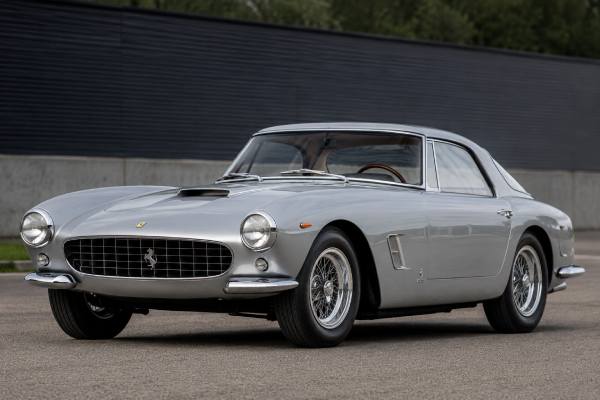
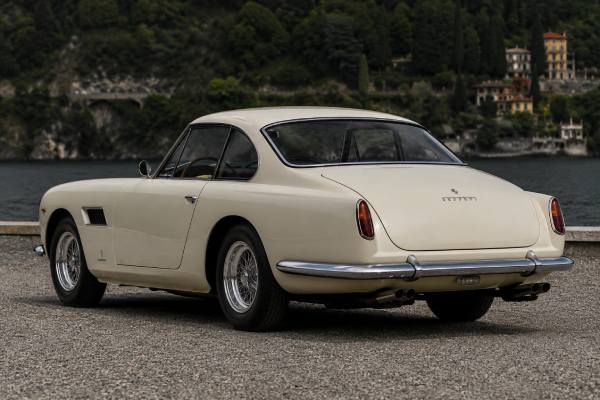
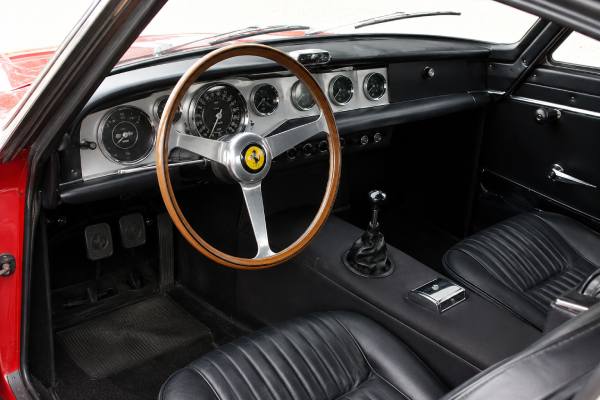
The Ferrari 250 GT Coupé Pinin Farina with Tipo 508D chassis and Tipo 128D 3.0-litre Colombo V12 is one of the most important road-going Ferraris of 1959–1960 because it turned the 250 GT formula into a more usable, more repeatable, and more commercially mature grand tourer. It kept the front-mounted V12, long-wheelbase chassis, rear-wheel-drive layout, and elegant two-seat coupé body that defined Ferrari’s late-1950s GT identity, but it moved away from the very small-batch feel of the earlier Boano and Ellena cars.
This was not the most exotic Ferrari 250, and it was not the most valuable. That is part of its appeal. The 250 GT Coupé Pinin Farina offered real Ferrari engineering in a restrained body that was meant to be driven, toured, serviced, and enjoyed rather than treated only as a competition artifact. The Tipo 128D engine is especially relevant to collectors because it belongs to the mature inside-plug Colombo V12 phase, with twin distributors and a 240 hp rating, while the Tipo 508D chassis connects the car to the long-wheelbase 250 GT family.
For buyers today, the attraction is simple but serious: a hand-built, coachbuilt Ferrari V12 coupé with 1950s character, usable road manners, and a market position below the California Spider, Tour de France Berlinetta, and later 250 GT SWB. The risk is just as clear. Authenticity, corrosion, accident history, engine identity, brake specification, and restoration quality can change the value and ownership experience dramatically.
Quick Take
The 1959–1960 Ferrari 250 GT Coupé Pinin Farina Tipo 508D / 128D is a refined long-wheelbase Colombo V12 grand tourer rather than a raw competition car, and its strongest appeal is the mix of elegant Pinin Farina styling, 240 hp Ferrari V12 performance, and genuine late-1950s coachbuilt character. The main caution is condition sensitivity: a tired, non-original, poorly restored, or undocumented example can cost more to correct than the purchase discount suggests, so chassis, engine, gearbox, rear axle, body identity, brake specification, and Ferrari Classiche documentation matter heavily.
Table of Contents
- Model History and Significance
- Tipo 128D Engine and Specifications
- Production, Variants and Factory Details
- Pinin Farina Design and Engineering
- Road Feel, Performance and Character
- Maintenance, Restoration and Inspection
- Market Values, Buying Guide and Rivals
Model History and Significance
The 250 GT Coupé Pinin Farina matters because it helped Ferrari move from boutique one-off coachbuilding toward repeatable road-car production without losing its V12 identity. It was still hand-built and expensive, but it was more standardized than the earlier 250 GT coupés and helped make Ferrari a stronger maker of road-going grand tourers.
Ferrari’s 250 GT line grew out of the company’s racing and road-car overlap in the 1950s. The name “250” refers to the approximate displacement of one cylinder in the 3.0-litre V12. The formula was simple on paper: a front-mounted Colombo V12, a tubular steel chassis, rear-wheel drive, and coachbuilt bodywork. In practice, the early 250 GT family was full of small changes, special bodies, competition links, and chassis-by-chassis variation.
Before the Pinin Farina coupé became the main production shape, Ferrari used Boano and Ellena bodies to satisfy demand while Pinin Farina expanded its own production capacity. The later Pinin Farina-bodied coupé, introduced for the 1958 model period and continuing into 1960, brought cleaner styling and a more consistent identity. It was still a proper coachbuilt Ferrari, but it was no longer a car made only in tiny experimental batches.
The 1959–1960 Tipo 508D / 128D version sits in the more mature phase of the model. It followed earlier Tipo 128C inside-plug engines and came before the later 128F or DF outside-plug evolution used on some 1960 cars. This is why exact chassis and engine identification matters. A car sold broadly as a “1959 250 GT Coupé Pinin Farina” may differ from another example in brakes, engine type, interior details, overdrive fitment, and restoration history.
Its reputation today is different from the more famous 250 GT SWB or California Spider. The Pinin Farina coupé is less aggressive, less race-focused, and usually less expensive. It appeals to collectors who want the shape, sound, and mechanical integrity of a classic Ferrari V12 without chasing the very top of the 250 hierarchy. Good examples also have concours relevance, especially when they retain their original body, engine, color combination, trim, and documentation.
The model’s importance is not based on outright rarity alone. It is important because it shows Ferrari learning how to build elegant, reliable, high-speed GT cars for private customers. It bridged the gap between the highly individualized early 250s and the more developed 1960s grand tourers such as the 250 GT/E 2+2 and 250 GT Berlinetta Lusso.
Tipo 128D Engine and Specifications
The core specification is a 2,953 cc Colombo V12 rated at about 240 hp, mounted in a 2,600 mm long-wheelbase tubular steel chassis. The Tipo 128D engine is a twin-distributor, inside-plug version of the classic Ferrari V12, and it gives the car its strongest mechanical identity.
| Category | Specification |
|---|---|
| Production focus | 1959–1960 250 GT Coupé Pinin Farina, Tipo 508D / Tipo 128D examples |
| Engine | Tipo 128D Colombo 60-degree V12 |
| Displacement | 2,953.21 cc |
| Bore x stroke | 73 mm x 58.8 mm |
| Valvetrain | Single overhead camshaft per bank, two valves per cylinder |
| Induction | Three Weber twin-choke carburetors, commonly 36 DCZ/3 type on period examples |
| Output | About 240 hp at 7,000 rpm |
| Transmission | Four-speed manual; overdrive appears on some later cars and must be verified by chassis |
| Drivetrain | Front engine, rear-wheel drive |
| Chassis | Tipo 508D tubular steel frame |
| Wheelbase | 2,600 mm |
| Front suspension | Independent unequal-length wishbones with coil springs |
| Rear suspension | Live axle with semi-elliptic leaf springs and radius/trailing location |
| Brakes | Hydraulic drums on earlier cars; Dunlop discs introduced late in the run, depending on chassis |
| Body | Two-seat steel coupé body by Pinin Farina, with hand-built variation |
| Performance | Roughly 0–60 mph in the low-seven-second range and about 145–150 mph when correctly tuned |
The Colombo V12 is compact, light for its layout, and central to the car’s value. It uses an aluminum block and heads, a short stroke, and a smooth high-rev character. It is not a lazy large-capacity engine. It needs careful carburetor setup, correct ignition timing, healthy cooling, and proper warm-up. When everything is right, it feels crisp and elastic rather than brutal.
The Tipo 128D detail matters because Ferrari changed these engines during the Pinin Farina coupé run. Earlier cars used the 128C, while later 1960 development moved to outside-plug layouts with different inlet-port arrangements. Buyers should not rely on the model year alone. The stamped engine number, engine type, internal features, and factory documentation must agree with the car’s claimed identity.
The chassis is equally important. The Tipo 508D frame is part of the long-wheelbase 250 GT family, with a 102-inch-plus wheelbase and a front-engine layout that gives the car stable high-speed road manners. It is not as agile as the later short-wheelbase berlinetta, but it is calmer, more relaxed, and better suited to long-distance touring.
Brakes are one of the biggest practical differences. Some 1959 cars still have drums, while later cars received Dunlop discs. Drums are correct and valuable when original to the chassis, but they require more anticipation and careful adjustment. Disc-brake cars are usually easier to use in modern traffic and on mountain descents. A conversion may improve use, but it can hurt originality unless it is documented, reversible, and accepted for the specific car.
Production, Variants and Factory Details
The Pinin Farina coupé was built in greater numbers than earlier 250 GT coachbuilt coupés, but it was still not a mass-produced car. Depending on how prototypes, specials, and late examples are counted, production is usually described in the mid-300 range, which makes individual chassis history more important than broad production totals.
The model was launched after Ferrari and Pinin Farina had already experimented with the Boano and Ellena-bodied 250 GT coupés. Pinin Farina’s new facility allowed more consistent body production, but these cars were still assembled with a level of handwork that creates real differences between examples. Door fit, trim shape, body gaps, interior details, and small fittings can vary.
For the 1959–1960 Tipo 508D / 128D focus, the most important identification points are:
- Chassis number and chassis type, checked against factory records.
- Engine number and engine type, especially confirmation of Tipo 128D identity.
- Gearbox and rear axle numbers, where recorded and verifiable.
- Pinin Farina body number and body identity.
- Original color and interior trim.
- Brake specification as delivered.
- Evidence of overdrive, if claimed.
- Factory delivery records, old registration documents, service invoices, restoration files, and Ferrari Classiche certification.
The cars are often divided informally into earlier and later Pinin Farina coupé phases. Earlier cars tend to be associated with drum brakes and the inside-plug engine layout, while later cars may have factory disc brakes and, in some cases, overdrive. The word “Series II” appears frequently in market listings, but buyers should treat it as a descriptive market term rather than a substitute for factory documentation.
Important factory and period differences
A buyer should pay attention to the small details that reveal whether a car has been preserved, restored correctly, modified over time, or assembled from mixed components.
| Area | What to check | Why it matters |
|---|---|---|
| Engine | Tipo 128D stamping, internal configuration, carburetor type, distributor layout | Defines the exact mechanical identity and value |
| Brakes | Drums or factory Dunlop discs | Affects originality, usability, and market description |
| Body | Pinin Farina number, panel fit, evidence of rebodying or major repairs | Body authenticity is central to collector value |
| Interior | Seat pattern, dashboard, instruments, steering wheel, trim materials | Incorrect restoration details are expensive to correct |
| Documentation | Build records, old photos, ownership chain, restoration invoices | Provenance reduces risk and supports value |
Factory colors and interiors were often chosen to suit the first owner. Red is not the only desirable color. Period greys, blues, silvers, dark greens, and subtle two-tone cabin combinations often suit the restrained Pinin Farina shape better than later resale-driven repaint choices. A car returned to its original color can be more appealing than one restored in a more obvious shade.
Special-bodied and prototype-related Pinin Farina coupés exist, but they should not be confused with the standard Tipo 508D / 128D coupé. Those cars belong to a different collector conversation. For the standard 1959–1960 car, the strongest example is usually not the most modified one. It is the car with the clearest identity, best-preserved or best-restored structure, correct mechanical components, and convincing paper trail.
Pinin Farina Design and Engineering
The design is deliberately restrained, and that restraint is the point. The 250 GT Coupé Pinin Farina has a long hood, clean sides, upright glass, a formal roofline, and balanced proportions that make it look more like a refined grand tourer than a thinly disguised race car.
Pinin Farina moved away from the busier details and more experimental shapes of some earlier 250 GT bodies. The front end is low and wide for the period, with a simple grille opening and modest chrome. The sides are comparatively plain, relying on proportion rather than decoration. The notchback rear gives the car a more mature touring identity than the fastback competition berlinettas.
The body was mainly steel, which helped consistency and durability but adds restoration complexity today. Unlike an alloy-bodied racing Ferrari, the Pinin Farina coupé can hide corrosion in ordinary-looking places. Rockers, lower doors, wheel arches, floor sections, inner sills, trunk floors, and body mounting points need careful inspection. A glossy repaint is not proof of a healthy structure.
Engineering decisions were shaped by the car’s purpose. This was a high-speed touring car for wealthy road customers, not a stripped competition machine. The 2,600 mm wheelbase improves stability. The live rear axle is simple and strong. The V12 sits ahead of the cabin but behind the front axle line enough to give the car a balanced feel by 1950s standards. The cabin is more comfortable than a berlinetta, with better luggage room and a less punishing driving environment.
The engine bay is a major part of the car’s visual identity. The Colombo V12 is compact and jewel-like, with triple carburetors, polished details on restored cars, and the mechanical density expected of a 1950s Ferrari. But originality matters. Over-restored finishes, modern hose choices, incorrect clamps, non-period wiring, and bright cosmetic choices can make an engine bay look impressive but less authentic.
The sensory character is just as important as the specification. The car has the light, metallic V12 sound that made the 250 series famous, but with a smoother touring tone than a competition berlinetta. Intake noise from the carburetors, gear whine, exhaust resonance, and the smell of warm oil and fuel are part of the experience. A healthy car feels alive. A tired one can feel flat, hot, smoky, noisy in the wrong ways, and difficult to tune.
Road Feel, Performance and Character
A well-sorted 250 GT Coupé Pinin Farina feels fast, mechanical, and composed rather than sharp or intimidating. Its best quality is the way the Colombo V12, long gearing, and stable chassis work together on open roads.
The engine likes revs. Below the middle of the tachometer it is smooth and flexible, but the car becomes more special as the revs climb and the carburetors are fully awake. Throttle response depends heavily on carburetor balance and ignition condition. A properly tuned Tipo 128D engine feels clean and eager; a poorly tuned one may cough, load up, run hot, foul plugs, or hesitate under load.
The four-speed gearbox is part of the period experience. It should not feel like a modern manual, but it should not be vague, noisy, or obstructive when warm. Cold shifts require patience. Owners who rush the gearbox, especially before the oil is warm, can accelerate wear. Later overdrive-equipped cars are more relaxed at speed, but overdrive function and wiring should be checked carefully.
Steering is heavier at parking speeds and more natural once moving. The car is narrow by modern standards, but it still feels valuable and long-nosed from the driver’s seat. Visibility is good compared with many later exotic cars. The driving position is upright, the dashboard is clear, and the cabin feels more like a tailored GT than a racer with carpets.
Braking behavior depends on specification and setup. Drum-brake cars can be perfectly enjoyable when correctly adjusted and driven with respect, but they ask for planning. Repeated hard stops can expose fade and imbalance. Disc-brake cars feel more confidence-inspiring and are often preferred by drivers who plan regular touring in modern conditions. Either system must be judged by condition rather than assumption.
Cornering balance is stable and progressive. The live rear axle means the car does not have the supple independence of later GTs, and rough roads can unsettle it if the dampers, springs, bushings, or tires are wrong. Correct tire choice matters. Oversized modern tires can add grip but reduce steering delicacy and place extra load on suspension components. Period-style radials often suit the car better than aggressive modern rubber.
The biggest difference between examples is not the factory specification. It is condition. A freshly restored but poorly sorted car may feel tight, hot, and frustrating. A carefully maintained older restoration may drive beautifully. A neglected car may still start and run, but it will not show the elegance of the design. These cars reward patient setup: valve adjustment, carburetor synchronization, ignition health, cooling efficiency, brake balance, and suspension alignment all change the experience.
Maintenance, Restoration and Inspection
Maintenance is specialist work, and restoration can quickly exceed normal collector-car expectations. The 250 GT Coupé Pinin Farina is mechanically robust when maintained properly, but age, old repairs, corrosion, and incorrect parts are the real threats.
The Colombo V12 needs regular attention from someone who understands early Ferrari engines. Valve clearances, ignition timing, distributor condition, carburetor setup, fuel delivery, oil leaks, and cooling behavior all matter. A compression and leak-down test is essential before purchase. Smoke on start-up, crankcase pressure, uneven idle, overheating, oil contamination, or noisy valve gear should not be dismissed as “old Ferrari character.”
Fuel systems deserve special care. Old tanks can shed debris, fuel lines can harden, and carburetors can wear at shafts and linkages. Modern fuel can worsen storage issues if the car sits. A car used regularly and serviced properly is often less troublesome than a museum piece that runs only briefly.
Cooling is another inspection priority. The radiator, water pump, hoses, thermostat, fan, and internal block condition need to work as a system. These engines do not like neglect, and repeated overheating can lead to expensive repairs. Temperature behavior should be checked in traffic, at idle, and during road use, not only during a short cold start.
The chassis and body can be more expensive than the engine to put right. Look closely at:
- Sills, floors, and jacking areas.
- Lower doors, fender bottoms, and wheel arches.
- Trunk floor and spare-wheel area.
- Front chassis tubes and suspension pickup points.
- Evidence of old accident repair or frame misalignment.
- Door, hood, and trunk fit.
- Paint thickness and filler use.
- Corrosion hidden under undercoating or fresh trim.
A body-off restoration can be excellent, but only if it is documented with photos, invoices, measurements, and specialist names. A cosmetic restoration over weak metal is a major risk. The car may look expensive, win casual admiration, and still need deep structural work.
Mechanical originality also affects value. Matching engine, gearbox, rear axle, and original body identity are important. A replacement engine does not automatically make the car undesirable, but it must be priced correctly and documented honestly. A restamped engine or unclear identity is a serious warning sign.
Pre-purchase inspection priorities
A serious inspection should go beyond a short drive and a visual check. The best approach is a marque specialist inspection backed by documentation review.
| Priority | Inspection item | Warning sign |
|---|---|---|
| Identity | Chassis, engine, gearbox, rear axle, and body numbers | Missing, altered, inconsistent, or undocumented numbers |
| Engine health | Compression, leak-down, oil pressure, smoke, cooling behavior | Low compression, overheating, heavy smoke, poor oil pressure |
| Body structure | Sills, floors, mounts, lower panels, accident repairs | Fresh paint over weak metal, poor panel fit, hidden filler |
| Brakes | Original drum or disc setup, condition, documentation | Unexplained conversions or poor pedal feel |
| Restoration quality | Photos, invoices, specialist involvement, correct finishes | No records, generic parts, over-restored details |
| Driving behavior | Warm starting, shifting, steering, braking, temperature stability | Difficult hot restart, gear noise, pulling brakes, unstable temperature |
Parts availability is better than many obscure coachbuilt cars because the 250 family is so well supported, but that does not make parts cheap. Correct Ferrari V12 components, period carburetor parts, trim pieces, instruments, Borrani wheels, brake parts, and body hardware can be expensive and slow to source. Skilled labor is often the limiting factor.
Originality versus upgrades is a personal decision, but the market usually rewards correctness. Sensible hidden improvements for safety or reliability may be acceptable if reversible. Modernizing the car too visibly can reduce collector appeal. Electronic ignition, improved cooling fans, seat belts, or discreet lighting upgrades may suit a touring owner, but any change should be documented and kept sympathetic.
Market Values, Buying Guide and Rivals
The 250 GT Coupé Pinin Farina is one of the more approachable classic Ferrari 250 road cars, but “approachable” is relative. Strong cars still trade in a serious collector market, and the difference between a correct, documented example and a needy project can be enormous.
As of recent market tracking, Pinin Farina coupés often sit far below the California Spider, 250 GT SWB, Tour de France Berlinetta, and rare special-bodied 250s. That makes them attractive to buyers who want a Colombo V12 Ferrari with real 1950s presence. It also means restoration economics must be treated carefully. A full engine rebuild, structural body restoration, interior correction, chrome work, brake overhaul, and documentation effort can consume the value gap quickly.
Value is driven by:
- Matching-number engine and major mechanical components.
- Original Pinin Farina body and clear body number.
- Factory color and trim, especially if attractive and documented.
- Disc-brake specification when original to the car.
- Complete ownership history.
- Ferrari Classiche certification or strong equivalent documentation.
- Quality of restoration, not just age of restoration.
- Driving condition and sorting after restoration.
- Absence of major accident history.
- Correct interior, instruments, wheels, lighting, and trim.
The best cars are not always the lowest-mileage cars. Mileage on a car of this age can be difficult to prove and may matter less than condition, originality, and documentation. A regularly used, carefully maintained car can be a better ownership prospect than a static showpiece.
Cars to seek and cars to avoid
Seek a car with a coherent story. The chassis number, engine number, body number, old photos, invoices, restoration records, and current condition should all support the same identity. A high-quality older restoration with known specialists and careful maintenance can be very appealing.
Be cautious with cars that have:
- Missing or vague number information.
- Fresh cosmetic restoration but no structural photos.
- Non-original engine with unclear origin.
- Undocumented brake conversions.
- Poor hot running or overheating.
- Incorrect interior patterns or modernized trim.
- Heavy filler or uneven panel gaps.
- Auction descriptions that rely on broad model prestige rather than car-specific proof.
The closest Ferrari alternatives include the earlier 250 GT Boano and Ellena coupés, the 250 GT/E 2+2, the 250 GT Cabriolet Pinin Farina Series II, and the later 250 GT Berlinetta Lusso. The Boano and Ellena cars have earlier charm and different coachbuilt appeal. The 250 GT/E is more practical and often less costly, but it lacks the two-seat purity. The Cabriolet is more glamorous and usually more expensive. The Lusso is more modern, more widely admired, and generally valued higher.
Period rivals include the Aston Martin DB4, Maserati 3500 GT, Mercedes-Benz 300 SL Roadster, and certain coachbuilt Alfa Romeo 1900 and 2600 models. The Aston offers a strong six-cylinder GT experience, the Maserati gives elegant Italian touring character, and the Mercedes brings engineering depth and global recognition. The Ferrari’s advantage is the Colombo V12, the 250 lineage, and the direct connection to Maranello’s late-1950s golden era.
Long-term collectability should remain strong for correct cars because the model combines a famous engine family, Pinin Farina design, limited production, and usability. It is unlikely to overtake the blue-chip competition 250s, but that is not its role. Its best future is as a respected, elegant, usable V12 Ferrari whose value depends less on hype and more on authenticity, condition, and the quality of its story.
References
- Ferrari 250 GT Coupé (1954) 1954 (Manufacturer Model Page)
- Ferrari Classiche: Certification – Ferrari.com 2026 (Certification)
- Officine Classiche – Ferrari.com 2026 (Official Service)
- 1959 Ferrari 250 GT Coupe by Pinin Farina | SHIFT/Monterey 2020 | RM Sotheby’s 2020 (Auction Catalogue)
- Ferrari 250 GT Coupé Pinin Farina Market – CLASSIC.COM 2026 (Market Database)
Disclaimer
This article is for informational purposes only and is not a substitute for professional diagnosis, inspection, repair, valuation, or restoration advice. Specifications, torque values, service intervals, procedures, parts, and original equipment can vary by chassis number, market, build date, and individual factory specification. Always verify details against official Ferrari service documentation, factory records, and a qualified Ferrari classic specialist before buying, repairing, restoring, or modifying a vehicle.
If this guide was useful, please consider sharing it on Facebook, X/Twitter, or your preferred car community to support our work.