
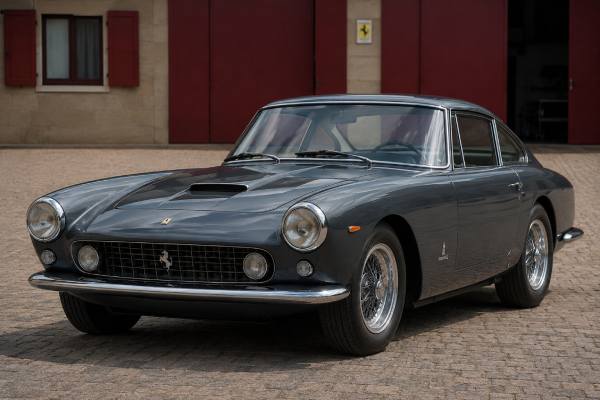
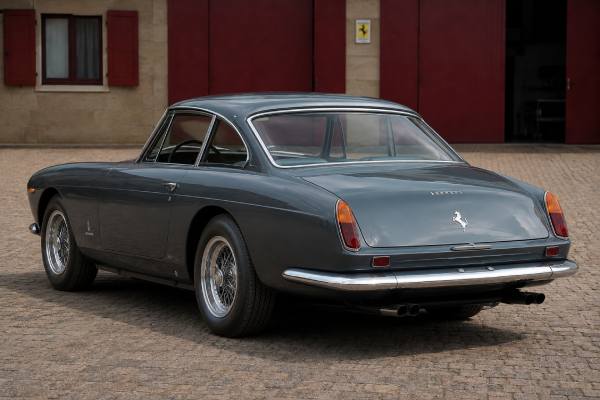
The 1960 Ferrari 250 GT Coupé Pinin Farina with Tipo 508F chassis and Tipo 128F 3.0-liter Colombo V12 is one of the most usable and mature road-going Ferraris of the late 1950s. It belongs to the final phase of the 250 GT Coupé Pinin Farina line, when Ferrari’s elegant two-seat grand tourer gained important mechanical improvements such as the outside-plug V12, disc brakes, a more convenient central gearshift, and overdrive on many cars.
This is not the most aggressive 250, nor the most expensive, nor the most famous. That is part of its appeal. The 250 GT Coupé Pinin Farina was built as a proper grand touring car: refined enough for long-distance use, compact enough to feel alive, and powered by the same basic Colombo V12 family that made the 250 name central to Ferrari history. The 1960 Tipo 128F version is especially interesting because it represents the most developed specification of the standard coupé before Ferrari moved deeper into the 2+2 era.
Quick Take
The 1960 Ferrari 250 GT Coupé Pinin Farina Tipo 508F is valued for its elegant coachbuilt body, usable grand touring character, and late Tipo 128F Colombo V12 specification rather than outright competition fame. Its biggest strength is balance: classic Ferrari V12 sound, two-seat proportions, disc-brake usability, and relatively understated styling. The main caution is condition sensitivity. A tired, poorly restored, or non-original example can consume serious money, so matching numbers, Ferrari Classiche documentation, body integrity, and specialist inspection matter more than normal classic-car cosmetic appeal.
Table of Contents
- Why the 1960 PF Coupé Matters
- Tipo 128F V12 and Core Specs
- Production Details, Variants, and Options
- Pinin Farina Design and Engineering
- Road Feel, Speed, and Usability
- Maintenance, Reliability, and Restoration Risk
- Market Values, Buying Checks, and Rivals
Why the 1960 PF Coupé Matters
The 1960 Ferrari 250 GT Coupé Pinin Farina matters because it helped turn Ferrari road cars from very low-volume coachbuilt specials into more repeatable, refined grand tourers. It was still hand-finished and exclusive, but it moved Ferrari closer to a semi-series production model.
Ferrari’s 250 line was already famous by 1960. The same broad family included competition berlinettas, cabriolets, California Spiders, and later the Lusso and GTO. The Pinin Farina coupé sat in a different lane. It was the elegant road car for clients who wanted V12 performance, handbuilt quality, and long-distance comfort without the sharper temperament of a competition-derived berlinetta.
The Pinin Farina coupé replaced the earlier Boano and Ellena-bodied 250 GT coupés. Those earlier cars were important stepping stones, but the Pinin Farina version had a cleaner, more modern body and was better suited to higher-volume production. This mattered because Ferrari’s road-car business was becoming more important. Wealthy private customers in Europe and North America wanted cars that could be driven, serviced, and enjoyed beyond the narrow world of racing.
By 1960, the model had reached its most developed form. The Tipo 128F engine used the desirable outside-plug layout, with spark plugs positioned outside the V of the engine above the exhaust side. The late cars also benefited from technical changes that made them easier to use in modern traffic than many earlier 1950s Ferraris. Disc brakes, overdrive, improved damping, and a more convenient gearshift all helped the car feel less archaic.
The 250 GT Coupé Pinin Farina also has a different collector identity from more dramatic Ferraris. A 250 GT SWB is more valuable and more motorsport-focused. A California Spider is more glamorous and far more expensive. A 250 GTE 2+2 is more practical and usually less costly. The PF coupé sits between those worlds: a pure two-seat Ferrari V12 with refined road manners and serious historic importance, but without the extreme prices attached to the most famous 250 variants.
Its reputation today is built on four qualities:
- it is a real Colombo V12 250 GT with strong Ferrari lineage;
- it has understated Pinin Farina styling that has aged well;
- late 1960 cars are among the most usable standard coupés;
- value depends heavily on originality, restoration quality, and documentation.
For collectors, the 1960 Tipo 508F / Tipo 128F combination is attractive because it represents the final evolution of the model. For drivers, it offers the classic Ferrari experience without the harsher edge of a competition car. For restorers, it is beautiful but demanding, with complex bodywork, expensive mechanical parts, and little tolerance for shortcuts.
Tipo 128F V12 and Core Specs
The defining mechanical feature of this 1960 version is the Tipo 128F Colombo V12, a 2,953 cc all-alloy engine usually rated at about 240 hp. It is paired with a tubular Tipo 508F chassis and rear-wheel drive, creating a classic front-engine Ferrari grand tourer layout.
| Category | Specification |
|---|---|
| Model | Ferrari 250 GT Coupé Pinin Farina |
| Chassis type | Tipo 508F tubular steel chassis |
| Engine type | Tipo 128F Colombo 60-degree V12 |
| Displacement | 2,953 cc |
| Induction | Naturally aspirated, triple Weber carburetors |
| Output | About 240 hp at 7,000 rpm |
| Transmission | 4-speed manual, commonly with electric overdrive on late cars |
| Drivetrain | Front engine, rear-wheel drive |
| Front suspension | Independent suspension with wishbones, coil springs, and dampers |
| Rear suspension | Live rear axle with leaf springs, radius location, and dampers |
| Brakes | Dunlop hydraulic disc brakes on late 1959 and 1960 cars |
| Wheelbase | 2,600 mm |
| Body style | Two-seat coupé by Pinin Farina |
The Colombo V12 is the heart of the car’s identity. It is small by modern V12 standards, but it is highly charismatic. The engine uses a single overhead camshaft per bank and two valves per cylinder. The 250 name comes from the approximate displacement of each cylinder, a Ferrari naming practice used across the family.
The Tipo 128F is important because it was the later outside-plug version. Earlier engines in the PF coupé line included Tipo 128C and Tipo 128D forms. The outside-plug arrangement helped improve service access and breathing layout, and the 128F is widely regarded as the most desirable standard engine specification for the late coupés. Some cars used Weber 36 DCZ carburetors, while some late or upgraded examples are seen with Weber 40 DCL units. Exact carburetor specification should always be checked against the car’s build records, not assumed from the model year alone.
Performance figures vary by source, gearing, carburetion, tune, and test method. A healthy late 250 GT PF Coupé is generally considered capable of around 140–150 mph under favorable conditions. Period-style 0–60 mph estimates usually fall around the low-seven-second to eight-second range. Those numbers are less important than the way the car delivers speed. The V12 is smooth, urgent, and musical, with a light rotating feel compared with larger later Ferrari engines.
The chassis follows the traditional Ferrari GT pattern of the period. A tubular steel frame carries the engine ahead of the cabin but set well back compared with ordinary sedans of the time. The suspension is not exotic by modern standards, especially with the live rear axle, but it is well matched to the car’s role. The long wheelbase gives stability, while the relatively compact engine helps the front end feel more responsive than the stately body might suggest.
The brakes are a major reason late cars are preferred by drivers. Earlier drum-brake Ferraris can be satisfying when properly set up, but they require more anticipation and are more vulnerable to fade. The Dunlop disc brakes on late 1959 and 1960 cars make the PF coupé easier to enjoy on mountain roads and in modern traffic. They do not feel like modern assisted brakes, but they give a welcome margin of confidence.
Production Details, Variants, and Options
The 1960 Tipo 508F car belongs to the final production phase of the Ferrari 250 GT Coupé Pinin Farina, not a separate model line. Identification depends on chassis number, engine type, body details, brake specification, gearbox layout, and factory documentation.
The PF coupé was produced from 1958 to 1960, with total production commonly quoted at roughly 350 cars. It was one of the first Ferraris built in meaningful semi-series numbers, though that phrase should not be confused with mass production. These were still expensive, hand-finished cars. Panel fit, trim details, interior materials, instruments, and customer-requested features can vary from one example to another.
The 1960 cars are usually discussed as late or Series II examples. Their desirability comes from the more developed mechanical package. Compared with earlier PF coupés, late cars may have:
- Tipo 128F outside-plug V12;
- Tipo 508F chassis designation;
- Dunlop disc brakes;
- central gearshift rather than the earlier offset arrangement;
- electric overdrive on many examples;
- telescopic dampers instead of earlier lever-arm arrangements on some cars;
- small detail changes in trim and equipment.
Ferrari production records are essential because the cars were not built with the rigid uniformity expected from modern manufacturers. A restorer or buyer should avoid assuming that every 1960 car left the factory with exactly the same carburetors, interior details, or accessories. Some cars were special ordered with unusual colors, trim, competition-style equipment, uprated exhausts, or non-standard cabin features.
Matching numbers are a major value factor. In this context, matching numbers usually means the chassis, engine, gearbox, and sometimes rear axle correspond to factory records. Body numbers and Pinin Farina tags also matter. A car can still be enjoyable with replacement components, but its collector value will usually be lower, especially if the changes are undocumented.
How to identify a strong late example
A desirable 1960 PF coupé should have its identity supported by more than a seller’s description. Look for factory build data, Ferrari Classiche certification where available, restoration invoices, ownership history, and photographs from before and during restoration. The most convincing cars tend to have a consistent paper trail.
Useful checks include:
- chassis number stamped where expected and consistent with documentation;
- engine number matching factory records;
- correct Tipo 128F engine specification;
- evidence of original or correctly restored Pinin Farina body structure;
- correct late brake and gearbox layout;
- original color and trim confirmed by records, or clearly documented changes;
- no unexplained gaps in ownership history;
- restoration photographs showing metalwork, not just finished paint.
Factory colors and interiors were part of the car’s appeal. Many PF coupés were delivered in elegant, restrained colors rather than loud racing shades. Silver, dark blue, black, grey, and deep red tones suit the body shape particularly well. A red repaint may help casual appeal, but it is not automatically more valuable. Original or factory-correct colors often carry more weight with serious collectors.
Special-order details can help or hurt. A documented period option, unusual original trim, or known first owner can add interest. Modern “upgrades” should be judged carefully. Better cooling, discreet electrical improvements, and sympathetic safety-related updates may make a car easier to use, but visible non-period modifications can reduce value.
Pinin Farina Design and Engineering
The 250 GT Coupé Pinin Farina is distinctive because it combines simple, formal design with serious Ferrari mechanical hardware. Its restraint is the point: it looks like a refined Italian grand tourer, not a race car softened for the road.
The body marked a shift from the rounder, more transitional shapes of earlier 250 coupés. The PF coupé has a cleaner notchback profile, a long hood, a relatively airy cabin, and slim pillars by the standards of the time. The front end is low and simple, with a broad grille and headlamps that give the car a calm expression. The flanks are mostly unadorned, which makes the proportions do the work.
Pinin Farina’s design also made practical sense. Ferrari and Pinin Farina needed a shape that could be repeated with better consistency than one-off coachwork. That meant fewer fussy details, cleaner panel forms, and a body that could be built in greater numbers. The result is not plain. It is disciplined. The best examples have a lightness that photographs do not always capture.
The car’s construction reflects its era. The chassis is a steel tube frame, while the body is coachbuilt and hand-finished. Steel body panels were typical, with aluminum used on some panels depending on the car and its build. Because these cars were hand assembled and many have been restored, it is important to inspect the actual car rather than rely on general model descriptions.
The engineering layout is traditional but effective. The compact V12 sits at the front, driving the rear wheels through a manual gearbox. The long wheelbase helps high-speed stability, while the engine’s modest size and smooth delivery suit grand touring. The live rear axle is not sophisticated by modern standards, but it is predictable when correctly set up. The suspension and brakes need careful adjustment, but a properly sorted car feels coherent rather than crude.
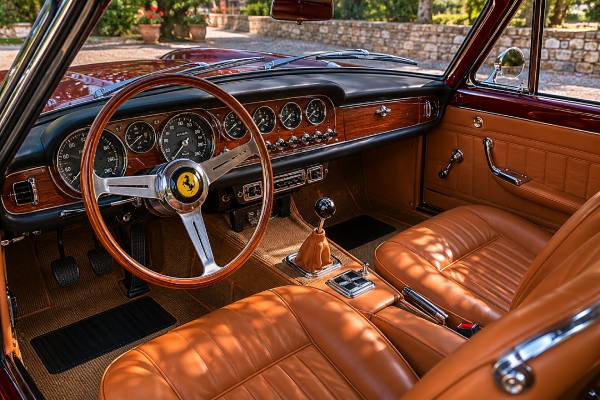
The cabin is part of the car’s charm. It is a two-seat grand tourer with a real luggage area, clear instruments, a thin-rim steering wheel, and a driving position that feels more open than many later exotics. The details vary by car, but leather, chrome, painted metal, and simple switchgear define the atmosphere. It feels expensive in a 1960 way: mechanical, fragrant, and handmade rather than electronically luxurious.
Sound is another special feature. A Tipo 128F V12 does not need large displacement to feel dramatic. At low speeds it is smooth and busy, with carburetor intake sound and a crisp exhaust note. As revs rise, the engine becomes sharper and more metallic. The experience is more about clarity and response than brute torque. That is why many drivers find these early Colombo V12 cars so memorable.
Road Feel, Speed, and Usability
A healthy 1960 250 GT Coupé Pinin Farina feels like a fast, elegant touring car rather than a raw racer. It rewards smooth inputs, proper warm-up, and mechanical sympathy.
The first thing a modern driver notices is the need for procedure. The carbureted V12 wants time to warm properly. Oil temperature matters. The gearbox responds best when the driver is deliberate rather than rushed. A cold car may feel heavy and slightly reluctant; a warm, well-tuned car becomes much more fluid.
Throttle response is one of the pleasures. The engine is not lazy, and it does not need to be driven brutally to feel special. It pulls cleanly when tuned correctly, then becomes more exciting as it climbs toward the upper rev range. The sound encourages the driver to use revs, but the car is still a grand tourer. It is happiest covering distance quickly and smoothly.
The 4-speed manual gearbox has a mechanical feel that depends heavily on adjustment, oil choice, clutch condition, and internal wear. Overdrive makes a meaningful difference on faster roads. It lowers engine speed and makes the car more relaxed on long journeys, one reason late examples are often seen as more usable than earlier cars.
Steering is heavier at parking speeds than a modern car, but it should lighten as the car moves. At speed, good examples offer clear front-end information. If the car wanders, tramlines badly, or feels vague, the cause may be tires, alignment, suspension wear, steering-box condition, or chassis damage. These cars should feel old, not sloppy.
The braking experience depends greatly on setup. The late disc brakes are a real advantage, but they still require period expectations. The pedal may feel firm, and braking distances are not modern-supercar short. What matters is consistency and confidence. Pulling, judder, excessive pedal travel, or poor bite should be investigated.
Ride quality is generally better than the car’s sporting image might suggest. The wheelbase and grand touring suspension tune give the PF coupé a settled feel on flowing roads. On poor surfaces, worn dampers, tired bushings, old tires, or incorrect springs can make the car feel unsettled. A properly restored example should not crash or skitter over every bump.
Visibility is good for a classic GT, and the cabin is more usable than many exotic cars. Heat, fuel smell, wind noise, and mechanical sound are part of the experience. They should be present but not overwhelming. Excessive fumes, overheating, or constant misfiring are signs of poor condition, not normal character.
The performance has to be judged in context. A modern hot hatch may be quicker in ordinary traffic, but it will not deliver the same sensation. The Ferrari’s appeal is the combination of a rev-happy V12, slim pillars, delicate controls, and a body that feels compact enough for real roads. It is quick enough to be exciting, but not so fast that the driver is isolated from the process.
Maintenance, Reliability, and Restoration Risk
The 1960 250 GT PF Coupé can be reliable when properly restored and maintained, but it is not a casual classic. The main risks are corrosion, old restoration work, incorrect parts, tired mechanical systems, and the cost of specialist labor.
The Colombo V12 is robust in the hands of people who understand it. Problems usually come from neglect, poor tuning, improper rebuilds, overheating, oil leaks, worn timing components, and carburetor issues. A smooth idle is not enough. A pre-purchase inspection should include compression and leak-down testing, oil pressure checks, cooling-system review, ignition inspection, carburetor setup, and verification of engine identity.
Carburetion is a common source of frustration. Triple Webers need correct jetting, synchronization, clean fuel, and careful linkage adjustment. A car that spits, hesitates, fouls plugs, or smells strongly of fuel may only need setup, but it may also be hiding deeper wear or poor restoration work.
Cooling deserves close attention. These cars were designed for period conditions, not endless modern traffic in hot cities. The radiator, water pump, hoses, fan, thermostat, and internal engine passages all matter. Many owners improve reliability with discreet upgrades, but any change should be reversible and documented.
The gearbox and overdrive should be tested thoroughly. Weak synchros, noise, jumping out of gear, clutch judder, or lazy overdrive engagement can be expensive to correct. The clutch is a service item, but access and labor make the work costly compared with ordinary classics.
The brake system on late disc-brake cars must be kept in excellent condition. Calipers, discs, servo assistance, lines, master cylinder, and fluid condition all matter. A car that has spent years on display may need a full hydraulic rebuild before serious driving.
Body and chassis condition can decide whether a car is a good purchase or a financial trap. Rust can appear in lower body sections, sills, floors, wheel arches, door bottoms, and hidden structural areas. Accident damage is another concern. A beautiful repaint may hide poor metalwork, filler, or incorrect panel shapes. Because the body is coachbuilt, getting the shape right is expensive and requires specialist skill.
High-cost inspection areas
| Area | What to check | Why it matters |
|---|---|---|
| Engine identity | Numbers, Tipo 128F specification, rebuild history | Originality strongly affects value |
| Body structure | Sills, floors, wheel arches, panel fit, old repairs | Coachbuilt metalwork is costly |
| Cooling system | Radiator, pump, hoses, fan, temperature behavior | Overheating can damage the V12 |
| Gearbox and overdrive | Synchros, clutch action, noise, engagement | Rebuilds require specialist parts and labor |
| Brakes | Disc condition, calipers, servo, lines, fluid | Cars stored for long periods often need hydraulic work |
| Documentation | Factory records, Classiche, invoices, photos | Paperwork separates top cars from risky cars |
Restoration quality matters more than shine. A concours-level restoration can be excellent, but only if it preserves the car’s identity and uses correct details. Older restorations should be judged carefully. Work done decades ago may now be deteriorating, and standards have risen. Paint thickness, trim accuracy, plating quality, wiring, underbody finish, and mechanical behavior all tell a story.
Parts availability is better than for many obscure classics because the Ferrari 250 family is so valuable, but “available” does not mean cheap. Correct components, original trim, gauges, carburetors, brakes, and body hardware can be difficult and expensive. Specialist knowledge is essential.
The best ownership approach is regular use, careful warm-up, annual inspection, fluid changes, and prompt attention to small problems. Letting the car sit can be worse than driving it. Fuel goes stale, seals dry, brake hydraulics suffer, and carburetors gum up. A PF coupé that is exercised correctly often feels better and costs less to keep healthy than one treated only as a static asset.
Market Values, Buying Checks, and Rivals
The 1960 250 GT Coupé Pinin Farina is usually one of the more attainable two-seat Ferrari 250 road cars, but “attainable” is relative. Good examples often trade in the mid-six-figure range, while exceptional cars with rare specification, strong provenance, or superb restoration can bring more.
Recent public market data shows a wide spread because condition and history vary so much. Some cars have sold around the lower-to-middle six figures, while stronger examples and better-documented cars have reached higher. A 2026 RM Sotheby’s listing for a notable 1960 Series II car carried a €500,000–€600,000 estimate and did not sell at that event. Market benchmarks around the 250 GT PF Coupé commonly sit near the half-million-dollar area, but a single benchmark should never be treated as the value of a specific chassis.
The main value drivers are clear:
- matching-numbers engine, gearbox, and major components;
- confirmed Tipo 128F late specification;
- original or factory-correct color combination;
- high-quality restoration by a recognized specialist;
- Ferrari Classiche certification or equivalent factory-backed records;
- clean ownership history;
- no serious unresolved accident or corrosion history;
- correct trim, instruments, carburetors, brakes, and body details;
- strong road behavior after restoration, not just cosmetic presentation.
A buyer should be careful with cars that look cheap. A lower purchase price can disappear quickly if the car needs engine work, metal repair, interior correction, or missing original parts. On a 250 GT, a “driver-quality” car can be a smart buy only when the needs are understood and priced honestly.
Buying checklist
Before purchase, commission a specialist inspection that covers:
- identity verification against factory records;
- engine, gearbox, rear axle, and body-number review;
- compression, leak-down, oil pressure, and cooling checks;
- carburetor, ignition, charging, and fuel-system condition;
- brake, clutch, steering, suspension, and overdrive operation;
- underside inspection for corrosion and poor repairs;
- paint-depth and panel-shape review;
- review of restoration invoices and photo records;
- road test from cold start to full operating temperature;
- market comparison against similar documented sales.
The closest Ferrari alternatives depend on budget and purpose. A 250 GT Boano or Ellena offers earlier charm and rarity, but may not have the same late usability. A 250 GTE 2+2 is more practical and often less expensive, though it lacks the pure two-seat profile. A 250 GT Cabriolet Pinin Farina is more glamorous and generally more valuable. A 250 GT SWB is far more sporting and much more expensive. A 330 GT 2+2 gives later usability and a larger engine at a different market level.
Period non-Ferrari rivals include the Aston Martin DB4 and DB5, Maserati 3500 GT, and Mercedes-Benz 300 SL Roadster or Gullwing depending on budget. The Maserati is often more relaxed and less expensive. The Aston Martin offers British GT character and strong parts support. The 300 SL is more iconic and usually sits in a different value bracket. None gives exactly the same blend of early Ferrari V12 sound, Pinin Farina restraint, and 250-family collectability.
Long-term collectability looks strong because the car has the right ingredients: Ferrari, Colombo V12, Pinin Farina coachwork, two seats, limited production, and direct connection to the golden 250 era. It is unlikely to match the price trajectory of competition 250s, but that is not its role. The best cars should remain desirable because they are usable, beautiful, and historically important without being too precious to drive.
The smartest purchase is not necessarily the cheapest car or the freshest restoration. It is the car with the clearest identity, best documentation, correct late specification, sound body, and trustworthy mechanical condition. For this model, confidence is worth paying for.
References
- Ferrari 250 GT Coupé (1954) 1954 (Manufacturer model page)
- 1960 Ferrari 250 GT Coupé Series II by Pinin Farina | Paris 2026 | RM Sotheby’s 2026 (Auction listing)
- 1960 Ferrari 250 GT Coupé Pinin Farina Market – CLASSIC.COM 2026 (Market data)
- Ferrari 250 GT Coupé Pinin Farina Market – CLASSIC.COM 2026 (Market data)
- 1959 Ferrari 250 GT 2953 Coupe | Hagerty UK 2026 (Valuation data)
Disclaimer
This article is for informational purposes only and is not a substitute for professional diagnosis, repair, restoration planning, or valuation advice. Specifications, torque values, service intervals, procedures, and original equipment can vary by VIN, market, build date, and individual factory order. Always verify details against official Ferrari documentation, factory records, and a qualified marque specialist before buying, servicing, or restoring a Ferrari 250 GT.
If this guide helped, please share it on Facebook, X/Twitter, or your favorite classic-car community to support our work.