
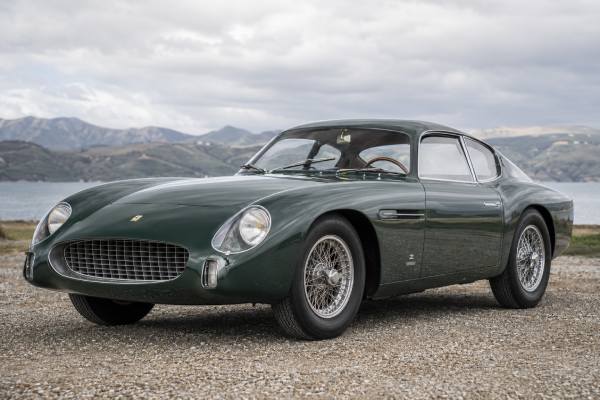
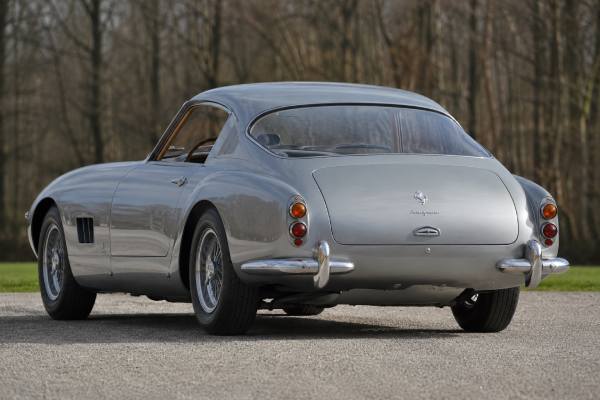
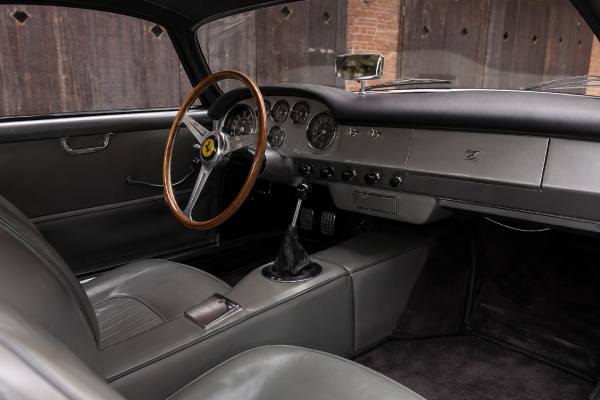
The Ferrari 250 GT LWB Berlinetta Zagato, built on the Tipo 508B long-wheelbase chassis and powered by the Tipo 128B 3.0-liter Colombo V12, is one of the rarest coachbuilt versions of Ferrari’s early competition GT line. Produced in tiny numbers from 1956 into the late 1950s, with the 1956–1957 cars forming the core of the original double-bubble Zagato story, it combined Ferrari’s proven 250 GT Berlinetta mechanical package with lightweight Milanese coachwork shaped for speed, elegance, and individuality.
This was not a normal catalogue Ferrari. The mainstream 250 GT Berlinetta “Tour de France” lineage is already one of the defining competition grand tourers of the 1950s, but the Zagato-bodied cars sit in a narrower collector world: hand-built, chassis-specific, visually distinct, and closely tied to period competition and concours history. The Tipo 128B V12’s 240 hp output, the 2,600 mm LWB chassis, the drum-braked road-racer layout, and the aluminium body make the car feel like a bridge between postwar sports-racing cars and the more polished Ferrari GTs that followed.
Quick Take
The 250 GT LWB Berlinetta Zagato is most appealing as a rare meeting point between Ferrari competition engineering and Zagato’s lightweight coachbuilt design, especially in the 1956–1957 double-bubble cars. Its identity rests on the Tipo 508B chassis, Tipo 128B Colombo V12, hand-formed aluminium bodywork, and period racing relevance rather than comfort or easy ownership. The tradeoff is that every example is effectively its own artifact: originality, documentation, restoration quality, and matching major components matter far more than ordinary mileage or cosmetic condition, while maintenance requires deep Ferrari 250 expertise and careful preservation rather than routine classic-car servicing.
Table of Contents
- History and Collector Importance
- Engine, Chassis and Key Specifications
- Production, Variants and Authenticity
- Zagato Design and Engineering Details
- Road and Period Racing Character
- Maintenance, Restoration and Risk Areas
- Market Values, Buying Advice and Rivals
History and Collector Importance
The Ferrari 250 GT LWB Berlinetta Zagato matters because it is one of the rarest coachbuilt branches of the 250 GT Berlinetta family. It took the serious competition foundation of the long-wheelbase 250 GT and clothed it in Zagato’s lighter, more individual aluminium bodywork.
The 250 GT line was the center of Ferrari’s move from small-series sports-racing machinery toward dual-purpose grand touring cars. The basic idea was simple but powerful: a front-mounted V12, rear-wheel drive, a strong tubular chassis, enough road usability for long-distance events, and enough performance to win. In the mid-1950s, that formula was exactly what Ferrari needed for GT racing.
The LWB Berlinetta became known as the “Tour de France” after the model’s success in the Tour de France Automobile. That name was not just a marketing label. The event demanded speed, endurance, braking strength, durability, and the ability to cover long road sections between competitive stages. A car that could win there had to be more than fast in a short sprint.
Most 250 GT Berlinettas of the period were associated with Scaglietti coachwork, with Pinin Farina design influence around the broader 250 GT family. The Zagato cars were different. They were special-bodied examples for select clients, not a regular production series. Their bodies were shaped by Carrozzeria Zagato in Milan, a firm already known for lightweight racing coachwork, compact cabins, and the famous double-bubble roof used to provide helmet clearance while keeping the roofline low.
For collectors, the Zagato-bodied 250 GT is important for three main reasons:
- Rarity: only a handful of 250 GT LWB Berlinettas received Zagato bodies.
- Design identity: the double-bubble roof, thin pillars, compact proportions, and aluminium skin make the cars visually separate from Scaglietti-bodied TdFs.
- Historical depth: several examples have period competition history, concours history, or both.
The 1956–1957 Tipo 508B / Tipo 128B cars are especially interesting because they sit early in the 250 GT Berlinetta’s competition story. They predate the later short-wheelbase 250 GT Berlinetta SWB and the 250 GTO, yet they show many of the themes that made those later cars famous: low weight, responsive V12 power, serious road-racing purpose, and a shape developed around speed rather than ornament.
The car’s reputation today is not based on production numbers alone. Many cars are rare; few are rare and historically central. The 250 GT Zagato Berlinettas combine Ferrari’s most famous V12 model family with one of Italy’s most distinctive coachbuilders. That makes them important to Ferrari collectors, Zagato collectors, concours entrants, and historians of 1950s endurance racing.
The result is a car that is often discussed less like a model and more like a group of individual chassis. Each example has its own body details, ownership chain, racing record, restoration story, and documentation trail. That individuality is part of the appeal, but it also makes buying or restoring one much more complex than buying a more standardized production Ferrari.
Engine, Chassis and Key Specifications
The technical base of the 1956–1957 250 GT LWB Berlinetta Zagato is a front-engine, rear-drive Ferrari competition GT with a 2,953 cc Colombo V12 and a 2,600 mm wheelbase chassis. The headline figure is 240 hp from the Tipo 128B engine, but the car’s real strength is the balance between power, weight, gearing, and long-distance durability.
The 3.0-liter V12 belongs to Ferrari’s small-block Colombo family. It is a 60-degree V12 with single overhead camshafts and carburetion. In period terms, it gave the car a broad enough power band for road events, while still rewarding high-rpm driving. The engine’s character is central to the car: crisp throttle response, a hard mechanical note, and a willingness to rev that separates it from heavier luxury GT engines of the same era.
| Category | Specification |
|---|---|
| Model years covered | 1956–1957 early Zagato-bodied 250 GT LWB Berlinetta examples |
| Chassis type | Ferrari Tipo 508B tubular steel chassis |
| Engine | Tipo 128B Colombo 60-degree V12 |
| Displacement | 2,953.21 cc |
| Power | 240 hp at 7,000 rpm |
| Induction | Triple twin-choke Weber carburetors, specification dependent |
| Transmission | 4-speed manual gearbox |
| Drivetrain | Front engine, rear-wheel drive |
| Wheelbase | 2,600 mm |
| Front suspension | Independent front suspension with unequal-length wishbones and coil springs |
| Rear suspension | Live rear axle with leaf springs and locating links |
| Brakes | Hydraulic drum brakes |
| Body | Hand-formed Zagato aluminium berlinetta coachwork |
The Tipo 508B chassis was a development of Ferrari’s tubular-frame practice of the period. It was not a modern monocoque. Instead, it used a steel tube structure with the body mounted over it. This made the car strong and repairable, but it also means that condition today depends heavily on past accident repairs, corrosion, alignment, and the way restorers treated the relationship between frame and body.
The suspension layout is typical of serious front-engine Ferrari GTs of the time. The front end uses independent suspension, while the rear relies on a live axle. On paper, that rear axle seems old-fashioned, especially when compared with some technically adventurous rivals. In use, it gave predictable behavior, toughness, and good traction on poor roads when properly set up.
The brakes are one of the major period limitations. The car used drums, not discs. In the 1950s this was normal, but modern drivers must understand what that means. Drum brakes can work well when correctly rebuilt, adjusted, cooled, and bedded in. They are not as fade-resistant or as consistent as later disc brakes, especially on mountain descents or during track use.
Performance figures vary because these cars differed by body, gearing, race preparation, and period source. A healthy 240 hp 250 GT LWB Berlinetta could approach roughly 150 mph in suitable specification, but gearing and engine tune matter. Acceleration feels strong rather than explosive by modern supercar standards. The experience is defined by lightness, gearing, noise, steering feel, and the V12’s upper-range pull.
What matters most is not a single quoted 0–60 mph number. A 250 GT Zagato was built for fast cross-country work, long events, and high average speed. Its specification is best understood as a package: strong V12, lightweight body, compact cabin, precise steering, durable chassis, and enough braking for period racing when maintained to a very high standard.
Production, Variants and Authenticity
The Zagato-bodied 250 GT LWB Berlinettas were not a uniform production run. They were a tiny group of special-bodied cars, and authenticity depends on chassis identity, body history, mechanical components, restoration records, and period documentation.
The early Zagato cars are usually discussed under names such as 250 GTZ, 250 GT LWB Berlinetta Zagato, or 250 GT “Tour de France” by Zagato. These names overlap, but they do not always mean a factory model designation in the modern sense. The safest approach is to identify each car by chassis number, body type, build period, and documented history.
Known Zagato-bodied 250 GT LWB Berlinetta examples are generally associated with chassis numbers including 0515 GT, 0537 GT, 0665 GT, 0689 GT, and 1367 GT. The first three are central to the 1956–1957 double-bubble story, while the later cars show further variation in style and purpose. This article focuses on the early Tipo 508B / Tipo 128B context, but any buyer or researcher should understand the wider five-car group because market comparisons and authenticity debates often involve all of them.
| Area | Why it matters |
|---|---|
| Chassis number | Defines the car’s identity and connects it to factory and period records. |
| Engine number | Matching or original engine status has major value impact. |
| Gearbox and rear axle | Original major driveline components strengthen provenance. |
| Zagato body details | Each body has unique hand-built features, roof, lights, vents, and trim differences. |
| Period race history | Documented competition use can greatly increase significance. |
| Restoration history | High-quality, well-documented restoration is essential for concours and market confidence. |
| Certification and archive files | Ferrari Classiche records, build sheets, invoices, photos, and ownership files help resolve uncertainty. |
Because these cars were hand-built, small detail differences are not automatically signs of incorrect work. Door skins, roof shape, window openings, headlamp treatment, vents, bumpers, grille forms, and rear-end treatment can vary between chassis. The danger is assuming that one car should match another exactly. For a normal production car, uniformity supports authenticity. For a coachbuilt Zagato Ferrari, documented individuality can be authentic.
That said, individuality is not a free pass. A buyer should look for evidence, not stories. Period photographs, build records, race entries, old registration documents, restoration invoices, concours records, and expert reports should all agree as much as possible. If a car has been crashed, rebodied, partly reconstructed, or heavily modified, the work may still be historically acceptable, but the market will judge it differently from a car with more original material.
Factory documentation is especially valuable. Ferrari Classiche certification can help confirm major component identity and specification, but it should be read alongside independent expert analysis. A certificate does not replace a physical inspection by someone who knows 1950s Ferrari chassis, Zagato body construction, and the quirks of individual cars.
Original colors and interiors also matter. Many 1950s competition cars changed colors, numbers, trim, and details during active use. Returning a car to a known period livery can be correct, but only if the chosen configuration is supported by records. A concours restoration to a famous race appearance may be desirable; a cosmetic interpretation without evidence can weaken credibility.
For the 1956–1957 cars, the most desirable traits usually include:
- documented Zagato coachwork from new
- confirmed chassis identity
- original or matching Tipo 128B engine
- strong period photographs
- known ownership chain
- significant race or concours history
- careful restoration that preserves correct hand-built details
- no unresolved questions around body replacement or major component substitution
The production story is therefore not just “how many were built.” It is a question of which exact chassis, in which configuration, with which history, and how faithfully that history survives today.
Zagato Design and Engineering Details
The Zagato body is what makes this Ferrari visually and historically separate from the standard 250 GT LWB Berlinetta. Its design combines lightweight aluminium construction, a compact greenhouse, low roofline, and competition-minded detailing rather than the more familiar Scaglietti TdF appearance.
Zagato’s double-bubble roof is the most recognizable feature on the early cars. It was not just decoration. The two raised roof sections allowed helmet clearance while keeping the center of the roof visually and physically low. This idea suited racing berlinettas because it preserved a compact profile without forcing the driver and passenger into an uncomfortably low seating position.
The bodies were hand-formed, so the details have a crafted quality. The surfaces are rounded and muscular, but the cabin looks light because of the slim pillars and generous glass area. Compared with many 1950s GTs, the Zagato Ferrari can appear both delicate and purposeful. It does not rely on heavy chrome or theatrical ornament. The drama comes from proportion and surface.
Several design elements define the early cars:
- low, rounded nose with compact grille treatment
- aluminium body panels shaped around the 250 GT chassis
- double-bubble roof on key early examples
- thin pillars and a bright, airy cabin
- short rear deck and rounded tail surfaces
- competition-style simplicity rather than luxury decoration
- chassis-specific headlamp, vent, and trim differences
The covered-headlamp treatment on certain cars, especially the famous 1957 example 0665 GT, gives a more resolved and aerodynamic look. Earlier bodies can appear more delicate and open; later interpretations can look more polished. None should be judged only by symmetry against another chassis because Zagato’s work was not standardized like mass production.
Engineering-wise, the body’s main contribution was weight and airflow. Aluminium helped keep mass down, while the compact roof and smooth surfaces supported high-speed use. The car was still a 1950s front-engine GT with a separate chassis, not a wind-tunnel-developed prototype. Even so, the low-drag mindset is clear. Zagato’s tradition was to make racing bodies lighter and cleaner, not merely prettier.
The cockpit is sparse by modern standards. The driving position is close to the mechanical action. The large steering wheel, clear gauges, long gear lever, and narrow cabin remind the driver that this is a competition-derived GT, not a luxury coupé. Visibility is generally better than the low roof might suggest because the pillars are slim and the glass area is useful, though individual body shape and seating position can vary.
Sound is another special feature. The Colombo V12 breathes through carburetors and exits through a period exhaust layout that gives a sharper, more mechanical note than later insulated road Ferraris. At low speed, the car sounds busy and metallic. At higher revs, it becomes hard-edged and urgent. Much of the emotional appeal comes from the way intake, exhaust, drivetrain, and body resonance mix together.
The Zagato body also affects restoration difficulty. A Scaglietti-bodied TdF is already complex, but a Zagato car adds another layer. The correct profile, roof shape, window frames, grille opening, lamps, vents, and interior details must be judged against that specific chassis. Recreating a generic “Zagato look” is not enough. The best restorations preserve irregularities and handmade details where they are part of the original car.
This is why the design has such lasting value. It is beautiful, but it is also evidence of a particular way of building competition GTs: customer-driven, coachbuilt, light, imperfect in the human sense, and deeply connected to the racing culture of the 1950s.
Road and Period Racing Character
A well-sorted 250 GT LWB Berlinetta Zagato should feel fast, mechanical, and alive, but not easy in the modern sense. It asks for warm-up time, sympathetic gear use, firm braking effort, and respect for its age, tires, and drum brakes.
The engine is the centerpiece. The Tipo 128B V12 does not deliver modern low-rpm torque in a lazy way. It wants temperature, clean carburetion, and revs. Once warm and properly tuned, it responds sharply, with a rising urgency that suits fast open roads. The power figure of 240 hp was serious for the time, especially in a lightweight aluminium-bodied GT.
Throttle response depends heavily on carburetor condition and setup. A fresh, correctly synchronized set of Webers makes the car feel crisp and eager. A neglected or poorly adjusted system can make it stumble, load up, or feel flat. Many impressions of classic Ferraris are really impressions of maintenance quality.
The 4-speed gearbox requires deliberate inputs. A properly rebuilt gearbox can be satisfying and accurate, but it still rewards patience, especially when cold. Drivers used to modern synchronized manuals may need time to adjust. Smooth shifts, correct rev matching, and mechanical sympathy matter. Rushing the gearbox is both unpleasant and expensive.
Steering is one of the great pleasures. At parking speeds, effort is high. Once moving, the front end becomes communicative and precise. The long wheelbase gives stability, while the relatively light body helps the car feel responsive for its era. It is not as compact or agile as the later SWB Berlinetta, but it has a flowing, high-speed balance that makes sense on open roads.
The ride is firm but not crude when the suspension is correct. The live rear axle can move around on rough surfaces, and old tires or tired dampers can make the car feel nervous. With correct geometry, fresh bushings, good dampers, and appropriate tires, the chassis feels much more composed. Again, condition changes everything.
Braking is the area where modern expectations need the biggest adjustment. The drum brakes can be powerful enough for period-style use, but they need careful maintenance. Pedal feel, balance, fade resistance, and straight-line stability under braking all depend on linings, drums, adjustment, hydraulic condition, cooling, and setup. On a mountain road, the driver must plan ahead. On a circuit, brake management becomes part of the skill.
In period competition, the car’s strengths were high average speed and durability. It was built for long events, not short bursts of acceleration between traffic lights. That character remains. A healthy car feels happiest when flowing through fast bends, climbing through the rev range, and covering distance with rhythm.
The cabin experience is raw. Heat, oil smells, induction noise, exhaust resonance, and driveline sounds are normal. Ventilation and insulation are limited. Long-distance driving can be tiring, but that was part of the original purpose. These cars were driven hard by people who accepted effort as part of performance.
A restored concours car may feel tighter and more polished than a heavily used old racer, but over-restoration can reduce authenticity if it removes period character. The best examples drive with precision but still feel like 1950s competition machines. They should not feel loose, vague, smoky, overheated, or difficult simply because they are old. A great one feels demanding, not broken.
Maintenance, Restoration and Risk Areas
Ownership of a 250 GT LWB Berlinetta Zagato is less about ordinary reliability and more about preservation, expert maintenance, and risk control. The car can be durable when properly prepared, but neglect, poor restoration, incorrect parts, and undocumented repairs can create enormous problems.
The engine is valuable, complex, and central to identity. A Tipo 128B V12 needs specialists who understand early Ferrari machining, carburetion, ignition, oiling, cooling, and correct assembly. Rebuild quality varies widely in the classic world. A shiny engine bay does not prove correct internal work.
Key mechanical areas to inspect include:
- compression and leak-down results
- oil pressure when hot
- coolant temperature stability
- signs of head gasket or liner sealing issues
- carburetor wear and synchronization
- ignition system condition
- timing chain, valve gear, and cam drive condition
- oil leaks beyond normal light seepage
- fuel tank, lines, pumps, and filters
- exhaust condition and mounting quality
Cooling deserves special attention. Many 1950s Ferraris can run hot if radiators are partially blocked, water pumps are tired, ignition timing is wrong, or mixtures are too lean. A car that behaves well in cool weather may struggle in traffic or hot climates. Upgrades must be considered carefully because visible modern modifications can affect originality.
The gearbox, clutch, and rear axle also require expert inspection. Gear noise, weak synchros, oil leaks, worn bearings, and incorrect ratios can all lead to expensive work. The car’s value may also depend on whether the gearbox and rear axle are original to the chassis, not merely functional.
Chassis condition is one of the biggest risks. The tubular frame can suffer from corrosion, poor accident repair, fatigue, or incorrect replacement sections. Because these cars were raced, damaged, repaired, and restored over decades, a straight-looking body is not enough. The chassis should be measured and inspected by someone familiar with Ferrari 250 construction.
Corrosion and body issues can appear in:
- lower body edges
- door bottoms and frames
- sills and rocker structures
- floor areas
- wheel arches
- bonnet and boot edges
- mounting points between body and chassis
- old repair seams
- areas hidden under trim, paint, or underseal
Aluminium bodywork brings its own challenges. It can crack, stretch, corrode where it meets steel, or lose original shape during restoration. Poor panel work may be hard to see in photographs but obvious in person. Door fit, bonnet fit, roof contour, window frames, grille opening, and rear shape should be checked against period images of that exact chassis.
The drum brakes require more attention than later disc systems. Drums must be round, linings appropriate, wheel cylinders healthy, and adjustment correct. A car that pulls under braking, has a long pedal, or fades quickly may need more than a simple fluid change.
Electrical systems are simple by modern standards but old wiring can still cause trouble. Brittle insulation, poor grounds, non-original switches, weak charging, and hidden repairs can create unreliable starting or lighting problems. Because originality matters, rewiring should be done in the correct style rather than with random modern components.
Restoration is difficult because correctness is chassis-specific. A proper restoration may require:
- factory records
- period photographs
- expert body measurement
- original material research
- correct instruments and switchgear
- correct upholstery pattern and materials
- accurate paint color confirmation
- mechanical component-number verification
- careful decisions about preservation versus replacement
The most dangerous cars are not always the rough ones. A visibly tired but honest car may be easier to understand than a glossy restoration with missing history. Paint, plating, and fresh leather can hide structural problems, incorrect details, or replaced components. A buyer should treat any undocumented restoration with caution, no matter how beautiful it appears.
There are also safety realities. This is a 1950s competition GT with period crash protection, no airbags, no modern restraint systems, no ABS, and no stability control. Owners who drive these cars on public roads must accept those limits and maintain tires, brakes, steering, and lighting to the highest standard.
Market Values, Buying Advice and Rivals
The 250 GT LWB Berlinetta Zagato sits at the top end of the 1950s Ferrari GT market because supply is tiny and each car has individual historical weight. Public price guidance is difficult because the best Zagato-bodied examples trade rarely, and some transactions occur privately or through sealed sales.
A standard 250 GT LWB Berlinetta “Tour de France” is already a major collector Ferrari. A Zagato-bodied example adds another layer of rarity and design importance. The market treats these cars less like normal TdFs and more like individual works: chassis history, originality, competition record, restoration quality, and public visibility drive value.
For a serious buyer, the first question is not “what is the mileage?” It is “what exactly is this car, and how much of its identity is supported?” Mileage is secondary because most of these cars have been restored, raced, stored, shown, or rebuilt across many decades. Provenance is the real currency.
| Priority | What to confirm |
|---|---|
| Identity | Chassis number, body history, and documented Zagato coachwork from new. |
| Major components | Original or matching engine, gearbox, and rear axle where claimed. |
| Documentation | Factory records, old registrations, race entries, period photos, restoration invoices, and certification. |
| Body originality | Amount of original aluminium, quality of repairs, and accuracy of Zagato details. |
| Chassis condition | Accident history, corrosion, alignment, and quality of structural repairs. |
| Mechanical condition | Engine health, gearbox behavior, brake performance, cooling, suspension, and fuel system. |
| Restoration quality | Correctness, transparency, expert involvement, and preservation of hand-built features. |
| Market position | Comparison with other TdFs, other Zagato Ferraris, and recent private or auction context. |
The best examples to seek are cars with a continuous ownership chain, strong period photographs, known race history, original major components, and a respected restoration. A car with concours awards can be attractive, but awards should not replace due diligence. Standards change, and some older restorations were judged before today’s documentation expectations became stricter.
Cars to approach carefully include those with unclear body history, missing major components, unresolved chassis-number questions, heavy accident reconstruction, vague restoration claims, or seller descriptions that rely on romance instead of records. With a car this rare, there may still be a valid reason to buy a complicated example, but the price should reflect the risk and the buyer should understand the story fully.
Comparable cars include:
- Ferrari 250 GT LWB Berlinetta “Tour de France” by Scaglietti
- Ferrari 250 GT SWB Berlinetta
- Ferrari 250 GT California Spider LWB
- Ferrari 250 MM and related early competition Ferraris
- Maserati A6G/54 Zagato
- Alfa Romeo 1900C SS Zagato
- Mercedes-Benz 300 SL Gullwing, especially alloy or competition-linked examples
- Aston Martin DB4 GT and DB4 GT Zagato, as later high-value coachbuilt GT rivals
Against a Scaglietti TdF, the Zagato car is rarer and more visually individual, but the Scaglietti cars form the main competition backbone of the model. Against a 250 GT SWB, the Zagato LWB is earlier, rarer, and more coachbuilt, while the SWB is more developed and generally easier to place within a larger model hierarchy. Against a DB4 GT Zagato, the Ferrari is earlier and more tied to 1950s road racing, while the Aston is a more formal early-1960s homologation GT icon.
Long-term collectability appears strong because the car combines the right ingredients: Ferrari 250 identity, Zagato coachwork, V12 power, extreme rarity, period competition relevance, and eligibility for major concours and historic events. The main risks are not demand-related. They are authenticity, documentation, restoration quality, and the high cost of correcting past mistakes.
For an owner, the smartest strategy is preservation with use. These cars should not be treated like fragile sculptures, but they also should not be consumed through careless driving or unsympathetic preparation. Proper exercise, fluid changes, brake service, fuel-system care, and expert inspections help keep the car alive. The best ownership experience comes when the car remains mechanically trustworthy, historically honest, and documented in detail.
References
- Ferrari 250 GT Berlinetta (1956) 1956 (Manufacturer Specifications)
- Frame 2026 (Zagato Archive)
- Ferrari 575 GT Zagato 2006 (Zagato Archive Context)
- 1957 Ferrari 250 GT LWB Berlinetta ‘Tour de France’ by Zagato | Sealed – Ferrari’s Iconic TdF ‘Double-Bubble’ Zagato | RM Sotheby’s 2023 (Auction Catalogue)
- 1956 Ferrari 250 GT Berlinetta Competizione ‘Tour de France’ by Scaglietti | Monterey 2015 | RM Sotheby’s 2015 (Auction Catalogue)
Disclaimer
This article is for informational purposes only and is not a substitute for professional diagnosis, repair, appraisal, restoration advice, or legal verification of a collector car’s identity. Specifications, torque values, service intervals, procedures, components, and correct details can vary by chassis number, market, period updates, and equipment. Always verify against official service documentation, factory records, Ferrari Classiche material where available, and a qualified marque specialist before buying, restoring, servicing, or driving a Ferrari 250 GT LWB Berlinetta Zagato.
If this guide was useful, please consider sharing it on Facebook, X/Twitter, or your favorite enthusiast community to support our work.