
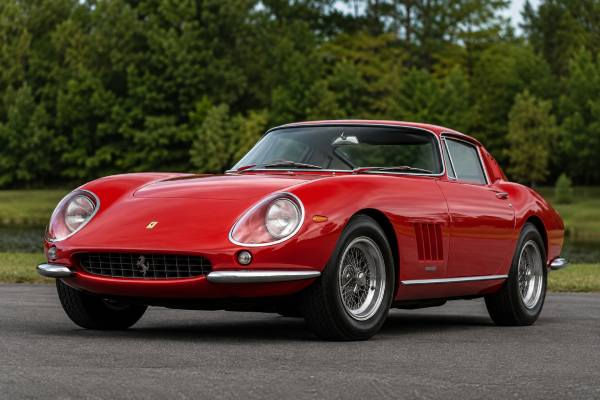
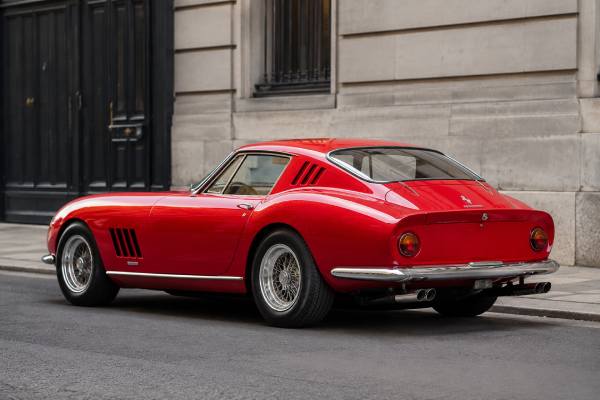
The Ferrari 275 GTB with the Tipo 563/66 chassis is the final two-cam version of Ferrari’s 3.3-litre berlinetta before the four-cam 275 GTB/4 arrived. Built in 1966, it used the Tipo 213 Colombo V12, a rear-mounted five-speed transaxle, independent rear suspension, long-nose Scaglietti coachwork, and a torque-tube driveline that made it more refined and durable than the earlier open-driveshaft cars.
This exact 275 GTB sits in an important narrow window. It is not the later 300 hp GTB/4, and it is not the earlier short-nose 275 GTB. It is the mature two-cam car: cleaner than the four-cam, more developed than the first series, and highly valued because it combines the original 275 GTB character with the engineering fixes Ferrari added near the end of production. For collectors, the main questions are originality, body material, carburetor specification, matching numbers, Ferrari Classiche documentation, restoration quality, and whether the car still carries its correct Tipo 563/66 identity.
Quick Take
The 1966 Ferrari 275 GTB Tipo 563/66 is most appealing as the most developed two-cam 275 GTB: a long-nose, torque-tube V12 grand tourer with beautiful Pininfarina design and Scaglietti construction. Its technical identity is the 280 hp Tipo 213 3.3-litre Colombo V12 paired with a rear transaxle and independent rear suspension, a major step forward for Ferrari road cars. The caution is that values depend heavily on authenticity, body material, carburetor setup, documentation, and restoration standard, while maintenance requires true vintage Ferrari expertise rather than normal classic-car servicing.
Table of Contents
- History and Significance
- Engine, Chassis and Specifications
- Production, Variants and Options
- Design, Engineering and Features
- Driving Experience and Performance
- Maintenance, Reliability and Restoration
- Market Value, Buying Guide and Rivals
History and Significance
The Tipo 563/66 275 GTB matters because it represents the final development of Ferrari’s original two-cam 275 GTB before the 275 GTB/4 changed the formula. It kept the simpler Tipo 213 V12 but gained the long-nose body and torque-tube driveline that made the model more stable, smoother, and more desirable.
Ferrari introduced the 275 GTB in 1964 as the replacement for the 250 GT/L Berlinetta Lusso. The Lusso was elegant, but the 275 GTB was a more serious grand touring machine. It brought two major advances to Ferrari road cars: a rear-mounted transaxle and independent rear suspension. These were not small details. Earlier front-engined Ferrari GTs generally used a front gearbox and live rear axle, which gave them a more traditional feel. The 275 GTB moved Ferrari toward a more modern balance between long-distance refinement and high-speed control.
The model name followed Ferrari’s period convention. “275” referred to the approximate displacement of each cylinder in cubic centimetres, “GT” meant Gran Turismo, and “B” meant Berlinetta, or closed coupe. The engine was still part of the Colombo V12 family, but enlarged to 3,285.72 cc and identified as Tipo 213 in the two-cam GTB.
The earliest cars are often called short-nose 275 GTBs. Ferrari later revised the front bodywork into the more familiar long-nose shape to improve high-speed stability and visual balance. In 1966, Ferrari made another important update: the Tipo 563/66 chassis with a torque tube linking the engine and rear transaxle more rigidly. This reduced driveline alignment issues and made the car feel more polished.
The 275 GTB’s body was designed by Pininfarina and built by Scaglietti. That combination gives the car much of its collector appeal. It has the proportions of a front-engined racing berlinetta but the detailing of an expensive road car. The covered headlamps, long bonnet, small cabin, fastback tail, side vents, and purposeful stance make it one of the defining Ferrari designs of the 1960s.
The 1966 Tipo 563/66 version is collectible because it occupies a sweet spot. It has the mature chassis and bodywork, but it retains the two-cam engine that many drivers find cleaner, lighter in feel, and less complex than the later four-cam unit. It is also rarer in this precise form than the broad 275 GTB name suggests. For buyers, that makes correct identification essential.
Engine, Chassis and Specifications
The Tipo 563/66 275 GTB used Ferrari’s Tipo 213 3.3-litre Colombo V12, rated at 280 hp in standard three-carburetor form. The chassis specification is just as important as the engine because the torque tube, rear transaxle, and independent suspension define the way this version drives.
| Item | Specification |
|---|---|
| Model | Ferrari 275 GTB long nose, torque tube |
| Chassis type | Tipo 563/66 tubular steel chassis |
| Engine | Tipo 213 Colombo 60-degree V12 |
| Displacement | 3,285.72 cc |
| Bore x stroke | 77 mm x 58.8 mm |
| Valve gear | Single overhead camshaft per bank, two valves per cylinder |
| Induction | Three Weber twin-choke carburetors as standard |
| Power | 280 hp at 7,600 rpm |
| Torque | About 218 lb-ft at 5,000 rpm |
| Transmission | Five-speed manual rear transaxle |
| Drive | Rear-wheel drive |
| Suspension | Independent front and rear, wishbones, coil springs, telescopic dampers |
| Brakes | Four-wheel disc brakes |
| Wheelbase | 2,400 mm |
| Dry weight | About 1,100 kg, depending on body and equipment |
| Top speed | About 258 km/h in standard form |
The Tipo 213 engine is a short-stroke V12, and that matters. Its 58.8 mm stroke helps explain the car’s willingness to rev. It is not a lazy large-capacity engine. It builds power with speed, sound, and smoothness, and it rewards a driver who uses the gearbox properly.
Standard cars used three twin-choke Weber carburetors. Ferrari also offered six-carburetor cars, commonly called 6C examples, with six Weber DCN carburetors and a higher claimed output. These are more valuable when factory-original and properly documented, but the standard three-carburetor 280 hp engine is the baseline for the Tipo 563/66 covered here.
The rear transaxle placed the gearbox at the back with the differential, improving weight distribution. The Tipo 563/66 torque tube then tied the engine and transaxle together more rigidly than the earlier open driveshaft arrangement. In simple terms, the torque tube helped the driveline behave as one aligned unit. That made the car less sensitive to engine and gearbox movement and reduced vibration and wear caused by misalignment.
The suspension was modern for a Ferrari road car of the period. Independent rear suspension gave the 275 GTB better composure over imperfect roads and better balance in fast corners than the live-axle Ferraris it replaced. It did not make the car feel modern in the current sense, but it made it more precise and less nervous at speed.
Production, Variants and Options
The Tipo 563/66 car is part of the 1966 long-nose, two-cam 275 GTB production run, not a separate model name used casually in period advertising. For collectors, the difference between short nose, long nose, torque tube, alloy body, six-carburetor, and four-cam cars can mean a major difference in value.
The broad two-cam 275 GTB family was built from 1964 to 1966. Early cars used short-nose bodywork and an open driveshaft. Later cars received long-nose bodywork. The final development used the Tipo 563/66 chassis with a torque tube. The GTB/4 that followed in late 1966 used a different four-cam engine, Tipo 226, and is a distinct model even though it looks closely related.
Main 275 GTB identification points
A buyer or enthusiast should separate the major forms like this:
| Version | Main identifiers | Collector relevance |
|---|---|---|
| Short-nose 275 GTB | Earlier front bodywork, open driveline | Original first-series appeal, usually less developed dynamically |
| Long-nose 275 GTB | Longer front body, improved high-speed stability | More desirable body shape for many buyers |
| Tipo 563/66 torque-tube 275 GTB | Long nose, torque tube, final two-cam chassis development | Highly desirable mature two-cam specification |
| 275 GTB/6C | Factory six-carburetor induction | Premium specification if original and documented |
| Alloy-bodied 275 GTB | Aluminium coachwork rather than standard steel | Major value premium, especially with 6C and torque tube |
| 275 GTB/4 | Four-cam engine, bonnet bulge, later production | Separate high-value successor model |
Factory options and special-order details are central to value. Borrani wire wheels, radios, headrests, electric windows, alternate axle ratios, special upholstery, alloy coachwork, outside fuel fillers, and six-carburetor induction can all affect desirability. The key is whether the equipment was factory-delivered, added later using correct parts, or installed as a modern restoration choice.
Body material is one of the most important points. Standard 275 GTBs used steel bodywork with aluminium opening panels, while lightweight alloy-bodied cars are much rarer. A factory alloy body can move a car into a different market tier, especially when combined with six carburetors and torque-tube specification.
Matching numbers matter enormously. A serious buyer should confirm the chassis, engine, gearbox, rear axle, and body numbers against factory records or recognized marque documentation. Ferrari Classiche certification can be valuable, but it should still be read carefully. Certification is not a substitute for a physical inspection by a 275 specialist.
Design, Engineering and Features
The 275 GTB Tipo 563/66 is distinctive because it combines hand-built 1960s Italian design with genuinely advanced Ferrari road-car engineering. The shape is elegant, but the mechanical layout was a major step beyond the earlier 250-series GT cars.
Pininfarina’s design gave the 275 GTB a long bonnet, compact cabin, and fastback rear. The long-nose version sharpened the car’s proportions and helped settle the front end at speed. The front opening, covered headlights, slim bumpers, side vents, and cut-off tail give the car a purposeful look without making it seem crude or purely competition-focused.
Scaglietti built the bodies, and that means hand-built variation is part of the car’s reality. Panel gaps, surface shape, trim fit, and small details can vary between cars. A restored car should not be judged exactly like a modern production vehicle, but uneven work can still reveal poor restoration, accident repair, or incorrect panel replacement.
The engineering layout is the model’s deeper story. The engine sits at the front, but the five-speed gearbox is mounted at the rear with the differential. This transaxle layout helped balance the car’s weight and improved cabin packaging. The independent rear suspension then allowed each rear wheel to react separately over bumps, improving grip and stability.
The torque tube advantage
The Tipo 563/66 torque tube is one of the main reasons this version attracts informed buyers. Earlier 275 GTBs could suffer from driveline alignment sensitivity because the engine and rear transaxle were connected by an open driveshaft. The torque tube created a more rigid connection, helping the engine and transaxle stay aligned under load.
That change did not turn the 275 GTB into a quiet luxury car. It remained a mechanical, high-revving Ferrari. But it made the final two-cam cars more refined and less troublesome when properly set up.
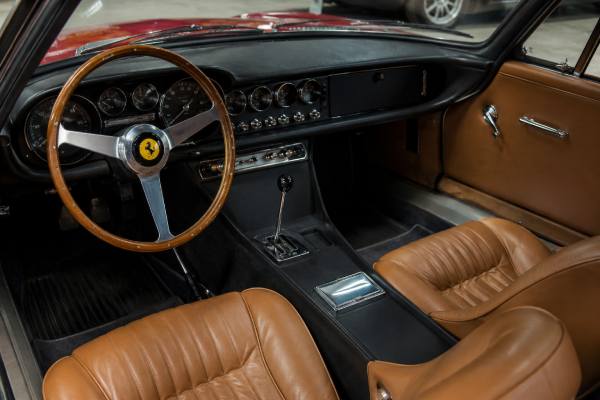
The cabin is simple but expensive in feel. Large gauges, a wood-rim steering wheel, leather trim, slim pillars, and a low seating position create a purposeful grand-touring environment. Ventilation, noise control, and heat management are all period-correct rather than modern. A good car feels special because the controls, engine, and chassis all speak clearly to the driver.
The sound is central to the experience. The Tipo 213 V12 has a lighter, sharper voice than many larger later V12s. It does not rely only on exhaust volume. Much of the character comes from induction noise, mechanical valvetrain sound, and the way the engine hardens as it moves toward the upper rev range.
Driving Experience and Performance
A healthy Tipo 563/66 275 GTB feels fast, stable, and mechanical rather than effortless. Its best quality is the combination of a rev-happy V12, balanced chassis, and long-legged grand-touring pace.
The car needs proper warm-up. Oil temperature matters, gearbox oil temperature matters, and carbureted engines are not at their best when cold. A careful driver lets the engine settle, avoids hard throttle early, and gives the transaxle time to loosen before demanding quick shifts.
Once warm, the Tipo 213 engine is smooth and responsive. The 280 hp figure does not tell the whole story because the engine’s character builds with revs. At low speed it is tractable, but the car comes alive when the driver keeps it in the middle and upper part of the rev range. The throttle response depends heavily on carburetor tune. A properly set up car feels crisp and clean. A poorly tuned one can hesitate, smell rich, foul plugs, or feel flat.
The five-speed transaxle is part of the experience. It rewards deliberate shifts. It is not a modern quick-shift manual, and it should not be forced when cold. A sorted gearbox has a positive mechanical action, while worn synchromesh, poor linkage adjustment, or tired mounts can make it balky.
The steering is heavier at parking speeds but becomes more natural once moving. The front end has real feedback, and the car feels narrower and more delicate than many later supercars. The independent rear suspension gives the car a more settled attitude over broken surfaces than older live-axle Ferraris, but tire choice and suspension setup make a huge difference.
Braking is good for the period, with four-wheel discs, but expectations must be realistic. The system does not have modern ABS, modern tire grip, or modern heat capacity. A restored brake system with correct components and fresh fluid can feel confident on the road. A tired system can feel long, uneven, or inconsistent.
High-speed touring is where the 275 GTB makes sense. The long nose improves stability, the V12 is comfortable at sustained speed, and the chassis feels composed when the car is maintained correctly. In city driving it is less happy. Heat, clutch effort, limited low-speed airflow, and the attention required by a valuable classic all make urban use more stressful.
On mountain roads, the car is rewarding because it asks for rhythm. It is not about electronic modes or huge grip. It is about choosing gears, balancing the car with throttle, reading the road, and working with the chassis. A restored car that has been driven and sorted will usually feel much better than a static concours car that has spent years being polished but not exercised.
Maintenance, Reliability and Restoration
A 275 GTB Tipo 563/66 can be dependable by vintage Ferrari standards, but only when maintained by specialists who understand the model. The biggest risks are not ordinary wear items; they are incorrect restoration work, corrosion, accident damage, missing original components, and poorly set up driveline or fuel systems.
The Tipo 213 V12 is strong when built properly, but it is expensive to rebuild. Compression, leak-down results, oil pressure, timing chain condition, valve gear wear, coolant behavior, and carburetor condition should all be checked before purchase. A beautiful engine bay is not enough. The engine must be inspected mechanically and documented with invoices from a recognized shop.
Fuel-system condition is especially important. Old fuel lines, tired carburetor seals, incorrect jetting, worn throttle shafts, and dirty tanks can make the car run poorly or create safety risks. Many 275 GTBs have been restored more than once, and not all restorations treated the fuel system with the same care as the paint and trim.
The cooling system must be right. These cars can be used on the road, but blocked radiator cores, weak fans, poor water pumps, incorrect hoses, and internal corrosion can lead to overheating. A buyer should look for evidence that the cooling system has been rebuilt as a system, not just patched.
Body and chassis inspection
Corrosion and accident history are major concerns. The 275 GTB’s value makes proper metalwork worthwhile, but also makes disguised repairs more tempting. Inspect:
- lower door edges, sills, wheel arches, floor areas, and suspension pick-up points
- front structure around the radiator opening and headlamp buckets
- rear body structure, spare-wheel area, and boot floor
- signs of uneven panel shape, thick filler, or incorrect welds
- body-number evidence on panels where applicable
- alignment of the torque tube, engine mounts, and rear transaxle mounts
A poor restoration can be more costly than visible wear. Cars restored decades ago may look attractive but hide old filler, incorrect materials, poor wiring, weak brakes, or non-original trim. The best examples are those with known ownership history, documented restoration work, correct finishes, and evidence of recent mechanical sorting.
The transaxle and torque tube need expert inspection. Listen for bearing noise, driveline vibration, clutch shudder, weak synchromesh, and differential noise. The torque-tube cars are desirable partly because the layout improved driveline behavior, so any vibration or harshness should be taken seriously.
Originality versus usability is a real tradeoff. Sensible hidden updates, such as improved cooling efficiency, modern internal seals, better fuel hose materials, or discreet electrical protection, can make a car safer and easier to drive. But visible non-original changes, wrong carburetors, incorrect trim, non-factory colors without documentation, or replacement major components can reduce collector value.
Market Value, Buying Guide and Rivals
The Tipo 563/66 275 GTB sits in the upper tier of two-cam 275 GTB values because it has the long-nose body and torque-tube chassis. The strongest examples are factory-correct, matching-numbers cars with excellent documentation, known ownership, high-quality restoration, and desirable original specification.
Market values move with condition and specification. A normal steel-bodied, three-carburetor car is valuable, but an alloy-bodied car is worth substantially more. A factory six-carburetor car adds another premium. A car that combines torque tube, alloy body, six carburetors, outside fuel filler, desirable colors, and Ferrari Classiche certification can sit near the top of the two-cam 275 GTB market.
Recent public-market data places ordinary 275 GTB values in the multi-million-dollar range, with major variation between tired cars, restored cars, highly original cars, and rare specifications. Auction numbers are useful, but they do not replace a car-specific appraisal. Two cars that both carry the “1966 Ferrari 275 GTB” label can differ dramatically in value because of body material, specification, history, restoration quality, and matching-number status.
What to check before buying
A serious pre-purchase inspection should focus on identity and condition first, cosmetics second.
- Confirm chassis type and whether the car is truly a Tipo 563/66 torque-tube example.
- Verify chassis, engine, gearbox, axle, and body numbers against documentation.
- Check whether six carburetors or alloy bodywork are factory-original or later additions.
- Review Ferrari Classiche documents, restoration invoices, old photos, and ownership history.
- Inspect for corrosion, accident repair, panel replacement, and incorrect metalwork.
- Test engine health with compression, leak-down, oil-pressure, and cooling-system checks.
- Evaluate the gearbox, clutch, differential, torque tube, and driveline alignment.
- Check suspension bushings, dampers, wheel bearings, brakes, steering box, and tires.
- Confirm correct interior materials, gauges, switches, wheels, tools, books, and spare parts.
The best cars to seek are those that have not been over-restored into lifeless showpieces, but also have not been neglected in the name of originality. A preserved car with known history can be wonderful, but deferred mechanical work on a 275 GTB is expensive. A restored car can be excellent, but only if the restoration was done accurately and the car has been driven enough afterward to reveal faults.
Cars to avoid include examples with unclear identity, missing major original components, unexplained engine changes, poor body repairs, undocumented alloy conversions, non-factory six-carburetor claims presented as original, and fresh cosmetic restorations with little mechanical evidence.
Closest Ferrari alternatives include the earlier 250 GT Lusso, the later 275 GTB/4, the 330 GTC, and the 365 GTB/4 Daytona. The Lusso is more graceful and less advanced. The GTB/4 is more powerful and more complex. The 330 GTC is more usable and usually less expensive. The Daytona is faster, heavier, and more muscular. Outside Ferrari, period rivals include the Aston Martin DB6, Lamborghini 350 GT and 400 GT, Maserati Ghibli, and Iso Grifo, but none has quite the same blend of Ferrari V12 engineering, Scaglietti-built berlinetta bodywork, and 1960s competition-adjacent aura.
For long-term collectability, the Tipo 563/66 275 GTB is secure because it has real engineering importance, rarity, beauty, and usability. The market may rise or fall, but the hierarchy is likely to remain strict: originality, documentation, correct specification, and restoration quality will keep separating the great cars from the merely shiny ones.
References
- Ferrari 275 GTB (1964) 1964 (Manufacturer Specifications)
- Ferrari 275 GTB: Ferrari History 1964 (Manufacturer History)
- Ferrari 275 GTB Series 2 Guide — Supercar Nostalgia 2020 (Technical Guide)
- Ferrari 275 GTB Market – CLASSIC.COM 2026 (Market Data)
- 1966 Ferrari 275 GTB/6C Alloy by Scaglietti | Paris 2024 | RM Sotheby’s 2024 (Auction Sale)
Disclaimer
This article is for informational purposes only and is not a substitute for professional diagnosis, inspection, repair, valuation, or restoration advice. Specifications, torque values, service intervals, procedures, and equipment can vary by chassis number, market, build specification, restoration history, and individual vehicle condition. Always verify details against official Ferrari service documentation, factory records, and a qualified vintage Ferrari specialist before buying, repairing, or restoring a 275 GTB.
Please share this article on Facebook, X/Twitter, or other platforms if it helped you. Your support helps us continue producing detailed, practical automotive guides.