
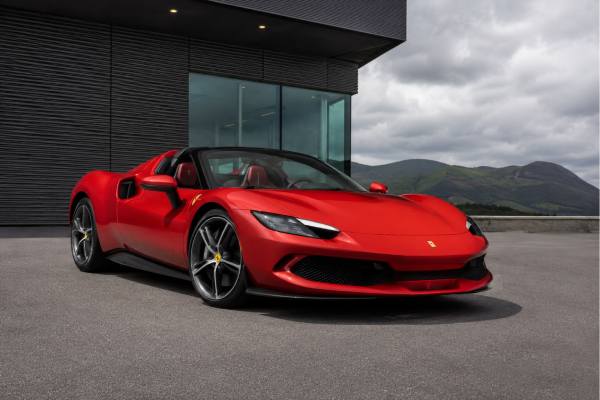
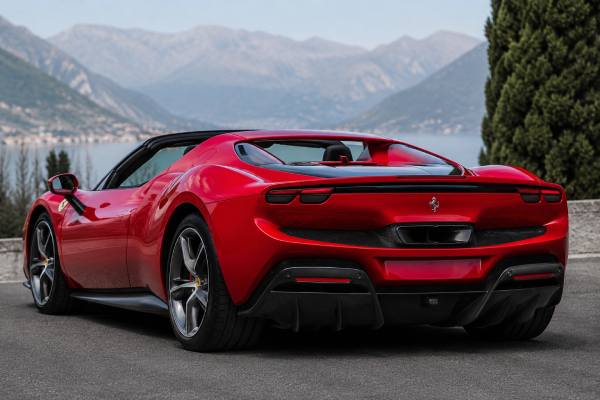
The Ferrari 296 GTS is the open-roof version of Ferrari’s F171-generation 296, introduced for 2022 as a retractable-hardtop spider powered by the F163 BC 3.0-liter twin-turbo V6 plug-in hybrid system. It matters because it puts one of Ferrari’s most important modern powertrains into a compact, rear-wheel-drive supercar that can run quietly on electric power, then deliver a combined 830 cv when the V6 and electric motor work together.
The GTS is not simply a 296 GTB with the roof removed. Ferrari redesigned the upper structure, roof packaging, rear deck, glass screen, and body stiffness targets so the car could keep the short-wheelbase, sharp-response character of the coupe while adding open-air sound and usability. For buyers, it sits at a fascinating point in Ferrari history: newer than the F8 Spider, less extreme than the SF90 Spider, more technically complex than a traditional V8 Ferrari, and increasingly relevant as collectors decide how to value plug-in hybrid supercars.
Quick Take
The 296 GTS is most appealing as a compact, roof-down Ferrari with supercar pace, a highly distinctive 120-degree V6 soundtrack, and genuine hybrid flexibility. Its identity is built around the F163 BC V6, rear-mounted MGU-K electric motor, 7.45 kWh battery, eight-speed dual-clutch gearbox, and fast-folding retractable hardtop. The main caution is complexity: battery condition, software status, recall completion, carbon-ceramic brake wear, lift-system function, tire age, and Ferrari dealer history matter as much as mileage. The best cars are low-owner, well-documented examples with desirable options, continuous service history, clean paintwork, and clear warranty or hybrid-coverage status.
Table of Contents
- History and Place in Ferrari Lineage
- Powertrain, Chassis and Key Specifications
- Production, Versions and Options to Know
- Design, Engineering and Special Features
- Road and Track Driving Character
- Maintenance, Reliability and Ownership Risk
- Market Values, Buying Advice and Rivals
History and Place in Ferrari Lineage
The 296 GTS is historically important because it brought Ferrari’s first V6 road-going spider with a Prancing Horse badge into regular production. It also marked a shift from the V8 mid-engine formula of the 458 Spider, 488 Spider, and F8 Spider toward a smaller-displacement, electrified, rear-wheel-drive supercar.
Ferrari revealed the 296 GTB coupe first, then introduced the 296 GTS as the spider companion in 2022. The GTS name follows Ferrari tradition: “Gran Turismo Spider,” applied here to a compact two-seat mid-rear-engine car with a folding hard roof. The “296” part refers to the rounded displacement and cylinder count: about 2.9 liters and six cylinders.
The car’s significance is not just the cylinder count. Ferrari had deep V6 history long before the 296, especially through Dino-branded sports cars and racing engines, but the 296 placed a six-cylinder engine in a modern Ferrari-badged production supercar. That made it a technical and emotional turning point. It had to prove that a smaller turbocharged hybrid V6 could feel worthy of Ferrari’s mid-engine bloodline.
The GTS replaced the older idea that the open mid-engine Ferrari must be a naturally aspirated or twin-turbo V8. Instead, it delivers a combined 830 cv from a 120-degree V6 and electric motor, making it far quicker than many larger-engined predecessors. It also introduced a different ownership rhythm: charging, electric-only urban driving, energy management, and hybrid warranty planning now sit beside normal Ferrari concerns such as service history, paint condition, and options.
The 296 GTS also fits into Ferrari’s wider strategy. The SF90 Stradale and SF90 Spider showed how extreme a plug-in hybrid Ferrari could be with all-wheel drive and roughly 1,000 cv. The 296 family took a more compact, lighter-feeling path: rear-wheel drive, shorter wheelbase, one electric motor, and more emphasis on agility. That is why many drivers see the 296 GTS as the more playful hybrid Ferrari, even though the SF90 is more powerful.
Today, enthusiasts pay attention to the 296 GTS for four reasons:
- It represents Ferrari’s modern V6 hybrid era.
- It keeps rear-wheel drive rather than adding front electric motors.
- It offers the open-roof experience without sacrificing much of the coupe’s performance.
- It is now visible on the used market, where specification, warranty status, and early depreciation are shaping buyer decisions.
It is still too new to be a traditional collector car, but it is already a collector-relevant Ferrari. The best-preserved, well-specified cars will likely be easier to place long term than heavily used examples with missing records, unresolved campaigns, worn carbon brakes, or unclear hybrid-system history.
Powertrain, Chassis and Key Specifications
The 296 GTS uses a 2,992 cc twin-turbo V6 paired with a rear-mounted electric motor and an eight-speed dual-clutch transmission. Ferrari quotes 610 kW, or 830 cv, for the full hybrid system in its highest-output mode.
| Item | Specification |
|---|---|
| Model code | F171-generation 296 GTS, retractable hardtop spider |
| Engine code | F163 BC |
| Engine type | 120-degree twin-turbocharged V6, dry sump |
| Displacement | 2,992 cc |
| Bore x stroke | 88 mm x 82 mm |
| Internal-combustion output | 663 cv |
| Combined hybrid output | 610 kW / 830 cv at 8,000 rpm |
| Maximum torque | 740 Nm at 6,250 rpm |
| Maximum engine speed | 8,500 rpm |
| Battery capacity | 7.45 kWh high-voltage battery |
| Transmission | 8-speed F1 dual-clutch automatic |
| Drivetrain | Rear-wheel drive |
The engine layout is central to the car’s character. A 120-degree V angle gives the V6 a wide, low shape, which helps lower the center of gravity. The turbochargers sit in the “hot vee” between the cylinder banks, shortening gas paths and helping response. The dry-sump oiling system is typical of Ferrari’s high-performance mid-engine cars and allows the engine to sit lower than a conventional wet-sump layout would permit.
The electric motor sits between the engine and gearbox. Ferrari uses the MGU-K name, borrowed from hybrid racing language, because the motor can add power, recover energy, and help manage response. A clutch can separate the V6 from the electric motor, allowing electric-only driving in eDrive mode. The car can travel a short distance without the engine running, which is useful in towns, garages, early-morning starts, and low-emission areas.
| Item | Ferrari 296 GTS figure |
|---|---|
| Length | 4,565 mm |
| Width | 1,958 mm |
| Height | 1,191 mm |
| Wheelbase | 2,600 mm |
| Dry weight | 1,540 kg with optional lightweight content |
| Weight distribution | 40.5% front / 59.5% rear |
| Fuel tank capacity | 65 liters |
| Front tires | 245/35 ZR20 |
| Rear tires | 305/35 ZR20 |
| Top speed | Over 330 km/h |
| 0–100 km/h | 2.9 seconds |
| 0–200 km/h | 7.6 seconds |
| 200–0 km/h braking | 107 meters |
The chassis uses aluminum construction rather than a full carbon-fiber tub. That matters for repair assessment. Accident damage, alignment history, and structural repair quality should be checked carefully, but the car is not built around the same kind of carbon monocoque inspection process as some McLaren or Lamborghini models.
The braking system uses carbon-ceramic discs, brake-by-wire control, energy recovery, and Ferrari’s ABS Evo logic. The electronics suite also includes Side Slip Control, an electronic differential, magnetorheological dampers, electric power steering, and a six-way chassis sensor. These systems are not decorative features; they are part of why a rear-wheel-drive car with this much torque can feel approachable.
Production, Versions and Options to Know
The 296 GTS is the open-roof counterpart to the 296 GTB, and both share the same basic hybrid powertrain. The key buying difference is that the GTS adds the retractable hardtop, specific rear-deck packaging, additional structural work, and a stronger focus on open-air driving.
Ferrari does not treat the standard 296 GTS as a numbered limited edition. Production is constrained by Ferrari’s normal allocation and model-cycle planning rather than a published build cap. That means rarity is driven more by color, options, market, mileage, and condition than by a numbered plaque.
Main 296 family versions
The standard 296 GTB is the fixed-roof berlinetta. It is usually the purer and slightly lighter choice for buyers focused on track work or long-term coupe collectability.
The 296 GTS is the retractable-hardtop spider. It keeps the same quoted performance figures while adding roof-down sound and a more emotional road-car personality.
The 296 Speciale and 296 Speciale A are later, more focused derivatives. They are relevant to the GTS because they may influence future demand, but they are separate higher-performance models with different positioning, output, aero, and collectability.
Assetto Fiorano package
Assetto Fiorano is the most important performance option for serious drivers. On the 296 GTS, it adds track-focused hardware and weight-saving measures rather than merely cosmetic trim. Key elements include Multimatic dampers derived from racing use, carbon-fiber exterior and interior parts, additional aerodynamic pieces, a Lexan rear screen, and availability of more focused Michelin Cup 2 R tires.
For buyers, Assetto Fiorano cuts two ways. It improves desirability among track-minded owners and collectors who want the sharpest specification. It can also make the car less relaxed on rough roads, and track use should be investigated carefully. A low-mile Assetto Fiorano car with no track wear is very different from one with heat-cycled tires, stone-chipped lower panels, cooked brakes, and heavy circuit use.
Factory options that affect desirability
Ferrari options can have a large effect on both price and resale appeal. The most valuable combinations are usually tasteful, well-documented, and coherent rather than simply expensive.
Options to look for include:
- Front suspension lift, especially for urban use and steep driveways.
- Carbon-fiber exterior details, including front spoiler, rear diffuser areas, side elements, and engine-bay trim.
- Carbon-fiber racing seats, if comfort and fit suit the driver.
- Daytona or special-design seats for buyers who prefer grand-touring comfort.
- Passenger display, a popular modern Ferrari option.
- Premium audio, useful in a spider but not essential for purists.
- Front and rear parking sensors, surround-view camera, and driver-assistance equipment where fitted.
- Apple CarPlay or smartphone integration, depending on market and year.
- Special paint, historic colors, or Tailor Made details with factory documentation.
Documentation matters. A window sticker, order sheet, Ferrari build record, service invoices, and warranty paperwork make a car easier to value. Paint-to-sample or Tailor Made cars need especially clear records, because an unusual specification can be either a strength or a resale obstacle depending on taste.
Design, Engineering and Special Features
The 296 GTS is designed around compactness, short overhangs, visible mechanical drama, and roof-down sound. Its engineering is not hidden beneath the styling; the roof, rear buttresses, cooling paths, active aero, and hybrid packaging all shape the way the car looks.
The retractable hardtop is the defining GTS feature. It opens or closes in about 14 seconds and can operate at low road speeds. Unlike a soft-top, it gives the car a coupe-like silhouette when raised and better noise isolation than a fabric roof. When lowered, the two-piece roof stores ahead of the engine area, while the rear deck keeps a glass window so the V6 remains visible.
The rear glass screen behind the occupants is another important detail. It helps manage airflow and cabin buffeting when the roof is down. This matters because the 296 GTS is not only for short blasts. Many owners use these cars for weekend trips, mountain roads, events, and highway drives, where wind management can make the difference between a tiring spider and a usable one.
The exterior design references classic mid-engine Ferrari proportions without copying them. The flying-buttress theme, clean body sides, muscular rear haunches, and compact cabin are more restrained than the sharper, vent-heavy look of some modern supercars. Ferrari’s aim was not to make the 296 GTS look like a track special in standard form. It is smoother and more technical than theatrical.
Aerodynamics are a major part of the package. Ferrari uses an active rear spoiler integrated into the rear bodywork, but unlike some older active systems that mainly reduced drag, this device is used to add downforce when needed. Assetto Fiorano cars add more visible aero parts and a more serious track stance.
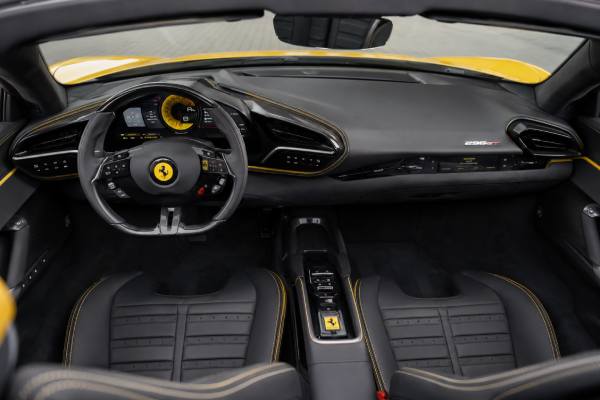
The cockpit is fully digital and heavily steering-wheel focused. Many functions sit on touch surfaces or wheel controls, including drive-mode logic and hybrid settings. The result feels modern and dramatic, but it also divides opinion. Some owners love the clean digital look; others prefer the more tactile controls of earlier Ferraris. A buyer should spend time sitting in the car, pairing a phone, using the displays, and checking that the interface feels natural.
The sound is a special part of the 296 GTS identity. The V6 is turbocharged, but the 120-degree layout, high rev limit, short exhaust routing, and careful harmonic tuning give it a bright, hard-edged note. With the roof open, the sound is more exposed and less filtered than in the GTB. It is not the same as a naturally aspirated Ferrari V8 or V12, but it has its own personality: metallic, urgent, and surprisingly high in pitch for a turbo V6.
Road and Track Driving Character
The 296 GTS feels defined by immediacy: electric torque fills the low-rev response, the V6 pulls hard to high rpm, and the short wheelbase gives the car a sharp, compact feel. It is extremely fast, but its greater achievement is making that performance feel alert rather than heavy.
In eDrive, the car can move quietly on electric power. This mode is useful for leaving a garage, moving through traffic, or driving short urban distances without firing the V6. It does not turn the 296 GTS into an electric grand tourer, but it makes the car easier to live with than a conventional supercar in certain situations.
Hybrid mode is the normal start-up setting. It decides when to run the combustion engine and when to use electric drive. For gentle driving, the car can feel calm, even subdued. Push harder, and the V6 arrives quickly. The transition is smoother than many older hybrid systems because the electric motor, clutch, gearbox, and engine management are integrated closely.
Performance mode keeps the V6 awake more of the time and maintains battery charge for repeated use. This is the mode many drivers prefer on fast roads because the car feels more ready, more consistent, and more Ferrari-like. Qualify mode gives maximum output and response but uses battery energy more aggressively.
The gearbox is one of the car’s strengths. Ferrari’s eight-speed dual-clutch transmission shifts quickly but does not feel crude in normal driving. In manual mode, paddle shifts have the crispness expected of a modern Ferrari. In automatic use, the gearbox is smoother than older single-clutch Ferrari transmissions and much easier to live with in town.
Steering is quick and light, with the familiar modern Ferrari emphasis on fast front-end response. The car does not need much steering input, so nervous drivers may need time to adjust. Good tires at the correct temperature are essential. On cold rubber or wet roads, the 296 GTS deserves respect; the electronics are highly capable, but the rear tires still have to manage huge torque and speed.
Brake feel is more complex than on an older hydraulic-only Ferrari because the 296 blends friction braking and energy recovery through a brake-by-wire system. The pedal is short and firm, with strong stopping power. On road, the system feels controlled and confidence-inspiring once the driver trusts it. On track, brake condition, tire condition, and cooling history become critical inspection points.
As a road car, the 296 GTS is more usable than its numbers suggest. The lift system helps with ramps. The hardtop reduces noise when closed. The hybrid system makes low-speed driving calmer. The ride is firm but not punishing in the right mode and on healthy tires. Visibility is still supercar-like, so parking sensors and cameras are valuable, but it is not a difficult car by modern exotic standards.
On track, the GTS can be very fast, but it is not the most sensible version for repeated heavy circuit use. A GTB, Assetto Fiorano car, or later Speciale derivative may be a better fit for owners who prioritize lap times. The GTS is at its best as a road-biased supercar that can handle track days when maintained carefully.
Maintenance, Reliability and Ownership Risk
The 296 GTS should be judged less like a normal used sports car and more like a high-voltage exotic with Ferrari-specific service needs. Its biggest ownership risks are not only engine failure or gearbox trouble, but incomplete service history, unresolved campaigns, battery uncertainty, expensive consumables, and poor repair documentation.
Ferrari’s seven-year scheduled maintenance program is an important part of the ownership picture. Regular annual servicing through the official network helps protect value, especially on a car with complex hybrid controls and software. Buyers should confirm what is covered in their market, whether the program transfers, and whether the car has missed any time-based visits.
Hybrid system and battery
The 7.45 kWh high-voltage battery is central to the car’s value. A pre-purchase inspection should check state of health, charging behavior, fault codes, cooling function, and software updates. A car that has spent long periods unused without proper battery maintenance deserves extra caution.
Ferrari has introduced hybrid warranty extension programs in many markets, and these can be very relevant to 296 ownership. Buyers should confirm the exact coverage by VIN, market, and date. Do not assume that a car has battery protection just because a similar car does. Continuity, transferability, and dealer enrollment all matter.
Engine, turbo and cooling checks
The F163 BC is a highly stressed engine with remarkable specific output. That does not mean it is fragile, but it does mean warm-up discipline, correct fluids, clean cooling paths, and campaign completion are important. Inspections should look for leaks, turbo oil-line condition, coolant issues, abnormal noises, and evidence of overheating.
The 296 has had safety recalls in some markets, including fuel-tank connecting-pipe concerns on certain early cars and a small 2025 recall involving the turbocharger oil-feed pipe connection. Any car should be checked by VIN through Ferrari and the relevant national safety database. Completion paperwork should be kept with the service file.
Brakes, tires and suspension
Carbon-ceramic brakes can last a long time in road use, but track use changes the equation. Inspect disc surface condition, remaining life measurements, pad wear, calipers, and service records. Replacement costs are high enough to affect the price of the car.
Tires matter more than many buyers expect. Old, mismatched, or heat-cycled tires can make the car feel nervous and can interfere with the way the stability systems read grip. The correct type, size, date code, and wear pattern should be part of the inspection.
Suspension lift, magnetorheological dampers, wheel alignment, and underbody condition also deserve attention. Look for scraped carbon parts, damaged undertrays, uneven tire wear, and signs of curb strikes. A car with front lift is easier to live with, but the system itself should work smoothly and quietly.
Electronics and cabin systems
The digital cockpit, steering-wheel controls, hybrid modes, charging system, ADAS options, cameras, sensors, and infotainment should all be tested. Modern Ferrari electronics are deeply integrated, so even small warning lights or intermittent faults should not be brushed aside. A diagnostic scan by a Ferrari specialist is essential.
Accident repair is another major risk. Paint protection film can hide stone chips but can also hide poor paintwork. Check panel gaps, paint depth, glass dates, wheel damage, carbon trim, and the front underside. A clean title is not enough; the car needs a documented physical inspection.
Market Values, Buying Advice and Rivals
The 296 GTS sits in a changing market: new enough to still be affected by allocation, options, and warranty, but old enough that used examples now reveal real depreciation patterns. The strongest cars are not simply the cheapest; they are the ones with the right specification, clean history, and low ownership risk.
In the United States, many used 296 GTS examples trade or advertise in the high-$300,000 to low-$400,000 range, with newer, heavily optioned, certified, or very low-mile cars asking more. In the United Kingdom and Europe, values vary widely by tax status, left- or right-hand drive, mileage, color, and official Ferrari Approved status. Market movement can be quick, so buyers should compare live listings rather than rely on old guide prices.
Value is usually driven by:
- Mileage and number of owners.
- Ferrari dealer service history.
- Remaining factory warranty and hybrid coverage.
- Assetto Fiorano specification.
- Exterior color and interior taste.
- Carbon-fiber options and front lift.
- Condition of carbon-ceramic brakes and tires.
- Paint originality and absence of accident repairs.
- Completeness of books, keys, charger, accessories, and invoices.
- Proof that recalls and service campaigns are complete.
The safest buying route is a Ferrari Approved car from an official dealer, but it is not the only route. A privately sold or independent-dealer car can make sense if it has excellent documentation and passes a proper Ferrari specialist inspection. A cheap car without clear records can become expensive quickly.
Buyer inspection checklist
Before committing to a 296 GTS, confirm the following:
- VIN-specific recall and campaign status.
- Full annual service history.
- High-voltage battery health and charging operation.
- Warranty and hybrid-program status.
- Diagnostic scan with no unresolved faults.
- Brake disc and pad measurements.
- Tire brand, type, size, tread, and date codes.
- Suspension lift function, if fitted.
- Roof operation, seals, alignment, and wind-noise behavior.
- Paint-depth readings and accident-repair checks.
- Condition of carbon trim, wheels, underbody, and front splitter.
- Original order sheet, books, keys, charger, and accessories.
The examples to seek are one- or two-owner cars with official history, desirable but tasteful options, fresh tires, clean paint, no track-abuse signs, and clear battery documentation. The examples to avoid are cars with missing records, unresolved warning lights, vague import history, unexplained paintwork, cheap replacement tires, worn brakes, or sellers who resist a specialist inspection.
Closest rivals
The McLaren 750S Spider is the closest driver-focused rival. It is lighter in feel, very fast, and more traditional because it avoids plug-in hybrid hardware. It also brings McLaren-specific concerns around depreciation, warranty, and carbon-tub repair.
The Lamborghini Huracán Evo Spyder and Tecnica are more dramatic and naturally aspirated, with a V10 character the Ferrari cannot copy. They are older in concept and less technically advanced, but their sound and simplicity appeal to many buyers.
The Ferrari F8 Spider is the most obvious same-brand alternative. It has a twin-turbo V8, no plug-in system, and a more familiar Ferrari ownership profile. The 296 GTS is quicker and more modern; the F8 may appeal to buyers who want the last part of Ferrari’s V8 spider lineage.
The SF90 Spider is faster and more expensive, with all-wheel drive and a more complex three-motor hybrid setup. It feels like a higher-tier technological statement, while the 296 GTS feels smaller, more playful, and more road-sized.
Long-term collectability will depend on how the market views Ferrari’s first-generation modern hybrid supercars. The 296 GTS has strong ingredients: historic powertrain significance, huge performance, open-roof emotion, and Ferrari badge strength. The caution is that complex hybrid cars reward careful ownership. The best-kept, best-documented examples should always be easier to sell than average cars bought only on price.
References
- Ferrari 296 GTS: the Epitome of Driving Pleasure 2022
- 296 GTS: DEFINING THE CONCEPT OF DRIVING THRILLS, INCLUDING TOP DOWN 2022
- Warranties And Official Ferrari Maintenance 2026
- Ferrari presents two new extended warranty programmes, Warranty Extension Hybrid and Power Hybrid 2024
- Part 573 Safety Recall Report 25V716 2025
Disclaimer
This article is for informational purposes only and is not a substitute for professional diagnosis, repair, valuation, or inspection. Specifications, torque values, service intervals, recall applicability, warranty terms, and repair procedures can vary by VIN, market, model year, equipment, and software status. Always verify details against official Ferrari service documentation and a qualified Ferrari dealer or specialist.
If this guide helped, please consider sharing it on Facebook, X/Twitter, or your favorite enthusiast community to support our work.