
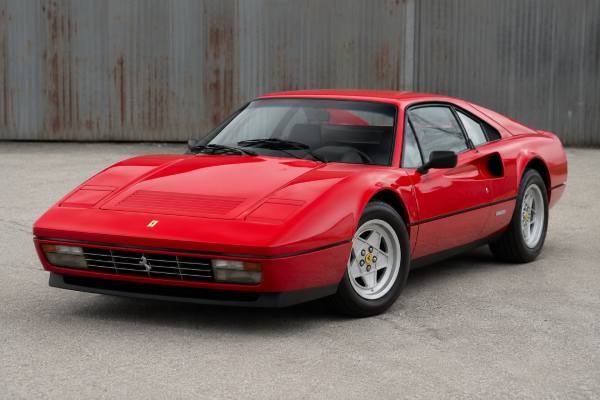
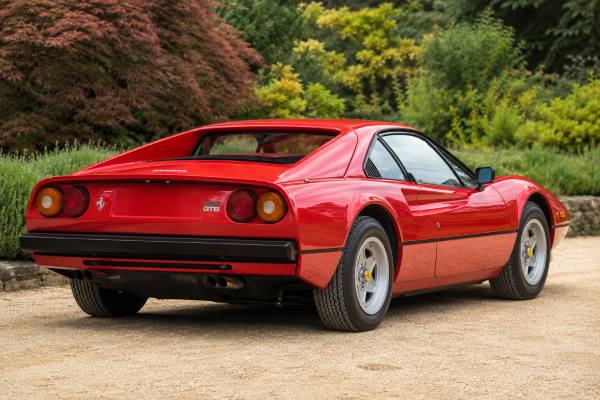
The Ferrari 308 GTBi, factory chassis type F 106 BB 100, was the fixed-roof, fuel-injected 308 built from 1980 to 1982 with Ferrari’s transverse 2.9-liter V8. In European-market form, the F106BB engine produced 214 hp, placing this car between the earlier carbureted 308 GTB and the later 308 GTB Quattrovalvole. It kept the clean Pininfarina berlinetta shape that made the 308 famous, but added Bosch K-Jetronic mechanical fuel injection to meet tightening emissions rules and improve day-to-day drivability.
The GTBi matters because it is one of the rarer standard 308 road cars, with far fewer berlinettas built than open-roof GTSi models. It is not the fastest 308, and that point has shaped its reputation for decades. Yet its appeal is more subtle: a steel-bodied, two-seat, mid-engine Ferrari with classic proportions, a gated manual gearbox, analog controls, and a more usable fuel system than the carbureted cars. Buyers still search for it because it can offer a relatively focused 308 experience, but only when condition, originality, service history, and corrosion risk are taken seriously.
Quick Take
The Ferrari 308 GTBi is appealing because it combines the fixed-roof 308 shape with mechanical fuel injection, a transverse V8, and a more manageable ownership personality than the earlier carbureted GTB. Its identity is very specific: a short-lived 1980–1982 bridge model with 214 hp in European specification, limited production, and a reputation for being smoother but less urgent than the carbureted and Quattrovalvole cars. The main caution is that deferred maintenance, body corrosion, old fuel-injection problems, and poor restoration work can erase any purchase-price advantage, so documentation and a specialist inspection matter more than mileage alone.
Table of Contents
- History and Collector Significance
- Engine, Chassis and Key Specifications
- Production, Variants and Factory Details
- Design, Engineering and Special Features
- Road Feel, Performance and Usability
- Maintenance, Reliability and Restoration Risks
- Values, Buying Advice and Rivals
History and Collector Significance
The 308 GTBi is important because it marks Ferrari’s shift from carburetors to fuel injection on the two-seat V8 berlinetta. It was not a clean-sheet model, but a carefully revised version of the 308 GTB created for a changing regulatory and ownership world.
The original 308 GTB appeared in 1975 as the sharper, two-seat companion to the Bertone-designed 308 GT4. Pininfarina handled the design, with Leonardo Fioravanti’s low wedge profile giving Ferrari a mid-engine shape that still defines the brand’s entry-level exotic line. Early fiberglass-bodied GTBs are now the collector darlings, followed by the steel-bodied carbureted cars, but the GTBi has its own place in the story.
By 1980, emissions rules were changing quickly, especially in important export markets. Ferrari responded by replacing the Weber carburetors with Bosch K-Jetronic mechanical fuel injection. The “i” in GTBi stands for “iniezione,” or injection. The system reduced emissions and improved cold-start behavior, but it also softened the engine’s output compared with the earlier carbureted European cars.
That tradeoff explains why the GTBi has long sat in the shadow of other 308 variants. The carbureted GTB has the rawest sound and response. The later Quattrovalvole restored much of the lost power with four-valve cylinder heads. The GTS body style gained wider public fame through television and open-air appeal. The GTBi is quieter in the market, but that is exactly why some collectors value it: it is rarer than the GTSi, more structurally focused than the targa, and cleaner in appearance than many U.S.-market bumper-equipped examples.
Its historical role is best understood as a bridge. It carried the 308 into the 1980s without changing the car’s basic layout: mid-mounted V8, tubular chassis, independent suspension, five-speed manual gearbox, and steel Pininfarina bodywork. At the same time, it introduced a more modern fueling system that pointed toward the 328 and later Ferrari V8 road cars.
Today, the 308 GTBi is collectible for several reasons:
- It is a short-production Ferrari berlinetta from the analog era.
- It has the classic two-seat 308 body without the removable roof panel.
- It uses a mechanical, serviceable fuel-injection system rather than complex modern electronics.
- It is significantly rarer than the open-roof GTSi.
- It often costs less than the most desirable carbureted and Quattrovalvole 308s, although top examples are no longer cheap.
It is not a concours shortcut or a budget Ferrari to buy casually. The best cars are bought on condition, originality, and records. A neglected GTBi can be far more expensive than a well-bought Quattrovalvole or even a 328.
Engine, Chassis and Key Specifications
The 308 GTBi uses a 2,926.90 cc transverse V8 with Bosch K-Jetronic mechanical fuel injection and a five-speed manual transaxle. The key point is that this is a European-specification 214 hp berlinetta, not the lower-output federal version.
| Item | Specification |
|---|---|
| Production years | 1980–1982 |
| Factory chassis type | F 106 BB 100 |
| Body style | Two-seat fixed-roof berlinetta |
| Engine | 90-degree V8, transversely mounted behind the cabin |
| Displacement | 2,926.90 cc |
| Bore x stroke | 81 mm x 71 mm |
| Fuel system | Bosch K-Jetronic mechanical fuel injection |
| Maximum power | 214 hp at 6,600 rpm |
| Maximum torque | About 243 Nm at 4,600 rpm |
| Transmission | Five-speed manual, rear-wheel drive |
| Top speed | About 240 km/h |
| Dry weight | About 1,286 kg |
The engine belongs to Ferrari’s compact V8 family, with double overhead camshafts and two valves per cylinder. The transverse layout places the engine and gearbox as a compact unit behind the seats, a package inherited from the 308 GTB line and related to Ferrari’s earlier mid-engine V8 architecture.
The chassis is a tubular steel structure with steel body panels. Suspension is independent at all four corners, using unequal-length wishbones, coil springs, telescopic dampers, and anti-roll bars. Braking is by ventilated discs all round. Steering is unassisted rack and pinion, which gives the car much of its low-speed weight and high-speed clarity.
| Area | Detail |
|---|---|
| Chassis | Tubular steel frame |
| Front suspension | Independent wishbones, coil springs, telescopic dampers, anti-roll bar |
| Rear suspension | Independent wishbones, coil springs, telescopic dampers, anti-roll bar |
| Brakes | Ventilated discs front and rear |
| Steering | Unassisted rack and pinion |
| Wheelbase | 2,340 mm |
| Length | 4,230 mm |
| Width | 1,720 mm |
| Height | 1,120 mm |
| Fuel capacity | About 74 liters |
Period performance figures vary by market, test conditions, and state of tune. A healthy European GTBi is commonly associated with a top speed around 240 km/h and 0–100 km/h in roughly seven seconds. Those numbers are respectable, but they do not tell the full story. The GTBi is less about explosive acceleration and more about balance, steering feel, engine note, and mechanical involvement.
Production, Variants and Factory Details
The GTBi was built in small numbers, with 494 examples commonly listed for the 1980–1982 production run. That makes it much rarer than the GTSi and gives the fixed-roof injected car a distinct identity within the 308 family.
The 308 line can be simplified into four major road-car phases:
| Variant | Period | Main identity |
|---|---|---|
| 308 GTB carbureted | 1975–1980 | Original fixed-roof model, early fiberglass then steel bodies |
| 308 GTS carbureted | 1977–1980s | Open-roof targa version with strong market recognition |
| 308 GTBi / GTSi | 1980–1982 | Bosch fuel injection, lower output, smoother road manners |
| 308 GTB / GTS Quattrovalvole | 1982–1985 | Four-valve heads, restored performance, visual updates |
The GTBi was the closed berlinetta version. The GTSi used the same basic mechanical package with a removable roof panel. For buyers today, the roof style changes the character more than the specification sheet suggests. The GTBi usually feels tighter, cleaner, and more focused. The GTSi offers open-air appeal and broader recognition, but the roof structure and seals add their own ownership checks.
Market differences are important. European cars are generally tied to the 214 hp figure in this article. U.S.-market cars used different emissions equipment and lower output. They also often have larger impact bumpers, side marker lights, and market-specific details. Buyers should avoid assuming that all “1980–1982 308 injected” cars share the same appearance, engine output, or equipment.
Factory options and common equipment varied by market and year. Air conditioning, leather trim, metallic paint, wider wheels, deep front spoilers, and different tire packages are all relevant when judging a car. Some cars have been modified over time with aftermarket wheels, modern audio systems, exhausts, electronic ignition changes, upgraded cooling fans, or non-original interior materials. Some upgrades improve usability, but they can reduce value if they are poorly installed or hard to reverse.
Documentation is central to authenticity. A serious GTBi should be checked against:
- chassis number and engine number records
- service books and invoices
- ownership history
- import papers for market-changed cars
- Ferrari Classiche certification when available
- paint and trim evidence
- old photographs and restoration records
- correct body, bumper, wheel, lighting, and interior details for its market
Matching-numbers status matters, although condition still carries enormous weight. A fully documented, original-engine GTBi with correct paint, trim, wheels, books, tools, and recent specialist service will usually be more desirable than a lower-mileage car with gaps in its history.
Design, Engineering and Special Features
The 308 GTBi’s design strength is its restraint: it looks like a classic 308 because Ferrari changed the fueling system without spoiling the Pininfarina body. The car’s appeal lies in the way its low nose, flying-buttress rear quarters, side intakes, and compact cabin express the mid-engine layout.
Pininfarina’s shape is clean and purposeful. The wedge nose contains pop-up headlights and radiator airflow management. The side intakes feed the mid-mounted V8 area. The rear deck and buttresses visually shorten the cabin and emphasize the engine behind the seats. Unlike many later supercars, the 308 does not rely on large wings or complex visible aero devices. Its drama comes from proportion.
The GTBi kept steel body construction rather than the fiberglass bodywork of the earliest 308 GTBs. Steel adds weight but is easier to understand in normal restoration work. It also introduces corrosion risk, especially around lower panels and hidden seams. Panel fit varies more than on modern cars, so “perfect” gaps are not always authentic, but uneven repairs, thick filler, or poorly aligned front and rear clips should raise concern.
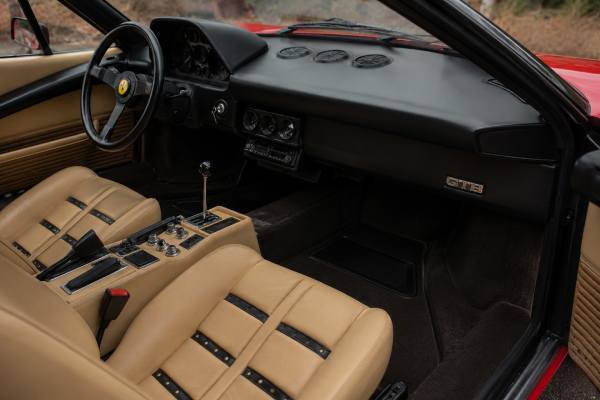
Inside, the 308 GTBi is simple but not crude. The driving position is low, the windscreen is close, and the cabin feels narrow by modern standards. The gated shifter is a central part of the experience. Instruments are clear, switches are period-correct, and the dashboard layout favors function over luxury. The injection-era cars also have detail changes compared with earlier carbureted versions, including interior revisions and instrument placement changes.
Engineering features that define the car include:
- transverse mid-mounted V8 packaging
- mechanical Bosch K-Jetronic fuel injection
- dry-sump or wet-sump differences depending on market and specification context
- steel tubular chassis construction
- unassisted rack-and-pinion steering
- independent suspension all round
- five-speed manual transaxle with open metal shift gate
- ventilated disc brakes
The sound character is different from a carbureted 308. The earlier cars have a sharper intake character because of their Weber carburetors. The GTBi is cleaner and smoother, with a slightly less vivid top-end feel. A good exhaust system can make the injected car sound excellent, but buyers should be wary of loud systems fitted to distract from weak compression, rough running, or fuel-system issues.
The car’s special feature is not one single part. It is the combination of old-world Ferrari construction and a more usable 1980s fueling system. That makes the GTBi attractive to drivers who want the 308 shape and manual experience without the constant tuning personality of carburetors.
Road Feel, Performance and Usability
A good 308 GTBi feels balanced, communicative, and mechanical rather than brutally fast. Its performance is modest by modern sports-car standards, but the steering, gearbox, engine placement, and visibility make it deeply involving at real road speeds.
The V8 needs revs. Below the midrange, it is tractable but not forceful. Above that, it becomes more eager, with a clean pull toward the upper range. The Bosch injection gives smoother starts and more predictable running than carburetors when the system is healthy. It also removes some of the rawness that makes earlier cars feel more urgent. That is the GTBi’s central driving tradeoff.
The gearbox is part of the ritual. When cold, the second-gear shift can be reluctant, which is common on classic Ferraris of this period. Drivers often let the oil warm before rushing the shift pattern. Once warm, the gated manual becomes precise and satisfying. A crunchy shift, baulking after warm-up, or jumping out of gear is not “character”; it is a warning sign.
Steering is heavy at parking speeds because there is no power assistance. On the move, it becomes one of the car’s best qualities. The front axle talks clearly, and the car feels narrow enough to place well on a twisting road. The mid-engine balance rewards smooth inputs. It is not a car that enjoys clumsy braking, sudden lifts, or aggressive wet-road behavior on old tires.
Ride quality is firm but not punishing when the suspension is fresh. Many poor-driving 308s are not badly designed; they are simply tired. Worn bushings, old dampers, incorrect alignment, aged tires, and uneven ride heights can make a GTBi feel nervous or vague. A properly set-up car feels much more settled.
Braking is adequate for spirited road driving, but the system belongs to its era. The pedal should feel progressive, not wooden or spongy. Old hoses, sticking calipers, contaminated fluid, or poorly rebuilt components can transform the car from enjoyable to unsettling. Track use requires caution unless the entire brake and cooling system is known to be fresh.
Usability is better than many people expect, but it remains a classic exotic. The cabin can be warm. Air conditioning may be weak unless restored correctly. Rearward visibility is acceptable for a mid-engine car, but the low nose is not always easy to judge. Luggage space is limited. Ground clearance is low enough to require care over ramps and steep driveways.
A healthy GTBi is happiest on fast country roads, mountain routes, and relaxed weekend drives. It can handle city use, but heavy steering, heat, clutch effort, and low-speed attention make it less relaxing in traffic. It is a car to warm properly, drive with mechanical sympathy, and service before problems become expensive.
Maintenance, Reliability and Restoration Risks
The 308 GTBi can be reliable when maintained by someone who understands classic Ferraris. Most serious problems come from age, deferred service, corrosion, fuel-system neglect, and repairs done by general shops rather than marque specialists.
The timing belts are the best-known maintenance item. They must be replaced on schedule, along with tensioners and related inspection work. A belt service is also the right time to check cam seals, coolant hoses, accessory belts, ignition components, and oil leaks. Skipping this work to save money is false economy.
The Bosch K-Jetronic injection system is generally durable, but it is sensitive to fuel quality, vacuum leaks, control-pressure problems, and long storage. A GTBi that has sat for years may need a fuel tank clean, pump, accumulator, injectors, warm-up regulator work, fuel distributor attention, hoses, and careful setup. Random parts replacement can get expensive quickly.
Common inspection points include:
- timing belt age and documented belt service
- oil leaks around cam covers, seals, and sump areas
- coolant leaks, radiator condition, and fan operation
- old fuel hoses and possible fuel smell
- hot-start and cold-start behavior
- ignition condition and distributor-related issues
- clutch bite point and gearbox synchromesh
- suspension bushings, ball joints, dampers, and wheel bearings
- brake calipers, hoses, master cylinder, and fluid age
- electrical grounds, fuse boxes, switches, window motors, and lights
Corrosion is a major buying concern. The 308’s steel body and tubular structure can hide expensive problems. Inspect lower doors, sills, wheel arches, floor areas, front valance, rear quarters, suspension pickup areas, battery tray, windscreen surrounds, and areas around previous repairs. Bubbles in paint may be only the visible part of a deeper issue.
Accident damage also matters. A mid-engine Ferrari with poor chassis repair can be costly to correct and difficult to align properly. Look for uneven panel gaps, strange tire wear, poor bumper alignment, overspray, cracked inner structures, and mismatched paint depth. A pre-purchase inspection should include lifting the car, not just admiring it in a showroom.
Restoration costs can exceed the value difference between a mediocre car and a great one. Interior retrims, correct leather, dashboard repairs, switchgear, wheels, suspension rebuilds, brake overhauls, fuel-system work, and paint correction all add up. Parts are available for many items, but not always cheaply or instantly. Some trim and market-specific details are much harder to source than routine mechanical parts.
Originality versus upgrades needs judgment. Sensible upgrades such as improved cooling fans, modern tires in correct sizes, stainless brake hoses, or discreet ignition improvements may help usability. Heavy modifications, incorrect wheels, cut dashboards, poor repaint color changes, or non-factory interiors can hurt value. The best approach is reversible improvement with documentation.
Values, Buying Advice and Rivals
The 308 GTBi usually trades below the most desirable early fiberglass GTBs and below the strongest Quattrovalvole berlinettas, but good examples are still serious collector cars. Current market data places average public-sale GTBi results around the lower-to-mid six-figure dollar range only for exceptional cars, while many usable examples sit lower depending on market, condition, history, and originality.
The GTBi’s value is driven less by headline mileage and more by proof. A 20,000-mile car with old belts, weak paint, and no records can be worse than a 55,000-mile car with continuous specialist maintenance. Buyers should focus on total condition.
| Value factor | Why it matters |
|---|---|
| Original engine and gearbox | Supports collector confidence and long-term desirability |
| Service history | Shows whether timing belts, fuel system, cooling, and brakes were maintained |
| Body condition | Rust and accident repairs can be more expensive than mechanical work |
| Correct market specification | European, U.S., and converted cars differ in appearance, output, and value |
| Paint and interior originality | Color changes and poor retrims reduce confidence |
| Tools, books, and records | Small details can make a large difference on collector Ferraris |
A sensible buying process is simple but strict:
- Confirm the exact variant, market, chassis number, and engine identity.
- Review records before arranging travel or inspection.
- Check whether the timing belt service is current and documented.
- Have a Ferrari specialist inspect the car on a lift.
- Test hot and cold starting, warm shifting, braking, cooling, and electrical functions.
- Inspect for rust, filler, accident damage, and poor previous restoration.
- Price the car based on what it needs, not what the seller says it “could be.”
Cars to seek include original-color berlinettas with known ownership, correct trim, recent major service, clean structure, and no stories around importation or identity. Cars to avoid include long-stored examples with fuel-system problems, fresh paint over unknown metalwork, missing records, incorrect interiors, overheating behavior, and vague claims about “recent service” without invoices.
Closest alternatives include the carbureted 308 GTB, 308 GTSi, 308 GTB Quattrovalvole, Ferrari 328 GTB, Porsche 911 SC or Carrera 3.2, Lamborghini Urraco, Maserati Merak, and Lotus Esprit Turbo. Within Ferrari, the 328 is easier to live with and more developed, but less delicate in appearance. The carbureted 308 is more charismatic but often more expensive and tune-sensitive. The Quattrovalvole offers more power and broader demand. The GTBi’s niche is narrower: rare fixed-roof 308 shape, fuel-injected usability, and understated collector appeal.
Long-term collectability should remain solid because the 308 is one of Ferrari’s defining road-car shapes. The GTBi may never overtake the fiberglass GTB or the best QV cars, but excellent examples are likely to keep gaining respect as buyers learn the difference between a merely cheap 308 and a properly preserved short-run berlinetta.
References
- Ferrari 308 GTBi (1980) 1980 (Manufacturer Specifications)
- Ferrari 308 GTB (1975) 1975 (Manufacturer Model History)
- Ferrari 308 GTB Quattrovalvole (1982) 1982 (Manufacturer Model History)
- Ferrari 308 GTBi Market 2026 (Market Data)
- Check for Recalls: Vehicle, Car Seat, Tire, Equipment 2026 (Recall Database)
Disclaimer
This article is for informational purposes only and is not a substitute for professional diagnosis, repair, inspection, or restoration advice. Specifications, torque values, maintenance intervals, procedures, and market details can vary by VIN, market, equipment, production changes, and prior repairs. Always verify details against official Ferrari service documentation and consult a qualified Ferrari specialist before buying, servicing, or restoring a 308 GTBi.
If this guide was useful, please consider sharing it on Facebook, X/Twitter, or your favorite car community to support our work.