
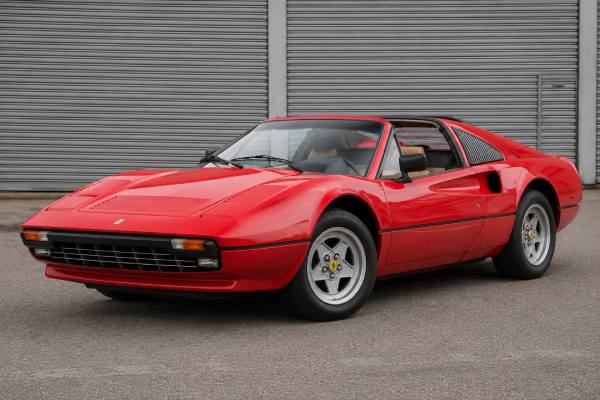
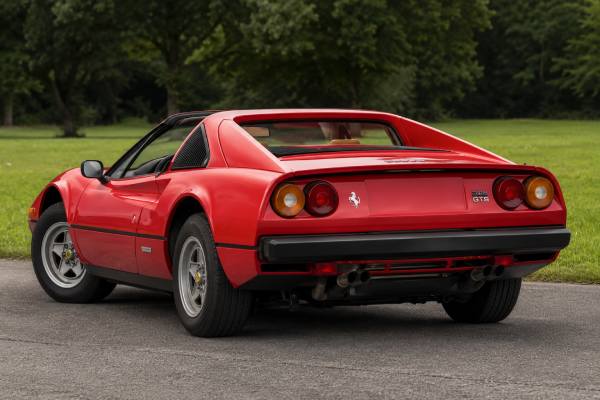
The Ferrari 308 GTS Quattrovalvole, built from 1982 to 1985, is the open-roof targa version of Ferrari’s 2.9-litre mid-engined V8 308 with four valves per cylinder. Its F105AB-family V8 restored much of the performance lost in the earlier fuel-injected 308 GTSi, while the F 105 GS 100 chassis kept the familiar wedge-shaped Pininfarina body, removable roof panel, five-speed manual gearbox, and rear-wheel-drive layout that made the 308 one of the defining sports cars of the early 1980s.
This exact version matters because it sits at the most usable and widely desired end of the classic 308 line. It is not as rare as the fixed-roof GTB Quattrovalvole, and it is not as raw as the earlier carbureted cars, but the GTS QV gives buyers the look, sound, open-air feel, and improved 32-valve engine in one of the most recognizable classic Ferrari shapes. Its appeal today is closely tied to condition, originality, service history, and the cost of putting deferred maintenance right. The essentials come first.
Quick Take
The 308 GTS Quattrovalvole is appealing because it combines the classic 308 targa body with the stronger 32-valve V8, Bosch K-Jetronic injection, and enough mechanical simplicity to remain serviceable by a good Ferrari specialist. Its main caution is that “entry-level classic Ferrari” pricing can hide expensive timing-belt, cooling, fuel-system, electrical, corrosion, trim, and suspension needs. The best cars are documented, original, recently serviced, dry underneath, correct in their details, and inspected by someone who knows 308s rather than general exotic cars.
Table of Contents
- History and Collector Significance
- Engine, Chassis and Key Specifications
- Production, Variants and Options
- Design, Engineering and QV Details
- Road Feel and Performance Character
- Maintenance, Restoration and Known Issues
- Market Value, Buying Advice and Rivals
History and Collector Significance
The 308 GTS Quattrovalvole is important because it was Ferrari’s answer to the performance drop that came with early emissions-era fuel injection. It kept the popular targa 308 shape but added four-valve cylinder heads, raising the European-market output to 240 hp and giving the car a sharper top-end character.
The original 308 GTB arrived in 1975 as the successor in spirit to the Dino 246 GT, with styling by Leonardo Fioravanti at Pininfarina. The GTS followed in 1977 with a removable roof panel, turning the 308 into a more relaxed open-air two-seater without abandoning the mid-engine layout. Early carbureted cars were followed by the 308 GTBi and GTSi in 1980, when Bosch mechanical injection improved cold starting and emissions behavior but reduced output.
The Quattrovalvole version was introduced in 1982. “Quattrovalvole” simply means “four valves,” and in this case it refers to four valves per cylinder, or 32 valves in total. That change was more than a badge. It helped the injected 308 breathe better at higher engine speeds and made the car feel more like a Ferrari again after the softer GTSi period.
In the model line, the GTS QV sits between the early 308 GTS and the later 328 GTS. The 328 that replaced it in 1985 brought a larger 3.2-litre engine, updated bumpers, revised details, and better low-speed torque. The 308 GTS QV, however, keeps the slimmer original 308 body treatment and the more delicate early cabin feel. That balance is the reason many collectors see it as the sweet spot of the targa 308 family.
Its collector status is not based on extreme rarity alone. Ferrari built more GTS QVs than GTB QVs, and many were driven, imported, serviced, modified, stored, or restored over the decades. What makes a good example valuable is the combination of correct specification, clean history, original colors, complete books and tools, proper maintenance, and a body that has not been poorly repaired. The car is now old enough that restoration quality matters as much as mileage.
The 308 also carries cultural weight. Its shape became one of the public faces of Ferrari during the 1980s, especially in targa form. That visibility brings demand from buyers who grew up with the car, but it also creates risk: some examples have been bought for appearance rather than maintained as complex Italian sports cars. A serious buyer should treat the GTS QV as a real collector Ferrari, not as a casual weekend toy with cheap running costs.
Engine, Chassis and Key Specifications
The core specification is a transverse, rear-mid-mounted 2,926.90 cc 90-degree V8 with Bosch K-Jetronic fuel injection, four valves per cylinder, and a five-speed manual gearbox. The official 240 hp figure applies to the European-style rating; U.S. emissions equipment and rating methods can produce lower quoted outputs.
| Item | Ferrari 308 GTS Quattrovalvole detail |
|---|---|
| Production years | 1982–1985 |
| Body style | Two-seat targa-top sports car |
| Chassis designation | F 105 GS 100 |
| Engine family/code | F105AB-family 90-degree V8 |
| Layout | Rear-mid transverse engine, rear-wheel drive |
| Displacement | 2,926.90 cc |
| Bore x stroke | 81 mm x 71 mm |
| Compression ratio | 9.2:1 on European specification cars |
| Valve gear | Twin overhead camshafts per bank, four valves per cylinder |
| Fuel system | Bosch K-Jetronic mechanical fuel injection |
| Maximum power | 240 hp at 7,000 rpm |
| Maximum torque | 260 Nm at 5,000 rpm |
| Transmission | Five-speed manual with reverse |
| Lubrication | Wet sump |
The chassis is a tubular steel structure with steel body panels and a removable targa roof. Suspension is independent at all four corners, using unequal-length wishbones, coil springs, telescopic dampers, and anti-roll bars. Steering is unassisted rack-and-pinion, while braking is by discs all round. By modern supercar standards the numbers look modest, but the 308 QV is a light, compact, mechanical car with direct controls.
| Dimension or chassis item | Figure or detail |
|---|---|
| Wheelbase | 2,340 mm |
| Length | 4,230 mm |
| Width | 1,720 mm |
| Height | 1,120 mm |
| Dry weight | About 1,286 kg |
| Fuel capacity | 74 litres |
| Front tyres | 205/55 VR 16 |
| Rear tyres | 225/50 VR 16 |
| Top speed | 255 km/h |
| Standing 400 m | About 14.5 seconds |
| Standing 1,000 m | About 26.2 seconds |
The figures need context. Weight, output, emissions equipment, gearing, bumpers, tyres, and test conditions can vary by market. European cars are usually the lighter and more powerful reference point, while U.S. cars gained federal bumpers, side markers, catalytic equipment, and other market-specific details. A buyer should verify the exact market specification before comparing performance or value.
Production, Variants and Options
The GTS Quattrovalvole was the higher-volume open-roof version of the 308 QV, with roughly 3,042 built from 1982 to 1985. The fixed-roof GTB QV is much rarer, with roughly 748 examples, which is why GTB QVs often attract a more rarity-focused collector audience.
The GTS is easy to understand at a high level: it is the targa model, not a full convertible. The removable roof panel stores behind the seats, and the black roof finish is part of the car’s visual identity. Compared with the GTB, the GTS gives more open-air enjoyment and broader market familiarity. Compared with the later 328 GTS, it has the earlier 308 body language and smaller 2.9-litre engine.
Important identifiers for a genuine GTS QV include the Quattrovalvole badging, the four-valve engine specification, revised front-lid radiator exhaust louvre, rectangular front driving lights in the grille area, power mirrors with small Ferrari shields, and later interior details. U.S. cars have additional emissions and safety equipment, including larger impact bumpers and side marker lamps. European cars usually have slimmer bumpers and a cleaner exterior look.
Factory and period options varied by market, but the main items buyers notice today include:
- Air conditioning, which is common and desirable if functional.
- 16-inch Speedline-style wheels with staggered tyre sizes.
- Metallic paint, which can be attractive but must match documentation.
- Deep front spoiler, often seen on sporting or European-style cars.
- Rear roof spoiler or aerofoil, fitted in some markets and often retrofitted.
- Full leather trim, with some cars having cloth seat inserts.
- Market-specific lighting, mirrors, emissions equipment, and instruments.
Originality matters, but not every deviation has the same value impact. A well-documented period wheel change is different from a poorly executed body conversion. A correct repaint in the original color is different from a color change with missing jamb, engine-bay, or front-compartment evidence. Factory documentation, warranty books, manuals, tool roll, jack kit, service invoices, import papers, and ownership records all help establish what the car was and how it has been treated.
Matching numbers are important for serious collector value. On a 308, that means the engine, gearbox, chassis identity, body details, and paperwork should make sense together. Ferrari Classiche certification can help on high-quality cars, but it does not replace a careful inspection. Certification, service history, and physical condition should support one another.
Design, Engineering and QV Details
The GTS QV looks familiar because Ferrari did not need to redesign the 308 to make it desirable. The important engineering change was under the engine cover: four-valve cylinder heads that let the injected V8 breathe better and regain the upper-rpm energy expected from a Ferrari.
The exterior shape is one of Pininfarina’s cleanest mid-engined road-car designs. The low nose, pop-up headlights, slim waistline, flying rear buttresses, round tail lamps, and short rear deck give the car a light, balanced look. The GTS roof panel changes the side profile slightly compared with the GTB, but it also gives the car much of its appeal. With the roof removed, the engine sound and mechanical feel become more present without turning the car into a soft convertible.
The targa construction brings small compromises. A GTS can have more body flex, roof-panel squeaks, wind noise, and water-leak concerns than a GTB. These are not necessarily faults if mild, but a loose roof, damaged seals, poor alignment, or evidence of structural repair should be taken seriously. The roof panel itself should fit well, latch cleanly, and store correctly behind the seats.
The engine bay is compact, and the transverse layout places the gearbox and final drive as part of the rear drivetrain package. This packaging helps keep the car short and visually compact, but it also affects service access. Timing belts, cooling hoses, fuel lines, ignition components, and oil leaks are not abstract maintenance items; they are the difference between an enjoyable 308 and a frustrating one.
The QV engine is smoother and more flexible than many people expect, but it is still a classic high-revving Ferrari V8. Bosch K-Jetronic is mechanical injection, not modern electronic injection. When healthy, it gives good drivability, stable idle, and reasonable cold behavior. When neglected, it can cause hard starting, uneven running, weak hot starts, flat spots, fuel smells, and expensive diagnostic time.
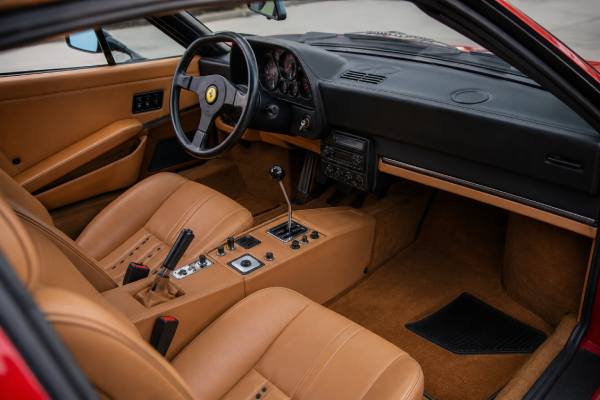
Inside, the GTS QV is compact, low, and simple. The driving position is slightly offset, the steering wheel is close, the pedals are set for careful footwork, and the gated shifter dominates the experience. The instruments are clear and purposeful. Cabin ventilation and air conditioning are acceptable only when fully sorted, and even then they are not modern. Heat soak from the engine bay, old seals, tired fans, and weak A/C components can make a neglected car uncomfortable.
The special quality of the 308 GTS QV is not one feature; it is the integration of size, shape, sound, and mechanical control. Modern performance cars are vastly quicker, but few give the same sense that every input is moving a cable, lever, valve, belt, or gear.
Road Feel and Performance Character
A sorted 308 GTS Quattrovalvole feels light, narrow, mechanical, and more rewarding with revs than with low-speed torque. It is quick by classic standards, not explosive by modern ones, and its best performance comes when the engine, gearbox oil, tyres, and driver are properly warmed up.
The V8 has a crisp, metallic sound that builds as the revs rise. Below the midrange it is civil enough for normal roads, but the car comes alive above 4,000 rpm and feels most Ferrari-like as it moves toward 7,000 rpm. The QV heads help the engine breathe at the top end, so the car rewards deliberate use of the gearbox rather than lazy throttle inputs.
The five-speed gated manual is central to the experience. First-to-second can be stiff when cold, and many careful owners avoid rushing that shift until the gearbox oil has warmed. Once warm, a good gearbox has a precise, mechanical action. A vague, crunchy, or obstructive shift is not “just how they all are.” It may point to clutch adjustment, linkage issues, worn synchros, tired mounts, or old fluid.
The steering is unassisted, so parking speeds require effort. On the move it becomes one of the car’s best traits. The front end gives clear information, and the car feels more delicate than its reputation suggests. Tyres matter greatly. Old tyres, incorrect sizes, hard compounds, or poor alignment can make a 308 feel nervous, heavy, or dull. A properly aligned car on fresh, correct rubber feels far better than a low-mileage garage queen on aged tyres.
Braking performance is period-correct. The discs are capable for spirited road use if the system is healthy, but the pedal feel, stopping distances, and heat capacity are not modern carbon-ceramic territory. Old hoses, old fluid, seized calipers, tired pads, or corroded hardware can transform acceptable brakes into a real risk. Brake work should be judged as a safety and enjoyment item, not just a service receipt.
Ride quality is firm but not punishing. The car is low, and the deep front spoiler can scrape. On rough roads it needs sympathy. It does not have modern stability control, ABS, traction control, or electronic dampers, so driver judgment matters. In the wet, on cold tyres, or on uneven pavement, the mid-engine layout rewards smooth inputs and punishes abrupt ones.
For real-world use, the GTS QV is happiest on open roads, mountain routes, and weekend drives. It can handle traffic, but heavy steering, cabin heat, old cooling components, and clutch effort can make city use tiring. The car feels special at 50 mph as well as at higher speeds, which is one reason it remains more satisfying than its paper performance suggests.
Maintenance, Restoration and Known Issues
The 308 GTS QV is not fragile when maintained properly, but it is unforgiving of neglect. The largest ownership risks usually come from age, deferred service, poor previous repairs, corrosion, fuel-system deterioration, cooling issues, and cosmetic restoration costs rather than from one fatal design flaw.
The timing belts are the service item everyone mentions, and for good reason. Belt age, tensioner condition, cam seals, water pump condition, and the quality of the previous belt service all matter. A receipt that simply says “belts done” is less useful than an itemized invoice from a known specialist showing what was replaced and when.
Cooling deserves close attention. The 308 has long coolant runs, an old radiator design, electric fans, hoses, clamps, bleed points, and a water pump that must all work together. Overheating, coolant smell, rusty coolant, weak fans, swollen hoses, repeated bleeding issues, or temperature creep in traffic should not be ignored.
Common inspection areas include:
- Engine leaks: Cam seals, cam covers, distributor areas, sump gaskets, oil lines, and crank seals can weep.
- Fuel system: Old hoses, injectors, warm-up regulators, accumulators, tanks, pumps, and K-Jetronic settings affect safety and drivability.
- Ignition: Digiplex ignition components, coils, connectors, plugs, leads, and grounds must be healthy.
- Gearbox and clutch: Cold shifting, synchro wear, clutch take-up, linkage condition, and leaks are important.
- Suspension: Bushings, ball joints, dampers, wheel bearings, and alignment have a major effect on feel.
- Brakes: Calipers, flex hoses, master cylinder, pads, discs, handbrake operation, and fluid age need inspection.
- Electrical system: Fuse boxes, relays, grounds, window motors, lights, fans, gauges, and aging connectors can cause many small faults.
- Body and corrosion: Door bottoms, sills, wheel arches, lower panels, front compartment, battery area, floor sections, and previous accident repairs should be checked carefully.
Rust and accident damage are especially important because body restoration can exceed mechanical repair costs. A shiny repaint can hide filler, poor panel gaps, repaired front damage, rust in seams, or a previous color change. The 308’s value is high enough that proper bodywork is expensive, but not always high enough to justify rescuing a poor shell unless the car is rare, special, or bought very cheaply.
Interior restoration is also costly. Correct leather, carpets, dash materials, switches, gauges, roof seals, and trim pieces are not always easy or cheap. Sticky switches are less of an issue than on later Ferraris, but brittle plastics, faded instruments, warped trim, cracked leather, and tired seat foam still affect value.
A good maintenance plan is simple: use the car regularly, keep fluids fresh, replace age-sensitive rubber parts before they fail, solve small electrical issues properly, and use a specialist who knows 308s. The most expensive 308 is often the one that sat for years and looks beautiful in photos.
Market Value, Buying Advice and Rivals
The 308 GTS QV now sits in the low-six-figure classic Ferrari market for strong examples, with project cars, tired drivers, and exceptional low-mileage cars spread far apart. As of the mid-2020s, public valuation and listing data generally show good GTS QVs around the $100,000 range, with excellent, low-mileage, original, or highly documented cars asking or selling higher.
Value is driven by more than mileage. A 20,000-mile car with old belts, old tyres, weak cooling, poor paint, missing tools, and spotty records may be less attractive than a 45,000-mile car with original books, known ownership, a recent major service, clean paint, strong compression, and correct details. Originality and condition must be read together.
| Buyer priority | What to look for | Why it matters |
|---|---|---|
| Documentation | Books, warranty card, tools, service invoices, ownership records | Supports mileage, specification, and long-term value |
| Mechanical condition | Recent belt service, clean leakdown, healthy cooling, good hot starts | Deferred work can quickly erase any purchase discount |
| Body condition | Original panel gaps, no corrosion, no poor accident repair | Body and paint costs can exceed engine-service costs |
| Originality | Correct wheels, trim, lighting, market equipment, color combination | Collector buyers pay more for correct cars |
| Driving quality | Clean shifts, stable temperature, straight tracking, strong brakes | A 308 should feel precise, not loose or fragile |
| Specialist inspection | Ferrari 308 expert, lift inspection, compression/leakdown, road test | General exotic inspections often miss model-specific faults |
Examples to seek are honest, complete, dry, well-serviced cars in desirable colors with no stories. A slightly higher purchase price is often cheaper than buying a car that needs belts, tyres, fuel hoses, suspension work, brake rebuilds, A/C repair, paint correction, interior work, and electrical sorting all at once.
Examples to avoid include cars with fresh cosmetic work but no mechanical history, unclear import status, incorrect VIN or engine details, poor cold or hot starting, overheating in traffic, damaged roof panels, missing documentation, inconsistent odometer history, or sellers who discourage a specialist inspection.
Closest Ferrari alternatives include the earlier carbureted 308 GTS, the injected 308 GTSi, the fixed-roof 308 GTB QV, and the later 328 GTS. The carbureted cars have more old-school sound and feel but may require more tuning attention. The GTSi is often less expensive but less powerful. The GTB QV is rarer and more rigid. The 328 GTS is more developed, torquier, and easier to live with, but it has a different look and usually commands its own premium.
Period rivals and alternatives include the Porsche 911 Carrera 3.2, Porsche 911 Turbo, Lamborghini Jalpa, Lotus Esprit Turbo, Maserati Merak SS, and De Tomaso Pantera. Most are cheaper to buy or faster in some conditions, but the Ferrari’s blend of styling, engine note, gated shift, targa roof, and brand history gives it a collector pull that is hard to duplicate.
The best reason to buy a 308 GTS QV is not that it is the fastest Ferrari for the money. It is that it delivers a deeply recognizable, analog Ferrari experience in a form that can still be driven and maintained with the right support. Buy the best documented and best inspected car you can afford, then budget for continued care rather than expecting appreciation to cover neglect.
References
- Ferrari 308 GTS Quattrovalvole (1982) 1982 (Manufacturer Specifications)
- 308 quattrovalvole 1984 (Owner’s Manual)
- Check for Recalls: Vehicle, Car Seat, Tire, Equipment 2026 (Recall Database)
- Ferrari 308 GTS Quattrovalvole Market 2026 (Market Data)
- 1985 Ferrari 308 GTS Quattrovalvole 2026 (Valuation Guide)
Disclaimer
This article is for informational purposes only and is not a substitute for professional diagnosis, repair, appraisal, or pre-purchase inspection. Specifications, torque values, service intervals, parts, emissions equipment, and procedures can vary by VIN, market, production date, and equipment, so owners and buyers should verify all work against official Ferrari service documentation and a qualified specialist.
If this guide helped you, please consider sharing it on Facebook, X/Twitter, or your preferred car community to support our work.