

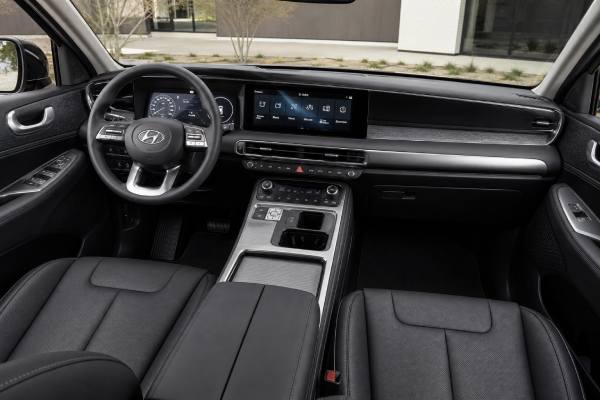
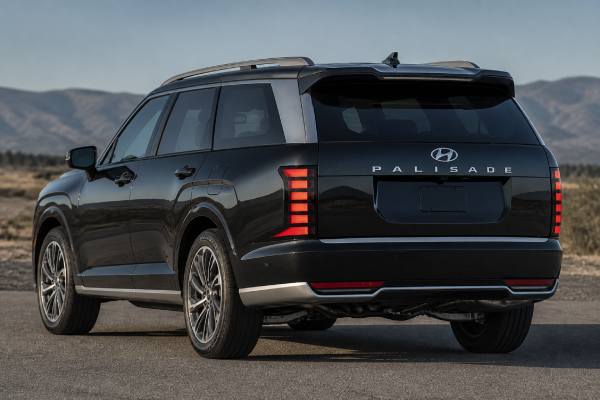
The second-generation Hyundai Palisade moves the model into a larger, more technology-heavy phase while keeping a conventional gasoline V6 available for buyers who prefer a simpler non-hybrid powertrain. In HTRAC AWD form, the LX3-generation Palisade is aimed at families who need three rows, confident winter traction, good towing ability, and a quieter long-distance cabin without stepping into a full-size body-on-frame SUV.
This coverage focuses on the North American 2026 Palisade with the 3.5-liter naturally aspirated V6, 8-speed automatic transmission, and HTRAC active on-demand all-wheel drive. Equipment, service intervals, towing hardware, and safety actions can vary by market, trim, production date, and VIN, so the most important ownership habit is simple: match every service decision to the exact vehicle label and official Hyundai documentation.
Quick Specs and Notes
- The 3.5-liter V6 makes 287 hp and 260 lb-ft, with smooth naturally aspirated delivery and regular unleaded fuel compatibility.
- HTRAC AWD adds snow, tow, terrain, and AWD Lock logic; XRT Pro adds extra ground clearance and an electronic limited-slip differential.
- The Palisade’s main strengths are space, comfort, standard driver assistance, and a 5,000 lb braked tow rating when properly equipped.
- Early ownership caution centers on 2026 Limited and Calligraphy recall checks, especially power-seat and third-row seat-belt actions.
- Normal engine oil and filter service is every 8,000 miles or 12 months; severe use shortens this to 5,000 miles or 6 months.
Table of Contents
- Palisade LX3 AWD Core Profile
- Palisade LX3 AWD Technical Specs
- Palisade LX3 AWD Trims and Safety
- Reliability, Issues and Recalls
- Maintenance and Buying Advice
- Real-World Driving and Performance
- Rivals and Final Verdict
Palisade LX3 AWD Core Profile
The LX3 Palisade is a three-row unibody crossover, not a truck-based SUV. That matters because its strengths are road comfort, passenger packaging, cabin refinement, and everyday usability rather than heavy off-road use. The HTRAC AWD version adds traction and stability benefits for rain, snow, gravel roads, and towing launches, but it remains a road-focused family SUV with an electronically managed AWD system rather than a low-range 4×4 transfer case.
The 3.5-liter V6 is the conventional gasoline option in the redesigned Palisade range. It replaces the earlier 3.8-liter V6 used in the first-generation model and is paired with an 8-speed automatic transmission. Output is 287 hp at 6,400 rpm and 260 lb-ft at 5,000 rpm. The character is typical of a modern naturally aspirated V6: smooth, predictable, and willing to rev, but not especially torquey at low engine speeds compared with turbocharged or hybrid rivals.
For buyers, the big decision is not only V6 versus hybrid. It is also trim and equipment. Lower and mid trims keep the Palisade’s value appeal, while Limited and Calligraphy bring more luxury equipment, power-folding rear seating, additional cameras, richer materials, and more complex electronics. XRT Pro is the rugged-themed AWD version with more ground clearance, off-road display pages, recovery hooks, 18-inch tires, and an electronic limited-slip differential.
The main advantages of this exact version are easy to understand. It offers a wide cabin, adult-friendly first and second rows, a usable third row for children and shorter adults, strong cargo flexibility, and an official braked tow rating of 5,000 lb when correctly equipped. HTRAC AWD is especially useful in cold-weather regions, on steep driveways, or when carrying a family and luggage in poor weather.
The caveat is that the V6 AWD model is not the efficiency leader. EPA figures for regular AWD trims are 18 mpg city, 24 mpg highway, and 20 mpg combined. XRT Pro’s more aggressive package is lower at 16 mpg city, 22 mpg highway, and 19 mpg combined. Anyone driving mostly short urban trips, towing often, or using winter tires should expect fuel costs to be a meaningful part of ownership.
Palisade LX3 AWD Technical Specs
The following specifications apply to the 2026 North American Hyundai Palisade LX3 with the 3.5-liter V6 and HTRAC AWD unless noted. Some early manufacturer tables and owner-manual service tables differ in how they present capacities; where that happens, the VIN-specific owner’s manual, under-hood label, and service information should take priority.
| Item | Hyundai Palisade HTRAC AWD 3.5 V6 |
|---|---|
| Vehicle code | LX3, second-generation Palisade |
| Engine code / family | Smartstream G3.5 MPI + GDI V6; public North American specs do not consistently list a separate alphanumeric engine code |
| Layout | V6, naturally aspirated, aluminum block and head |
| Valvetrain | DOHC, 24 valves, 4 valves per cylinder |
| Bore × stroke | 92.0 × 87.0 mm (3.62 × 3.43 in) |
| Displacement | 3.5 L (3,470 cc) |
| Induction | Naturally aspirated |
| Fuel system | MPI + GDI in current retail specs; some early press material abbreviates this as GDI |
| Compression ratio | 12.3:1 |
| Maximum power | 287 hp (214 kW) at 6,400 rpm |
| Maximum torque | 353 Nm (260 lb-ft) at 5,000 rpm |
| Timing drive | Chain |
| Recommended fuel | Regular unleaded |
| EPA efficiency, regular AWD | 13.1 / 9.8 / 11.8 L/100 km city/highway/combined (18 / 24 / 20 mpg US; 21.6 / 28.8 / 24.0 mpg UK) |
| EPA efficiency, XRT Pro AWD | 14.7 / 10.7 / 12.4 L/100 km city/highway/combined (16 / 22 / 19 mpg US; 19.2 / 26.4 / 22.8 mpg UK) |
| Real-world highway at 120 km/h | Typically about 9.8–11.8 L/100 km (20–24 mpg US; 24–29 mpg UK), depending on tires, temperature, load, wind, and trim |
| Item | Specification |
|---|---|
| Transmission | 8-speed automatic, A8LF1, shift-by-wire, paddle shifters |
| Drive type | HTRAC active on-demand AWD |
| Differential | Open differentials on most trims; XRT Pro adds electronic limited-slip differential |
| Front suspension | MacPherson struts with coil springs and stabilizer bar |
| Rear suspension | Independent multi-link, separate springs and dampers, stabilizer bar, self-leveling suspension listed |
| Steering | Column-mounted motor-driven power steering, rack and pinion |
| Steering ratio | 14.3:1; XRT Pro 13.3:1 |
| Brakes | Front ventilated discs 345 × 30 mm (13.6 × 1.18 in); rear solid discs 325 × 20 mm (12.8 × 0.79 in) |
| Popular wheel / tire sizes | 235/65 R18, 255/50 R20, or 265/45 R21 depending trim; XRT Pro uses 18-inch all-terrain-oriented packaging |
| Ground clearance | 188 mm (7.4 in); XRT Pro 213 mm (8.4 in) |
| Approach / departure angle | 18.6° / 21.1°; XRT Pro 20.5° / 22.4° |
| Breakover angle | 16.3°; XRT Pro 18.3° |
| Length | 5,060 mm (199.2 in); Calligraphy 5,065 mm (199.4 in); XRT Pro 5,090 mm (200.4 in) |
| Width | 1,981 mm (78.0 in) |
| Height | 1,765 mm (69.5 in) |
| Wheelbase | 2,969 mm (116.9 in) |
| Turning circle | 11.9 m (39.2 ft) curb-to-curb; XRT Pro about 11.9 m (39.0 ft) |
| Item | Specification or practical note |
|---|---|
| Curb weight | Varies by trim and seating; early public specification sheets did not finalize all AWD values, so verify the VIN label |
| GVWR | VIN placard controls; some North American AWD trim listings show around 2,870 kg (6,327 lb) |
| Payload | Varies by trim, options, and seating; use the Tire and Loading Information label, not a generic estimate |
| Fuel tank | 72 L (19.0 US gal; 15.8 UK gal) |
| Cargo volume, SAE | 541 L (19.1 ft³) behind third row; 1,311 L (46.3 ft³) behind second row; 2,455 L (86.7 ft³) behind front row |
| 0–100 km/h | Not officially published in the main North American specification sheet; real-world AWD V6 performance is generally in the high-7 to mid-8-second range depending trim and test method |
| Top speed | Not officially published; electronically limited top speed is market- and calibration-dependent |
| 100–0 km/h braking | Not officially published; tire package, load, and surface temperature make a large difference |
| Towing, braked | 2,268 kg (5,000 lb), when properly equipped |
| Towing, unbraked | 748 kg (1,650 lb) |
| Item | Specification |
|---|---|
| Engine oil | SAE 0W-20, API SN PLUS/SP or ILSAC GF-6; owner-manual drain/refill 5.8 L (6.13 US qt). Some early feature/spec sheets list 6.6 L, so fill by the official procedure and dipstick level. |
| Coolant | Ethylene-glycol-based antifreeze and water for aluminum radiator; owner-manual system volume 11.77 L (12.44 US qt) |
| Automatic transmission fluid | SK ATF SP4M-1, MICHANG ATF SP4M-1, S-OIL ATF SP4M-1, or Hyundai-approved equivalent; 7.0 L (7.39 US qt) |
| Rear differential oil | API GL-5 SAE 75W/85 hypoid gear oil; 0.65 L (0.67 US qt) |
| Transfer case oil | API GL-5 SAE 75W/85 hypoid gear oil; 0.7 L (0.74 US qt) |
| XRT Pro e-LSD oil | SHELL TF0870C or equivalent; 480 ± 15 mL (0.507 ± 0.015 US qt) |
| Brake fluid | DOT-4 LV meeting SAE J1704, FMVSS 116 DOT-4, ISO 4925 Class 6 |
| A/C refrigerant | R-1234yf; 1,075 ± 25 g (37.92 ± 0.88 oz by weight) |
| A/C compressor lubricant | PAG; 190 ± 10 g (6.70 ± 0.35 oz by weight) |
| Wheel nut torque | 107–127 Nm (79–94 lb-ft) |
Palisade LX3 AWD Trims and Safety
The North American 2026 Palisade trim ladder includes SE, SEL, SEL Premium, XRT Pro, Limited, and Calligraphy in gasoline form, with hybrid-specific trims also available separately. For the 3.5 V6 HTRAC AWD buyer, the important differences are not engine output but seating, wheels, rear-seat power functions, cameras, lighting, cabin materials, towing equipment, and AWD hardware.
SE is the practical entry point and is the only common configuration with 8-passenger seating as standard. SEL moves the Palisade into the more typical family-SUV format with second-row captain’s chairs, upgraded convenience equipment, and a more complete daily-use package. SEL Premium adds more comfort and visibility features, including equipment such as ventilated front seats and available wider driver displays depending on final trim configuration.
XRT Pro is the functional outlier. It is the one to identify by its rugged exterior trim, 18-inch wheel package, increased ground clearance, terrain-oriented displays, dark trim, factory tow hitch on the feature sheet, and e-LSD availability. It is not a rock-crawling SUV, but it is the most useful Palisade for gravel access roads, snowbelt driveways, light trail approaches, and owners who value tire sidewall over large wheels.
Limited and Calligraphy are the luxury-leaning trims. They add richer cabin materials, more acoustic treatment, additional power seat functions, more camera and parking support, and upgraded interior features. Calligraphy is also the key trim for HDA II, the more advanced highway assistance layer, and for the enhanced forward-collision logic listed in Hyundai’s equipment matrix.
Safety equipment is broad even on lower trims. Standard active safety includes Forward Collision-Avoidance Assist with car, pedestrian, and cyclist detection, Lane Keeping Assist, Lane Following Assist, Driver Attention Warning, Forward Attention Warning, Rear Cross-Traffic Collision-Avoidance Assist, Safe Exit Assist, Trailer Sway Control, ABS, electronic stability control, traction control, brake assist, and tire-pressure monitoring with individual tire display.
The airbag package includes front advanced airbags, a front center airbag, driver knee airbag, front and second-row side-impact airbags, and side curtain airbags with rollover sensors. LATCH/ISOFIX provisions include two lower-anchor positions and three tethers in the second row when fitted with a bench, plus lower anchors and three tethers in the third row.
As of the latest available safety data, the 2026 Hyundai Palisade has an IIHS Top Safety Pick designation. IIHS lists Good ratings for small overlap front, updated side, headlights, pedestrian front-crash prevention, and vehicle-to-vehicle front-crash prevention, with an Acceptable rating in the updated moderate overlap front test. NHTSA and Euro NCAP star ratings should be checked by VIN and market because ratings may not be available or may differ by test program and equipment.
After windshield replacement, bumper repairs, suspension alignment work, radar replacement, camera replacement, or collision repair, ADAS calibration matters. A Palisade can drive normally while its camera or radar aim is slightly off, but lane centering, emergency braking, blind-spot alerts, and parking support may become less reliable. A proper repair invoice should state which systems were calibrated and whether the work was static, dynamic, or both.
Reliability, Issues and Recalls
The LX3 Palisade is still a very new generation, so long-term reliability patterns are not yet mature. That makes it different from evaluating a 2020–2025 Palisade, where several years of owner data, service histories, and high-mileage examples exist. For the 2026 V6 AWD model, a fair reliability view should separate known official actions from reasonable watch items.
| Area | Prevalence | Severity / cost tier | Symptoms | Recommended action |
|---|---|---|---|---|
| Second- and third-row power seats on affected Limited / Calligraphy vehicles | Known recall on affected production | High safety severity | Powered seat may not respond to contact with an occupant or object as intended | Check VIN, complete recall software remedy, and use caution around powered rear seats until verified |
| Third-row driver-side seat-belt buckle wiring on affected Limited / Calligraphy vehicles | Known recall on affected production | High safety severity, usually low owner cost under recall | Instrument panel may falsely show the third-row driver-side belt as latched | Check VIN, install wiring harness extension and replace buckle assembly if required |
| Oil level during break-in | Occasional normal observation | Low if monitored, high if ignored | Oil level drops during first several thousand miles | Check level regularly, especially before long trips or towing; document abnormal consumption |
| Direct-injection deposits | Unknown for this generation; possible long-term watch item | Medium | Rough idle, misfires, loss of response at higher mileage | Use correct oil, quality fuel, avoid endless short trips, diagnose before cleaning |
| AWD transfer case and rear differential oil | Usage-dependent | Medium | Whine, binding, vibration, fluid contamination after water exposure | Inspect at schedule, replace fluid after submersion, shorten intervals for severe use |
| ADAS sensors and cameras | Occasional after repairs or impacts | Medium to high | Warning lights, unavailable lane or cruise functions, false alerts | Perform proper calibration after glass, bumper, alignment, or collision work |
The V6 uses a timing chain, not a scheduled timing belt. There is no routine belt-style replacement interval, but that does not mean timing components are maintenance-free forever. Chain noise on cold start, cam/crank correlation faults, metal debris, or persistent timing-related diagnostic codes should be investigated quickly. Running low on oil or stretching oil changes under severe service is one of the easiest ways to shorten timing-chain and actuator life.
Oil consumption should be monitored rather than assumed. Hyundai notes that new engines can consume more oil during break-in and that consumption should stabilize after roughly 4,000 miles. A sensible owner checks the dipstick every few fuel stops early in ownership, then before long highway trips and towing. A low-oil warning should never be treated as a normal maintenance reminder.
Cooling-system and fuel-system problems are not yet common enough on the LX3 V6 to call them pattern failures. Still, the buyer’s inspection should include coolant smell, coolant staining, fan operation, warm idle smoothness, misfire history, fuel-trim data, and any stored or pending diagnostic codes. On a new model with heavy electronics, a clean scan matters as much as a clean test drive.
For recalls and service campaigns, the safest approach is VIN-specific. Ask for dealer proof that all open actions were completed, not just a verbal statement. On Limited and Calligraphy examples, pay special attention to the rear power seat recall and the third-row seat-belt buckle wiring recall. Because both involve occupant safety, they should be handled before purchase, before a family road trip, and before using the vehicle as a primary child-transport vehicle.
Maintenance and Buying Advice
The Palisade’s maintenance plan is straightforward, but the vehicle’s use case often pushes it into severe service. Short school runs, long idling, winter salt, repeated stop-and-go traffic, mountain driving, roof loads, towing, dusty roads, and frequent rapid acceleration all count against the easy-life assumption. For many real families, severe-service intervals are the smarter baseline.
| Interval | Service items |
|---|---|
| Every fuel stop early in ownership, then monthly | Check engine oil level, coolant level, tire pressures, lights, washer fluid, and visible leaks |
| 8,000 miles / 13,000 km / 12 months | Replace engine oil and filter under normal service; rotate tires; inspect brakes, steering, suspension, driveshaft boots, battery condition, hoses, and exhaust |
| 5,000 miles / 8,000 km / 6 months | Use this oil interval under severe use, including repeated short trips, heavy traffic, towing, dusty roads, mountain driving, or extensive idling |
| 24,000 miles / 39,000 km | Replace engine air cleaner filter under normal schedule; replace sooner in dusty areas |
| Every 12–24 months depending use | Replace cabin air filter; inspect A/C performance and drains |
| 48,000 miles / 78,000 km / 48 months | Replace brake fluid after initial inspections; inspect drive belts for cracks or reduced tension |
| 60,000 miles / 100,000 km under severe use | Replace automatic transmission fluid if the vehicle meets severe-use conditions |
| 72,000 miles / 120,000 km under severe use | Replace rear differential and transfer case oil; also replace if submerged in water |
| 96,000 miles / 156,000 km | Replace spark plugs under normal schedule; replace earlier if severe service or misfire symptoms justify it |
| 120,000 miles / 200,000 km / 120 months | First engine coolant replacement, then every 24,000 miles / 40,000 km / 24 months |
For a buyer, the best Palisade is the one with the right equipment and the least risk. On a new or nearly new 2026, ask for the window sticker, build date, VIN recall printout, service campaign record, and tire placard photo. Confirm whether it has power second- and third-row seats, factory tow equipment, XRT Pro hardware, and the wheel size you actually want to maintain.
The most sensible trims depend on priorities. SEL and SEL Premium are strong value choices for families who want comfort features without the highest-complexity rear-seat equipment. XRT Pro is the better pick for winter roads, unpaved access, and owners who prefer 18-inch tires. Limited and Calligraphy are attractive for luxury, cameras, sound insulation, and high-end seating, but they should be bought only after recall completion is verified.
On inspection, look for uneven tire wear, steering pull, brake pulsation, coolant smell, oil seepage, underbody damage, hitch wiring condition, cargo-area trim damage, and signs of water intrusion around the liftgate or panoramic roof area. Inside, test every seat fold, slide, heat, ventilation, window, camera, parking sensor, USB port, and driver-assistance mode. A three-row SUV has many moving parts, and small convenience failures can become expensive once the bumper-to-bumper warranty is gone.
For long-term durability, the V6 AWD Palisade should do well when serviced carefully. Its naturally aspirated engine is less stressed than a small turbo engine, the 8-speed automatic is conventional, and the AWD system is not unusually complex for the class. The ownership risk is less about one scary powertrain flaw and more about neglect: late oil changes, ignored fluid contamination, skipped brake-fluid service, poor tire rotation, unverified recalls, and repairs performed without ADAS calibration.
Real-World Driving and Performance
On the road, the Palisade HTRAC AWD feels like a large, comfort-tuned crossover. The long wheelbase helps it settle down on the highway, and the cabin is designed to isolate passengers from wind, tire, and powertrain noise. Compared with the previous generation, the LX3 feels more substantial and more upscale, though that also means the V6 has more mass to move.
The 3.5-liter engine is smooth and quiet under light load. Around town, throttle response is predictable rather than sharp, and the 8-speed automatic generally favors early upshifts to keep revs and noise down. Ask for a quick pass or a steep climb, and the transmission needs to downshift because peak torque arrives at 5,000 rpm. This is normal naturally aspirated V6 behavior, but drivers coming from turbocharged engines may notice the need for revs.
HTRAC AWD improves confidence more than acceleration. In normal dry driving it behaves mostly like a front-biased system that can send torque rearward when needed. Snow mode, terrain modes, Tow mode, and AWD Lock adjust how quickly the system reacts, how the throttle responds, and how stability control intervenes. The result is useful security in poor weather, especially with proper winter tires.
Ride quality depends heavily on wheels. The 18-inch setup gives the Palisade more sidewall and better impact absorption. The 20- and 21-inch packages look more premium and can sharpen initial response, but they are more exposed to pothole damage and usually transmit more texture into the cabin. For families who drive broken pavement, winter roads, or rural routes, the smaller wheel packages are often the better ownership choice.
Fuel economy is acceptable but not a highlight. A gentle highway driver in mild weather can approach the official highway rating. Mixed use with school runs, idling, hills, winter tires, and roof accessories can fall into the high teens mpg US. Towing, especially with a boxy trailer, can cut economy sharply; a 25–40 percent penalty is realistic under moderate towing, with larger penalties in wind or mountains.
Towing stability should be good for the class when the trailer is properly loaded and the tongue weight is within limits. The Palisade has trailer sway control and a 5,000 lb braked tow rating, but it is still a unibody three-row crossover. Leave margin for passengers, cargo, tongue weight, grades, ambient temperature, and braking distance. A family loaded with luggage and bicycles may run out of payload before it reaches the maximum trailer rating.
Rivals and Final Verdict
The Palisade’s closest rival remains the Kia Telluride, but the comparison is changing as the Palisade has moved into its new LX3 generation. The Telluride still has a strong reputation for value, space, and V6 refinement, while the 2026 Palisade counters with newer cabin technology, a more squared-off design, available hybrid power, and a broader trim spread. For buyers focused only on the 3.5 V6 AWD, the Telluride may still feel slightly more familiar and proven, while the Palisade feels newer and more feature-rich.
The Honda Pilot is the more pragmatic rival. It has a strong naturally aspirated V6, clever storage, good driving manners, and available TrailSport trim for buyers who want a more outdoors-oriented package. The Pilot’s cabin is less overtly luxurious than a Palisade Calligraphy, but it has an appealing simplicity. Families who value easy controls and proven Honda packaging should drive both.
The Toyota Grand Highlander is the efficiency and space rival, especially in hybrid form. Against the Palisade V6 AWD, it can offer better fuel economy and a highly practical cabin. The Hyundai’s advantage is value-per-feature, warranty appeal, and luxury-trim ambience. The Toyota’s advantage is fuel-saving breadth and brand reputation.
Volkswagen Atlas is another direct three-row competitor. It offers a roomy cabin, confident road manners, and a turbocharged engine with strong midrange torque. The Palisade feels more polished inside in upper trims, while the Atlas often appeals to buyers who want maximum cabin openness and a more European driving feel.
The final verdict is balanced. The 2026 Hyundai Palisade HTRAC AWD 3.5 V6 is a strong family SUV for buyers who want comfort, space, AWD security, regular-fuel V6 operation, and a high level of standard safety technology. It is not the best choice for maximum fuel economy, and the newest, most luxurious trims require extra attention to recall completion and electronic-feature checks. Choose the right trim, keep the service schedule honest, and verify all VIN-specific actions, and the LX3 Palisade has the ingredients to be a capable long-term family vehicle.
References
- 2026 Palisade Features and Specifications 2025 (Manufacturer Specifications)
- 2026 Palisade | Three-Row Midsize SUV | Hyundai USA 2026 (Manufacturer Model Page)
- PALISADE 2026 – Car & User Manual 2026 (Owner’s Manual)
- 2026 Hyundai Palisade 2026 (Safety Rating)
- Vehicle Detail Search – 2026 HYUNDAI PALISADE | NHTSA 2026 (Recall Database)
Disclaimer
This article is for informational purposes only and is not a substitute for professional diagnosis, repair, inspection, or official Hyundai service information. Specifications, torque values, service intervals, software remedies, capacities, and repair procedures can vary by VIN, market, trim, production date, and installed equipment. Always verify details against the official owner’s manual, service documentation, under-hood labels, tire placard, recall database, and qualified Hyundai service guidance for the exact vehicle.
If this information was useful, please consider sharing it on Facebook, X/Twitter, or another platform to support our work.