
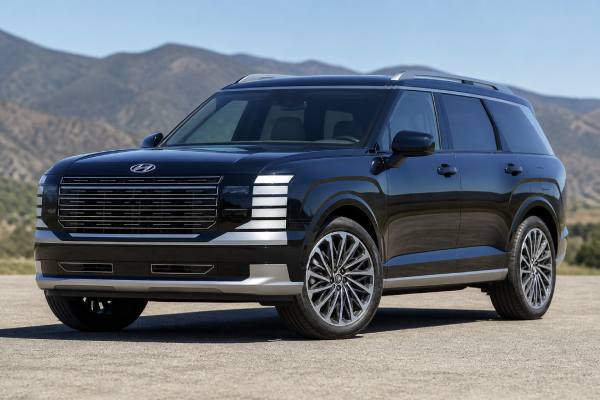
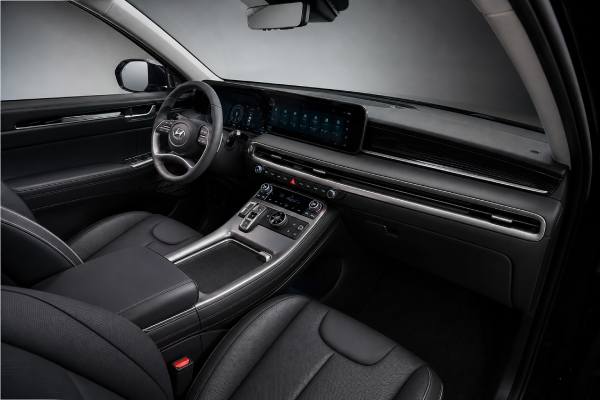
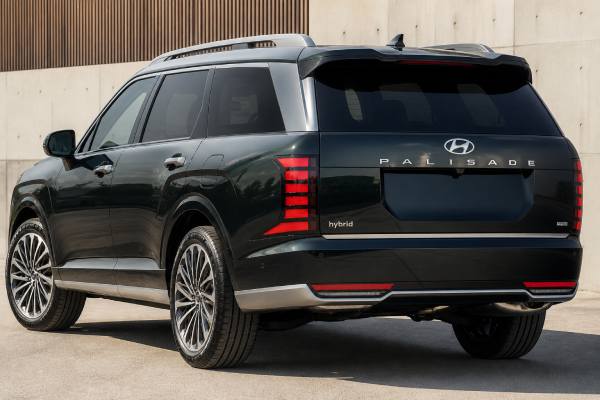
The LX3-generation Hyundai Palisade Hybrid is a large three-row SUV built around a new turbocharged hybrid system rather than the older naturally aspirated V6 formula. In HTRAC AWD form, it aims to combine family-car space, stronger low-speed torque, better fuel economy, and all-weather traction without requiring plug-in charging.
For buyers comparing large hybrid SUVs, the important point is balance. The Palisade Hybrid is not a dedicated off-road vehicle and not a plug-in EV, but it is a more efficient and more responsive version of Hyundai’s flagship family SUV. The details that matter most are the hybrid drivetrain layout, market-specific ratings, recall verification, trim equipment, tyre choice, and long-term maintenance discipline.
Quick Specs and Notes
- 329 hp and 339 lb-ft combined output, with a turbocharged 2.5-litre four-cylinder and dual electric motors in a 6-speed hybrid automatic.
- HTRAC AWD adds useful wet-weather, snow, and towing traction, but the hybrid does not use a rear e-motor or locking differential.
- Strong advantages include seven- or eight-seat practicality, quiet cruising, generous ADAS availability, and much better economy than the V6 Palisade.
- Main ownership caveat: early LX3 Limited/Calligraphy examples should be checked carefully for completed safety recalls and software updates.
- Normal-use oil service is commonly planned around 7,500 miles or 12 months; severe use, towing, short trips, and extreme temperatures justify shorter intervals.
Table of Contents
- Palisade Hybrid LX3 Core Overview
- Palisade Hybrid LX3 Technical Specs
- Palisade Hybrid LX3 Trims and Safety
- Reliability, Issues and Service Actions
- Maintenance and Buyer Guidance
- Driving, Performance and Efficiency
- Comparison With Three-Row Rivals
Palisade Hybrid LX3 Core Overview
The 2026 Hyundai Palisade Hybrid HTRAC AWD belongs to the second-generation Palisade family, known by the LX3 code. It is a five-door, three-row unibody SUV offered with seven- or eight-seat layouts depending on trim and market. The hybrid model uses Hyundai’s Smartstream 2.5-litre turbocharged gasoline engine paired with electric assistance and a conventional-style 6-speed automatic, rather than a belt-driven CVT.
That transmission choice matters. Many hybrid SUVs use e-CVT systems that feel smooth but can hold the engine at a steady rpm during hard acceleration. The Palisade Hybrid’s 6-speed automatic gives more familiar stepped shifts, while the electric motors fill torque at low speed and during gear changes. The result is a large SUV that feels more immediate in urban driving than the older V6 Palisade, especially when pulling away from stops or climbing grades with passengers aboard.
The HTRAC AWD system is an active on-demand setup. The gasoline engine and hybrid motor system primarily work through the front driveline, while the rear axle is engaged through the AWD hardware when traction, acceleration, terrain mode, or stability needs call for it. This is not the same as an electric rear axle, and it should not be confused with a true low-range 4×4 system. It is best viewed as a road-biased AWD system tuned for rain, snow, gravel roads, boat ramps, and light towing.
Market differences are important. In North America, the Palisade Hybrid is generally described as producing 329 hp and 339 lb-ft combined. In some global materials the same powertrain is listed as 245 kW and 460 Nm, while Korean/global brochures may show output in PS. These figures are broadly equivalent, but they are not always measured under identical local rules. Fuel economy, towing capacity, trim names, seating layouts, and safety ratings also vary by region.
The strongest argument for this version is that it delivers the Palisade’s space and comfort with a meaningful fuel-economy improvement over the V6. The main compromise is complexity: turbocharging, hybrid battery hardware, power electronics, HTRAC AWD, software-managed braking, and high-content seating systems add more systems to inspect and maintain.
Palisade Hybrid LX3 Technical Specs
The following figures focus on the 2026 Palisade Hybrid HTRAC AWD. Some rows include market notes because Hyundai publishes different units, capacities, and ratings by region.
| Item | 2026 Palisade Hybrid HTRAC AWD |
|---|---|
| Platform / generation | LX3, second-generation Palisade |
| Powertrain code | Smartstream G2.5 T-GDi HEV; G4KIII 2.5 T-GDI HEV listed in some market literature |
| Engine layout | Transverse inline-4, aluminum block/head, DOHC, 16 valves, 4 valves per cylinder |
| Bore × stroke | 88.5 × 101.5 mm (3.48 × 4.00 in) |
| Displacement | 2.5 L; 2,497 cc |
| Induction | Turbocharged |
| Fuel system | Gasoline direct injection |
| Compression ratio | 12.0:1 |
| Engine output alone | 258 hp at 5,800 rpm; 260 lb-ft at 1,800–4,500 rpm |
| Hybrid motors | Permanent-magnet synchronous motors; P1 starter-generator and P2 traction motor integrated with the hybrid transmission |
| Electric motor output | P1: 17 hp and 75 lb-ft; P2: 72 hp and 195 lb-ft |
| Battery | 1.65 kWh lithium-ion, 300 V / 5.5 Ah; chemistry family not separately specified in public owner-level data |
| Battery power output | 64 kW |
| Combined output | 329 hp and 339 lb-ft; also published as 245 kW and 460 Nm in some markets |
| Timing drive | Timing chain |
| Rated efficiency | US AWD: 29 city / 30 highway / 29 combined mpg US, about 8.1 / 7.8 / 8.1 L/100 km; Australia combined: 6.8 L/100 km, about 34.6 mpg US / 41.5 mpg UK |
| Real-world 120 km/h estimate | Typically about 8.0–9.5 L/100 km, depending on tyres, wind, load, roof accessories, terrain, and temperature |
| Item | Specification |
|---|---|
| Transmission | 6-speed automatic with P1 + P2 electric motors, TMED-II hybrid layout |
| Drive type | HTRAC AWD, active on-demand |
| Differential / traction hardware | Open differentials with electronic brake-based traction control; no hybrid e-LSD listed |
| Front suspension | MacPherson strut with coil springs and stabilizer bar |
| Rear suspension | Independent multi-link; self-leveling rear suspension listed in US specifications |
| Steering | Column-mounted motor-driven power steering, rack and pinion; 14.3:1 ratio; 2.8 turns lock-to-lock |
| Turning circle | 11.94 m (39.2 ft) curb-to-curb |
| Brakes | Front ventilated discs 345 × 30 mm (13.6 × 1.2 in); rear solid discs 325 × 20 mm (12.8 × 0.8 in) |
| Common tyres | 235/65 R18, 255/50 R20, or 265/45 R21 depending on trim; Calligraphy commonly uses 265/45 R21 |
| Ground clearance | 187 mm (7.4 in) for standard AWD hybrid trims; XRT Pro figures do not apply to the hybrid in US trim charts |
| Angles | Approach 18.6°, departure 21.1°, breakover 15.5° for HEV standard body data |
| Length / width / height | About 5,060–5,065 mm / 1,980 mm / 1,765–1,805 mm depending on bumper and roof-rail measurement (199.2–199.4 / 78.0 / 69.5–71.1 in) |
| Wheelbase | 2,970 mm (116.9 in) |
| Curb weight | Public US hybrid curb weight listed as TBD in some Hyundai sheets; Australian Calligraphy Hybrid AWD: about 2,175–2,304 kg (4,795–5,079 lb) |
| GVWR | Market dependent; Australian Hybrid AWD: 2,980–3,000 kg (6,570–6,614 lb) |
| Fuel tank | US: 18.2 US gal (68.9 L / 15.2 UK gal); Australia: 72 L (19.0 US gal / 15.8 UK gal) |
| Cargo volume | US SAE: 19.1 / 46.3 / 86.7 ft³ behind third / second / first row; about 541 / 1,311 / 2,455 L. Australia VDA: 300 / 712 / 2,081 L |
| Item | Specification or note |
|---|---|
| 0–100 km/h | About 6.8–7.1 seconds based on early instrumented testing and published estimates; Hyundai market sheets may not list a universal official figure |
| 0–60 mph | About 6.6 seconds in early independent testing |
| Top speed | Not consistently published across markets; some regional data lists up to about 210 km/h (130 mph) |
| Braking distance | About 40–42 m from 100–0 km/h in published regional/estimated data, tyre dependent |
| Towing capacity | US: 1,814 kg (4,000 lb) braked, 748 kg (1,650 lb) unbraked. Australia: 2,000 kg (4,409 lb) braked, 750 kg (1,653 lb) unbraked |
| Payload | Market and trim dependent; using Australian published GVM and curb ranges gives roughly 696–825 kg (1,534–1,819 lb) |
| Engine oil capacity | 6.8 L (7.2 US qt) listed in US specifications; use the viscosity and standard specified on the oil cap and service documentation for the exact VIN |
| Coolant capacity | 3.3 L (3.5 US qt) listed in US specifications; hybrid cooling loops and service procedures must be verified by VIN |
| Transmission fluid capacity | 5.9 L (6.2 US qt) listed in US specifications; use Hyundai-approved ATF for the TMED-II unit |
| Transfer case / rear driveline fluid | HTRAC AWD service fluid and quantity should be verified in the service manual by VIN and market |
| A/C refrigerant and compressor oil | Verify on the under-hood label and factory service manual; public specification sheets do not consistently publish charge values |
| Wheel fastener torque | 79–94 lb-ft, about 107–127 Nm, from Hyundai owner-level wheel-change guidance |
| IIHS | 2026 Palisade rated Top Safety Pick; headlights rated Good on all trims |
| ANCAP | Five-star rating for LX3 hybrid variants in Australia; 84% adult, 86% child, 71% vulnerable road user, 73% safety assist |
| Euro NCAP / NHTSA | No universal Euro NCAP result for this exact model line; NHTSA star ratings and recall status should be checked by VIN in the relevant market |
Palisade Hybrid LX3 Trims and Safety
Trim structure depends heavily on market. In the United States, the hybrid range is centered around HEV SEL Premium, Limited, and Calligraphy grades, with FWD and AWD availability varying by trim. In Australia, the launch emphasis is the high-content Calligraphy Hybrid AWD, available with seven or eight seats. Other regions may use Luxury, Prestige, Calligraphy, or market-specific names.
The mechanical differences are narrower than the equipment differences. All Palisade Hybrid versions use the 2.5T HEV powertrain and 6-speed hybrid automatic. HTRAC AWD is the key driveline option covered here. Wheel choice has a larger real-world effect than many buyers expect: 18-inch tyres usually ride better and cost less to replace, while 20- and 21-inch wheels sharpen the look but add replacement cost and can transmit more impact harshness.
Quick identifiers include the Hybrid badging, HEV power-flow displays, 6-speed hybrid transmission behavior, and the absence of the V6 engine note. HTRAC-equipped examples may show AWD or HTRAC references in the vehicle menus, and many markets include terrain modes such as Snow, Mud, and Sand on AWD models. In some US trim documentation, the XRT Pro is tied to the non-hybrid V6, so do not assume XRT Pro hardware applies to the hybrid.
Safety equipment is a major part of the Palisade’s appeal. Standard and available systems include Forward Collision-Avoidance Assist with car, pedestrian, cyclist, junction, and lane-change/crossing functions depending on trim; Blind-Spot Collision Warning; Rear Cross-Traffic Collision-Avoidance Assist; Lane Keeping Assist; Lane Following Assist; Driver Attention Warning; Safe Exit Assist; Highway Driving Assist; and Trailer Sway Control.
Passive safety equipment includes multiple airbags, side curtains, stability control, traction control, anti-lock braking, brake assist, tyre-pressure monitoring, and child-seat anchors. Hyundai lists LATCH/ISOFIX-style provisions across the rear seating rows, but exact anchor count and layout vary with seven-seat captain’s chairs versus eight-seat bench arrangements.
The Palisade’s driver-assistance systems rely on cameras, radar sensors, ultrasonic sensors, steering-angle data, and braking-system calibration. After a windshield replacement, front-end repair, wheel alignment, bumper repair, suspension work, or radar-area damage, sensor calibration should be treated as part of the repair, not as an optional extra. A Palisade that tracks poorly, gives false warnings, or drops lane-centering unexpectedly after bodywork needs diagnostic calibration before it is judged as simply “normal.”
Reliability, Issues and Service Actions
Because the LX3 Palisade Hybrid is new, long-term reliability data is still limited. The best way to judge early examples is to separate proven Hyundai/Kia hybrid principles from brand-new model risks. The 2.5T hybrid system has strong paper specifications, but buyers should remember that the Palisade Hybrid combines a turbo engine, high-voltage battery, dual electric motors, a 6-speed hybrid automatic, HTRAC AWD, extensive ADAS, and high-content power seating. The more highly equipped the trim, the more important software updates and recall completion become.
| Prevalence | System | Symptoms | Likely concern | Recommended action |
|---|---|---|---|---|
| Occasional | Power seat systems | Seat movement concern, warning, abnormal one-touch fold behavior, recall notice | Power-seat detection or control logic concern on certain high trims | Verify recall completion by VIN; apply official software or hardware remedy |
| Occasional | Third-row seat-belt monitoring | False latch-status display or rear belt warning issue | Seat-belt buckle wiring/harness concern on certain affected vehicles | Check VIN for recall; inspect and repair harness or buckle as directed |
| Possible | Hybrid battery / DC-DC system | 12 V battery warnings, no-start condition, “check hybrid system” message | Low 12 V state of charge, DC-DC control issue, module fault, software condition | Scan all modules, test 12 V battery, confirm hybrid system updates |
| Possible | Turbo GDI engine | Oil smell, low oil level, misfire, rough cold start, hesitation | Leak, consumption, GDI deposit sensitivity, ignition or fuel-control issue | Document oil level, use correct oil, scan misfire counters, inspect for updates |
| Possible in harsh climates | Brakes | Rotor rust, vibration, scraping after parking, uneven rear rotor sweep | Regenerative braking reduces friction-brake use, allowing corrosion | Regular brake inspections; occasional firm stops when safe; clean/lubricate hardware |
| Possible | HTRAC AWD | Binding, driveline noise, vibration, fluid leak | Fluid degradation, tyre mismatch, coupling or rear driveline issue | Keep tyres matched; service AWD fluids by severe-use needs; inspect leaks |
For the high-voltage battery, the practical concern is not rapid capacity loss in normal use. A 1.65 kWh full-hybrid battery works within a managed state-of-charge window and is not cycled like a plug-in EV battery. Heat, repeated deep discharge events, flood exposure, collision damage, and poor 12 V health are bigger concerns than normal hybrid cycling.
The Palisade Hybrid has no external charge port and no onboard charger in the PHEV sense, so plug-in charging failures do not apply. The relevant electrified components are the hybrid battery, inverter, DC-DC converter, hybrid transmission motors, high-voltage cabling, cooling circuits, and control software. Any “check hybrid system,” regenerative-brake warning, isolation fault, or READY-mode issue should be diagnosed with Hyundai-capable scan equipment rather than generic code reading alone.
For the engine, watch normal turbo-GDI ownership items: correct oil, timely oil changes, clean air filtration, cooling-system condition, and misfire diagnosis before catalytic-converter damage occurs. The timing chain is not a routine replacement item like a belt, but chain noise, cam/crank correlation faults, poor maintenance, or tensioner problems should be taken seriously.
For recalls and service actions, do not rely on model year alone. Check the VIN through the official recall database and ask the dealer to print completed campaigns. This is especially important on early Limited and Calligraphy vehicles with power-folding second- or third-row seating. A pre-purchase inspection should include a full module scan, update history, recall proof, fluid-leak inspection, tyre matching check, battery state-of-health review, and a road test from cold.
Maintenance and Buyer Guidance
The Palisade Hybrid rewards routine maintenance because its best qualities depend on many systems working smoothly together. Clean oil protects the turbocharged engine and timing chain. Fresh brake fluid protects the blended braking system. Correct tyres protect the HTRAC AWD hardware. A healthy 12 V battery protects module communication and hybrid startup logic.
| Interval | Service items | Notes |
|---|---|---|
| Every fuel stop or monthly | Check tyre pressure, washer fluid, exterior lights, warning messages, visible leaks | Tyre pressure has a clear effect on ride, fuel economy, ADAS behavior, and tyre wear |
| 7,500 miles / 12 months | Engine oil and filter, tyre rotation, brake inspection, fluid level inspection, underbody check | Use shorter oil intervals for towing, short trips, dusty roads, extreme heat or cold |
| 15,000 miles / 24 months | Cabin filter, engine air filter inspection, brake hardware inspection, steering and suspension check | Replace filters sooner in dusty regions or heavy pollen environments |
| 30,000 miles / 36 months | Brake fluid replacement or moisture test, cooling hoses, belts, AWD inspection, alignment check | Hybrids can hide brake wear because regeneration reduces friction-brake use |
| 45,000–60,000 miles | Spark plug inspection/replacement as specified, transmission and AWD fluid evaluation, coolant condition check | Severe service and towing justify earlier fluid attention than “lifetime” assumptions |
| 60,000–100,000 miles | Hybrid cooling-system inspection, 12 V battery replacement window, engine mounts, suspension bushings, wheel bearings | Hybrid and ADAS warnings often start with weak 12 V batteries or poor grounds |
| As needed | Timing chain diagnosis, ADAS calibration, HV battery health check, software updates, recall completion | Timing chain replacement is condition-based, not a normal belt-style interval |
Key published service capacities include 6.8 L of engine oil, 5.9 L of transmission fluid, and 3.3 L of coolant in US specification sheets, but these should not replace VIN-specific service data. Hybrid vehicles may have separate coolant loops or bleeding procedures, and fluid fill methods can matter as much as fluid quantity.
Buyer checks should start with documentation. A good Palisade Hybrid should have service records, recall completion proof, matching tyres with even tread depth, no unresolved warning lights, and no history of flood damage or major front-end repairs. The front bumper and windshield areas deserve special attention because radar and camera calibration affect ADAS reliability.
On the road test, start the vehicle cold and confirm READY mode appears normally. Listen for harsh engine startup, drivetrain clunks, steering knocks, brake grinding, and suspension rattles. Test low-speed EV creep, moderate acceleration, highway passing, parking maneuvers, reverse camera operation, blind-spot alerts, lane-centering behavior, and all power-seat functions. For AWD examples, check for vibration under acceleration and tight-turn binding in a parking lot.
Recommended configurations depend on priorities. For value and efficiency, smaller-wheel hybrid trims are usually the most rational. For maximum luxury, the Calligraphy is compelling, but it carries more powered seating, larger wheels, and more electronics to verify. For towing or winter climates, HTRAC AWD is worth seeking, provided the owner keeps tyres matched and services the driveline appropriately.
The long-term durability outlook is cautiously positive if maintenance is disciplined. Hyundai has broad hybrid experience, and the powertrain’s electric torque reduces some stress during launch. The risks are typical of a new, complex first-model-year configuration: early software updates, trim-specific recalls, dealer familiarity, and repair costs outside warranty.
Driving, Performance and Efficiency
The Palisade Hybrid HTRAC AWD feels strongest in the first half of the speedometer. Electric torque helps the large SUV move away cleanly without needing high revs, and the turbo four-cylinder fills in once the vehicle is rolling. Compared with a non-hybrid V6 three-row SUV, the hybrid feels less strained in stop-and-go traffic and more responsive during short passing gaps.
The 6-speed automatic gives the Palisade a conventional driving character. It shifts rather than droning, and the electric motors help mask some turbo lag. In Eco mode, throttle response is softer and the transmission tries to keep the engine calm. Sport mode sharpens response and makes the drivetrain more willing to hold lower gears. My Drive allows some customization depending on market and trim.
Ride quality depends heavily on wheels. The 18-inch tyre package is usually the best choice for poor roads, winter tyres, and lower replacement cost. The 20- and 21-inch packages suit the Palisade’s upscale look, but the shorter sidewalls can make sharp bumps more noticeable. The chassis is tuned more for calm family travel than aggressive cornering. Steering is accurate enough for highway confidence, but it is light and filtered rather than sporty.
Cabin noise is one of the model’s strengths. At city speeds, the hybrid system can move the vehicle with the engine off under light load. At highway speeds, wind and tyre noise depend on wheel size, road surface, and crosswinds, but the Palisade generally feels like a relaxed cruiser. The hybrid engine is less sonorous than a V6 under full throttle, yet it is well isolated in normal driving.
Real-world fuel economy depends on route. In city and suburban driving, the hybrid system gives its biggest advantage because regenerative braking and electric launch reduce gasoline use. On steady high-speed motorway trips, the benefit narrows because the Palisade is large, heavy, and aerodynamically limited by SUV shape. Expect the best results below 110 km/h, with a noticeable increase in consumption at 120–130 km/h, especially with roof bars, cold weather, loaded passengers, or 21-inch tyres.
There is no plug-in charging. The Palisade Hybrid has no AC charge rate, no DC fast-charge curve, and no 10–80% charging time. Its battery charges through engine operation and regenerative braking. Stay Mode, available in some markets, lets occupants use climate and infotainment while parked with the hybrid system managing battery state and engine operation as needed.
Towing is useful but should be treated conservatively. The hybrid’s torque helps at low speed, and Trailer Sway Control is a plus, but towing a boxy trailer increases fuel use sharply. Use the correct hitch equipment, respect tongue-weight guidance, check local braked-trailer limits, and monitor temperatures on long grades. Fuel consumption can rise by 30–70% with a moderate trailer depending on speed, terrain, and wind.
Comparison With Three-Row Rivals
The Palisade Hybrid HTRAC AWD sits in a narrow but growing space: large three-row SUVs with electrified powertrains. Its closest rivals depend on whether the buyer values fuel economy, power, towing, third-row space, or premium feel.
| Model | Strength against Palisade Hybrid | Where Palisade Hybrid answers back |
|---|---|---|
| Toyota Grand Highlander Hybrid | Excellent fuel economy, strong reputation, spacious layout | Palisade Hybrid has much stronger output than the standard Toyota hybrid and a richer cabin in upper trims |
| Toyota Grand Highlander Hybrid Max | More power, strong towing rating, quick acceleration | Palisade Hybrid is often smoother, more comfort-focused, and can be more efficient than Hybrid Max AWD |
| Mazda CX-90 PHEV | Plug-in EV range, rear-biased driving feel, premium cabin design | Palisade has a roomier-feeling family layout and avoids plug-in charging complexity |
| Honda Pilot AWD | Simple V6 powertrain, practical cabin, strong resale reputation | Palisade Hybrid is more efficient and stronger on combined output |
| Kia Telluride | Excellent packaging and value in current V6 form | Palisade Hybrid offers the electrified option Telluride shoppers may be waiting for in many markets |
Against the standard Toyota Grand Highlander Hybrid, the Hyundai feels more powerful and more premium in high trims, but the Toyota is the economy leader for many buyers. Against the Hybrid Max, the Hyundai gives away peak output but may be easier to justify for drivers who want comfort and efficiency rather than maximum acceleration.
The Mazda CX-90 PHEV is the more interesting driver’s choice and the only plug-in alternative in this group, but its packaging is less straightforward. Its third row and cargo usability may not suit families who use all three rows often. The Palisade is more conventional, easier to understand, and better suited to buyers who do not want to install home charging.
Compared with the Honda Pilot or V6 Kia Telluride, the Palisade Hybrid’s advantage is efficiency with no major loss of capability. The trade-off is that the Honda and Kia V6 layouts are mechanically simpler and may appeal to long-term owners who prioritize lower complexity over fuel savings.
The Palisade Hybrid HTRAC AWD makes the most sense for families who drive enough city and suburban miles to benefit from hybrid operation, want a quiet three-row cabin, need occasional AWD traction, and prefer a full hybrid over a plug-in. It is less ideal for buyers who tow near the limit frequently, drive mostly high-speed highway miles, or want the simplest possible powertrain.
References
- 2026 Palisade Features and Specifications 2026 (Manufacturer Specifications)
- PALISADE Hybrid 2026 – Car & User Manual 2026 (Owner’s Manual)
- 2026 Hyundai Palisade 2026 (Safety Rating)
- Hyundai Palisade | Safety Rating & Report | ANCAP 2025 (Safety Rating)
- Vehicle Detail Search – 2026 HYUNDAI PALISADE | NHTSA 2026 (Recall Database)
Disclaimer
This article is for informational purposes only and is not a substitute for professional diagnosis, repair, or factory service information. Specifications, torque values, fluid capacities, maintenance intervals, software updates, recall eligibility, and procedures can vary by VIN, market, trim, production date, and equipment. Always verify details against the official owner’s manual, service manual, under-hood labels, dealer records, and the relevant recall database for the exact vehicle.
If this helped, please consider sharing it on Facebook, X/Twitter, or another platform to support our work.