

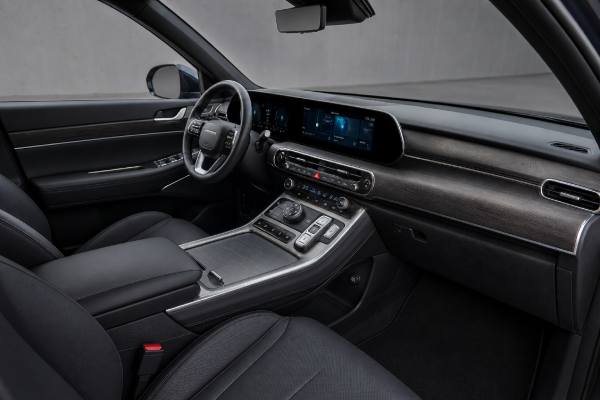
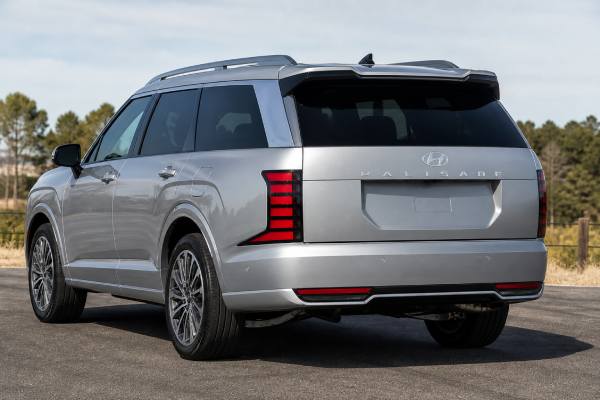
The second-generation Hyundai Palisade, known by the LX3 model code, moves the nameplate into a more mature three-row SUV role. The 3.5-liter V6 version is the conventional gasoline model: naturally aspirated, paired with an 8-speed automatic transmission, and available with front-wheel drive or HTRAC all-wheel drive depending on trim and market. It is aimed at buyers who want space, comfort, towing ability, and relatively simple gasoline ownership rather than hybrid efficiency.
For the 2026 model year, the Palisade is larger, more squared-off, and more technology-heavy than the first generation. That brings clear advantages in cabin usability and equipment, but it also means buyers should pay close attention to software updates, trim-specific safety recalls, and service documentation. Specifications also vary by country, so the details below focus primarily on the U.S.-market 2026 Palisade 3.5 V6 unless noted otherwise.
Quick Specs and Notes
- The 3.5-liter V6 makes 287 hp and 260 lb-ft, giving smooth delivery but not class-leading acceleration.
- Interior space, cargo volume, standard driver-assistance equipment, and towing capacity are major strengths.
- Limited and Calligraphy models with power rear seats require careful recall-status verification.
- Normal engine oil and filter service is listed at every 8,000 miles or 12 months; severe use shortens this to 5,000 miles or 6 months.
- Spark plugs are scheduled at 96,000 miles, while coolant is first replaced at 120,000 miles or 120 months.
Table of Contents
- Palisade LX3 V6 Model Profile
- Palisade LX3 Technical Specs
- Palisade LX3 Trims and Safety
- Reliability, Issues and Recalls
- Maintenance and Buying Advice
- Driving, Performance and Efficiency
- Palisade V6 Against Rivals
Palisade LX3 V6 Model Profile
The Hyundai Palisade LX3 is a midsize-to-large three-row unibody SUV introduced for the 2026 model year. In the gasoline version covered here, it uses a transverse-mounted Smartstream 3.5-liter V6 with natural aspiration and an 8-speed automatic transmission. Hyundai lists output at 287 hp at 6,400 rpm and 260 lb-ft at 5,000 rpm. In metric terms, that is about 214 kW and 353 Nm.
This engine replaces the earlier 3.8-liter V6 used in the first-generation Palisade in North America. On paper, the difference is not dramatic, but the new LX3 body is larger and heavier, so the 3.5 V6 feels more relaxed than urgent. Its best qualities are smoothness, linear throttle response, and predictable behavior in daily use. It is not the fastest option in the segment, and the hybrid version is stronger in both torque and fuel economy, but the V6 remains the more traditional choice for drivers who prefer a non-hybrid powertrain.
The platform is front-drive based. Most trims are available with either FWD or HTRAC AWD, while XRT PRO is AWD-focused and adds an electronic limited-slip differential, more ground clearance, all-terrain-oriented hardware, and off-road drive displays. The automatic transmission is the A8LF1 8-speed unit, controlled by shift-by-wire with paddle shifters.
The body is a four-door SUV with three seating rows. Most versions seat seven with second-row captain’s chairs, while selected versions can be configured for eight with a second-row bench. Cargo volume is one of the model’s practical advantages: Hyundai lists 19.1 cu ft behind the third row, 46.3 cu ft behind the second row, and 86.7 cu ft behind the front seats using SAE volume measurement. That makes the Palisade useful not only as a family vehicle, but also as a long-distance travel SUV.
The likely buyer is comparing the Palisade against the Kia Telluride, Honda Pilot, Toyota Grand Highlander, Mazda CX-90, Nissan Pathfinder, and larger crossover-SUV alternatives. The key decision is not just engine output. It is whether the Palisade’s comfort, space, equipment, safety technology, and warranty coverage outweigh its average fuel economy and modest V6 acceleration.
A useful way to view the 2026 Palisade 3.5 is as a comfort-biased family SUV rather than a sporty one. The engine is durable in concept because it is naturally aspirated and chain-driven, but the vehicle is new enough that long-term reliability patterns are still developing. Early ownership attention should focus on software updates, recall completion, proper oil service, rear-seat power-seat operation on affected trims, and AWD driveline maintenance if used in snow, mountain roads, towing, or rough-road conditions.
Palisade LX3 Technical Specs
The following tables summarize U.S.-market 2026 Hyundai Palisade LX3 3.5 V6 data where publicly specified. Some values, especially curb weight, GVWR, certain torque specs, and market-specific fuel-system wording, may vary by VIN, trim, wheel package, and country.
| Item | 2026 Hyundai Palisade LX3 3.5 V6 |
|---|---|
| Engine code / family | Smartstream G3.5 GDI V6; market documents may describe MPI + GDI wording, while U.S. specifications list GDI |
| Engine layout | Transverse naturally aspirated V6, DOHC, 24 valves, 4 valves per cylinder |
| Bore × stroke | 92.0 × 87.0 mm / 3.62 × 3.43 in |
| Displacement | 3.5 L / 3,470 cc / 211.8 cu in |
| Induction | Naturally aspirated |
| Fuel system | Gasoline direct injection in U.S. manufacturer specification; regular unleaded fuel |
| Compression ratio | 12.3:1 |
| Maximum power | 287 hp / 214 kW at 6,400 rpm |
| Maximum torque | 260 lb-ft / 353 Nm at 5,000 rpm |
| Timing drive | Timing chain |
| EPA fuel economy | FWD: 19/25/21 mpg city/highway/combined; AWD: typically 18/24/20 mpg; XRT PRO: about 16/22/19 mpg |
| Metric fuel economy | FWD: about 12.4/9.4/11.2 L/100 km; AWD: about 13.1/9.8/11.8 L/100 km; XRT PRO: about 14.7/10.7/12.4 L/100 km |
| Real-world highway at 75 mph / 120 km/h | Often around 24–25 mpg US / 9.4–9.8 L/100 km in steady highway use, lower with roof loads, cold weather, or XRT PRO tires |
| Item | Specification |
|---|---|
| Transmission | 8-speed automatic A8LF1, shift-by-wire, paddle shifters |
| Drive type | FWD standard on many trims; HTRAC AWD optional, standard on XRT PRO |
| Differential | Open differential on most models; electronic LSD on XRT PRO |
| Front / rear suspension | MacPherson strut front; independent multi-link rear with separated springs and dampers; self-leveling rear suspension listed |
| Steering | Column-mounted motor-driven rack-and-pinion; 14.3:1 ratio, 13.3:1 on XRT PRO; 2.8 turns lock-to-lock |
| Brakes | Front ventilated discs 345 × 30 mm / 13.6 in; rear solid discs 325 × 20 mm / 12.8 in |
| Popular tire sizes | 235/65 R18, 255/60 R18 XRT PRO, 255/50 R20, 265/45 R21 |
| Ground clearance | 188 mm / 7.4 in; XRT PRO 213 mm / 8.4 in |
| Approach / departure / breakover | 18.6° / 21.1° / 16.3°; XRT PRO 20.5° / 22.4° / 18.3° |
| Length / width / height | 5,060 mm / 1,981 mm / 1,765 mm; 199.2 in / 78.0 in / 69.5 in |
| Wheelbase | 2,969 mm / 116.9 in |
| Turning circle | 11.95 m / 39.2 ft curb-to-curb; XRT PRO about 11.89 m / 39.0 ft |
| Fuel tank | 72 L / 19.0 US gal / 15.8 UK gal |
| Cargo volume, SAE | 541 L / 19.1 cu ft behind third row; 1,311 L / 46.3 cu ft behind second row; 2,455 L / 86.7 cu ft behind front seats |
| Towing capacity | 2,268 kg / 5,000 lb braked; about 750 kg / 1,654 lb unbraked |
| Payload / vehicle capacity | About 550 kg / 1,212 lb for 7-passenger models; about 600 kg / 1,323 lb for 8-passenger models, depending on door-jamb label |
| System | Specification / Capacity |
|---|---|
| Engine oil | SAE 0W-20, API SN PLUS/SP or ILSAC GF-6; drain and refill about 5.8 L / 6.13 US qt |
| Coolant | Ethylene-glycol coolant for aluminum radiator; about 11.77 L / 12.44 US qt |
| Automatic transmission fluid | SP4M-1 specification ATF; about 7.0 L / 7.39 US qt |
| Rear differential oil, AWD | API GL-5 SAE 75W/85 hypoid gear oil; about 0.65 L / 0.67 US qt |
| Transfer case oil, AWD | API GL-5 SAE 75W/85 hypoid gear oil; about 0.7 L / 0.74 US qt |
| e-LSD oil, XRT PRO | Shell TF0870C or equivalent; about 480 ± 15 mL / 0.507 ± 0.015 US qt |
| Brake fluid | DOT-4, preferably DOT-4 LV meeting SAE J1704 / FMVSS 116 / ISO 4925 Class 6 |
| A/C refrigerant | R-1234yf; 1,075 ± 25 g / 37.92 ± 0.88 oz |
| A/C compressor oil | PAG; 190 ± 10 g / 6.70 ± 0.35 oz |
| Wheel nut torque | 107–127 Nm / 79–94 lb-ft |
| Category | 2026 Palisade LX3 |
|---|---|
| IIHS overall recognition | 2025 Top Safety Pick for the 2026 Palisade |
| IIHS crashworthiness | Small overlap front: Good; updated moderate overlap front: Acceptable; updated side: Good |
| IIHS headlights | Good for all trims |
| IIHS front crash prevention | Good for vehicle-to-vehicle 2.0 and pedestrian systems |
| Euro NCAP | No broadly applicable Euro NCAP rating for this U.S.-market LX3 V6 specification at time of writing |
| ADAS | Forward Collision-Avoidance Assist, Lane Keeping Assist, Lane Following Assist, blind-spot warning, rear cross-traffic collision avoidance, smart cruise, Highway Driving Assist, and rear automatic braking features vary by trim |
Palisade LX3 Trims and Safety
The U.S. Palisade 3.5 V6 range is built around SE, SEL, SEL Premium, XRT PRO, Limited, and Calligraphy grades, with hybrid-focused “Blue” versions applying to the separate 2.5T hybrid line. The V6 trims share the same core engine and transmission, so the main differences are equipment, seating, wheels, AWD availability, cabin materials, driver-assistance level, and towing or off-road hardware.
SE is the value-oriented entry point. It is usually the simplest Palisade to identify because it has cloth seating, an 8-passenger layout, 18-inch wheels, and fewer luxury features. SEL adds more everyday convenience, including H-Tex leatherette seating and broader comfort equipment. SEL Premium is the better-equipped family trim, adding features such as more advanced interior appointments, additional comfort items, and wider availability of camera and parking technology.
XRT PRO is the functional outlier. It is visually distinct through darker trim, black exterior elements, model-specific 18-inch wheels with 255/60 R18 tires, higher ground clearance, off-road displays, standard HTRAC AWD, and an electronic limited-slip differential. It is not a rock-crawling SUV, but it is the Palisade trim best suited to snow routes, gravel roads, trailheads, and light off-pavement use. It also has the least favorable V6 fuel economy because of its AWD hardware, tire package, stance, and aerodynamics.
Limited and Calligraphy are the upscale trims. These bring the most comfort and technology, including higher-grade audio, premium seating materials, expanded glass and acoustic treatments, power-folding rear-seat functions, and the most complete driver-assistance setup. Calligraphy is the easiest to identify by its 21-inch wheels, premium Nappa leather, high-end interior detailing, and HDA II availability.
Safety equipment is a strong point across the range. All versions receive a substantial airbag package: advanced front airbags, a front center airbag, driver knee airbag, front and second-row side airbags, and side curtains with rollover sensors. Hyundai also lists front, second-row, and third-row outboard pretensioners and load limiters, plus LATCH child-seat provisions in the second and third rows.
The IIHS result is favorable overall, but not perfect. The 2026 Palisade earned Good ratings in small overlap front and updated side testing, with an Acceptable rating in the updated moderate overlap front test. Headlights, seat-belt reminders, LATCH ease of use, vehicle-to-vehicle front crash prevention, and pedestrian front crash prevention were rated Good. For buyers using all three rows, the moderate-overlap rear-occupant result and the availability of complete child-seat hardware deserve more attention than the headline award alone.
ADAS calibration matters after repairs. The Palisade uses cameras, front radar, corner radars, ultrasonic sensors, and in some trims an in-cabin camera. Windshield replacement, front bumper repair, grille removal, suspension alignment work, collision repair, or sensor replacement can require calibration. A clean dashboard warning-light status is not always enough; service records should show that the proper calibration procedure was completed when relevant.
Reliability, Issues and Recalls
The 2026 LX3 Palisade is still too new for a complete long-term reliability record. The engine itself is conventional in layout—naturally aspirated V6, timing chain, regular unleaded fuel, and a torque-converter automatic—but the vehicle around it is more software-driven than earlier Palisades. Early reliability judgment should therefore separate mechanical durability from launch-year electronics, recalls, and trim-specific powered-seat systems.
The most important early service-action area involves rear-seat power functions on Limited and Calligraphy models. A U.S. safety recall covers certain 2026 Palisade and Palisade Hybrid vehicles with second- and third-row power-seat assemblies that may not respond to contact with an occupant or object as intended during powered operation. The concern involves automatic power-folding and one-touch tilt-and-slide functions. The interim and remedy actions involve updated software through OTA or dealer update, depending on vehicle status and owner enrollment. On any affected vehicle, buyers should verify recall completion before purchase and should operate power-folding seats only after confirming the seating area is clear.
A separate recall covers certain Limited and Calligraphy vehicles for a third-row driver-side seat-belt buckle wiring issue. The concern is that internal wiring can be damaged by tension, potentially causing a false seat-belt latch-status indication. The remedy involves a wiring harness extension and, if necessary, buckle replacement. Because both seat-related recalls affect upper trims, high-spec Palisades need more careful documentation review than their luxury equipment might suggest.
Another software-related recall involves instrument-panel display failure across several Hyundai models, including the 2026 Palisade. The remedy is an instrument-panel or audio-video-navigation software update performed OTA or by a dealer. Symptoms may include display malfunction or missing critical information. Any used example should have a clean recall report and current infotainment, cluster, and ADAS software versions.
Mechanical issues to watch are mostly predictable for a large V6 SUV. Direct-injection engines can develop intake-valve deposits over long mileage, especially with short trips and low-load operation. The 3.5’s exact market fuel-injection description should be verified by VIN because some markets use dual-injection wording while U.S. documents list GDI. Either way, quality fuel, correct oil, and periodic longer drives help reduce deposit and moisture problems.
Potential owner checks should include:
- Oil level between services, especially during break-in and high-speed travel.
- Coolant level stability and absence of dried residue around hoses, radiator tanks, and water pump area.
- Smooth 1–2 and 2–3 shifts from cold, plus clean kickdown behavior during highway passing.
- AWD warning lights, binding on tight turns, rear differential noise, and transfer-case seepage on HTRAC models.
- Brake pulsation, uneven tire wear, steering pull, and alignment changes after pothole impacts.
- Clean ADAS sensor areas and no unresolved calibration warnings after windshield or bumper work.
The timing chain does not have a routine replacement interval like a belt. It should be inspected when symptoms appear: rattling at startup, cam/crank correlation faults, rough running, metal contamination, or timing-related diagnostic trouble codes. Chain, guide, and tensioner replacement should be based on measured wear or confirmed fault, not mileage alone.
For ownership risk, the main point is simple: the V6 powertrain is not the biggest concern early in the LX3 cycle. Recall completion, software currency, powered rear-seat behavior, and verified service history are more important.
Maintenance and Buying Advice
Hyundai’s normal maintenance schedule for the 2026 Palisade uses 8,000-mile / 12-month intervals for engine oil and filter replacement when recommended oil is used. Severe use shortens that to 5,000 miles / 8,000 km or 6 months. Severe use includes short trips, extended idling, heavy traffic, rough or dusty roads, salt exposure, mountain driving, towing, roof loads, commercial use, rapid acceleration, frequent stop-and-go driving, and non-recommended oil.
| Interval | Service items |
|---|---|
| Every 8,000 miles / 13,000 km or 12 months | Replace engine oil and filter; rotate tires; inspect brakes, steering, suspension, lights, tires, fluid levels, and battery condition |
| Every 5,000 miles / 8,000 km or 6 months under severe use | Replace engine oil and filter; inspect tires, brakes, underbody, and driveline more frequently |
| Every 16,000 miles / 26,000 km or 24 months | Replace cabin air filter; inspect vacuum hoses, brake lines, driveshaft boots, exhaust, A/C refrigerant, and compressor |
| Every 24,000 miles / 39,000 km | Replace engine air cleaner filter under normal schedule; sooner in dust or sand |
| 48,000 miles / 78,000 km or 72 months | First drive-belt inspection; then inspect every 8,000 miles / 12 months |
| 48,000 miles / 78,000 km or 48 months | Brake fluid replacement after initial inspection cycle |
| 60,000 miles / 100,000 km under severe use | Replace automatic transmission fluid if severe-use conditions apply |
| 72,000 miles / 120,000 km under severe use | Replace rear differential and transfer case oil on AWD models under severe conditions |
| 96,000 miles / 156,000 km | Replace spark plugs |
| 120,000 miles / 200,000 km or 120 months | First coolant replacement; then every 24,000 miles / 40,000 km or 24 months |
Use SAE 0W-20 engine oil meeting API SN PLUS/SP or ILSAC GF-6, and avoid oil additives. The service-fill oil quantity is listed at about 5.8 L / 6.13 US qt, but the final level should always be set by the dipstick after proper warm-up, drain, refill, and settling procedure. The Palisade may also use an oil-life management system; it should be reset only after the oil has actually been changed.
For AWD models, rear differential and transfer case oil may be listed as inspection-only under normal use, but water submersion requires replacement. Towing, mountain roads, heavy loads, and winter road salt justify more cautious driveline-fluid service. XRT PRO owners should also confirm the e-LSD fluid specification before any service, because it differs from ordinary hypoid gear oil.
A good pre-purchase inspection should include:
- VIN-based recall check through an official database and Hyundai dealer history.
- Proof of oil services at time or mileage intervals, not just “dealer maintained” claims.
- Confirmation that seat, cluster, infotainment, and ADAS software updates are complete.
- Inspection for coolant seepage, oil leaks, underbody corrosion, and tire wear patterns.
- A cold start, hot restart, city-speed shift test, highway kickdown, and tight-turn AWD test.
- Verification that all rear-seat fold, slide, latch, and seat-belt warning functions work correctly.
- Check of both key fobs, digital key setup, Bluelink status, camera views, parking sensors, and driver-assistance warnings.
Best-value trims depend on priorities. SEL Premium is often the practical sweet spot because it combines family comfort, safety technology, and manageable wheel sizes. XRT PRO makes sense for buyers who need AWD, ground clearance, and rough-road confidence, but it has the highest fuel-use penalty. Limited and Calligraphy are luxurious, but their power rear-seat recalls make documentation especially important. SE is simplest and may age well, but it lacks some comfort and convenience equipment expected in this class.
Long-term durability should be solid if the vehicle receives correct oil, cooling-system care, brake-fluid service, tire rotation, AWD-fluid attention under severe use, and software updates. The main caution is that this is a launch-year redesign, so early examples should be bought with a complete service and recall trail.
Driving, Performance and Efficiency
The Palisade 3.5 V6 drives like a comfort-oriented family SUV. The engine is smooth and quiet at low to moderate load, with a clean naturally aspirated response that avoids turbo lag. It does not produce the low-rpm surge of the hybrid, so the automatic transmission often needs to downshift for quick passing or steep grades. Around town, that is rarely a problem. Fully loaded, at altitude, or when towing, the V6’s torque peak at 5,000 rpm becomes more noticeable.
Acceleration is adequate rather than quick. Independent tests of V6 Palisade models have generally put 0–60 mph in the high-7- to high-8-second range, with XRT PRO and loaded Calligraphy versions often slower than lighter rivals. A realistic 0–100 km/h estimate is roughly 8.2–9.0 seconds depending on drivetrain, trim, tires, test conditions, and load. That is enough for everyday merging, but the Palisade V6 is not the performance choice in its class.
The 8-speed automatic is tuned for smoothness. In normal driving it shifts unobtrusively, and the paddles are more useful for managing descents or towing than for sporty driving. In Eco or relaxed throttle use, it tries to keep revs down. Sport mode sharpens response, but it cannot change the basic fact that this is a large three-row SUV with modest torque for its mass.
Ride quality is one of the model’s better traits. The longer wheelbase helps highway stability, and the cabin feels settled on rough pavement. Wheel choice matters. The 18-inch tires provide the most compliance and impact absorption, while 20- and 21-inch setups add visual presence but can transmit sharper impacts. XRT PRO’s tire and suspension package gives more sidewall and ground clearance, but its all-terrain bias can add road noise and reduce fuel economy.
Steering is light and predictable. It is not especially communicative, but it suits the vehicle’s purpose. The turning circle of about 39.2 ft is manageable for a three-row SUV, though the vehicle’s width and squared body mean parking sensors and camera views are genuinely useful. Braking feel is stable for daily use, and the large four-wheel discs provide good confidence, but brake wear will depend heavily on load, urban use, hills, and towing.
Real-world fuel economy varies widely. FWD models are the most efficient V6 versions, with official figures around 19 mpg city, 25 mpg highway, and 21 mpg combined. AWD normally drops that to about 18/24/20 mpg, while XRT PRO is closer to 16/22/19 mpg. In metric terms, a mixed-use AWD Palisade often lands around 11.8 L/100 km in rating terms, but dense traffic, cold starts, roof boxes, winter tires, and short trips can push consumption higher.
At a steady 75 mph / 120 km/h, drivers should expect roughly mid-20s mpg US in favorable conditions, with XRT PRO and loaded AWD trims consuming more. Towing or carrying a full passenger load can reduce economy sharply. A moderate trailer, roof cargo, or mountain route can easily increase fuel use by 25–50 percent depending on wind, speed, terrain, and tongue weight.
HTRAC AWD is best viewed as an all-weather traction system, not a heavy-duty 4×4 system. It adds confidence in rain, snow, gravel, and light trail use. AWD Lock, Snow mode, Mud/Sand modes, and XRT PRO’s e-LSD improve control in low-grip situations, but the Palisade remains a unibody crossover with limited underbody clearance compared with true off-road SUVs. Its strengths are secure family transport, highway comfort, and practical towing, not aggressive off-roading.
Palisade V6 Against Rivals
The Palisade’s closest rival is the Kia Telluride. The two share broad corporate roots and a similar family-SUV mission, but the 2026 Palisade is newer, more technology-rich, and available with a hybrid alternative. Against the Telluride, the V6 Palisade offers a fresher cabin layout, strong cargo practicality, and a wider spread of advanced convenience features. The Telluride, however, remains a strong benchmark for simple V6 usability and may feel slightly more familiar to buyers who prefer a less software-heavy experience.
The Honda Pilot is the more traditional competitor for drivers who value predictable controls, good packaging, and a strong reputation for family durability. The Pilot’s V6 and 10-speed automatic give it a different character: not luxurious, but robust and straightforward. The Hyundai counters with a more premium cabin feel, longer warranty coverage, and generous standard equipment. The Honda may appeal more to buyers who prioritize long-term simplicity, while the Palisade feels more upscale.
The Toyota Grand Highlander is the efficiency and space threat, especially in hybrid forms. Compared with Toyota’s hybrid options, the Palisade 3.5 V6 cannot match fuel economy. The Hyundai fights back with strong feature content, a polished interior, and high equipment value. Buyers who drive high annual mileage or spend a lot of time in traffic should compare the Palisade Hybrid rather than the V6 against Toyota’s hybrid grades.
The Mazda CX-90 is aimed at buyers who want a more premium driving feel. It offers rear-drive-based proportions and available inline-six power, giving it a more dynamic character. The Palisade is roomier in feel, easier to use as a family vehicle, and less focused on sporty road manners. The Mazda may satisfy an enthusiast parent; the Hyundai is more convincing as a comfortable people mover.
The Nissan Pathfinder is more rugged in image and often competitive on value. It has strong towing credentials and simpler packaging, but its cabin and technology presentation do not feel as upscale as the upper Palisade trims. The Hyundai is the better choice for buyers who want near-luxury appointments without moving into Genesis, Acura, Lexus, or German-brand pricing.
The Palisade 3.5 V6’s main advantages are cabin space, comfort, safety equipment, towing capacity, trim variety, and a polished ownership package. Its weaknesses are fuel economy, average acceleration, launch-year recall attention, and the cost of complex upper-trim features once the warranty period ends. For most buyers, the best match is an SEL Premium or carefully documented Limited. XRT PRO is worthwhile only when its AWD hardware and ground clearance will be used. Calligraphy is appealing, but it should be purchased with full recall and software records.
References
- 2026 Palisade Features and Specifications 2025 (Manufacturer Specifications)
- PALISADE 2026 – Car & User Manual 2026 (Owner’s Manual)
- 2026 Hyundai Palisade 2026 (Safety Rating)
- Vehicle Detail Search – 2026 HYUNDAI PALISADE 2026 (Recall Database)
- Part 573 Safety Recall Report 26V160 2026 (Recall Report)
Disclaimer
This article is for informational purposes only and is not a substitute for professional diagnosis, repair, or inspection. Specifications, torque values, service intervals, fluids, procedures, recalls, and equipment can vary by VIN, market, production date, trim, and installed options. Always verify critical information against the official owner’s manual, service information, recall database, and dealer records for the exact vehicle.
If this information was useful, please consider sharing it on Facebook, X/Twitter, or another platform to support our work.