
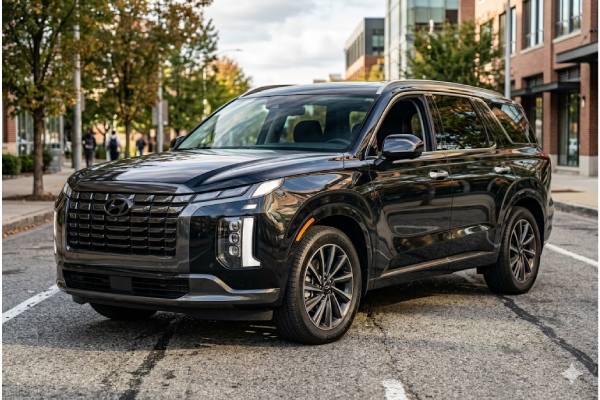
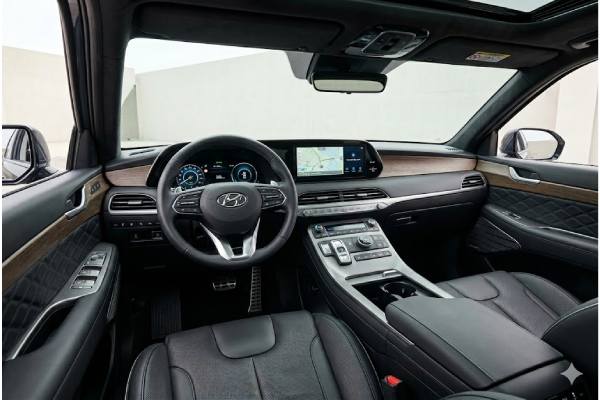

The 2023–2025 Hyundai Palisade LX2 PE is the facelifted version of Hyundai’s large three-row SUV, sold in many North American markets with the naturally aspirated Lambda II 3.8-litre gasoline V6. It is not a performance SUV and it is not meant to feel rugged in the way a body-on-frame 4×4 does. Its strengths are space, comfort, standard safety equipment, straightforward V6 power, and a relatively premium cabin for the price.
For families, used-SUV shoppers, and owners planning long-term maintenance, the most important details are not just the headline 291 hp figure. The Palisade’s real value depends on trim equipment, fuel use, service history, recall completion, tyre condition, transmission behaviour, and whether the vehicle has been used for heavy towing or mostly gentle commuting. The 2023–2025 facelift is mature, but it still needs careful inspection because safety campaigns and trim-specific equipment can make two similar-looking examples quite different to own.
Quick Specs and Notes
- Smooth 3.8-litre V6, roomy three-row cabin, and up to 5,000 lb / 2,268 kg braked towing when properly equipped.
- Strong standard safety content, including forward collision avoidance, lane support, blind-spot monitoring, and rear cross-traffic assistance on most North American trims.
- HTRAC AWD improves winter traction, but it adds weight and slightly reduces highway economy.
- Verify recall completion carefully, especially seat belt buckle, engine-related, and later safety-campaign records by VIN.
- Typical oil-service intervals vary by market; many schedules use 8,000 km / 6 months or 8,000 miles / 12 months depending on region and operating conditions.
Table of Contents
- Palisade LX2 PE Buyer Overview
- Palisade LX2 PE Technical Specs
- Palisade LX2 PE Trims and Safety
- Reliability, Recalls, and Known Issues
- Maintenance Schedule and Buying Checks
- Road Manners and Real-World Performance
- How Palisade Compares to Rivals
Palisade LX2 PE Buyer Overview
The LX2 PE Palisade is the facelifted first-generation Palisade, introduced for the 2023 model year and carried through 2025 before the later-generation replacement arrived. In this scope, it is a large unibody three-row SUV with a front-mounted 3.8-litre Lambda II gasoline V6, an 8-speed automatic transmission, and either front-wheel drive or Hyundai’s HTRAC all-wheel-drive system.
The engine is one of the Palisade’s defining advantages. The Lambda II 3.8 GDi is naturally aspirated, so there is no turbocharger, no hybrid battery, and no plug-in charging system to consider. It produces 291 hp at 6,000 rpm and 262 lb-ft / 355 Nm at 5,200 rpm. Those figures are not class-leading today, but they are well matched to the SUV’s relaxed character. The V6 is smooth, predictable, and generally quieter under normal driving than many smaller turbocharged engines used in newer rivals.
The 2023 facelift brought more than styling changes. It added a wider grille design, revised lighting, updated interior displays, expanded safety technology, and trim reshuffling. In the U.S. lineup, common trims include SE, SEL, XRT, Limited, Calligraphy, and later Calligraphy Night Edition. Canadian and other markets may use different grade names and equipment bundles, so trim names should not be treated as universal.
The Palisade is best understood as a comfort-biased family SUV. It gives priority to second-row space, third-row usability, cabin isolation, easy access, and a broad set of convenience features. It is also one of the more convincing near-premium choices in its price class, especially in Limited and Calligraphy trim. Quilted leather, a head-up display, ventilated seats, dual sunroofs, power-folding third row, surround-view cameras, and premium audio can make higher trims feel closer to a luxury SUV than a basic family hauler.
The main ownership trade-offs are fuel economy, size, and inspection discipline. The V6 uses regular unleaded gasoline, but it is not especially frugal in city use. AWD versions are heavier and can return noticeably lower highway mileage than the best hybrid rivals. The Palisade is also wide, so parking sensors, camera systems, tyre condition, and wheel alignment matter more than they might on a smaller crossover.
For used buyers, the best examples are not necessarily the highest trims. A well-maintained SEL Premium or XRT with clean recall history can be a better long-term buy than a poorly serviced Calligraphy. The key is to verify service records, check all power seat and tailgate functions, confirm ADAS operation, inspect tyres for uneven wear, and ensure that all open safety campaigns have been completed.
Palisade LX2 PE Technical Specs
The following figures describe the 2023–2025 Hyundai Palisade LX2 PE with the 3.8-litre Lambda II GDi V6. Exact values can vary by market, trim, seating layout, wheel package, and production date, so VIN-specific service data should be used for repair work.
Powertrain and efficiency
| Item | Specification |
|---|---|
| Engine code / family | Lambda II 3.8L Atkinson-cycle-capable GDi V6 |
| Layout | Front-mounted V6, aluminum block and heads |
| Valvetrain | DOHC, 24 valves, 4 valves per cylinder, D-CVVT |
| Bore × stroke | 96.0 × 87.0 mm / 3.78 × 3.43 in |
| Displacement | 3.778 L / 3,778 cc |
| Induction | Naturally aspirated |
| Fuel system | Gasoline direct injection |
| Compression ratio | 13.0:1 |
| Maximum power | 291 hp / 217 kW @ 6,000 rpm |
| Maximum torque | 355 Nm / 262 lb-ft @ 5,200 rpm |
| Timing drive | Timing chain |
| Fuel type | Regular unleaded gasoline |
| EPA efficiency, 2024–2025 FWD | 19 city / 26 highway / 22 combined mpg US; about 12.4 / 9.0 / 10.7 L/100 km |
| EPA efficiency, 2024–2025 AWD | 19 city / 24 highway / 21 combined mpg US; about 12.4 / 9.8 / 11.2 L/100 km |
| Real-world highway at 120 km/h / 75 mph | Typically about 10.5–12.0 L/100 km / 20–22 mpg US, depending on AWD, tyres, load, wind, and temperature |
Transmission and driveline
| Item | Specification |
|---|---|
| Transmission | 8-speed automatic, A8LF1, shift-by-wire, manual shift mode |
| Drive type | FWD standard on many trims; HTRAC AWD optional or standard depending on trim/market |
| AWD torque distribution | Active on-demand; normal operation can vary from front-biased to roughly 50:50; AWD Lock can bias from about 80:20 to 50:50 |
| Differentials | Open differentials with brake-based traction management; no mechanical rear locker |
| Front suspension | MacPherson struts with coil springs and stabilizer bar |
| Rear suspension | Independent multi-link with separated springs and dampers; self-leveling rear suspension on selected higher trims |
| Steering | Column-mounted motor-driven power steering, rack and pinion, 15.6:1 ratio |
| Turning circle | 11.8 m / 38.7 ft curb-to-curb |
| Brakes | Front ventilated discs 340 × 30 mm / 13.4 × 1.2 in; rear solid discs 305 × 11 mm / 12.0 × 0.4 in |
| Common tyre sizes | 245/60R18 on lower trims; 245/50R20 on XRT, Limited, Calligraphy, and many option packages |
Dimensions and capability
| Item | Specification |
|---|---|
| Length / width / height | 4,996 / 1,976 / 1,750 mm; 196.7 / 77.8 / 68.9 in |
| Wheelbase | 2,901 mm / 114.2 in |
| Ground clearance | 201 mm / 7.9 in |
| Curb weight | Approximately 1,892–2,044 kg / 4,171–4,506 lb depending on drivetrain, trim, and seating |
| GVWR | Approximately 2,600–2,663 kg / 5,732–5,871 lb |
| Fuel tank | 71.2 L / 18.8 US gal / 15.7 UK gal |
| Cargo volume, SAE | Behind third row: 510 L / 18.0 ft³; behind second row: 1,297 L / 45.8 ft³; behind front row: 2,447 L / 86.4 ft³ |
| Towing capacity | 2,268 kg / 5,000 lb braked; 748 kg / 1,650 lb unbraked |
| Payload | Approximate calculated range 619–708 kg / 1,365–1,560 lb; use the door-jamb label for the exact vehicle |
Fluids and service capacities
| System | Specification / capacity |
|---|---|
| Engine oil | Full synthetic 5W-30 commonly specified; published capacity about 6.9 L / 7.3 US qt in Hyundai product data, though some service references list 6.9 US qt; confirm by VIN and dipstick after refill |
| Coolant | Ethylene-glycol coolant suitable for aluminum engines, mixed with distilled water; published service data varies by market and drain method |
| Automatic transmission fluid | Hyundai-approved ATF for A8LF1; product data lists about 7.0 L / 7.4 US qt total, while drain-and-fill quantity is lower |
| Rear differential / transfer case, AWD | API GL-5 SAE 75W-85 hypoid gear oil; inspect periodically and replace after water submersion or severe service |
| Brake fluid | DOT 4; replace by schedule or moisture test |
| A/C refrigerant and oil | VIN-specific label under hood should be used for exact refrigerant type, charge, and compressor oil quantity |
| Wheel lug nuts | 107–127 Nm / 79–94 lb-ft |
| Engine oil drain plug | Common service references list about 39–41 Nm / 29–30 lb-ft; replace the sealing washer and verify by service manual |
Safety and driver assistance
| Area | 2023–2025 Palisade LX2 PE status |
|---|---|
| Euro NCAP | No directly applicable Euro NCAP rating for this U.S.-focused 3.8 GDi scope |
| IIHS | 2023 earned Top Safety Pick+ under its applicable criteria; 2025 listed as Top Safety Pick, with Good small-overlap and side ratings but a Poor updated moderate-overlap result |
| IIHS headlights | Good rating for all trims in the tested 2023–2025 scope |
| Core ADAS | Forward collision avoidance with car/pedestrian/cyclist detection, lane keeping, lane following, blind-spot warning, rear cross-traffic avoidance, driver attention warning, and safe exit assist widely standard |
| Higher-level ADAS | Highway Driving Assist I or II, surround-view monitor, blind-spot view monitor, and parking collision avoidance vary by trim and package |
Palisade LX2 PE Trims and Safety
The Palisade trim structure is one of the biggest reasons shoppers should compare actual window stickers, not just badges. The same 291 hp V6 and 8-speed automatic sit under every North American 2023–2025 gasoline Palisade, but comfort, seating, cameras, driver assistance, and wheel packages vary substantially.
The SE is the simplest version and usually the best value for buyers who want the space but do not need luxury equipment. It commonly has eight-passenger seating with a second-row bench, 18-inch wheels, cloth upholstery, essential safety features, and the same towing rating when properly equipped. SEL adds more comfort and option flexibility, often including available captain’s chairs, upgraded interior materials, a larger convenience package, and more advanced driver-assistance features depending on year.
XRT is mostly a design and equipment package rather than an off-road transformation. It usually brings 20-inch wheels, dark exterior trim, roof rails or rugged-style details, and trim-specific appearance pieces. It does not add a low-range transfer case, locking differentials, or significant ground-clearance improvement, so it should be treated as a mild adventure-look trim rather than a trail vehicle.
Limited and Calligraphy are the premium grades. These can include Nappa leather, ventilated first- and second-row seats, a head-up display, digital rear-view mirror depending on year and market, surround-view camera, blind-spot view monitor, premium audio, power-folding third row, and more sophisticated cabin lighting and trim. Calligraphy Night Edition, added in the later facelift run, is visually distinct through darker exterior detailing and model-specific trim finishes.
Quick identifiers include the front grille finish, wheel design, seat upholstery, second-row layout, head-up display presence, and camera functions. XRT and Calligraphy are usually easy to identify by exterior trim and wheels. SEL can be harder because package content varies, so a build sheet or Monroney label is useful.
Safety equipment is a major advantage of the Palisade. It uses a broad airbag package including advanced front airbags, a driver knee airbag, side-impact airbags, and side curtains with rollover sensors. LATCH/ISOFIX coverage is strong for a three-row SUV, with second-row anchors and tethers plus third-row child-seat provisions. Stability control, anti-lock brakes, brake assist, tyre-pressure monitoring with individual tyre display, trailer sway control, and rear occupant alert systems are also part of the safety package.
The most important safety-rating nuance is test version. A 2023 award label and a 2025 award label cannot be compared without checking which IIHS criteria were active at the time. The Palisade performs well in many structural and crash-avoidance categories, but updated moderate-overlap testing raised concerns around rear-occupant protection. That does not make the Palisade unsafe, but it does mean buyers who regularly carry children or adults in the second row should pay attention to correct belt fit, booster-seat compatibility, and the production date of a 2025 vehicle.
ADAS calibration also matters. If the windshield, front bumper, radar, camera module, steering-angle sensor, or suspension geometry has been disturbed after collision repair, alignment work, or glass replacement, the vehicle may need calibration. A Palisade with warning lights, unavailable lane support, inconsistent adaptive-cruise behaviour, or unexplained parking-sensor errors should not be dismissed as a minor inconvenience until the root cause is confirmed.
Reliability, Recalls, and Known Issues
The 2023–2025 Palisade is generally a solid large SUV when serviced properly, but it is not free of issues. The drivetrain is mature, the V6 is not highly stressed, and the conventional automatic is easier to understand than many dual-clutch or hybrid systems. Still, buyers should treat recall history, electronics, tyres, suspension wear, and transmission service as serious inspection points.
| Issue area | Prevalence | Severity / cost tier | Symptoms and recommended action |
|---|---|---|---|
| Seat belt buckle latching campaign | Important safety action on affected 2020–2025 vehicles | High severity, usually no-cost recall remedy | Light or weak buckle click, belt not fully latching, abnormal buckle button position. Verify by VIN and confirm dealer inspection or replacement. |
| 2024 valve-spring recall | Limited affected production range | High severity | Potential sudden loss of power or engine damage. Confirm whether the vehicle is included and whether the engine sub-assembly remedy was completed. |
| Later third-row ejection-mitigation safety campaign | Affects certain 2020–2025 vehicles in official recall filings | High severity | VIN check is essential, especially for vehicles regularly using the third row. |
| Infotainment, navigation, and camera glitches | Occasional | Low to medium | Screen lag, Bluetooth issues, camera display faults, or update prompts. Check software level and confirm all functions during test drive. |
| Transmission shift harshness or flare | Occasional | Medium | Delayed engagement, harsh 2–3 or 3–4 shifts, hunting on grades. Check ATF service history, scan for codes, and confirm adaptive updates if applicable. |
| AWD transfer case / rear differential neglect | Occasional in severe use | Medium to high | Binding, whining, seepage, or vibration. Inspect fluid condition, seals, and service records, especially on snowy-climate or towing vehicles. |
| Brake wear and rotor vibration | Common on heavy city-use SUVs | Low to medium | Pulsation, squeal, uneven pad wear. Inspect rotors and calipers, especially on vehicles that sit outside or tow. |
| Suspension bushings, alignment, and tyres | Common wear item | Low to medium | Inner-edge tyre wear, steering pull, clunks over sharp bumps. Check alignment printout, tyre date codes, and bushing condition. |
The Lambda II 3.8 GDi does not have a timing-belt replacement interval because it uses timing chains. That does not mean the timing system can be ignored forever. On high-mileage or poorly maintained engines, chain noise at cold start, cam/crank correlation fault codes, or tensioner and guide wear should be investigated. Routine oil changes with the correct oil are the best preventive measure.
Direct injection can also lead to intake-valve deposits over time because fuel does not continuously wash the back of the intake valves. Severe carbon build-up is not usually the first Palisade concern, but rough idle, misfire codes, reduced response, or poor cold running on higher-mileage examples should prompt diagnosis. Cleaning should be based on symptoms and inspection, not sold as a routine add-on without evidence.
Oil consumption is not a defining pattern for the 2023–2025 Palisade, but owners should still check the level between services. Large V6 engines used for short trips, long idling, towing, or high-speed highway work can consume oil even when healthy. Low oil accelerates wear in timing-chain components and cam phasers, so the dipstick matters.
Cooling-system checks are important because the Palisade is often used as a family hauler in hot weather, long traffic queues, and towing situations. Inspect the radiator, hoses, coolant reservoir, thermostat operation, fan function, and water-pump area for leaks or crusting. Any repeated overheating, coolant smell, or unexplained coolant loss deserves immediate diagnosis.
Corrosion is not usually a dramatic structural issue on young LX2 PE vehicles, but road-salt markets can still attack fasteners, brake hardware, subframe edges, suspension arms, exhaust clamps, and underbody seams. A pre-purchase inspection should include the underside, not just the paint and interior.
The best reliability strategy is simple: buy the cleanest service history, confirm VIN-specific campaigns, avoid modified wiring or questionable tow-hitch installations, and do not ignore warning lights. A Palisade that has been maintained by the book and used mainly as family transport should have a strong long-term outlook. A neglected example with missed recalls, cheap tyres, accident repair, and unknown transmission history is a very different risk.
Maintenance Schedule and Buying Checks
Maintenance on the Palisade is straightforward, but intervals vary by market and by normal versus severe service. Short trips, heavy traffic, dusty roads, mountain driving, towing, extreme heat, freezing winters, and long idling all push the vehicle toward severe-service thinking. For a large family SUV, conservative fluid service is usually cheaper than trying to stretch intervals.
| Item | Typical interval / guidance | Notes |
|---|---|---|
| Engine oil and filter | Often 8,000 km / 6 months in some schedules or 8,000 miles / 12 months in others; shorter for severe use | Use correct synthetic 5W-30 and verify final level after refill. |
| Tyre rotation | At oil-service intervals | Important for 20-inch tyres and AWD vehicles; inspect for inner-edge wear. |
| Engine air filter | Inspect regularly; replace about every 24,000–32,000 km / 15,000–20,000 miles, sooner in dust | A dirty filter can reduce response and fuel economy. |
| Cabin air filter | About every 16,000 km / 12 months, or as needed | Replace sooner if airflow drops or odours appear. |
| Spark plugs | About 160,000 km / 100,000 miles | Use correct plugs; avoid delaying if misfires appear. |
| Drive belt | Inspect by 96,000 km / 72 months, then about every 32,000 km / 24 months | Replace for cracks, glazing, noise, or weak tension. |
| Coolant | Often first replacement around 192,000 km / 120 months, then every 48,000 km / 24 months | Use approved coolant and correct mix; pressure-test if loss is suspected. |
| Automatic transmission fluid | Common severe-service replacement target around 96,000 km / 60,000 miles | Use only correct ATF; drain-and-fill quantity differs from total capacity. |
| Rear differential and transfer case, AWD | Inspect about every 32,000 km / 24 months; replace after water submersion or severe use | More important for towing, snow-belt driving, and repeated steep grades. |
| Brake fluid | Usually every 24–36 months, or by moisture test | Use DOT 4; inspect pads, rotors, calipers, and parking-brake function. |
| 12 V battery | Test annually after year three | Weak batteries can trigger electronic faults and start-stop complaints. |
| Alignment | Check annually or after tyre impact | Large tyres and soft suspension bushings make alignment condition easy to see in tread wear. |
A buyer’s inspection should begin with records. Look for regular oil changes, brake-fluid service, tyre rotations, warranty repairs, recall completion, and any ATF or AWD fluid service. A clean Carfax-style history is helpful but not enough; dealer service printouts and receipts are better.
On the test drive, start from cold. Listen for timing-chain rattle, belt squeal, ticking beyond normal injector noise, exhaust leaks, and rough idle. The 8-speed should engage Drive and Reverse smoothly, shift without a flare, and downshift predictably. A harsh bump from a stop, repeated gear hunting, or delayed engagement after selecting Drive deserves a professional scan and fluid inspection.
Check the body carefully. Panel gaps, mismatched paint, overspray, replaced headlights, and warning stickers around sensors can point to accident repair. Because the Palisade relies heavily on cameras and radar, poor front-end repair can create expensive ADAS problems. Confirm adaptive cruise, lane support, blind-spot warnings, parking sensors, rear camera, surround camera if equipped, power liftgate, seat heating, seat ventilation, power-folding seats, sunroof, and climate functions.
For towing vehicles, inspect the hitch, wiring, transmission cooler area, rear suspension, brake wear, and rear tyres. A Palisade can tow 5,000 lb when properly equipped, but repeated towing near the limit places real load on cooling, brakes, tyres, and transmission fluid. The best towing example will have proof of fluid services and conservative use.
Recommended versions depend on priorities. SEL with desirable packages is usually the value sweet spot. XRT works for buyers who like the appearance and standard 20-inch wheel look but do not need every luxury feature. Limited and Calligraphy are excellent for comfort, but they add more power equipment to inspect. For long-term durability and lower tyre costs, an 18-inch-wheel SEL can be easier to live with than a 20-inch luxury trim.
Road Manners and Real-World Performance
The Palisade drives like a large, comfort-focused crossover. It is stable, quiet, and easy to place on highways, with light steering at parking speeds and enough body control to feel secure in normal family use. It does not invite hard cornering, but it resists feeling sloppy unless the tyres are worn, pressures are wrong, or the suspension is tired.
Ride quality is one of its better traits. On 18-inch wheels, the Palisade has a more forgiving edge over potholes and expansion joints. The 20-inch packages look better and sharpen initial response slightly, but they also transmit more impact harshness and cost more at replacement time. Buyers who cover rough roads should not dismiss the smaller wheel package.
The 3.8-litre V6 has a smooth, progressive character. Peak torque arrives high in the rev range, so the engine does not feel as punchy at low rpm as a modern turbocharged six-cylinder or hybrid. Even so, the automatic transmission masks much of that by downshifting readily when more power is needed. Around town, throttle response is predictable and easy to manage. On highway ramps and passing manoeuvres, the V6 becomes more audible but rarely coarse.
Typical 0–60 mph performance is in the high-six to low-seven-second range depending on drivetrain, trim, tyres, fuel, temperature, and test method. Expect 0–100 km/h in roughly the low-to-mid-seven-second range. That is quick enough for family-SUV duty, though not especially sporty by current standards. The more important real-world measure is passing response from about 80–120 km/h / 50–75 mph, where the transmission’s willingness to kick down matters more than the peak horsepower number.
Braking feel is confident when the system is healthy, but the Palisade is heavy. Frequent mountain driving, heavy loads, and towing can heat the brakes quickly if the driver does not use engine braking and proper following distance. A test drive should include moderate braking from highway speed. Pulsation, steering-wheel shake, or a soft pedal points to rotor, pad, caliper, or brake-fluid issues.
HTRAC AWD gives the Palisade better all-weather confidence, not off-road toughness. In normal driving it is front-biased, then sends torque rearward when needed. Snow mode softens responses and helps the system manage slippery starts. AWD Lock can help at low speed on loose surfaces, but ground clearance, approach angle, tyre choice, and the lack of a low range limit true trail ability.
Real-world fuel use depends strongly on speed and load. City driving often lands around 12–15 L/100 km / 16–20 mpg US, especially in cold weather or heavy traffic. Mixed driving commonly sits near 10.5–12.5 L/100 km / 19–22 mpg US. Highway cruising at moderate speed can be reasonable for the size, but 120 km/h / 75 mph, roof boxes, winter tyres, AWD, and headwinds can push consumption into the 11–12 L/100 km range.
Towing is stable when the trailer is set up properly, the tongue weight is correct, and the vehicle is not overloaded. The Palisade’s 5,000 lb rating is useful for small campers, utility trailers, and personal watercraft, but it should not be confused with truck-like reserve. Expect a meaningful fuel penalty when towing, often 25–45 percent depending on trailer shape and speed. For frequent towing, AWD, careful weight distribution, and shorter fluid-service intervals are sensible.
How Palisade Compares to Rivals
The Palisade’s closest rival is the Kia Telluride, which shares much of its underlying engineering but has a more squared-off personality. The Telluride often feels slightly more rugged in design, while the Palisade leans more upscale and polished, especially inside. Mechanically, they are close enough that trim equipment, condition, price, and dealer support matter more than brand differences.
Against the Honda Pilot, the Palisade feels more luxurious in higher trims and often offers richer equipment for the money. The Pilot counters with strong packaging, a more adventure-oriented TrailSport option, and Honda’s reputation for long-term ownership. Buyers who prefer a firmer, more utilitarian SUV may like the Pilot. Buyers who value cabin ambience and quietness may prefer the Palisade.
The Toyota Highlander is more efficient when equipped as a hybrid, but it is smaller inside and less spacious in the third row. The Toyota Grand Highlander is the more direct size competitor and offers hybrid powertrain options that can beat the Palisade’s fuel economy by a wide margin. The Palisade answers with a smooth V6, strong equipment levels, and attractive used pricing, but it cannot match Toyota hybrid efficiency.
The Mazda CX-90 brings rear-drive-based dynamics, available inline-six turbo power, and a more premium driving feel. It is more engaging but also more complex, especially in plug-in hybrid form. The Palisade is simpler, roomier-feeling for many families, and easier to understand from a maintenance standpoint.
The Volkswagen Atlas offers generous space and a boxy cabin, but its powertrain character and interior finish vary by year. The Subaru Ascent offers standard AWD and good bad-weather confidence, but its turbocharged flat-four and CVT give it a very different feel from the Palisade’s V6 automatic combination.
The Palisade’s main advantages are comfort, space, equipment value, intuitive controls, smooth power delivery, and strong family practicality. Its main disadvantages are fuel economy, limited off-road capability, recall diligence, and the fact that the highest trims add more electronics and power features to inspect as the vehicle ages.
For most buyers, the 2023–2025 Palisade LX2 PE is worth considering if the goal is a refined three-row SUV with a conventional gasoline drivetrain and a premium-feeling cabin. It is less ideal for drivers who want hybrid fuel economy, a genuinely rugged off-road package, or the lowest possible ownership cost. The best purchase is a clean, documented, recall-complete example with good tyres, smooth transmission behaviour, and trim features that match actual family needs rather than showroom appeal alone.
References
- 2024 Palisade Specifications 2024 (Specifications)
- 2025 Hyundai Palisade 2025 (Safety Rating)
- Part 573 Safety Recall Report 25V607 2025 (Recall Database)
- Part 573 Safety Recall Report 24V-106 2024 (Recall Database)
- Part 573 Safety Recall Report 26V034 2026 (Recall Database)
Disclaimer
This article is for informational purposes only and is not a substitute for professional diagnosis, repair, or inspection. Specifications, torque values, service intervals, fluid capacities, recall status, and repair procedures can vary by VIN, market, production date, trim, drivetrain, and installed equipment. Always verify critical information against the official owner’s manual, service manual, dealer records, recall database, and the vehicle’s certification labels before making maintenance or repair decisions.
If this helped, consider sharing it on Facebook, X/Twitter, or another platform to support our work.