

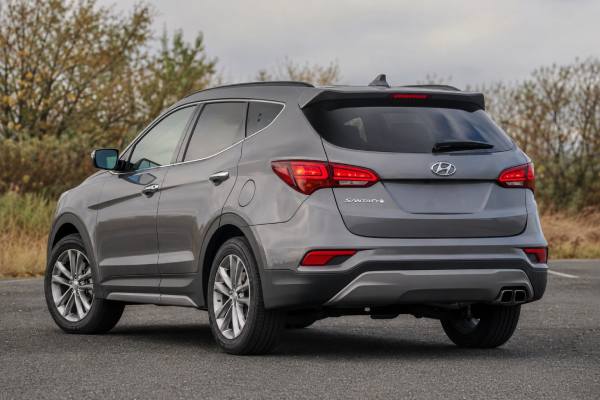
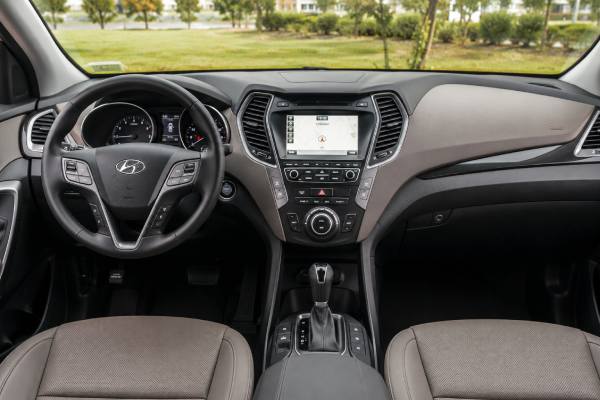
The facelifted Hyundai Santa Fe DM with the 2.4 GDi petrol engine sits in an interesting place on the used SUV market. It is larger and more comfortable than many compact crossovers, simpler than turbocharged alternatives, and available with an on-demand 4WD/AWD system that improves traction in rain, snow, and loose surfaces. For families who want space without moving into a large V6 SUV, it can be a sensible choice.
There are important details to check, however. The “2.4 GDi 188 hp” rating is most commonly associated with international-market Theta II GDI versions, while some North American Santa Fe Sport AWD models with the same 2.4-liter GDI family engine were rated at 185 hp under local test standards. Equipment, safety systems, towing limits, and maintenance schedules can also vary by market and VIN. The right example is comfortable, useful, and reasonably robust, but condition and service history matter more than badge appeal.
Quick Overview
- Spacious, comfortable, and practical for family use, with a roomy cabin and strong cargo capacity for its size.
- Naturally aspirated 2.4 GDi power delivery is smoother and simpler than the turbo version, though not especially quick.
- 4WD/AWD improves winter and wet-road traction, but this is a road-focused crossover rather than a low-range off-roader.
- Check recall completion, oil consumption history, AWD driveline condition, suspension wear, and corrosion in salt-belt climates.
- Typical normal-use oil service is around 12,000 km or 12 months; severe use can shorten this to about 6,000 km or 6 months.
Table of Contents
- Santa Fe DM 4WD Profile
- Santa Fe DM 2.4 GDi Specs
- Santa Fe DM Trims and Safety
- Reliability, Issues and Recalls
- Maintenance and Used Buying
- Road Performance and Efficiency
- Rivals and Final Assessment
Santa Fe DM 4WD Profile
The Hyundai Santa Fe DM facelift covers the updated third-generation model sold around the 2016–2018 model years. Depending on market, the same basic vehicle may be called Santa Fe, Santa Fe Sport, or sold alongside a longer three-row Santa Fe variant. The 2.4 GDi version is the naturally aspirated petrol choice, positioned below the stronger turbocharged petrol and diesel versions offered in some regions.
The engine is from Hyundai’s Theta II family, commonly identified as the G4KJ 2.4 GDI. It is an aluminum inline-four with direct fuel injection, dual overhead camshafts, four valves per cylinder, and dual continuously variable valve timing. In international specification it is usually quoted at 188 hp, or 138 kW, at 6,000 rpm, with 241 Nm of torque at 4,000 rpm. North American Santa Fe Sport versions with the 2.4-liter GDI engine are often listed at 185 hp and 178 lb-ft because of regional rating methods and emissions calibration differences.
The 4WD or AWD system is an electronically controlled, on-demand setup. In normal driving it behaves mostly like a front-drive SUV, then sends torque rearward when wheel slip, throttle position, steering angle, or stability-control logic calls for it. Some versions include a lock mode for low-speed slippery conditions, but there is no low-range transfer case, no locking axle differential, and no heavy-duty off-road hardware. It is best understood as an all-weather family crossover, not a substitute for a ladder-frame 4×4.
In daily use, the Santa Fe DM’s strongest qualities are comfort, space, and ease of driving. The cabin is wider than many compact SUVs, the rear seats are adult-friendly, and the cargo area is useful even before the second row is folded. The suspension tuning favors calm cruising over sharp handling, which suits the vehicle’s family role. Steering is light, visibility is decent, and the six-speed automatic transmission gives the car a conventional, familiar driving feel.
The 2.4 GDi’s main limitation is torque. It needs revs when carrying passengers, climbing long grades, or overtaking at highway speeds. Drivers coming from a diesel Santa Fe, a V6 SUV, or the 2.0T petrol version may find it modest. Drivers coming from a compact hatchback or older naturally aspirated crossover will likely find it adequate.
For used buyers, the value case is strongest when the car has documented oil changes, matching tyres, completed recalls, and no evidence of overheating, bearing noise, AWD binding, or deferred fluid service. A clean, well-maintained 2.4 GDi 4WD is usually a better buy than a higher-trim example with patchy history and cosmetic appeal.
Santa Fe DM 2.4 GDi Specs
Specifications vary by market, trim, wheel package, seating layout, and test standard. The figures below focus on the facelifted DM/AN Santa Fe or Santa Fe Sport with the 2.4 GDi petrol engine and 4WD/AWD where applicable. Where regional differences are common, ranges are used rather than false precision.
| Item | Hyundai Santa Fe DM 2.4 GDi 4WD |
|---|---|
| Engine code | Theta II G4KJ, market dependent |
| Engine layout | Inline-4, 4 cylinders, DOHC, 4 valves per cylinder |
| Bore × stroke | 88.0 × 97.0 mm / 3.46 × 3.82 in |
| Displacement | 2.4 L / 2,359 cc |
| Induction | Naturally aspirated |
| Fuel system | Gasoline direct injection |
| Compression ratio | 11.3:1 |
| Maximum power | 188 hp / 138 kW at 6,000 rpm; some markets list 185 hp |
| Maximum torque | 241 Nm / 178 lb-ft at 4,000 rpm |
| Timing drive | Chain |
| Rated efficiency | About 9.4–10.7 L/100 km combined / 22–25 mpg US / 26–30 mpg UK, depending on test cycle |
| Real-world highway at 120 km/h | About 8.8–10.2 L/100 km / 23–27 mpg US / 28–32 mpg UK, depending on tyres, load, weather, and terrain |
| Item | Specification |
|---|---|
| Transmission | 6-speed torque-converter automatic with manual shift mode; some markets also listed manual variants |
| Drive type | On-demand 4WD/AWD with electronically controlled rear coupling |
| Differentials | Open front and rear differentials; traction control manages wheel slip |
| Low-range gearing | Not fitted |
| Item | Typical figure |
|---|---|
| Front suspension | MacPherson strut with coil springs and anti-roll bar |
| Rear suspension | Multi-link independent suspension with coil springs and anti-roll bar |
| Steering | Motor-driven power steering; about 15.0:1 ratio |
| Front brakes | Ventilated discs, about 320 mm / 12.6 in |
| Rear brakes | Solid discs, about 302 mm / 11.9 in |
| Common tyre sizes | 235/65 R17, 235/60 R18, 235/55 R19 |
| Ground clearance | About 180–185 mm / 7.1–7.3 in |
| Approach / departure / breakover | About 16.5° / 21.2° / 16.6°, market and bumper dependent |
| Length / width / height | About 4,690–4,700 mm / 1,880 mm / 1,680–1,690 mm; 184.6–185.0 in / 74.0 in / 66.1–66.5 in |
| Wheelbase | 2,700 mm / 106.3 in |
| Turning circle | About 10.9 m / 35.8 ft kerb-to-kerb |
| Kerb weight | About 1,720–1,810 kg / 3,790–3,990 lb, depending on trim and market |
| GVWR | About 2,280 kg / 5,027 lb on many AWD versions |
| Fuel tank | About 64–66 L / 16.9–17.4 US gal / 14.1–14.5 UK gal |
| Cargo volume | About 1,000 L / 35 cu ft seats up and about 2,025 L / 71.5 cu ft seats folded by SAE method; VDA figures may be lower |
| Item | Typical figure or note |
|---|---|
| 0–100 km/h / 0–62 mph | About 9.9–11.0 seconds, depending on drivetrain, test method, and load |
| Top speed | About 190–202 km/h / 118–126 mph, market dependent |
| 100–0 km/h braking | Typically around 38–41 m / 125–135 ft in independent testing, tyre dependent |
| Towing capacity | Often about 907 kg / 2,000 lb braked for 2.4 AWD in North America; some markets differ |
| Unbraked towing | Often about 750 kg / 1,650 lb, depending on market rules |
| Payload | Usually around 500–560 kg / 1,100–1,235 lb, depending on trim and GVWR |
| Engine oil | API SN / ILSAC GF-5 or later where specified; commonly SAE 5W-20 or 5W-30; about 4.8 L / 5.1 US qt with filter |
| Coolant | Ethylene-glycol coolant for aluminum engines, typically 50/50 mix; capacity varies by service method and market documentation |
| Automatic transmission fluid | Hyundai/Kia ATF SP-IV type; drain/refill and total capacities vary, so verify by VIN |
| Transfer case and rear differential | Hyundai-approved hypoid gear oil, commonly API GL-5 75W-90 type; small-capacity units require correct fill level |
| A/C refrigerant | Usually R-134a on many DM models, but charge amount must be checked on the under-bonnet label |
| Key torque examples | Wheel lug nuts commonly 88–108 Nm / 65–80 lb-ft; spark plug and drain-plug values must be confirmed from the service manual |
| Euro NCAP | Third-generation Santa Fe achieved a 5-star result in the 2012 test programme; later protocol changes mean scores are not directly comparable with newer tests |
| IIHS | 2017–2018 Santa Fe Sport ratings were strong in major crashworthiness categories when comparing applicable model years and build dates |
| ADAS availability | Rear camera widely fitted; blind-spot monitoring, rear cross-traffic alert, lane departure warning, smart cruise control, and AEB varied by trim and package |
The most important specification caveat is market identity. A European, Middle Eastern, Asian, or North American 2.4 GDi Santa Fe may share the same basic engine family but differ in emissions equipment, rating method, transmission pairing, seating layout, tow approval, lighting, driver assistance, and service schedule. Always use the VIN and local owner’s manual when ordering parts or confirming capacities.
Santa Fe DM Trims and Safety
Trim naming differs widely. In North America, the short-wheelbase version was commonly sold as the Santa Fe Sport, with the 2.4 GDI serving as the base naturally aspirated engine and the 2.0T as the higher-output petrol choice. In other markets, the vehicle may simply be badged Santa Fe, with trims such as Comfort, Trend, Style, Premium, Executive, Active, or Elite depending on country. Some regions focused more heavily on diesel versions, while petrol 2.4 GDi availability could be limited.
For the 2.4 GDi 4WD, mechanical differences by trim are usually modest. The core engine, six-speed automatic, and AWD hardware tend to be the same, while higher trims add larger wheels, better lighting, leather or upgraded upholstery, navigation, panoramic roof, heated rear seats, upgraded audio, parking sensors, power tailgate, and extra driver assistance. A larger wheel package can change ride comfort and tyre cost more than many buyers expect. The 17-inch and 18-inch packages usually provide the best balance of comfort, durability, and replacement cost; 19-inch wheels look sharper but can feel busier on broken pavement.
Quick identifiers help when checking a used vehicle. A 2.4 GDi model may carry a GDi badge, while AWD or 4WD badging is often placed on the tailgate. North American Santa Fe Sport 2.4 models are usually easy to separate from 2.0T versions by the absence of turbo badging and by equipment level. The safest method is still the VIN: it confirms engine family, market, production date, restraint configuration, recall eligibility, and original equipment. Build-date stickers are also useful because some safety ratings and recall campaigns depend on production date rather than registration year.
Safety equipment is one of the facelifted DM’s stronger areas. Standard systems generally include front, side, and curtain airbags, anti-lock brakes, electronic brake-force distribution, brake assist, electronic stability control, traction control, hill-start assist, downhill brake control, tyre-pressure monitoring, and child-seat anchor points. Many versions also include a driver knee airbag. Rearview cameras became common or standard in many markets during this period.
Driver assistance depends heavily on trim and package. Blind-spot monitoring and rear cross-traffic alert are common on better-equipped cars and may be optional on lower trims. Lane departure warning, smart cruise control, forward collision warning, automatic emergency braking with pedestrian detection, high-beam assist, and adaptive or bending headlights were generally limited to higher trims or technology packages. These systems make the vehicle more desirable, but they also add inspection points after collision repair. Radar sensors, windscreen cameras, bumper brackets, and steering-angle calibration must be correct for the systems to work reliably.
Crash-test interpretation needs care. The DM-generation Santa Fe earned strong results in its period, but rating bodies changed test protocols over time. Euro NCAP’s 2012 five-star result should not be treated as equivalent to a 2026 five-star result, because newer tests place greater emphasis on advanced crash avoidance, vulnerable road-user protection, and stricter impact scenarios. In the United States, IIHS ratings for Santa Fe Sport and related Santa Fe models are useful, but build dates and headlight equipment can affect the final assessment. A car with advanced safety equipment and good headlights is a stronger buy than a base car with the same basic body structure but fewer active-safety features.
For families, the practical safety checks are simple: inspect the tyres, brakes, headlights, seatbelts, child-seat anchors, rear camera, blind-spot lights, parking sensors, and dashboard warning lamps. A pre-purchase scan should confirm there are no stored ABS, airbag, camera, radar, or steering-angle faults. If the windscreen has been replaced, ask whether the camera system was recalibrated.
Reliability, Issues and Recalls
A well-serviced Santa Fe DM 2.4 GDi can be durable, but it is not a vehicle to buy casually without checks. The engine, transmission, AWD system, suspension, brakes, electronics, and recall history all deserve attention. The best examples have short oil-change intervals, no warning lights, no driveline binding, matching tyres, clean coolant, dry engine seams, and proof of completed service campaigns.
| System | Prevalence | Typical symptoms | Likely cause | Recommended remedy |
|---|---|---|---|---|
| 2.4 GDi oil use and bearing wear | Occasional to common, depending on history | Low oil level, ticking, knocking, oil-pressure warning, metallic debris | Oil consumption, poor service history, bearing wear, contamination, overheating | Consumption test, oil analysis, dealer campaign check, engine inspection or replacement where applicable |
| GDI intake carbon | Occasional | Rough idle, hesitation, misfires, reduced economy | Direct injection does not wash intake valves with fuel | Intake inspection, walnut blasting or approved cleaning, PCV check |
| Timing chain and tensioner | Rare to occasional | Cold-start rattle, cam/crank correlation faults, poor running | Chain stretch, guide wear, tensioner wear, oil neglect | Diagnose with scan data and mechanical checks; replace chain set if out of specification |
| Six-speed automatic | Usually robust | Harsh shifts, flare, shudder, delayed engagement | Old ATF, adaptation issues, valve-body wear, mounts | Scan for codes, check mounts, update software if available, service ATF under severe-use guidance |
| AWD coupling, transfer case, rear differential | Occasional | Binding, rumble, clunking, no rear drive, vibration | Mismatched tyres, low fluid, neglected gear oil, coupling wear | Fit matched tyres, inspect fluid, scan AWD system, service or repair affected unit |
| Suspension and steering | Common with age | Clunks, wandering, uneven tyre wear, vibration | Strut mounts, control-arm bushes, ball joints, links, wheel bearings | Road test, lift inspection, alignment after repairs |
| Body and underbody corrosion | Climate dependent | Rust on subframes, brake lines, suspension arms, seams, tailgate edges | Road salt, blocked drains, damaged coatings | Inspect on lift, repair early, avoid structurally corroded examples |
| ADAS and parking electronics | Occasional | Blind-spot faults, camera failure, parking-sensor warnings | Sensor damage, bumper repair, wiring, calibration errors | Scan modules, inspect brackets and wiring, recalibrate after repair |
The Theta II GDI engine is the main risk area. Not every 2.4 GDi is problematic, but oil level discipline is essential. Check the dipstick before the first start, after the test drive, and again if possible after the car has sat. A seller who says “they all use a bit of oil” should not be dismissed automatically, but the amount matters. Heavy oil consumption, visible smoke, bearing knock, or recent thick oil that masks noise are warning signs.
Short trips and long oil intervals are not friendly to this engine. Direct injection, high compression, and stop-start urban use can accelerate oil contamination and intake deposits. Cars used mainly for short journeys may show rough idle, fuel smell in the oil, weak battery behavior, and faster exhaust or brake corrosion. On the other hand, a motorway-driven car with regular oil changes can feel much younger than its mileage suggests.
The automatic transmission is usually not the weak link. It is a conventional six-speed unit, which is generally preferable for used buyers who want predictable behavior. Still, “sealed for life” language should be treated cautiously. Under severe use, towing, steep terrain, hot climates, or heavy city driving, periodic ATF service is sensible. A harsh 2–3 shift, delayed reverse engagement, or torque-converter shudder deserves diagnosis before purchase.
Recalls and service actions are especially important. Some 2016–2018 Santa Fe and Santa Fe Sport vehicles were included in campaigns related to ABS or HECU module electrical short risk, with fire-risk warnings and fuse or module remedies. Other campaigns in some markets involved trailer tow hitch wiring harnesses, brake-light or lighting concerns, and market-specific updates. The only safe approach is an official VIN check, followed by dealer service records showing completion. A clean dashboard does not prove recall completion.
Software updates can also matter. Engine, transmission, AWD, infotainment, and ADAS modules may have calibration updates for drivability, warning messages, sensor behavior, or diagnostic logic. A dealer or Hyundai specialist can check whether the car has the latest applicable updates. This is particularly relevant after engine work, transmission complaints, steering-angle sensor replacement, windscreen replacement, front-end body repair, or radar/camera-related faults.
Before buying, request full service records, recall proof, invoices for oil changes, tyre replacement dates, brake work, coolant work, and any transmission or AWD service. On the road test, listen for cold-start rattle, bearing knock, suspension clunks, rear driveline noise, brake pulsation, wind noise, and panoramic roof creaks or leaks if fitted. A scan-tool report is strongly recommended, because some faults remain stored even when warning lamps are off.
Maintenance and Used Buying
The Santa Fe DM rewards preventive maintenance. It is heavy enough to work its tyres, brakes, suspension, AWD coupling, and automatic transmission harder than a smaller hatchback, and the 2.4 GDi engine is sensitive to oil quality and level. For a long-term keeper, shorter service intervals are cheap insurance.
| Item | Normal interval | Severe-use guidance | Notes |
|---|---|---|---|
| Engine oil and filter | About 12,000 km or 12 months | About 6,000 km or 6 months | Use correct API/ILSAC grade and check oil level between services |
| Engine air filter | Inspect regularly; replace around 48,000 km in normal use | Replace more often in dust, gravel, or heavy traffic | A dirty filter hurts economy and throttle response |
| Cabin air filter | About 24,000 km or 12 months | Shorter in dusty or humid climates | Helps HVAC airflow and demisting |
| Spark plugs | Often around 156,000 km | Inspect sooner if misfires occur | Use the correct heat range and torque |
| Fuel filter | Often treated as maintenance-free | Inspect if poor fuel quality is suspected | Hard starting, hesitation, or power loss may require diagnosis |
| Timing chain | No routine replacement interval | Inspect if noisy or if timing faults appear | Replace chain, guides, and tensioner only when worn or out of specification |
| Drive belts and hoses | Inspect from about 96,000 km, then periodically | Inspect more often in hot climates | Look for cracks, glazing, swelling, leaks, and weak clamps |
| Coolant | Long-life interval, often first major service near 10 years or high mileage | Shorter if contaminated, overheated, or repaired | Use Hyundai-approved coolant and correct mix |
| Automatic transmission fluid | Often no routine normal-use service listed | About 96,000 km under severe use | Use ATF SP-IV type; avoid universal fluid unless approved |
| Transfer case and rear differential | Inspect periodically | Service after towing, water exposure, or hard use | Correct level is critical because capacities are small |
| Brake fluid | Every 2 years is a sensible practical interval | Same or sooner in humid climates | Use specified DOT fluid and bleed correctly |
| Brake pads and rotors | Inspect at every service | Inspect more often in city or mountain use | Rear brakes can corrode if the car sits outdoors |
| Tyre rotation and alignment | Rotate around 8,000–12,000 km | Check more often if tyre wear is uneven | AWD versions need matched tyre size, brand, tread depth, and pressure |
| 12 V battery | Test annually after 3 years | Replace sooner with short trips or cold starts | Weak voltage can trigger misleading warning lights |
Severe use is more common than many owners think. Repeated short trips, freezing starts, long idling, dusty roads, mountain driving, towing, urban stop-and-go traffic, high heat, roof loads, and frequent full-passenger use all justify tighter maintenance. A family SUV that spends its life on school runs and short errands is often under more mechanical stress than one used for steady highway travel.
For fluids, the safest practice is to follow the VIN-specific manual. Engine oil capacity is commonly about 4.8 L, or 5.1 US qt, with filter. Automatic transmission fluid should meet Hyundai/Kia SP-IV requirements. Transfer case and rear differential fluids should match the approved hypoid gear oil specification and should not be overfilled or underfilled. Brake fluid should meet the specified DOT standard. A/C refrigerant and compressor oil must be checked from the vehicle label, because refrigerant type and charge can vary by model year and market.
A used-purchase inspection should be methodical. Start with paperwork: service book, invoices, recall proof, oil-change frequency, tyre age, and whether the car has ever towed. Then inspect the car cold. A warmed-up engine can hide timing-chain rattle, bearing noise, slow starting, smoke, and idle instability. Check the coolant bottle, radiator area, oil filler cap, dipstick, underside of the engine, transmission seams, transfer case, rear differential, and rear subframe.
During the test drive, use light throttle, full throttle, steady cruising, low-speed turns, reverse, hill starts, and highway speeds. The transmission should shift smoothly without flare or thump. The AWD system should not bind in tight turns on dry pavement. Braking should be straight and consistent. Steering should not knock or wander. The engine should pull cleanly above 3,000 rpm without misfire or warning lights.
The best versions to seek are not necessarily the most highly optioned. A clean mid-spec car with smaller wheels, full maintenance records, completed recalls, and no panoramic roof leaks can be a better ownership proposition than a top-trim car with neglected service. Desirable features include AWD, heated seats, rear camera, blind-spot monitoring, good headlights, parking sensors, and a clean infotainment system. Be cautious with heavily modified cars, mismatched tyres, tow-hitch wiring of unknown origin, recent engine work without documentation, and any example showing oil pressure, ABS, airbag, or AWD warning messages.
Long-term durability is acceptable when maintenance is disciplined. The platform itself is solid, the interior ages reasonably well, and the six-speed automatic is familiar to many independent specialists. The main durability question is the individual engine’s oil and bearing history. A pre-purchase inspection is not optional if the car is high-mileage, imported, used for towing, or sold without records.
Road Performance and Efficiency
The Santa Fe DM 2.4 GDi 4WD is tuned for calm, practical transport rather than excitement. Its best driving qualities are stability, comfort, and a relaxed cabin. On urban roads, the steering is light and the automatic transmission is smooth at low speeds. The suspension absorbs ordinary bumps well, though larger wheels can make sharp potholes more noticeable. The body feels substantial, and the seating position gives the driver a useful view without feeling truck-like.
At highway speeds, the Santa Fe feels secure. Straight-line stability is good, crosswind behavior is manageable, and the cabin is quiet enough for long trips when tyres are in good condition. Wind noise can increase around roof rails, door seals, or panoramic roof areas as the car ages. Coarse tyres can add more road noise than the engine itself. A fresh set of quality touring tyres can transform refinement.
Handling is predictable rather than sporty. The front end is safe and progressive, but the vehicle’s weight is obvious if it is driven hard. There is body roll in quick direction changes, and the steering does not offer much feedback. For family use, that is rarely a problem. The Santa Fe is more comfortable at a steady pace than being rushed down a tight road. The brakes are strong enough for normal use, but repeated heavy braking with a full load will reveal the mass of the vehicle. Brake fluid condition, tyre quality, and rotor health make a noticeable difference.
The 2.4 GDi engine is smooth but not muscular. Peak torque arrives at 4,000 rpm, so the engine needs to rev when asked for strong acceleration. Around town it feels pleasant because throttle response is linear and there is no turbo lag. On open roads, kickdown is frequent when climbing hills or overtaking. The six-speed automatic generally chooses gears sensibly, but it may hunt between ratios on rolling terrain with passengers and luggage aboard.
Performance is adequate for normal driving. A typical 0–100 km/h time in the 10-second range is enough for merging and commuting, but the car does not feel fast. Passing from 80–120 km/h requires planning, especially when loaded. Drivers who often tow, drive in mountains, or carry five adults may be better served by a diesel, turbo petrol, or larger-displacement rival if available in their market.
Real-world fuel economy depends strongly on use. In city driving, expect roughly 11.5–14.0 L/100 km, or about 17–20 mpg US and 20–25 mpg UK. Mixed driving often lands around 9.5–11.5 L/100 km, or about 20–25 mpg US and 25–30 mpg UK. On steady highways at 100–120 km/h, a healthy car on sensible tyres can return roughly 8.8–10.2 L/100 km, or about 23–27 mpg US and 28–32 mpg UK. Cold weather, short trips, winter tyres, roof boxes, hills, and heavy loads can worsen those figures by 10–20 percent.
The AWD system is most useful in poor weather. It improves launch traction on wet roads, packed snow, gravel, and muddy parking areas. It does not make the Santa Fe unstoppable, and tyres remain the most important factor. A front-drive SUV on excellent winter tyres will often outperform an AWD SUV on poor all-season tyres when braking or turning. The Santa Fe’s AWD helps you move; tyres help you stop and steer.
Towing should be approached conservatively with the 2.4 GDi. The powertrain can handle light trailers within its approved rating, but this is not the engine to choose for frequent heavy towing. Expect fuel consumption to rise sharply, sometimes by 30–60 percent depending on trailer shape, weight, speed, and terrain. Use the correct hitch, wiring, cooling condition, tyre pressure, and brake setup. If the car has a tow hitch, inspect the wiring harness and confirm any relevant service action was completed.
Overall, the driving experience suits buyers who value comfort, space, and simple operation. It is not the most economical or quickest SUV in its class, but it feels mature, stable, and easy to live with when properly maintained.
Rivals and Final Assessment
The Santa Fe DM 2.4 GDi 4WD competes with a broad group of family SUVs. Its closest relative is the Kia Sorento, especially in 2.4 GDI AWD form. The Sorento often offers similar mechanicals with a slightly different cabin layout and, in some markets, more three-row emphasis. The Hyundai feels a little more urban and compact in short-wheelbase form, while the Kia may appeal to buyers who want extra passenger flexibility.
Compared with the Toyota RAV4 2.5 AWD, the Santa Fe is roomier and more substantial, but usually less fuel-efficient. The RAV4 has a stronger reputation for low running costs and resale stability, while the Hyundai can offer more equipment for the money. The Toyota is easier to recommend for buyers who prioritize economy and reliability above cabin space. The Hyundai is more appealing if comfort, width, rear-seat room, and value matter more.
Against the Honda CR-V 2.4 AWD, the Santa Fe again feels larger and heavier. The CR-V is more efficient, easier to park, and has a strong reputation for practicality. The Hyundai counters with a more substantial cabin feel and, often, richer equipment at a given price. The Honda is the safer conservative buy; the Hyundai can be the better value if its service history is excellent.
The Nissan X-Trail or Rogue 2.5 AWD is another common alternative. It is lighter and usually more economical, but its CVT transmission can be a concern for some used buyers. The Santa Fe’s conventional six-speed automatic is a point in its favor for those who dislike CVT feel or want a more traditional driveline. The Nissan may be better in tight urban use, while the Hyundai is stronger as a comfortable highway family vehicle.
The Mitsubishi Outlander 2.4 AWD is often cheaper and may offer seven seats in some versions, but its cabin and refinement generally feel less substantial. It can be a practical budget choice, especially when well maintained, though the Santa Fe usually feels more polished. The Outlander PHEV is a different proposition and may be much cheaper to run for short commutes, but battery health and charging access become central buying factors.
| Rival | Where it beats the Santa Fe | Where the Santa Fe responds well |
|---|---|---|
| Kia Sorento 2.4 AWD | Often stronger three-row practicality | Similar mechanical base, comfortable cabin, good value |
| Toyota RAV4 2.5 AWD | Fuel economy, resale value, conservative reliability appeal | More cabin width, more substantial feel, often better equipment value |
| Honda CR-V 2.4 AWD | Efficiency, packaging, low-stress ownership reputation | Quieter highway feel, larger-SUV comfort, strong equipment levels |
| Nissan X-Trail / Rogue 2.5 AWD | Urban economy and lighter feel | Conventional automatic, more solid road presence |
| Mitsubishi Outlander 2.4 AWD | Price and available seven-seat layouts in some markets | Better refinement, stronger cabin feel, more mature road manners |
The Hyundai’s main advantages are space, comfort, equipment, and the straightforward feel of a naturally aspirated engine with a conventional automatic. Its main disadvantages are fuel economy, modest torque, and the need to inspect the Theta II GDI engine carefully. It is not the best choice for frequent heavy towing, hard mountain use, or buyers who want the lowest possible running costs.
A good Santa Fe DM 2.4 GDi 4WD makes the most sense for a driver who wants a roomy, comfortable, all-weather family SUV and is willing to maintain it properly. It is less compelling as a neglected high-mileage bargain. The difference between a good one and a poor one can be thousands in future repair costs, so condition should outrank mileage, trim level, paint color, and wheel size.
The best buying strategy is simple: choose a car with completed recalls, frequent oil changes, clean scan results, matched tyres, smooth transmission behavior, quiet cold starts, and no corrosion surprises underneath. When those boxes are checked, the facelifted Santa Fe DM remains a capable and pleasant used SUV with more substance than many smaller crossovers at the same price.
References
- 2018 HYUNDAI SANTA FE SPORT SPECIFICATIONS 2018 (Manufacturer specifications)
- 2018 HYUNDAI SANTA FE SPORT FEATURES & OPTIONS 2018 (Manufacturer equipment guide)
- 2017 Hyundai Santa Fe Sport 2017 (Safety Rating)
- Part 573 Safety Recall Report 22V-056 2022 (Recall Database)
- Hyundai Santa Fe – Crash Test 2012 2012 (Safety Rating)
Disclaimer
This article is for informational purposes only and is not a substitute for professional diagnosis, repair, inspection, or official service documentation. Specifications, torque values, fluid capacities, maintenance intervals, safety equipment, recalls, and procedures can vary by VIN, market, production date, trim, and installed equipment. Always verify details against the official owner’s manual, service information, recall database, and a qualified Hyundai technician before making repair or purchase decisions.
If you found this useful, consider sharing it on Facebook, X/Twitter, or with someone comparing used Hyundai Santa Fe models. Your support helps keep detailed ownership resources available.