
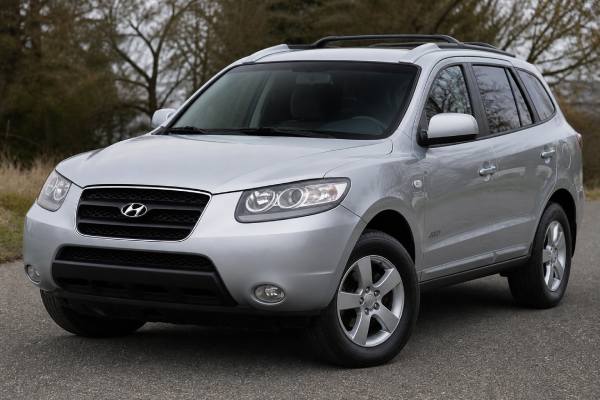
The facelifted first-generation Hyundai Santa Fe 4WD with the 3.5 V6 is one of the more interesting versions of the SM-series Santa Fe because it combines the compact, upright body of the original model with the strongest petrol engine offered in many markets. For 2005–2006, the 3.5-liter V6 brought 200 hp, a 5-speed automatic in North American specification, and an electronically managed 4WD system intended more for bad weather and light trail use than serious off-roading.
As a used SUV, its appeal is straightforward: it is simple by modern standards, roomy for its size, usually affordable, and mechanically understandable. Its drawbacks are just as clear. Fuel economy is heavy by current standards, corrosion matters, and timing-belt maintenance is not optional. Condition, service history, and recall completion are more important than trim badges.
Owner Snapshot
- Strongest SM Santa Fe petrol version, with a naturally aspirated 3.5 V6 rated at 200 hp and 219 lb-ft.
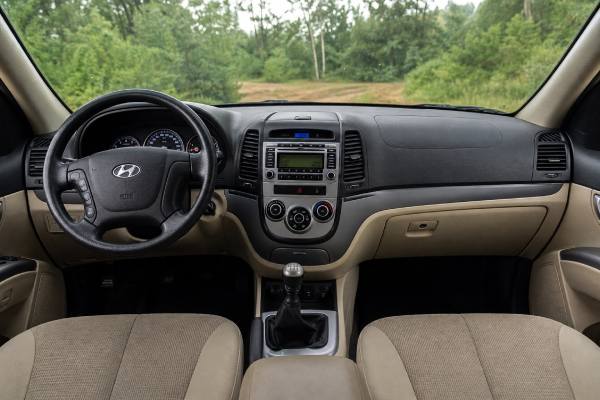
- Practical 5-seat cabin, useful cargo space, full-size spare, and simple controls make it easy to live with.
- Electronic 4WD improves wet-road and snow traction, but it is not a low-range off-road system.
- Main ownership caveats are timing-belt service, road-salt corrosion, aging suspension parts, and fuel use.
- Normal engine oil service is every 7,500 miles / 12,000 km or 6 months; severe use calls for 3,000 miles / 4,800 km or 3 months.
Table of Contents
- Santa Fe SM 3.5 V6 Profile
- Santa Fe SM 3.5 Technical Data
- Santa Fe SM Trims and Safety
- Reliability Issues and Service Actions
- Maintenance and Used Buying
- Driving Feel and Performance
- Santa Fe SM Versus Rivals
Santa Fe SM 3.5 V6 Profile
The 2005–2006 Hyundai Santa Fe 4WD 3.5 V6 belongs to the facelifted final phase of the first-generation Santa Fe, known by the SM platform code. It is a 5-door, 5-seat compact-to-midsize SUV depending on market classification, built before the Santa Fe became larger and more family-crossover oriented in later generations.
The engine is Hyundai’s 3.5-liter Sigma-series V6, commonly identified as G6CU. It is a naturally aspirated, multi-point-injected V6 with double overhead camshafts and four valves per cylinder. In North American 2005–2006 specification, output is 200 hp at 5,500 rpm and 219 lb-ft at 3,500 rpm. Some international data lists the same engine as 203 PS, which is the same basic output expressed under a different rating convention.
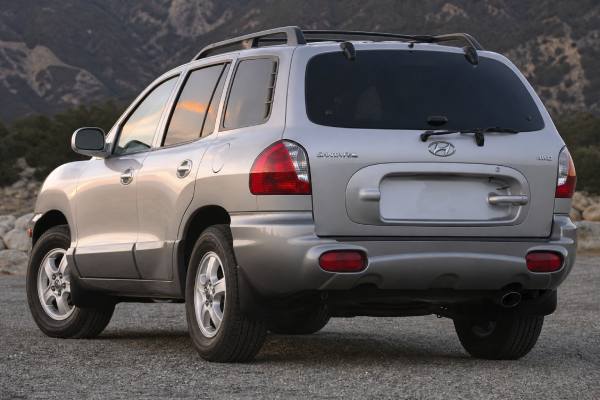
The important model-year point is the facelift. For 2005, Hyundai revised the Santa Fe’s exterior and interior details, including the grille, body cladding, tail lamps, tailgate handle, rear bumper, alloy-wheel design, instrument cluster, cloth trim, and two-tone cabin presentation. The 3.5 V6 was positioned above the 2.7 V6 and became the engine to choose for buyers who wanted the strongest towing and passing performance.
In the United States and Canada, the 3.5 V6 was paired with a 5-speed Shiftronic automatic. That matters because earlier or lower-output Santa Fe versions may use a 4-speed automatic, and some international listings mix specifications from 2.7, 3.5, diesel, FWD, and 4WD models. For this 3.5 4WD article, the relevant transmission is the 5-speed automatic used with the 200 hp V6 in 2005–2006 North American-style specification.
The 4WD system is also worth separating from traditional truck-style four-wheel drive. The Santa Fe 3.5 used an electronic on-demand system developed with BorgWarner and described by Hyundai as InterActive Torque Management. In normal driving it behaves primarily as a front-drive-based system, then sends torque rearward when sensors detect front-wheel slip. There is no low-range transfer case, locking center differential, or heavy-duty off-road hardware. It is best understood as an all-weather traction system for rain, snow, gravel, wet grass, and steep driveways.
The main advantages are a strong V6 for the era, simple naturally aspirated power delivery, useful cargo space, comfortable seats, and relatively low purchase prices. The trade-offs are fuel consumption, age-related wear, and the need to inspect older examples carefully for rust and deferred maintenance. A well-kept 3.5 4WD can still be a practical budget SUV, but a neglected one can quickly become uneconomical to restore.
Santa Fe SM 3.5 Technical Data
Specification data for this Santa Fe varies by country, trim, emissions certification, and whether the source describes 2005 or 2006 North American, Canadian, European, or other-market versions. The figures below focus on the facelifted 2005–2006 SM 3.5 V6 4WD with the 200 hp engine and automatic transmission.
| Item | Hyundai Santa Fe 4WD 3.5 V6 SM |
|---|---|
| Engine code | G6CU / Sigma 3.5 V6 |
| Layout | Front transverse V6, 6 cylinders, DOHC, 4 valves per cylinder |
| Bore × stroke | 93.0 × 85.8 mm / 3.66 × 3.38 in |
| Displacement | 3.5 L / 3,497 cc / 213.4 cu in |
| Induction | Naturally aspirated |
| Fuel system | Multi-point fuel injection |
| Compression ratio | 10.0:1 |
| Maximum power | 200 hp / 149 kW at 5,500 rpm |
| Maximum torque | 297 Nm / 219 lb-ft at 3,500 rpm |
| Timing drive | Timing belt |
| Official EPA economy | 15 city / 21 highway / 17 combined mpg US; about 15.7 / 11.2 / 13.8 L/100 km |
| Real-world highway at 120 km/h / 75 mph | Typically about 11.5–13.5 L/100 km / 17–20 mpg US when healthy and lightly loaded |
| Item | Specification |
|---|---|
| Transmission | 5-speed automatic with Shiftronic manual shift gate; commonly associated with A5HF1/F5A51-family service references |
| Drive type | Front-based electronic 4WD / AWD |
| Center coupling | Electronically controlled wet-clutch torque transfer unit |
| Differentials | Open front and rear differentials; no factory low range or locking differential |
| Item | Specification |
|---|---|
| Front suspension | Independent strut-type layout with stabilizer bar |
| Rear suspension | Independent multi-link / coil-spring layout with stabilizer bar |
| Steering | Hydraulic power-assisted rack and pinion |
| Brakes | Ventilated front discs, solid rear discs, ABS where fitted |
| Popular tyre size | 225/70 R16 on 16-inch alloy wheels |
| Tyre pressure | 30 psi / 207 kPa, typical owner-manual figure |
| Ground clearance | About 206 mm / 8.1 in |
| Approach / departure angles | About 28.4° / 26.0° in common published North American trim data |
| Length / width / height | 4,500 / 1,820 / 1,675 mm; about 177.1 / 71.5 / 65.9 in, excluding roof-rack height variation |
| Wheelbase | 2,620 mm / 103.1 in |
| Turning circle | About 11.3 m / 37.1 ft |
| Curb weight | About 1,790 kg / 3,946 lb for 3.5 V6 AWD automatic |
| GVWR | About 2,376 kg / 5,238 lb in common North American data; verify the door placard |
| Fuel tank | 72 L / 19.0 US gal / 15.8 UK gal in North American owner data |
| Cargo volume | About 850–864 L / 30.0–30.5 ft³ seats up; about 2,100–2,209 L / 74.2–78.0 ft³ seats folded, depending on measuring method |
| Item | Typical figure |
|---|---|
| 0–100 km/h / 0–62 mph | About 9.0–10.0 seconds depending on test method, trim, tyres, load, and condition |
| 0–60 mph | About 8.5–9.5 seconds in commonly published independent estimates |
| Top speed | About 180–200 km/h / 112–124 mph depending on source and market gearing |
| Braking distance | 100–0 km/h figures vary by tyre and test; expect older examples to depend heavily on tyre age, fluid condition, and rotor quality |
| Towing capacity | Up to about 1,134 kg / 2,500 lb in common U.S. 3.5 4WD automatic data; some markets list different braked limits |
| Unbraked trailer | Typically around 680 kg / 1,500 lb in owner-manual towing tables, market dependent |
| Payload | Roughly 550–590 kg / 1,200–1,300 lb by curb-weight and GVWR calculation; use the vehicle placard for the exact limit |
| System | Specification and capacity |
|---|---|
| Engine oil | SAE 5W-20 or 5W-30 preferred for all-temperature use; API SJ/SL or above, ILSAC GF-3 or above; 4.54 US qt / 4.3 L with filter |
| Coolant | Ethylene-glycol coolant for aluminum engines, normally mixed 50:50 with demineralized water; about 8.66 US qt / 8.2 L |
| Automatic transmission fluid | Hyundai Genuine ATF SP-III or approved SP-III equivalent; about 8.98 US qt / 8.5 L total system quantity |
| Transfer case | API GL-5 SAE 80W-90; about 0.85 US qt / 0.8 L |
| Rear axle | API GL-5 SAE 80W-90; about 1.16 US qt / 1.1 L |
| Power steering | PSF-3 type fluid; about 1.06 US qt / 1.0 L for 3.5 V6 |
| Brake fluid | DOT 3, DOT 4, or equivalent; replace based on time and moisture condition |
| A/C refrigerant and compressor oil | R-134a system; charge amount varies by market label, so use the under-hood label or service manual |
| Engine oil drain plug | About 34–44 Nm / 25–33 lb-ft |
| Oil filter | About 12–16 Nm / 9–12 lb-ft, or hand-tight per filter instructions when specified |
| Wheel lug nuts | Typically about 88–108 Nm / 65–80 lb-ft; verify for wheel type |
Safety data also needs careful interpretation. This Santa Fe predates modern driver-assistance technology and modern small-overlap crash tests. IIHS rated the 2005 Santa Fe Good in the original moderate-overlap front test, Acceptable in the original side test, and Poor for head restraints and seats. NHTSA-era 5-star results are older test-protocol results and should not be compared directly with modern overall safety scores. Advanced driver assistance such as AEB, adaptive cruise control, lane keeping, blind-spot monitoring, traffic-sign recognition, and cyclist/pedestrian detection was not part of this generation.
Santa Fe SM Trims and Safety
In North American-style 2005–2006 form, the 3.5 V6 was generally found in upper GLS and LX or Limited-type trims depending on model year and market naming. The exact badge can vary, but the mechanical package to identify is the 3.5-liter V6, 5-speed automatic, and 4WD/AWD driveline. A buyer should not assume that every Santa Fe with similar body trim has the same powertrain.
Common trim and equipment differences include cloth versus leather upholstery, power driver’s seat, heated front seats, sunroof, alloy-wheel design, roof rack, fog lamps, premium audio, compass mirror, cargo cover, privacy glass, and interior trim finish. The 2005 facelift brought noticeable cosmetic updates, so late SM models can look and feel more refined than earlier 2001–2004 examples, even though the basic body and cabin architecture remain the same.
Quick identifiers include:
- 3.5 V6 badging or engine-bay emissions label showing 3.5 L / G6CU.
- 5-speed automatic shift behavior on 3.5 V6 versions rather than the 4-speed used on many lower-output versions.
- 225/70 R16 tyre size on many 3.5 AWD trims.
- 4WD/AWD badging and rear driveline hardware visible under the vehicle.
- Higher trims often showing leather, power seat controls, heated-seat switches, sunroof, and premium audio.
There are no major suspension or brake-performance upgrades that make one trim a sport version. The practical difference is usually equipment rather than chassis tuning. Towing ratings and curb weights vary by engine, drive type, market, and whether the trailer has brakes. The owner’s manual and door placard should always override a generic online specification.
The restraint package is typical of its era. Dual front airbags were standard, and later SM Santa Fe models had front seat-mounted side airbags for head and torso protection in many markets. Anti-lock brakes and traction control were available or standard depending on trim and market; the 3.5 4WD versions are more likely to have a fuller safety-feature set than entry trims.
Child-seat provisions are also era-specific. North American vehicles use LATCH anchors, but the layout is not as flexible as newer SUVs. Any family buyer should test the exact child seat, check rear belt condition, confirm anchor visibility, and inspect the rear seatbacks and buckles for wear or damage. In markets using ISOFIX terminology, equipment can vary; checking the actual vehicle matters more than relying on generic model data.
The most important safety limitation is that this Santa Fe does not have modern crash-avoidance technology. There is no factory automatic emergency braking, adaptive cruise control, active lane centering, blind-spot warning, rear cross-traffic alert, or traffic-sign assist. Halogen headlights are simple and inexpensive to service, but they do not deliver modern LED performance. If night driving is common, lens clarity, correct bulb type, proper aim, and clean electrical grounds matter.
After windshield, bumper, suspension, steering, or airbag-related repairs, make sure warning lights go out normally and the SRS system has no stored faults. Older vehicles often hide safety issues behind disconnected bulbs, cleared codes, or aftermarket steering-wheel work. A professional scan and a visual inspection of airbags, seatbelt pretensioners, crash sensors, and wiring are worthwhile before purchase.
Reliability Issues and Service Actions
The Santa Fe SM 3.5 V6 is not a complicated SUV by modern standards, but age is now the main reliability factor. Most problems on surviving examples are not because the design is exotic; they come from overdue belts and fluids, corrosion, worn suspension parts, neglected cooling systems, and owners treating a low-value vehicle as disposable.
Common or important issues include:
- Timing belt neglect: common severity is high. The 3.5 V6 uses a belt, and overdue belt service can lead to serious engine damage. Symptoms before failure may be absent, so service records matter more than sound.
- Oil leaks: occasional, low-to-medium cost unless severe. Valve-cover gaskets, cam/crank seals, and oil-pan seepage are typical age-related checks. Burning-oil smell after a drive often points to oil dripping onto hot exhaust parts.
- Cooling-system aging: occasional, medium cost. Inspect the radiator, hoses, thermostat behavior, coolant color, heater performance, and water-pump history. Overheating a V6 SUV can turn a modest repair into a major one.
- Automatic transmission shift quality: occasional, medium-to-high cost. Delayed engagement, harsh 2–3 shifts, flare, slipping, or dark burnt ATF suggests risk. Correct SP-III fluid is important; universal fluid without the proper specification is a warning sign.
- 4WD driveline wear: occasional, medium cost. Listen for rear differential whine, transfer-case noise, binding on tight turns, vibration under load, and clunks from worn mounts or prop-shaft joints.
- Front suspension and steering wear: common, low-to-medium cost. Ball joints, bushings, struts, sway-bar links, tie rods, and wheel bearings are normal wear items on high-mileage examples.
- Corrosion: common in road-salt climates, potentially high cost. Front springs, subframes, brake lines, fuel lines, rocker seams, rear suspension mounts, spare-wheel area, and underbody seams deserve close inspection.
- Electrical and interior aging: occasional, usually low-to-medium cost. Window regulators, door locks, alternators, battery cables, grounds, airbag lights, seat sensors, and old audio components can all cause nuisance faults.
Service actions and recalls require a VIN check because coverage depends on production date, market, and campaign completion. Important U.S.-market items include occupant-classification-system recalls on certain 2005 vehicles, where the passenger-seat OCS could misclassify a child restraint or small child and required ECU reprogramming. Another major campaign involved front coil-spring corrosion on 2001–2006 Santa Fe vehicles in salt-belt states, with inspection and replacement where required.
The coil-spring issue deserves special attention even outside formal recall regions. A broken front spring can contact the tyre. On a pre-purchase inspection, look for cracked spring ends, heavy rust on the lower coils, fresh shiny scrape marks on the tyre sidewall, uneven ride height, and clunks when steering at low speed.
Software and calibrations are limited compared with modern vehicles, but the OCS recall shows that electronic modules still matter. A scan tool should check SRS, ABS, transmission, and engine modules. Any airbag warning lamp, ABS lamp, transmission fault, or catalyst/oxygen-sensor code should be diagnosed before purchase, not dismissed as “just a sensor.”
A strong used example should have documented timing-belt work, water-pump replacement if done during belt service, regular oil changes, coolant service, SP-III ATF service, transfer-case and rear-axle oil service, brake-fluid replacement, and proof that recalls were completed. Missing records do not automatically mean the vehicle is bad, but they should reduce the price enough to perform the work immediately.
Maintenance and Used Buying
Maintenance on the 3.5 V6 Santa Fe is straightforward, but skipping intervals is expensive. The engine is durable when serviced, yet the timing belt, cooling system, and automatic transmission need more discipline than many buyers expect from a cheap used SUV.
| Item | Recommended interval or check |
|---|---|
| Engine oil and filter | Every 7,500 miles / 12,000 km or 6 months in normal use; every 3,000 miles / 4,800 km or 3 months in severe use |
| Engine air filter | Inspect regularly; replace about every 30,000 miles / 48,000 km, sooner in dust |
| Cabin air filter | Replace every 12 months / 10,000 miles / 15,000 km where fitted, or sooner if airflow is weak |
| Coolant | Replace about every 30,000 miles / 48,000 km after initial service points; inspect level and condition often |
| Spark plugs | Platinum plugs typically around 60,000 miles / 96,000 km; use correct heat range and gap |
| Timing belt | Replace every 62,000 miles / 100,000 km, or sooner with age, leaks, unknown history, or visible damage |
| Accessory belts and hoses | Inspect at each service; replace cracking, glazed, swollen, or oil-contaminated parts |
| Automatic transmission fluid | Inspect at normal service points; replace every 30,000 miles / 48,000 km under severe use with correct SP-III fluid |
| Transfer case and rear axle oil | Inspect every 25,000 miles / 40,000 km; replace if submerged, contaminated, noisy, or used for towing |
| Brake fluid | Replace about every 2 years, or sooner if moisture content is high |
| Brake pads, rotors, hoses, lines | Inspect at least every 12 months; check rear brakes and parking brake carefully |
| Tyre rotation and alignment | Rotate every 5,000–7,500 miles / 8,000–12,000 km; align after suspension work or uneven wear |
| 12 V battery | Test annually after year three; replacement window is commonly 4–6 years depending on climate |
When buying, start with the underside. Rust is often more decisive than mileage. Inspect the front coil springs, lower control arms, rear suspension mounts, brake lines, fuel lines, subframes, rocker seams, wheel arches, exhaust hangers, and spare-wheel carrier. Surface rust is expected on an older vehicle; swelling seams, flaking structural metal, wet brake lines, or torn mounts are more serious.
Then check the powertrain cold. The V6 should start cleanly, idle smoothly, and settle without heavy lifter noise, misfires, coolant smell, or blue smoke. Look for oil in the coolant, coolant residue around the radiator and water pump area, and oil leaks at the valve covers. Confirm the temperature gauge stays stable during a long drive and at idle with the A/C on.
The automatic should engage Drive and Reverse promptly. On the road, shifts should be firm enough to feel but not harsh, and there should be no flare when accelerating moderately. A slight old-vehicle feel is normal; slipping, burnt fluid, or a delayed cold engagement is not.
A good inspection checklist includes:
- Confirm VIN, engine, transmission, and 4WD equipment match the advertised model.
- Ask for timing-belt proof with mileage and date, not just a verbal claim.
- Check recall completion through an official VIN tool or dealer record.
- Scan all modules, including SRS, ABS, transmission, and engine.
- Inspect underbody corrosion on a lift.
- Drive at city speed, highway speed, and in tight low-speed turns.
- Check all windows, locks, A/C, heater, lights, wipers, mirrors, seat functions, and audio.
- Budget immediately for fluids, belts, filters, plugs, brakes, tyres, and suspension items if records are incomplete.
The best buy is not necessarily the lowest-mileage Santa Fe. A 140,000-mile vehicle with clean structure, recent belt work, fresh fluids, good tyres, and working safety systems is usually better than a 90,000-mile example with rust, unknown belt history, and warning lights.
Driving Feel and Performance
The 3.5 V6 changes the Santa Fe SM’s character noticeably. The smaller V6 versions are adequate, but the 3.5 gives the SUV enough torque to feel relaxed in daily driving. It pulls cleanly from low and mid rpm, and the 5-speed automatic helps keep engine speed lower than the older 4-speed in many conditions.
Throttle response is smooth rather than sporty. The naturally aspirated engine has no turbo lag, and peak torque arrives at a useful 3,500 rpm, but the Santa Fe is still a tall, relatively heavy SUV on 70-profile tyres. It is quick enough for merging and passing when healthy, yet it does not feel athletic in the modern crossover sense.
The 5-speed automatic is generally easygoing. It may downshift decisively when asked for passing power, and it can hunt on grades if the load, wind, or trailer weight is high. Manual Shiftronic control is useful on long descents or when holding a lower gear before a pass, but it is not a performance transmission.
Ride quality is one of the Santa Fe’s strengths. The tall tyres and soft suspension tuning absorb broken pavement well, and the cabin has a relaxed, upright feel. At highway speeds, wind and tyre noise are more noticeable than in newer SUVs, but a good example should not drone, wander, or vibrate. Wandering usually points to tyres, alignment, worn bushings, tired struts, or steering play.
Handling is safe and predictable, not sharp. The Santa Fe leans in corners, and the steering is light-to-medium in weight with limited feedback. The best driving approach is smooth inputs and early braking. A set of fresh, quality all-season or winter tyres transforms the vehicle more than any accessory.
The 4WD system is most useful in poor traction. It reacts to front-wheel slip and can send torque to the rear axle through its controlled clutch pack. On snow or wet gravel, that makes the Santa Fe easier to launch and more stable than a front-drive model. It does not replace proper tyres, and it does not make the vehicle suitable for deep mud, rock crawling, or repeated high-load off-road use.
Fuel consumption is the largest daily-use compromise. The official EPA rating for the 2005–2006 3.5 V6 4WD automatic is 15 mpg city, 21 mpg highway, and 17 mpg combined. In metric terms, that is roughly 15.7 L/100 km city, 11.2 L/100 km highway, and 13.8 L/100 km combined. In real-world use, urban short trips can easily sit in the mid-to-high teens L/100 km, while steady highway driving may land around 11.5–13.5 L/100 km depending on speed, tyres, terrain, and maintenance.
Towing should be approached conservatively. The V6 has enough power for a small trailer, but the Santa Fe’s wheelbase, cooling capacity, brakes, and age limit its comfort margin. Use the correct hitch, keep tongue weight within limits, service the ATF and cooling system, and avoid towing near maximum rating in hot weather or mountains. Expect fuel economy to fall sharply under tow.
Santa Fe SM Versus Rivals
Against period rivals, the facelifted Santa Fe 3.5 4WD sits between compact soft-roaders and larger V6 family SUVs. It is smaller and simpler than many midsize SUVs, but stronger than most four-cylinder crossovers of the time.
Compared with the Toyota RAV4 of the mid-2000s, the Santa Fe 3.5 V6 offers more low-end torque and a more substantial feel, but the Toyota generally has the advantage for fuel economy, resale value, and long-term parts confidence. The Hyundai is usually cheaper to buy, which can make sense if the individual vehicle is well maintained and rust-free.
Compared with the Honda CR-V, the Santa Fe feels more powerful and quieter under load, especially with passengers or cargo. The CR-V is easier on fuel, more space-efficient in some cabin dimensions, and usually cheaper to maintain. The Santa Fe’s V6 appeal is strongest for buyers who dislike high-revving four-cylinder performance or want more relaxed highway passing.
Compared with the Kia Sorento of the same era, the Santa Fe is more crossover-like. The Sorento is body-on-frame in that generation and better suited to heavier towing and rougher use, while the Santa Fe is more comfortable and easier to drive in town. Buyers who need genuine truck-like strength should look at the Sorento; buyers who want daily comfort should favor the Santa Fe.
Compared with the Ford Escape V6 and Mazda Tribute V6, the Santa Fe feels roomier and more relaxed, with a more substantial cabin. The Ford and Mazda can feel lighter and easier to park, and their parts support is strong in North America. Hyundai’s advantage is often purchase price and equipment level.
The main reason to choose the Santa Fe 4WD 3.5 V6 today is value. A good one delivers V6 power, a comfortable cabin, decent cargo space, simple controls, and all-weather traction for modest money. The reason to avoid one is equally clear: if fuel economy, modern safety tech, or rust-free structure is a priority, newer alternatives are better.
For a buyer considering one now, the verdict depends almost entirely on condition. Choose a documented, corrosion-light example with completed recalls, recent timing-belt service, healthy transmission behavior, and no warning lights. Avoid examples with structural rust, unknown belt history, overheating evidence, airbag faults, or transmission slip. The Santa Fe SM 3.5 4WD can still be a useful, honest SUV, but only when bought with inspection discipline rather than nostalgia or price alone.
References
- 2005 HYUNDAI SANTA FE 2004 (Manufacturer Press Information)
- Hyundai Santa Fe 2006 Owner’s Manual 2006 (Owner’s Manual)
- Gas Mileage of 2005 Hyundai Santa Fe 2005 (Fuel Economy)
- 2005 Hyundai Santa Fe 2005 (Safety Rating)
- Part 573 Safety Recall Report 14V-435 2014 (Recall Database)
Disclaimer
This article is for informational purposes only and is not a substitute for professional diagnosis, repair, or inspection. Specifications, torque values, service intervals, procedures, safety equipment, and recall applicability can vary by VIN, market, production date, trim, and installed equipment. Always verify details against the official owner’s manual, workshop information, service bulletins, vehicle labels, and dealer or manufacturer records for the exact vehicle.
If this helped, consider sharing it on Facebook, X/Twitter, or another platform to support our work.