
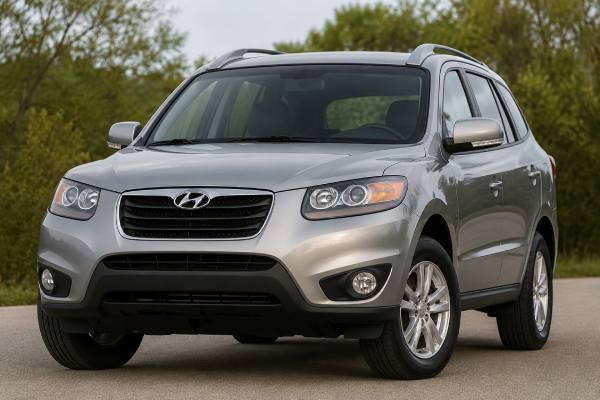
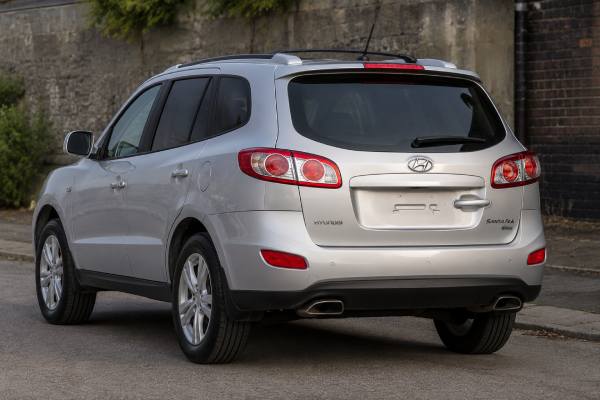
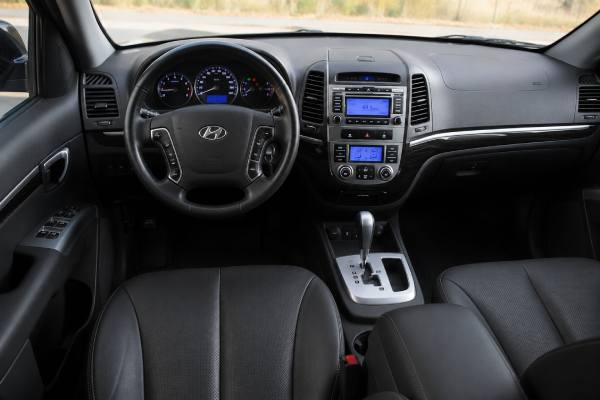
The facelifted Hyundai Santa Fe CM with the 2.4 MPI petrol engine sits in a practical middle ground: larger and more relaxed than many compact crossovers, simpler than turbocharged or direct-injected alternatives, and usually cheaper to buy than equivalent Japanese rivals. In front-wheel-drive form, it is not aimed at off-road use or heavy towing, but it offers useful cabin space, a comfortable ride, and a straightforward naturally aspirated four-cylinder engine.
For used buyers, the important question is not whether this Santa Fe feels modern by current standards. It does not. The better question is whether a well-maintained 2010–2012 2.4 FWD example can still be a sensible family SUV. The answer is yes, provided the automatic-transmission recall history, corrosion condition, suspension wear, cooling system, and fluid service records are checked carefully.
Owner Snapshot
- The 2.4 MPI engine is simple by modern standards: naturally aspirated, port-injected, chain-driven, and rated at 175 hp.
- FWD models are lighter and usually cheaper to run than AWD versions, though traction is more limited in snow, mud, and steep loose surfaces.
- Cabin space, cargo room, ride comfort, and value are the Santa Fe CM’s strongest advantages.
- Age-related wear, corrosion, neglected ATF, brake hardware, and suspension bushings are bigger concerns than outright engine complexity.
- A practical ownership rhythm is engine oil every 8,000–12,000 km or 5,000–7,500 miles, with brake fluid every 2 years.
Table of Contents
- Hyundai Santa Fe CM 2.4 FWD Profile
- Hyundai Santa Fe CM 2.4 Specs
- Santa Fe CM Trims and Safety
- Reliability, Issues and Service Actions
- Maintenance and Used Buying Advice
- Driving, Performance and Economy
- Santa Fe CM Rivals Compared
Hyundai Santa Fe CM 2.4 FWD Profile
The CM-generation Hyundai Santa Fe was the second-generation Santa Fe, sold in many markets from the mid-2000s into the early 2010s. The 2010 facelift brought revised styling, updated engines, new transmission choices in several markets, and improved equipment. The model covered here is the front-wheel-drive facelift version with the 2.4-litre MPI petrol four-cylinder, commonly identified as part of Hyundai’s Theta II engine family and widely known by the G4KE engine code.
This version is best understood as a value-focused midsize crossover rather than a rugged SUV. It uses a transverse engine layout, a unibody platform, independent suspension, and car-like steering. With FWD, power goes only to the front wheels, so there is no rear differential, transfer case, or AWD coupling to maintain. That reduces mechanical complexity and saves some weight, but it also means tyre choice and stability-control function matter more in winter or on unpaved roads.
The 2.4 MPI engine produces 175 hp at 6,000 rpm and 169 lb-ft of torque at 3,750 rpm. Its multi-point fuel injection is important because it avoids one common downside of many later direct-injection engines: heavy intake-valve carbon build-up caused by fuel no longer washing the intake ports. It still needs clean oil, good cooling-system health, and timely spark-plug and air-filter service, but it is not a highly stressed powerplant.
Depending on market and trim, the 2.4 FWD Santa Fe was available with a 6-speed manual or a 6-speed automatic transmission. In North America, the automatic is the more common used-market find. The manual is simpler and can feel more responsive, but clutch condition becomes a major inspection point. The automatic suits the vehicle’s relaxed character, though old fluid, harsh shifts, or whining from affected early-2010 driveline components should never be ignored.
The Santa Fe CM’s main appeal is practicality. It has a wide cabin, a high seating position, generous cargo room, and a calm highway ride. It is not especially quick, economical, or agile, but it works well as an affordable family vehicle, commuter SUV, or occasional long-distance hauler. The best examples are those with regular oil changes, proof of transmission service, completed recalls, clean underbody metal, and no signs of cooling-system neglect.
Market differences matter. European, North American, Australian, and Middle Eastern Santa Fe models can differ in trim names, safety equipment, emissions hardware, service intervals, tyres, towing ratings, and even fluid-fill details. The figures below reflect the facelifted 2.4 MPI FWD model as commonly specified in North American and comparable export-market data, but the vehicle’s certification label, owner’s manual, and VIN-specific service information remain the final authority.
Hyundai Santa Fe CM 2.4 Specs
The 2.4 MPI FWD Santa Fe uses a conventional petrol drivetrain: naturally aspirated inline-four engine, front transaxle, independent suspension, four-wheel disc brakes, and hydraulic power steering. The numbers show why it feels relaxed rather than sporty. It has enough power for daily use, but the body is fairly heavy for a four-cylinder SUV of this era.
| Item | Hyundai Santa Fe CM 2.4 MPI FWD |
|---|---|
| Engine code | G4KE, market-dependent identification |
| Engine layout | Inline-4 petrol, DOHC, 16 valves, 4 valves per cylinder |
| Bore × stroke | 88.0 × 97.0 mm |
| Displacement | 2.4 L, 2,359 cc |
| Induction | Naturally aspirated |
| Fuel system | MPI / MPFI port fuel injection |
| Compression ratio | 10.5:1 |
| Max power | 175 hp, 130 kW at 6,000 rpm |
| Max torque | 229 Nm, 169 lb-ft at 3,750 rpm |
| Timing drive | Chain |
| Rated efficiency | Approx. 10.2–10.7 L/100 km city and 7.2–7.5 L/100 km highway in Canadian-style ratings; about 19–20 mpg US city and 26–28 mpg US highway in EPA-style ratings, depending on transmission |
| Real-world highway at 120 km/h | Typically about 8.8–10.0 L/100 km, or 24–27 mpg US / 28–32 mpg UK, depending on tyres, load, wind, terrain, and transmission |
| Item | Specification |
|---|---|
| Transmission | 6-speed manual or 6-speed automatic with manual shift mode, depending on market and trim |
| Drive type | Front-wheel drive |
| Differential | Open front differential integrated with transaxle |
| Front suspension | MacPherson struts with stabilizer bar |
| Rear suspension | Independent multi-link with stabilizer bar |
| Steering | Hydraulic power-assisted rack and pinion; approximately 3.0 turns lock-to-lock |
| Brakes | Four-wheel disc brakes; ventilated front discs and solid rear discs on common 2.4 FWD specifications |
| Common tyre size | 235/65 R17 on 17 × 7 in wheels; some trims and markets used different wheel packages |
| Ground clearance | Approx. 206 mm, 8.1 in |
| Length / width / height | 4,676 / 1,890 / 1,725 mm, or 184.1 / 74.4 / 67.9 in |
| Wheelbase | 2,700 mm, 106.3 in |
| Turning circle | Approx. 10.8 m, 35.4 ft |
| Curb weight | Approx. 1,672–1,689 kg, or 3,686–3,724 lb, depending on gearbox and equipment |
| GVWR | Approx. 2,230 kg, 4,916 lb, in some North American FWD specifications; verify the door-jamb certification label |
| Fuel tank | Typically 75 L, 19.8 US gal, 16.5 UK gal in North American-style data; some sources and markets list different usable capacity |
| Cargo volume | Approx. 968 L, 34.2 ft³, seats up; approx. 2,214 L, 78.2 ft³, seats folded, SAE-style published data |
| Measure | Typical Figure |
|---|---|
| 0–100 km/h | Approx. 10.5–11.5 seconds, depending on transmission, load, tyres, and test method |
| Top speed | Approx. 185–190 km/h, 115–118 mph |
| 100–0 km/h braking | Typically around 40–43 m, or 131–141 ft, with healthy brakes and good tyres |
| Towing capacity | Approx. 907 kg, 2,000 lb braked; approx. 749 kg, 1,650 lb unbraked in common 2.4 FWD data |
| Payload | Usually about 500–540 kg, 1,100–1,190 lb, depending on VIN, trim, passengers, accessories, and market |
| System | Specification and Capacity |
|---|---|
| Engine oil | API-rated petrol engine oil; 5W-20 commonly preferred, with 5W-30 acceptable in many climates; approx. 4.6 L, 4.9 US qt with filter |
| Coolant | Ethylene-glycol coolant suitable for aluminium engines, mixed about 50:50 with distilled water; system capacity commonly around 6–7 L depending on market and heater layout |
| Automatic transmission fluid | Hyundai/Kia SP-IV specification; total fill about 7.7–7.8 L, with lower drain-and-fill quantity |
| Manual transaxle fluid | API GL-4 SAE 75W-85; capacity typically about 2 L, verify by gearbox and fill-level procedure |
| Transfer case / rear differential | Not fitted on FWD models |
| Brake fluid | DOT 3 or DOT 4, changed by time and moisture content rather than mileage alone |
| A/C refrigerant | R134a; many CM 2.4 front-A/C systems are around 600 g, 21 oz, but the under-hood label is decisive |
| A/C compressor oil | PAG oil, often PAG 46 type; charge quantity varies by compressor and repair procedure |
| Useful torque values | Wheel nuts about 88–108 Nm, 65–80 lb-ft; oil drain plug about 39 Nm, 29 lb-ft; spark plugs commonly around 15–25 Nm, 11–18 lb-ft depending on plug type and service data |
For safety equipment, the 2010–2012 Santa Fe CM reflects its era. Stability control, traction control, anti-lock brakes, brake assist, front airbags, front side airbags, side-curtain airbags, and child-seat anchors were widely available and often standard in key markets. Advanced driver-assistance systems such as automatic emergency braking, adaptive cruise control, lane centering, and cyclist detection were not part of the normal equipment set for this generation.
Santa Fe CM Trims and Safety
Trim names vary widely by region. In North America, the 2.4 FWD version was commonly associated with GLS or GL-style equipment levels, while other markets used names such as Classic, Style, Comfort, Premium, or locally defined grades. The mechanical core remained similar: 2.4 MPI petrol engine, front-wheel drive, independent suspension, and either manual or automatic transmission where offered.
The main trim differences are usually equipment rather than major mechanical changes. Lower grades tend to have cloth upholstery, manual or basic automatic climate control, simpler audio, 17-inch wheels, and fewer convenience features. Higher grades may add upgraded audio, leather trim, heated seats, power-adjustable driver’s seat, roof rails, fog lamps, sunroof, larger wheels in some markets, rear parking sensors, and improved interior finishes. The 2.4 FWD models usually do not receive the heavier-duty towing or traction advantages of AWD or larger V6 versions.
Quick identifiers include the tailgate badging, wheel size, interior seat material, climate-control panel, presence or absence of roof rails, and transmission selector. A VIN check or build sheet is more reliable than badges alone because imported used vehicles, dealer accessories, regional packages, and replacement tailgates can obscure the original configuration.
Year-to-year differences from 2010 to 2012 are generally modest for this facelift phase. The large change had already occurred around the 2010 update: revised front and rear styling, updated engines, new 6-speed transmissions in several markets, and refreshed equipment. Later changes are more likely to involve trim packaging, audio features, colours, wheel designs, and market-specific safety or emissions details rather than a fundamental redesign.
Safety ratings need careful interpretation because different organizations tested different versions under different protocols. IIHS data for the 2007–2012 Santa Fe shows strong performance in the moderate-overlap front test, side test, and head-restraint evaluations for relevant versions. However, IIHS headlight ratings and modern small-overlap front testing were not part of the original assessment cycle for this generation, so it should not be compared directly with a current SUV using today’s test standards.
In Australia and New Zealand, the facelifted Santa Fe received a 5-star ANCAP rating for relevant late-2009-onward specifications, including 2.4 petrol variants in the stated coverage. That rating is useful for those markets, but it should not be automatically transferred to every global Santa Fe without checking local equipment. Airbag count, seatbelt reminders, ESC fitment, and structural specification can differ by market.
The core passive-safety package is respectable for its time. Typical equipment includes dual front airbags, front seat-mounted side airbags, side-curtain airbags with rollover sensing in many markets, front seatbelt pretensioners, anti-lock brakes, electronic brake-force distribution, brake assist, electronic stability control, traction control, and ISOFIX or LATCH child-seat anchors. Child-seat installation is usually straightforward in the second row, but the rear seat cushion shape and buckle position should be checked with the actual child seat before purchase.
Driver-assistance technology is basic. The Santa Fe CM predates widespread fitment of AEB, adaptive cruise control, lane-keeping assist, blind-spot monitoring, rear cross-traffic alert, and traffic-sign recognition. Rear parking sensors or a reversing camera may appear on some trims or dealer-installed setups, but they should not be assumed. If a vehicle has aftermarket parking sensors, head units, cameras, alarms, or remote-start hardware, inspect the wiring quality carefully because poor installations can create battery drain and electrical faults.
After collision repair, safety-related work should be checked with extra care. Airbag warning lights, steering-angle sensor calibration, ABS and ESC faults, seatbelt pretensioner status, and crash-sensor replacement history all matter. A clean dashboard at startup is not enough; a diagnostic scan of the airbag, ABS, engine, and transmission modules is a wise pre-purchase step.
Reliability, Issues and Service Actions
The 2.4 MPI FWD Santa Fe is generally a durable vehicle when maintained, but by 2010–2012 age is now a major factor. Many examples are well beyond the mileage where suspension bushings, brake hardware, seals, sensors, batteries, tyres, and cooling parts can reasonably be expected to remain original. The best approach is to judge condition and records, not mileage alone.
| Area | Prevalence | Severity | Symptoms | Likely Remedy |
|---|---|---|---|---|
| Automatic driveline recall on certain early 2010 2WD 2.4 automatic models | Limited VIN range | High | Whirring or whining from the right-side transaxle area, possible loss of drive | Verify recall completion; dealer remedy involved output gear and intermediate shaft replacement |
| ATF neglect or shift quality problems | Occasional | Medium to high | Harsh shifts, delayed engagement, flare, shudder, dark fluid | Correct SP-IV fluid service, diagnostic scan, adaptation check, repair if wear is present |
| Oil leaks | Common with age | Low to medium | Oil smell, wet valve cover area, seepage at timing cover or sump | Replace gaskets or reseal affected joint; clean and recheck |
| Cooling-system ageing | Common with age | Medium | Coolant smell, crusting, rising temperature, weak cabin heat | Inspect radiator, hoses, cap, thermostat, water pump, and coolant condition |
| Suspension and steering wear | Common above 120,000 km / 75,000 miles | Low to medium | Clunks, wandering, uneven tyre wear, vibration | Control-arm bushings, ball joints, sway links, struts, wheel bearings, alignment |
| Brake corrosion and seized hardware | Common in salted climates | Medium | Dragging brakes, hot wheel, uneven pad wear, poor parking brake | Clean or replace sliders, calipers, pads, rotors, parking-brake components |
| Underbody corrosion | Market-dependent | Medium to high | Rust at subframes, brake lines, fuel lines, wheel arches, rear suspension mounts | Detailed lift inspection; avoid severe structural rust |
The most specific service action to know is the recall affecting certain 2010 2WD Santa Fe vehicles with the 2.4-litre engine and automatic transaxle. The issue involved excessive wear related to the right-side output gear and intermediate shaft alignment. The warning sign is often a whining or whirring noise from the transaxle area, and in severe cases the vehicle can lose motive power. Not every 2010–2012 Santa Fe is affected, so a VIN-specific recall check and dealer service record are essential.
Engine reliability is helped by the MPI fuel system and timing chain, but neither makes the engine maintenance-free. Dirty oil can affect variable valve timing components, chain tensioner operation, and oil-control valves. Listen for start-up chain rattle, ticking that does not settle, rough idle, cam/crank correlation fault codes, and low-oil history. A timing chain is normally replaced only when symptoms, measurements, or diagnostic data justify it, not on a fixed belt-style interval.
Oil consumption should be assessed during a test drive and ownership history review. A 2.4 MPI engine that has been serviced well should not need constant top-ups, but older examples can use oil through worn rings, valve-stem seals, PCV issues, leaks, or extended oil-change intervals. Check the dipstick before startup, inspect the exhaust after a cold start and long idle, and look for oil residue around the valve cover, timing cover, filter housing area, and sump.
The cooling system deserves a careful look because overheating can turn a modest repair into a serious engine problem. Inspect the radiator side tanks, cap, thermostat housing, heater hoses, water pump area, and coolant colour. A neglected system may show rust-coloured coolant, oily residue, repeated low-coolant warnings, poor heater output, or dried deposits near hose connections. On any used example with unknown history, a coolant flush with the correct type and a pressure test are sensible.
The automatic transmission should shift cleanly when cold and hot. A slightly firm shift is not automatically a failure, but flare, delayed reverse engagement, shudder, repeated harsh downshifts, or stored transmission codes are warning signs. Old fluid is common on vehicles advertised as having “lifetime” transmission oil. For a used Santa Fe, fresh correct-spec SP-IV fluid is a good preventive measure if the transmission is otherwise healthy, but a fluid change should not be expected to cure mechanical wear.
Chassis wear is predictable. Front lower control-arm bushings, sway-bar links, strut mounts, rear suspension bushes, wheel bearings, and engine mounts can all wear enough to make the vehicle feel loose. Because the Santa Fe is relatively heavy, cheap tyres and worn dampers have a noticeable effect on stopping distance, wet grip, and stability-control intervention.
Corrosion is one of the biggest used-buying risks. Look beyond cosmetic rust. Brake lines, fuel lines, front and rear subframes, suspension mounting points, rear wheel arches, tailgate seams, exhaust flanges, and jacking points need inspection on a lift. A mechanically sound Santa Fe with serious structural rust can become uneconomical quickly.
Maintenance and Used Buying Advice
A good maintenance plan for this Santa Fe should be more conservative than a minimal new-car schedule. The vehicle is now old enough that time-based replacement matters as much as mileage. Rubber, seals, fluids, brake components, electrical connectors, and cooling parts degrade even when mileage is low.
| Item | Suggested Interval | Notes |
|---|---|---|
| Engine oil and filter | Every 8,000–12,000 km or 5,000–7,500 miles; 6–12 months | Use the correct API-rated oil; shorter intervals are wise for city driving, cold starts, and older engines |
| Engine air filter | Inspect yearly; replace about every 24,000–30,000 km or 15,000–20,000 miles | Replace sooner in dusty areas |
| Cabin air filter | Every 12 months or 15,000–20,000 km | A clogged filter reduces airflow and demisting performance |
| Spark plugs | Inspect around 100,000 km / 60,000 miles; replace by service-data interval or if history is unknown | Use correct heat range and torque; inspect coils and plug wells for oil |
| Coolant | About every 3–5 years after initial service, or sooner if condition is unknown | Pressure-test the system and replace weak hoses, cap, and thermostat as needed |
| Brake fluid | Every 2 years | Moisture lowers boiling point and accelerates internal corrosion |
| Automatic transmission fluid | Every 60,000–90,000 km or 40,000–60,000 miles in practical used-car service | Use SP-IV specification; avoid universal fluid unless clearly approved |
| Manual transaxle oil | Every 60,000–100,000 km or 40,000–60,000 miles | Use API GL-4 SAE 75W-85, not aggressive GL-5 unless specified compatible |
| Timing chain | No routine replacement interval | Inspect for rattle, correlation codes, guide wear, tensioner issues, or metal contamination |
| Serpentine belt and hoses | Inspect yearly; replace when cracked, glazed, swollen, soft, or oil-soaked | Age is often more important than mileage |
| Brake pads, rotors, calipers | Inspect every service | Clean sliders and check rear parking-brake hardware, especially in salted climates |
| Tyre rotation and alignment | Rotate every 8,000–10,000 km or 5,000–6,000 miles; align after impacts or uneven wear | Correct tyres make a major difference to braking, noise, and wet grip |
| 12 V battery | Test yearly after year 3; replacement often needed every 4–6 years | Weak voltage can cause misleading warning lights and starting faults |
When inspecting a used 2.4 FWD Santa Fe, start with documents. Look for regular oil changes, coolant service, ATF or manual transaxle service, brake-fluid changes, recall completion, and any major suspension or brake work. A thick file of routine maintenance is more valuable than a freshly detailed engine bay.
The test drive should include cold start, idle, low-speed manoeuvres, full operating temperature, highway speed, firm braking, and a few moderate kickdowns. The engine should start quickly, settle smoothly, and pull without misfire. The automatic should engage Drive and Reverse without a long delay. The steering should not groan, bind, or wander, and the vehicle should track straight under braking.
On a lift, check for leaks from the engine, transaxle, power steering, radiator, brake lines, and A/C compressor area. Inspect the front subframe, rear suspension mounting points, rocker seams, wheel arches, tailgate lower edge, and exhaust. Surface rust is manageable; swelling seams, perforation, crushed jacking points, and heavily corroded brake or fuel lines are much more serious.
Common reconditioning items include tyres, brake pads and rotors, caliper service, spark plugs, filters, fluids, sway-bar links, lower control-arm bushings, engine mounts, struts, wheel bearings, and battery replacement. Budgeting for these items is realistic, not pessimistic. A cheap Santa Fe that immediately needs tyres, brakes, suspension, fluids, and rust repair may not be cheap at all.
The best version to seek is a clean, low-corrosion 2011 or 2012 FWD automatic or manual with complete service history, good tyres, no warning lights, and no transmission noise. A 2010 can also be a good buy, but the automatic-transaxle recall history must be verified carefully. Avoid examples with overheating history, severe underbody rust, harsh automatic shifts, neglected fluids, airbag lights, ABS/ESC faults, or evidence of poor crash repair.
Long-term durability is generally good if the structure is clean and the drivetrain has not been neglected. The vehicle’s age, not its basic design, is the limiting factor. A well-kept Santa Fe CM 2.4 FWD can still provide practical family transport, but buying the cheapest example without inspection is risky.
Driving, Performance and Economy
The Santa Fe CM 2.4 FWD drives like a comfort-oriented family crossover. The seating position is high, visibility is good, and the controls are simple. It does not feel light, sharp, or sporty, but it feels settled at normal speeds. On rough roads, the suspension usually absorbs bumps well, although worn dampers, tired bushings, or poor tyres can make the body feel floaty or noisy.
Steering effort is moderate and parking manoeuvres are easy for a vehicle of this size. Feedback is limited, but the vehicle is predictable. In corners, the Santa Fe leans more than a compact hatchback or modern sport-tuned crossover, and the front tyres do most of the work. FWD models will understeer if pushed hard, especially with budget tyres or wet roads. Stability control is useful and should not be disabled for normal driving.
The 2.4 MPI engine has a smooth, honest character. It does not deliver strong low-rpm shove, so the transmission needs to use revs for hills, overtaking, or a full load. Throttle response is straightforward because there is no turbo lag, but acceleration is only adequate. Around town, the engine is pleasant. On fast highways with passengers and luggage, it can sound busy during kickdown.
The 6-speed automatic fits the vehicle better than older 4-speed units used in earlier SUVs. It keeps revs lower on the highway and offers reasonable shift quality when healthy. However, it can hunt between gears on long grades or when loaded. The 6-speed manual gives more control and can feel livelier, but many buyers prefer the automatic for family use and resale ease.
Real-world economy depends heavily on driving style. In city use, expect roughly 11.0–13.5 L/100 km, or about 17–21 mpg US / 21–26 mpg UK. In mixed driving, 9.8–11.5 L/100 km, or about 20–24 mpg US / 25–29 mpg UK, is realistic. On steady highways at 100–110 km/h, careful drivers may see the high-7s to mid-8s L/100 km. At 120 km/h, wind resistance and weight push consumption closer to 8.8–10.0 L/100 km.
Cold weather can worsen fuel economy by 10–20 percent, especially with short trips, winter tyres, thick traffic, and long warm-up idling. Roof boxes, underinflated tyres, poor alignment, dragging brakes, old spark plugs, and a lazy oxygen sensor can also increase fuel use. Because the engine is naturally aspirated, there is no special turbo-cooling routine, but regular oil changes remain important.
Braking performance is acceptable when the system is fresh. The pedal should feel firm and linear, not spongy or pulsing. Because many used examples have old brake fluid, corroded sliders, uneven rear pads, or cheap tyres, actual stopping confidence can vary dramatically. Good tyres and fully serviced brakes transform the vehicle more than many owners expect.
Towing should be kept within the modest rating. The 2.4 FWD model can handle a small trailer, light utility load, or occasional recreational use, but it is not the best choice for regular heavy towing. Expect slower acceleration, longer stopping distances, more transmission heat, and higher fuel consumption. A braked trailer, correct tongue weight, fresh ATF, and good cooling-system condition matter.
Loaded with passengers, the Santa Fe remains comfortable but less responsive. The rear suspension copes well with normal family use, though sagging springs or tired dampers can make it feel unsettled. For long trips, its strengths are space, comfort, simple controls, and relaxed cruising. Its weaknesses are road noise on coarse surfaces, modest passing power, and fuel economy that trails smaller crossovers.
Santa Fe CM Rivals Compared
The Santa Fe CM 2.4 FWD competes with vehicles such as the Toyota RAV4 2.5, Honda CR-V 2.4, Kia Sorento 2.4, Ford Edge, Subaru Forester, Nissan X-Trail/Rogue, and Mazda CX-7, depending on market. Its position is clear: it is usually roomier and better value than compact rivals, but less economical and less modern than newer designs.
| Rival | Where the Santa Fe Helps | Where the Rival May Be Better |
|---|---|---|
| Toyota RAV4 2.5 FWD | Santa Fe feels wider, more relaxed, and often cheaper for similar age and equipment | RAV4 usually has stronger resale value, better economy, and a sharper reputation for durability |
| Honda CR-V 2.4 | Santa Fe offers a larger, more substantial feel and good highway comfort | CR-V is typically easier to park, more efficient, and highly practical inside |
| Kia Sorento 2.4 | Similar engine family and value appeal; Santa Fe may feel more familiar and car-like in some markets | Sorento may offer different seating configurations and equipment packages |
| Ford Edge V6 | Santa Fe 2.4 is simpler, usually cheaper to fuel, and easier to maintain in FWD form | Edge offers stronger V6 performance and a more powerful cruising character |
| Subaru Forester / Outback | Santa Fe may offer more cabin width, cargo space, and lower purchase price | Subaru AWD traction is a major advantage in snow and rural conditions |
Against the Toyota RAV4 and Honda CR-V, the Santa Fe’s strongest argument is size for money. It feels like a larger vehicle, especially in width and cargo space. For families carrying bulky items, child seats, luggage, or sports gear, that extra space can matter more than a small fuel-economy penalty. The trade-off is that the Toyota and Honda often hold value better and may have lower running costs over time.
Compared with the Kia Sorento, the decision depends heavily on condition and specification. Some Sorento versions share related engines and transmissions, so the difference is not always mechanical. Seating layout, trim level, local parts prices, corrosion condition, and service records are more important than badge preference.
Compared with V6 crossovers, the Santa Fe 2.4 FWD is cheaper and simpler but less powerful. Drivers who often tow, climb mountain roads fully loaded, or demand effortless overtaking may prefer a V6 rival. Drivers who mostly commute, carry family, and want lower purchase cost may find the 2.4 perfectly adequate.
The Santa Fe is not the best choice for buyers who want modern ADAS, premium cabin technology, sharp handling, or class-leading fuel economy. It is a better fit for buyers who value space, comfort, straightforward mechanicals, reasonable parts availability, and a lower entry price.
The final verdict is condition-dependent. A clean, serviced Santa Fe CM 2.4 FWD with completed recalls and minimal rust is a practical used SUV with real advantages. A neglected one with transmission symptoms, old fluids, poor tyres, brake corrosion, and underbody rust can quickly become expensive. Buy the history and condition, not just the badge or mileage.
References
- 2010 SANTA FE UNWRAPPED WITH A PAIR OF NEW ENGINES 2010 (Manufacturer Publication)
- Gas Mileage of 2010 Hyundai Santa Fe 2026 (Fuel Economy Database)
- 2010 Hyundai Santa Fe 2026 (Safety Rating)
- Hyundai Santa Fe | Safety Rating & Report | ANCAP 2026 (Safety Rating)
- Vehicle Detail Search – 2010 HYUNDAI SANTA FE | NHTSA 2026 (Recall Database)
Disclaimer
This article is for informational purposes only and is not a substitute for professional diagnosis, repair, or inspection. Specifications, torque values, fluid capacities, service intervals, safety equipment, recalls, and procedures can vary by VIN, market, model year, transmission, trim, and installed equipment. Always verify details against the vehicle’s official service documentation, certification labels, owner’s manual, and VIN-specific dealer or regulatory records before buying, servicing, towing, or repairing the vehicle.
If this helped you evaluate the Hyundai Santa Fe CM 2.4 FWD, consider sharing it on Facebook, X/Twitter, or with someone comparing used family SUVs.