
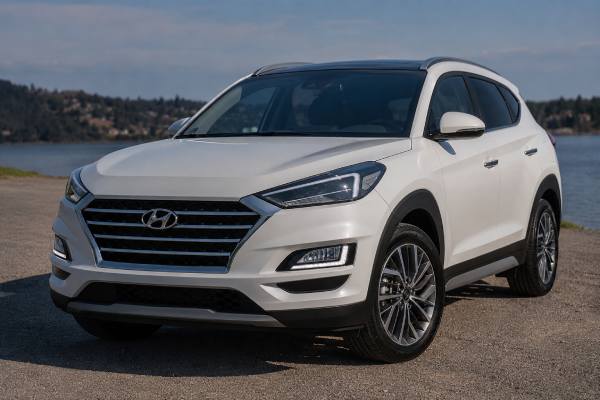
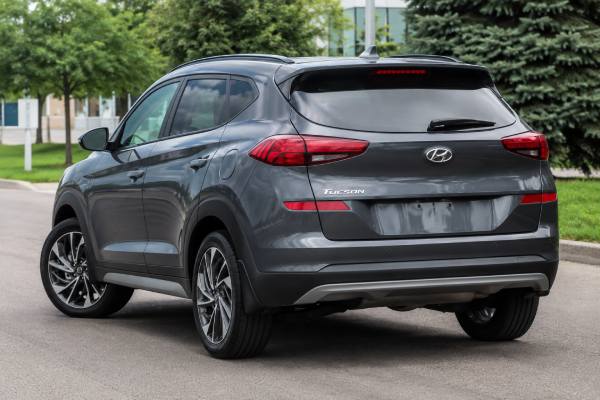
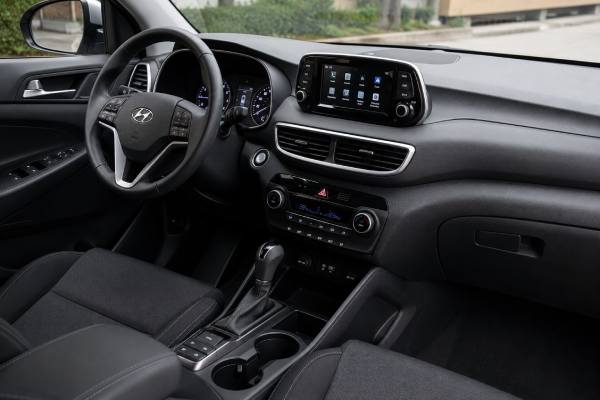
The facelift Hyundai Tucson TL with the Gamma 1.6 T-GDi engine is one of the stronger petrol versions of the third-generation Tucson. In front-wheel-drive form, it gives the SUV useful performance without the extra weight and drivetrain complexity of AWD. It is most often found with either a 6-speed manual gearbox or Hyundai’s 7-speed dry dual-clutch transmission, depending on market and trim.
This version suits drivers who want a practical compact SUV with decent overtaking power, a roomy cabin, and modern safety equipment, but who do not want a diesel. The main things to understand before buying are the turbo direct-injection engine’s maintenance needs, the dry-clutch DCT’s city-driving behaviour, and the equipment differences between trims.
Final Verdict
The 2019–2020 Hyundai Tucson FWD 1.6 T-GDi is a good used choice if you want a comfortable, spacious petrol SUV with stronger performance than the basic 1.6 GDi. Its best appeal is the useful 177 hp turbo engine, which makes motorway driving and family use feel relaxed. It suits private buyers who value space, equipment, warranty history, and sensible running costs over sporty handling. The main tradeoff is that real fuel economy is only average, and DCT cars need careful inspection for clutch judder or hesitant low-speed take-up. Buy only with clear service records, completed recalls, and a clean cold-start and stop-start test drive.
| Pros | Cons |
|---|---|
| 177 hp turbo petrol gives useful mid-range pull | Real-world fuel economy is modest for a compact SUV |
| FWD layout avoids AWD weight and rear driveline servicing | DCT versions can feel jerky in heavy urban traffic |
| Roomy cabin and practical 513-litre petrol boot | Direct injection can develop intake carbon deposits over time |
| Facelift models gained improved equipment and safety tech | ADAS availability depends strongly on trim and market |
| Manual and DCT choices suit different driving styles | Large 19-inch wheels reduce ride comfort on rough roads |
Table of Contents
- Tucson TL FWD overview
- Tucson 1.6 T-GDi specifications
- Trims, safety and driver assistance
- Reliability, common issues and service actions
- Maintenance and buying advice
- Driving, performance and economy
- Tucson rivals comparison
Tucson TL FWD overview
The Hyundai Tucson TL facelift is a practical family SUV first, not a sporty crossover. The 1.6 T-GDi FWD version is the petrol model to consider when the basic naturally aspirated engine feels too slow and diesel ownership no longer makes sense.
The facelift arrived with sharper styling, revised equipment, updated infotainment, and a cleaner engine range in many European markets. The car kept the same basic third-generation TL platform, with MacPherson struts at the front, a multi-link rear suspension, five seats, and a conventional SUV body shape.
The 1.6 T-GDi engine is Hyundai’s Gamma turbocharged petrol four-cylinder. It uses direct injection and a turbocharger to produce 177 PS, or about 175–177 hp depending on how the output is stated. Torque is the bigger benefit: 265 Nm is available across a broad rev range, which makes the Tucson feel much stronger than the non-turbo 1.6 GDi.
In FWD form, the Tucson is lighter and usually more efficient than AWD versions. It also avoids transfer case and rear differential servicing. That matters for buyers who mainly drive in cities, suburbs, and on motorways. The downside is traction: in wet weather, a heavy throttle can make the front tyres work hard, especially on cheaper tyres or 19-inch wheels.
There are two main transmission choices. The 6-speed manual is simple, predictable, and often the better choice for long-term buyers who want lower risk. The 7-speed DCT is quicker on paper and more relaxing in steady driving, but it is a dry-clutch dual-clutch gearbox. It does not behave like a torque-converter automatic at parking speeds, and it needs to be tested carefully before purchase.
As a used SUV, this Tucson makes most sense for buyers who want:
- a roomy petrol family car;
- higher seating without a very large body;
- stronger performance than the entry-level petrol;
- good equipment for the price;
- simpler ownership than an older diesel with emissions hardware.
It is less ideal for buyers who do mostly short urban journeys and expect hybrid-like economy, or for drivers who regularly tow heavy loads in stop-start traffic with a DCT. For that use, a manual petrol, a diesel, or a newer hybrid Tucson may be a better match.
Tucson 1.6 T-GDi specifications
This Tucson uses a transverse 1.6-litre turbocharged petrol engine driving the front wheels. The important technical points are the strong torque output, the choice of manual or 7-speed DCT transmission, and the fact that fuel economy varies noticeably by wheel size and trim.
| Item | Hyundai Tucson FWD 1.6 T-GDi |
|---|---|
| Generation | TL facelift, 2019–2020 |
| Engine family | Gamma 1.6 T-GDi petrol |
| Engine layout | Inline-4, DOHC, 16 valves |
| Displacement | 1,591 cc |
| Bore × stroke | 77.0 × 85.44 mm |
| Induction | Turbocharged |
| Fuel system | Turbo gasoline direct injection |
| Compression ratio | 10.0:1 |
| Maximum power | 177 PS / 130.2 kW at 5,500 rpm |
| Maximum torque | 265 Nm at 1,500–4,500 rpm |
| Emissions standard | Euro 6d-Temp in many European facelift versions |
| Fuel tank | 62 litres |
| Item | 6-speed manual FWD | 7-speed DCT FWD |
|---|---|---|
| Transmission type | 6-speed manual | 7-speed dry dual-clutch |
| Drive type | Front-wheel drive | Front-wheel drive |
| 0–62 mph | 9.2 seconds | 8.9 seconds |
| Top speed | 126 mph / 203 km/h | 125 mph / 201 km/h |
| Braked towing limit | Up to 1,900 kg | Up to 1,600 kg |
| Unbraked towing limit | 750 kg | 750 kg |
| Noseweight | 100 kg | 100 kg |
| Item | Value |
|---|---|
| Body style | Five-door compact SUV |
| Seats | 5 |
| Length | 4,475 mm |
| Width excluding mirrors | 1,850 mm |
| Width including mirrors | 2,065 mm |
| Wheelbase | 2,670 mm |
| Typical height | About 1,650 mm, depending on trim and wheels |
| Cargo volume, seats up | 513 litres on petrol FWD versions |
| Cargo volume, seats folded | 1,503 litres on petrol FWD versions |
| Roof load | 100 kg |
| Item | 6-speed manual FWD | 7-speed DCT FWD |
|---|---|---|
| Kerb weight | About 1,470–1,636 kg | About 1,502–1,667 kg |
| Gross vehicle weight | 2,110 kg | 2,140 kg |
| Payload | About 474–640 kg | About 473–638 kg |
| Common tyres | 225/60 R17 or 245/45 R19 | 225/60 R17, 225/55 R18 or 245/45 R19 |
| Official combined economy | About 8.0–8.1 L/100 km | About 7.8–7.9 L/100 km |
| Official combined mpg | About 29 mpg US / 35 mpg UK | About 30 mpg US / 36 mpg UK |
| CO₂ range | Often about 168–173 g/km | Often about 151–161 g/km, trim dependent |
Some markets quote slightly different lengths, economy figures, emissions values, and trim names. This is normal because homologation, tyre packages, roof rails, emissions equipment, and local specifications differ. For a specific used car, the VIN plate, registration data, and original market brochure are more reliable than generic online listings.
Trims, safety and driver assistance
Trim choice matters on the 2019–2020 Tucson because equipment and safety systems vary more than the engine itself. The same 1.6 T-GDi FWD powertrain can be found in modest, well-equipped, and sporty-looking versions.
In the UK, facelift trims commonly included S Connect, SE Nav, Premium, Premium SE, and N Line. Other European markets used different names such as Comfort, Style, Premium, Executive, or similar local grades.
The simplest quick identifiers are wheels, lights, infotainment, roof, and seats:
- SE Nav-type trims usually have 17-inch wheels, navigation, rear camera, roof rails, and the main comfort equipment most family buyers want.
- Premium-type trims commonly add larger wheels, better interior trim, heated front seats, wireless charging on some versions, and upgraded audio on certain markets.
- Premium SE-type trims may add a panoramic sunroof, ventilated front seats, smart tailgate, heated steering wheel, LED headlights, and more driver assistance.
- N Line versions use sportier bumpers, N Line badging, 19-inch wheels, dark headlining, sport-style interior details, and firmer sport suspension on T-GDi models.
Mechanical differences are limited. The most important functional changes are wheel size, suspension tune on N Line, transmission choice, and tow rating. The bigger 19-inch wheels look good but make the ride firmer and tyres more expensive. A 17- or 18-inch car is usually the more comfortable long-term family choice.
Safety equipment is one of the facelift Tucson’s strengths. Standard systems in many markets included ABS, electronic stability control, traction control, hill-start assist, trailer stability assist, tyre-pressure monitoring, front airbags, front side airbags, curtain airbags, front seatbelt pretensioners, and ISOFIX points on the outer rear seats.
ADAS availability depends on trim and market, but important systems may include:
- autonomous emergency braking or forward collision-avoidance assist;
- lane keeping assist;
- driver attention warning;
- blind-spot monitoring;
- rear cross-traffic alert;
- smart adaptive cruise control with stop-and-go on DCT versions;
- high beam assist;
- speed limit information.
Crash-test interpretation needs care. The third-generation Tucson achieved strong ratings in its period, but safety-test standards change over time. A five-star rating from 2015 does not mean the car would score the same under newer test rules. It still indicates a well-structured vehicle for its era, especially when fitted with the stronger active-safety package.
For buyers carrying children, check that the rear ISOFIX covers are present, the rear seatbacks lock properly, and the rear seatbelts retract cleanly. For cars with lane assist, AEB, or adaptive cruise, ask whether the windscreen has ever been replaced. Camera-based systems may require calibration after windscreen replacement, front-end repair, wheel alignment work, or collision repairs.
Reliability, common issues and service actions
The Tucson TL 1.6 T-GDi is generally durable when serviced properly, but it is not a neglect-tolerant old-school petrol engine. Its main ownership risks are direct-injection carbon buildup, turbo-related maintenance sensitivity, and DCT behaviour on cars fitted with the 7-speed dual-clutch gearbox.
Engine issues to check
The Gamma 1.6 T-GDi uses direct injection, so fuel does not constantly wash the backs of the intake valves. Over time, especially with short trips, low-quality oil, or long oil-change intervals, carbon deposits can build up. Symptoms include rough cold idle, hesitation, misfires, poor fuel economy, and reduced response. A borescope inspection of the intake ports is useful on higher-mileage cars.
Oil condition is important. Turbo engines put more heat into the oil than a basic naturally aspirated engine. A used Tucson with long gaps between oil services, low oil level, or unknown oil grade is a riskier buy. On inspection, check for blue smoke after idling, oil smell around the turbo area, oil leaks around the timing cover and cam cover, and any rattling at cold start.
The timing drive is a chain, not a routine replacement belt. That does not make it immortal. Listen for chain rattle on cold start, check for camshaft timing correlation fault codes, and be cautious if the engine sounds rough before oil pressure builds. Chain, guide, and tensioner replacement is condition-based.
Cooling-system issues are usually occasional rather than defining problems. Look for crusted coolant around hose joints, a weak expansion tank cap, heater performance issues, and fan operation problems. A road test should bring the engine to temperature steadily and keep it there without warning lights.
DCT and driveline behaviour
The 7-speed DCT is the part of this Tucson that most needs a careful test drive. It is a dry dual-clutch transmission, so it uses clutch engagement rather than the fluid creep of a conventional automatic. Mild take-up feel at very low speed is normal. Shudder, vibration, repeated hesitation, burning clutch smell, or harsh engagement is not.
Symptoms to watch for include:
- judder when moving away gently from rest;
- vibration during parking manoeuvres;
- delayed engagement from Drive or Reverse;
- repeated clutch overheating warnings;
- harsh 1–2 shifts in traffic;
- gearbox fault codes or previous clutch adaptation work.
The likely causes are clutch wear, actuator adjustment, software calibration, or driving style that overheats the clutch packs. Remedies can range from a TCU update and relearn procedure to actuator adjustment or clutch replacement. Dealer records matter because software updates and adaptation procedures are often part of the fix.
Manual cars have fewer electronic transmission concerns, but clutch wear and dual-mass flywheel noise still need checking. A high clutch bite point, slip under boost in a high gear, or rattling from the bellhousing can mean a costly clutch job is near.
Chassis, brakes and corrosion
The Tucson’s suspension is strong enough for family use, but higher-mileage cars can need anti-roll bar links, bushings, ball joints, rear dampers, wheel bearings, and alignment correction. Uneven tyre wear is common on SUVs that have not been aligned after pothole impacts.
Brake wear depends heavily on driving style. Check rear discs for corrosion, especially on low-mileage cars used mostly in town. Electronic parking brake operation should be smooth on trims that have it. Brake fluid should not be treated as lifetime fluid.
Corrosion is usually more of a climate and maintenance issue than a model-defining weakness. Inspect rear subframe areas, suspension arms, brake pipes, exhaust hangers, lower door edges, tailgate seams, and underbody fixings. Cars from salted-road regions deserve a proper lift inspection.
Recalls, TSBs and updates
Recall coverage varies by country, plant, model year, engine, and VIN. Do not assume that a recall in one market automatically applies to a European 1.6 T-GDi FWD car. Still, it is wise to check for ABS module recalls, transmission software campaigns, infotainment updates, and ADAS calibration records.
Some North American Tucson recalls involved ABS module fire risk on certain model years. Hyundai’s remedy involved dealer inspection and electrical protection changes depending on campaign. Because recall scope is VIN-specific, the practical step is simple: run the VIN through the official Hyundai recall checker for the car’s market, then ask a Hyundai dealer to confirm completion in writing.
Maintenance and buying advice
The best Tucson 1.6 T-GDi is not necessarily the lowest-mileage car. It is the car with regular oil changes, correct fluids, clean diagnostics, a smooth gearbox, and evidence that recalls and software updates have been handled.
| Item | Practical interval | Why it matters |
|---|---|---|
| Engine oil and filter | 10,000–15,000 km or 12 months | Shorter intervals protect the turbo and timing chain |
| Severe-use oil interval | 5,000–7,500 km if mostly city or short trips | Turbo GDI engines dislike old, fuel-diluted oil |
| Engine air filter | 30,000–45,000 km, sooner in dust | Protects turbo compressor and airflow readings |
| Cabin filter | 15,000–30,000 km | Keeps HVAC airflow and demisting performance strong |
| Spark plugs | About 70,000–75,000 km | Turbo engines are sensitive to weak ignition |
| Brake fluid | Every 2 years or about 30,000 km | Moisture lowers boiling point and affects ABS parts |
| Coolant | Follow market schedule; often 8–10 years first fill | Old coolant can harm pump, radiator, and heater parts |
| Drive belt and hoses | Inspect yearly; replace when cracked or noisy | Prevents avoidable roadside failures |
| Manual/DCT gear oil | Inspect; consider 60,000–100,000 km in hard use | Useful for towing, heat, or heavy urban driving |
| Tyre rotation and alignment | 10,000–15,000 km or after pothole impacts | Reduces tyre wear and steering pull |
| 12 V battery | Test yearly after 4 years | Weak batteries cause warning lights and start issues |
For oil, many Gamma 1.6 T-GDi applications use 5W-30 or 0W-30 oils meeting the correct ACEA/API specification for the market. Some regions specify different grades depending on climate and emissions equipment. The oil-change fill is roughly 4.5 litres, with total engine capacity around 5.1 litres, but this must be verified against the VIN and local service literature.
For wheel work, the safest approach is to use the factory wheel-nut torque printed in the owner’s manual or service data for the exact car. Many Hyundai SUV manuals list a wheel-nut torque range around 107–127 Nm, but a tyre shop should still confirm the Tucson TL value before tightening.
Used buying checklist
Before paying for a Tucson 1.6 T-GDi, check these items:
- cold start: no chain rattle, smoke, misfire, or warning lights;
- service records: oil changes on time, not just stamp-book gaps;
- DCT test: smooth pull-away, no judder, no overheating warnings;
- turbo response: steady boost, no whistling, no limp mode;
- diagnostics: scan engine, transmission, ABS, airbag, and ADAS modules;
- brakes: rear disc corrosion, fluid age, parking brake operation;
- suspension: knocks, uneven tyre wear, steering pull;
- body: tailgate seams, lower doors, front bumper alignment;
- interior: infotainment, camera, parking sensors, climate control;
- recall proof: official VIN check and dealer completion records.
Recommended buys are usually well-kept mid- or high-trim cars on 17- or 18-inch wheels, especially if comfort and tyre cost matter. N Line cars look sharper, but inspect the 19-inch wheels for cracks, kerb damage, and tyre noise. A manual car is attractive for long-term simplicity. A DCT car is fine if it drives cleanly, has service proof, and has not spent its life creeping in city traffic or reversing trailers uphill.
Driving, performance and economy
The 1.6 T-GDi FWD Tucson feels strong enough for family use and noticeably livelier than the non-turbo petrol. It is not a hot SUV, but its mid-range torque makes it easy to drive on motorways and A-roads.
The engine’s best range is the middle of the rev counter. From about 1,500 rpm, it pulls with useful strength, and it does not need constant revs to keep up with traffic. There is some turbo lag from very low rpm, especially if you ask for sudden acceleration in a high gear. Once moving, it feels more relaxed than its displacement suggests.
The manual gearbox gives the driver more control and is often smoother in awkward conditions such as hills, tight parking, and slow traffic. The DCT is quicker in acceleration figures and pleasant on open roads, where shifts are fast and engine revs stay in the torque band. In stop-start driving, it can feel less natural than a torque-converter automatic because the clutches engage and disengage repeatedly.
Ride comfort depends heavily on wheels. Cars on 17-inch wheels ride with the most compliance. The 18-inch setup is a good compromise. The 19-inch N Line and Premium SE setups give the Tucson a sharper stance but can thump more over broken surfaces and create more tyre noise.
Handling is safe and predictable. The front end is not especially playful, but it is stable and confidence-inspiring. Steering is light at low speed and accurate enough on faster roads. If pushed hard, the Tucson leans and moves into gentle understeer, which is normal for this type of SUV.
Braking feel is straightforward, though brake condition varies a lot on used examples. A healthy car should stop cleanly with no steering shake, pulsing pedal, grinding, or rear brake scraping after sitting overnight.
Real-world economy is average rather than outstanding. Expect roughly:
- City driving: 9.5–11.5 L/100 km, or about 20–25 mpg US / 25–30 mpg UK.
- Steady highway driving: 6.8–8.0 L/100 km, or about 29–35 mpg US / 35–42 mpg UK.
- Mixed use: 8.0–9.5 L/100 km, or about 25–29 mpg US / 30–35 mpg UK.
Cold weather, roof boxes, short journeys, 19-inch tyres, old spark plugs, poor alignment, and heavy throttle use can push those numbers higher. Drivers moving from a diesel Tucson may be surprised by the petrol’s consumption, but they avoid diesel particulate filter and AdBlue concerns.
For towing, the manual’s higher braked rating is useful on paper. The DCT can tow moderate loads, but repeated low-speed manoeuvring with a trailer is hard on dry clutches. If towing is frequent, keep loads sensible, avoid long clutch-slip manoeuvres, and service the car more often.
Tucson rivals comparison
The Tucson 1.6 T-GDi sits in a crowded class, and its strongest argument is balance. It is roomy, well equipped, generally comfortable, and usually good value used, but rivals may beat it on economy, handling, or premium feel.
| Rival | Where the rival is stronger | Where the Tucson is stronger |
|---|---|---|
| Kia Sportage 1.6 T-GDi | Similar package with different styling and trim mix | Often easier to find in family-friendly specifications |
| Volkswagen Tiguan 1.5 TSI | More premium cabin feel and refined motorway manners | Usually better used value and simpler equipment choices |
| Mazda CX-5 petrol | Sharper steering and more natural automatic feel | Stronger low-rpm turbo torque in daily driving |
| Nissan Qashqai 1.3 DIG-T | Lighter feel and often lower running costs | More SUV space and stronger towing capability |
| Toyota RAV4 Hybrid | Much better economy and excellent long-term reputation | Lower purchase price in many used markets |
| Ford Kuga petrol | More engaging steering and chassis feel | More straightforward cabin and strong equipment value |
Against the Kia Sportage, the choice is mostly about price, condition, trim, and design preference. They are closely related and share many strengths. The Hyundai often feels slightly cleaner and more conservative inside, while the Kia may appeal to buyers who prefer a bolder look.
Against the Tiguan, the Tucson is less polished but often better value. The Volkswagen feels more expensive in the cabin and is quieter at speed, but a used Tiguan with DSG, turbo petrol, and high trim can become costly if maintenance has been skipped.
Against Japanese rivals, the Tucson’s advantage is torque and equipment. The Mazda CX-5 is nicer to drive, and the RAV4 Hybrid is far more efficient, but the Hyundai often costs less to buy and still offers plenty of comfort and space.
The final decision should come down to use case. For high-mileage motorway driving, a diesel or hybrid rival may be more efficient. For short city trips, a hybrid is easier to justify. For a balanced used petrol SUV with good practicality and strong performance, the Tucson 1.6 T-GDi FWD remains a sensible option if the specific car passes inspection.
References
- Hyundai Tucson press kit – December 2019 2019 (Manufacturer Technical Data)
- 2019 Hyundai Tucson 2019 (Safety Rating)
- Hyundai Tucson | Safety Rating & Report 2015 (Safety Rating)
- Part 573 Safety Recall Report 20V-543 2020 (Recall Database)
- OWNER’S MANUAL 2022 (Owner’s Manual)
Disclaimer
This article is for informational purposes only and is not a substitute for professional diagnosis, repair, or vehicle inspection. Specifications, torque values, service intervals, fluids, procedures, recall coverage, and equipment can vary by VIN, market, production date, trim, and transmission. Always verify details against the official owner’s manual, service documentation, dealer records, and the vehicle’s VIN.
If this guide helped you, please consider sharing it on Facebook, X/Twitter, or with another Tucson buyer. Your support helps us keep producing detailed used-car guides.