
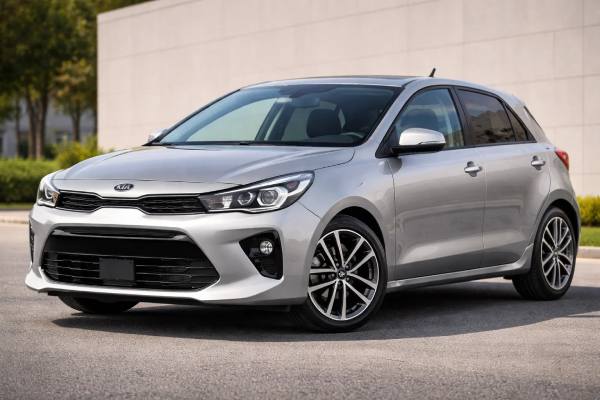
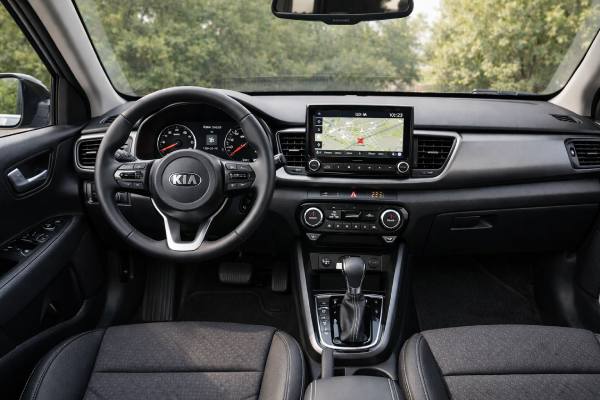
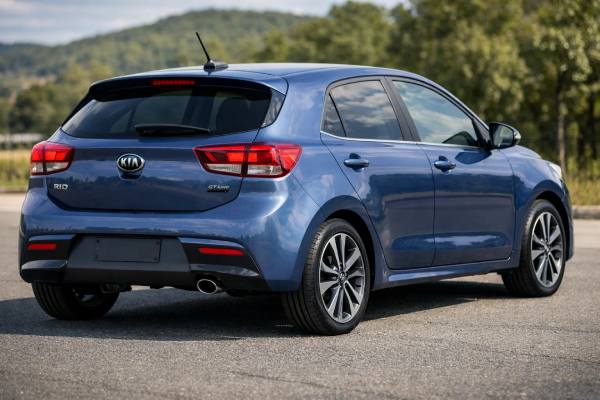
The facelifted Kia Rio (YB) with the 1.2i 84 hp engine is one of those cars that rewards realistic expectations. It is not fast, but it is engineered to be predictable, light on consumables, and easy to live with. The naturally aspirated 1.2-liter four-cylinder avoids the thermal and boost stress of a turbo, and its simple 5-speed manual setup keeps repair paths straightforward. In day-to-day use, the Rio’s strengths are calm stability, compact exterior dimensions that make parking easy, and a cabin that feels more “grown up” than many older superminis.
For owners, the big story is cost control: fuel consumption is usually steady if you drive within its comfort zone, and routine maintenance is uncomplicated. The main trade-off is that you must plan overtakes and hills, especially with passengers or motorway speeds.
What to Know
- Smooth, simple 1.2i powertrain favors low running costs over speed.
- Facelift updates improved tech availability (trim-dependent), especially driver-assist features.
- Best efficiency comes from steady throttle and early upshifts; high-speed cruising costs more fuel.
- Budget for periodic brake-fluid service every 2 years, even if mileage is low.
- Rotate tyres about every 10,000–12,000 km (6,000–7,500 miles) to keep wear even.
Quick navigation
- Kia Rio YB facelift essentials
- Kia Rio 1.2i 84 hp specifications
- Kia Rio facelift trims and safety
- Reliability patterns and fix strategy
- Maintenance plan and used buying
- Real-world driving and economy
- Rio 1.2i vs its closest rivals
Kia Rio YB facelift essentials
The 2020–2023 facelift of the Kia Rio (YB) keeps the same basic recipe—compact hatchback packaging, front-wheel drive, and an easygoing chassis—but tightens up the ownership proposition. With the 1.2i 84 hp engine, you are looking at the “steady and simple” end of the range: a naturally aspirated petrol four-cylinder paired most commonly with a 5-speed manual. That matters because it influences how the car feels (linear, not punchy) and how it ages (fewer high-heat turbo components to manage).
From an engineering perspective, this Rio sits in a sweet spot for durability: modest output, conservative cooling demands, and relatively low kerb weight. In practice, it means the engine is rarely strained in city driving, and common wear items—tyres, brakes, clutch—tend to last predictably if the car is driven smoothly. The flip side is that motorway merges and uphill sections require planning. If your routine includes heavy loads or frequent high-speed cruising, the small engine will run at higher rpm more often, and that can raise noise and fuel use.
The facelift years also brought more variation in equipment depending on market and trim. Some cars remain very traditional (basic infotainment, minimal driver assists), while others add modern safety tech like autonomous emergency braking and lane support as standard or part of an option pack. This trim spread is important for buyers: two 2021 Rios can feel like different cars in daily use if one has a better head unit, improved lighting, and driver-assistance features.
As a compact hatch, the Rio is at its best for urban commuting, short-to-medium trips, and new-driver duty. It is also a sensible used buy when you focus on condition and service history rather than chasing the newest plate.
Kia Rio 1.2i 84 hp specifications
Below are key technical specifications for the facelift-era Rio 1.2i/1.2 DPi in typical European-market form (values can vary slightly by market, wheel size, and trim). Use them as a decision guide, then confirm details by VIN and the vehicle’s official documentation.
Powertrain and efficiency
| Item | Specification |
|---|---|
| Engine family / code | 1.2 DPi (market naming varies) |
| Layout | Transverse front engine |
| Cylinders / valvetrain | Inline-4, DOHC, 4 valves/cyl (16V) |
| Displacement | 1.2 L (1,197 cc) |
| Induction | Naturally aspirated |
| Fuel system | Port injection (DPi/MPi by market) |
| Compression ratio | Typically around 11:1 (market-dependent) |
| Max power | 84 hp (62 kW) @ ~6,000 rpm |
| Max torque | ~122 Nm (90 lb-ft) @ ~4,000 rpm |
| Timing drive | Chain (typical for this engine family) |
| Rated efficiency (WLTP, combined) | ~5.4 L/100 km (about 44 mpg US / 52 mpg UK) |
| Real-world highway @ 120 km/h (75 mph) | Commonly ~6.2–7.0 L/100 km (38–32 mpg US / 46–40 mpg UK), wind and load dependent |
Transmission and driveline
| Item | Specification |
|---|---|
| Transmission | 5-speed manual (most common) |
| Drive type | FWD |
| Differential | Open |
Chassis and dimensions
| Item | Specification |
|---|---|
| Front suspension | MacPherson strut |
| Rear suspension | Coupled torsion beam axle |
| Steering | Electric power steering |
| Brakes | Disc front / drum rear (common on this class; exact sizes vary) |
| Wheels and tyres (common sizes) | 185/65 R15 or 195/55 R16 (trim dependent) |
| Length / width / height | 4,065 / 1,725 / 1,450 mm (160.0 / 67.9 / 57.1 in) |
| Wheelbase | 2,580 mm (101.6 in) |
| Kerb weight | ~1,143 kg (2,520 lb) (trim dependent) |
| GVWR | ~1,570 kg (3,461 lb) |
| Fuel tank | 45 L (11.9 US gal / 9.9 UK gal) |
| Cargo volume | 325 L seats up; 1,103 L seats down (method varies by market) |
Performance and capability
| Item | Specification |
|---|---|
| 0–100 km/h (0–62 mph) | Often in the mid–high 13 s range (market tests vary) |
| Top speed | ~173 km/h (107 mph) |
| Towing capacity | Up to ~910 kg braked / ~450 kg unbraked (market dependent) |
| Payload | Varies by trim; use GVWR minus kerb weight as a quick estimate |
Fluids and service capacities (typical guidance)
Because Kia specifications differ by region and VIN, treat the figures below as “shopping and planning” values and verify before purchasing fluids.
| System | Typical specification |
|---|---|
| Engine oil | Often 0W-20 or 5W-30 (climate dependent), API SN/SP or ACEA equivalent |
| Oil capacity | Commonly ~3.3–3.6 L (3.5–3.8 US qt) with filter |
| Coolant | Long-life ethylene glycol coolant; premix varies (often 50/50) |
| Manual gearbox oil | MTF to Kia spec (verify) |
| A/C refrigerant | Commonly R-1234yf in EU markets; charge varies by equipment |
Safety and driver assistance (headline)
| Item | Typical availability |
|---|---|
| Stability control and traction control | Commonly standard |
| Airbags | Usually front + side + curtain (trim/market dependent) |
| ADAS | AEB and lane support often trim- or pack-dependent |
| Crash ratings | Euro NCAP results exist for Rio with and without an optional safety pack (see Safety section for context) |
Kia Rio facelift trims and safety
Because the Rio is sold across many markets, trims can look different even within the same model year. Still, the facelift-era pattern is consistent: lower trims focus on value and simplicity, while mid and upper trims add comfort features and, importantly, driver assistance systems. When shopping, prioritize the equipment that changes your day-to-day experience rather than cosmetic extras.
Trims and options that matter
Most buyers should pay attention to three areas:
- Infotainment and connectivity: Higher trims often bring a larger touchscreen, better phone integration, and sometimes navigation. In real ownership terms, this affects how quickly the head unit boots, whether Bluetooth is stable, and how often you feel tempted to replace the system later.
- Lighting and visibility: Upgraded headlights and fog lights can make a bigger difference than wheels. If you do a lot of winter or rural driving, prioritize the best lighting package available in your market.
- Driver assistance packages: The big split is whether the car has forward collision avoidance (AEB) and lane support. These features can raise confidence in heavy traffic and can influence insurance and resale appeal.
Quick identifiers when you inspect a used Rio:
- Steering wheel buttons and camera housing: Cars with lane support often have additional steering wheel controls and a camera unit near the rear-view mirror.
- Front bumper details: AEB-equipped cars may have radar or camera integration (market dependent).
- Wheels and tyre size: 15-inch setups usually ride more softly and cost less to replace; 16-inch can sharpen response but are less forgiving on potholes.
Safety ratings and what they really mean
For the Kia Rio, Euro NCAP published results for the model in the late 2010s and continued rating validity reviews through the facelift era. The important detail is that the Rio has been assessed with standard safety equipment and also with an optional safety pack that improves active safety performance. In plain terms: a Rio that looks identical on the driveway may have very different crash-avoidance ability depending on whether it has AEB and lane assist.
For owners and buyers, interpret ratings like this:
- Structure and passive protection: This reflects the body shell, restraint systems, and airbag strategy. It tends to remain stable across trims.
- Safety Assist score: This can swing dramatically based on whether ADAS features are standard or optional in your trim.
- Rating “age”: A rating can be “expired” under newer rules without implying the car is unsafe; it means the test is not run under the latest protocol.
ADAS and service implications
If your facelift Rio has AEB, lane support, or traffic sign recognition, plan for slightly more careful servicing:
- Windshield replacement may require camera calibration.
- Front bumper repairs may affect sensor alignment.
- Battery health (12 V) matters more because modern driver-assist systems are sensitive to low voltage events.
When comparing two used examples, a clean service record plus a well-equipped safety package often delivers more real value than one extra model year.
Reliability patterns and fix strategy
The Rio 1.2i’s reliability story is mostly positive, but it rewards a practical approach: treat it as a simple car that stays simple only if you keep up with basics. Below are common patterns grouped by prevalence and cost tier, with symptoms and sensible remedies.
Common, low-to-medium cost issues
- Ignition coils or spark plugs (occasional):
Symptoms: Rough idle, misfire under load, check engine light.
Likely cause: Worn plugs, marginal coil, or moisture intrusion.
Remedy: Replace plugs at the correct interval and use the specified type; swap coils if misfire codes follow a cylinder. - Battery and charging sensitivity (common with short trips):
Symptoms: Slow cranking, random infotainment resets, warning lights after a cold start.
Likely cause: A weak 12 V battery or frequent short journeys that never fully recharge it.
Remedy: Test battery state-of-health; replace proactively if it fails load testing, especially before winter. - Brake noise and corrosion (common in wet climates):
Symptoms: Squeal, light vibration, uneven braking after sitting.
Likely cause: Surface rust and light glazing, especially with gentle driving.
Remedy: Periodic firm braking when safe, rotor cleaning during service, and correct pad hardware installation.
Occasional, medium cost issues
- Cooling system seepage (occasional as cars age):
Symptoms: Sweet smell, gradual coolant drop, damp hose joints.
Likely cause: Hose clamp relaxation, aging plastic fittings, or radiator seam seepage.
Remedy: Pressure test and fix early; small leaks become bigger leaks. - Manual gearbox feel (occasional):
Symptoms: Notchy cold shifts, vague engagement.
Likely cause: Old gearbox oil, worn linkage bushings, or clutch hydraulics.
Remedy: Check linkage, consider gearbox oil service if allowed in your region, and inspect clutch operation.
Rare, higher cost concerns
- Timing chain noise or correlation faults (rare on maintained cars):
Symptoms: Rattle at start-up, persistent timing-related fault codes, loss of smoothness.
Likely cause: Chain stretch or tensioner wear, usually after long oil-change intervals.
Remedy: Diagnose properly; do not guess. If confirmed, replace chain components and reset timing correctly. - Oil consumption from neglected service (rare but real):
Symptoms: Low oil between services, blue smoke on start-up, catalytic converter efficiency codes later.
Likely cause: Extended oil intervals, wrong oil grade, or sustained high-rpm use with poor maintenance.
Remedy: Establish baseline consumption, repair leaks, and keep oil at the correct level; heavy consumption needs deeper inspection.
Recalls, TSBs, and software updates
Modern cars can “fail soft” through software glitches rather than hard mechanical breakdowns. With the facelift Rio, typical update themes (varies by market) include:
- Infotainment stability: Reboots, Bluetooth dropouts, or camera glitches may be solved by updates.
- ADAS calibration logic: If equipped, some faults are resolved by reflash and recalibration.
Pre-purchase, ask for proof of recall completion and update history. If the seller cannot provide it, plan a dealer VIN check as part of your buying process.
Maintenance plan and used buying
A Rio 1.2i stays inexpensive when you follow a routine that matches how the car is used. Short trips and cold starts are harder on oil, the battery, and brakes than motorway miles, so adjust your habits accordingly. The schedule below is a practical baseline that fits most owners; always align it with your market’s official service documentation.
Practical maintenance schedule
- Engine oil and filter: every 10,000–15,000 km (6,000–9,000 miles) or 12 months.
If you do mainly short trips, stay near the shorter end. Fresh oil is the single best hedge against timing-chain wear. - Cabin air filter: every 15,000–30,000 km (9,000–18,000 miles) or yearly if you drive in dusty cities.
A clogged filter makes HVAC noisy and can fog windows faster. - Engine air filter: every 30,000–45,000 km (18,000–28,000 miles).
Replace sooner if you drive on dusty roads. - Brake fluid: every 2 years regardless of mileage.
This protects the ABS system and preserves a firm pedal feel. - Spark plugs: commonly around 60,000–100,000 km (37,000–62,000 miles), depending on plug type and market interval.
If you notice rough idle before that, test rather than guessing. - Coolant: often 5 years / 100,000 km (62,000 miles) as a planning figure, then per official interval.
Replace with the correct long-life coolant type. - Tyre rotation and alignment check: rotate every 10,000–12,000 km (6,000–7,500 miles); check alignment if you see inner-edge wear.
This car responds well to correct tyre pressures, so check monthly. - Brakes (pads/rotors): inspect at every service.
City driving can wear fronts faster; light use can cause corrosion and noise. - 12 V battery: test annually after year 3; many batteries become marginal in years 4–6 depending on climate and usage.
Fluids, torque values, and “do-not-guess” items
For DIY owners, the Rio is approachable, but avoid improvisation:
- Use the correct oil grade and specification for your climate.
- If you service brakes, use a torque wrench and follow correct tightening sequences.
- If your car has ADAS, treat windshield or bumper work as calibration-sensitive.
Because torque values vary by fastener design and VIN, the safest approach is to use the official service manual for any critical fastener (wheel lug nuts, brake carrier bolts, suspension fasteners).
Buyer’s guide: what to inspect
- Service records: Look for regular oil changes and brake-fluid changes. Gaps matter more than brand stamps.
- Cold start behavior: Listen for unusual rattles and confirm steady idle.
- Clutch take-up and gear engagement: A high bite point or shudder suggests wear or contamination.
- Cooling system: Check coolant level and look for dried residue around hose joints.
- Electronics: Confirm all keys work, all windows operate smoothly, and the infotainment behaves consistently.
- Tyres and alignment: Uneven wear can signal poor alignment or suspension bushing wear from curb impacts.
Long-term durability outlook: if maintained on time, the 1.2i Rio is typically the kind of car that ages slowly—its costs are more about predictable wear items than surprise failures.
Real-world driving and economy
The Rio 1.2i is built for smoothness and consistency rather than acceleration. If you treat it like a small-capacity engine—keep momentum, plan gear changes, and avoid late throttle inputs—it feels agreeable and composed. If you drive it like a larger car and demand instant response at low rpm, it can feel strained.
Ride, handling, and NVH
- Ride: On 15-inch tyres, the Rio generally rides with a calm, slightly firm feel that resists float. It handles potholes better than many 16-inch setups, and the softer sidewall helps reduce harshness over sharp edges.
- Handling balance: The chassis is predictable. It turns in safely, and the rear torsion beam keeps things stable rather than playful.
- Steering: Electric steering is light in town and more settled at speed, though feedback is limited. For commuting, that is a feature, not a flaw.
- Cabin noise: At city speeds, noise is reasonable. At higher speeds, engine rpm and tyre roar become more noticeable, especially on coarse asphalt.
Powertrain character
This engine rewards being kept in its mid-range:
- Throttle response: Linear and easy to modulate, which helps in parking and stop-start traffic.
- Low-rpm pull: Modest. Expect to downshift on hills and when passing.
- 5-speed gearing: A 5-speed can mean the engine spins higher on the motorway than a 6-speed would. That is normal for this variant, but it shapes the experience: it feels happier at 90–110 km/h than at sustained higher speeds.
Real-world fuel economy
Real-world results depend strongly on speed and route:
- City: Often ~6.0–7.2 L/100 km (39–33 mpg US / 47–39 mpg UK), depending on traffic and temperature.
- Highway 100–120 km/h: Often ~6.2–7.0 L/100 km (38–34 mpg US / 46–40 mpg UK).
- Mixed driving: Many owners see ~5.6–6.5 L/100 km (42–36 mpg US / 50–43 mpg UK).
Cold weather can push consumption up meaningfully because the engine takes longer to reach full efficiency, and cabin heat demands more energy. If you do many short trips, your best “maintenance mod” is not a part—it is combining errands so the engine reaches operating temperature.
Performance metrics that change expectations
- Overtaking: The Rio can overtake safely, but it needs space. Downshift early and accept that the engine will sound busy.
- Braking feel: Typically consistent and easy to modulate; if it feels grabby or pulsing, suspect rusted rotors, uneven pad deposits, or tyre issues.
- Load sensitivity: Two adults plus luggage will noticeably soften acceleration. If you often drive fully loaded, prioritize a well-maintained example with strong clutch feel and correct tyre spec.
Rio 1.2i vs its closest rivals
In the supermini and small-hatch class, the Rio 1.2i competes less on headline performance and more on ownership logic: purchase price, equipment-per-dollar, and how calmly it holds up after years of everyday use. Here is how it typically stacks up against common rivals.
Where the Rio 1.2i wins
- Simple drivetrain value: A naturally aspirated engine and conventional manual gearbox can be a strong long-term play. Many rivals moved toward small turbos in this period, which can be great to drive but add heat, boost plumbing, and higher sensitivity to neglected oil service.
- Cabin maturity: The Rio tends to feel solid and “normal,” with sensible controls and stable road manners.
- Practical packaging: A useful boot and easy rear-seat folding make it workable for errands and weekend trips, not just commuting.
Where rivals may be better
- Performance and motorway comfort: Turbocharged alternatives (even small ones) often deliver easier overtakes and lower effort at speed. If your driving is mainly motorway, a small turbo or a larger-displacement rival can feel less busy.
- Latest ADAS as standard: Depending on market, some competitors made AEB and lane keeping standard earlier or across more trims. With the Rio, you may need to shop carefully to get the full safety suite.
- Ride finesse: Some European-focused chassis tunes can feel more supple over broken pavement, especially at similar wheel sizes.
Smart comparisons by buyer type
- City-first drivers and new drivers: The Rio 1.2i is easy to place on the road, simple to drive smoothly, and usually cheap to run. A 15-inch wheel setup is often the comfort sweet spot.
- Mixed driving with occasional highway: The Rio works well if you accept that the engine needs downshifts. Look for a trim with better seats, better lighting, and the safety pack if possible.
- Frequent highway and hills: Consider whether a small turbo rival (or a higher-output Rio variant in the same generation) better matches your routine. You will likely gain relaxed passing performance and sometimes lower cruising rpm.
Verdict
The facelift Kia Rio 1.2i 84 hp is a rational choice when you prioritize predictable running costs and straightforward maintenance over speed. Buy the best-maintained example you can find, verify safety equipment by trim, and the car will usually repay you with calm, low-drama ownership.
References
- Rio-Specifications-MY22.pdf 2022 (Technical Specifications)
- Kia Rio 2017 (Safety Rating)
- Kia Car Owners Manual | Kia UK 2025 (Owner’s Manual Portal)
- Car Safety Recalls | What They Are & What To Do | Kia UK 2025 (Recall Information)
Disclaimer
This article is for informational purposes only and is not a substitute for professional diagnosis, inspection, or repair. Specifications, torque values, service intervals, and procedures vary by VIN, market, model year, and installed equipment. Always verify details using your vehicle’s official service documentation and manufacturer guidance.
If you found this guide useful, please consider sharing it on Facebook, X (Twitter), or your favorite forum to help others discover it.