
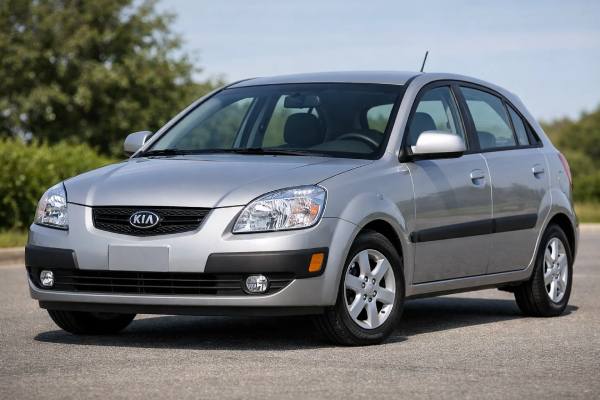
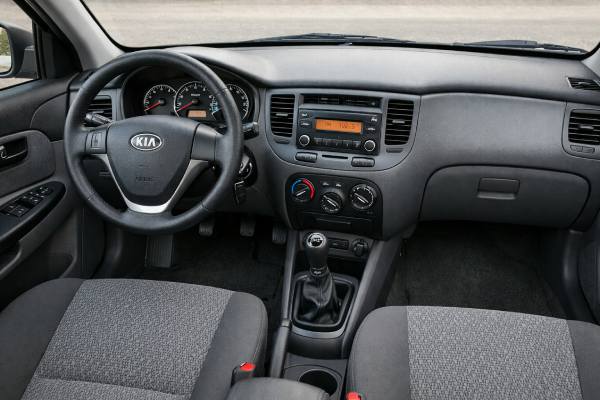
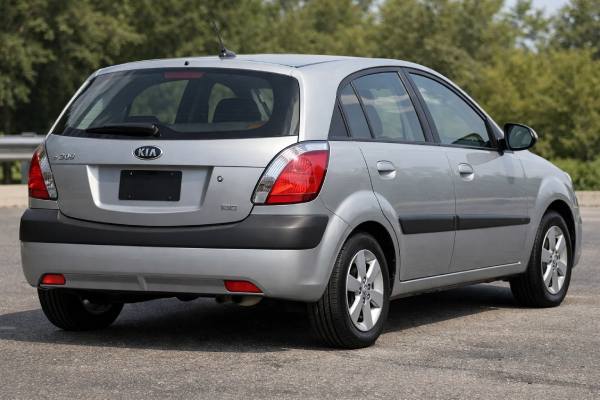
The 2006–2009 Kia Rio (JB) with the 1.6-liter petrol engine is a simple, durable small car when it’s maintained on time. In most markets, this version pairs a naturally aspirated, multi-point injected inline-four with either a 5-speed manual or a conventional 4-speed automatic. The result is predictable throttle response, low running complexity, and parts availability that remains strong years later.
What separates a good Rio JB from a tiring one is less about the engine and more about ownership history: cooling-system care, timing-belt documentation, and suspension/brake upkeep. Because the chassis is light, worn tires or tired dampers can change the driving feel more than you’d expect. Buy well, service it routinely, and this Rio rewards you with easy daily usability, reasonable fuel use, and straightforward repairs—exactly what many shoppers want from a practical used hatchback or small sedan.
Fast Facts
- Strong value if you prioritize simple mechanicals and low parts costs over modern tech.
- The 1.6 petrol feels noticeably more relaxed at highway speeds than the smaller engines.
- Many cars live long lives if cooling system and oil changes are kept consistent.
- Plan ahead for timing-belt service and related components if paperwork is missing.
- Change engine oil about every 10,000–15,000 km (6,000–9,000 mi) or 12 months, depending on use.
Guide contents
- Kia Rio JB 1.6 ownership fit
- Kia Rio JB 1.6 specs tables
- Kia Rio JB equipment and safety
- Reliability hotspots and fixes
- Service schedule and purchase checks
- Driving feel and fuel use
- Compared with small-car rivals
Kia Rio JB 1.6 ownership fit
If you’re shopping the Rio JB 1.6, the best way to think about it is “honest transportation with a few predictable needs.” The 110 hp 1.6 is a good match for this platform: it’s strong enough to keep pace in modern traffic without feeling strained, and it doesn’t depend on turbo hardware or direct injection. That matters in real ownership because it keeps repair risk lower as the car ages.
The Rio’s real strengths show up in three areas:
- Mechanical simplicity: A conventional gasoline engine, straightforward cooling system, and typical front-wheel-drive layout mean most shops can service it easily.
- Lightweight efficiency: Even without advanced tech, modest mass helps fuel economy and brake/tire wear.
- Parts availability: Common service parts (filters, belts, brakes, suspension components) are typically affordable.
Where owners sometimes get caught out is the “small car multiplier”: a Rio with worn tires, loose bushings, old dampers, or uneven braking can feel much worse than it really is. Because everything is lighter, small degradations are easier to notice. A short test drive over rough pavement and a highway stretch tells you a lot.
This model also rewards buyers who match the drivetrain to their use. The 5-speed manual is the more engaging and usually the cheaper long-term bet (fewer heat-related failures, simpler service). The 4-speed automatic can be perfectly fine, but it is more sensitive to neglected fluid changes and heat—especially in hot climates or heavy city traffic.
Finally, set expectations on modern features. You’re not buying advanced driver assistance here. You’re buying an older, simpler car that can still be a dependable commuter if you’re willing to keep up with the basics: clean oil, healthy coolant, sound brakes, and documented belt service. For many owners, that trade—less tech, more mechanical clarity—is the Rio JB 1.6’s core appeal.
Kia Rio JB 1.6 specs tables
Specs can vary by market and body style (4-door sedan vs 5-door hatch). The tables below focus on common 2006–2009 1.6 petrol configurations and highlight items that matter for maintenance and ownership decisions.
Powertrain and efficiency
| Item | Spec (typical 1.6 petrol) |
|---|---|
| Code | Alpha II / G4ED (common) |
| Engine layout and cylinders | I-4, transverse; DOHC; 4 valves/cyl |
| Bore × stroke | 76.5 × 87.0 mm (3.01 × 3.43 in) |
| Displacement | 1.6 L (1599 cc) |
| Induction | Naturally aspirated |
| Fuel system | Multi-point injection (MPI) |
| Compression ratio | ~10.0:1 |
| Max power | 110 hp (82 kW) @ ~6000 rpm |
| Max torque | ~146 Nm (108 lb-ft) @ ~4500 rpm |
| Timing drive | Belt (verify by VIN/market) |
| Rated efficiency (US EPA, 2006 1.6) | 29 mpg combined (≈8.1 L/100 km) |
| Real-world highway @ 120 km/h | ~7.0–7.8 L/100 km (30–34 mpg US), setup-dependent |
Transmission and driveline
| Item | Spec |
|---|---|
| Transmission | 5-speed manual or 4-speed automatic (market-dependent) |
| Drive type | FWD |
| Differential | Open |
Chassis and dimensions
| Item | Sedan (4-door) | Hatch (5-door) |
|---|---|---|
| Length | 4240 mm (167.0 in) | 3990 mm (157.1 in) |
| Width | 1695 mm (66.7 in) | 1695 mm (66.7 in) |
| Height | 1470 mm (57.9 in) | 1470 mm (57.9 in) |
| Wheelbase | 2500 mm (98.4 in) | 2500 mm (98.4 in) |
| Track (front/rear) | ~1470–1485 / 1460–1475 mm (by wheel/tire) | similar |
| Suspension (front/rear) | MacPherson strut / torsion beam | |
| Steering | Hydraulic assist (typical); ratio varies by market | |
| Brakes | Front discs; rear drums or discs (trim-dependent) | |
| Wheels/tires (common) | 175/70 R14, 185/65 R14, 195/55 R15, 205/45 R16 | |
| Ground clearance | ~150–160 mm (5.9–6.3 in), market-dependent | |
| Fuel tank | 45 L (11.9 US gal / 9.9 UK gal) | |
| Kerb weight | ~1100–1180 kg (2425–2601 lb), body/transmission-dependent | |
| Cargo volume | Hatch ~270 L (9.5 ft³) seats up; Sedan often ~390 L (13.8 ft³) trunk (market-dependent) |
Performance and capability
| Metric | Typical value |
|---|---|
| 0–100 km/h (0–62 mph) | ~10–11 s (transmission and body-dependent) |
| Top speed | ~180–190 km/h (112–118 mph) |
| Braking 100–0 km/h | Often ~41–44 m (tire and brake condition dominate) |
| Towing capacity | Frequently 900–1100 kg braked, ~450 kg unbraked (market-dependent) |
| Payload | Commonly ~400–500 kg (trim and GVWR-dependent) |
Fluids and service capacities
| Item | Spec (petrol model, common) |
|---|---|
| Engine oil | API SJ/SL or higher; ILSAC GF-3 or higher; 3.3 L (3.5 US qt) with filter |
| Coolant | Ethylene-glycol base; 5.5–5.8 L (5.8–6.1 US qt) |
| Manual trans oil | API GL-4; 1.9 L (2.0 US qt) |
| Automatic ATF | SP-III type; 6.1 L (6.4 US qt) |
| Power steering | PSF-III; 0.8 L (0.85 US qt) |
| Brake/clutch fluid | DOT-3 or DOT-4; 0.7–0.8 L (0.74–0.85 US qt) |
| A/C refrigerant and oil | Varies by system and market; verify on under-hood label |
| Key torque specs | Wheel lug nuts 88–107 Nm (65–79 lb-ft) |
Safety and driver assistance
| Item | What to expect |
|---|---|
| Crash ratings | Vary by market/test year; check local rating body and equipment fitted |
| ABS and EBD | Standard on some trims/markets, optional on others |
| ESC (stability control) | Often not available on many 2006–2009 configurations |
| ADAS | Generally none (no AEB/ACC/LKA in this era) |
Kia Rio JB equipment and safety
The Rio JB lineup is usually organized around practical trims rather than luxury themes. Names vary (LX/EX, base/comfort, “Emotion,” etc.), but the core differences tend to be predictable: wheels/tires, audio, airbags, and braking hardware. When you shop 2006–2009 cars, prioritize functional equipment that changes safety and running costs more than cosmetics.
Trims and options that matter
- Brakes and stability hardware
Some markets offered ABS with EBD as standard on higher trims, while base models could be without it. This is a meaningful difference in wet stopping distances and stability under hard braking. If you can choose, pick a car with ABS/EBD. - Airbag count
Dual front airbags are common. Side airbags and curtain airbags can be trim-dependent. If you see “SRS” tags on the seatbacks and “curtain” labels near the roofline, that’s a good sign—but still verify with the VIN build list or the original window sticker if available. - Wheel and tire packages
Common factory tire sizes include 175/70 R14 and 185/65 R14 on steel wheels, with 195/55 R15 or 205/45 R16 on higher trims. Larger wheels can sharpen steering response, but they can also increase tire cost and ride harshness. For comfort and cost, the 14- or 15-inch setups are often the sweet spot. - Transmission pairing
The manual gearbox is often found on simpler trims and tends to be less expensive to keep happy. The automatic can be more common on better-equipped cars in some regions, so you may be trading equipment for complexity—decide what matters more.
Safety ratings and what they really mean here
Crash-test results on older small cars are heavily influenced by the exact variant and equipment fitted. For the Rio JB, side and curtain airbags can change the real-world outcome in a side impact more than almost any other single option. Also note that test protocols changed over time; a “star rating” from the mid-2000s is not directly comparable to a modern star rating.
A practical approach is to shop the car, not the brochure:
- Confirm airbag warning light behavior at key-on (it should illuminate briefly, then go out).
- Check that seat belts retract smartly and that buckles feel positive.
- Inspect for previous crash repair (mismatched paint, uneven panel gaps, missing under-tray fasteners).
Driver assistance and calibration implications
Most 2006–2009 Rio JB cars do not have camera/radar ADAS systems, which is a reliability advantage—there is no lane camera to recalibrate after a windshield change, for example. However, the car still depends on basics that must be right: wheel speed sensors for ABS (if equipped), brake hydraulic condition, and proper tire sizing. Mixing tire sizes or running odd pressures can trigger ABS faults and reduce stability in emergency braking. Keep the car on matched tires and correct pressures, and it will behave more consistently.
Reliability hotspots and fixes
Overall, the Rio JB 1.6 petrol is not known for exotic failures. Most issues are the “age and mileage” kind—rubber hardens, sensors drift, and cooling components fatigue. The good news is that many fixes are straightforward if you catch them early.
Common issues (expect to see these)
- Ignition wear (coils, plugs, leads depending on market)
Symptoms: misfire under load, rough idle, flashing MIL.
Likely cause: aging coils or plugs; sometimes oil in plug wells from a valve-cover gasket leak.
Remedy: replace plugs with the correct heat range; address gasket leaks; replace coil(s) as needed. - Throttle body and idle control buildup
Symptoms: hunting idle, stalling when coming to a stop, sticky pedal feel.
Likely cause: carbon deposits and old PCV flow.
Remedy: clean throttle body; inspect PCV valve and vacuum hoses. - Cooling system seepage (radiator end tanks, hoses, thermostat housing)
Symptoms: sweet smell, crusty residue, slow coolant loss, occasional overheating.
Likely cause: age-related plastic/rubber fatigue.
Remedy: fix leaks promptly; replace thermostat if temperature behavior is inconsistent; bleed system correctly. - Front suspension consumables (bushings, ball joints, end links)
Symptoms: clunks over bumps, vague steering, uneven tire wear.
Likely cause: worn rubber and joints, especially on rough roads.
Remedy: replace worn components in pairs where sensible; align afterward.
Occasional issues (not every car, but not rare)
- Manual gearbox wear
Symptoms: notchiness or grind into a gear, especially when cold.
Likely cause: synchro wear, old gear oil, or clutch drag.
Remedy: confirm clutch release, refresh gear oil with correct spec; repair if persistent. - Automatic shift quality
Symptoms: delayed engagement, flare on upshift, harsh 2–3 shift.
Likely cause: aged ATF or heat stress.
Remedy: service with the correct ATF spec; ensure cooling airflow is clear; avoid “universal” fluids. - A/C performance decline
Symptoms: weak cooling at idle, cycling, compressor noise.
Likely cause: low refrigerant from slow leaks, aging compressor clutch.
Remedy: leak test and recharge to spec; repair leaks rather than topping up repeatedly.
Rare but higher-cost concerns
- Timing-belt neglect (if belt-equipped for your engine)
Symptoms: often none before failure; may show squeal, cracking, or oil contamination.
Likely cause: overdue belt, failing tensioner, or water pump seizing.
Remedy: replace belt, tensioner, and commonly the water pump as a set if history is unknown.
Recalls, service actions, and how to verify
A notable safety recall on some 2006–2008 cars involves the front passenger seat occupant classification system (OCS) sensor mat, which can affect airbag deployment logic. The right way to handle this is simple: run a VIN check through official channels and confirm the repair is completed, not merely “not open.” When you’re inspecting a car, also confirm the airbag warning light behaves correctly and that there are no stored SRS faults.
Service schedule and purchase checks
A Rio JB 1.6 that lasts is usually one that gets boring, repeatable maintenance. The schedule below is a practical baseline; adapt it to your climate and driving pattern (short trips, heavy traffic, dusty roads, or extreme heat all shorten intervals).
Practical maintenance schedule
- Engine oil and filter: every 10,000–15,000 km (6,000–9,000 mi) or 12 months. Short-trip cars benefit from the shorter end.
- Engine air filter: inspect every oil change; replace about 30,000 km (18,000 mi) or sooner in dust.
- Cabin air filter: 15,000–30,000 km (9,000–18,000 mi) depending on air quality.
- Spark plugs: typically 60,000–100,000 km (37,000–62,000 mi) depending on plug type; replace earlier if misfires appear.
- Coolant: about 5 years / 100,000 km (60,000 mi) as a sensible ownership interval unless your market specifies otherwise.
- Brake fluid: every 2 years, regardless of mileage.
- Manual trans oil: inspect for leaks; refresh around 90,000–120,000 km (55,000–75,000 mi) if shifts feel tired or history is unknown.
- Automatic ATF: service around 60,000–90,000 km (37,000–55,000 mi); heat and city driving push you toward the shorter interval.
- Brake pads/rotors: inspect every tire rotation; don’t ignore caliper slide lubrication.
- Tire rotation and alignment: rotate every 8,000–10,000 km (5,000–6,000 mi); align if wear is uneven or after suspension work.
- 12 V battery: test annually after year 4; many last 4–6 years depending on climate.
Fluid specs and capacities (decision-useful)
- Engine oil with filter: 3.3 L (3.5 US qt); use the correct API/ILSAC level for your market.
- Coolant: 5.5–5.8 L (5.8–6.1 US qt) ethylene glycol base.
- Manual gearbox: 1.9 L (2.0 US qt) GL-4.
- Automatic: 6.1 L (6.4 US qt) SP-III type.
- Brake/clutch: 0.7–0.8 L (0.74–0.85 US qt) DOT-3 or DOT-4.
- Wheel lug nuts: 88–107 Nm (65–79 lb-ft).
Buyer’s guide: what to check before you pay
- Timing-belt proof (or plan to do it)
If the engine in your market is belt-driven, missing paperwork should be treated as “due now.” Budget for belt, tensioner, and often a water pump. - Cooling system health
Look for crusty residue at hose joints, radiator seams, and thermostat housing. Confirm the cabin heater is strong and stable (air pockets and low coolant show up here). - Suspension, tires, and alignment clues
Uneven inner tire wear, steering pull, or clunks over bumps suggest bushings and alignment work. These are not deal-breakers, but they should move the price. - Brakes and ABS behavior
A firm pedal and straight stops matter more than “new pads.” If equipped, confirm the ABS light illuminates at key-on then goes out. - Rust and water intrusion
Check rear arches, door bottoms, underbody seams, and the spare tire well. Wet carpets can point to door seal or hatch seal issues.
Long-term durability outlook
With consistent fluids, timely belt service (where applicable), and suspension refreshes as needed, the Rio JB 1.6 can be a steady long-term commuter. The ownership pattern that shortens its life is neglect: overheating events, ignored oil leaks onto rubber components, and driving on worn tires and brakes until secondary damage occurs. Treat it like a simple machine that needs regular basics, and it tends to behave like one.
Driving feel and fuel use
The Rio JB 1.6’s driving character is best described as “light, predictable, and slightly busy on rough roads.” The chassis is simple and not heavy, which helps agility in town. Steering effort is usually moderate with a natural on-center feel, but wear in front end links and bushings can quickly turn that feel into looseness—so a tight, well-maintained example matters.
Ride, handling, and NVH
- Ride: The torsion-beam rear setup is robust and space-efficient, but it can transmit sharp impacts over broken pavement. Smaller wheels with taller sidewalls (14–15″) generally ride better than 16″ packages.
- Handling: Neutral and tidy at normal speeds. Lift-off mid-corner can make the rear feel lighter, typical of many small FWD hatchbacks—good tires help most.
- Noise: Expect noticeable road noise on coarse asphalt. Wind noise is usually manageable, but door seals and alignment matter as the car ages.
Powertrain character
The 1.6’s advantage is usable midrange torque rather than dramatic acceleration. It doesn’t feel fast, but it feels less stressed than smaller engines during merges and long hills. The manual gearbox typically suits the engine well, letting you keep it in the 2500–4500 rpm band where response is strongest. The 4-speed automatic is smooth when healthy, but it can feel “busy” because it has fewer ratios; it may downshift more often on grades.
Real-world efficiency
For a benchmark, the 2006 1.6 shows 29 mpg combined in both manual and automatic form in U.S. EPA figures, with city/highway splits around 25/35 mpg (automatic) and 27/32 mpg (manual). In metric terms, that’s roughly:
- Combined: ~8.1 L/100 km
- City: ~8.7–9.4 L/100 km
- Highway: ~6.7–7.4 L/100 km
At a steady 120 km/h (75 mph), real drivers often see about 7.0–7.8 L/100 km (30–34 mpg US) depending on tires, alignment, wind, and load. A roof rack, underinflated tires, or a slipping brake caliper can easily push consumption higher—so “condition” is as important as “spec.”
Key metrics that change the verdict
- If your test drive shows wandering at speed, budget for tires and an alignment first, then reassess.
- If the car shows hesitation, surging, or misfires, assume ignition and intake cleaning work until proven otherwise.
- If braking feels inconsistent, inspect for sticking caliper slides and old brake fluid; these are common “small car feels worse than it is” issues.
Compared with small-car rivals
In the 2006–2009 small-car class, the Rio JB 1.6 competes on value and simplicity more than refinement. Here’s how it typically stacks up against common alternatives.
Versus :contentReference[oaicite:0]{index=0} :contentReference[oaicite:1]{index=1}
A comparable Toyota Yaris often feels more refined in cabin materials and noise control, and it can hold resale value better. The Rio’s counter is purchase price and straightforward servicing. If you want the “set it and forget it” experience with strong resale, the Yaris is often the safer bet. If upfront cost matters most and you’re diligent with maintenance, the Rio can deliver similar daily utility for less money.
Versus :contentReference[oaicite:3]{index=3} :contentReference[oaicite:4]{index=4}
The Honda Fit is hard to beat for interior packaging and cargo flexibility. If you regularly carry bulky items, the Fit’s cabin design can be worth paying for. The Rio’s advantages are usually lower entry price and simpler trim complexity, but it won’t match the Fit’s space efficiency or “clever” interior features.
Versus :contentReference[oaicite:6]{index=6} :contentReference[oaicite:7]{index=7}
A same-era Ford Fiesta can feel more fun and better damped on certain roads, depending on the exact version. However, parts pricing and availability can vary widely by market. The Rio tends to be a “known quantity” for routine service, which matters if you’re keeping the car on a tight budget.
Versus :contentReference[oaicite:9]{index=9} :contentReference[oaicite:10]{index=10} and :contentReference[oaicite:11]{index=11} :contentReference[oaicite:12]{index=12}
These European superminis can offer more polished ride tuning and a more upscale feel in certain trims, but they may also bring more trim-level complexity and more electronics variation as they age. If you have strong local specialist support, they can be great. If you prefer broad shop familiarity and straightforward repairs, the Rio often feels less fussy.
The Rio JB 1.6’s best-case niche
Choose the Rio when you want a small car that is:
- Cost-effective to buy
- Mechanically straightforward to maintain
- “Good enough” on performance without chasing speed
- Easy to keep on the road with routine upkeep
If you want maximum refinement, modern safety tech, or best-in-class interior flexibility, one of the rivals may fit better. But for honest, budget-focused ownership—especially with documented service—the Rio JB 1.6 remains a sensible pick.
References
- JB swd-3.qxd 2011 (Owner’s Manual)
- Gas Mileage of 2006 Kia Rio 2006 (Fuel Economy Data)
- Vehicle Detail Search – 2006 KIA RIO | NHTSA 2006 (Recall Database)
- Microsoft Word – SC097 – RIO OCS_ Final Owner Notification Ltr.DOCX 2012 (Recall Notice)
- Crash Tests 2008 (Safety Rating)
Disclaimer
This article is for informational purposes only and is not a substitute for professional inspection, diagnosis, or repair. Specifications, torque values, service intervals, and procedures can vary by VIN, market, engine version, and equipment; always verify details using official owner and service documentation for your specific vehicle.
If you found this guide helpful, please consider sharing it on Facebook, X (Twitter), or your favorite forum to support our work.