
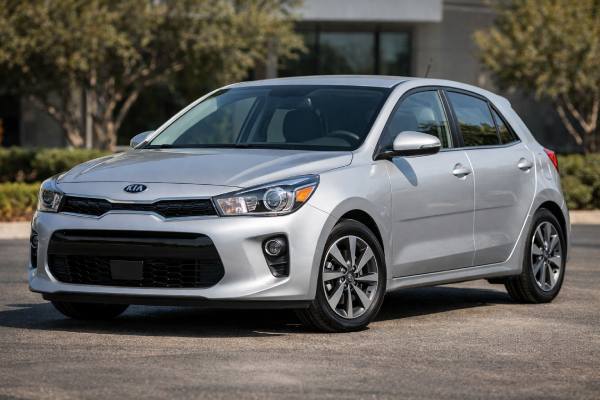
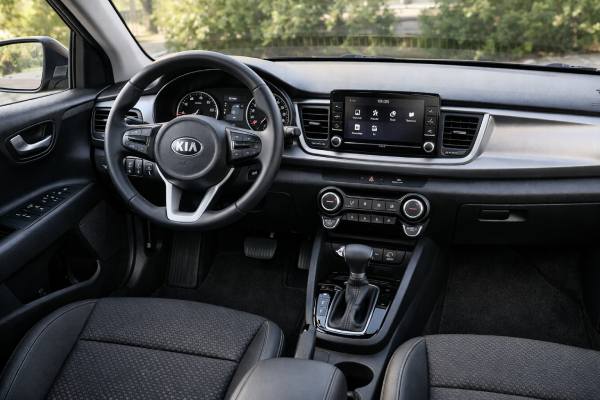
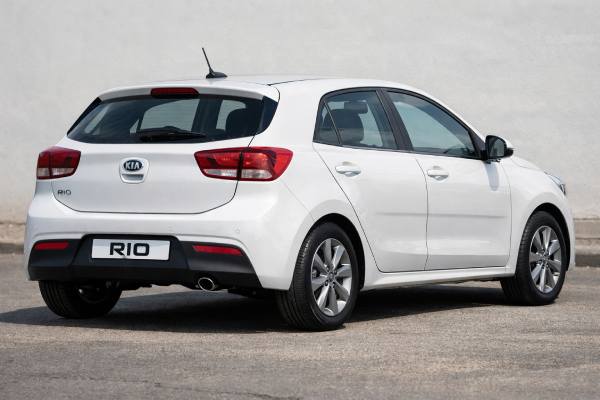
The 2018–2020 Kia Rio (YB) with the 1.6 GDI is one of the simplest “modern” subcompacts you can buy: a naturally aspirated, direct-injected four-cylinder driving the front wheels through either a 6-speed manual or a conventional 6-speed automatic. That matters for ownership. You avoid turbocharger heat and complexity, yet you still get decent response and highway stability for the class. The trade-off is that direct injection (GDI) demands clean oil, good fuel, and a driving pattern that occasionally gets the engine fully warm—otherwise carbon buildup and sensor complaints become more likely over time.
In daily use, the Rio’s strengths are predictable controls, low running costs, and easy packaging. Its weaknesses are the usual small-car ones: limited sound insulation, basic rear suspension, and safety tech that varies widely by trim and market. If you shop carefully, it can be a very rational long-term car.
Owner Snapshot
- Strong value powertrain: simple 1.6 GDI with no turbo hardware to age out.
- Stable on the highway for a subcompact, with light steering and tidy dimensions for city parking.
- Low parts cost and easy access for common service items (filters, plugs, brakes).
- Watch for GDI carbon buildup symptoms if the car lived on short trips in cold weather.
- Plan engine oil and filter service about every 10,000 km (6,200 mi) or 12 months (adjust shorter for harsh use).
Contents and shortcuts
- Kia Rio YB 1.6 GDI focus
- Kia Rio YB 1.6 GDI numbers
- Kia Rio YB equipment and ADAS
- Problem patterns and campaigns
- Service schedule and used checks
- Road feel and fuel use
- Alternatives in the segment
Kia Rio YB 1.6 GDI focus
The Kia Rio (YB) sits in the “small but grown-up” corner of the subcompact market. With the 1.6 GDI, it’s built around a straightforward idea: keep the car light, keep the drivetrain conventional, and focus on predictable daily behavior rather than headline performance.
What the 1.6 GDI changes (versus smaller turbos): this engine doesn’t rely on boost to make torque. Instead, it uses direct injection to improve efficiency and throttle response while staying mechanically simple—no turbocharger, no intercooler plumbing, and fewer heat-soak issues after years of short trips. That simplicity is a real advantage for owners who plan to keep the car beyond the warranty window.
What it doesn’t change: the Rio is still a subcompact, so you should expect a firmer ride over broken pavement and more road noise at highway speeds than in a larger car. The rear suspension is a torsion-beam design. It’s cost-effective and space-efficient, but it won’t isolate sharp impacts like a multi-link rear setup. The payoff is a roomy cabin footprint for the exterior size and a trunk/cargo area that works well for groceries and commute gear.
Body styles and markets: depending on where the car was sold, you may see a 4-door sedan and/or a 5-door hatchback. Equipment also varies by region. In some markets, advanced driver assistance systems (ADAS) were bundled in optional packs, while base trims stayed very simple. That means “a Rio” can feel like two different cars depending on trim.
Ownership personality: the Rio’s long-term comfort comes from predictable steering, easy service access, and inexpensive consumables. Its long-term risk comes mostly from maintenance habits. GDI engines reward clean oil and occasional long runs that get the engine fully hot. If a car spent its life on short, cold trips, you’ll want to be more proactive about intake cleaning and PCV (positive crankcase ventilation) health.
If you want an affordable daily driver with conventional mechanicals and you’re willing to choose the right trim (and maintain it correctly), the 1.6 GDI Rio is one of the more rational picks in the class.
Kia Rio YB 1.6 GDI numbers
Below are the key specifications that matter for this exact powertrain: the naturally aspirated 1.6 GDI rated around 130 hp, paired with a 6-speed manual or 6-speed automatic, driving the front wheels. Specs can vary slightly by VIN, body style, and market, so treat these as “core configuration” data and confirm details for your specific car.
Powertrain and efficiency
| Item | Specification |
|---|---|
| Engine family (common) | Gamma 1.6 GDI (market naming varies) |
| Layout | Inline-4 |
| Displacement | 1.6 L (1,591 cc) |
| Valvetrain | DOHC, 16 valves |
| Fuel system | Gasoline Direct Injection (GDI) |
| Induction | Naturally aspirated |
| Bore × stroke | 77.0 × 85.44 mm (3.03 × 3.36 in) |
| Compression ratio | 11.0:1 |
| Max power | 130 hp (97 kW) @ 6,300 rpm |
| Max torque | 161 Nm (119 lb-ft) @ 4,850 rpm |
| Timing drive | Chain (typical for this family; verify by engine code) |
| Recommended fuel | Unleaded gasoline (regular grade in most markets) |
Rated efficiency (typical):
- Many markets land around 7.0–7.5 L/100 km combined (about 31–34 mpg US, depending on test cycle and gearbox).
- Highway cruising at 120 km/h (75 mph) commonly sits around 6.5–7.2 L/100 km if tires and alignment are healthy.
Transmission and driveline
| Item | Specification |
|---|---|
| Drive type | FWD |
| Manual gearbox | 6-speed (where offered) |
| Automatic gearbox | 6-speed torque-converter automatic |
| Differential | Open (traction control manages wheelspin) |
Why the 6-speed automatic matters: it’s a conventional hydraulic automatic, not a dual-clutch. That usually means smoother low-speed behavior and fewer “clutch learning” quirks in traffic, at the expense of a slightly softer feel under hard acceleration.
Chassis and dimensions (typical sedan configuration)
| Item | Specification |
|---|---|
| Suspension (front / rear) | MacPherson strut / torsion beam |
| Steering | Electric power steering |
| Steering ratio | 14.9:1 |
| Turning circle (kerb-to-kerb) | 10.2 m (33.5 ft) |
| Brakes (front / rear) | Ventilated disc / drum (some trims rear disc) |
| Front disc diameter | 279 mm (11.0 in) |
| Rear drum diameter | 203 mm (8.0 in) |
| Wheelbase | 2,581 mm (101.6 in) |
| Length / width / height | 4,384 / 1,725 / 1,450 mm (172.6 / 67.9 / 57.1 in) |
| Ground clearance | 140 mm (5.5 in) |
| Common tire size | 185/65 R15 |
Weights, capacities, and cargo
| Item | Specification |
|---|---|
| Kerb weight (typical) | ~1,200–1,230 kg (2,650–2,715 lb), by gearbox/trim |
| Fuel tank | 45 L (11.9 US gal) |
| Cargo (sedan trunk, typical) | ~388 L (13.7 ft³), method varies by market |
Performance (realistic expectations)
| Metric | Typical range |
|---|---|
| 0–100 km/h (0–62 mph) | ~9.8–11.0 s (gearbox and body style dependent) |
| Top speed | ~185–195 km/h (115–121 mph) |
| Braking 100–0 km/h | Commonly ~37–41 m (tire dependent) |
The Rio isn’t built for big speed. Its strength is repeatable, predictable performance that doesn’t feel stressed—especially when maintained well and kept on decent tires.
Kia Rio YB equipment and ADAS
Trim naming varies by region, but the ownership logic is the same everywhere: identify the safety tech first, then pick the comfort features you care about. In many markets, the Rio could be had in very basic form (simple infotainment, few driver aids) or with an optional safety package that adds key ADAS features.
Trims and options that matter mechanically
Most Rio YB 1.6 GDI models share the same core mechanical parts: engine, transmission choices, and suspension layout. Differences that can affect ownership include:
- Rear brakes: some trims use rear drums; higher trims may use rear discs. Discs generally give more consistent feel under repeated braking, while drums can be cheaper to service.
- Wheel and tire packages: base 15-inch wheels prioritize ride compliance and tire cost. Larger wheels can sharpen steering response but increase impact harshness and replacement cost.
- Infotainment tier: base units can be very simple; upgraded systems often add a larger screen, better Bluetooth stability, and more camera integration.
How to identify higher-spec cars quickly
Use fast visual and functional checks:
- Steering wheel buttons: ADAS-equipped cars usually have cruise and lane-related controls beyond basic audio buttons.
- Windshield camera housing: lane support and forward collision systems typically need a camera module near the rearview mirror.
- Front grille sensor window (market dependent): some systems place radar behind a smooth panel area.
Safety ratings and what they imply
Safety ratings depend on test body, year, and equipment level:
- Euro NCAP: the Rio has been shown with a basic (standard equipment) score set and a higher score with an optional safety pack in some test configurations. The key message for buyers is that ADAS availability changes the outcome—especially in “Safety Assist.”
- IIHS: for 2018-era Rio configurations, crashworthiness ratings include Good marks in several structural tests, with some variation by test type.
What this means in plain terms: the Rio’s structure can score well, but crash avoidance capability depends heavily on trim and optional packs.
ADAS features to look for (and verify)
When equipped, the Rio’s typical ADAS menu includes:
- AEB (autonomous emergency braking): may cover vehicles and, in some packages, pedestrians.
- Lane support: lane keep assist (LKA) or lane departure warning.
- Driver attention / speed assistance: market dependent.
- Rear camera and parking sensors: common on better trims; useful and inexpensive to fix compared with many advanced sensors.
Calibration note: if the car has a windshield camera, windshield replacement must be done carefully. Poor calibration can create false warnings or disable features—something to check after any glass work.
Problem patterns and campaigns
Overall, the 1.6 GDI Rio is not known for exotic failures. Most problems fall into a few predictable buckets: GDI-related deposits, aging sensors, and wear items that show up faster in city use. Below is a practical severity and prevalence map you can use when inspecting or planning maintenance.
Common, usually low-to-medium cost
- GDI intake valve carbon buildup (common on short-trip cars)
Symptoms: rough idle, hesitation at low rpm, occasional misfire codes, reduced fuel economy.
Likely cause: fuel sprays directly into the cylinder, so intake valves don’t get “washed” by fuel; oil vapor from the PCV system can deposit on the valves.
Remedy: confirm plugs and coils are healthy first; if symptoms persist, intake cleaning (walnut blasting where available) and PCV system inspection. - Ignition coils and spark plugs (common wear items)
Symptoms: misfire under load, flashing check engine light, stumble in wet weather.
Cause: normal aging; heat cycles accelerate wear.
Remedy: replace plugs at the scheduled interval; coils as needed (or in pairs/sets if repeat failures occur). - Oxygen sensors and catalytic efficiency codes (occasional)
Symptoms: check engine light, emissions readiness failure, slight economy drop.
Cause: sensor aging, exhaust leaks, or prolonged misfires damaging the catalyst.
Remedy: diagnose carefully—don’t “guess” a catalytic converter without confirming fuel trims and misfire history.
Occasional, medium cost
- High-pressure fuel pump / injector sensitivity (market and fuel-quality dependent)
Symptoms: extended crank, uneven idle, lean codes under load.
Cause: deposit formation or wear in high-pressure components.
Remedy: confirm low-pressure supply first; use high-quality fuel and keep up with oil changes to reduce contamination. - Cooling system aging (thermostat, coolant seepage)
Symptoms: slow warm-up, overheating in traffic, sweet smell or small leaks.
Cause: typical rubber seal aging and thermostat fatigue.
Remedy: correct coolant type, proper bleeding, and replace weak components early.
Rare, higher consequence if ignored
- Timing-related noise or correlation faults (rare, but important)
Symptoms: rattle at startup, cam/crank correlation codes, rough running.
Cause: timing chain stretch or tensioner wear (risk rises with poor oil service).
Remedy: do not ignore; confirm oil condition and pressure, then inspect timing components if codes appear.
Recalls, service campaigns, and software
Recall and service action coverage varies by market. In the U.S., you can verify completion by VIN using NHTSA tools and dealer history. A practical approach:
- Run a VIN recall check and print the result for your records.
- Ask the seller for repair invoices showing recall completion, not just verbal assurance.
- Confirm software updates if the car has advanced safety features or infotainment glitches.
Even if your car has no open recalls, service bulletins (TSBs) can still matter—especially for drivability updates, sensor logic tweaks, and infotainment stability.
Service schedule and used checks
A Rio lasts a long time when you treat it like a GDI engine: clean oil, clean air, and occasional full-temperature running. Below is a practical schedule you can actually follow, plus a buyer’s checklist tailored to the YB 1.6 GDI.
Practical maintenance schedule (typical)
Every 10,000 km (6,200 mi) or 12 months
- Engine oil and filter (use the viscosity and specification listed for your market)
- Visual inspection: leaks, belt condition, coolant level, brake pad thickness
- Tire rotation and pressure check
Every 20,000–30,000 km (12,000–18,000 mi)
- Engine air filter (shorten interval for dusty areas)
- Cabin air filter
- Brake inspection (pads, rotors/drums, slide pins)
Every 40,000–60,000 km (25,000–37,000 mi)
- Brake fluid (time-based also: about every 2 years)
- Alignment check (especially if tire wear is uneven)
- Inspect PCV system and intake tract for oil residue (helps prevent carbon issues)
Every 90,000–160,000 km (55,000–100,000 mi)
- Spark plugs (wide range because plug type and schedules vary—confirm your manual)
- Coolant service (often time-based as well; follow your official interval)
- Automatic transmission fluid service (if your manual allows; many owners benefit from earlier changes than “lifetime” claims)
Ongoing
- Keep tires matched and in good condition; they shape braking distance and stability more than most owners expect.
- If the car does mostly short trips, plan an occasional longer drive to fully warm oil and exhaust.
Fluids and service capacities (decision-level)
These are common values for this powertrain family; always verify for your VIN/market:
| Item | Typical specification |
|---|---|
| Engine oil capacity | ~3.6 L (about 3.8 US qt) |
| Fuel tank | ~45 L |
| Lug nut torque (typical small Kia) | often ~88–108 Nm (65–80 lb-ft) |
Buyer’s guide: what to inspect on a used Rio 1.6 GDI
Paperwork checks
- Complete service history with oil change frequency
- Recall status printout and proof of completion
- Any drivability-related dealer visits (misfires, stalling, extended cranking)
Under-hood checks
- Cold start: listen for timing rattle and check idle stability
- Look for oil seepage around valve cover and timing cover edges
- Check coolant level and condition; oil in coolant is a red flag
Road test
- Smooth pull from 1,500–3,000 rpm (hesitation can hint at deposits or ignition issues)
- Automatic shift quality: no harsh 1–2 or flare under light throttle
- Straight-line braking: no pulling, pedal pulsation, or grinding
Cabin electronics
- Verify all switches, windows, and camera function
- If equipped with AEB/lane functions, confirm there are no warning lights and that the windshield area around the camera is clean and crack-free
Best “sweet spot” configuration
- Choose the trim that gives you the safety tech you want without oversized wheels.
- Prioritize documented maintenance over low mileage. A well-serviced 120,000 km car can be a better bet than a neglected 60,000 km one.
Road feel and fuel use
The Rio’s driving experience is defined by lightness and simplicity. It’s easy to place in traffic, easy to park, and generally calm at typical speeds—so long as you accept that it’s a small car with a short wheelbase and modest sound insulation.
Ride, handling, and NVH
- Ride quality: the front strut / rear torsion-beam setup is tuned for stability and low cost. On smooth roads it feels composed, but sharp edges (potholes, expansion joints) come through more than in a compact class car. Smaller wheels and taller tires help noticeably.
- Handling balance: neutral and safe. The rear torsion beam can feel a bit busy over mid-corner bumps, but the car’s limits are predictable. For everyday driving, it’s confidence-inspiring rather than sporty.
- Steering: light, quick enough for city work, and not very chatty. It’s designed for low effort, not feedback.
- Cabin noise: road and wind noise build at highway speeds. Fresh door seals and good tires can reduce the “drone” more than you’d think.
Powertrain character
The 1.6 GDI is happiest when you drive it like a naturally aspirated engine:
- Throttle response: generally crisp at small inputs, but it needs rpm for best acceleration.
- Low-rpm torque: adequate, not punchy. Expect more downshifts on hills than with a turbo 1.0–1.2.
- 6-speed automatic behavior: smooth around town. It may downshift early under moderate throttle to keep the engine in its power band, which can raise noise but helps drivability.
- Manual gearbox (where fitted): usually the better choice for driver involvement and, sometimes, real-world economy—if you’re comfortable with clutch wear in heavy traffic.
Real-world fuel economy
Your biggest economy levers are speed and tires:
- City use: often 7.5–9.0 L/100 km (26–31 mpg US), depending on traffic and trip length.
- Highway 100–120 km/h: often 6.5–7.2 L/100 km (33–36 mpg US) if alignment is correct.
- Mixed driving: typically 7.0–7.8 L/100 km (30–34 mpg US).
Cold-weather delta: short trips in winter can add 10–20% consumption. The engine spends more time in warm-up enrichment, and the cabin heater demand keeps the thermostat working harder.
Performance metrics that matter
For a Rio, the metrics that change ownership satisfaction aren’t lap times—they’re the “everyday” ones:
- Passing power: from 80–120 km/h, expect a downshift and a steady build rather than a surge.
- Braking consistency: good tires and fresh brake fluid are key. A Rio on bargain tires can feel dramatically less secure under emergency braking than the same car on quality rubber.
- Turning circle: tight enough to make city life easy; it feels smaller than its interior space suggests.
If you want a calm, economical commuter, the Rio delivers. If you want effortless passing power at low rpm, you’ll prefer a turbocharged rival or a larger class.
Alternatives in the segment
The Rio’s value becomes clearer when you compare it to the cars buyers cross-shop most often. In this class, the best choice depends on what you prioritize: reliability simplicity, cabin space, safety tech, or fuel economy.
Versus Hyundai Accent (same era)
The Hyundai Accent is closely related in platform terms, so the driving feel is often similar. The deciding factors tend to be:
- Equipment packaging: one brand may bundle safety tech more generously in your market.
- Ride and noise tuning: subtle differences; test drive matters.
- Used-market pricing: whichever is cheaper for the same condition often wins.
If you find a Rio with stronger maintenance history than an Accent, choose the better-kept car.
Versus Toyota Yaris (where available)
The Yaris often appeals to long-term owners for durability and resale reputation.
- Pros: strong efficiency, typically good long-term reliability perception, easy parts access.
- Cons: trim availability and safety tech can vary by market; some years have less cabin space feel than expected.
Choose the Yaris if your priority is “keep it forever and worry less,” and the Rio if you want similar practicality with a better price-to-equipment ratio in your area.
Versus Honda Fit / Jazz (where available)
If cargo flexibility is your top need, the Fit/Jazz is a standout.
- Pros: clever packaging, roomy feel, versatile rear seat configurations.
- Cons: used prices can be higher; some powertrains feel noisier under load.
Choose the Fit/Jazz if you carry bulky items or value cabin versatility above all else.
Versus VW Polo / Skoda Fabia (Europe-focused rivals)
European superminis often feel more “grown up” at speed:
- Pros: more stable highway feel, often better sound insulation, strong infotainment options.
- Cons: higher parts and labor costs in many regions; more complex engines and gearboxes in some trims.
Choose a Polo/Fabia if refinement matters and your budget supports higher service costs. Choose the Rio if you want a simpler ownership equation.
The Rio verdict
The Rio (YB) 1.6 GDI’s edge is not that it’s the most exciting—it’s that it’s predictable. When maintained correctly, it delivers low running costs, straightforward repairs, and a stress-free daily rhythm. The best rival might be “a slightly nicer car,” but the Rio often wins on the numbers that matter to owners: total cost, time in the shop, and ease of living.
References
- 2018 Kia Rio Specifications 2018
- Official Kia Rio safety rating 2017 (Safety Rating)
- 2018 Kia Rio 2018 (Safety Rating)
- Vehicle Detail Search – 2018 KIA RIO 4 DR FWD | NHTSA 2018 (Recall Database)
- Owner’s Manuals and Documents 2026 (Owner’s Manual)
Disclaimer
This article is for informational purposes only and is not a substitute for professional inspection, diagnosis, or repair. Specifications, torque values, fluid types, service intervals, and procedures can vary by VIN, market, and equipment. Always verify details using your vehicle’s official service documentation and recall records before performing work or purchasing parts.
If this guide helped, please consider sharing it on Facebook, X (Twitter), or your favorite forum or group—sharing supports our work and helps other owners.